- Year
- 1998
Specifications
Performance (across variants)
- Range ·
- 2,500 nm
- Cruise ·
- 446 kt
- Service ceiling ·
- 47,000 ft
- MTOW ·
- 13,600 kg
- Passengers ·
- 10 as configured (up to 14 across variants)
Description
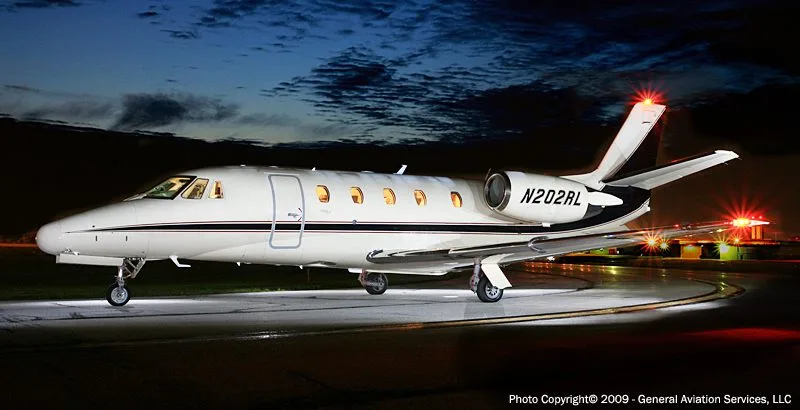
Aircraft Information General Performance & Specifications Description Aircraft Information Year: 1998 – 2004 Make: Citation Model: Excel Active Fleet: 372 – For Sale/Lease: 23 Average Asking Price – February 2014: $3,905,000 Range: 1,449 – 1,839 nm Contact Number: 1-847-726-5000 General Performance & Specifications Cabin Height: 5.7 Feet Cabin Width: 5.5 Feet Cabin Length: 18.5 Feet Baggage Volume Internal: 10.0 Cubic Feet Baggage Volume External: 80.0 Cubic Feet Seats Executive: 2/7 Max. Take-Off Weight: 20,000 lbs. Max. Landing Weight: 18,700 lbs. Maximum Payload: 2,500 lbs. Balance Field Length: 4,060 Feet Landing Distance: 4,994 Feet Rate of Climb – All Engines: 3,790 Feet / Minute Rate of Climb – One Engine Out: 699 Feet / Minute Normal Cruise Speed: 433 ktas Max. Cruise Speed: 433 ktas Service Ceiling Max. Weight: 44,000 Feet Number of Engines: 2 Engine Manufacturer: Pratt & Whitney Engine Model: PW545A Description The Cessna Citation Excel (Model 560XL) is a turbofan-powered small-to-medium sized business jet built by the Cessna Aircraft Company in Wichita, Kansas, USA. With the success of Cessna’s high-end Citation X, the manufacturer saw a market for an aircraft with the X’s features but aimed at the traditional Citation market, where it chiefly competes with twin turboprop aircraft. Rather than being a direct variant of another Citation airframe, the Excel was a combination of technologies and designs. To produce the Excel, Cessna took the X’s wide, stand-up cabin fuselage, shortened it by about 21 feet (6.4 m) and mated it with an unswept wing utilizing a supercritical airfoil (based on the Citation V Ultra’s wing) and a Citation V’s tail. To power the aircraft, Cessna chose the a new Pratt & Whitney Canada turbofan, the PW545A. As a result, the Excel has the roomiest cabin in its class of light corporate jets and can seat up to 10 passengers (in high-density configuration; typically the number is six to eight in a corporate configuration), while being flown by a crew of two.
Comparable sales
No completed sales yet — check back later.