Cessna 172N Service Bulletin
CESSNA 172N SKYHAWK · Service Bulletins
Overview
This document is a Service Bulletin for the Cessna 172N Skyhawk, detailing important updates, maintenance procedures, and safety information relevant to this aircraft model. It serves as a critical reference for pilots and maintenance personnel, ensuring compliance with safety standards and operational efficiency. The bulletin includes specific instructions for inspections, modifications, and any necessary repairs that may affect the aircraft's performance and safety. It is essential for maintaining the airworthiness of the Cessna 172N and provides guidance on best practices for upkeep and operation.
- Regular inspections are critical for safety and compliance.
- Modification instructions must be followed precisely to ensure airworthiness.
- Safety recommendations should be integrated into daily operations.
- Compliance with the bulletin is mandatory within the specified timeline.
- Pre-flight checks are essential to identify potential issues before flight.
Document
Source
Originally published by txwg.cap.gov. Sprinkle hosts a reference copy with an added summary, specifications and searchable full text.
Document details
- Type
- Service Bulletins
- Year
- 1980
- Pages
- 266
- File size
- 6.3 MB
- Publisher
- txwg.cap.gov
Specifications & performance
Extracted from this document.
Specifications
- Range (nm)
- 500
- Engine (hp)
- 150
- Height (ft)
- 8
- Length (ft)
- 27
- Propeller
- Fixed-pitch
- Wingspan (ft)
- 36
- Engine model
- Lycoming O-320
- Max speed (kt)
- 124
- Cruise speed (kt)
- 110
- Empty weight (lb)
- 1,550
- Fuel capacity (gal)
- 40
- Rate of climb (fpm)
- 730
- Service ceiling (ft)
- 14,000
- Max takeoff weight (lb)
- 2,300
Performance
- Fuel burn (gph)
- 8
- Landing over 50ft
- 1,500
- Max crosswind (kt)
- 15
- Takeoff over 50ft
- 2,000
- Landing distance (ft)
- 1,200
- Takeoff distance (ft)
- 1,500
- Best glide speed (kt)
- 65
- Stall speed clean (kt)
- 50
- Stall speed landing (kt)
- 45
V-speeds
- VA
- 105
- VR
- 55
- VX
- 62
- VY
- 74
- VFE
- 85
- VNE
- 150
- VNO
- 125
- VS1
- 48
- VSO
- 40
- VREF
- 60
Weight & balance
- Useful load (lb)
- 750
- Max ramp weight (lb)
- 2,325
- Baggage allowance (lb)
- 200
- Basic empty weight (lb)
- 1,550
- Max landing weight (lb)
- 2,300
- Max takeoff weight (lb)
- 2,300
Common. One of the most common aircraft types we track.
Most owners only have the POH. Here's the essential set for the CESSNA 172N SKYHAWK.
- Pilot's Operating Handbook / AFM
- Checklist
- Maintenance Manual
- Parts Catalog (IPC)
- Systems & Wiring
- Service Bulletins
- Type Certificate (TCDS)
CESSNA 172N SKYHAWK for sale now
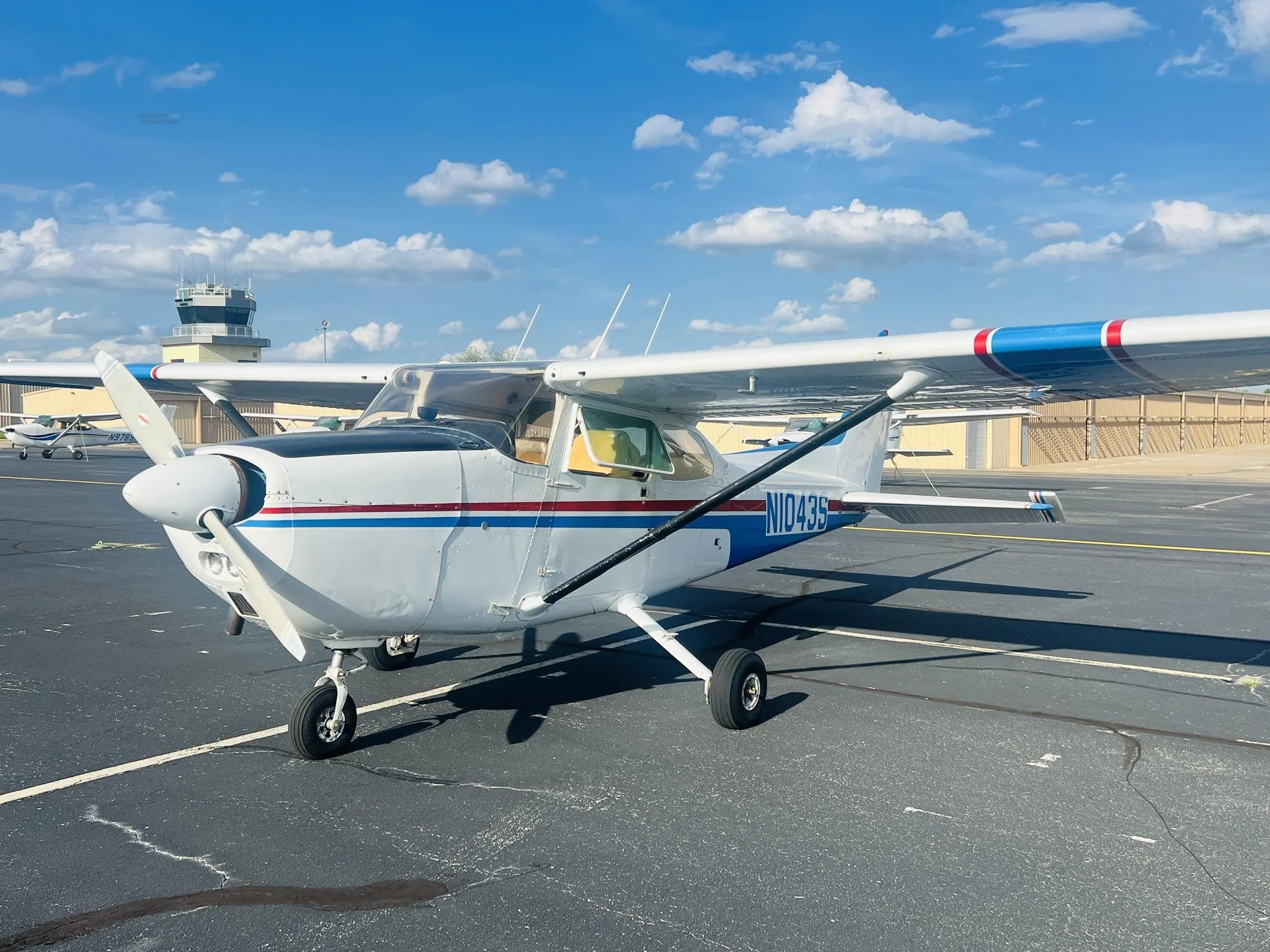


Free — save the 172N Skyhawk to your watchlist and track it in one place.
More CESSNA 172N SKYHAWKmanuals & documents
See all 16 →- Cessna 172N N8050E Weight and BalanceWeight And Balance
- Cessna C-172N ChecklistChecklist
- STANDARDIZATION MANUAL and AMPLIFIED PROCEDURESV Speeds Reference
- C172N PREFLIGHT GUIDEChecklist
- Cessna 172P Skyhawk Standardization ManualNormal Procedures
- Cessna 172N Skyhawk Standardization ManualFlight Manual
- CESSNA SKYHAWK (C-172 N/P) NORMAL CHECKLISTChecklist
- Aviation Maintenance Alerts AC No. 43-16A Alert No. 254Airworthiness Directives
- Cessna 172N Pilot's Operating HandbookPilot's Operating Handbook
- Pilot's Operating HandbookV Speeds Reference
- PILOT'S OPERATING HANDBOOK ~ Cessna 1978 Skyhawk CESSNA MODEL 172NPilot's Operating Handbook
- PILOT·s OPERATING HANDBOOK CESSNA MODEL 172NMaintenance Manual
If you fly the CESSNA 172N SKYHAWK, you may also be researching these.


In this document
Introduction
The introduction outlines the purpose of the Service Bulletin, emphasizing the importance of adhering to the guidelines provided for the safety and performance of the Cessna 172N. It also highlights the need for regular maintenance checks as per the outlined procedures.
Inspection Procedures
This section details the specific inspection procedures that must be followed to ensure the aircraft remains in compliance with safety regulations. It includes checklists for pre-flight inspections and periodic maintenance checks.
Modification Instructions
Instructions for modifications required on certain components of the Cessna 172N are provided here. This includes part numbers, installation procedures, and any tools required for the modifications.
Safety Recommendations
Safety recommendations are outlined to prevent common issues that may arise during operation. This section stresses the importance of following the manufacturer's guidelines and conducting thorough pre-flight checks.
Compliance Timeline
The bulletin specifies a timeline for compliance with the recommendations and modifications outlined in the document. It is crucial for operators to adhere to these timelines to maintain airworthiness.
Safety notes
- Failure to comply with inspection procedures may result in safety hazards.
- Modifications must be performed by certified personnel to ensure proper installation.
Full document text
© C Pilot's Operating Handbook and FAA Approved Airplane Flight Manual THIS DOCUMENT MUST BE CARRIED IN THE AIRPLANE AT ALL TIMES. Cessna Aircraft Company 1986 Model 172P Serial No. 17276553 Registration No.. N9411L THIS HANDBOOK INCLUDES THE MATERIAL REQUIRED TO BE FURNISHED TO THE PILOT BY CAR PART 3 AND CONSTI- TUTES THE FAA APPROVED AIRPLANE FLIGHT MANUAL. Member of GAMA COPYRIGHT 1985 Cessna Aircraft Company Wichita, Kansas USA Original Issue - 2 September 1985 ☑ Cessna THIS MANUAL WAS PROVIDED FOR THE AIRPLANE 1-24-86 IDENTIFIED ON THE TITLE PAGE ON SUBSEQUENT REVISIONS SUPPLIED BY CESSNA AIRCRAFT COMPANY MUST BE PROPERLY IN- SERTED. By B. D. Hamith Executive Ength F Cessna Aircraft Co., Aircraft Div Delegation Option Manufacturer. CE-1 Carl J Gerker Cessna Aircraft Company, Aircraft Division CESSNA MODEL 172P CONGRATULATIONS CONGRATULATIONS. . . Welcome to the ranks of Cessna owners! Your Cessna has been designed and constructed to give you the most in performance, economy, and comfort. It is our desire that you will find flying it, either for business or pleasure, a pleasant and profitable experience. This Pilot's Operating Handbook has been prepared as a guide to help you get the most pleasure and utility from your airplane. It contains information about your Cessna's equipment, operating pro- cedures, and performance, and suggestions for its servicing and care. Please study it carefully and refer to it often. The worldwide Cessna Dealer Organization and Cessna Customer Services stand ready to serve you. You will find the following services are offered by most Cessna Dealers: • 0 THE CESSNA WARRANTY, which provides coverage for parts and labor, is available at Cessna Dealers worldwide. Specific benefits and provisions of warranty, plus other impor- tant benefits for you, are contained in your Customer Care Program Handbook, supplied with your airplane. Warranty service is available to you at authorized Cessna Dealers throughout the world upon presentation of your Customer Care Card which establishes your eligibility under the warranty. FACTORY-TRAINED PERSONNEL to provide you with courteous expert service. FACTORY-APPROVED SERVICE EQUIPMENT to provide you efficient and accurate work- manship. A STOCK OF GENUINE CESSNA SERVICE PARTS on hand when you need them. THE LATEST AUTHORITATIVE INFORMATION FOR SERVICING CESSNA AIRPLANES, since Cessna Dealers have all of the Service Manuals and Parts Catalogs, kept current by Cessna Service Bulletins and Cessna Service Newsletters, published by Cessna Aircraft Company. We urge all Cessna owners to use the Cessna Dealer Organization to the fullest. A current Cessna Dealer Directory accompanies your new airplane. The Directory is revised fre- quently, and a current copy can be obtained from your Cessna Dealer. Make your Directory one of your cross-country flight planning aids; a warm welcome awaits you at every Cessna Dealer. Original Issue i PERFORMANCE- SPECIFICATIONS CESSNA MODEL 172P PERFORMANCE - SPECIFICATIONS *SPEED: Maximum at Sea Level Cruise, 75% Power at 8000 Ft CRUISE: Recommended lean mixture with fuel allowance for engine start, taxi, takeoff, climb and 45 minutes reserve. 75% Power at 8000 Ft 40 Gallons Usable Fuel 75% Power at 8000 Ft 50 Gallons Usable Fuel 75% Power at 8000 Ft 62 Gallons Usable Fuel Maximum Range at 10,000 Ft 40 Gallons Usable Fuel Maximum Range at 10,000 Ft 50 Gallons Usable Fuel Maximum Range at 10,000 Ft 62 Gallons Usable Fuel RATE OF CLIMB AT SEA LEVEL SERVICE CEILING TAKEOFF PERFORMANCE: Ground Roll Total Distance Over 50-Ft Obstacle LANDING PERFORMANCE: Ground Roll . Total Distance Over 50-Ft Obstacle STALL SPEED (KCAS): Flaps Up, Power Off Flaps Down, Power Off MAXIMUM WEIGHT: Ramp • Takeoff or Landing STANDARD EMPTY WEIGHT MAXIMUM USEFUL LOAD BAGGAGE ALLOWANCE WING LOADING: Pounds/Sq Ft POWER LOADING: Pounds/HP FUEL CAPACITY: Total Standard Tanks Long Range Tanks Integral Tanks OIL CAPACITY ENGINE: Avco Lycoming 160 BHP at 2700 RPM PROPELLER: Fixed Pitch, Diameter 123 KNOTS 120 KNOTS .Range Time 440 NM 3.8 HRS .Range 585 NM Time 5.0 HRS .Range 755 NM Time 6.4 HRS - .Range 520 NM Time .Range 5.6 HRS 680 NM Time .Range 7.4 HRS 875 NM 9.4 HRS Time . 700 FPM . 13,000 FT . 890 FT 1625 FT ' . 540 FT 1280 FT • 51 KNOTS • 46 KNOTS 2407 LBS . 2400 LBS 1433 LBS 974 LBS 120 LBS 13.8 15.0 43 GAL. 54 GAL. 68 GAL. 8 QTS O-320-D2J 75 IN. *Speed performance is shown for an airplane equipped with optional speed fairings, which increase the speeds by approximately 2 knots. There is a corresponding differ- ence in range, while all other performance figures are unchanged when speed fair- ings are installed. The above performance figures are based on the indicated weights, standard atmos- pheric conditions, level hard-surface dry runways, and no wind. They are calculated values derived from flight tests conducted by the Cessna Aircraft Company under carefully documented conditions and will vary with individual airplanes and numer- ous factors affecting flight performance. ii Original Issue : CESSNA MODEL 172P COVERAGE/REVISIONS/ LOG OF EFFECTIVE PAGES COVERAGE The Pilot's Operating Handbook in the airplane at the time of delivery from Cessna Aircraft Coin- any contains information applicable to the 1986 Model 172P airplane designated by the serial number and registration number shown on the Title Page of this handbook. This information is based on data available at the time of publication. REVISIONS Changes and/or additions to this handbook will be covered by revisions published by Cessna Air- craft Company. These revisions are distributed to owners of U.S. Registered aircraft according to FAA records at the time of revision issuance, and to Internationally Registered aircraft according to Cessna Owner Advisory records at the time of issuance. Revisions should be examined immediately upon receipt and incorporated in this handbook. NOTE It is the responsibility of the owner to maintain this handbook in a current
Show full textShow less
status when it is being used for operational purposes. Owners should contact their Cessna Dealer whenever the revision status of their handbook is in question. A revision bar will extend the full length of new or revised text and/or illustrations added on new or presently existing pages. This bar will be located adjacent to the applicable revised area on the outer margin of the page. All revised pages will carry the revision number and date on the applicable page. The following Log of Effective Pages provides the dates of issue for original and revised pages, and a listing of all pages in the handbook. Pages affected by the current revision are indicated by an asterisk (*) preceding the pages listed. LOG OF EFFECTIVE PAGES Dates of issue for original and revised pages are: Original 2 September 1985 Page Date Page Date Title Assignment Record .. i thru v vi Blank 1-1 thru 1-9 1-10 Blank 2-1 2-2 Blank 2-3 thru 2-13 2-14 Blank 3-1 thru 3-9 3-10 Blank 3-11 thru 3-18 4-1 thru 4-25 2 September 1985 2 September 1985 2 September 1985 2 September 1985 2 September 1985 2 September 1985 2 September 1985 2 September 1985 2 September 1985 2 September 1985 2 September 1985 2 September 1985 2 September 1985 2 September 1985 4-26 Blank 5-1 2 September 1985 2 September 1985 5-2 Blank 5-3 thru 5-7 5-8 Blank 5-9 thru 5-25 5-26 Blank 6-1 2 September 1985 2 September 1985 2 September 1985 2 September 1985 2 September 1985 2 September 1985 6-2 Blank 6-3 thru 6-30 7-1 thru 7-38 8-1 2 September 1985 2 September 1985 2 September 1985 2 September 1985 8-2 Blank 8-3 thru 8-19 2 September 1985 2 September 1985 Original Issue D1297-13PH-RPC-300-10/85 iii LOG OF EFFECTIVE PAGES CESSNA MODEL 172P LOG OF EFFECTIVE PAGES (Continued) Page 8-20 Blank 9-1 thru 9-3 9-4 Blank Date Page 2 September 1985 2 September 1985 2 September 1985 NOTE Date Refer to Section 9 Table of Contents for supplements applicable to optional sys- tems. iv Original Issue C C ) ) ) ) ) ) C CESSNA MODEL 172P TABLE OF CONTENTS TABLE OF CONTENTS SECTION • • 1 2 GENERAL.... LIMITATIONS….. EMERGENCY PROCEDURES.. NORMAL PROCEDURES……. PERFORMANCE... WEIGHT & BALANCE/ EQUIPMENT LIST ………. AIRPLANE & SYSTEMS DESCRIPTIONS AIRPLANE HANDLING, SERVICE & MAINTENANCE .... SUPPLEMENTS (Optional Systems Description & Operating Procedures) Original Issue 3 • 4 5 6 7 8 .9 v/(vi blan c) C c) ©) C CESSNA MODEL 172P SECTION 1 GENERAL SECTION 1 GENERAL TABLE OF CONTENTS Page Three View Introduction Descriptive Data Engine Propeller Fuel Oil Maximum Certificated Weights Standard Airplane Weights Cabin And Entry Dimensions Baggage Space And Entry Dimensions Specific Loadings . Symbols, Abbreviations And Terminology General Airspeed Terminology And Symbols Meteorological Terminology Engine Power Terminology Weight And Balance Terminology 1-2 1-3 • 1-3 1-3 1-3 1-3 1-4 1-5 • 1-5 1-5 • 1-5 1-5 1-6 1-6 1-6 1-7 . Airplane Performance And Flight Planning Terminology 1-7 . 1-8 )) 1 ) 1-1 Original Issue - 2 September 1985 SECTION 1 GENERAL NOTES: 1. Wing span shown with strobe lights installed. 2. Maximum height shown with nose gear depressed, all tires and nose strut properly inflated, and flashing beacon installed. 3. Wheel base length is 65″. 4. Propeller ground clearance is 11¼". 5. Wing area is 174 square feet. 6. Minimum turning radius (* pivot point to outboard wing tip) is 27'-5%". 1-2 "M -26'-11”- -11'-4″. * CESSNA MODEL 172P 8'-9 1/2" MAX. PIVOT POINT PIVOT POINT 75" MAX. -36′-0″. C C ) ) ) -8'-4 1/2”. Figure 1-1. Three View Original Issue A C CESSNA MODEL 172P SECTION 1 GENERAL INTRODUCTION This handbook contains 9 sections, and includes the material required to be furnished to the pilot by CAR Part 3. It also contains supplemental data supplied by Cessna Aircraft Company. Section 1 provides basic data and information of general interest. It also contains definitions or explanations of symbols, abbreviations, and terminology commonly used. DESCRIPTIVE DATA ENGINE Number of Engines: 1. Engine Manufacturer: Avco Lycoming. Engine Model Number: O-320-D2J. Engine Type: Normally-aspirated, direct-drive, air-cooled, horizontally- opposed, carburetor equipped, four-cylinder engine with 319.8 cu. in. displacement. Horsepower Rating and Engine Speed: 160 rated BHP at 2700 RPM. PROPELLER Propeller Manufacturer: McCauley Accessory Division. Propeller Model Number: 1C160/DTM7557. Number of Blades: 2. Propeller Diameter, Maximum: 75 inches. Minimum: 74 inches. Propeller Type: Fixed pitch. FUEL Approved Fuel Grades (and Colors): 100LL Grade Aviation Fuel (Blue). 100 (Formerly 100/130) Grade Aviation Fuel (Green). NOTE Isopropyl alcohol or ethylene glycol monomethyl ether may be added to the fuel supply. Additive concentrations shall not exceed 1% for isopropyl alcohol or .15% for ethylene glycol monomethyl ether. Refer to Section 8 for additional information. Original Issue 1-3 <' SECTION 1 GENERAL Fuel Capacity: Standard Tanks: Total Capacity: 43 gallons. Total Capacity Each Tank: 21.5 gallons. Total Usable: 40 gallons. Long Range Tanks: Total Capacity: 54 gallons. Total Capacity Each Tank: 27 gallons. Total Usable: 50 gallons. Integral Tanks: Total Capacity: 68 gallons. Total Capacity Each Tank: 34 gallons. Total Usable: 62 gallons. NOTE To ensure maximum fuel capacity when refueling and minimize cross-feeding when parked on a sloping surface, place the fuel selector valve in either LEFT or RIGHT position. CESSNA MODEL 172P OIL Oil Specification: MIL-L-6082 Aviation Grade Straight Mineral Oil: Used when the airplane was delivered from the factory and should be used to re- plenish the supply during the first 25 hours. This oil should be drained after the first 25 hours of operation. Refill the engine and con- tinue to use until a total of 50 hours has accumulated or oil consump- tion has stabilized. MIL-L-22851 Aviation Grade Ashless Dispersant Oil: Oil conforming to Avco Lycoming Service Instruction No. 1014, and all revisions and supplements thereto, must be used after first 50 hours or oil con- sumption has stabilized. Recommended Viscosity for Temperature Range: All temperatures, use multi-viscosity oil or Above 16° C (60° F), use SAE 50 -1° C (30° F) to 32° C (90° F), use SAE 40 -18° C (0° F) to 21° C (70° F), use SAE 30 NOTE When operating temperatures overlap, use the lighter grade of oil. Oil Capacity: Sump: 7 Quarts. Total: 8 Quarts. 1-4 Original Issue C 1 C C C ) CESSNA MODEL 172P SECTION 1 GENERAL MAXIMUM CERTIFICATED WEIGHTS Ramp, Normal Category: 2407 lbs. Utility Category: 2107 lbs. Takeoff, Normal Category: 2400 lbs. Utility Category: 2100 lbs. Landing, Normal Category: 2400 lbs. Utility Category: 2100 lbs. See STC. Weight in Baggage Compartment, Normal Category: Baggage Area 1 (or passenger on child's seat) - Station 82 to 108; 120 lbs. See note below. Baggage Area 2 - Station 108 to 142: 50 lbs. See note below. NOTE The maximum combined weight capacity for baggage areas 1 and 2 is 120 lbs. Weight in Baggage Compartment, Utility Category: In this category, the baggage compartment and rear seat must not be occupied. STANDARD AIRPLANE WEIGHTS Standard Empty Weight, Skyhawk: 1433 lbs. Maximum Useful Load: Skyhawk: Normal Category Utility Category 974 lbs. 674 lbs. CABIN AND ENTRY DIMENSIONS Detailed dimensions of the cabin interior and entry door openings are illustrated in Section 6. BAGGAGE SPACE AND ENTRY DIMENSIONS Dimensions of the baggage area and baggage door opening are illustrated in detail in Section 6. SPECIFIC LOADINGS Wing Loading: 13.8 lbs./sq. ft. Power Loading: 15.0 lbs./hp. Original Issue 1-5 SECTION 1 GENERAL SYMBOLS, ABBREVIATIONS AND TERMINOLOGY CESSNA MODEL 172P GENERAL AIRSPEED TERMINOLOGY AND SYMBOLS KCAS KIAS KTAS VA VFE VNO VNE Vs མ་ Vy Knots Calibrated Airspeed is indicated airspeed corrected for position and instrument error and expressed in knots. Knots calibrated airspeed is equal to KTAS in standard atmosphere at sea level. Knots Indicated Airspeed is the speed shown on the airspeed indicator and expressed in knots. Knots True Airspeed is the airspeed expressed in knots relative to undisturbed air which is KCAS corrected for altitude and temperature. Maneuvering Speed is the maximum speed at which full or abrupt control movements may be used. Maximum Flap Extended Speed is the highest speed permissible with wing flaps in a prescribed extended position. Maximum Structural Cruising Speed is the speed that should not be exceeded except in smooth air, then only with caution. Never Exceed Speed is the speed limit that may not be exceeded at any time. Stalling Speed or the minimum steady flight speed at which the airplane is controllable. Stalling Speed or the minimum steady flight speed at which the airplane is controllable in the landing configu- ration at the most forward center of gravity. Best Angle-of-Climb Speed is the speed which results in the greatest gain of altitude in a given horizontal distance. Best Rate-of-Climb Speed is the speed which results in the greatest gain in altitude in a given time. METEOROLOGICAL TERMINOLOGY OAT Outside Air Temperature is the free air static temperature. Original Issue 1-6 CESSNA MODEL 172P ( ) Standard Tempera- ture Pressure Altitude SECTION 1 GENERAL It is expressed in either degrees Celsius or degrees Fah- renheit. Standard Temperature is 15°C at sea level pressure alti- tude and decreases by 2°C for each 1000 feet of altitude. Pressure Altitude is the altitude read from an altimeter when the altimeter's barometric scale has been set to 29.92 inches of mercury (1013 mb). ENGINE POWER TERMINOLOGY BHP RPM Static RPM Brake Horsepower is the power developed by the engine. Revolutions Per Minute is engine speed. Static RPM is engine speed attained during a full-throttle engine runup when the airplane is on the ground and stationary. AIRPLANE PERFORMANCE AND FLIGHT PLANNING TERMINOLOGY Demon- strated Crosswind Velocity Usable Fuel Unusable Fuel GPH NMPG g Original Issue Demonstrated Crosswind Velocity is the velocity of the crosswind component for which adequate control of the airplane during takeoff and landing was actually demon- strated during certification tests. The value shown is not considered to be limiting. Usable Fuel is the fuel available for flight planning. Unusable Fuel is the quantity of fuel that can not be safely used in flight. Gallons Per Hour is the amount of fuel consumed per hour. Nautical Miles Per Gallon is the distance which can be expected per gallon of fuel consumed at a specific engine power setting and/or flight configuration. g is acceleration due to gravity. 1-7
849 CESSNA 172N SKYHAWK parts for sale
See all →

Parts listed for sale by vetted eBay sellers — confirmed on eBay at checkout.