Piper J-3 Cub Model Guide
Piper J-3 Cub · Model Guide
Overview
The Piper J-3 Cub is a two-seat, single-engine piston light airplane built from 1938 to 1947. It has a strut-braced, cloth-covered wing and a welded steel tube fuselage covered in fabric. Sample owner checklists show a 1220 lb gross weight, 12 gal of fuel and a 73 mph cruise. That suits slow, short-field flying rather than heavy loads or fast travel.
- Two seats, 12 gal fuel, 1220 lb gross. One sample J3 shows 698 lb empty, 522 lb useful load and only 20 lb baggage.
- Modest performance in the sample checklists: 73 mph cruise, 38-39 mph stall, 450 fpm climb at gross and a 370 ft takeoff run.
- Details vary by aircraft: oil is 3-4 qts on one checklist and 5 qts on a J3-65 checklist. Check the exact airplane you are buying.
- Check fabric, strut and gear bolts, bungees, flying wires, tailwheel springs and hydraulic brake lines. The manual lists 20-hour and 100-hour inspections.
Summary written by AI from the source document. Check the original before relying on it. See which parts of Sprinkle are written by AI.
Reference only, not for flight. Use the current approved manual for your aircraft. See terms, section 5.
Document
Source
Copy found at sprinkle.com. Sprinkle hosts a reference copy with an added summary, specifications and searchable full text.
Document details
- Type ·
- Model Guide
- Year ·
- 2026
- File size ·
- 47 KB
- Copy found at ·
- sprinkle.com
Specifications & performance
Extracted from this document.
Specifications
- Seats ·
- 2
- Fuel capacity (gal) ·
- 12
- Production end year ·
- 1,947
- Production start year ·
- 1,938
Performance
- Fuel burn (gph) ·
- 4.4
- Climb rate (fpm) ·
- 450
- Takeoff run (ft) ·
- 370
- Landing roll (ft) ·
- 290
- Absolute ceiling (ft) ·
- 14,000
Weight & balance
- Useful load (lb) ·
- 522
- Empty weight (lb) ·
- 698
- Baggage capacity (lb) ·
- 20
- Max gross weight (lb) ·
- 1,220
How much can a Piper J-3 Cub carry?
One Piper J-3 Cub checklist shows 1220 lb gross, 698 lb empty and 522 lb useful load. That includes 12 gal of fuel, and baggage is limited to 20 lb. A J3C-85 example has 795 lb empty and 425 lb useful load.
How fast is the Piper J-3 Cub?
The Piper J-3 Cub checklists show a 73 mph cruise and a 38-39 mph stall. The J3C-85 checklist adds an 83 mph top speed and a 122 mph Vne. Climb is 55 mph, and the approach is 50-60 mph.
What should a buyer inspect on a Piper J-3 Cub?
Follow the checklists. Check fabric on the wing and fuselage, wing strut and landing gear bolts, bungee covers, and hydraulic brake lines. Check aileron cables, flying wires, tailwheel springs and chains, and the propeller. The manual also lists 20-hour and 100-hour inspections.
What is the Piper J-3 Cub Model Guide?
The Piper J-3 Cub Model Guide is a model guide for the Piper J-3 Cub, dated 2026.
What year was the Piper J-3 Cub Model Guide published?
The Piper J-3 Cub Model Guide — the Piper J-3 Cub model guide on file — is dated 2026.
Common. More common than 99% of the aircraft models we track.
Most owners only have the POH. Here's the essential set for the Piper J-3 Cub.
- Pilot's Operating Handbook / AFM
- Checklist
- Maintenance Manual
- Parts Catalog (IPC)
- Systems & Wiring
- Service Bulletins on file
- Type Certificate (TCDS)
Piper J-3 Cub for sale now


Free — save the J3C to your watchlist and track it in one place.
More Piper J-3 Cubmanuals & documents
See all 21 →- J-3 Cub 10cc Instruction ManualPilot's Operating Handbook
- Piper J-3 Cub User GuideWeight & Balance
- NORMAL PROCEDURES Piper Cub J-3/L-4 – HB-OENChecklist
- Type Acceptance Report TAR 20/21B/8 – Piper J3L SeriesOther Documents
- Ultra-Micro J-3 Cub RTF & BNF Instruction ManualChecklist
- Supplemental Type CertificateSupplemental Type Certificate
- J-3 Cub BL Instruction ManualMaintenance Manual
- PIPER J3 CUB - 1937- 47Specifications
- Pilot's Operating Handbook for the Piper J-3 CubPilot's Operating Handbook
- WEIGHT & BALANCE WORK SHEETWeight & Balance
- PIPER J3 CUB CHECKLISTPilot's Operating Handbook
- Pilot's Operating HandbookPilot's Operating Handbook
Related documents
If you fly the Piper J-3 Cub, you may also be researching these.




In this document
Construction and what to look at
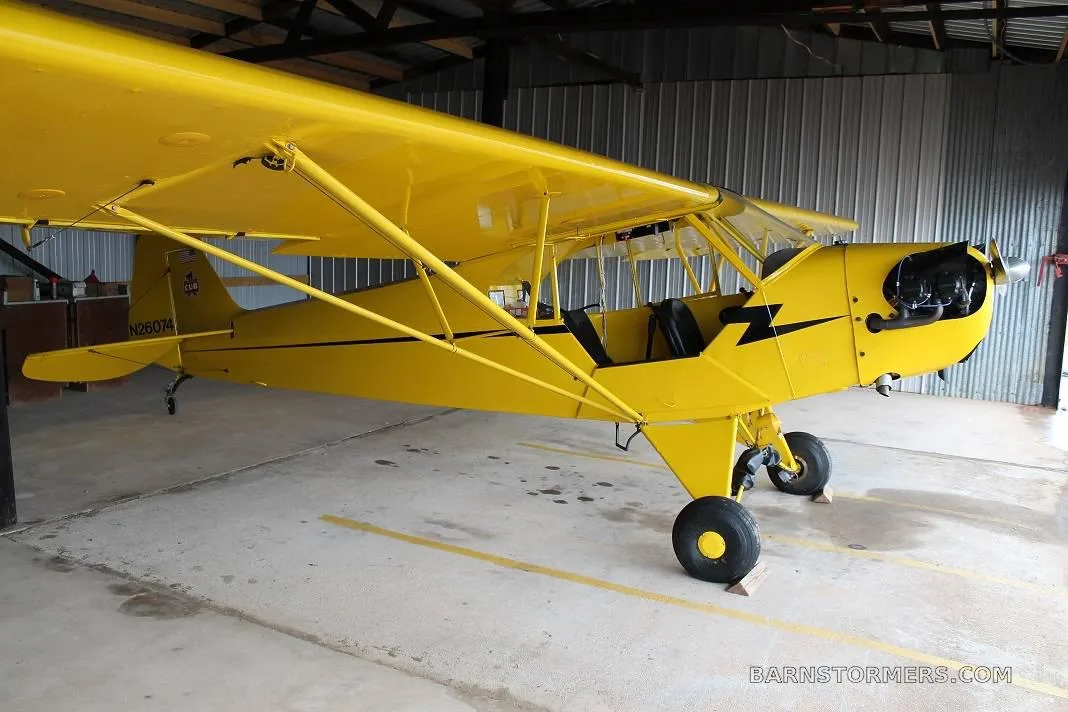
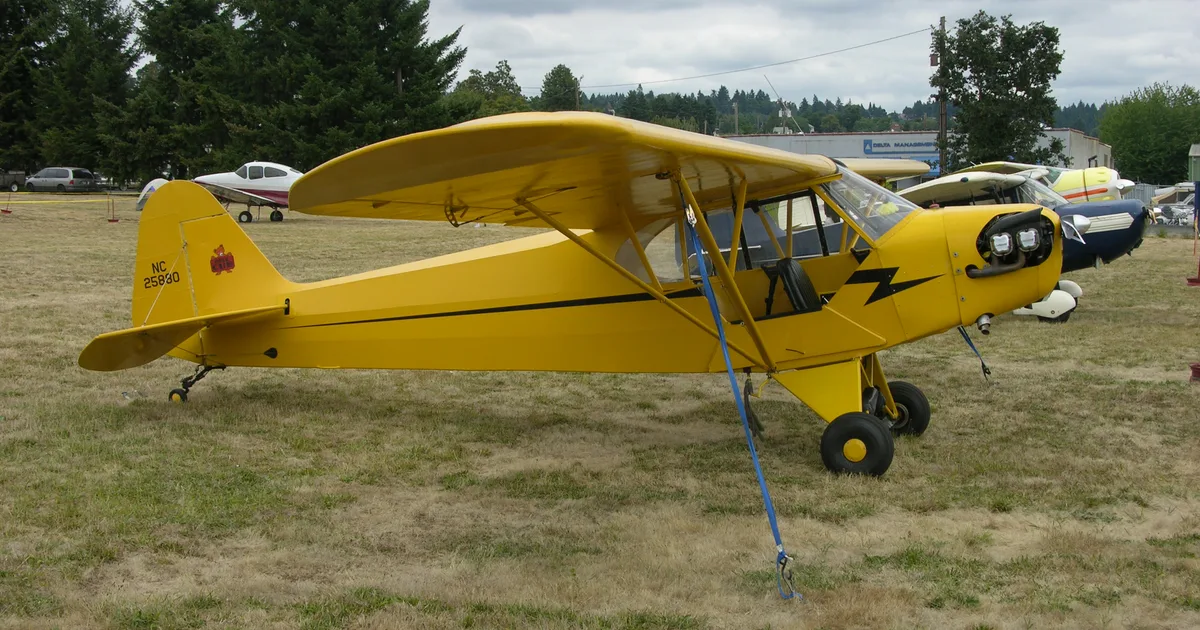
The service manual describes a 2-place monoplane with a strut-braced, two-spar, cloth-covered wing and a welded steel tube, cloth-covered fuselage. The main gear is a split-axle type with rubber cord shock absorbers. Hydraulic brakes and a steerable tail wheel were available. Checklists stress fabric condition, lift and jury struts, aileron cables, bungee covers and flying wires.
Variants and numbers in the inputs
A J3 checklist (N78407) gives 698 lb empty, 522 lb useful load, 4.4 gph fuel burn and a 38 mph stall. A J3C-85 checklist gives 795 lb empty, 425 lb useful load, 4.5 gph, a 39 mph stall, 83 mph top speed, 122 mph Vne, a 290 ft landing roll and a 14000 ft absolute ceiling. Both show 1220 lb gross, 12 gal fuel and 370 ft takeoff run.
Operating habits to expect
Checklists call for a 1700 rpm run-up with a magneto drop of no more than 75 rpm. Climb at 55 mph, cruise at 2150 rpm and approach at 50-60 mph. The J3-65 checklist gives oil pressure 30-60 psi and a 225 degree F oil temperature limit, with carb heat warmed before power reduction.
Summary written by AI from the source document. Check the original before relying on it. See which parts of Sprinkle are written by AI.
Safety notes
- Hand-propping: never stand in the propeller plane and always treat the prop as live (J3C-85 checklist).
- Do not roll the aircraft backwards on the tail wheel because it will not castor. Lift the tail and pull it back instead.
- Use carb heat as the checklists direct: warm it 15 seconds before reducing power on landing, and check the drop in rpm at run-up.
Summary written by AI from the source document. Check the original before relying on it. See which parts of Sprinkle are written by AI.
Full document text
Piper J-3 Cub Model Guide The Piper J-3 Cub is a two-seat, single-engine piston light airplane built from 1938 to 1947. It has a strut-braced, cloth-covered wing and a welded steel tube fuselage covered in fabric. Sample owner checklists show a 1220 lb gross weight, 12 gal of fuel and a 73 mph cruise. That suits slow, short-field flying rather than heavy loads or fast travel. • Two seats, 12 gal fuel, 1220 lb gross. One sample J3 shows 698 lb empty, 522 lb useful load and only 20 lb baggage. • Modest performance in the sample checklists: 73 mph cruise, 38-39 mph stall, 450 fpm climb at gross and a 370 ft takeoff run. • Details vary by aircraft: oil is 3-4 qts on one checklist and 5 qts on a J3-65 checklist. Check the exact airplane you are buying. • Check fabric, strut and gear bolts, bungees, flying wires, tailwheel springs and hydraulic brake lines. The manual lists 20-hour and 100-hour inspections. Construction and what to look at The service manual describes a 2-place monoplane with a strut-braced, two-spar, cloth-covered wing and a welded steel tube, cloth-covered fuselage. The main gear is a split-axle type with rubber cord shock absorbers. Hydraulic brakes and a steerable tail wheel were available. Checklists stress fabric condition, lift and jury struts, aileron cables, bungee covers and flying wires. Variants and numbers in the inputs A J3 checklist (N78407) gives 698 lb empty, 522 lb useful load, 4.4 gph fuel burn and a 38 mph stall. A J3C-85 checklist gives 795 lb empty, 425 lb useful load, 4.5 gph, a 39 mph stall, 83 mph top speed, 122 mph Vne, a 290 ft landing roll and a 14000 ft absolute ceiling. Both show 1220 lb gross, 12 gal fuel and 370 ft takeoff run. Operating habits to expect Checklists call for a 1700 rpm run-up with a magneto drop of no more than 75 rpm. Climb at 55 mph, cruise at 2150 rpm and approach at 50-60 mph. The J3-65 checklist gives oil pressure 30-60 psi and a 225 degree F oil temperature limit, with carb heat warmed before power reduction. Safety notes: • Hand-propping: never stand in the propeller plane and always treat the prop as live (J3C-85 checklist). • Do not roll the aircraft backwards on the tail wheel because it will not castor. Lift the tail and pull it back instead. • Use carb heat as the checklists direct: warm it 15 seconds before reducing power on landing, and check the drop in rpm at run-up.