
AIRBUS H135 Model Guide
Model Guide for the Airbus H135
PDF, 48 KB, from Sprinkle’s own files.
What it covers
AIRBUS H135 is a light twin-engine turbine helicopter with a Fenestron tail rotor and a bearingless four-blade main rotor. The Technical Description lists two Pratt & Whitney Canada PW206B3 or Safran ARRIUS 2B2 plus engines, each with FADEC. The H135 family (EC135 variants) is listed at up to 7 passengers.
Key points
- Twin turbine engines with FADEC; the Technical Description offers PW206B3 or ARRIUS 2B2 plus.
- Family-level figures (up to): 430 nm range, 129 kt cruise, 7 passengers, 17,000 ft service ceiling.
- H135 retrofit standard: MTOW 2,980 kg, plus better hot-and-high performance and lower noise.
- Many EC135 variants can be retrofitted to H135 standard, and an Inlet Barrier Filter is an option.
Figures in this document
As the document states them. Check them against the PDF before you rely on one.
Performance
- Service ceiling (ft)
- 16,350
- Max density altitude (ft)
- 16,000
Weight and balance
- Hover oei weight kg
- 2,700
- Max takeoff weight kg
- 2,980
Main sections
Design and equipment
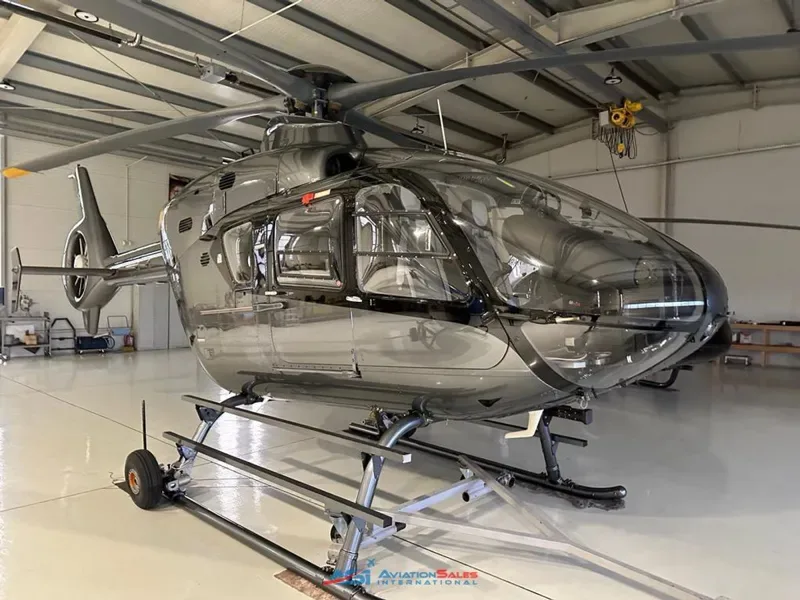
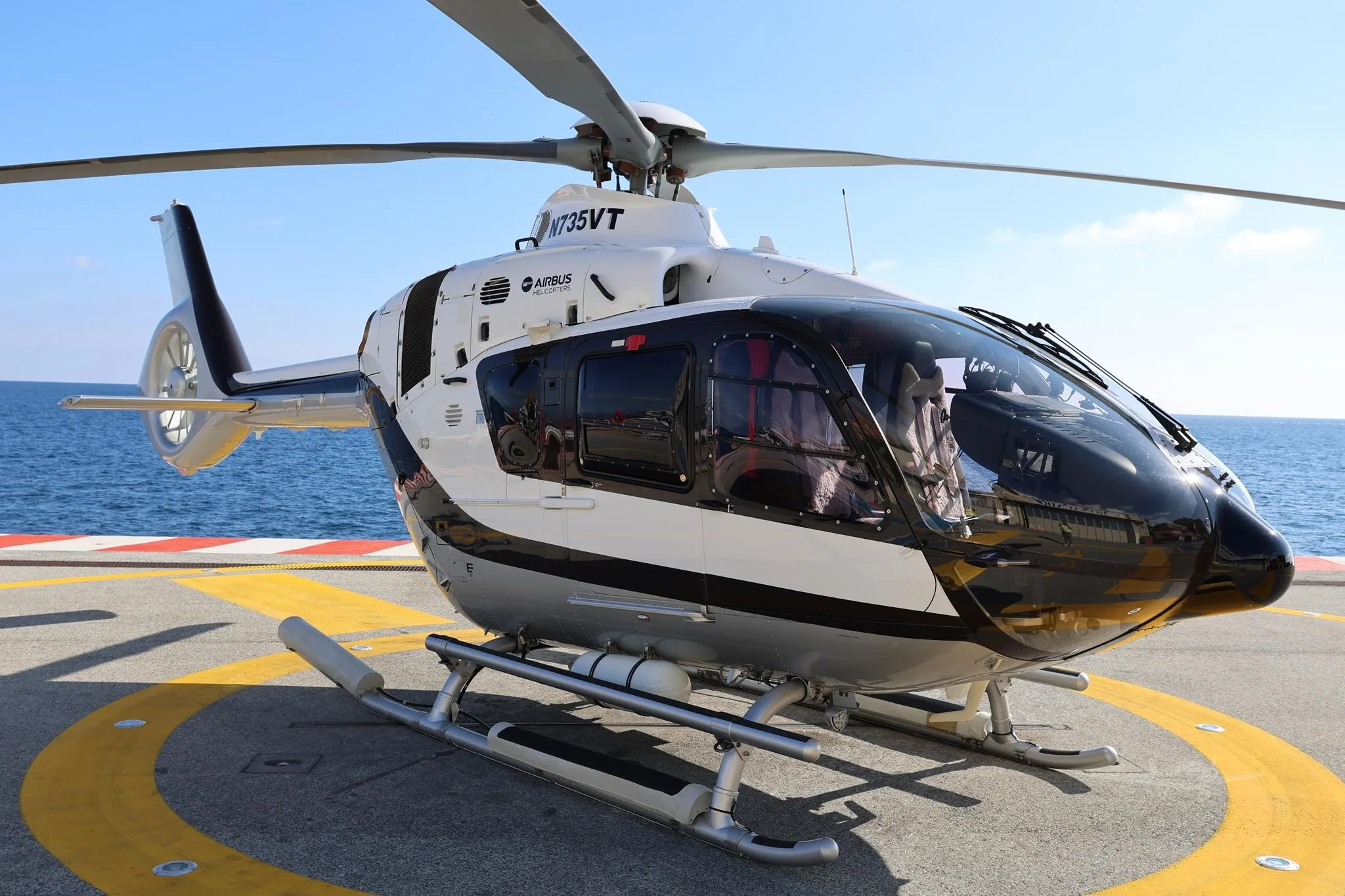
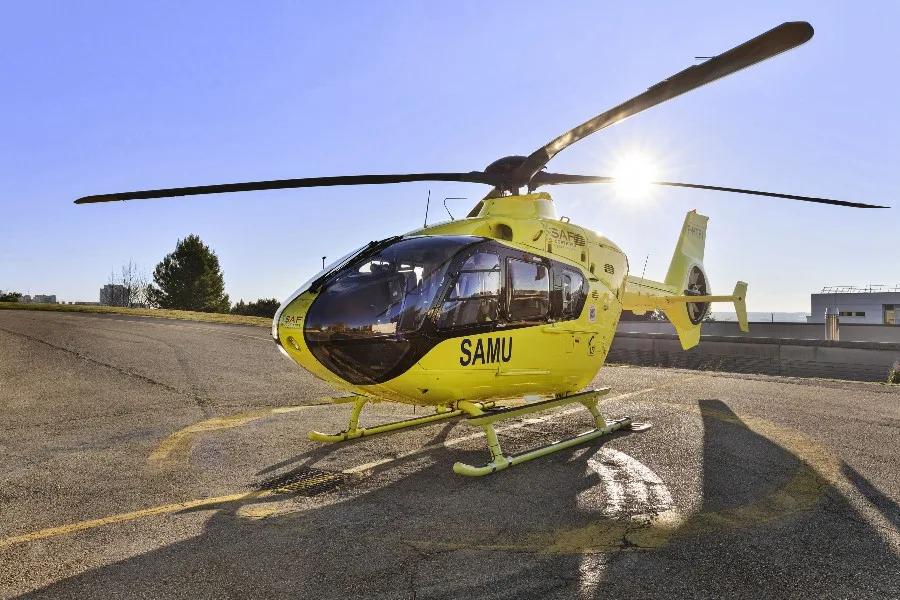
Skid landing gear, a one-level cabin and cargo floor, two sliding passenger doors and two rear clam-shell doors. It has a bearingless main rotor with four composite blades and a Fenestron tail rotor with ten metal blades. Avionics include two 6 x 8 inch multifunction displays, a 3-axis stability augmentation system and a usage monitoring system.
Performance of the H135 retrofit standard
The retrofit brochure gives MTOW of 2,980 kg, hover OEI (2 min power, sea level, ISA) of 2,700 kg, service ceiling of 16,350 ft with a 200 ft/min climb reserve, and max density altitude of 16,000 ft. Payload gains are largest in hot-and-high conditions. Average noise is 86.3 dB, 8.4 dB below the FAR Stage 2 / ICAO limit.
EC135 to H135 retrofit
The brochure says EC135 P1, T1, P2, T2, P2+ and T2+ aircraft can be converted. It gives roughly 20 working days for minimum content and up to 60 days for the most extensive retrofit (EC135 T1 CDS to H135). The Inlet Barrier Filter has a 99.8 % filtration rate. Some configurations without the filter are marked certification still outstanding.
Safety notes
- The Technical Description is general information only. Use the approved flight manual for performance data and operating limits.
- The registry category reads single-engine piston, but the documents describe two turbine engines. Confirm the actual aircraft configuration.
- Check which retrofit standard and Inlet Barrier Filter status apply to the airframe, since certification is outstanding for some configurations.
Questions this document answers
What engines does the AIRBUS H135 have?
The AIRBUS H135 Technical Description lists two Pratt & Whitney Canada PW206B3 turbine engines or two Safran Helicopter Engines ARRIUS 2B2 plus turbine engines. Both are fitted with FADEC and fire detectors.
Can an older EC135 be upgraded?
Yes. The AIRBUS H135 retrofit brochure covers EC135 P1, T1, P2, T2, P2+ and T2+ conversions. It expects about 20 to 60 working days, depending on the starting and target configuration.
How much can the AIRBUS H135 carry?
The registry lists the AIRBUS H135 family at up to 7 passengers. The retrofit standard has an MTOW of 2,980 kg. Check payload for your exact variant in the flight manual.
The document’s text
Show the text read from the PDF
AIRBUS H135 Model Guide AIRBUS H135 is a light twin-engine turbine helicopter with a Fenestron tail rotor and a bearingless four-blade main rotor. The Technical Description lists two Pratt & Whitney Canada PW206B3 or Safran ARRIUS 2B2 plus engines, each with FADEC. The H135 family (EC135 variants) is listed at up to 7 passengers. • Twin turbine engines with FADEC; the Technical Description offers PW206B3 or ARRIUS 2B2 plus. • Family-level figures (up to): 430 nm range, 129 kt cruise, 7 passengers, 17,000 ft service ceiling. • H135 retrofit standard: MTOW 2,980 kg, plus better hot-and-high performance and lower noise. • Many EC135 variants can be retrofitted to H135 standard, and an Inlet Barrier Filter is an option. Design and equipment Skid landing gear, a one-level cabin and cargo floor, two sliding passenger doors and two rear clam-shell doors. It has a bearingless main rotor with four composite blades and a Fenestron tail rotor with ten metal blades. Avionics include two 6 x 8 inch multifunction displays, a 3-axis stability augmentation system and a usage monitoring system. Performance of the H135 retrofit standard The retrofit brochure gives MTOW of 2,980 kg, hover OEI (2 min power, sea level, ISA) of 2,700 kg, service ceiling of 16,350 ft with a 200 ft/min climb reserve, and max density altitude of 16,000 ft. Payload gains are largest in hot-and-high conditions. Average noise is 86.3 dB, 8.4 dB below the FAR Stage 2 / ICAO limit. EC135 to H135 retrofit The brochure says EC135 P1, T1, P2, T2, P2+ and T2+ aircraft can be converted. It gives roughly 20 working days for minimum content and up to 60 days for the most extensive retrofit (EC135 T1 CDS to H135). The Inlet Barrier Filter has a 99.8 % filtration rate. Some configurations without the filter are marked certification still outstanding. Safety notes: • The Technical Description is general information only. Use the approved flight manual for performance data and operating limits. • The registry category reads single-engine piston, but the documents describe two turbine engines. Confirm the actual aircraft configuration. • Check which retrofit standard and Inlet Barrier Filter status apply to the airframe, since certification is outstanding for some configurations.
Read from the PDF by machine, so tables and diagrams come out rough. The PDF is the document.
More Airbus H135 documents
All 3 →- H135 Technical Description
The document provides a technical description of the Airbus H135 helicopter, detailing its systems, components, and features. It serves as a general reference for understanding the aircraft's design and operational capabilities.
- H135 Retrofit
The H135 Retrofit service bulletin outlines enhancements to the EC135 helicopter, improving its performance, safety, and market value. Key upgrades include a new main rotor, updated engines, and improved aerodynamics, making it suitable for high and hot conditions.
Service Bulletins · 2017PDF · 991 KB of H135 Retrofit, opens in a new tabRequest removal of H135 Retrofit
Airbus Helicopters EC135 for sale now
View all 20 for sale →Aircraft that this model guide covers, listed on the sites Sprinkle reads. Asking prices, not sales. Airbus Helicopters EC135 asking prices by year built.
Also useful for the Airbus H135
From Sprinkle’s library of aircraft documents. PDFs open from Sprinkle’s own files. Read Nov 24, 2026.
Want this document taken down? Request removal