Beechcraft D17S Staggerwing Model Guide
Beechcraft D17S Staggerwing · Model Guide
Overview
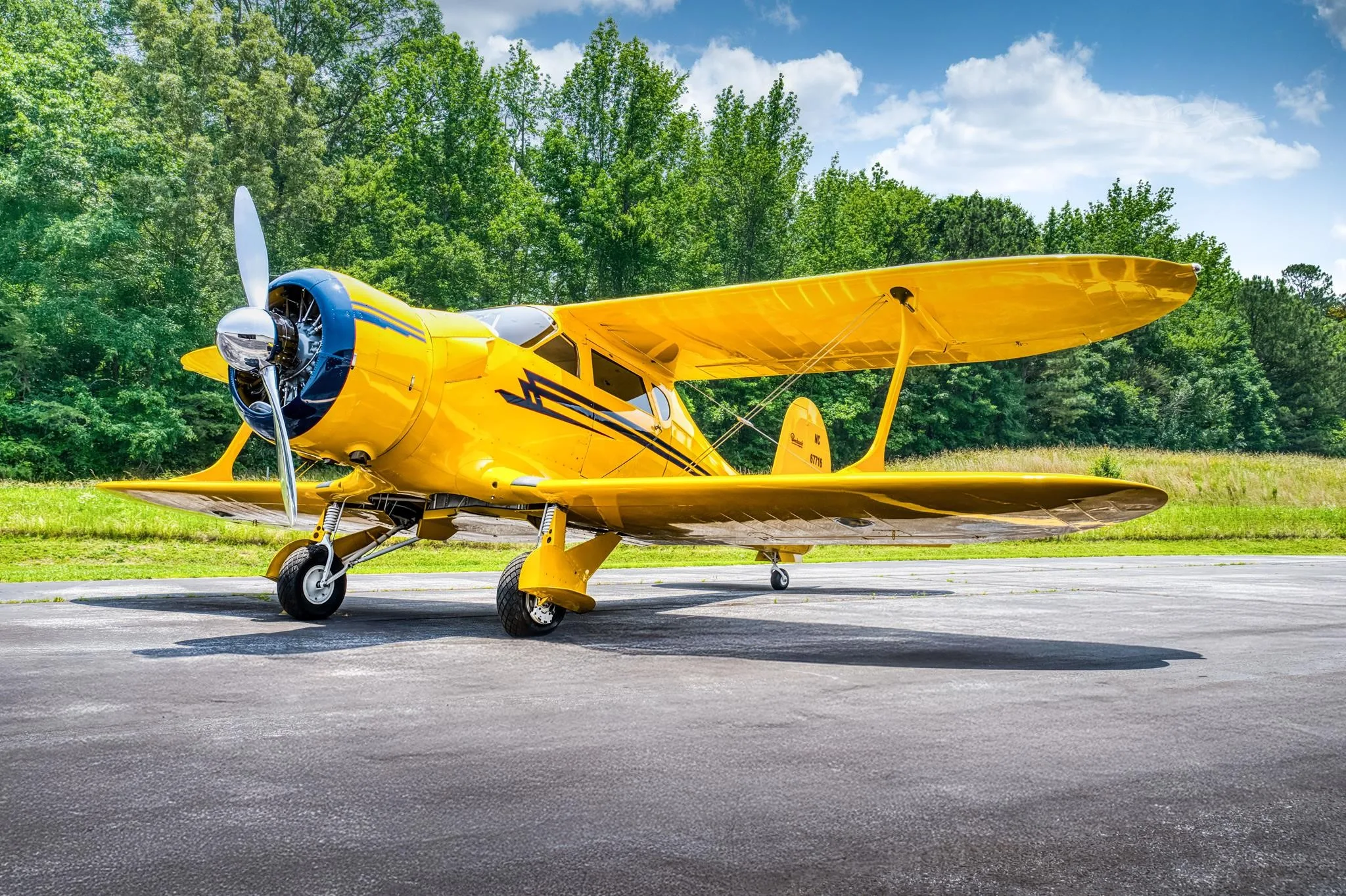
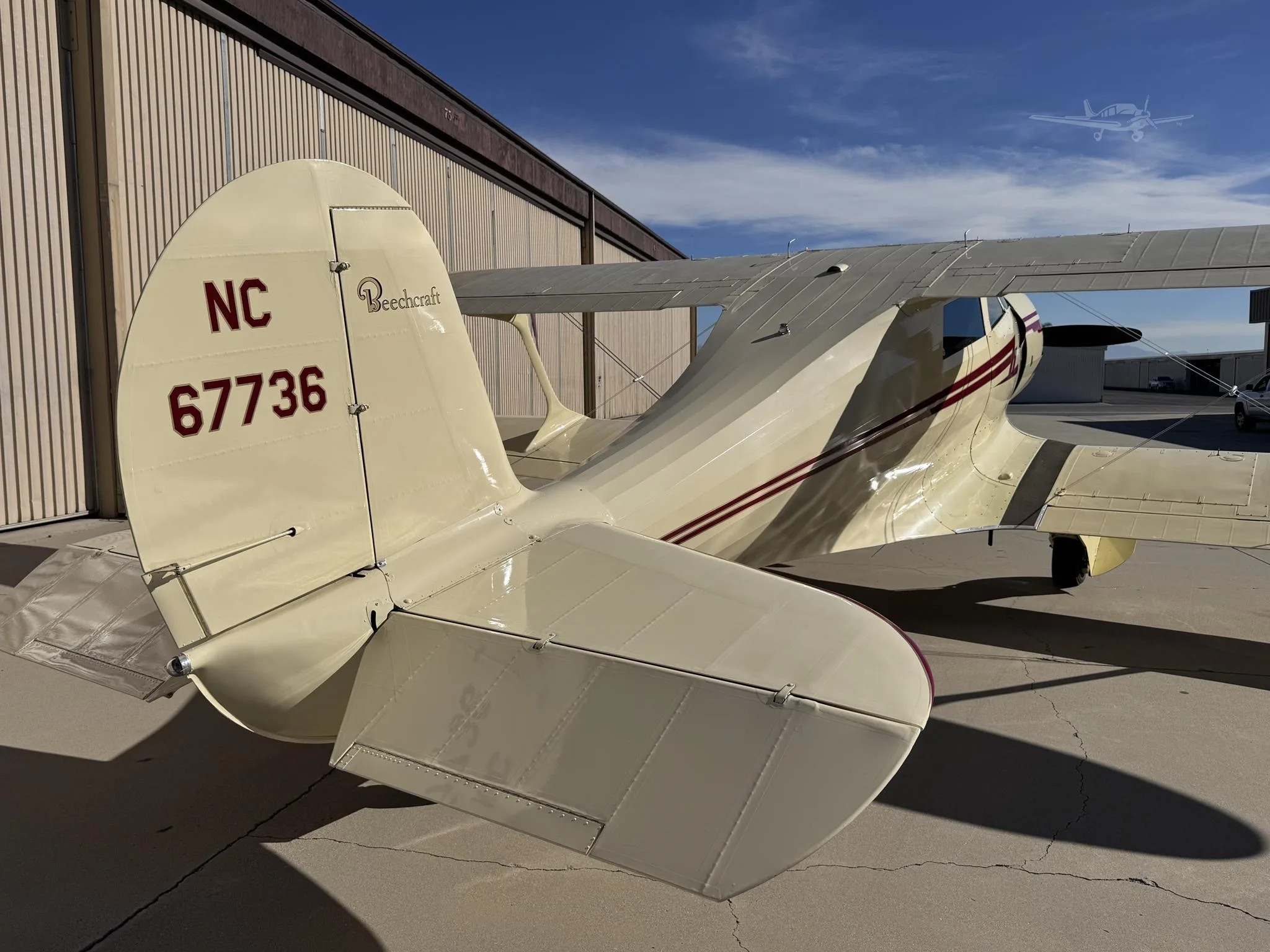
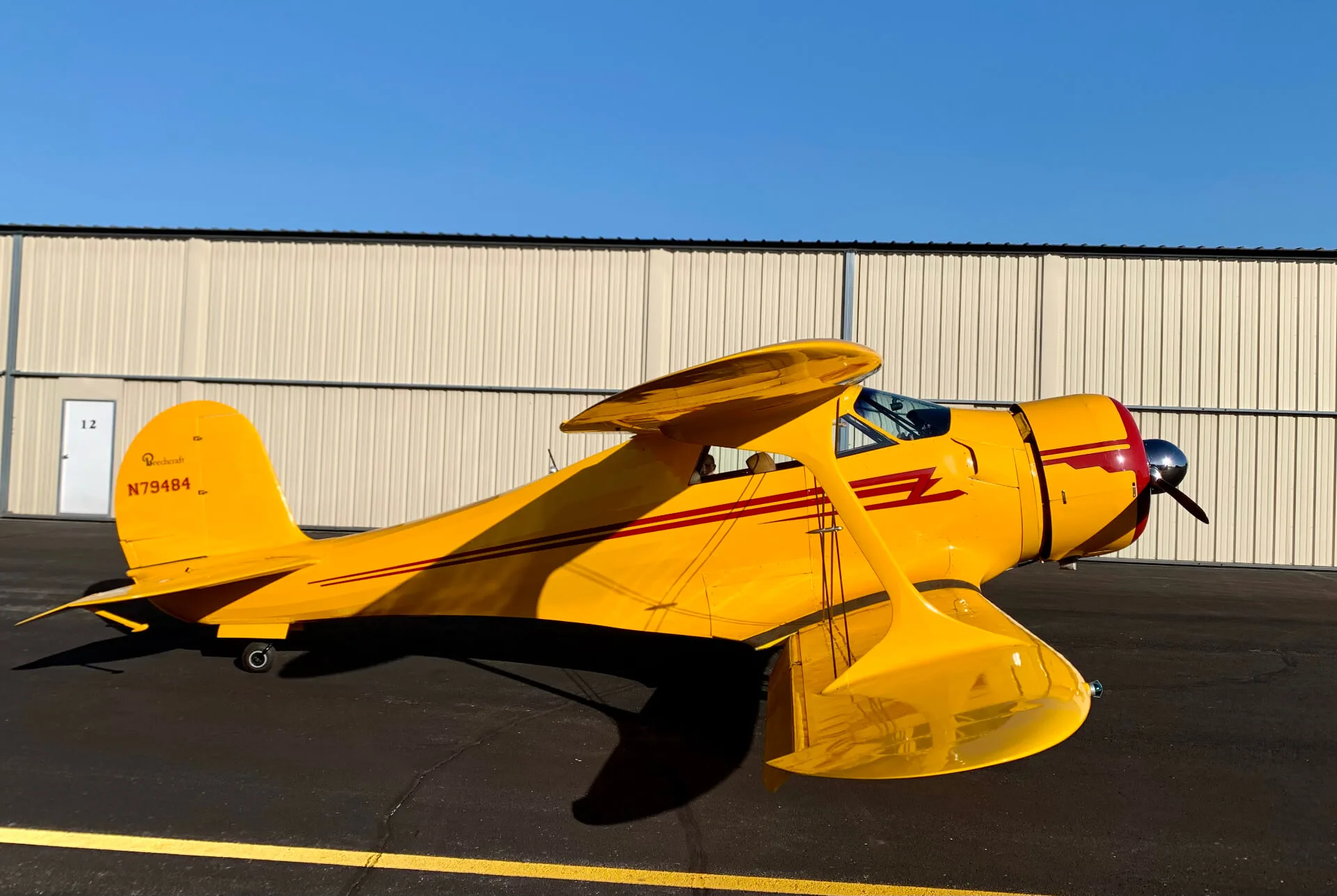
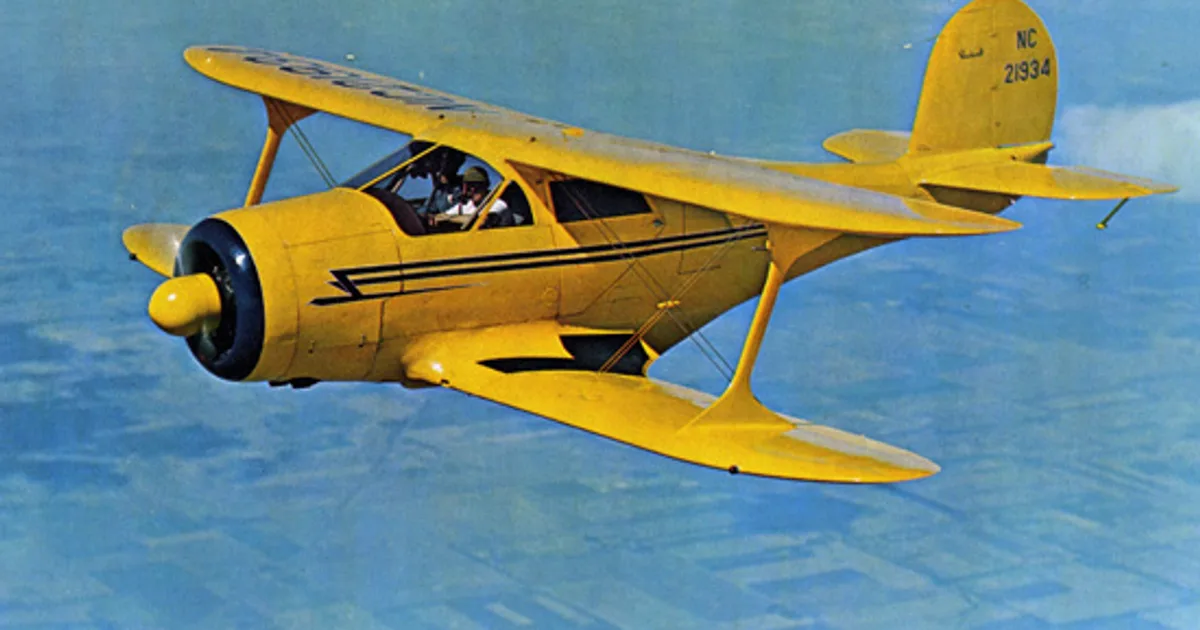
The Beechcraft D17S Staggerwing is a four- to five-seat, retractable-gear cabin biplane with negative stagger, meaning the lower wing sits forward. The D17S was approved on September 1, 1937 under US Type Certificate A-649. It uses a Pratt & Whitney Wasp Jr (or military equivalent) and a Hamilton Standard 2D30 propeller. Maximum certificated takeoff weight is 4250 lb (1928 kg).
- Max takeoff weight is 4250 lb (1928 kg). Power is a Pratt & Whitney Wasp Jr or military equivalent turning a Hamilton Standard 2D30 propeller.
- D-series changes from 1937 added flaps on the lower wing, a rudder trim tab, standard toe brakes and an 18-inch longer fuselage. Optional tanks reach 174 gal.
- Support is thin. Publication D170039 is the only factory technical publication currently available, and no flight manual was required originally.
- Check the control wheel shaft. AD DCA/B17/1 covers Beech half-circle wheels. Replace the shaft if the counterbore is over 1 7/16 inches.
Summary written by AI from the source document. Check the original before relying on it. See which parts of Sprinkle are written by AI.
Reference only, not for flight. Use the current approved manual for your aircraft. See terms, section 5.
Document
Source
Copy found at sprinkle.com. Sprinkle hosts a reference copy with an added summary, specifications and searchable full text.
Document details
- Type ·
- Model Guide
- Year ·
- 2026
- File size ·
- 49 KB
- Copy found at ·
- sprinkle.com
Specifications & performance
Extracted from this document.
Specifications
- Max takeoff weight (lb) ·
- 4,250
- Fuselage stretch (in) ·
- 18
- Optional fuel capacity max (gal) ·
- 174
Performance
- Family max range (nm) ·
- 590
- Family max cruise speed (kt) ·
- 185
- Family max service ceiling (ft) ·
- 20,000
Weight & balance
- Max takeoff weight (lb) ·
- 4,250
How many people does it seat?
The Beechcraft D17S Staggerwing is listed with four to five seats. The wider D17 family registry data shows up to 4 passengers.
What is the maximum takeoff weight?
The Beechcraft D17S Staggerwing has a maximum certificated takeoff weight of 4250 lb (1928 kg) on Type Certificate A-649.
Does it have an official flight manual?
The Beechcraft D17S Staggerwing was certified under Aero Bulletin 7A, which has no flight manual requirement. New Zealand used an undated Operations Manual, so verify what applies to your airframe.
How fast and far does it go?
Family-level registry data for the D17 (D17S, SD17S) shows up to 590 nm range, 185 kt cruise and a 20000 ft ceiling. Those are maximums across variants, not confirmed Beechcraft D17S Staggerwing figures.
What is the Beechcraft D17S Staggerwing Model Guide?
The Beechcraft D17S Staggerwing Model Guide is a model guide for the Beechcraft D17S Staggerwing, dated 2026.
What year was the Beechcraft D17S Staggerwing Model Guide published?
The Beechcraft D17S Staggerwing Model Guide — the Beechcraft D17S Staggerwing model guide on file — is dated 2026.
Common. More common than 79% of the aircraft models we track.
Most owners only have the POH. Here's the essential set for the Beechcraft D17S Staggerwing.
- Pilot's Operating Handbook / AFM
- Checklist
- Maintenance Manual
- Parts Catalog (IPC)
- Systems & Wiring
- Service Bulletins on file
- Type Certificate (TCDS)
Beechcraft D17S Staggerwing for sale now
Free — save the D17 to your watchlist and track it in one place.
More Beechcraft D17S Staggerwingmanuals & documents
- Emergency Procedures for Beechcraft D17S StaggerwingEmergency Procedures
- Type Acceptance Report TAR 4/21B/16 – Beech G17SOther Documents
- Airworthiness Directive ScheduleAirworthiness Directives
- Type Acceptance Report TAR 95/09 — BEECH D17SPilot's Operating Handbook
- Walter H. and Olive Ann Beech CollectionFlight Manual
- The Beech 17Checklist
- Beech 17 Staggerwing Parts CatalogParts Catalog
- Official Publication of The Ninety-Nines, Inc.Other Documents
- Beechcraft D17S Staggerwing Pilot's Operating HandbookPilot's Operating Handbook
- BEECHCRAFT MODEL 17Wiring Diagrams
Related documents
- Airworthiness Directive ScheduleBeechcraft D17S Staggerwing · Airworthiness Directives
- Beech 17 Staggerwing Parts CatalogBeechcraft D17S Staggerwing · Parts Catalog
- Beechcraft D17S Staggerwing Pilot's Operating HandbookBeechcraft D17S Staggerwing · Pilot's Operating Handbook
- Beechcraft Model 18 Model GuideBeechcraft Model 18 · Model Guide
- Type Acceptance Report TAR 95/09 — BEECH D17SBeechcraft D17S Staggerwing · Pilot's Operating Handbook
If you fly the Beechcraft D17S Staggerwing, you may also be researching these.
In this document
Construction and heritage
The Model 17 has a welded steel tube fuselage with wooden formers and stringers. Its wing spars are steel tube trusses with wood ribs, and the fabric covering was known for its finish. Between 1937 and 1944 the U.S. Army bought 105 and the U.S. Navy 320 Staggerwings, so some airframes have military history (UC-43/GB-2 equivalents).
Documents and parts support
The original Aero Bulletin 7A certification basis has no flight manual requirement. The manual used in New Zealand, the Beechcraft Model D17S Operations Manual, is undated and has no list of effective pages. Maintenance data includes poor photocopies of military handbooks bound in one volume. The Staggerwing Club holds the Model 17 drawings and provides copies to proven owners.
Known airworthiness directive
DCA/B17/1 (FAA AD 48-51-01, effective 7 May 1999) applies to D17S aircraft with Beech half-circle control wheels. It does not apply to bow-tie wheels with a three-bolt flange. Inspection means drilling a 3/8-inch hole in the wheel hub and measuring the shaft counterbore. A counterbore over 1 7/16 inches means the shaft must be replaced.
Summary written by AI from the source document. Check the original before relying on it. See which parts of Sprinkle are written by AI.
Safety notes
- Control wheel shaft: AD DCA/B17/1 requires counterbore measurement. Over 1 7/16 inches deep means replace the shaft.
- When drilling the hub for the check, do not let the drill go more than 1 inch into the hub, or the securing pin will be damaged.
- Confirm which flight manual applies to the specific airframe. The Operations Manual seen in New Zealand was undated and its source could not be confirmed.
Summary written by AI from the source document. Check the original before relying on it. See which parts of Sprinkle are written by AI.
Full document text
Beechcraft D17S Staggerwing Model Guide The Beechcraft D17S Staggerwing is a four- to five-seat, retractable-gear cabin biplane with negative stagger, meaning the lower wing sits forward. The D17S was approved on September 1, 1937 under US Type Certificate A-649. It uses a Pratt & Whitney Wasp Jr (or military equivalent) and a Hamilton Standard 2D30 propeller. Maximum certificated takeoff weight is 4250 lb (1928 kg). • Max takeoff weight is 4250 lb (1928 kg). Power is a Pratt & Whitney Wasp Jr or military equivalent turning a Hamilton Standard 2D30 propeller. • D-series changes from 1937 added flaps on the lower wing, a rudder trim tab, standard toe brakes and an 18-inch longer fuselage. Optional tanks reach 174 gal. • Support is thin. Publication D170039 is the only factory technical publication currently available, and no flight manual was required originally. • Check the control wheel shaft. AD DCA/B17/1 covers Beech half-circle wheels. Replace the shaft if the counterbore is over 1 7/16 inches. Construction and heritage The Model 17 has a welded steel tube fuselage with wooden formers and stringers. Its wing spars are steel tube trusses with wood ribs, and the fabric covering was known for its finish. Between 1937 and 1944 the U.S. Army bought 105 and the U.S. Navy 320 Staggerwings, so some airframes have military history (UC-43/GB-2 equivalents). Documents and parts support The original Aero Bulletin 7A certification basis has no flight manual requirement. The manual used in New Zealand, the Beechcraft Model D17S Operations Manual, is undated and has no list of effective pages. Maintenance data includes poor photocopies of military handbooks bound in one volume. The Staggerwing Club holds the Model 17 drawings and provides copies to proven owners. Known airworthiness directive DCA/B17/1 (FAA AD 48-51-01, effective 7 May 1999) applies to D17S aircraft with Beech half-circle control wheels. It does not apply to bow-tie wheels with a three-bolt flange. Inspection means drilling a 3/8-inch hole in the wheel hub and measuring the shaft counterbore. A counterbore over 1 7/16 inches means the shaft must be replaced. Safety notes: • Control wheel shaft: AD DCA/B17/1 requires counterbore measurement. Over 1 7/16 inches deep means replace the shaft. • When drilling the hub for the check, do not let the drill go more than 1 inch into the hub, or the securing pin will be damaged. • Confirm which flight manual applies to the specific airframe. The Operations Manual seen in New Zealand was undated and its source could not be confirmed.