SCHEDULE OF AIRWORTHINESS DIRECTIVES
Beechcraft King Air C90GTx · Airworthiness Directives
Overview
This document is an Airworthiness Directive (AD) issued by the Civil Aviation Safety Authority (CASA) of Australia, specifically addressing safety concerns related to the Beechcraft 90 and 65-90 (King Air) series aeroplanes. The directive focuses on the inspection and maintenance of the wing spar fittings to prevent fatigue-related failures. It outlines the necessary actions to be taken, including specific inspection procedures and compliance timelines for various models within the series. The document is intended for aircraft operators and maintenance personnel to ensure the continued airworthiness of the affected aircraft models.
- All model 65-90, 65-A90, B90, C90, and E90 aircraft must inspect wing spar fittings before exceeding 3000 hours of service.
- Inspections for models 65-90, 65-A90, B90, C90, and E90 should occur at intervals not exceeding 200 hours thereafter.
- Model F90 aircraft have different inspection intervals, with some inspections required every 5 years.
- Fluorescent liquid penetrant and eddy current methods are acceptable for inspecting fittings, with specific attention to critical areas.
- If a fatigue crack is found, the affected component must be replaced before further flight.
Document
Source
Originally published by services.casa.gov.au. Sprinkle hosts a reference copy with an added summary, specifications and searchable full text.
Document details
- Type
- Airworthiness Directives
- Year
- 2000
- Pages
- 3
- File size
- 18 KB
- Publisher
- services.casa.gov.au
Common. Rarer than 0% of the aircraft models we track.
Most owners only have the POH. Here's the essential set for the Beechcraft King Air C90GTx.
- Pilot's Operating Handbook / AFM
- Checklist
- Maintenance Manual
- Parts Catalog (IPC)
- Systems & Wiring
- Service Bulletins
- Type Certificate (TCDS)
Beechcraft King Air C90GTx for sale now
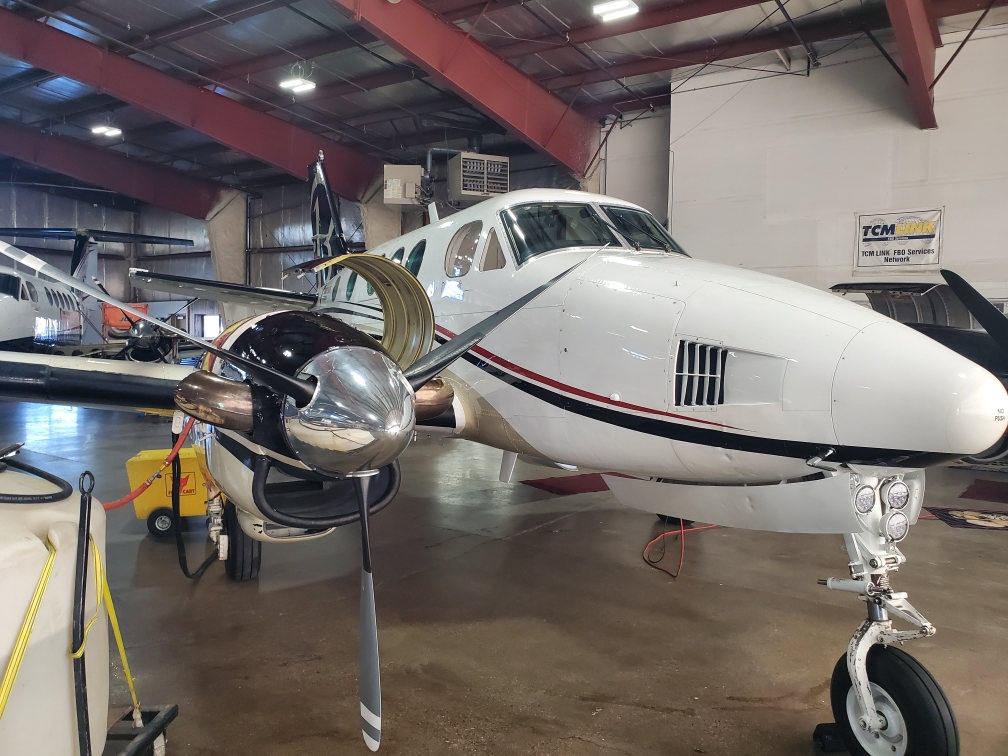


Free — save the C90 to your watchlist and track it in one place.
More Beechcraft King Air C90GTxmanuals & documents
See all 19 →- AAIB Bulletin: 11/2024Other Documents
- AAIB Bulletin: 11/2024Other Documents
- BEECHCRAFT KING AIR 90 SERIES AUXILIARY FUEL TANKS ICA MANUALParts Catalog
- KING AIR C90GTxSpecifications
- IM199-90 INSTALLATION MANUAL WITH IPL FOR CONVERSION KIT PART NO. 199-90Flight Manual
- BEECHCRAFT KING AIR 90 SERIES AUXILIARY FUEL TANKS ICA MANUALParts Catalog
- KING AIR C90GTxOther Documents
- 2008 King Air C90GTi Specifications and SummarySpecifications
- G1000/GFC 700 Post Installation Checkout Procedure – Hawker / Beechcraft King Air C90Flight Manual
- GWX 68 Weather Radar Installed in Beech Queen Air/King Air Series STC Master Data ListChecklist
- GWX 68 Installation DataType Certificate
- AIRWORTHINESS DIRECTIVE AD/BEECH 90/22 Amdt 3Airworthiness Directives
If you fly the Beechcraft King Air C90GTx, you may also be researching these.

In this document
Applicability
The Airworthiness Directive applies to all Beechcraft models 65-90, 65-A90, B90, C90, and E90, with specific exclusions for certain serial numbers. It also includes model F90 aircraft with its own set of requirements.
Requirement
The directive mandates the removal of wing main spar lower attachment bolts and the inspection of fittings for fatigue. Inspections must be performed using either fluorescent liquid penetrant or eddy current methods, with specific attention to critical areas such as bolt counterbores and fillet radii.
Compliance
For models 65-90, 65-A90, B90, C90, and E90, inspections must be conducted prior to exceeding 3000 hours of component time in service and at intervals not exceeding 200 hours thereafter. For model F90, different intervals apply, including a maximum of 5 calendar years for certain inspections.
Background
The directive is based on historical fatigue issues with the 'bathtub' fittings and consolidates previous amendments to ensure safety. It reflects updated inspection intervals and procedures based on the latest findings.
Safety notes
- Care must be taken to avoid using mechanical or abrasive means of paint removal to prevent damage.
- Inspection of bolts and nuts is detailed in AD/BEECH 90/69, which should be referenced for additional guidance.
Full document text
COMMONWEALTH OF AUSTRALIA (Civil Aviation Regulations 1998), PART 39 - 105 CIVIL AVIATION SAFETY AUTHORITY SCHEDULE OF AIRWORTHINESS DIRECTIVES Beechcraft 90 and 65-90 (King Air) Series Aeroplanes AIRWORTHINESS DIRECTIVE For the reasons set out in the background section, the CASA delegate whose signature appears below revokes Airworthiness Directive (AD) AD/BEECH 90/48 Amdt 1 and issues the following AD under subregulation 39.1 (1) of CAR 1998. The AD requires that the action set out in the requirement section (being action that the delegate considers necessary to correct the unsafe condition) be taken in relation to the aircraft or aeronautical product mentioned in the applicability section: (a) in the circumstances mentioned in the requirement section; and (b) in accordance with the instructions set out in the requirement section; and (c) at the time mentioned in the compliance section. AD/BEECH 90/48 Amdt 2 Wing Spar Fitting Fatigue - Inspection 11/2000 Applicability: All model 65-90, 65-A90, B90, C90, and E90 aircraft, except serial nos. LJ-1085, and LJ 1088 and subsequent. All model F90 aircraft except serial nos. LA-226 and subsequent. Requirement: 1. Remove the wing main spar lower attachment bolts in accordance with the manufacturer’s instructions. Strip all paint from the “bathtub” portion of the four outer wing to centre section main spar lower attachment fittings. 2. For all except F90: Perform a fluorescent liquid penetrant inspection of all four fittings in accordance with the Beechcraft Structural Inspection and Repair Manual (SIRM) P/N 98-39006B3 as revised May 28 1999, Chapter 57-13-01 Chart 201 Index Nos. 1 and 10, or 57-13-02 Chart 201 Index Nos. 1 and 5, as applicable to individual aeroplanes. When inspecting the “bathtub” portion of the fittings, pay particular attention to the bolt counterbore and fillet radius. As an alternative, this inspection may be performed using an eddy current (pencil probe) procedure as detailed in Chapter 20-00-00 of the SIRM in which case paint strip is not required. 3. For model F90 aircraft only: Perform a fluorescent liquid penetrant inspection of all four fittings in accordance with the Beechcraft Structural Inspection and Repair Manual (SIRM) P/N 98-39006B3 as revised May 28 1999, Chapter 57-14-01 Chart 201 Index No. 1. Pay particular attention to the bolt counterbore and fillet radius in the “bathtub” portion of the centre wing fitting, and the radius at the end of the barrel nut recess in the outer wing fitting. As an alternative, this inspection may be performed using the eddy current procedure specified in 4 below. 4. For model F90 aircraft only: Perform an eddy current inspection of all four fittings in accordance with the Beechcraft Structural Inspection and Repair Manual (SIRM) P/N 98-39006B3 as revised May 28 1999, Chapter 57-14-01 Chart 201 Index No. 2. Paint strip is not required for eddy current inspection. In accordance with the SIRM, should a fatigue crack be found in the outer wing fitting, the complete outer wing main spar lower cap must be replaced before further flight. A crack in a centre section fitting requires replacement of the affected component only. COMMONWEALTH OF AUSTRALIA (Civil Aviation Regulations 1998), PART 39 - 105 CIVIL AVIATION SAFETY AUTHORITY SCHEDULE OF AIRWORTHINESS DIRECTIVES Note 1: The SIRM Chapter 20-00-00 “Warning” regarding not removing paint for penetrant inspections should be disregarded. To prevent corrosion, some form of protective treatment, such as a standard zinc chromate primer, should be applied between inspections, to surfaces from which the paint has been removed. Note 2: Solvent removers should be used wherever possible. If the use of other paint strippers is unavoidable, the complete removal of residue must be ensured before inspection. In either case, the use of mechanical or abrasive means of paint removal must be avoided. Note 3: It is recommended that the penetrant be applied to the counterbore and recess radii using a fine artist’s paint brush. This will simplify penetrant removal and minimise false indications. Care should be taken to ensure full coverage of the fillet radius and a similar distance (at least 5 mm) into the cylindrical portion of the counterbore, in particular on the side of the hole adjacent to the “bottom of the bathtub”. Note 4: No attempt should be made to polish out suspect indications, as this has led in the past to the obscuring of large cracks. Where suspect indications need to be confirmed, seek specialist NDT advice. Note 5: Inspection of the bolts and nuts is detailed in the current issue of AD/BEECH 90/69. Compliance: For Models 65-90, 65-A90, B90, and C90 and E90 aircraft, Requirements 1 and 2: Prior to exceeding 3000 hours component time in service, and thereafter at intervals not exceeding 200 hours component time in service. Where the eddy current procedure is used, the recurring inspection interval may be doubled. For Model F90 aircraft only: Requirement 3: At intervals not exceeding 5 calendar years. Requirement 4: Prior to exceeding 20 000 hours component time in service, and thereafter at intervals not exceeding 1200 hours component time in service. Note 6: Inspections carried out in accordance with previous issues of this or related ADs, satisfy the initial inspection requirements of this amendment. This Amendment becomes effective on 2 November 2000. Background: The original issue of this Airworthiness Directive became effective on 30 June 1977, and was based on the known fatigue history of the “bathtub” fittings. COMMONWEALTH OF AUSTRALIA (Civil Aviation Regulations 1998), PART 39 - 105 CIVIL AVIATION SAFETY AUTHORITY SCHEDULE OF AIRWORTHINESS DIRECTIVES Amdt 1 was issued by Telex on 24 May 1979, and reduced the inspection threshold and interval for most models following an in-flight failure of an outer wing fitting on a King Air 65-90 aeroplane in Canada, and issue of Canadian emergency AD CF 79-06.
Show full textShow less
This Amendment results from a review of the AD which confirmed the need for the requirement and the appropriateness of the inspection intervals. It consolidates AD/BEECH 90/47 and AD/BEECH 90/48 Amdt 1 into a single AD. The applicability has been curtailed to exclude later production aircraft which have clevis fittings in lieu of the “bathtub” type fittings. The requirements have been aligned with the Beechcraft SIRM to the extent possible; and the use of eddy current inspection of the “bathtub” is allowed as an optional alternative to fluorescent dye penetrant, with a corresponding increase in the repetitive inspection interval. Since the E90 shares the same fittings as the earlier models, the same inspection intervals also apply; this was overlooked when Amendment 1 was issued. The model F90 has also been added, it uses different fittings for which the SIRM inspection procedures and intervals have been adopted. David Alan Villiers Delegate of the Civil Aviation Safety Authority 22 September 2000 The above AD is notified in the Commonwealth of Australia Gazette on 4 October 2000.
What's in the Beechcraft King Air C90GTx TCDS
A Type Certificate Data Sheet (TCDS) is the FAA's record of what an aircraft type was approved as. It is the source of truth for weights, seating, fuel and the rules the design was certified against. Expand any line to see what it means.
1,480 Beechcraft King Air C90GTx parts for sale
See all →



Parts listed for sale by vetted eBay sellers — confirmed on eBay at checkout.