
Tornado Alley Turbo, Inc. TAT SI15-02
Service Bulletins for the Cessna A185E
PDF, 2 pages, 90 KB, from Sprinkle’s own files.
What it covers
This Service Instruction (TAT SI15-02) issued by Tornado Alley Turbo, Inc. provides maintenance guidance specifically for the Cessna A185E/F and other aircraft that have been turbonormalized. The document addresses issues related to low manifold pressure that may occur after the installation of new or overhauled turbochargers. It emphasizes the importance of regular operation of the aircraft to prevent rust deposits from forming on the turbocharger components, which can lead to performance issues. The instructions are aimed at aircraft owners and maintenance personnel to help mitigate these potential problems and ensure the proper functioning of the turbocharging system.
Key points
- The turbocharger may stick due to rust deposits, especially after installation or overhaul.
- Pilots should expect full manifold pressure of 29.6 inches or more during takeoff.
- Regular operation of the aircraft is recommended to prevent rust accumulation on turbocharger components.
- Specific troubleshooting steps are provided for addressing turbocharger issues.
- Compliance with this Service Instruction is not covered under warranty.
Main sections
Compliance
Compliance with these Service Instructions is recommended by Tornado Alley Turbo to assist owners in managing maintenance of their aircraft. The instructions are effective from the date of issue.
Purpose
The purpose of this Service Instruction is to provide maintenance guidance to mitigate issues with low manifold pressure on new or recently overhauled turbochargers. It highlights the risks of rust deposits forming due to water vapor accumulation.
Troubleshooting
If the engine does not achieve its full manifold pressure of 29.6 inches or more during takeoff, it may indicate that the turbocharger is sticking due to rust deposits. Pilots should be aware of potential oil leakage past the turbocharger seal.
Accomplishment Instructions
If the turbocharger shows signs of dragging or freezing, specific steps are provided to troubleshoot and potentially free the turbocharger shaft. This includes accessing the turbocharger, applying penetrating oil, and verifying proper output after maintenance.
Warranty Information
Compliance with this Service Instruction is not covered under warranty, indicating that owners are responsible for any maintenance performed.
Safety notes
- Ensure that the turbocharger is functioning properly before takeoff to avoid performance issues.
The document’s text
Show the text read from the PDF
Tornado Alley Turbo, Inc. TAT SI15-02 300 Airport Road August 16, 2015 Ada, OK 74820 Page 1 of 2 Phone: (580)332-3510 Service Instruction TAT SI15-02 Issued: 08/16/2015 Revised: Model: noted below Models: Beechcraft 33/35/36 series turbonormalized per STC’s SA5223NM and SE5222NM Cirrus Design SR22 turbonormalized per STC’s SA10588SC and SE10589SC Cessna A185E/F turbonormalized per STC’s SA00214DE and SE00215DE Cessna 177RG turbonormalized per STC’s SA4081NM and SE4082NM COMPLIANCE RECOMMENDED: Tornado Alley Turbo considers compliance with these Service Instructions to be of assistance to owners in managing maintenance of their aircraft. These instructions are effective on the date of issue. EFFECTIVITY All aircraft listed above with Tornado Alley Turbo, Inc. turbonormalizing systems with new or low time turbochargers. PURPOSE The purpose of this Service Instruction is to provide maintenance guidance and assistance to owners to mitigate issues with low manifold pressure on new or recently overhauled turbocharger(s). DESCRIPTION After installation of a new or overhauled turbocharger and for a short time after installation of a new or overhauled turbocharger rust deposits may build up on the turbine shaft and turbine shaft piston ring seal as a result of water vapor accumulation. This condition occurs when the turbocharger is new or newly overhauled and heat and normal operation have not yet formed a protective layer on the internal parts that protects them against oxidation. During periods of prolonged inactivity (typically several days to weeks, and more frequently in humid weather) these deposits from oxidation may cause a restriction so that on initial engine start up, the turbocharger does not spin up. This condition will normally be detected by the pilot during initial engine full power application on the runway. In that event, the pilot should reduce power and return the aircraft to the ramp for brief maintenance, as described below. It is recommended that owners operate their aircraft frequently without undue prolonged idle periods of time for the first 100 hours after installation of new or overhauled turbocharger(s) to mitigate the possibility of this issue. FREQUENCY This Service Instruction applies to turbonormalized aircraft with low time turbochargers. The procedures listed may need to be performed more than once, depending on engine run time, area humidity conditions, and engine operation procedures. -- 1 of 2 -- Tornado Alley Turbo, Inc. TAT SI15-02 300 Airport Road August 16, 2015 Ada, OK 74820 Page 2 of 2 Phone: (580)332-3510 WARRANTY INFORMATION Compliance with this Service Instruction is not covered under warranty. MANPOWER REQUIREMENTS For removal and replacement of induction tube: One mechanic, ½ hour For removal and replacement of a tailpipe: One mechanic, 1 hour WEIGHT AND BALANCE Weight change: None. MATERIAL INFORMATION It is recommended that the nut on the T-bolt be replaced when reinstalling the tailpipe V-band clamp: 1 each per V-band clamp: SPS 72412-428 high temp nut .2500 - 28 Penetrating Oil (if needed): Kano Aerokroil or Mouse Milk Penetrating Oil or WD-40 or Crown Penetrating and Cleaning Oil or Sprayon No. 203 Penetrating Oil TROUBLESHOOTING When advancing throttle to full power prior to takeoff, if the engine does not achieve its full 29.6 inches or more of manifold pressure, the turbocharger may be sticking due to rust deposits in the area of turbine shaft piston ring seal. This may be accompanied by oil leakage past the turbocharger seal. However, the oil leakage may be due to other factors such as inadequate scavenging caused by leaks in the scavenging line or a malfunctioning check valve at the turbocharger shaft housing inlet or outlet. ACCOMPLISHMENT INSTRUCTIONS If the low time turbocharger shows signs of dragging or freezing perform the following steps: 1. Gain access to the turbocharger. 2. Remove ducting to the inlet of the compressor side of the turbocharger. 3. Try turning the turbocharger shaft with your fingers or a wooden dowel to loosen the stuck shaft. The turbine should turn freely. If that frees the turbocharger shaft, reinstall the inlet ducting and go to step 9. If that doesn’t free the turbocharger shaft, then 4. Remove tailpipe. 5. Apply penetrating oil liberally to the area behind the wheel around the turbine shaft seal. Allow penetrating oil a few minutes to loosen the turbine shaft. 6. Attempt to turn the shaft. A light rap on the shaft end with a soft mallet may help free the shaft. 7. Repeat steps 5 and 6 as required. 8. Reinstall tailpipe and compressor inlet duct. 9. Start engine and run at full power to verify turbocharger is providing proper output. ADDITIONAL INFORMATION See Continental Motors Service Bulletin M71-21 for Continental Motors’ instructions regarding this subject. -- 2 of 2 --
Read from the PDF by machine, so tables and diagrams come out rough. The PDF is the document.
More Cessna A185E documents
All 7 →- Schedule Of Airworthiness Directives
This document is a Service Bulletin issued by the Civil Aviation Safety Authority of Australia, specifically addressing airworthiness directives for the Cessna 185 series aircraft. It includes models 185, 185A, 185B, 185C, 185D, 185E, A185E, and A185F. The directive focuses on the inspection and potential installation of an angle stiffener on the lower spar cap of the wings for aircraft that have undergone specific modifications. The compliance timeline is set for within 50 hours of service after the directive's effective date. The bulletin aims to prevent wing failure during flight, which could lead to loss of control of the aircraft.
- CESSNA A185E Model Guide
CESSNA A185E is a single-engine piston aircraft powered by a Continental IO-520-D. The documents show a Hartzell three-blade constant-speed propeller STC, Cleveland wheel and brake kits, a replacement trim wheel and a turbonormalizing option. The 185 family is listed with up to 5 passengers, up to 145 kt cruise and up to 700 nm range. These are family maxima, not A185E figures.
- Cessna A185E Maintenance Manual
This document provides installation instructions for the McFarlane aluminum elevator trim wheel kit designed for Cessna 180, early 182, and 185 aircraft. It addresses common issues with the original equipment manufacturer (OEM) trim wheels, such as the risk of shearing pins and cracking due to material fatigue. The new design aims to enhance reliability and safety by using rivets for assembly and aluminum for durability. The document includes a parts list, installation steps, and aircraft eligibility information, ensuring that users can correctly install the trim wheel kit on their aircraft models. It is intended for aircraft owners and maintenance personnel who are familiar with aircraft systems and maintenance procedures.
- Instructions For Continued Airworthiness For Hartzell (P)HC-C3YF-1RF/F8429 Propeller On Cessna A185(E, F) Aircraft
This document provides Instructions for Continued Airworthiness (ICA) for the Hartzell (P)HC-C3YF-1RF/F8429 propeller installed on Cessna A185E and A185F aircraft. It is intended for maintenance personnel and pilots who are responsible for the upkeep and operation of these aircraft. The ICA outlines the necessary inspections, maintenance procedures, and time intervals for the propeller, ensuring compliance with FAA regulations. It supplements the existing aircraft service manuals by providing specific information related to the propeller installation and maintenance requirements. The document emphasizes the importance of following the guidelines in Hartzell Manual 115N for proper propeller care and maintenance.
Flight Manual · 2018PDF · 3 pages · 214 KB of Instructions For Continued Airworthiness For Hartzell (P)HC-C3YF-1RF/F8429 Propeller On Cessna A185(E, F) Aircraft, opens in a new tabRequest removal of Instructions For Continued Airworthiness For Hartzell (P)HC-C3YF-1RF/F8429 Propeller On Cessna A185(E, F) Aircraft - Cessna-Mustang-datasheet.pdf
This document provides a comprehensive overview of the Cessna Citation Mustang, specifically Units 510-0431 and On. It includes detailed specifications regarding the aircraft's design, performance, and equipment. The manual serves as a reference for evaluating the Mustang's capabilities and features, including its powerplants, structural design, and systems. It is intended for potential buyers, operators, and maintenance personnel, ensuring they have the necessary information to understand the aircraft's operation and maintenance requirements. The document also outlines certification details, dimensions, weights, and performance metrics, making it a valuable resource for anyone involved with the Citation Mustang.
- IM199-62 Installation Manual For Conversion Kit 199-62
This document is an installation manual for the Cleveland Conversion Kit 199-62, specifically designed for Cessna aircraft models 180, 185, and 206. It provides detailed instructions for qualified maintenance personnel on how to install Cleveland Wheels and Brakes on these aircraft. The manual outlines the purpose of the kit, safety precautions, and the necessary equipment included in the kit. It also includes sections on weight and balance computations, product registration, and illustrated parts lists for the wheel and brake assemblies. This manual is essential for ensuring proper installation and compliance with FAA regulations regarding aircraft braking systems.
Cessna 185 for sale now
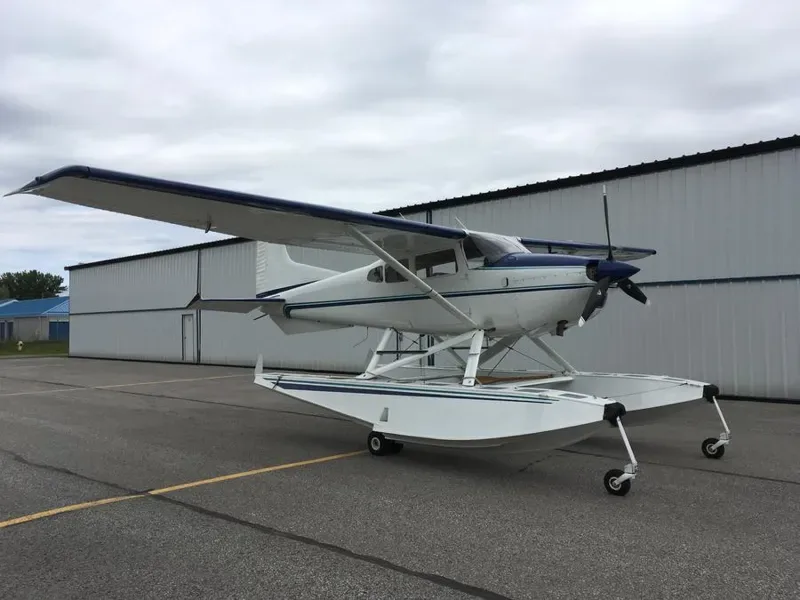
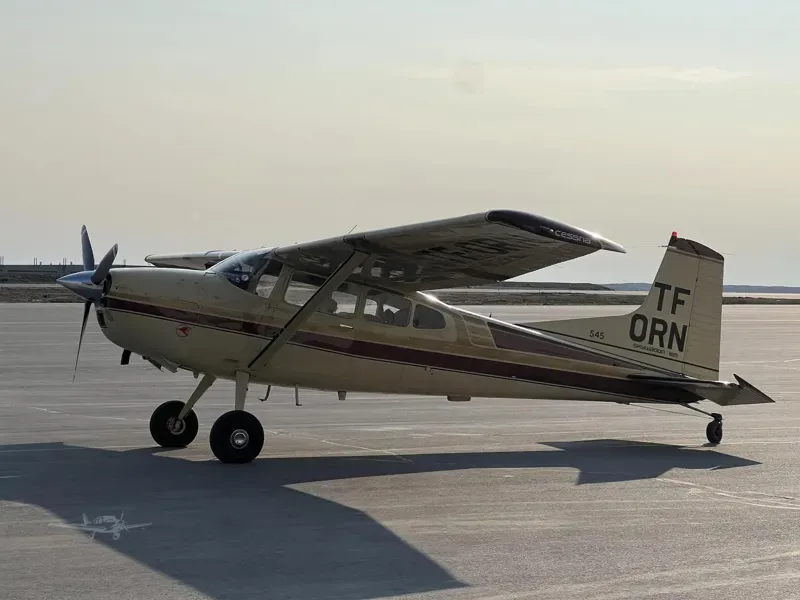
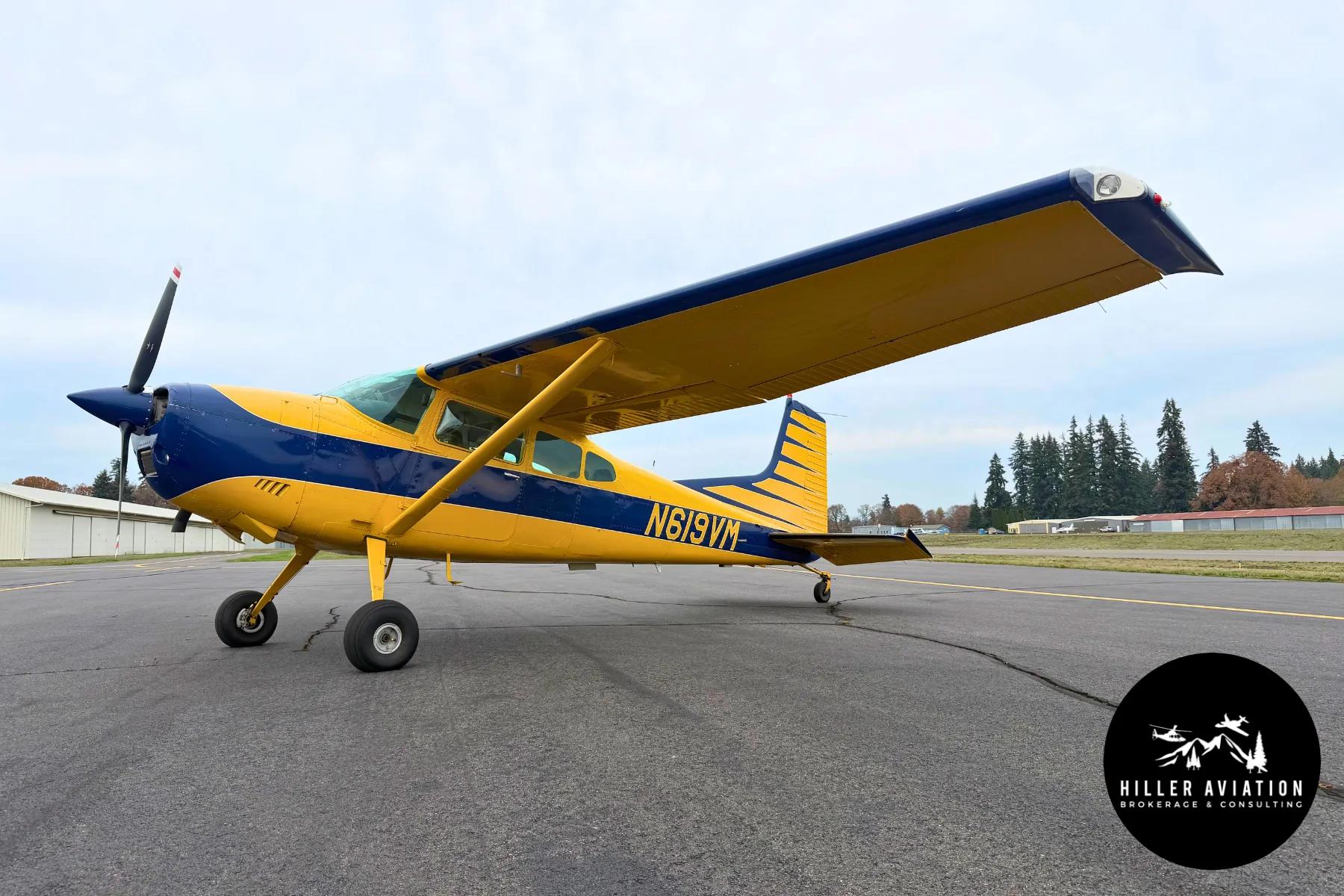
View all 44 for sale →Aircraft that this service bulletins covers, listed on the sites Sprinkle reads. Asking prices, not sales. Cessna 185 asking prices by year built.
Also useful for the Cessna A185E
From Sprinkle’s library of aircraft documents. PDFs open from Sprinkle’s own files. Read Jul 1, 2026.
Want this document taken down? Request removal