
ATLAS Active Winglets for Cessna Citation CJ, CJ1 & CJ1+
Performance Data for the Cessna Citation CJ1+
PDF, 13 pages, 1.0 MB, from Sprinkle’s own files.
What it covers
This document provides performance data and specifications for the ATLAS Active Winglets designed for the Cessna Citation CJ, CJ1, and CJ1+ aircraft models. It highlights the benefits of the active winglet technology, including increased range, improved climb performance, and enhanced fuel efficiency. The document is intended for pilots, aircraft owners, and aviation enthusiasts interested in understanding how the ATLAS Active Winglets can enhance the operational capabilities of their Cessna Citation jets. Key features include weight increases for maximum zero fuel weight and useful load, as well as detailed comparisons of payload-range capabilities across the CJ series.
Key points
- Total system net weight increase: 79 lb
- Max zero fuel weight increase: 400 lb
- Improved climb performance to FL410 in under 30 minutes
- Fuel burn during climb to FL410: under 500 lb
- Enhanced range and fuel efficiency with ATLAS Active Winglets
Main sections
ATLAS Active Winglet Specifications
The ATLAS Active Winglet system adds a total net weight of 79 pounds to the aircraft. It also increases the maximum zero fuel weight by 400 pounds, allowing for a higher useful load due to fuel savings.
Performance Benefits
The installation of ATLAS Active Winglets results in increased range, reduced time to climb to FL410, and improved single-engine climb performance. The system also provides structural envelope protection and greater glide distance.
Payload-Range Comparisons
The document includes detailed payload-range comparisons for the CJ, CJ1, and CJ1+ models, based on real-world test flight data. These comparisons illustrate the performance enhancements provided by the ATLAS Active Winglets.
The Active Winglet Solution
The ATLAS Active Winglet technology utilizes load sensors and a camber surface that can respond quickly to changing wing loads, optimizing aerodynamic efficiency without requiring additional wing structure.
Installation Centers
A list of authorized installation centers for the ATLAS Active Winglets is provided, including locations in the USA, UK, Brazil, and Germany, along with contact information for each center.
Safety notes
- The system operates automatically and requires no pilot action during normal operation.
- In the event of a failure, the only required pilot action is to slow to the indicated airspeed shown on the cockpit annunciator.
The document’s text
Show the text read from the PDF
Unlock the Beauty and Performance of Your Jet ATLAS® Active Winglets for Cessna Citation CJ, CJ1 & CJ1+ -- 1 of 13 -- ATLAS Active Winglets for Cessna Citation CJ, CJ1 & CJ1+ Increased range Reduced time to climb to FL410 Fuel savings & reduced CO2 emissions WAT (Hot/High) Table Increase of 500lbs 400lbs higher MZFW Higher useful load due to fuel savings Ride smoothing & stability Greatly improved single engine climb performance Structural envelope protection Greater glide distance Upgraded LED navigation & anti-collision lighting Ramp appeal & aircraft value retention -- 2 of 13 -- ATLAS Active Winglet Specifications Total System Net Weight Increase 79 lb. Max Zero Fuel Weight Increase 400 lb. -- 3 of 13 -- Payload-Range Comparisons - CJ Note: Specifications are based on analysis and real-world test flight data. Performance may vary by individual aircraft. -- 4 of 13 -- Payload-Range Comparisons - CJ1 Note: Specifications are based on analysis and real-world test flight data. Performance may vary by individual aircraft. -- 5 of 13 -- Payload-Range Comparisons - CJ1+ Note: Specifications are based on analysis and real-world test flight data. Performance may vary by individual aircraft. -- 6 of 13 -- The Passive Winglet Problem Winglets have been around for 100 years and work by increasing the wing’s aspect ratio, which increases aerodynamic efficiency (think gliders). All winglets to date have been passive winglets, and cannot adapt to changing wing loads. Passive winglets increase wing bending, especially during large gust events or high-G maneuvering, and as a result, require additional wing structure to protect the wing, but this adds weight. The Active Winglet Solution But what if a winglet could intelligently ‘turn itself off’ during load events and be optimized for peak efficiency the rest of the time? ATLAS does exactly that. Using load sensors, and a camber surface that can respond in fractions of a second, the Active Winglet can automatically control wing loading during load events. ATLAS is fully automatic, requires no pilot action, and functions autonomously from other aircraft systems. The result is peak efficiency without the need to add additional wing structure – and an Active Winglet that allows ‘bolt on’ installation. -- 7 of 13 -- ATLAS Active Winglets consist of three main parts: • The wing extension • The TACS (the load alleviation element) • The winglet itself The patented combination of all three parts makes Active Winglets two to three times more efficient than passive winglets. Within the aircraft itself are five control and indication elements: • The ATLAS Control Unit (ACU) which senses loads • The two wing mounted TACS Control Units (TCUs) which are high speed actuators • The ATLAS cockpit annunciator • The ATLAS cockpit annunciator controller As the ATLAS Control Unit (ACU) in the aircraft senses increased loading, it commands the TACS Control Unit (TCU) to position the TACS to aerodynamically ‘turn off’ the Active Winglet. System operation is completely automatic. Failure modes are benign and the only required pilot action in the event of a failure is to slow to the indicated airspeed shown on the cockpit annunciator. ATLAS has been extensively flight tested with ice shapes (normal and asymmetrical), TACS positioned in all modes, and even with only one Active Winglet on the aircraft. At all times the aircraft control surfaces have authority for normal handling. Updated LED wingtip and tail strobes are included as part of the ATLAS installation kit. ACU TCU Cockpit Annunciator & Controller Wingtip Light Tail Strobe How ATLAS Works -- 8 of 13 -- CJ3. Paris, TX to Paris, France. One Stop. Carrying two pilots, one passenger and loaded to max takeoff weight, the jet departed Paris, Texas flying 2,104 nautical miles to St. John’s, Newfoundland (CYYT). The flight had a 4 knot tailwind and flew at 376 knots true airspeed for 5 hours and 32 minutes. The total fuel burn for the first leg equaled 3960 pounds (107 gallons per hour block fuel burn). The St. John’s, to Paris Le Bourget flight, a distance of 2244 nautical miles, took 5 hours and 45 minutes flying at 373 knots true airspeed with a 17 knot tailwind. The total fuel burn for the transatlantic leg was 4210lb (108 gallons per hour block fuel burn). Fuel burn at maximum Mach number at Flight Level 450 has typically dropped from around 800lb/hr. to 700lb/hr. Combined with a faster time to climb and much quicker acceleration when leveling at cruise altitude, the fuel savings significantly extend the range of the CJ3. -- 9 of 13 -- Testimonials "As a professional pilot, I must say that TAG's winglet- equipped CJ was impressive from takeoff at MTOW, to touchdown. The noticeably improved climb performance experienced through the flight levels is a testament to the success and effectiveness of Tamarack’s winglet technology. Fuel consumption to top of climb (TOC) at FL410 was only 560 lb. (82 gallons) and just under 35 minutes, which is a big advantage over the winglet-less platform. "A recent flight from Carlsbad to Sandpoint was the first time I flew the ATLAS™ - equipped CJ on any kind of a normal or typical point-to-point flight. The airplane flies superbly with the ATLAS™. I frequently encounter airplanes and products that don't quite live up to their manufacturer's claims, but the ATLAS™ is everything that Tamarack claims, and more. Unlike the factory CJ, the ATLAS™ CJ smoothly and swiftly climbs to FL410. Climb rate in the mid-flight levels, especially in turning flight, was definitely improved. Acceleration at level off (FL410) to cruise speeds and a favorable angle of attack occurred much quicker than normally experienced. Tamarack’s new technology has the potential to transform how we think about retrofit winglets on light jet aircraft and evaluate many additional benefits that active winglets provide, including improved aircraft performance, operating efficiency, and ultimately cost savings." ---Jason Herman - Professional Pilot, CJ3/CJ4, ATP, CFI/CFII/MEI, ADX The stock airplane struggles above 370 at a weight with fuel for a maximum-range trip. The fuel burn claim of "900/600/600/600" is dead on, as we demonstrated on the CRQ-SZT flight. The standard airplane could not have made that flight, and would have had to make an enroute fuel stop. It is worth noting that the flight experienced a 100+ knot direct headwind for the entire flight, and still reached Sandpoint with acceptable reserves for the weather conditions. And subjectively, there is a smoothness to the feel of the airplane (it's hard to describe) that may be due to a change is in wing loading with the winglets. In any case, it is a more pleasant feel, from a pilot's point of view. I very much hope that I am able to fly the ATLAS™ CJ again, and look forward to the day when all CJs will be ATLAS™ -equipped. Once the word gets out, that shouldn't take long.“ --- Randall Brink, ATP, CE-500, CE-510, CE525S, DC-3, SA-227, DHC-8, LR-60 -- 10 of 13 -- Testimonials "I want to thank the Tamarack Aerospace Group for the opportunity to fly its CJ, equipped with your Active Winglet technology. Without question they exceeded my expectations - which were already high based on your reported data. Climbing to FL 400 in 20 min. and maintaining 1000 ft. per minute climb though the last 1000 ft. of climb was most impressive. In my CJ1, I fly in the FL 390 – 410 range quite often and normally take 40 - 45 minutes to get there, usually requiring an intermediate stop for a couple of minutes along the way. “Climbing out of the first 10,000 feet things pretty much felt the same, however as we got higher I noticed the VSI was indicating significantly more climb than I am used to seeing. After a bit of back and forth between approach and center we were cleared up to FL410. The airplane made it up there in under 30 minutes (inclusive of a brief hold at 12,000 for ATC), and to my surprise used under 500 pounds of fuel to do so (I had a flight the next day in my 525 and noticed I used about 800 pounds to climb to FL390 - wow, quite a difference). Another observation; after reaching FL 400, the aircraft accelerated to cruise much quicker than I experience in my plane. In addition, when I disconnected the autopilot, I was very impressed with the responsiveness of the controls and the stability of the plane. In my opinion the plane is also a much improved instrument platform when hand flying in the landing configuration. Please do not hesitate to use me as a reference to anyone considering your winglets. I am certainly looking forward to getting my plane retrofitted as soon as possible." --- John Hammill, S/N 525-0418, N300BV. Owner, Hammill Mfg. Co. Once there, the airplane accelerated quickly to cruise speed, shedding any induced drag built up in the climb as evidenced by the AOA retreating. I also took it off Auto Pilot (and Yaw Damper) at FL 410 and made some turns. The feel was solid and there was no hint of buffeting, yawing, or squirreliness on the controls. Overall I was impressed by the effectiveness of the technology. The benign nature of the installation requires no structural modifications and the fail-safe mode simply allows the active surfaces to trail on failure.” - Harry Hedaya, ATP, N525HA, S/N: 525-0081 -- 11 of 13 -- Installation Centers TAMARACK AEROSPACE GROUP (KSZT) Sandpoint Airport 2021 Industrial Drive Sandpoint, ID 83864, USA +1 208-255-4400 SIGNATURE TECHNICAir (EGHH) Bournemouth Airport Hangar 100 Christchurch, Dorset UK BH23 6NW +44 (0)1202 583414 EAGLE AVIATION (KCAE) Columbia Metropolitan Airport 2861 Aviation Way West Columbia, SC 29170 +1 803-822-5550 SOLOJET AVIAÇÃO Chacara Aeroporto Av. Emilio Antonon 841 Jundiai – SP, Brazil 13212-010 +55 11 4582-7899 DUNCAN AVIATION (KLNK) Lincoln Airport 3701 Aviation Road Lincoln, NE 68524 Toll Free: +1 800.228.4277 NORTHEAST AIR (KPWM) Portland International Jetport 1011 Westbrook Road Portland, ME 04102 Toll Free: +1 877 354 7881 ELLIOTT AVIATION (KDSM) Des Moines Airport 2800 McKinley Ave Des Moines, IA 50321 Toll Free: +1 800.332.3511 ATLAS AIR SERVICE AG (EDDW) Bremen Airport Hanna-Kunath-Strasse 18 28199 Bremen, Germany +49 421 53658-766 WESTERN AIRCRAFT (KBOI) Boise Airport 4300 Kennedy St. Boise, ID 83705 Toll Free: +1 800 333-3442 -- 12 of 13 -- Tamarack Aerospace Group Sandpoint Airport - KSZT 2021 Industrial Drive Sandpoint, ID 83864, USA Email: sales@tamarackaero.com Tel: 208.255.4400 Web: www.tamarackaero.com © 2018 Tamarack Aerospace Group. All rights reserved. -- 13 of 13 --
Read from the PDF by machine, so tables and diagrams come out rough. The PDF is the document.
More Cessna Citation CJ1+ documents
All 13 →- Cessna Citation CJ1 FLIGHT-TEST Data Gathering And LEVEL-C Simulator Model Development
This document presents the flight-test data gathering and simulator model development for the Cessna Citation CJ1 business aircraft. Conducted by the National Research Council of Canada, the program aimed to create a high-fidelity simulator model that meets FAA Advisory Circular 120-40B Level C standards. The data collection involved approximately 75 hours of flight time and over 921 test points, focusing on various parameters such as aerodynamic performance, engine dynamics, and flight control systems. The resulting simulator model is intended for use in full flight simulators, enhancing training and operational efficiency for pilots and operators of the CJ1.
- Cessna Citation CJ1+ Model Guide
The Cessna Citation CJ1+ is a light jet built from 2005 to 2010. It seats 4 to 6 and has two Williams FJ44-1AP turbofans and Collins Pro Line 21 avionics. The 2006 brochure lists a maximum cruise of 389 ktas, a 41,000 ft ceiling and 1,300 nm NBAA IFR range at maximum takeoff weight.
- Redbird CJ1+ Amended Qualification and Approval Guide
The Redbird CJ1+ Amended Qualification and Approval Guide (QAG) serves as a comprehensive resource for the Redbird Flight Simulations CJ1+ aviation training device. This document outlines the device's compliance with FAA regulations, its design criteria, and the functionalities that replicate the Cessna Citation CJ1+ aircraft. It is intended for use by flight instructors and training organizations to ensure that the training device meets the necessary standards for pilot training and experience. The guide includes detailed descriptions of the training device's components, operational capabilities, and the required functionalities to simulate the actual aircraft accurately. It also provides insights into the various configurations available and the performance metrics that the device adheres to, ensuring a realistic training environment for pilots.
- AAIB Bulletin: 1/2021
This document is an AAIB Bulletin detailing a serious incident involving the Cessna Citation CJ1+ (registration N680KH) that occurred on April 13, 2019. The bulletin provides a comprehensive investigation report, including the aircraft's specifications, the incident's circumstances, and the subsequent analysis of the events leading to the uncommanded roll experienced by the pilot. The report aims to enhance safety by identifying issues related to the aircraft's modification and operational procedures. It serves as a critical resource for pilots, maintenance personnel, and aviation safety professionals, emphasizing the importance of understanding aircraft systems and the implications of modifications.
- Corporate Aircraft Service Program (Casp Sm) Citation CJ1/CJ2
This document outlines the Corporate Aircraft Service Program (CASP) for the Cessna Citation CJ1 and CJ2 models. It provides details on maintenance solutions tailored for avionics and cabin equipment, emphasizing cost-effectiveness and operational availability. The program offers fixed hourly rates, immediate coverage, and various incentives for aircraft owners. It is designed to support aircraft maintenance while minimizing financial risks associated with component failures. The document is intended for aircraft operators and maintenance personnel seeking comprehensive support for their Citation jets.
- Business Aircraft Maintenance Training
This document outlines the maintenance training programs offered for various business aircraft, including the Cessna Citation CJ1+. It is designed for aircraft maintenance engineers and technicians, providing them with the necessary training to enhance safety and operational efficiency. The document highlights the training solutions available, including specialized courses tailored to different aircraft models. It emphasizes the importance of technical training in ensuring safety and service excellence in aviation operations.
- AAIB Bulletin: 3/2011
This document is an accident report from the AAIB concerning the Cessna Citation CJ1+ with registration N646VP. It details an incident that occurred on June 7, 2010, during a rejected takeoff at Leeds Bradford Airport. The report outlines the circumstances leading to the accident, including the pilot's decision-making process, the performance of the aircraft, and the subsequent investigation into the braking system's failure. The report serves as a critical analysis of the events that transpired, providing insights into the aircraft's operational parameters and safety considerations for pilots and operators of the CJ1+.
- Cessna Citation CJ1+
This document provides a detailed systems description for the Cessna Citation CJ1+, specifically serial number 525-0650. It outlines the aircraft's specifications, maintenance history, and equipment features. The CJ1+ is a light business jet known for its efficiency and advanced avionics. This document serves as a reference for pilots and maintenance personnel, detailing the aircraft's performance metrics, avionics systems, and interior configurations. It also highlights the aircraft's maintenance contracts and compliance with aviation regulations, ensuring that the aircraft is well-maintained and equipped for safe operations.
Cessna 525 for sale now
View all 113 for sale →Aircraft that this performance data covers, listed on the sites Sprinkle reads. Asking prices, not sales. Cessna 525 asking prices by year built.
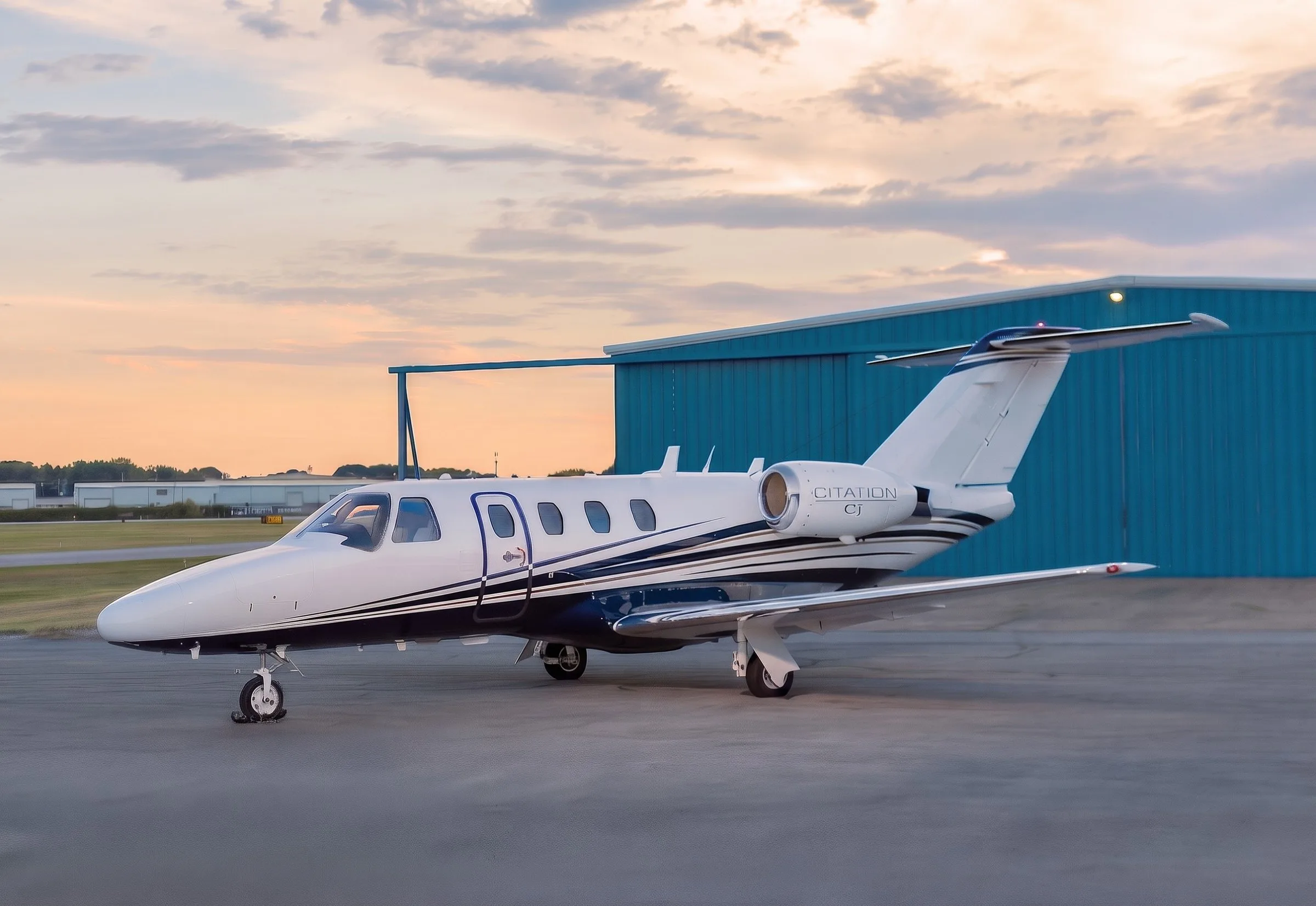
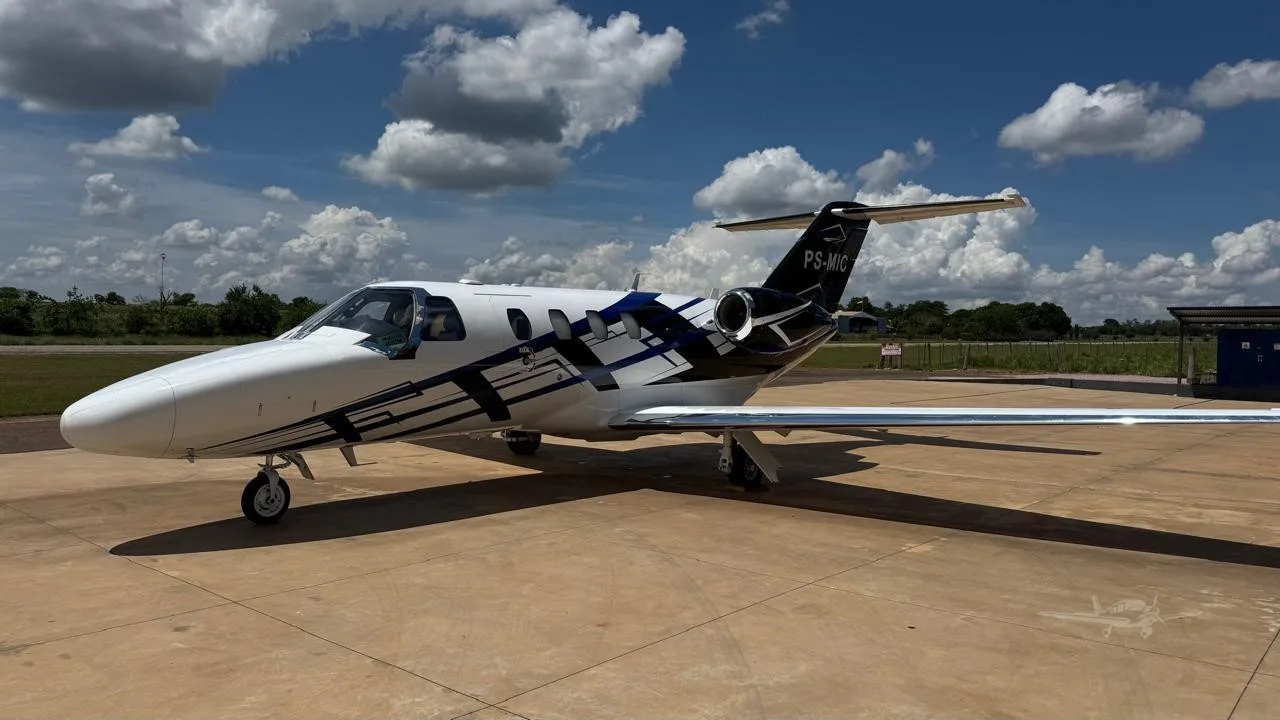

Also useful for the Cessna Citation CJ1+
From Sprinkle’s library of aircraft documents. PDFs open from Sprinkle’s own files. Read Aug 7, 2026.
Want this document taken down? Request removal