
Emergency Procedures for Cessna Citation CJ3
Emergency Procedures for the Cessna Citation CJ3+
PDF, 4 pages, 22 KB, from Sprinkle’s own files.
What it covers
This document outlines the emergency procedures for the Cessna Citation CJ3. It serves as a critical reference for pilots operating this aircraft, detailing specific actions to take in various emergency situations. The procedures include responses to engine failures, environmental system issues, and emergency descents, among others. Each section provides clear instructions to ensure safety and effective management of emergencies during flight operations.
Key points
- Maximum ramp weight: 14,070 lbs
- Max takeoff weight: 13,870 lbs
- Max landing weight: 12,750 lbs
- V1 speed: critical for engine failure decisions
- Emergency descent pitch attitude: 7.5° nose down
Main sections
Operating Limits
This section provides essential operating limits for the Cessna Citation CJ3, including maximum speeds (VA 200 KIAS, VMO 278 KIAS, MMO 0.737), fuel capacities (max usable fuel quantity 4,710 lbs), and weight limitations (maximum ramp weight 14,070 lbs, max takeoff weight 13,870 lbs). It also lists various speed configurations for different flight phases.
Engine Failure During Takeoff
The procedures for engine failure during takeoff are divided into two scenarios: below and above V1. If failure occurs below V1, pilots should apply brakes as required, throttle to idle, and extend speed brakes. If above V1, maintain directional control, accelerate to VR, rotate at VR, and climb at V2.
Engine Fire Procedures
In the event of an engine fire indicated by a warning light, the affected engine's throttle should be set to idle. If the warning light remains illuminated, the engine fire button should be activated to discharge the fire suppression system.
Emergency Descent Procedures
For an emergency descent, pilots should disengage the autopilot, set throttles to idle, extend speed brakes, and initially target a pitch attitude of 7.5° nose down to expedite descent.
Emergency Evacuation Procedures
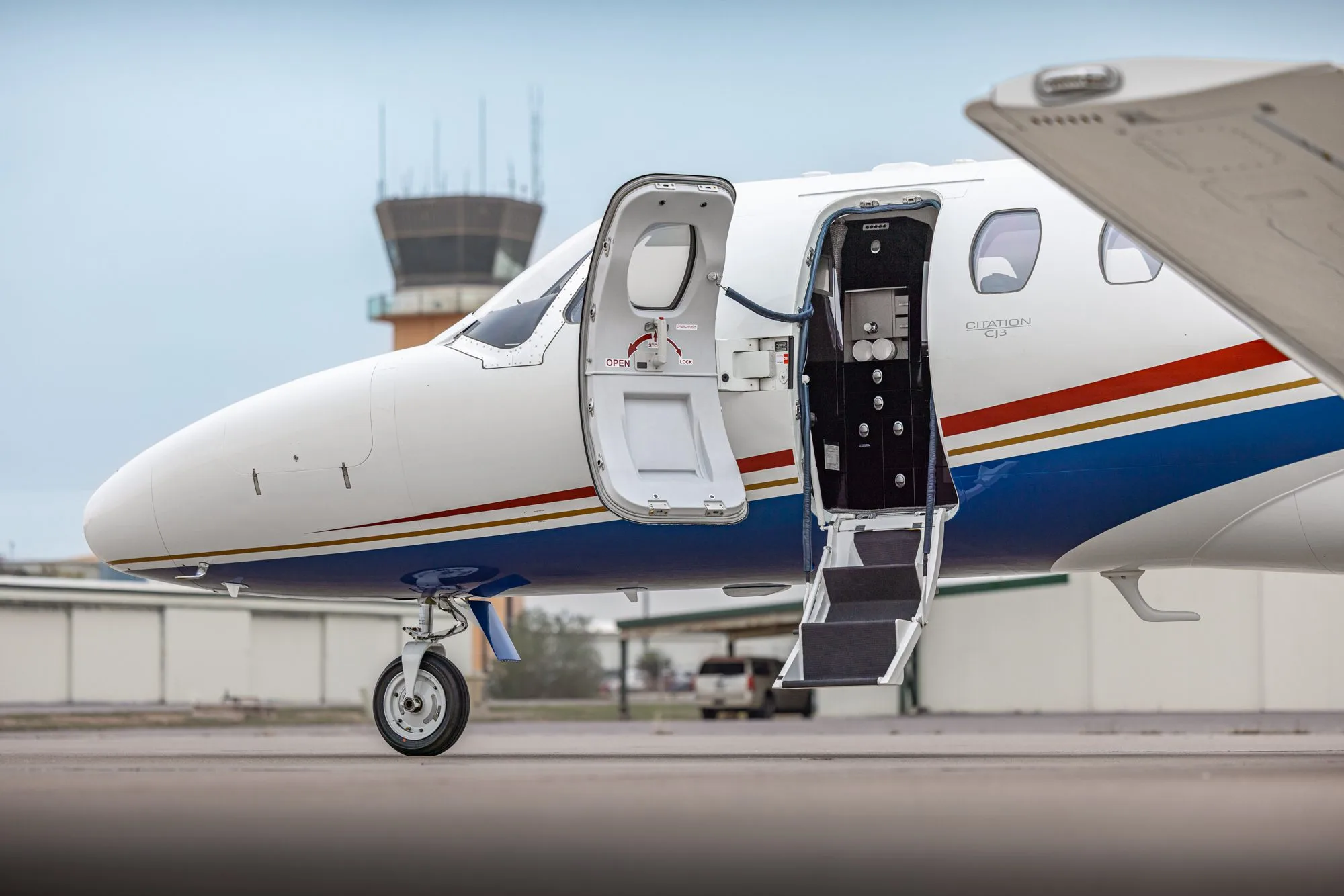
In case of an emergency evacuation, the parking brake should be set, throttles turned off, and both engine fire buttons pressed. The battery switch should be turned off, and the emergency locator transmitter (ELT) activated. Pilots must assess the best escape route and open the cabin door or emergency exit as necessary.
Safety notes
- Always maintain directional control during engine failure above V1.
- Ensure oxygen masks are donned in case of cabin altitude issues.
- Follow emergency evacuation procedures carefully to ensure safety.
The document’s text
Show the text read from the PDF
1 DEPARTAMENTO “SEGURIDAD OPERACIONAL” SUBDEPARTAMENTO “LICENCIAS” SECCIÓN EVALUACIONES “CESSNA CITATION CJ3 C-525” SR. HERNÁN BRIONES A.- OPERATING LIMITS 1.- Limitations (KIAS) 2.- Fuel (U.S. GAL) VA (maximum) 200 Type to Utilize JET-A1 VMO (8000 TO 29.300) 278 Main Fuel System 4.710 lbs MMO (Above 30.500’) 0,737 Max Imbalance 200 VFE (up to 15°) 200 Max Usable Fuel Quantity 4.710 Lbs VFE (Full Down) 35ª 161 Max Emergency Imbalance 600 VFE (Ground 55°) 140 VLE 200 3.- Weight (LBS) VLO 200 Maximum Ramp Weight 14.070 VSB NO LIMIT Maximum TOW 13.870 VTIRE 165 MAX Landing Weight 12.750 VMCA 88 MAX ZFW 10.510 VMCG 89 VS (CLEAN, MTOW) 102 VSO (Flaps 35°, Gear Down) 86 VX (flaps 15) 110 4.- Starter Limitations VY (flaps 15) 160 VAPP (Full Flaps) 130 Max Cross Wind 21 3 Starts in 30 Min with 60 sec rest between starter. Max Tail Wind 10 -- 1 of 4 -- 2 B.- EMERGENCIES PROCEDURES 1.- ENGINE FAILURE DURING TAKEOFF SPEED BELOW V1 Brakes AS REQUIRED Throttles IDLE Speed Brakes EXTEND 2.- ENGINE FAILURE DURING TAKEOFF SPEED ABOVE V1 Maintain Directional Control Airspeed Accelerate to VR Rotate at VR, CLIMB AT V2 Landing Gear UP (after positive rate-of-climb) Flaps RETRACT (1500¨ AGL V2 + 10 or VENR) 3.- ENGINE FAILURE DURING FINAL APPROACH Thrust (Operating Engine) INCREASE Airspeed Vapp Flaps TAKEOFF AND APPROACH 15° 4.- ENGINE FIRE (LH OR RH ENGINE FIRE WARNING LIGHT/SWITCH ILLUMINATED) Throttle (Affected Engine) IDLE a.- If Light Remains Illuminated: Engine Fire Button LIFT COVER and PUSH Either Illuminated Bottle Armed Light PUSH -- 2 of 4 -- 3 5.- EMERGENCY RESTART – TWO ENGINES L/R boost pump BOTH ON Throttles OFF, THEN IDLE (24% N2 MAX) If altitude Allows INCREASE AIRSPEED TO 230 KIAS 6.- ENVIRONMENTAL SYSTEM SMOKE, ODOR, SMOKE REMOVAL, ELECTRICAL FIRE OR SMOKE Oxygen Masks DON and EMER Microphone Select Sw MIC OXY MASK 7.- CABIN ALT (Cabin decompression, cabin altitude above normal limits) Oxygen Masks DON and 100% OXYGEN Microphone Select Sw MIC OXY MASK Emergency Descent AS REQUIRED Passenger Oxygen MAKE SURE PASSENGER ARE RECEIVING OXYGEN 8.- EMERGENCY DESCENT Autopilot/Trim Disengage Button PRESS AND RELEASE Throttles IDLE Speed Brakes EXTEND Airplane Pitch Attitude INITIALLY TARGET 7.5° NOSE DOWN -- 3 of 4 -- 4 9.- BATTERY OVERHEAT Volt/Amp NOTE Battery Switch EMER Volt/Amp NOTE DECREASE 10.- AUTOPILOT MALFUNCTION Autopilot/Trim Disengage Button PRESS AND RELEASE 11.- EMERGENCY EVACUATION Parking Brake SET Throttles BOTH OFF LH/LR Engine Fire Buttons BOTH PRESS Illuminated Bottle armed Buttons BOTH PRESS Battery Switch OFF Elt ACTIVATE Airplane And immediate area CHECK FOR BEST ESCAPE ROUTE a.- If Thru Cabin Door: Cabin Door OPEN Move Away From Airplane b.- If Thru Emergency Exit: Emergency Exit Door REMOVE AND THROW EXIT DOOR OUT OF AIRPLANE. Move away from airplane. -- 4 of 4 --
Read from the PDF by machine, so tables and diagrams come out rough. The PDF is the document.
More Cessna Citation CJ3+ documents
All 15 →- Citation SERVICE LETTER MANDATORY SL525B-05-04
This service letter, SL525B-05-04, addresses mandatory changes to the maintenance and inspection program for the Cessna Citation CJ3 and CJ3+ models. It specifically outlines revisions to the inspection intervals for critical components such as the nacelles/pylons and stabilizers, as detailed in the Model 525B Maintenance Manual. The letter emphasizes the importance of compliance with these changes to ensure the continued airworthiness of the aircraft. Operators are required to implement these changes within 150 flight hours or one year from receipt of the document. The letter serves as a guide for mechanics and aircraft owners to update their maintenance practices accordingly, ensuring that all inspections are performed as mandated.
- 2023 Citation CJ3+
This document provides specifications for the 2023 Cessna Citation CJ3+, detailing its total flight time, engine cycles, equipment, and interior features. It is intended for potential buyers and aviation enthusiasts seeking detailed information about this specific aircraft model. The document outlines standard equipment, installed options, and warranty information, ensuring that readers have a comprehensive understanding of the aircraft's capabilities and features.
- CESCOM 10 - Aircraft Status Report
This document is a maintenance report for the Cessna Citation CJ3+ aircraft, detailing its current status, maintenance inspections, and compliance with airworthiness directives. It includes information on the aircraft's utilization, maintenance tasks, and inspection history.
- CITATION JET PILOTS ASSOCIATION STANDARD OPERATING PRACTICES for CITATION SINGLE PILOT OPERATIONS Model CE-525 Series Garmin G3000 Configuration
This document serves as a Standard Operating Practices (SOP) guide for single pilot operations of Citation aircraft, specifically tailored for the Cessna Citation CJ3+ and other models in the CE-525 series equipped with Garmin G3000 avionics. It is designed to enhance safety and operational efficiency for pilots by providing best practices derived from industry standards and the experiences of the Citation Jet Pilots Association (CJP) Safety Committee. The SOPs are structured to promote consistency in flight operations, ensuring that pilots adhere to established procedures while allowing for flexibility in technique. The document emphasizes the importance of safety, proper flight planning, and adherence to Federal Aviation Regulations (FARs).
Pilot's Operating Handbook · 2022PDF · 38 pages · 2.1 MB of CITATION JET PILOTS ASSOCIATION STANDARD OPERATING PRACTICES for CITATION SINGLE PILOT OPERATIONS Model CE-525 Series Garmin G3000 Configuration, opens in a new tabRequest removal of CITATION JET PILOTS ASSOCIATION STANDARD OPERATING PRACTICES for CITATION SINGLE PILOT OPERATIONS Model CE-525 Series Garmin G3000 Configuration - Navigation - Garmin Software Update To Version 4.8.11
This service bulletin, SB525B-34-32, is a mandatory document issued by Textron Aviation for the Cessna Citation CJ3+ (Model 525B). It details the necessary steps to update the Garmin G3000 software to version 4.8.11. The bulletin is applicable to specific serial numbers of the CJ3+ and outlines compliance requirements, including the need for certain preliminary software updates and the use of specific parts. The document is intended for maintenance personnel and outlines the procedures for safely updating the avionics software, ensuring that all necessary components are correctly installed and configured. It emphasizes the importance of following the outlined instructions to maintain the aircraft's operational integrity and compliance with FAA regulations.
- Citation CJ3 +
This document provides performance data for the Cessna Citation CJ3+, detailing its specifications, operational capabilities, and advanced features. It is intended for pilots and aviation enthusiasts seeking comprehensive information about this light jet. Key aspects covered include maximum range, cruise speed, passenger capacity, and engine specifications. The document emphasizes the aircraft's efficiency, advanced avionics, and comfort features, making it suitable for both business and personal travel.
Performance Data · 2020PDF · 9 pages · 20 MB of Citation CJ3 +, opens in a new tabRequest removal of Citation CJ3 + - Master Minimum Equipment List (MMEL)
This document is the Master Minimum Equipment List (MMEL) for the Textron Aviation Model 525B Citation CJ3 and CJ3+. It serves as a regulatory guide for operators to determine the minimum equipment required for safe operation of the aircraft. The MMEL outlines various systems and components, detailing their operational status and the conditions under which the aircraft may be dispatched with inoperative equipment. This document is essential for pilots and maintenance personnel to ensure compliance with FAA regulations and to maintain safety standards during flight operations. It includes revisions and updates that reflect changes in equipment and operational procedures, ensuring that operators have the most current information available.
- Citation SERVICE BULLETIN SB525B-76-04
This service bulletin, SB525B-76-04, addresses the replacement of the Full Authority Digital Engine Control (FADEC) units in Cessna Citation CJ3+ aircraft. Specifically, it provides instructions for replacing the outdated 9912614-2 FADEC with the updated 9912614-3 FADEC. The bulletin applies to specific serial numbers of the CJ3+ and outlines the compliance requirements, which are optional for owners. It emphasizes the importance of following the instructions precisely and using only the specified parts. The document also includes references to the affected maintenance manuals and flight manuals, ensuring that all operational changes are documented and communicated to the flight crew. Overall, this bulletin is crucial for maintaining the aircraft's engine control systems and ensuring compliance with FAA regulations.
Cessna 525B for sale now
View all 74 for sale →Aircraft that this emergency procedures covers, listed on the sites Sprinkle reads. Asking prices, not sales. Cessna 525B asking prices by year built.

Also useful for the Cessna Citation CJ3+
From Sprinkle’s library of aircraft documents. PDFs open from Sprinkle’s own files. Read Feb 17, 2026.
Want this document taken down? Request removal