
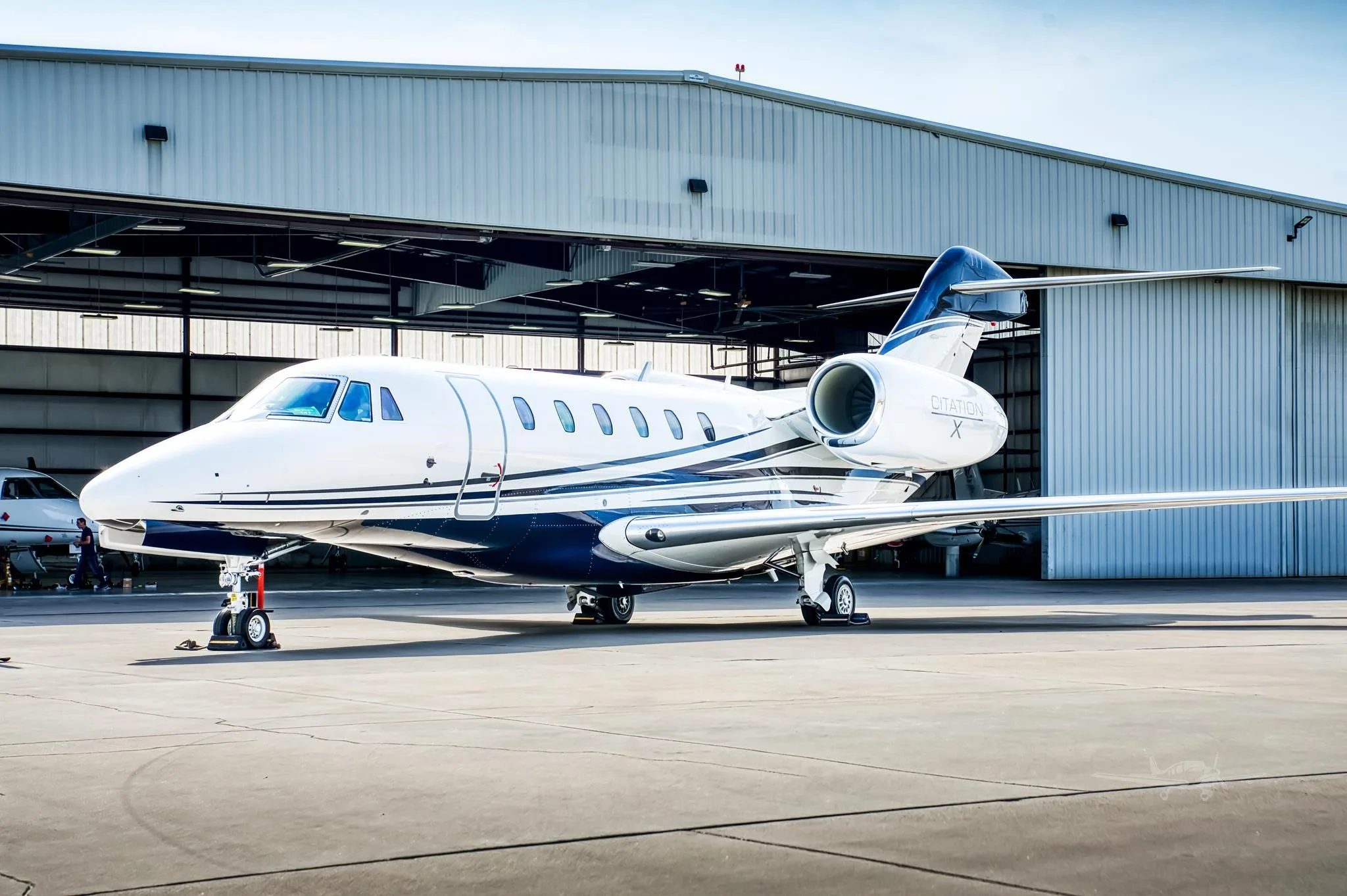
Cessna Citation C750 (Citation X)
Emergency Procedures for the Cessna Citation X+
PDF, 6 pages, 258 KB, from Sprinkle’s own files.
What it covers
This document provides emergency procedures specifically for the Cessna Citation X (C750). It outlines critical limitations, emergency protocols, and operational guidelines to ensure safety during various in-flight emergencies. The procedures are designed for pilots operating the Citation X, offering clear instructions for handling situations such as engine failure, APU fire, and hydraulic system malfunctions. The manual emphasizes the importance of adhering to specified speeds and altitudes during emergencies, ensuring pilots can respond effectively to maintain control of the aircraft and safeguard passengers.
Key points
- Maximum Takeoff Weight: 36,100 lbs
- Maximum Landing Weight: 31,800 lbs
- Maximum Operating Altitude: 51,000 ft
- V1 Speed: Critical for takeoff decisions
- APU Fire Procedure: Lift cover and push switch
- Emergency Descent: Initiate maximum rate-of-descent to a safe altitude
- Minimum Speed for Control: Maintain Vref + 10 KIAS during final approach
Main sections
Limitations
This section details the operational limitations for the Cessna Citation X, including maximum speeds (KIAS) for turbulence, VMO, MMO, and various flap positions. It also specifies fuel types and quantities, weight limits for takeoff and landing, and altitude limitations for operations.
Emergency Procedures Overview
The emergency procedures section outlines critical actions to take in response to various emergencies. This includes procedures for APU fire, engine failure, and hydraulic system failures, among others. Each emergency is addressed with step-by-step instructions to ensure pilots can respond quickly and effectively.
Specific Emergency Scenarios
Detailed procedures for specific emergencies such as engine fire, dual engine flameout, and electrical system smoke are provided. Each scenario includes clear actions to take, such as throttle adjustments, switch operations, and altitude considerations.
Safety notes
- Always adhere to specified limitations to ensure safe operation.
- In case of engine failure, follow the prescribed procedures for aborting takeoff or climbing to a safe altitude.
- Use caution with rudder inputs during emergencies to avoid loss of control.
The document’s text
Show the text read from the PDF
1 DEPARTAMENTO “SEGURIDAD OPERACIONAL” SUBDEPARTAMENTO “LICENCIAS” SECCIÓN EVALUACIONES “CESSNA CITATION C750 (CITATION X)” “PUNTA BRAVA S.A.” (Rev. 2 - 10 Abril 2012) A.- LIMITATIONS: 1.- Limitations ( KIAS) V (Turbulence - Max) 350 VMO (below 8.000’) 270 VMO (8.000 a 30.650’) 350 MMO (Above 30.650’) 0.92M MMO (Mach Trim OFF) 0.82M VFE ( 5° position) 250 VFE ( 15° position) 210 VFE (Full Position) 180 VLO/VLE 210 VSB max NO LIMIT VSB min VREF + 15 Vslats extended 250 VTIRE (Ground Speed) 182 Kts VS VSO VX VY VXSE VYSE 190 Max Cross Wind (Hyd. Fail) 10 Max Tail Wind 10 Max Cross Wind CAT II 15 Max Tail Wind CAT II 10 2.- Fuel (U.S. GAL & LBS) Type to Utilize JET A – A1 Main Fuel System Auxiliary Fuel System Max Usable Fuel Quantity Max Asymmetric Fuel 400 Emerg Asymmetric Fuel 800 Min Wing Fuel Per tank For T/O 500 3.- Weight (LBS) Maximum TAKE-OFF 36.100 Maximum LANDING 31.800 MAX ZFW 24.400 MAX Baggage Compartment 700 4.- Altitude Limitation Max Alt Ext Flaps & L-Gear 18.000 Max Operating Alt 51.000 Max Alt For T/O & Landing 14.000 5.- Starter Limitations 30 SEC ON 30 SEC OFF 30 SEC ON 30 SEC OFF 30 SEC ON 25 MIN OFF -- 1 of 6 -- 2 B.- EMERGENCY PROCEDURES: 1. APU FIRE 1. APU FIRE Switch Lift Cover and Push 2. AUTO SLAT FAIL 1. Control Column Push, Pitch Down to Horizon 2. Throttles Set to TO/MC Detent 3. Airspeed Increase 3. BATT 1 or 2 O’TEMP 1. Battery Switch (affected side ) OFF 4. CABIN ALTITUDE 1. Oxygen Masks Don and 100% 2. L and R MIC Switches MIC OXY MASK 3. Emergency Descent As Required 5. EDM – EMERGENCY DESCENT 1. Initiate maximum rate-of-descent to a safe altitude. 6. ENGINE FIRE L or R 1. Throttle (affected engine) IDLE 2. WING XOVER ANTI-ICE Switch (if icing conditions) WING XOVER If ENG FIRE Light Remains On (15 Seconds) Probable Fire 3. Illuminated ENG FIRE Button Lift Cover and Push 4. Either Illuminated BOTTLE ARMED Light Push -- 2 of 6 -- 3 7. HYD PUMP FAIL A and B 1. A AUX PUMP Switch ON 8. MINIMUM SPEED 1. Control column Push, Pitch Down to Horizon 2. Throttles Set to TO/MC Detent 9. NO TAKEOFF Speed Below V1 – Takeoff Rejected 1. Takeoff Abort 10. NO TAKEOFF Speed Above V1 – Takeoff Continued 1. Climb to a Safe Altitude. 11. RUDDER LIMIT FAIL 1. Rudder Pedals Do Not Apply Large or Abrupt Rudder Input 12. TR AUTOSTOW L and R 1. THRUST REVERSER Stow switches (both) STOW EMER 2. Throttles (both) IDLE, Then Normal Operation 13. ENGINE FAILURE OR OTHER EMERGENCY DURING TAKEOFF If Speed Below V1 1. Takeoff Abort -- 3 of 6 -- 4 14. ENGINE FAILURE OR OTHER EMERGENCY DURING TAKEOFF If Speed at or Above V1 1. Climb to a safe altitude 2. WING XOVER Switch (if bleed air anti-ice systems are on) XOVER 15. ENGINE FAILURE DURING FINAL APPROACH 1. Flaps Select 15° 2. Airspeed Vref (Flaps 15°)+ 10 KIAS Minimum Until landing is assured 16. THRUST REVERSER IN-FLIGHT DEPLOYMENT 1. TRHUST REVERSER Stow Switch (affected thrust reverser) STOW EMER 2. Throttle (affected engine) IDLE 3. Control Wheel/Autopilot Grip/Disengage 4. Airspeed Reduce to 170 KIAS Maximum 17. DUAL ENGINE FLAMEOUT – LOW ALTITUDE 1. Fuel Check (tank/quantity; crossfeed/as required; transfer/as required) 2. FUEL BOOST Switches ON 3. Throttles CUTOFF 18. DUAL ENGINE FLAMEOUT – CRUISE 1. Crew Oxygen Masks (if required) DON 19. ELECTRICAL SYSTEM SMOKE OR FIRE 1. Oxygen Masks Don and EMER 2. Smoke Goggles Don (as required) -- 4 of 6 -- 5 20. ENVIROMENTAL SMOKE OR ODOR 1. Oxygen Masks Don and EMER 2. Smoke goggles Don (as required) 21. SMOKE REMOVAL 1. Oxygen Masks Don and EMER 2. Smoke goggles Don (as required) 22. HYDRAULIC WHEEL BRAKE FAILURE 1. Brake Pedals Remove Feet 2. EMERGENCY BRAKE Handle Pull and Hold Until Stopped 23. NOSEWHEEL STEERING MALFUNCTION 1. AP/TRIM/NWS Disengage Button Push and hold 24. JAMMED ROLL OR PITCH CONTROL SYSTEM 1. Control Wheel Relax Pressure 2. Pitch/Roll Disconnect Handle Pull Until Latched 3. Operative Flight Control Wheel Identify, Recover Aircraft Attitude 25. PRIMARY PITCH TRIM RUNAWAY 1. AP/TRIM/NWS Disengage Button Push and hold 26. SECONDARY PITCH TRIM RUNAWAY 1. SECONDARY TRIM Switch OFF (close guard cover) -- 5 of 6 -- 6 27. INADVERTENT STALL (STICK SHAKER, BUFFET, AND/OR ROLL-OFF) 1. Autopilot Disconnect 2. Pitch Attitude Reduce 3. Roll Attitude Level 4. Throttles TO Detent 28. EMERGENCY DESCENT 1. AP/TRIM/NWS Disengage Button Press (to disengage autopilot) 2. Throttles IDLE 3. Speed Brakes Extend 4. Initial Pitch Attitude 15° Down 29. TOTAL LOSS OF (OR UNRELIABLE) AIRSPEED INDICATION (PILOT, COPILOT AND STANDBY) 1. AP/TRIM/NWS Disengage Button Press 2. Flight Director OFF 3. LH/RH PITOT/STATIC Anti-ice Switches Both OFF, then ON 4. Rudder Pedals Do Not Apply Large or Abrupt Rudder Input -- 6 of 6 --
Read from the PDF by machine, so tables and diagrams come out rough. The PDF is the document.
More Cessna Citation X+ documents
All 15 →- Pilot Training
This document outlines the training courses available for the Cessna Citation X, including initial and recurrent training options. It provides details on course lengths, ground school hours, simulator training, and prerequisites for obtaining a CE-750 type rating. The training is designed for pilots seeking to enhance their skills and knowledge specific to the Citation X aircraft. The document emphasizes the importance of quality training and safety procedures, ensuring pilots are well-prepared for their roles.
- Cessna Citation X+ Model Guide
The Cessna Citation X+ is a twin-engine business jet built 2014–2018, with 8 to 12 seats per the library record. It has two Rolls-Royce AE3007C2 turbofans, cruises at up to 528 ktas and is certified to 51,000 ft. Garmin G5000 avionics with autothrottles are fitted. Listings show 8- or 9-passenger interiors; the brochure maximum is 12.
- Specifications and Summary
This document provides detailed specifications and summary information for the Cessna Citation X+, specifically for the aircraft with serial number N387SL. It includes highlights of the aircraft's features, performance data, engine specifications, avionics, interior and exterior descriptions, and maintenance status. The document is intended for potential buyers and aviation enthusiasts, offering a comprehensive overview of the aircraft's capabilities and current condition as of January 27, 2020.
- Citation X+
This document provides performance data for the Cessna Citation X+, detailing its capabilities, specifications, and features. It is intended for pilots and aviation enthusiasts who seek to understand the operational limits and performance metrics of this high-speed business jet. Key information includes maximum speed, range, takeoff distance, and interior specifications, along with insights into the advanced avionics system. The Citation X+ is highlighted as a leader in speed and efficiency, making it a competitive choice for business travel.
Performance Data · 2016PDF · 9 pages · 1.9 MB of Citation X+, opens in a new tabRequest removal of Citation X+ - Cessna Citation X+ Specifications and Summary
This document provides detailed specifications and a summary for the Cessna Citation X+, specifically for the aircraft with serial number N487SL. It includes information on aircraft highlights, engine details, weight specifications, avionics systems, maintenance programs, and interior descriptions. The document is intended for potential buyers and aviation enthusiasts who are interested in the capabilities and status of the aircraft. Key features include advanced avionics, engine specifications, and maintenance history, making it a comprehensive reference for understanding the aircraft's performance and condition.
- 2015 Cessna Citation X+
This document serves as an avionics manual for the 2015 Cessna Citation X+. It provides detailed specifications, performance data, and descriptions of the aircraft's avionics systems, including the Garmin G5000 suite. The manual is intended for pilots and aviation enthusiasts who require comprehensive information about the aircraft's capabilities, maintenance status, and optional equipment. Key features include the integrated flight deck, engine specifications, and performance metrics, making it a valuable resource for understanding the operational aspects of the Citation X+.
- Honeywell Sales Bulletin 2014-01 (o) Primus Elite DU875 for Citation X
This document is a sales bulletin from Honeywell detailing the Primus Elite DU875 LCD flight deck upgrade specifically for the Cessna Citation X. It outlines the benefits of upgrading from CRT displays to LCDs, emphasizing improvements in safety, efficiency, and reduced maintenance costs. The bulletin also mentions the availability of service bulletins related to the upgrade and provides information on program incentives for customers. It is intended for operators and owners of the Citation X looking to enhance their aircraft's avionics and overall value.
- Cessna Citation X Landing Gear Service Tools Kit
This document is a maintenance manual specifically for the Cessna Citation X Landing Gear Service Tools Kit. It outlines the tools required for the assembly and disassembly of the Main Landing Gear (MLG) and Nose Landing Gear (NLG) struts. The manual is intended for use by maintenance personnel and technicians who are responsible for servicing the landing gear of the Cessna Citation X. It emphasizes the importance of using OEM parts and following proper procedures as outlined in the Cessna Service Manuals. Additionally, it provides information on warranty coverage and the process for obtaining spare parts.
Cessna 750 for sale now
View all 29 for sale →Aircraft that this emergency procedures covers, listed on the sites Sprinkle reads. Asking prices, not sales. Cessna 750 asking prices by year built.


Also useful for the Cessna Citation X+
From Sprinkle’s library of aircraft documents. PDFs open from Sprinkle’s own files. Read Feb 17, 2026.
Want this document taken down? Request removal