Cessna 182F Skylane Avionics Manual
CESSNA 182F Skylane · Avionics Manual
Overview
The Cessna 182 Training Manual serves as a comprehensive guide for pilots transitioning to the Cessna 182 aircraft. It is designed to supplement flight instruction and provide essential technical and operational information. The manual covers various aspects of the aircraft, including its history, technical specifications, and operational procedures. The Cessna 182, known for its reliability and versatility, has been a popular choice among private pilots since its introduction in 1956. This manual emphasizes the importance of understanding the aircraft's systems, limitations, and performance characteristics to ensure safe and effective operation. The content is structured to align with standard training syllabi, making it an invaluable resource for both new and experienced pilots.
- The Cessna 182 is a versatile aircraft suitable for various flying conditions.
- Understanding the aircraft's systems and limitations is crucial for safe operation.
- The manual is intended to supplement formal flight training and should be used in conjunction with the Pilot's Operating Handbook.
Document
Source
Originally published by www.macmak.com. Sprinkle hosts a reference copy with an added summary, specifications and searchable full text.
Document details
- Type
- Avionics Manual
- Pages
- 113
- File size
- 11 MB
- Publisher
- www.macmak.com
Common. Rarer than 6% of the aircraft models we track.
Most owners only have the POH. Here's the essential set for the CESSNA 182F Skylane.
- Pilot's Operating Handbook / AFM
- Checklist
- Maintenance Manual
- Parts Catalog (IPC)
- Systems & Wiring
- Service Bulletins
- Type Certificate (TCDS)
CESSNA 182F Skylane for sale now

Free — save the 182F Skylane to your watchlist and track it in one place.
More CESSNA 182F Skylanemanuals & documents
See all 20 →- CONTROL WHEELS INSTALLATION INSTRUCTIONSSupplemental Type Certificate
- 2022 AIR QUALITY MANAGEMENT PLANTraining Manual
- 2020 Skylane Owners GuideAvionics Manual
- Cessna Flyer - December 2020Airworthiness Directives
- Guiding Organizational ChangeTraining Manual
- CESSNA 182 Aircraft Rev-022 SK4182-42A.DOCService Bulletins
- AAIB Bulletin: 8/2015 G-WARP and G-BBSAService Bulletins
- Cessna FlyerOther Documents
- AAIB Bulletin: 2/2009Other Documents
- TYPE CERTIFICATE DATA SHEET NO. 3A13Type Certificate
- Airworthiness Directives; CESSNA Models 150F, G, H, J, K, L, F150F, G, H, J, K, L, A150K, L, FA150K, L, 172F, G, H, I, K, L, F172F, G, H, K, R172E, F, G, H, FR172E, F, G, H, 177, 177A, B, 177RG, F177RG, 182E, F, G, H, J, K, L, M, N, A182J, K, L, M, N, 205, 205A, 206, P206, P206A, B, C, D, E, and , TP206A, B, C, D, E, U206, U206A, B, C, D, E, and , TU206A, B, C, D, E, 207 and T207, 210D, E, F, G, H, J, K, T210F, G, H, JService Bulletins
- PILOT'S OPERATING HANDBOOK - Matt Beyer AviationPilot's Operating Handbook
If you fly the CESSNA 182F Skylane, you may also be researching these.


In this document
Aircraft Technical Information
This section includes detailed descriptions of the airframe, flight controls, engine systems, electrical systems, and avionics. It provides essential information for understanding the aircraft's design and operational capabilities.
Flight Operations
This section outlines normal procedures for pre-flight checks, takeoff, climb, cruise, approach, and landing. It also includes emergency procedures and performance specifications.
Performance Specifications and Limitations
This section details the aircraft's performance metrics, including weight and balance calculations, takeoff and landing distances, and operational limitations.
Safety notes
- Always refer to the approved Aircraft Flight Manual (AFM) for specific operational limits and procedures.
- Consult the AFM for any modifications or additional equipment that may affect performance.
Full document text
CESSNA 182 TRAINING MANUAL CESSNA 182 Training Manual By Oleg Roud and Danielle Bruckert Red Sky Ventures and Memel CATS © 2006 by D. Bruckert & O. Roud © 2006 Page 1 CESSNA 182 TRAINING MANUAL D Bruckert Contact the Authors: redskyventures@gmail.com +264 81 244 6336 O Roud roudoleg@yahoo.com +264 81 208 0566 PO Box 11288 Windhoek, Namibia Red Sky Ventures PO Box 30421 Windhoek, Namibia Memel CATS ISBN 978-0-557-04524-2 COPYRIGHT & DISCLAIMER All rights reserved. No part of this manual may be reproduced for commercial use in any form or by any means without the prior written permission of the authors. This Training Manual is intended to supplement information you receive from your flight instructor during your type conversion training. It should be used for training and reference use only, and is not part of the Civil Aviation Authority or FAA approved Aircraft Operating Manual or Pilot's Operating Handbook. While every effort has been made to ensure completeness and accuracy, should any conflict arise between this training manual and other operating handbooks, the approved aircraft flight manuals or pilot's operating handbook should be used as final reference. Information in this document is subject to change without notice and does not represent a commitment on the part of the authors, nor is it a complete and accurate specification of this product. The authors cannot accept responsibility of any kind from the use of this material. ACKNOWLEDGEMENTS: Peter Hartmann, Aviation Center, Windhoek: Supply of technical information, maintenance manuals and CD's for authors research Brenda Whittaker, Auckland New Zealand: Editor, Non Technical Note- ENGLISH SPELLING has been used in this text, which differs slightly from that used by Cessna. Differences in spelling have no bearing on interpretation. by D. Bruckert & O. Roud © 2006 Page 2 CESSNA 182 TRAINING MANUAL Table of Contents Terminology..... Useful Factors and Formulas.. Conversion Factors........ Useful Formulas…........ Aircraft Flight Manual Information... Introduction.. History....... Development of the C182 Models and Differences AIRCRAFT TECHNICAL INFORMATION.. General... .5 .8 .8 ..9 .10 .11 .11 .12 .13 Airframe... Flight Controls.. Elevator.... Ailerons. Rudder.. Trim…...... Flaps......... Flap System Schematic.. Flap Linkage Diagram Landing Gear. Shock Absorption. Brakes...... Brake Construction Diagram... Towing.......... Engine & Engine Controls. Engine Controls........ Throttle...... Pitch Control.. Mixture....... Engine Gauges.... Induction System and Carb. Heat.. Oil System.... Ignition System... Cooling System.... Fuel System....... Fuel Measuring and Indication... Priming System Fuel Venting.. Fuel Drains...... Auxiliary Pump (fuel-injection engine only). Fuel System Schematic.. Electrical System....... Battery...... Alternator.... External Power..... Electrical Equipment.... System Protection and Distribution.. Electric System Schematic by D. Bruckert & O. Roud © 2006 16 .16 17 .20 .20 .20 .21 .26 .28 .30 ..31 .32 .33 .37 .38 .39 .40 .41 .41 .43 .44 .45 .47 .48 .49 ..50 .53 .54 .54 .54 ..55 .56 .57 .58 .58 ..58 .59 ..59 ..59 ..61 Page 3 CESSNA 182 TRAINING MANUAL Flight Instruments and Associated Systems.. .62 Vacuum System......... Vacuum System Diagram.. Pitot-Static System .62 ..63 8330 ..64 Ancillary Systems.... Pitot Static System Diagram.. Stall Warning System....... Lighting System......... Cabin Heating and Ventilating System.. Cabin Heating System Diagram.. Avionics Systems....... FLIGHT OPERATIONS. Note on C182 POH NORMAL PROCEDURES. Pre-Flight Check.... Instrument Panel Diagram... Exterior Inspection........ Starting and Warm-up. Engine Run-up..... Pre Takeoff Vital Actions.. Takeoff. Climb.. Cruise........ Approach and Landing Circuit Pattern....... Engine Handling.. Note on Checklists.... ABNORMAL AND EMERGENCY PROCEDURES. General....... Emergency During Takeoff ..65 ....66 ..66 ..66 ..67 .67 ..68 ..69 ...69 .70 .70 .72 .73 .76 .79 ..80 .80 .83 ..84 .84 .86 .88 .89 .90 ...90 .90 Gliding and Forced Landing.. ..91 Engine Fire.... .92 Electrical Fire... ..93 Stalling and Spinning... ..95 PERFORMANCE SPECIFICATIONS AND LIMITATIONS. ..96 Performance Graphs... .98 Weight and Balance.... .98 GROUND PLANNING ..99 Navigation Planning... ..99 Cruise Performance... ..99 Fuel Planning Worksheet... .101 Weight and Balance Calculation.. .101 Loading Worksheet......... .103 Takeoff and Landing Performance Planning.. .104 Departure Performance... .105 REVIEW QUESTIONS...... .107 by D. Bruckert & O. Roud © 2006 Page 4 CESSNA 182 TRAINING MANUAL Terminology Airspeed KIAS KCAS KTAS Knots Indicated Airspeed Knots Calibrated Airspeed Knots True Airspeed Manoeuvring Va Maximum Speed Vfe Speed Vno Maximum Vne Vs Vso Vx Vy Speed in knots as indicated on the airspeed indicator. KIAS corrected for instrument error. Note this error is often negligible and CAS may be omitted from calculations. KCAS corrected for density (altitude and temperature) error. The maximum speed for full or abrupt control inputs. Maximum Flap The highest speed permitted with flap extended. Indicated by the top of the white arc. Extended structural cruising speed Never Exceed speed Stall Speed Stall Speed landing configuration Best angle of climb speed Best Rate of Climb speed Vref Reference speed Vr Rotation speed Vat Vto Sometimes referred to as "Normal operating range" Should not be exceeded except in smooth conditions and only with caution. Indicated by the green arc. Maximum speed permitted, exceeding will cause structural damage. Indicated by the upper red line. The minimum speed before loss of control in the clean |configuration. Indicated by the bottom of the green arc. Sometimes referred to as minimum ‘steady flight speed. The minimum speed before loss of control in the landing configuration, at the most forward C of G*. Indicated by the bottom of the white arc. The speed which results in the maximum gain in altitude for a given horizontal distance.
Show full textShow less
The speed which results in the maximum gain in altitude for a given time, indicated by the maximum rate of climb for the conditions on the VSI. The minimum safe approach speed, calculated as 1.3 x Vso. The speed which rotation should be initiated. Barrier speed The speed nominated to reach before the 50ft barrier or on reaching 50ft above the runway on approach. Takeoff Safety Speed The speed nominated to reach before the 50ft barrier or on reaching 50ft above the runway on takeoff. *forward centre of gravity gives a higher stall speed and so is used for certification by D. Bruckert & O. Roud © 2006 Page 5 CESSNA 182 TRAINING MANUAL Maximum |The maximum demonstrated crosswind during flight Demonstrated testing and certification. Crosswind Meteorological Terms OAT IOAT Outside Air Temperature Indicated Outside Air Temperature Standard Temperature Pressure Altitude Density Altitude Engine Terms BHP RPM Brake Horse Power Revolutions per Minute Static RPM Free outside air temperature, or indicated outside air temperature corrected for gauge, position and ram air errors. Temperature indicated on the temperature gauge. The temperature in the International Standard atmosphere for the associated level, and is 15 degrees Celsius at sea level decreased by two degrees every 1000ft. The altitude in the International Standard Atmosphere with a sea level. pressure of 1013 and a standard reduction of 1mb per 30ft. Pressure Altitude would be observed with the altimeter subscale set to 1013. The altitude that the prevailing density would occur in the International Standard Atmosphere, and can be found by correcting Pressure Altitude for temperature deviations. The power developed by the engine (actual power available will have some transmission losses). Engine drive and propeller speed. The maximum RPM obtained during stationery full throttle operation Weight and Balance Terms Arm (moment The horizontal distance in inches from reference datum arm) line to the centre of gravity of the item. C of G Centre of Gravity The point about which an aeroplane would balance if it were possible to suspend it at that point. It is the mass centre of the aeroplane, or the theoretical point at which entire weight of the aeroplane is assumed to be concentrated. It may be expressed in percent of MAC (mean aerodynamic chord) or in inches from the reference datum. by D. Bruckert & O. Roud © 2006 Page 6 CESSNA 182 TRAINING MANUAL MZFW BEW SEW OEW MRW Centre of Gravity Limit Datum (reference datum) Moment Maximum Zero Fuel Weight Basic Empty Weight Standard Empty Weight Operating Empty Weight Payload Maximum Ramp Weight MTOW Maximum Take off Weight MLW Other AFM Maximum Landing Weight The specified forward and aft point beyond which the CG must not be located. The forward limit defines the controllability of aircraft and aft limits - stability of the aircraft. An imaginary vertical plane or line from which all measurements of arm are taken. The datum is established by the manufacturer. The product of the weight of an item multiplied by its arm and expressed in inch-pounds. The total moment is the weight of the aeroplane multiplied by distance between the datum and the CG. The maximum permissible weight to prevent exceeding the wing bending limits. This limit is not always applicable for aircraft with small fuel loads. The weight of an empty aeroplane, including permanently installed equipment, fixed ballast, full oil and unusable fuel, and is that specified on the aircraft mass and balance documentation for each individual aircraft. The basic empty weight of a standard aeroplane, specified in the POH, and is an average weight given for performance considerations and calculations. The weight of the aircraft with crew, unusable fuel, and operational items (galley etc.). The weight the aircraft can carry with the pilot and fuel on board. The maximum weight for ramp manoeuvring, the maximum takeoff weight plus additional fuel for start taxi and runup. The maximum permissible takeoff weight and sometimes called the maximum all up weight, landing weight is normally lower as allows for burn off and carries shock loads on touchdown. Maximum permissible weight for landing. Sometimes this is the same as the takeoff weight for smaller aircraft. Aircraft Flight These terms are inter-changeable and both refer to the Manual POH Pilot's Operating Handbook approved manufacturers handbook. Cessna most often uses the term Pilot's Operating Handbook, early manuals were called Owners Manual and later texts used the term AFM. Most legal texts refer to Aircraft Flight Manual. by D. Bruckert & O. Roud © 2006 Page 7 CESSNA 182 TRAINING MANUAL Useful Factors and Formulas Conversion Factors Lbs to kg 1kg =2.204lbs USG to Lt Lt to Imp Gal 1USG = 3.785Lt 1lt = 0.22 Imp G kgs to lbs It to USG Imp.Gal to It 1lb = .454kgs NM to KM 1nm = 1.852km km to nm NM to StM to ft 1nm = 1.15stm 1nm = 6080ft Stm to nm to ft FT to Meters Inches to Cm Hpa(mb) to "Hg 1 FT = 0.3048 m 1 inch = 2.54cm meters to ft cm to inches 1lt = 0.264USG 1Imp G = 4.55lt 1km = 0.54nm 1 stm = 0.87nm 5280ft 1 m = 3.281 FT 1cm = 0.394" 1mb = .029536" Hg to Hpa (mb) ་ 1" = 33.8mb AVGAS FUEL Volume/ weight SG = 0.72 Litres Lt/kg kgs Litres Ibs/Its Lbs 1.39 1 0.72 0.631 1 1.58 Kts 10 20 Crosswind component per 10 kts of wind 30 40 50 60 70 80 10 2 3 5 6 8 9 9 10 by D. Bruckert & O. Roud © 2006 Page 8 CESSNA 182 TRAINING MANUAL Useful Formulas Celsius (C) to Fahrenheit (F) Pressure altitude (PA) Standard Temperature (ST) Density altitude (DA) Specific Gravity (SG) One in 60 rule Rate 1 Turn Radius Percent to Gradient fpm Gust factor C = 5/9 x(F-32) F = CX9/5+32 PA = Altitude AMSL + 30 x (QNH-1013) i.e. Altitude AMSL is 30ft higher than pressure altitude for every mb above 1013mb Memory aid - Subscale up/down altitude up/down ST = 152 x PA/1000 ie. 2 degrees cooler per 1000ft altitude DA = PA +(-) 120ft/deg above (below) ST i.e. 120Ft higher for every degree hotter than standard SG x volume in litres = weight in kgs 1 degree of arc @ 1nm at a radius of 60nm i.e degrees of arc approximately equal length of arc at a radius of 60nm R = GS/60/л ≈ GS/20 fpm ≈ % x G/S Or fpm Vat = = % x G/S x 1.013 Vref+1/2HWC + Gust eg. Wind 20kts gusting 25 at 30 degrees to Runway: Vat Vref +.7x10+5 = = Vref+12, If the Vref is 75kts, Vat should be 75+12 = 87kts by D. Bruckert & O. Roud © 2006 Page 9 CESSNA 182 TRAINING MANUAL Aircraft Flight Manual Information Aircraft manufacturers and international aviation organisations have standardized the format of the Aircraft Flight Manuals (AFM) for light aircraft for ease of use and improved safety. If conforming to the accepted standard the pilot's operating handbook will include the following sections in the following order: Section 1 General Section 2 Limitations Section 3 Emergencies Section 4 Section 5 Normal Operations Performance Section 6 Section 7 Weight and Balance Systems Descriptions Section 8 Servicing and Maintenance Section 9 Supplements Definitions and abbreviations Specific operating limits, placards and specifications Complete descriptions of action in the event of any emergency or non-normal situation Complete descriptions of required actions for all normal situations Performance graphs, typically for stall speeds, airspeed calibration, cross wind calculation, takeoff, climb, cruise, and landing Loading specifications, limitations and loading graphs or tables Technical descriptions of aircraft systems, airframe, controls, fuel, engine, instruments, avionics and lights etc. Maintenance requirements, inspections, requirements etc. stowing, oil Supplement sections follow the format above for additional equipment or modification. The AFM is legally required to be on board the aircraft during flight, and is the master document for all flight information. For use in practical training this text should be used in conjunction with the AFM from on board the aircraft you are flying. Note - even if you have an AFM of the same model of C182, you should review the AFM from your aircraft as supplements for modifications and optional equipment may have been added to the AFM. by D. Bruckert & O. Roud © 2006 Page 10 CESSNA 182 TRAINING MANUAL Introduction This training manual provides technical and operational descriptions for the Cessna 182 aircraft. The information is intended as an instructional aid to assist with conversion training in conjunction with an approved training organisation and the POH or AFM. The text is arranged according to standard training syllabi rather than POH order for ease of use and assimilation with training programs. This material does not supersede, nor is it meant to substitute any of the manufacturer's operation manuals. The material presented has been prepared from the basic design data obtained in the pilot's operating handbook and from operational experience. History The Cessna aircraft company has a long and rich history. Founder Clyde Cessna built his first aeroplane in 1911, and taught himself to fly it! He went on to build a number of innovative aeroplanes, including several race and award winning designs. In 1934, Clyde's nephew, Dwane Wallace, fresh out of college, took over as head of the company. During the depression years Dwane acted as everything from floor sweeper to CEO, even personally flying company planes in air races (several of which he won!). Under Wallace's leadership, the Cessna Aircraft Company eventually became the most successful general aviation company of all time. by D. Bruckert & O. Roud © 2006 Page 11 CESSNA 182 TRAINING MANUAL Development of the C182 The Cessna 182 is one of the most popular aircraft for the private and recreational market. Cessna's present marketing portrays the C182 as roading to a new dimension. - "the SUV of the skies", as it takes off- The C182 began it's life as the tricycle conversion of the popular C180 tail wheel model. The first model C182 appeared in 1956, resembling very nearly a C180 with the tail wheel removed. The name Skylane was introduced a little later in reference to the C182A with additional equipment introduced. Major changes to the airframe were later introduced with the C182C. The Cessna 182 can be one of the safest and most rewarding aircraft that you may fly, providing you know the aircraft well, understand the systems, abide by the limitations, and do not attempt to operate on or near the boundary of your own limitation. Approximately 22,000 Cessna 182's have been built to date. V5-VA V5-JFH by D. Bruckert & O. Roud © 2006 Page 12 CESSNA 182 TRAINING MANUAL Models and Differences As detailed on the previous page, the Cessna 182 model had a number of type variants during its production history. Additionally there are a number of modifications provided for the airframe, instruments/avionics equipment and electrics. Speeds often vary between models by one or two knots, sometimes more for significant type variants. Whenever maximum performance is required the speeds will also vary with weight, and density altitude. For simplification the speeds have been provided for the model C182 Skylane, which was produced in the largest numbers. All speeds have been converted to knots and rounded up to the nearest 5kts. Generally multiple provision of figures can lead to confusion for memory items and this application is safer for practical use during conversion training. During practical training reference should be made to the flight manual of the aeroplane you will be flying to ensure that the limitations applicable for that aeroplane are adhered to. Likewise when flying different models it should always be remembered that MAUW, flap limitations, engine limitations and speeds may vary from model to model. Before flying different models, particularly if maximum performance is required, the AFM should be consulted to verify differences. Model History We provide the following information to outline significant differences from an operational perspective. C182 The early model C182 had the same fuselage as the C180 ("straight back"), without the rear window. The main operational differences of the C182 are manual flap lever and the limitation of 110mph (95kts) for all flap selections (nb:some models had electric flap installed but remained with the 110mph limitation) lower maximum all up weight (2500lbs) C182A,B,C,E,G Skylane Various minor airframe changes were made to gradually bring about the more commonly known version of the C182 including: C182C Third window on cabin, swept tail, C182E Wrap around rear window, re-profiled cowlings, improved fairings C182G Elliptical side windows C182G Tubular steel undercarriage, enlarged fin The addition of the rear window and cowlings were mainly responsible for the present appearance of the C182, however more significant operational differences include: • Electric flap, first 10 degrees of flap may be lowered below 140kts 160mph, this in normally denoted by the blue arc on the flap lever, and may be confirmed in the limitations section of the AFM less drag providing improved speeds in the cruise higher maximum all up weight (increased to 2800, followed by an increase in maximum take off weight to 2950lbs) by D. Bruckert & O. Roud © 2006 Page 13 CESSNA 182 TRAINING MANUAL Major performance options were offered in the late 1970's including: C182RG, 1977 Retractable version of the Skylane, improved speed but added responsibility T182RG and T182, 1979 235hp turbo charged version, service ceiling 20,000 (with oxygen!), added power, added maintenance, increase in MAUW to 3100lbs When Cessna resumed production of it's single engine range in the 90's, a new and improved C182S was available. C182S, C182T, 1997 If you are lucky enough to find one of these it is really a dream to operate. After the recovery from public liability suits and the 80's recession, the C182 received upgraded systems and equipment to produce the same proven design with the latest accessories and support. Significant differences include: 10540 engine, providing 230hp at 2400rpm with fuel injection, full IFR avionics as standard installation including auto pilot, • warning and caution annunciator panel indications, • increase in maximum takeoff weight to 3100lbs, maximum landing weight 2950lbs Reims F182 Like all Reims productions we have to admit this model is also an excellent version. Only 169 aircraft were produced. Significant differences include: Lower stall speeds, similar to the Robertson STOL conversion Slightly higher cruise speeds Common Modifications: Robertson STOL kits Additions of Robertson STOL Kits (Sierra Industries) to the C182 produce remarkable short field performance and stall speeds that approach that of a 152, however without any significant increase drag in the cruise. It is an impressive modification, however must be taken carefully if you wish to use it to its limits. Care should be taken at low speed where operating near the wrong side of the drag curve, particularly when at MAUW and with high density altitudes. by D. Bruckert & O. Roud © 2006 Page 14 CESSNA 182 TRAINING MANUAL V5-RON Early Model Straight Back C182 15-RUD C182RG Skylane with Rear Window by D. Bruckert & O. Roud © 2006 Page 15
4,482 CESSNA 182F Skylane parts for sale
See all →
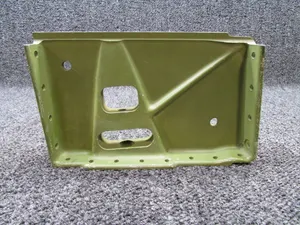

Parts listed for sale by vetted eBay sellers — confirmed on eBay at checkout.