Advisory Circular AC139-4 Revision 7
Cessna 207 Skywagon · Emergency Procedures
Overview
This document is an Advisory Circular (AC) published by the Civil Aviation Authority (CAA) of New Zealand, specifically focusing on aerodrome rescue and firefighting (RFS) procedures. It outlines acceptable compliance methods with the aerodrome emergency plan and firefighting requirements as per Civil Aviation Rule Part 139. The document is intended for aerodrome operators and RFS personnel, detailing the necessary training, equipment, and operational standards required to ensure effective emergency response in the event of an aircraft accident. Key updates in Revision 7 include new sections on simulated training and operational requirements, as well as updates to medical and training standards.
- The RFS must create survivable conditions and initiate rescues during aircraft accidents.
- Personnel must meet strict medical fitness standards, including vision and hearing assessments.
- Annual live fire training is mandatory for RFS personnel to maintain skills.
- Personal protective equipment (PPE) is essential for all firefighting personnel.
- Response capabilities must be verified regularly to ensure readiness for emergencies.
Document
Source
Originally published by www.aviation.govt.nz. Sprinkle hosts a reference copy with an added summary, specifications and searchable full text.
Document details
- Type
- Emergency Procedures
- Year
- 2023
- Pages
- 32
- File size
- 574 KB
- Publisher
- www.aviation.govt.nz
Most owners only have the POH. Here's the essential set for the Cessna 207 Skywagon.
- Pilot's Operating Handbook / AFM
- Checklist
- Maintenance Manual
- Parts Catalog (IPC)
- Systems & Wiring
- Service Bulletins
- Type Certificate (TCDS)
Free — save the 207 Skywagon 207 to your watchlist and track it in one place.
More Cessna 207 Skywagonmanuals & documents
- Capability listChecklist
- Federal Register / Vol. 85, No. 104 / Friday, May 29, 2020 / Proposed RulesService Bulletins
- Engine failure – Townsville Airport, Qld, 1 November 2006, VH-UBX, Cessna Aircraft CompanyOther Documents
- AVIATION COORDINATOR HANDBOOKOther Documents
- Aviation Occurrence Report 02-001 Cessna 207, ZK-SEV, collision with terrainOther Documents
- Cessna 207 Skywagon Flight ManualFlight Manual
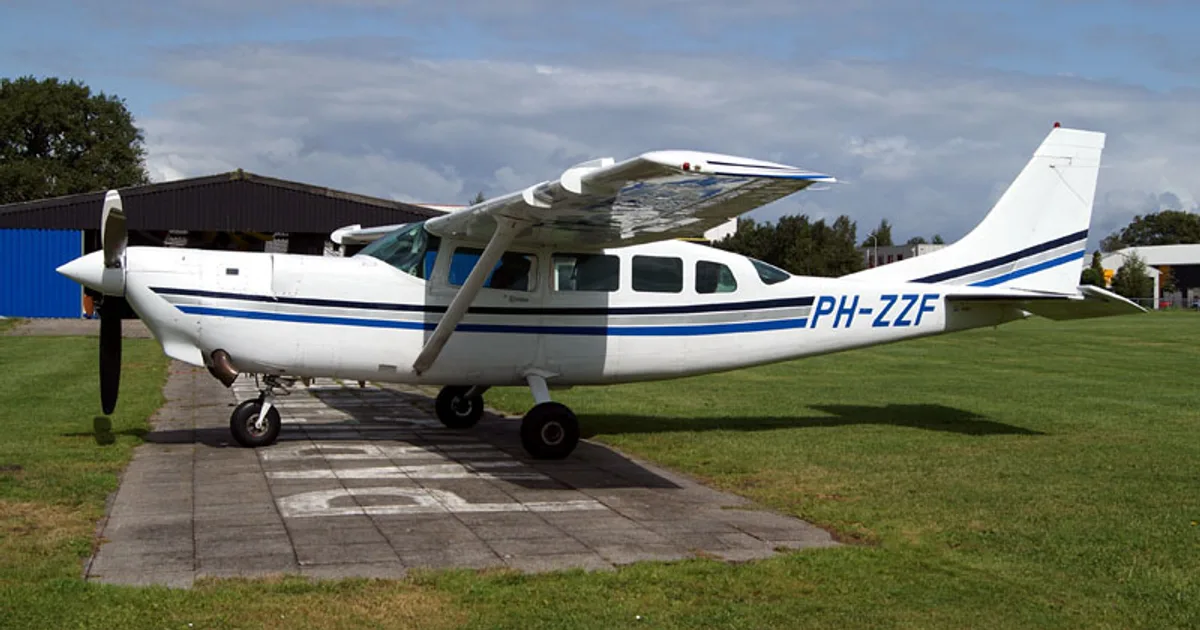
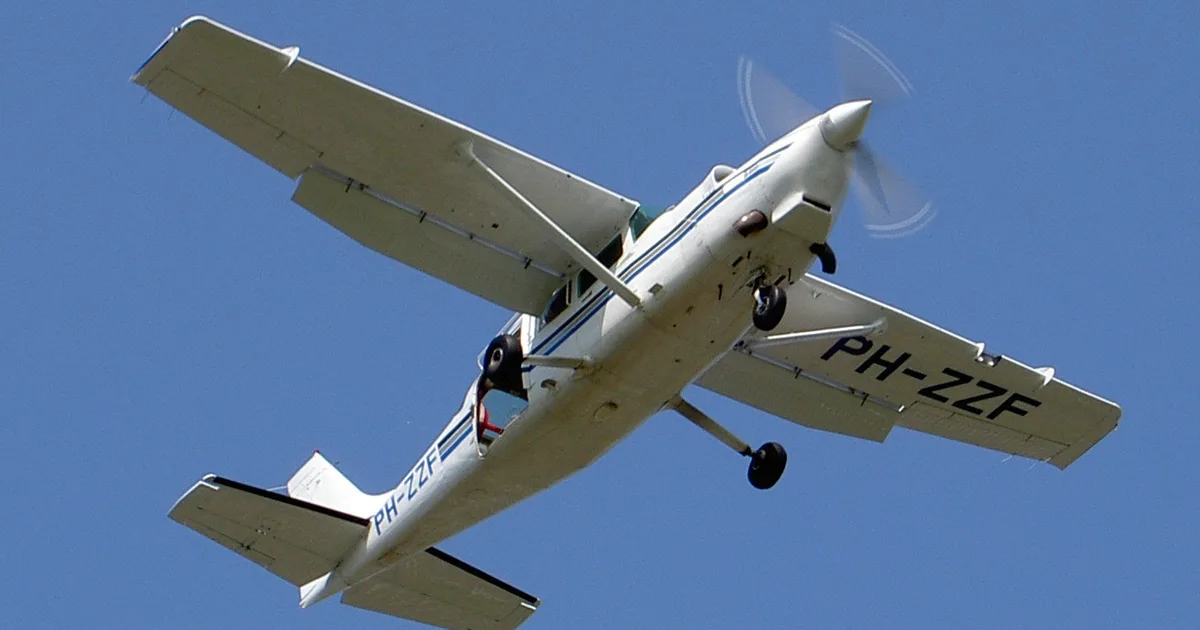
If you fly the Cessna 207 Skywagon, you may also be researching these.



In this document
Introduction
The principal objective of the RFS is to save lives during aircraft accidents at or near aerodromes. The RFS must create survivable conditions, provide egress routes, and initiate rescues when necessary. Effective rescue depends on training, equipment, and the speed of response.
Application
This AC provides guidance for compliance with Part 139 requirements for RFS at aerodromes serving international and domestic routes. It outlines the types of RFS appropriate for different aerodrome categories.
Personnel
The document emphasizes the importance of medical fitness for RFS personnel, detailing standards for vision, hearing, and overall health. Regular assessments are required to ensure personnel can perform their duties safely.
Training
Training for RFS personnel includes practical and theoretical components, with an emphasis on annual live fire training and simulated exercises. Continuous development is encouraged to maintain skills and competencies.
Firefighting and Rescue Equipment
The AC specifies the types of firefighting and rescue equipment necessary for effective operations, including personal protective equipment (PPE) and communication tools.
Response Capability
The document outlines the required response capabilities for RFS, including verification of response times and the adequacy of resources available for emergencies.
Aeroplane Classification by Aerodrome Category
This section categorizes aircraft types based on their operational requirements at aerodromes, which influences the RFS response and equipment needed.
Safety notes
- Personnel must be free from conditions that could impair their performance during emergencies.
- Regular medical assessments are critical to ensure ongoing fitness for duty.
Full document text
Published by Civil Aviation Authority PO Box 3555 Wellington 6140 Authorised by DCE Aviation Security and Infrastructure Advisory Circular AC139-4 Revision 7 Aerodrome Rescue and Firefighting Xx xxxx 202x General Civil Aviation Authority (CAA) Advisory Circulars (ACs) contain information about standards, practices, and procedures that the Director has found to be an acceptable means of compliance with the associated rule. Consideration will be given to other methods of compliance that may be presented to the Director. When new standards, practices, or procedures are found to be acceptable they will be added to the appropriate AC. Purpose This AC describes an acceptable means of compliance with aerodrome rescue and firefighting requirements under Civil Aviation Rule Part 139 Aerodromes—Certification, Operation and Use. Related Rules This AC relates specifically to rules 139.57, Aerodrome emergency plan, 139.59, Rescue and firefighting – category determination, 139.61, Rescue and firefighting extinguishing agents, 139.63, Rescue and firefighting vehicles, 139.65, Rescue and firefighting personnel requirements, 139.67, Rescue and firefighting response capacity, and 139.67A, Rescue and firefighting communication and alerting system. Change Notice Revision 7: • Adds new sections: ➢ 4.7, Simulated and synthetic training, and ➢ 7.4, Rescue and firefighting – operational requirements • Updates some medical requirements • Updates some entry training standards • Adds Tables 1 and 2 to section 6.5 Reserve supply • Deletes the Definitions section • Updates old Table 1, now Table 3, Typical aeroplane types and the respective category • Updates style and format to align with current AC standards, and • Adds a Version History. Revision 6 adds an example of a rescue and firefighting service (RFS) ‘response model’; and clarifies required actions when ‘initiating the rescue’. Version History History log: Revision no Effective date Summary of changes AC139-04, Rev 0 21 Dec 1992 Initial issue AC139-04, Rev 1 13 Sept 1999 Superseded AC139-04, Rev 0, that was published in hard copy on grey paper. No technical change to this AC. AC139-04, Rev 2 16 Dec 2003 Encompassed the recommendations of the Rescue and Firefighting CIRAG TSG, the addition of information on aeroplane classification by aerodrome category, and editorial and formatting updates. AC139-4, Rev 3 27 Apr 2007 Re-numbered from AC 139-04 to AC 139-4 as part of a project to standardise the numbering of all ACs AC139-4, Rev 4 26 Sept 2014 Made significant changes as follows: • re-numbered headings and subheadings as part of a systematic update to standardise the formatting of all ACs • incorporated amendments to reflect industry best practice, and • amended headings and sub-headings as necessary. AC139-4, Rev 5 7 Feb 2016 Made significant changes as follows: • updated to align with Amendment 12 to Part 139 • introduced an annual live hot fire training exercise • incorporated fitness and competency checks of participants prior to commencement of the annual live hot fire training exercise, and • added option to review fitness levels during each operational shift. AC139-4, Rev 6 19 Aug 2016 Added an example of a rescue and firefighting service (RFS) ‘response model’. Clarified required actions when ‘initiating the rescue’. AC139-4, Rev 7 Xx xxx 202x Adds new sections: • 4.7, Simulated and synthetic training • 7.4, Rescue and firefighting – operational requirements Updates some medical requirements Updates some entry training standards Adds Tables 1 and 2 to section 6.5 Reserve supply Deletes the Definitions section Updates old Table 1, now Table 3, Typical aeroplane types and the respective category Updates style and format to align with current AC standards Adds a Version History. Note: Because of the new material, the numbering of some sections has changed. Advisory Circular AC139-4 Revision 7 Xx xxxx 202x CAA of NZ 4 Table of Contents 1. Introduction .......................................................................................................... 5 1.1 The principal objective ................................................................................................ 5 1.2 Initiating the Explanation of initiate rescue ................................................................... 5 2. Application ............................................................................................................ 6 2.1 Aerodromes serving international or domestic routes .................................................... 6 2.2 Electronic filing of differences (EFOD) .............................................................................. 7 2.2 RFS Guidance material ................................................................................................ 7 3. Personnel .............................................................................................................. 7 3.1 Entry training standards .............................................................................................. 7 3.2 Personnel medical fitness ............................................................................................ 8 3.2 Continued medical fitness of personnel ........................................................................ 9 3.3 Continued physical fitness of personnel ........................................................................ 9 3.4 Entry training standards ............................................................................................ 10 3.4 Continued rescue and firefighting service (RFS) personnel development ........................ 10 3.5 RFS organisational structure ...................................................................................... 11 3.6 Personal protective equipment (PPE) Protective clothing for personnel ......................... 11 3.7 Personnel levels ....................................................................................................... 12
Show full textShow less
3.8 Task and resource analysis (TRA) ................................................................................ 13 4 Training ............................................................................................................... 15 4.1 General ................................................................................................................... 15 4.2 Practical training ...................................................................................................... 16 4.3 Theoretical training .................................................................................................. 16 4.4 Delivery of training ................................................................................................... 17 4.5 Annual live (hot) fire training ..................................................................................... 17 4.6 Simulated and synthetic training ................................................................................ 18 5 Firefighting and Rescue Equipment ....................................................................... 18 5.1 Firefighting equipment .............................................................................................. 18 5.2 Rescue equipment .................................................................................................... 18 5.3 Mutual aid emergency agreements ............................................................................ 19 5.4 Operations in a difficult environment ......................................................................... 20 5.5 Communications ...................................................................................................... 21 6 Extinguishing Agents ............................................................................................ 21 6.1 Complementary extinguishing agents ......................................................................... 21 6.2 Halogenated hydrocarbons ....................................................................................... 21 6.3 Foam concentrates ................................................................................................... 22 6.4 Foam characteristics ................................................................................................. 22 6.5 Reserve supply ......................................................................................................... 22 6.6 Water supplies ......................................................................................................... 23 7 Response Capability ............................................................................................. 24 7.1 Frequency of RFS rescue and firefighting response verification ..................................... 24 7.2 Response location .................................................................................................... 24 7.3 Response timing ....................................................................................................... 24 7.4 Rescue and firefighting – operational requirements ..................................................... 25 Definitions of Emergencies and Incident .................................................................... 26 8 Aeroplane Classification by Aerodrome Category .................................................. 27 8.1 Aircraft categories .................................................................................................... 27 Advisory Circular AC139-4 Revision 7 Xx xxxx 202x CAA of NZ 5 1. Introduction 1.1 The principal objective The principal objective of a rescue and firefighting service (RFS) is to save lives in the event of an aircraft accident or incident occurring at, or in the immediate vicinity of, an aerodrome. The role of the RFS is provided to: • create and maintain survivable conditions, • provide egress routes for occupants, and • initiate the rescue of those occupants unable to make their escape without direct aid when necessary, using The rescue may require the use of equipment and personnel other than those intended assessed primarily for rescue and firefighting purposes. The most important factors bearing on in effective rescue in an aircraft survivable accident are the: • training received • effectiveness of the equipment, and • speed with which RFS personnel and equipment designated for rescue and firefighting purposes can be deployed. 1.2 Initiating the Explanation of initiate rescue This subsection contains an example of an RFS response model which identifies that the response objective can be splits the actions into three main parts (phases)1: The three phases are as follows • Phase 1 –Aerodrome RFS create and maintain survivable conditions, and facilitate rescue (aircraft occupants self-evacuate or receive limited assistance with evacuation). • Phase 2 – Local fire authority(s) and support services respond to and assemble at the aerodrome. • Phase 3 – Rescue of occupants who are unable to make their escape without direct aid. 1 This example is relevant to an aerodrome which has determined that on-board rescue efforts will not be undertaken until external fire services are present. Some aerodromes may have the capability to start Phase 3 prior to, or in parallel with, Phase 2. Advisory Circular AC139-4 Revision 7 Xx xxxx 202x CAA of NZ 6 When initiating the rescue, an RFS team needs a realistic understanding of the: CAA view regarding the extent of required actions or steps when ‘initiating the rescue’ is that it should be defined with regard to: a) rescue capabilities of aerodrome RFS b) rescue capability with back-up, and c) reliance on external provision. These capabilities would have to be should be set out in the aerodrome emergency plan (AEP) as per rule 139.57, Aerodrome emergency plan, and remain acceptable to the Director. In addition, planned actions as part of initiating the rescue should Any interpretation of ‘initiate the rescue’ must be considered against in the context of the particular aerodrome’s: • operation • types of aircraft • geographical location and terrain • pre-determined attendance of local emergency services, and • time of response by local emergency services, etc. Initiating ‘Initiate the rescue should at least involve ensuring that the local emergency services have been alerted. In some situations initiating the rescue could be interpreted as opening aircraft doors/exits and positioning ladders/steps in readiness for support services to assemble and commence begin the rescue phase. whilst Iin other situations it might be necessary for the RFS may need to make plans provision to be able to carry out rescues themselves with limited aid from support services, as may be the case in remote locations. A task and resource analysis (TRA) can help clarify the aerodrome rescue capability and the role of external services. CAA advises that a Aerodrome operators should collaborate with their local fire and rescue authority(s) and support services to identify the steps required to meet Phase 3 of the response model. and o Once agreed, this should be reflected in the responsibilities of each agency concerned in the AEP. , and outlined in a m Mutual aid emergency agreements between all emergency and support services may be involved. 2. Application 2.1 Aerodromes serving international or domestic routes This AC advisory circular contains guidance on for compliance with Part 139 requirements for RFS rescue and firefighting. For simplicity this AC advisory circular refers to: Advisory Circular AC139-4 Revision 7 Xx xxxx 202x CAA of NZ 7 • aerodromes to which rule 139.5(aa)(1) applies as ‘aerodromes serving international routes’, and • aerodromes to which rule 139.5(aa)(2) applies as ‘aerodromes serving domestic routes’. Rule 139.59 should be read in its entirety to determine what type of RFS is appropriate for different types of the fire and rescue category required at certificated aerodromes. 2.2 Electronic filing of differences (EFOD) New Zealand has accepted that aerodromes serving international routes will comply with the applicable standard of ICAO Annex 14. At aerodromes serving domestic routes only, New Zealand has filed a difference with the ICAO, and a standard has been developed based on the characteristics of the aircraft being served by the aerodrome. 2.2 RFS Guidance material This AC advisory circular contains guidance for compliance with Part 139 requirements for rescue and firefighting. Coverage of the different aspects of rescue and firefighting is not exhaustive in this advisory circular which also an RFS and addresses elements that need further expansion and guidance. There are several publications available which address the elements of RFS rescue fire in detail, and below is a list of some publications which can be referred to, for further guidance material. including: • ICAO Annex 19 Safety Management System • ICAO Doc 9683 Human Factors Training Manual • CAP 1150 Rescue and Fire Fighting Service Task and Resource Analysis • ICAO Annex 14 Aerodromes • ICAO Doc 9137-AN/898 Airport Services Manual Part 1 Rescue and Fire Fighting • National Fire Protection Association (NFPA) Codes – e.g. 402, 403, 1003 & 1500 • Guidance on delivering an effective Airport Rescue and Fire Fighting Service (RFFS) (caa.co.uk) ICAO Doc 7192-AN/857 Training Manual Part E-2 Aerodrome Fire Services Personnel Information on the ICAO Documentation is obtainable from the ICAO website at http://www.icao.int/icao/en/sales.htm Information on the National Fire Protection (NFPA) Codes is available from the NFPA website at http://catalog.nfpa.org/ 3. Personnel 3.1 Entry training standards A recruitment and retention policy should ensure that all RFS rescue and fire personnel go through a detailed and comprehensive assessment process to ensure that the right candidate/s is/are selected for the position. Advisory Circular AC139-4 Revision 7 Xx xxxx 202x CAA of NZ 8 If rescue and fire personnel are recruited with no previous RFS experience, they should take an initial fire fighter’s course and be deemed competent on acquisition of skills. Competency assessments in both practical and technical aspects should be conducted within this course. 3.2 Personnel medical fitness Personnel selected for rescue and firefighting duties should be free from any physical or mental condition or disability which might limit their performance or which might be aggravated by a sudden level of exertion. Medical fitness should be assessed before employment and regularly throughout their career to ensure health conditions are identified and managed, enabling firefighters to remain capable of conducting prescribed duties when on watch. If satisfactory visual function for the rescue and firefighting duties is achieved only with the use of correction, the spectacles, inserts or contact lenses must provide optimal visual function, be well-tolerated, and suitable for rescue and firefighting duties, including the wearing of breathing apparatus. The medical fitness of a prospective rescue and firefighting personnel should be determined by a medical examination and assessment conducted by a registered medical practitioner to the following standards: (a) Vision - applicants should have: (i) a distance visual acuity (without correction) of 6/12 in each eye separately. No standard is set for near visual acuity (ii) normal fields of vision. (b) Colour perception - applicants should have normal colour perception as tested by pseudo-isochromatic plates. If this is failed by more than 2 errors with a 24 plate set, they should demonstrate an ability readily to identify coloured lights of signal red, signal green and white as tested by the normally accepted lantern tests. (c) Hearing - applicants should understand an average conversational voice in a quiet room, using both ears, at a distance of 2.5 m (8 feet) from the examiner, and with the back turned to the examiner. In cases of doubt, and on-the-job hearing assessment should be used to determine whether there is adequate ability to understand radioed instructions and verbal instructions under the conditions of background noise to be encountered in and around operating firefighting appliances. (d) Medical fitness - applicants should be free from any congenital or acquired disability and the effects of medication or of drugs causing such degree of functional incapacity as is likely to interfere with the efficient performance of their duties during the period before the next medical review. (e) Applicants should be free from any risk factor, disease, or disability which renders them likely to become suddenly unable to perform their assigned duties safely during the period before the next medical review. (f) There should be no history or current diagnosis of the following: (i) psychosis, depression or other psychiatric illness (ii) alcohol or drug dependency Advisory Circular AC139-4 Revision 7 Xx xxxx 202x CAA of NZ 9 (iii) epilepsy (iv) any disturbance of consciousness without an explanation (v) coronary artery disease (whether successfully treated or not) (vi) other cardiac conditions treated by surgical means (for example, valve replacement or insertion of a pacemaker) (vii) any active disease (or functional disability) of the lungs (viii) diabetes mellitus controlled by insulin. In determining the complete fitness of a person, consideration should be given to the arduous nature of rescue and firefighting duties. Particular care should be taken if personnel are selected to wear respiratory equipment, where psychological factors are significant, in addition to physical suitability. The nature of testing, and procedures for assessing, the suitability of prospective rescue and firefighting personnel should be established and included in the aerodrome certification exposition. 3.2 Continued medical fitness of personnel Medical fitness assessments specific to RFS should be developed. The medical fitness assessments should be conducted for pre-employment entry as rescue and firefighting personnel as well as ongoing medical fitness assessments for existing staff. The frequency of medical fitness assessments should be determined by local arrangement. The medical fitness framework assessments should be used to identify any underlying medical conditions, which may pose a risk to the individual rescue and firefighting personnel, during physically demanding activities. The assessment should include a medical certificate: (i) from a registered medical practitioner (ii) with the periodicity of the checks set by the medical practitioner based on the rescue and firefighting personnel history, and results of examinations (iii) with a maximum check periodicity of four years. 3.3 Continued physical fitness of personnel Required fitness levels should be determined by the aerodrome operator and could be maintained as an employment condition and reviewed during each operational shift. The physical fitness assessments should be conducted for pre-employment entry as rescue and firefighting personnel as well as ongoing physical fitness assessments for existing staff to ensure that rescue and firefighting personnel are maintaining their level of physical fitness. RFS managers should develop various types of tests to ensure that the aerobic endurance fitness, anaerobic fitness and flexibility is tested to determine if RFS the rescue and firefighting personnel has have the required physical fitness level for the job. The physical fitness assessment should also be conducted at least once a year. Aerobic endurance fitness is the ability to continue to exercise for prolonged periods of time at low to moderate or high intensity. This is typically what limits the ability to continue to run, cycle or swim for more than a few minutes and is dependent upon the body‘s heart, lungs and blood to get the oxygen to the muscles (VO2) providing the sustained energy needed to Advisory Circular AC139-4 Revision 7 Xx xxxx 202x CAA of NZ 10 maintain prolonged exercise. Typical aerobic activities include walking, jogging, cycling, rope skipping, stair climbing, swimming, and or any other various endurance activities. Anaerobic fitness works differently to aerobic fitness. It is an activity that requires high levels of energy and is done for only a few seconds or minutes at a high level of intensity. The term anaerobic means - without oxygen. Participation in anaerobic activities leads to anaerobic fitness, which may be defined as higher levels of muscular strength, speed and power. Examples of anaerobic activities include heavy weight lifting, running up several flights of stairs, sprinting, power swimming, or any other rapid burst of hard exercises. Muscular strength is the ability to lift, pull, push and carry heavy objects over. Flexibility refers to the ability to move the limbs and joints into specific positions at the end of their normal range of movement. Flexibility is important as it will allow the body to work in cramped positions without unduly stressing the muscles, tendons and ligaments and may reduce the risk of injury. Flexibility is best developed using slow controlled stretching exercises. 3.4 Entry training standards A recruitment and retention policy should ensure that all rescue and fire personnel go through a detailed and comprehensive assessment process to ensure that the right candidate is selected for the position. If rescue and fire personnel are recruited with no previous RFS experience, they should undertake an initial fire fighters course and be deemed competent on acquisition of skills. Competency assessments in both practical and technical aspects should be conducted within this course. 3.4 Continued rescue and firefighting service (RFS) personnel development An environment conducive to learning and development should be provided, enabling personnel to fulfil their potential. All personnel in the aerodrome RFS, regardless of RFS experience on or off aerodromes, should participate in an ongoing structured learning program (SLP). Competency assessments in both practical and technical aspects should be conducted within this program. All RFS watches, shifts or crews should participate in comprehensive recurrent training appropriate to their roles and tasks to maintain skills necessary to ensure all RFS operations are carried out safely and effectively. In addition to the activities listed in section 4.2, Practical training, RFS personnel wanting to widen their skill base could also focus on training centred on: a) participation in the coordinated incident management system in emergency response activities b) leading the entry team in an aircraft incident (when resources allow) c) the initial command and control at hazardous substance emergencies, and d) practicing of casualty care during rescue and extrication activities. This training should include: (a) realistic fire drills commensurate with the types of aircraft in use at the aerodrome Advisory Circular AC139-4 Revision 7 Xx xxxx 202x CAA of NZ 11 (b) live fires associated with fuel discharge under very high pressure (requirement to be determined at local level) (c) drills to maintain operational performance with fire service equipment (d) training to include human performance and team coordination (e) breathing apparatus training in heat and or smoke. Typical courses and syllabi would be those available in the national qualifications framework system for “fire and rescue services – airport” under the New Zealand qualifications authority (http://www.nzqa.org.nz/) and the industry training organisation (http://skills.org.nz/http://skills.org.nz/. 3.5 RFS organisational structure The RFS organisational structure should show clear lines of accountability so that it is apparent to all where safety responsibilities lie when responding to an incident or carrying out routine duties. Each RFS unit should establish a training syllabus, with competencies and experience requirements for each rank from recruit fire fighter to supervisory and management level. Sole duty RFS personnel should be able to display the required competencies to create and maintain survivable conditions and act as the first on scene point of contact. Aerodrome operators may use different titles in their organisational structure (such as firefighter, supervisor and manager) but they should equate to the following in terms of training, qualifications and accountability: • Rescue firefighter - carries out day-to-day firefighting and other duties. • Rescue fire officer - in charge of the watch at smaller fire stations or the crew of a fire appliance. Carries out day-to-day firefighting and other duties. Will attend incidents as officer in charge (OIC) of an appliance and will also take command of small-scale incidents. May undertake specialist duties such as training or fire safety. • Senior rescue fire officer - responsible for management of a fire station or day-to-day work in a specific policy area. Will take charge of large-scale incidents or undertake specialist tasks such as support at an incident and any other duties. The RFS organisational structure should show clear lines of accountability so that it is apparent to all where safety responsibilities lie. 3.6 Personal protective equipment (PPE) Protective clothing for personnel It is essential that All personnel operating at an aircraft fire need to be provided with protective clothing (personal protective equipment or PPE) designed to provide protection from radiated heat and occasional flame contact, and injury from abrasive contact. Consideration should be given to the extent to which it is necessary to wear continuously all or some elements of, the protective clothing so as to ensure immediate response when a call for attendance at an aircraft accident is received. Some forms of protective clothing create dressing problems which cannot easily be solved within the crew compartment of a moving vehicle. Advisory Circular AC139-4 Revision 7 Xx xxxx 202x CAA of NZ 12 On responding to a fire call all RFS personnel should don as a minimum, their firefighter boots and leggings: a) prior to mounting the fire vehicle, and b) prior to entering the fire appliance or response vehicle, and c) enroute to the scene of the incident, and d) before becoming involved with operations at the scene of the incident. Each rescue firefighter should be provided with at least the following items of protective clothing: a) protective helmet complete with visor b) bunker coat and leggings c) firefighting gloves d) firefighting boots, and e) firefighter’s flash hood. Self-contained respiratory equipment should be provided for personnel who are required to enter a smoke-filled cabin or operate in the presence of smoke or toxic gases. Respiratory protection should be provided for personnel who may be required to work in areas where breathing may be hazardous due to airborne particles (e.g. composite materials). Each aerodrome should also assess the need for other items such as entry protective suits or chemical suits. 3.7 Personnel levels RFS managers need to manage timetables to make sure that the aerodrome’s RFS has The objective of providing an adequate level of competent personnel is to have available sufficient trained staff at all responsibility levels to ensure that: a) the RFS is capable of achieving the principal objective b) all vehicles and equipment can be operated effectively and safely c) continuous agent application at the appropriate rate(s) can be fully maintained (as determined in Part 139 for the applicable category) d) sufficient supervisory grades can implement a coordinated incident management system, and e) the RFS elements of the AEP can be effectively achieved. The RFS vehicles should be staffed to ensure their ability to discharge at their maximum capability, extinguishing agents, principal and complimentary, both effectively and safely, at an aircraft accident / incident. Any control room or communications facility operated by, and serving, the RFS can continue to provide this service until alternative arrangements to undertake this function are initiated following the procedures in the AEP. Advisory Circular AC139-4 Revision 7 Xx xxxx 202x CAA of NZ 13 In determining the minimum number of RFS personnel and supervisory levels required, a task and resource analysis (TRA) should be completed, and the level of staffing and supervisory control needed are documented or referenced in the aerodrome exposition. 3.8 Task and resource analysis (TRA) A TRA should be completed to determine the minimum number of competent personnel required to deliver an effective airport RFS, at different times of the day and night. When carrying out a TRA, RFS managers need to it is essential to fully understand the complexity of the various roles an individual is required to do to achieve the principal objective of the RFS. The task analysis should observe human factor principles to obtain optimum response by all existing agencies participating in emergency operations. The principles should include the effect of on human performance due to of workload, capabilities, functions, decision aids, environmental constraints, team versus individual performance and training effectiveness. When assigning operational duties to RFS personnel enroute on the way to the incident, attention should be given to the following. RFS managers need to stress the need to: a) There is need to: • approach the scene with extreme caution and watch for evacuating occupants, wreckage debris, fuel ponding, and other hazards, and • avoid driving through any smoke which obscures your vision and view of potential evacuees, and • avoid driving over any aircraft wreckage, and • ensure the monitor-operator is able to: o assume the operating position while the vehicle is in motion, and o operate the monitor through at least 60 degrees either side of the central axis of the vehicle. The following items will assist in determining the basic contents of a TRA: a) Description of the aerodrome(s) including the number of runways. b) Promulgated RFS categories (Aeronautical Information Publication (AIP)). c) Response time criteria (area, times and number of fire stations). d) Current and future types of aircraft movements. e) Operational hours. f) Current RFS structure and establishment. g) Current level of personnel. h) Level of supervision for each operational crew. i) RFS qualifications/competence (training programme and facilities). Advisory Circular AC139-4 Revision 7 Xx xxxx 202x CAA of NZ 14 j) Extraneous duties (to include domestic and first aid response). k) Communications and RFS alerting system including extraneous duties. l) Appliances and extinguishing agents available. m) Specialist equipment: fast rescue craft, hovercraft, water carrier, hose layer, extending boom technology and high reach extendable turret technology. n) Initial emergency medical aid: roles and responsibilities. o) Medical facilities: roles and responsibilities. p) Pre-determined attendance- local council authority services, police, fire and ambulances, etc. q) Incident task analysis- feasible worst-case scenarios, workload assessment, human performance/factors including: i. mobilisation ii. deployment to scene iii. scene management iv. firefighting v. suppression and extinguishment vi. application of complementary agents vii. post fire security/control viii. personnel protective equipment ix. rescue teams x. aircraft evacuation, and xi. extinguishing agent replenishment. Note: the aim is to identify any pinch points within the current workload and proposed workload. r) Appraisal of existing RFS provision. s) Future requirements - aerodrome development and expansion. t) Enclosures could include airport maps, event trees to explain tasks and functions conducted by the RFS. u) AEP and procedures. Note: The list above is not exhaustive and should only act as a guide. At aerodromes serving international routes, a fully trained senior rescue fire officer should arrive at the scene of the incident no later than the first responding RFS vehicle. This will allow an early appraisal of conditions to assess and direct firefighting operations. Advisory Circular AC139-4 Revision 7 Xx xxxx 202x CAA of NZ 15 At aerodromes serving domestic routes only, a fully trained senior fire officer or a suitably trained fire officer should arrive at the scene of the incident no later than the first responding RFS vehicle. This will allow an early appraisal of conditions to assess and direct firefighting operations. 4 Training 4.1 General Personnel whose duties consist primarily of the provision of RFS for aircraft operations are infrequently called upon to face a serious situation involving lifesaving at a major aircraft fire. They will experience a few incidents and a larger number of standbys to cover movements of aircraft in circumstances where the possibility of an accident may reasonably be anticipated, but will seldom be called upon to put their knowledge and experience to the supreme test. It follows, therefore, that only by means of a most carefully planned and rigorously followed programme of training can there be any assurance that both personnel and equipment will be fit to deal capably with a major aircraft fire should the necessity arise. Training of RFS rescue and firefighting personnel falls into two broad categories: a) Initial training in the use and maintenance of equipment, and operational tactics training, which covers the development of personnel and equipment to accomplish control of fire to permit rescue operations to proceed. b) Structured learning program (SLP) which should be commenced on completion of the initial training course. All RFS personnel, regardless of previous applicable experience, on or off the aerodrome should participate in an SLP. The core content of the program can be organised into nine topics: i. fire dynamics, toxicity and basic first aid ii. extinguishing agents and firefighting techniques iii. handling of vehicles, vessels and equipment iv. airfield layout and aircraft construction v. operational tactics and manoeuvres vi. emergency communication vii. leadership performance viii. physical fitness, and ix. auxiliary modules (e.g. rescue in difficult terrain, response to biological/chemical threats etc). Training also needs to address the key paradox of an RFS role: trained fire fighters who spend most of their professional life not fighting fires, but who need to be fully prepared to do so at very short notice. RFS personnel at aerodromes are not often going to be called on to face a serious situation involving lifesaving at a major aircraft fire. They are likely to experience a few incidents and a larger number of standbys to cover movements of aircraft in circumstances where an accident Advisory Circular AC139-4 Revision 7 Xx xxxx 202x CAA of NZ 16 may reasonably be anticipated, but will seldom be called upon to put their knowledge and experience to the supreme test. This makes it harder for RFS personnel to maintain their operational readiness for major fires, and increases the risk that the RFS unit will not be prepared. To mitigate this risk of unpreparedness, maintaining fitness and readiness, e.g. by running drills and desktop exercises, needs to be central to RFS training. The training programme in its entirety should be designed to ensure that both personnel and equipment are at all times prepared and equipment is effective anything less than full preparedness increases the risk to both RFS personnel and those they may need to assist. fully efficient. This represents a very high standard of achievement but anything less than full efficiency is unacceptable and may be dangerous both to those in need of aid and also to those who are seeking to give such aid In addition, the training program should also be designed to build cohesiveness between key functional units of an RFS team to deliver a consistent level of proficiency during emergencies. To ensure a high standard of operational readiness, RFS managers should develop a competency audit framework, to assess the effectiveness of RFS training at both individual and team levels. All initial training courses and SLPs all structured learning programs should include an assessment of competence with oral technical, practical and written technical tests. The minimum competence standard for students should be established for each course. Each RFS unit should have access to a training ground or training area on their aerodrome at a location that does not compromise their response time. 4.2 Practical training The area identified for practical training should be able to accommodate activities such as: a) realistic fire drills commensurate with the types of aircraft in use at the aerodrome b) live fires associated with fuel discharge under very high pressure (requirement to be determined at local level) c) drills to maintain operational performance with fire service equipment d) training to include human performance and team coordination, and e) breathing apparatus training in heat and or smoke. All RFS personnel at each RFS unit should be periodically assessed to determine their continued competencies in the practical activities identified above. ((a) through (e)). 4.3 Theoretical training The area identified for theoretical training should be conducive to learning and able to accommodate theoretical input, lectures, seminars and self-study. Each RFS unit should have access to a training room or training area, on their aerodrome at a location that does not compromise their response time. Each RFS unit should provide training aids to support the delivery of the nine topics in section 4.1(b) above. that make up the content of the SLP (refer to paragraph 4.1). Advisory Circular AC139-4 Revision 7 Xx xxxx 202x CAA of NZ 17 The training aids used for the study and instruction of the nine topics of the SLP can be in a variety of formats, such as: a) power point presentations b) visual aids c) fire service manuals d) interactive computer simulation and ‘synthetic’ training, discussed in more detail below, and e) locally agreed reference manuals. All RFS personnel at each RFS unit should be periodically assessed to determine their continued competency in each of the topics that make up the SLP content of the structured learning program. 4.4 Delivery of training Each RFS unit should identify a person that is responsible for the coordination and supervision of RFS rescue and firefighting training, and the maintenance of all training records. Personnel used for the delivery of training should be suitably trained and experienced in the RFS rescue and firefighting role or specialists in a particular aspect of the training syllabus. The design of a course for RFS a rescue and firefighting personnel at an aerodrome serving domestic routes only needs to address the fact that the RFS rescue and firefighting personnel are is not supported by a large organisation and could be the sole duty rescue and firefighting personnel. The training of such a person should consider this self-sufficiency with emphasis on proficiency at the aerodrome and on the equipment provided. Each RFS unit should establish a training syllabus, and competency cies and experience requirements for each supervisory and management level. Practical and theoretical forms of training are a continuing commitment and should be resourced accordingly. 4.5 Annual live (hot) fire training Each member of an airport RFS unit should participate in at least one live ‘hot’ fire training exercise per 12-month period. The objective is for airport RFS personnel to observe fire behaviour and demonstrate the practical tactics and techniques that are used to control and extinguish a live ‘hot’ aircraft fire in a range of aircraft fire scenarios These scenarios may including: a) live external fire on a static training rig simulating an aircraft fuselage b) live internal fire on a static training rig simulating an aircraft fuselage c) live fire of an underwing engine on a static training rig simulating an underwing engine fire d) live fuel pond fire, and/ or e) live fire training to include human performance and team coordination. Advisory Circular AC139-4 Revision 7 Xx xxxx 202x CAA of NZ 18 The live hot fire training Exercises should begin with all participants declaring themselves having ensured that they are fit and well enough to take part. If deemed necessary, the fitness level of any participant may be ascertained by an on-site fitness test before prior to taking part. If a fitness test is required, suitable recovery time should be allowed before the participant takes part in the live hot fire training exercise. The operational competence of each firefighter is key to the safe conclusion of the live hot fire training exercise and as such, individual operational competence should be ascertained prior to participation. 4.6 Simulated and synthetic training In addition to simulated training, and other types of virtual reality experiences, ‘synthetic’ training, that is, a mixture of virtual reality (VR), augmented reality (AR), Mixed Reality (MR) and Artificial Intelligence (AI) interacting with a live environment, can significantly enhance training of RFS staff. Despite the potential of these training tools and methods, however, they do not provide a full training experience alone: they are an enhancement to more traditional methods, and should be treated as such. They do not replace the need for classroom training, formal study, learning from more experienced colleagues or practical on-the-job training. 4.7 Fitness training Fitness levels are to be maintained as an employment condition and may be reviewed during each operational shift. 5 Firefighting and Rescue Equipment 5.1 Firefighting equipment Each RFS vehicle required under Part 139 should be equipped with at least the following firefighting equipment: a) fire delivery hose b) firefighting branches c) standpipe, key and bar, and d) roof mounted monitor. 5.2 Rescue equipment Aerodrome operators should consider providing rescue equipment on vehicles in line with the level of aircraft operations expected: Rescue equipment commensurate with the level of aircraft operations expected should be provided on the rescue and firefighting vehicle(s). Aerodromes serving international routes should have at least the following equipment available for rescue at the scene of any aircraft accident: a) portable lighting equipment providing flood and spot lighting b) power operated cutting tools that can be operated from a portable power source c) hand tools including wire and bolt cutters, screwdrivers of appropriate sizes and designs, crowbars, hammers, axes, metal and wood saws Advisory Circular AC139-4 Revision 7 Xx xxxx 202x CAA of NZ 19 d) forcing equipment, usually hydraulically operated, for bending or lifting operations e) sufficient breathing apparatus sets f) medical first aid equipment, ideally pre-packed wound dressings in protective containers, scissors, adhesive dressings and burn dressings, stretchers or spine boards and blankets g) communications equipment in the form of radiotelephone units and a portable loud hailer h) miscellaneous items including shovels, grab hooks, lines (cordage), harness cutting knives, and ladders of appropriate type and length, related to the likely aircraft types involved i) a powered fan unit capable of extracting contaminated air from aircraft, and j) battery-operated equipment. The quantity and type of rescue equipment held on site by the aerodrome operator should be specific to aircraft types using the aerodrome and be readily available to arrive at the scene of the incident without delay. Items (a) to (j) (i) inclusive should be carried in the rescue and firefighting vehicles to be available at the accident site within the required response times under Part 139. Aerodromes serving domestic routes only should have at least the equipment listed in items (c), (f) and (h) except for stretchers, spine boards and blankets. The scale should be in relationship to the number of firefighting personnel being used. The equipment should be carried in the rescue and firefighting vehicles to be available at the accident site within the required response times under Part 139. Records of all tests and inspections should be maintained by the RFS for a minimum period of two years. The records should include details of consequential action where an inspection has revealed a defect or deficiency. 5.3 Mutual aid emergency agreements When In developing an AEP and the water rescue service at aerodromes, a range of public and private rescue services may be available to help in an emergency. consideration should be given to p Public services include: (such as military search and rescue units, harbour police, or fire departments. Private rescue services include: rescue squads, power and communication companies, offshore oil field operators, or shipping and waterway operators. A signal system for alerting private or public services when there is an in time of emergency should be prearranged. The following should be considered: (a) The close proximity of an airport to surrounding communities and the possibility of an off-airport aircraft accident give rise to the need for mutual aid emergency agreements. (b) A mutual aid emergency agreement should specify initial notification and response assignments. It should not specify the responsibilities of the agency concerned as this will be contained in the AEP. Advisory Circular AC139-4 Revision 7 Xx xxxx 202x CAA of NZ 20 (c) Mutual aid emergency agreements should be prearranged and duly authorized. The airport authority may have to act as coordinating agency if more complicated jurisdictional or multi-agency agreements are necessary. All on-airport and off-airport services should consider the necessary level of aid from nearby public and private services. Therefore, it is recommended that aerodromes and nearby public and private service develop mutual aid emergency agreements which: a) specify initial notification and response assignments b) set out the responsibilities of each party concerned, and c) are prearranged and duly authorised. The airport authority may have to act as coordinating agency if more complicated jurisdictional or multi-agency agreements are necessary. 5.4 Operations in a difficult environment For aerodromes serving international routes, the plan should include the activation of the Emergency Operations Centre (EOC) for coordination with appropriate specialist rescue services agreed in the pre-determined response plan. ready availability of, and coordination with, appropriate specialist rescue services to be able to respond to emergencies, where an aerodrome is located close to water and/or swampy areas and where a significant portion of approach or departure operations takes place over these areas. At those aerodromes located close to water and/or swampy areas, or difficult terrain, the AEP should include the establishment, testing and assessment at regular intervals of a predetermined response for the specialist rescue services. If practicable, An assessment of the approach and departure areas within 1,000m of the runway threshold should be carried out to determine the options available for intervention. Part 1, Chapter 13 of the ICAO Doc 9137, Airport Services Manual, contains guidance material on assessing approach and departure areas within 1,000m of runway thresholds. For aerodromes serving domestic routes only, the AEP should have specific procedures and specialist agencies involved when the aerodrome is located near large bodies of water, swamps or where the approach/departure areas are over water. This could include the use of coast guard, divers, boats/hovercraft and the local harbourmaster. The appropriate rescue services should be involved in testing of the emergency exercises on a regular basis. It is important that RFS are aware of the operating environment, notably whether the aerodrome has a control tower or not. At controlled aerodromes, i.e., those with ATC on watch, RFS come under the direction of ATC. At aerodromes without ATC on watch, RFS should broadcast their intentions on the promulgated radio frequency. When RFS vehicles leave fire stations and enter the manoeuvring area, RFS personnel come under the direction of the control tower, where applicable. These vehicles should be equipped with two-way radio communications equipment, through which their movements can, at all times, be subject to direction by the control tower. The choice of: • a direct air traffic control/fire service frequency, monitored in the master watch room, or • a discrete airport fire service frequency, relaying airfield / air traffic control instructions and fresh information, Advisory Circular AC139-4 Revision 7 Xx xxxx 202x CAA of NZ 21 will be a matter for the airport authority to determine, based on local operational and technical considerations. 5.5 Communications When rescue and firefighting vehicles leave the fire stations and enter the manoeuvring area, the RFS personnel come under the direction of the control tower. These vehicles should be equipped with two-way radio communications equipment, through which their movements can at all times, be subject to direction by the control tower. The choice of a direct air traffic control/fire service frequency, monitored in the master watch room, or a discrete airport fire service frequency, relaying airfield / air traffic control instructions and fresh information, will be a matter for the airport authority to determine, based on local operational and technical considerations. The radio equipment on rescue and firefighting RFS vehicles should accommodate communication between vehicles, en route on the way to, and in operation at, an aircraft accident. Within individual vehicles there should be an intercommunication system, particularly between drivers and monitor-operators, to optimise the deployment of the vehicles at an accident. The provision of a communication facility within an appliance must recognize the likelihood of should be chosen or designed to cope with high noise levels, and this may require the use of noise-cancelling microphones, headsets and loudspeakers, for effective intercommunication. The rescue and fire fighting RFS vehicles should be provided with communication equipment capable of communicating directly with an aircraft in an situation of emergency using an aeronautical radio frequency. The aeronautical radio frequency permits the RFS rescue and firefighting service and the emergency aircraft, to communicate with each other directly, allowing the rescue and firefighting RFS crew to issue critical information regarding the exact nature of, and the hazards associated with an emergency, along with recommendations for actions. 6 Extinguishing Agents 6.1 Complementary extinguishing agents The complementary agent(s) required is/are: a) carbon dioxide (CO2), or b) dry chemical powders, or c) a combination of the agents stated in items (a) and (b). It is important to ensure compatibility must be ensured when selecting dry chemical powders for use with foam. 6.2 Halogenated hydrocarbons In line with the 1987 Montreal Protocol on Substances that Deplete the Ozone Layer, the production of halon 1301, 1211 and 2402 has been banned since 1994. Halons are therefore no longer discussed in this document but may still be found in some aircraft fixed installations. Advisory Circular AC139-4 Revision 7 Xx xxxx 202x CAA of NZ 22 6.3 Foam concentrates Any foam concentrate used in rescue and firefighting RFS vehicles should meet or exceed the criteria of the ICAO specifications, so as to achieve performance level B or C foam solution when using 3% or 6% foam concentrate (as outlined in refers to Part 1 Chapter 8, Paragraph 8.1.3 of the ICAO Doc 9137, Airport Services Manual). There is no direct relationship between this specification and specifications of other organisations such as the International Standards Organisation (ISO) or US defence force military specifications (Mil Spec). If such foam concentrates are used, users need to be able to show that they will produce foam meeting the ICAO performance level B and level C requirements. It is the responsibility of the Part 139 certificate holder to ensure all firefighting foam used meets the latest standards as published by Environmental Protection Authority (EPA) which are available at: https://www.epa.govt.nz/news-and-alerts/latest-news/epa- tightens-rules-for-toxic-firefighting-foams/ 6.4 Foam characteristics The quantity of foam concentrate separately provided on vehicles for foam production should be in proportion to the quantity of water provided and the foam concentrate selected. The amounts of water specified for foam production are calculated on an application rate of 5.5 L/min/m² for foam meeting performance level B. For agent substitution, the following equivalents should be used: • 1 kg dry chemical powder or 2 kg CO2 = 0.66 L water for production of a foam meeting performance level B. 6.5 Reserve supply A 200 percent reserve supply of foam concentrate for the runway category should be maintained on the aerodrome for vehicle replenishment purposes. Where a major delay in the replenishment of this supply getting reserve supplies is anticipated, the amount of kept in reserve supply should be increased. If the 200 percent reserve supply of foam concentrate is temporarily not available on the aerodrome, the runway rescue and firefighting category should need only be reduced when the quantity of foam concentrate available falls below 100 percent of that for the normal category. The quantity of foam concentrate provided on a vehicle should be sufficient to produce at least two loads of foam solution. Table 1 - Foam requirements when using ICAO Performance Level B Foam (1) Foam carried on Fire Appliance(s) Ltr (2) 200% Reserve Foam requirement Ltr Category 3% 6% 3% 6% 3 72 144 144 288 4 144 288 288 576 5 324 648 648 1296 6 474 948 948 1896 Advisory Circular AC139-4 Revision 7 Xx xxxx 202x CAA of NZ 23 7 726 1452 1452 2904 8 1092 2184 2184 4368 9 1458 2916 2916 5832 10 1938 3876 3876 7752 (1) Foam carried on Fire Appliance(s) + (2)200% Reserve Foam requirement = (3) Total foam required by the rule. Table 2 - Foam requirements when using ICAO Performance Level C Foam (1) Foam carried on Fire Appliance(s) Ltr (2) 200% Reserve Foam requirement Ltr Category 3% 6% 3% 6% 3 50 100 100 112 4 102 204 204 408 5 234 468 468 936 6 348 696 696 1392 7 528 1056 1056 2112 8 768 1536 1536 3072 9 1026 2052 2052 4104 10 1368 2736 2736 5472 (1) Foam carried on Fire Appliance(s) + (2)200% Reserve Foam requirement = (3) Total foam required by the rule. 6.6 Water supplies Supplementary water supplies, for quickly supplying RFS the expeditious replenishment of rescue and firefighting vehicles, should be pre-arranged The objective of providing additional water supplies at adequate pressure and flow is to ensure additional water supplies with adequate pressure and flow rapid replenishment of for aerodrome RFS vehicles. This ensures there is enough continuous water being supplied to be most effective in an aircraft accident. This supports the principle of continuous application of extinguishing media to maintain survivable conditions at the scene of an aircraft accident. Additional water to replenish vehicles may be required in as little as five minutes after an accident so RFS teams should fully assess, ahead of any emergency, how well their storage and delivery facilities can achieve this. ; therefore an analysis should be conducted to determine the extent to which it, and its associated storage and delivery facilities, should be provided. When assessing this, conducting the analysis, the following factors are amongst those items which should be the following factors should be considered but not limited to: a) sizes and types of aircraft using the aerodrome Advisory Circular AC139-4 Revision 7 Xx xxxx 202x CAA of NZ 24 b) the capacities and discharge rates of aerodrome fire vehicles c) the provision of strategically located hydrants d) the provision of strategically located static water supplies e) availability utilisation of existing natural water supplies for firefighting purposes f) vehicle response times g) historical data on amounts of water used during aircraft accidents h) the availability of supplementary pumping capacity i) the provision of additional vehicle-borne supplies j) the level of support provided by local authority emergency services k) the pre-determined response of local authority emergency services l) fixed pumps where these may provide a rapid and less resource-intensive method of replenishment m) additional water supplies adjacent to airport fire service training areas, and n) overhead static water supplies. There are likely to be other factors, depending on the type of operation, staffing levels and terrain. 7 Response Capability 7.1 Frequency of RFS rescue and firefighting response verification The holder of an aerodrome operating certificate Aerodrome operators should regularly complete an RFS a rescue and firefighting response time verification exercise. Response time verifications should be held with a periodicity of from between 1 and 3 every month and every three months. 7.2 Response location The verification should require a fire vehicle to produce water through the vehicle’s monitor at the correct operating pressure, immediately upon arrival at a nominated location. 7.3 Response timing The response time verification should be initiated using the normal emergency response activation procedures detailed in the AEP. and tThe time required from the activation to the production of water at the nominated location should be recorded. The response timing verification should be carried out during periods of minimal or no traffic so that the fire vehicles are not disrupted during the verification and the vehicles can be serviced before the next scheduled aircraft movement. The timing verification should be carried out during daylight hours and with dry surface conditions. Advisory Circular AC139-4 Revision 7 Xx xxxx 202x CAA of NZ 25 7.4 Rescue and firefighting – operational requirements One required fire appliance: Aerodromes with a category of 3, 4, and 5 are required to provide: • a minimum of one operational primary fire appliance, and • access to a minimum of one operational reserve appliance, in case the primary appliance is unavailable during the RFS promulgated hours in the AIP. When a reserve appliance replaces a primary appliance, the aerodrome category should be immediately recalculated. This information should be promulgated, in accordance with rule 139.123, Aerodrome condition notification, to notify of any change to the aerodrome category. If an aerodrome operates two appliances to meet the capability requirements of rule 139.61, Rescue and firefighting extinguishing agents, and one becomes unavailable (e.g. during maintenance), the aerodrome category should be immediately recalculated. This information should be promulgated, in accordance with rule 139.123, to accurately reflect any change to the aerodrome category. If the primary and reserve fire appliances are inoperative at the same time, regular passenger transport operations (RPT) by aircraft with 30+ seats should cease until an aerodrome category of 3, 4 or 5 is achieved. This information should be promulgated in accordance with rule 139.123. Two required fire appliances: Aerodromes with a category of 6 and 7 are required to provide: • a minimum of two operational primary fire appliances, and • access to a minimum of one operational reserve appliance, in case the primary appliances are unavailable during the RFS promulgated hours in the AIP. When a reserve appliance replaces a primary appliance, the aerodrome category should be immediately recalculated (using Part 139’s Table 2, Minimum usable amounts of extinguishing agents. Any change to the aerodrome category should be promulgated in accordance with rule 139.123. If the aerodrome operator is only able to provide one operational fire appliance, the category should be reduced to reflect the capability of the remaining fire appliance as per Part 139’s Table 2 and Table 3, Minimum rescue and firefighting vehicles. If the reserve appliance allows the aerodrome operator to operate with the same aerodrome category as per rule 139.61, Rescue and firefighting – extinguishing agents, and rule 139.63, Rescue and firefighting – vehicles, but cannot meet the requirements of rule 139.67, Rescue and firefighting – response capability, the aerodrome may continue to operate for a period of 72 hours before restricting aircraft operations to the aerodrome category that meets the performance requirements of all three rule parts. An example would be an aerodrome with a published aerodrome category of 7 which has two primary fire appliances and an older reserve appliance. In the event that one of the primary Advisory Circular AC139-4 Revision 7 Xx xxxx 202x CAA of NZ 26 fire appliances was not operational (e.g. for maintenance), the reserve appliance could be used. The use of the reserve appliance could ensure the aerodrome operator continued to meet: • the minimum usable amounts of extinguishing agents (as per Table 2), and • the minimum rescue and firefighting vehicles (as per Table 3) to meet requirements for the promulgated aerodrome category. In practice, however, the reserve appliance might not be able to arrive within three or four minutes as required by rule 139.67. If this was the situation, the aerodrome operator would be able to continue to operate for 72 hours before changing the aerodrome category to reflect the requirements of rules 139.61, 139.63 and 139.67. In the event that a primary appliance was not available, the aerodrome operator should consider the expected timeframe for the return to service of the appliance before considering whether to amend the aerodrome category immediately. Three required fire appliances: Aerodromes with a category of 8, 9, and 10 are required to provide: • a minimum of three operational primary fire appliances, and • access to a minimum of one operational reserve appliance, in case the primary appliances are unavailable during the RFS promulgated hours in the AIP. When a reserve appliance replaces a primary appliance, the aerodrome category should be immediately recalculated (using Table 2). This information should be promulgated in accordance with rule 139.123, to notify of any change to the published aerodrome category. If the aerodrome operator is only able to provide two operational fire appliances, the category should be reduced to reflect the capability of the remaining appliances as per Part 139 Tables 2 and 3. If the reserve appliance enables the aerodrome operator to operate with the same aerodrome category as per rules 139.61 and 139.63, but not to meet the requirements of rule 139.67, the aerodrome may continue to operate for a period of 72 hours before restricting aircraft operations to the aerodrome category to a level that meets the performance requirements of all three rule parts. In the event that a primary appliance was not available, the aerodrome operator should consider the expected timeframe for the return to service of the appliance before considering whether to amend the aerodrome category immediately. Definitions of Emergencies and Incident For the purposes of this advisory circular: Aircraft accident means an aircraft accident which has occurred or is inevitable on, or in the vicinity of, the aerodrome. Advisory Circular AC139-4 Revision 7 Xx xxxx 202x CAA of NZ 27 Aircraft ground incident means an aircraft on the ground is known to have an emergency situation other than an accident, requiring the attendance of emergency services. Full emergency means when it is known that an aircraft in the air is, or is suspected to be , in such difficulties that there is a danger of an accident. Local standby means when it is known that an aircraft has, or is suspected to have, developed some defect but the trouble would not normally involve any serious difficulty in effecting a safe landing. Weather standby means when the weather conditions are such as to render a landing difficult or difficult to observe. 8 Aeroplane Classification by Aerodrome Category 8.1 Aircraft categories Table 1 provides guidance on to the types of aeroplanes with its respective category. However the actual aerodrome category specifiesd under rule 139.59(a) may differ from the guidance provided in Table 1. The actual aerodrome category will be determined after considering the nature, size and frequency of aeroplane movements (rule 139.59(b) and (c)). Typical aeroplane types and the respective category Airport Category 3 Aeroplane Over-all fuselage length (m) 12 ≤ L < 18 Maximum fuselage width (m) W ≤ 3 Beech 99 Airliner 13.58 1.40 Beech 1900 D Airliner 17.63 1.40* Beech Premier I 14.02 1.68* Beech King Air 200 13.4 1.37 Beech King Air 350 14.2 1.37 British Aerospace Jetstream 31 & 32 14.37 1.98* Cessna Citation CJ1 12.98 1.47* Cessna Citation CJ3 15.61 1.43* Cessna Citation Encore 14.9 1.49* Cessna Grand Caravan 12.7 1.6 Dassault Falcon 10 13.85 1.46* Advisory Circular AC139-4 Revision 7 Xx xxxx 202x CAA of NZ 28 Dassault Fan Jet Falcon D, E & F 17.15 1.87* Hawker 400 XP 14.76 1.5* Hawker 800 XP 15.6 1.83* Hawker 125 14.45 1.80* Learjet 31, 45 & 60 14.83, 17.6, 17.8 1.62, 1.8, 1.95 Nomad GAF 22, & 24A 12.57, 14.36 1.44 Piper Cheyenne PA42 13.2 1.3 Twin Otter DH-6 & Srs 300 15.77 1.61 Airport Category 4 Aeroplane Over-all fuselage length (m) 18 ≤ L < 24 Maximum fuselage width (m) W ≤ 4 Airtech CN235 21.40 2.90 ATR42 320 & 500 22.67 2.86 BAe Jetstream 41 19.25 1.85* Bombardier Challenger 300 20.91 2.34 Bombardier Challenger 604 20.85 2.69 Cessna Citation Sovereign 19.37 1.7* Cessna Citation X 22 1.7* Dassault Falcon 900 20.21 2.34* De Havilland Dash 8 DHC-8 100 & 200 22.25 2.69 Dornier 328 21.22 2.41 Douglas DC3 Dakota 19.63 2.03 Embraer Brasilia EM120 20.00 2.28 Friendship F-27 100 23.56 2.70 Hawker Horizon 21.08 1.97* Hawker Siddeley HS-748 20.42 2.46* Metroliner 23 & III 18.1 1.68 Advisory Circular AC139-4 Revision 7 Xx xxxx 202x CAA of NZ 29 Saab 340 19.65 2.3* Airport Category 5 Aeroplane Over-all fuselage length (m) 24 ≤ L < 28 Maximum fuselage width (m) W ≤ 4 ATR72 200, 210 , 500 & 600 27.17 2.86* BAe 146 100 26.16 3.56* Bombardier Challenger 800 26.77 2.69 Canadair RJ 24.38 2.69 Convair 440 & 580 24.67, 24.84 2.39* De Havilland Dash 8 DHC-8 300 25.68 2.69 Embraer 145 27.93 2.28 Friendship F-27 500 25.1 2.3* Grumman Gulfstream II 24.36 2.39 Airport Category 6 Aeroplane Over-all fuselage length (m) 28 ≤ L < 39 Maximum fuselage width (m) W ≤ 5 Airbus A318 31.44 3.96 Airbus A319 33.84 3.96 Airbus A320 37.57 3.96 Boeing 737 300 33.4 3.76 Boeing 737 700 33.6 3.76 Bombardier Global Express 30.3 2.69 De Havilland Dash 8 DHC-8 400 30.48 2.69 Embraer 170 29.9 3.0 Embraer 175 31.7 3.0 Embraer 190 / Lineage 1000 36.2 3.0 Embraer 195 38.7 3.0 Grumman Gulfstream G500 & 29.4 2.4 Advisory Circular AC139-4 Revision 7 Xx xxxx 202x CAA of NZ 30 G550 GIV Airport Category 7 Aeroplane Over-all fuselage length (m) 39 ≤ L < 49 Maximum fuselage width (m) W ≤ 5 Airbus A321 44.51 3.96 Boeing 737 800 39.5 3.76 Boeing 737-900ER 42.1 3.8 Boeing 757 200 47.32 3.7 Boeing 767 200 48.5 4.7 Bombardier CRJ 1000 39.1 2.7 Airport Category 8 Aeroplane Over-all fuselage length (m) 49 ≤ L < 61 Maximum fuselage width (m) W ≤ 7 Airbus A300 600 54.1 5.64 Airbus A310 300 46.66 5.64 Airbus A330 200 59.0 5.64 Airbus A340 200 46.06 5.64 Boeing 757 300 54.5 3.7 Boeing 767 300 54.9 4.7 Boeing 787 800 56.7 5.77 Airport Category 9 Aeroplane Over-all fuselage length (m) 61 ≤ L < 76 Maximum fuselage width (m) W ≤ 7 Airbus A330 300 63.6 5.64 Airbus A340 300 63.6 5.64 Airbus A340 500 67.9 5.64 Airbus A340 600 75.3 5.64 Antonov AN124 69.1 6.4* Advisory Circular AC139-4 Revision 7 Xx xxxx 202x CAA of NZ 31 Boeing 747 100, 200 & 300 70.6 6.1* Boeing 747 400 70.7 6.1* Boeing 767 300 54.9 5.0 Boeing 767 400 61.4 4.7 Boeing 777 200 63.7 6.19 Boeing 777 300 73.9 6.19 Boeing 787 9 - Preliminary Data 62.8 5.77 Boeing 787 10 - Preliminary Data 68.3 5.77 Airport Category 10 Aeroplane Over-all fuselage length (m) 76 ≤ L < 90 Maximum fuselage width (m) W ≤ 8 Airbus A380, A380F 841 & 861 72.8 7.14 Antonov AN225 88.4 6.4* *Approximate Airport Category 1 Aeroplane Over-all fuselage length (m) 0=L < 9 Maximum fuselage width (m) W ≤ 2 Cessna 172 Skyhawk 8.2 1.0* Cessna 182 Skylane 8.84 1.07* Cessna 185 Skywagon 7.8 1.12* Gippsland Airvan G8 8.94 1.5* Piper Cherokee 6 PA32 8.44 1.3* Piper Seneca PA34 8.7 1.3* Airport Category 2 Aeroplane Over-all fuselage length (m) 9 ≤ L < 12 Maximum fuselage width (m) W ≤ 2 Cessna 206G Stationair 8.6 2.3 Advisory Circular AC139-4 Revision 7 Xx xxxx 202x CAA of NZ 32 Cessna 207A Skywagon 9.68 2.3 Cessna 421 Golden Eagle 11.09 1.4 Cessna Caravan 675 & 208 11.5 1.6 Beech King Air C90B 10.8 1.37 Britten Norman Islander BN2 & BN2A 10.86 1.09 Piper Aztec PA23 250 9.5 Piper Chieftain PA31 350 10.6 1.27*