CEE 5614: Analysis of Air Transportation Systems
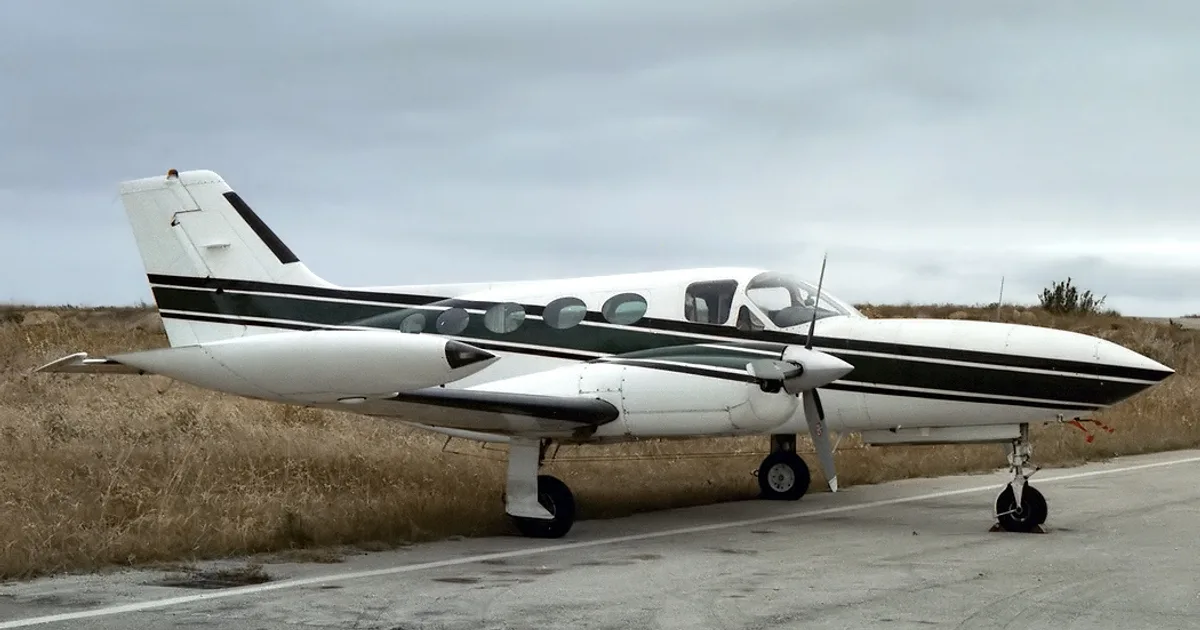
CESSNA 421C · Performance Data
Overview
This document is an analysis of air transportation systems focusing on aircraft performance calculations. It includes evaluations of various aircraft, specifically the Cessna 421C, in terms of runway requirements, takeoff distances, and payload capacities. The analysis is intended for students and professionals in aviation, providing insights into the operational capabilities of the Cessna 421C and other aircraft. Key performance metrics such as maximum takeoff weight, runway lengths, and fuel efficiency are discussed in detail, making it a valuable resource for understanding aircraft performance in real-world scenarios.
- Maximum takeoff weight of Cessna 421C is critical for runway length calculations.
- Runway length required for takeoff varies based on aircraft weight and environmental conditions.
- Payload capacity is essential for determining operational feasibility for flights.
- Fuel efficiency impacts overall operational costs and range capabilities.
- Understanding performance metrics is vital for safe and efficient aircraft operation.
Document
Source
Originally published by 128.173.204.63. Sprinkle hosts a reference copy with an added summary, specifications and searchable full text.
Document details
- Type
- Performance Data
- Year
- 2024
- Pages
- 15
- File size
- 10 MB
- Publisher
- 128.173.204.63
Specifications & performance
Extracted from this document.
Specifications
- Range (nm)
- 5,373
- Engine model
- Rolls-Royce
- Empty weight (lb)
- 280,060
- Max takeoff weight (lb)
- 561,500
Performance
- Landing distance (ft)
- 8,000
- Takeoff distance (ft)
- 13,700
Weight & balance
- Useful load (lb)
- 63,500
- Basic empty weight (lb)
- 280,060
- Max takeoff weight (lb)
- 561,500
Common. One of the most common aircraft types we track.
Most owners only have the POH. Here's the essential set for the CESSNA 421C.
- Pilot's Operating Handbook / AFM
- Checklist
- Maintenance Manual
- Parts Catalog (IPC)
- Systems & Wiring
- Service Bulletins
- Type Certificate (TCDS)
CESSNA 421C for sale now
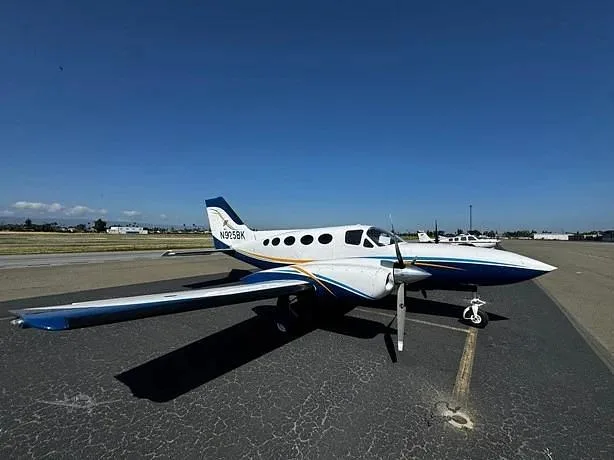
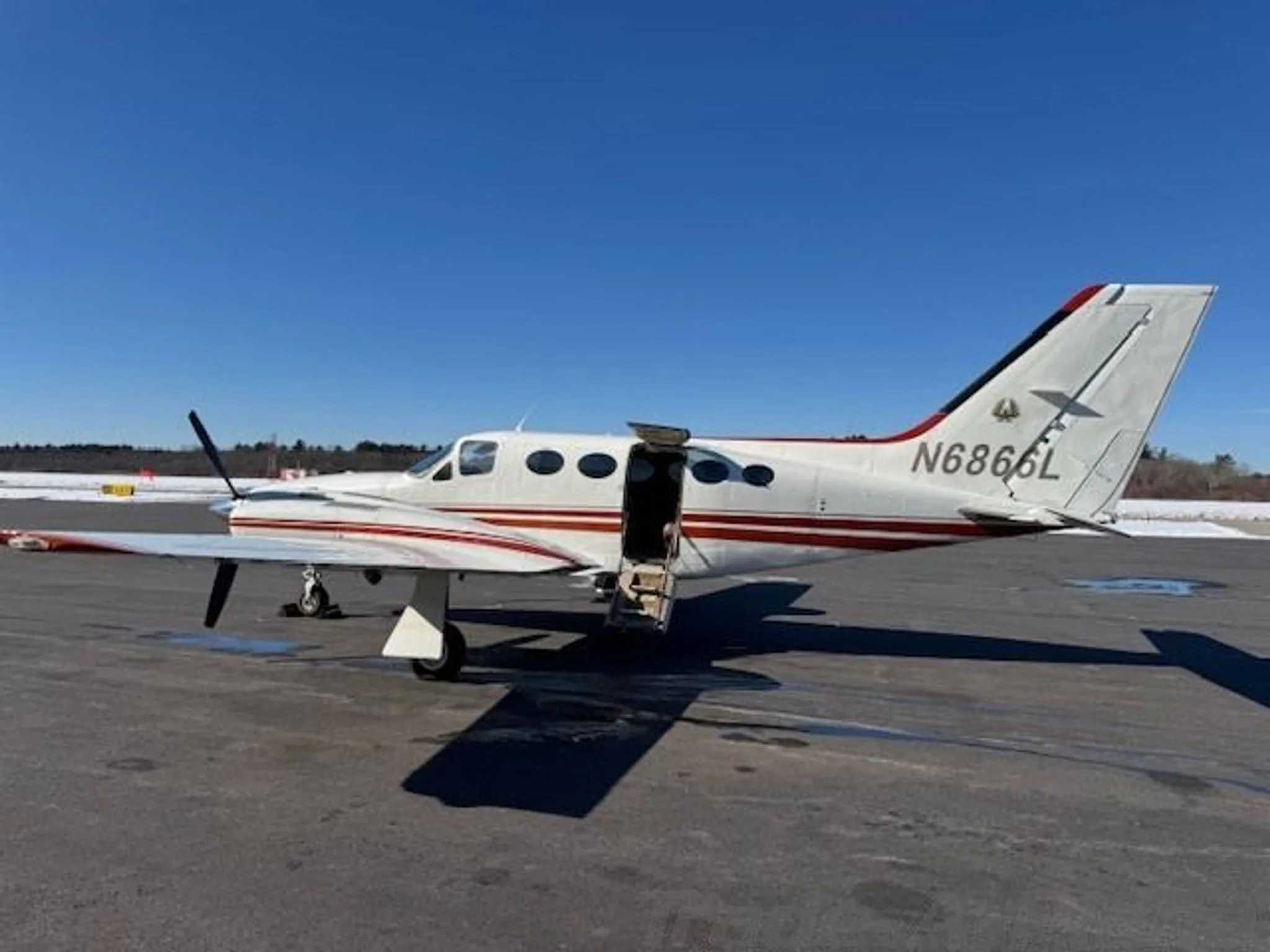
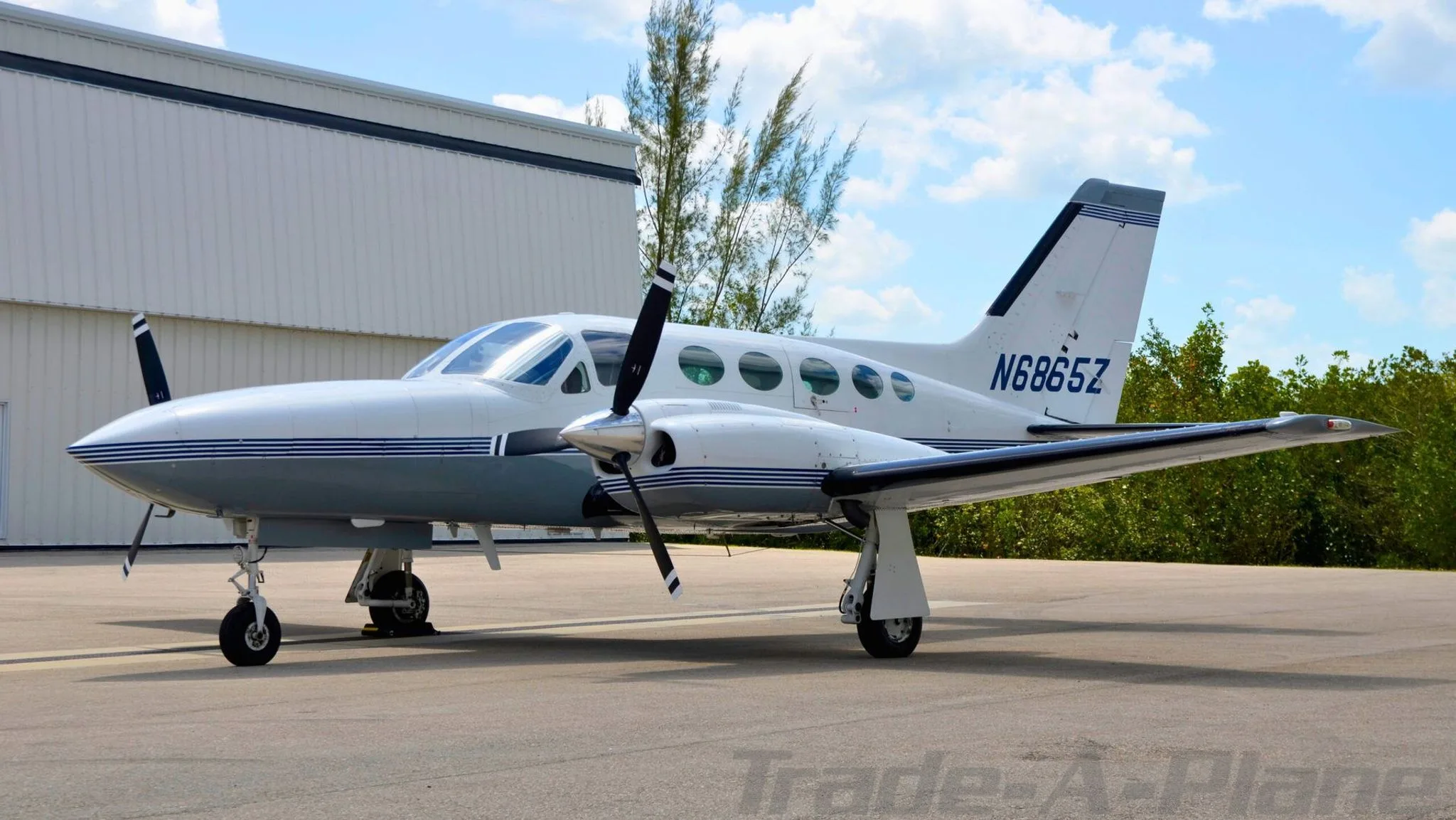
Free — save the 421C to your watchlist and track it in one place.
More CESSNA 421Cmanuals & documents
See all 20 →- ATSB Transport Safety Report: Aviation Occurrence Investigation (Short) AO-2023-055Other Documents
- Rosen Sunvisor Systems CMM / IPC for Sunvisor AssemblyParts Catalog
- Airworthiness Directive Schedule Aeroplanes Cessna 421 SeriesService Bulletins
- Aircraft Alternator Owners ManualWiring Diagram
- The Twin Cessna FlyerChecklist
- Cessna Flyer - December 2015Checklist
- Aviation Accident Final ReportOther Documents
- CESSNA 421C Eagle II & Eagle IIISystems Description
- RNAV Training ManualTraining Manual
- AAIB Bulletin: 6/2006Other Documents
- Aviation Accident Final ReportOther Documents
- AAIB Bulletin No: 1/2002Emergency Procedures
If you fly the CESSNA 421C, you may also be researching these.





In this document
Aircraft Performance Overview
The document provides a comprehensive analysis of the Cessna 421C's performance metrics, including its maximum takeoff weight, which is crucial for determining runway requirements and operational capabilities. It discusses the aircraft's design specifications and how they influence its performance in various conditions.
Runway Length Requirements
The analysis includes specific runway length requirements for the Cessna 421C under different conditions. For instance, it outlines the necessary runway lengths for takeoff and landing, considering factors such as aircraft weight and environmental conditions.
Payload Capacity and Fuel Efficiency
The document evaluates the payload capacity of the Cessna 421C, detailing how much cargo and passenger weight it can carry. Additionally, it discusses fuel efficiency metrics, providing insights into operational costs and range capabilities.
Comparison with Other Aircraft
The performance of the Cessna 421C is compared with other aircraft models, highlighting its advantages and limitations in terms of runway requirements and operational efficiency.
Operational Recommendations
Based on the performance data, the document offers recommendations for operators considering the Cessna 421C for various flight operations, emphasizing the importance of understanding runway conditions and aircraft capabilities.
Safety notes
- Ensure runway length is adequate for the maximum takeoff weight to prevent accidents during takeoff.
- Consider environmental factors such as temperature and elevation when calculating performance metrics.
Full document text
CEE 5614: Analysis of Air Transportation Systems Spring 2024 Assignment 3: Aircraft Performance Calculations Solution Instructor: TraniProblem 2 An airline is evaluating two aircraft to operate flights from Colorado Springs Airport (COS) Airport. The following table shows the aircraft proposed by Boeing. The airline would like to fly with the selected aircraft to Narita International Airport in Japan (NRT). In your analysis use the latest version of the Boeing documents. Table 1. Boeing 787-9 and Boeing 787-10 Considered in the Airline Evaluation. Use the Climate Explorer website (https://crt-climate-explorer.nemac.org/climate_graphs) to find the mean maximum temperature of the hottest month of the year. More detailed information about the airport can be found at the AIRNAV database available on the web at: http://www.airnav.com/airports/ or visit the airport site. Historical temperature = 84 deg. F Higher emissions = 86.9 deg. F. COS airport elevation is 6,187 feet (1886 meters) Longest runway is 13,500 feet ISA temperature at COS = 36.93 degrees F. Design condition is ISA + 47.1 deg. F. Use ISA + 45 deg. F. a) Find if the proposed route can be flown with both aircraft considered. In your analysis use the Great Circle Flight Path mapper link provided in our interesting web sites. Add 6% to the distances calculated to account for real Air Traffic route conditions and to account for possible weather deviations from the optimal Great Circle flight path. Aircraft Considered Boeing 787-9 with High-Thrust Rolls-Royce engines (see picture below). The aircraft has a maximum design takeoff weight of 561,500 lb. With 290 seats in a two-class layout. See other characteristics in the Boeing documents for airport planning and design. Boeing 787-10 with High-Thrust Rolls-Royce engines. Aircraft maximum design takeoff weight is 560,000 lb. 330 seats in a two-class layout. See other characteristics in the Boeing documents for airport planning and design. CEE 5614 A3 Trani Page of 1 15 Trip distance = 5,373 nm (adjusted from 5,071 nm). Table 1 shows a summary of the calculations for the Boeing 787-9. b) Find the runway length needed for each one of the aircraft flying the COS-NRT route. Determine if Colorado Springs has enough runway length to support flights with all seats full. The runway is 13,500 feet. 13,700 feet is needed (see Figure 3) for the Boeing 787-9 to operate from Colorado Springs. Technically, a runway extension would be needed if the airline wants to operate such service. Table 1. Boeing 787-9 Analysis with 100% Load Factor. Maximum design takeoff weight of 561,500 lb (254,692). With 290 seats in a two-class layout. Parameter Kilograms Pounds OEW 127,300 280,060 PYL 29,000 63,800 OEW + PYL 156,300 343,860 DTW 222,000 488,400 FW 65,700 144,540 Passengers 290 Fuel/passenger 227 498 Runway Length (takeoff) 13,700 feet 13,700 feet Runway Length (Landing) 8,000 feet 8,000 feet Route Distance 5375 Average SAR (nm/kg) 0.0818 CEE 5614 A3 Trani Page of 2 15 Figure 2. Payload-Range Diagram Boeing 787-9. DTW ~ 222,000 kilograms. CEE 5614 A3 Trani Page of 3 15 Figure 3. Takeoff Field Length for Boeing 787-9. ISA + 45 deg. F. Performance Chart. High-Thrust Engines. Takeoff from Colorado Springs at 222,000 kilograms. Table 2. Boeing 787-10 Analysis with 100% Load Factor. High-Thrust Rolls-Royce engines. Aircraft maximum design takeoff weight is 560,000 lb. 330 seats in a two-class layout. Parameter Kilograms Pounds OEW 136,364 300,000 PYL 33,000 72,600 OEW + PYL 169,364 372,600 DTW 240,000 528,000 FW 70,636 155,400 CEE 5614 A3 Trani Page of 4 15 Passengers 330 Fuel/passenger 214 471 Runway Length (takeoff) Cannot operate at 240,000 kgs. At any condition Cannot operate at 240,000 kgs. At any condition Runway Length (Landing) 8,300 feet 8,300 feet Route Distance 5375 Average SAR (nm/kg) 0.0761 Table 2. Boeing 787-10 Analysis with 100% Load Factor. High-Thrust Rolls-Royce engines. Aircraft maximum design takeoff weight is 560,000 lb. 330 seats in a two-class layout. Parameter Kilograms Pounds Figure 4. Payload-Range Diagram Boeing 787-10. Estimated Desired Takeoff Weight is 240,000 kilograms. CEE 5614 A3 Trani Page of 5 15 c) Repeat part (b) assuming a load factor of 0.85 (85% of the seats used). The Boeing 787-9 can execute the flight with 85% load factor from COS. The runway needed is estimated to be 11,800 feet (see Table 3). Figure 5. Takeoff Field Length for Boeing 787-10. ISA + 45 deg. F. Performance Chart. High-Thrust Engines. Table 3. Boeing 787-9 Analysis with 85% Load Factor. Maximum design takeoff weight of 561,500 lb (254,692). With 247 Passengers. Parameter Kilograms Pounds OEW 127,300 280,060 PYL 24,650 54,230 OEW + PYL 151,950 334,290 DTW 216,000 475,200 CEE 5614 A3 Trani Page of 6 15 FW 64,050 140,910 Passengers 247 Fuel/passenger 260 572 Runway Length (takeoff) 11,800 feet 11,800 feet Runway Length (Landing) 8,000 feet 8,000 feet Route Distance 5375 Average SAR (nm/kg) 0.0839 Table 3. Boeing 787-9 Analysis with 85% Load Factor. Maximum design takeoff weight of 561,500 lb (254,692). With 247 Passengers. Parameter Kilograms Pounds Table 4. Boeing 787-10 Analysis with 85% Load Factor. High-Thrust Rolls-Royce engines. Aircraft maximum design takeoff weight is 560,000 lb. 330 seats in a two-class layout. 281 Passengers. Parameter Kilograms Pounds OEW 136,364 300,000 PYL 28,050 61,710 OEW + PYL 164,414 361,710 DTW 234,000 514,800 FW 69,586 153,090 Passengers 281 Fuel/passenger 248 546 Runway Length (takeoff) Cannot operate at 234000 kilograms from COS. The tire speed limit is exceeded. Cannot operate at 234000 kilograms from COS. The tire speed limit is exceeded. CEE 5614 A3 Trani Page of 7 15 d) If the aircraft carries 85% of the seats full, can the flight carry additional belly cargo as payload from the existing longest runway at COS?
Show full textShow less
The Boeing 787-9 could ~3500 kilograms in cargo within the 13,500 feet of runway available at COS. The estimated departure weight would be 219,500 kilograms. e) Using the Payload-Range diagram of each aircraft, to find the fuel needed to fly the route. Find the Specific Air Range (SAR) parameter for each aircraft. Comment on the SAR values calculated. The SAR values are included in each table. f) Considering various factors such as payload, fuel economy, and potential of additional belly cargo, which aircraft is the best for this airline? Explain. The Boeing 787-9 is the only alternative to operate from COS with 85% load factor. The COS runway would have to be extended another 200 feet allowing 100% load factor operations to NRT. Runway Length (Landing) 8,300 feet 8,300 feet Route Distance 5375 Average SAR (nm/kg) 0.0772 Table 4. Boeing 787-10 Analysis with 85% Load Factor. High-Thrust Rolls-Royce engines. Aircraft maximum design takeoff weight is 560,000 lb. 330 seats in a two-class layout. 281 Passengers. Parameter Kilograms Pounds CEE 5614 A3 Trani Page of 8 15 Problem 2 A new low-cost airline is evaluating The Airbus A220-300 to operate flights from a variety of airports including Roanoke-Blacksburg Regional (ROA). The airline would like your help to evaluate the A220-300 with the Pratt and Whitney PW1524G or with the lower thrust PW1521G. The design airport temperature used should be the average of the maximum daily temperatures of the hottest month of the year. Use the Climate Explorer website (https://crt-climate-explorer.nemac.org/ climate_graphs) to find the mean maximum temperature of the hottest month of the year. More detailed information about the airport can be found at the AIRNAV database available on the web at: http:// www.airnav.com/airports/ or visit the airport site. In your analysis use the latest version of the Airbus A220-300 documents for airport design (http:// 128.173.204.63/courses/cee5614/sites_ce_5614.html#Aircraft_Data). Historical temperature = 84.7 deg. F Higher emissions = 87.5 deg. F. ROA airport elevation is 1,175 feet Longest runway is 6800 feet ISA temperature at ROA = 54.81 degrees F. Design condition using historical data is ISA + 27 deg. F. Use ISA + 45 deg. F. Design condition using climate change conditions is ISA + 29.9 deg. F. Use ISA + 27 deg. F. (ISA + 15 deg. C). a) Find the maximum range that the airline can fly from ROA airport either at maximum takeoff weight or limited by runway length. Evaluate the departure conditions for both engines and the usual airport design temperature conditions. Airbus has several documents for the A220-300. Given that the problem refers to the A220-300 I used document BD500-3AB48-32000-00, Issue No. 026 which contains the payload-range diagram for the A220-300 and the full performance specifications. Figures 7 and 8 shows the runway length performance for the A220-300 with high-thrust and normal thrust engines. The 24,000 lbs thrust engine allows the aircraft to depart at 143,000 lbs. from ROA’s 6,800 ft. runway. The normal thrust engine (21,000 lbs) allows a departure weight of 134,000 lbs. Figure 6. Airbus A220-300 140 seat configuration. Maximum takeoff weight is 149,000 lbs. CEE 5614 A3 Trani Page of 9 15 Figure 7. Takeoff Field Length for Airbus A220-300. ISA + 27 deg. F. Performance Chart. High-Thrust Engines (24,000 lbs). CEE 5614 A3 Trani Page of 10 15 Figure 9 shows the payload-range diagram for the A220-300. The tradeoff line at MTOGW has a slope of -9.63 lbs/nm. If the takeoff weight from ROA is 143,000 lbs (6,000 lbs below the maximum of 149,000 lbs), then an estimate of the maximum range is: nm The calculation assumes that the fuel burn at 143,000 lbs is similar to that at 149,000 lbs. This is a rough approximation but still useful to determine the tradeoff in range departing from a short runway. Figure 8. Takeoff Field Length for Airbus A220-300. ISA + 27 deg. F. Performance Chart. Normal Thrust Engines (21,000 lbs). Ra nge = 3100 − 6000/9.23 = 2477 CEE 5614 A3 Trani Page of 11 15 b) Does ROA have enough runway to support maximum takeoff weight departure operations? No. Only 143,000 lbs for the high-thrust engine version (24,000 lbs) and 134,000 lbs for normal thrust engine (21,000 lbs). c) Estimate the average fuel per passenger on a 1,200 nm (includes detour factor) for the aircraft. For a 1,200 nm trip, the aircraft has an estimated DTW of: lbs (adding 20% fuel reserve) lbs. Fuel per passenger ~ = 79.11 lbs. (only the fuel used is employed in the estimate) d) Find the SAR for the same 1,200 nm trip. SAR = = 0.1083 nm/lbs e) Considering the runway length and the environmental conditions at ROA airport which aircraft engine would you recommend? Figure 9. Payload-Range Diagram for Airbus A220-300. ISA Conditions. The slope of the MTOGW Line is -9.63 lb/nm. DT W = OE W + PY L + F W F W = 9.23 * 1200 + 0.20 * (9.23 * 1200) = 13291 DT W = 81750 + 13291 + 30800 = 125841 1200 * 9.23/140 1200/11076 CEE 5614 A3 Trani Page of 12 15 The lower thrust engine provides more fuel efficiency and yet allows MTOGW at 134,000 lbs. The Airbus A220-300 with MTOGW of 149,000 lbs would probably require the 24,000 lbs engine (higher thrust). Problem 3 Use the data for the large twin-aisle transport aircraft similar to the Boeing 777-200 (http:// 128.173.204.63/cee5614/cee5614_pub/B777_class.m) to answer the following questions. a) Calculate total drag produced by the aircraft during a climb profile with an Indicated Airspeed of 270 knots at 3,400 meters above mean sea level conditions. Assume atmospheric conditions to be ISA. The aircraft weight is 320,000 kgs. Indicated airspeed = 270 knots Altitude = 3400 meters Mass of aircraft = 320000 kilograms Drag = 164935.4 Newtons Thrust = 567033.2 Newtons Fuel Burn = 90.73 N/s Mach Number = 0.480 dimensionless b) Repeat the process when the aircraft is climbing at 9,500 meters and an indicated Mach number of 0.78. Indicated airspeed = 322.95 knots Indicated airspeed = 322.95 knots Altitude = 9500 meters Mass of aircraft = 320000 kilograms Drag = 167424.3 Newtons Thrust = 244754.1 Newtons Fuel Burn = 39.16 N/s Mach Number = 0.780 dimensionless c) Estimate the instantaneous fuel consumption for each flight condition given in parts (a) and (b). Fuel burn values are reported above. d) Comment on the observed trends. The dark does not change appreciably because at higher altitudes, the density is lower and the speed increase compensates to yield similar drag values/ The fuel burn at 3,400 meters is 2.3 time higher than at 9,500 meters. CEE 5614 A3 Trani Page of 13 15 Problem 4 Use the SARLAT tool described in class to answer the following: Use the Small Aircraft Runway Length Analysis Tool (SARLAT) to design a runway at a new airport located 3,800 feet above mean sea level conditions. The average of the maximum daily temperature of the hottest month of the year is 80 degrees Fahrenheit. Table 3 shows the representative aircraft at the airport. To obtain the SARLAT tool follow the links in the class notes. a) Find the required runway length needed to satisfy the runway performance requirements of the fleet mix in Table 1. For the critical aircraft, list the following runway lengths: 1) dry runway takeoff distance, 2) wet runway takeoff distance, 3) dry landing distance, and 4) wet landing distance. Use the default “useful load” parameters included in SARLAT (100% for piston aircraft and 90% for turboprop and jet-powered aircraft). See Figure 10. b) The FAA Airport Improvement Program (AIP) pays for a dry takeoff runway and a wet landing runway. Find the runway length that the FAA AIP Program may approve. State the critical aircraft and the condition used (i.e., takeoff or landing). The critical aircraft for dry takeoff is the Cessna Citation Jet 1 (4911 feet). The critical aircraft for landing on wet runway is the CJ1 as well (3,570 feet). A 5,000 foot runway will satisfy both criteria. c) If the airport client wants to pay additionally for a runway that satisfies wet takeoff conditions, estimate the runway length needed. State the critical aircraft used in the design. An additional 650 feet is required to satisfy the wet takeoff condition of the CJ1. d) Show the SARLAT bar chart of runway length requirements for each individual aircraft for your solution. Table 3. Aircraft Fleet Mix for Problem 4. Aircraft Type Aircraft Useful Load (%) Piston Cirrus SR22 100 Piston Cessna 421C 100 Jet Cessna CitationJet 1 90 Jet Phenom 300 90 CEE 5614 A3 Trani Page of 14 15 Figure 10. SARLAT Design Case. No Part 135 Operations Considered for Jet Aircraft. CEE 5614 A3 Trani Page of 15 15
What's in the CESSNA 421C TCDS
A Type Certificate Data Sheet (TCDS) is the FAA's record of what an aircraft type was approved as. It is the source of truth for weights, seating, fuel and the rules the design was certified against. Expand any line to see what it means.
2,232 CESSNA 421C parts for sale
See all →





Parts listed for sale by vetted eBay sellers — confirmed on eBay at checkout.