Cessna Flyer - June 2015
Cessna 425 Corsair · Pilot's Operating Handbook
Overview
This document is the June 2015 issue of Cessna Flyer, a publication dedicated to the Cessna Flyer Association and its members. It features articles and insights specifically related to Cessna aircraft, with a focus on the Cessna 425 Conquest I. The issue includes technical articles, maintenance tips, and community events relevant to Cessna aircraft owners and enthusiasts. It serves as a resource for pilots looking to enhance their knowledge and skills regarding the Cessna 425, including operational insights and maintenance practices.
- The Cessna 425 Conquest I is known for its speed and efficiency, making it a popular choice among general aviation pilots.
- Regular maintenance, including gauge checks, is crucial for safe operation of the Cessna 425.
- Understanding the aircraft's performance characteristics can enhance flight planning and operational efficiency.
- Community events and gatherings are valuable for networking and sharing knowledge among Cessna owners.
Document
Source
Originally published by www.cessnaflyer.org. Sprinkle hosts a reference copy with an added summary, specifications and searchable full text.
Document details
- Type
- Pilot's Operating Handbook
- Year
- 2015
- Pages
- 84
- File size
- 15 MB
- Publisher
- www.cessnaflyer.org
Common. Rarer than 24% of the aircraft models we track.
Most owners only have the POH. Here's the essential set for the Cessna 425 Corsair.
- Pilot's Operating Handbook / AFM
- Checklist
- Maintenance Manual
- Parts Catalog (IPC)
- Systems & Wiring
- Service Bulletins
- Type Certificate (TCDS)
Free — save the CESSNA 425 Corsair to your watchlist and track it in one place.
More Cessna 425 Corsairmanuals & documents
- CAP 747 Mandatory Requirements for AirworthinessService Bulletins
- ANO (AW) Part 66- Aircraft Maintenance LicenceAirworthiness Directives
- 2014 Notice of Names of Persons Appearing to be Owners of Abandoned and Unclaimed PropertyService Bulletins
- AOPA PILOT February 2013Checklist
- NOISE CONTOURS STUDY TORONTO CITY CENTRE AIRPORT Final ReportOther Documents
- Canadian Aviation Service Difficulty ReportsService Bulletins
- Emergency Procedures for Cessna 425 CorsairEmergency Procedures
- Airworthiness Directive Schedule Aeroplanes Cessna 425Service Bulletins
- Pilot's Operating HandbookPilot's Operating Handbook
- B/CA Analysis: Cessna 425 CorsairPilot's Operating Handbook
- Prototype Airfield Capacity Spreadsheet Model User’s GuideChecklist
If you fly the Cessna 425 Corsair, you may also be researching these.

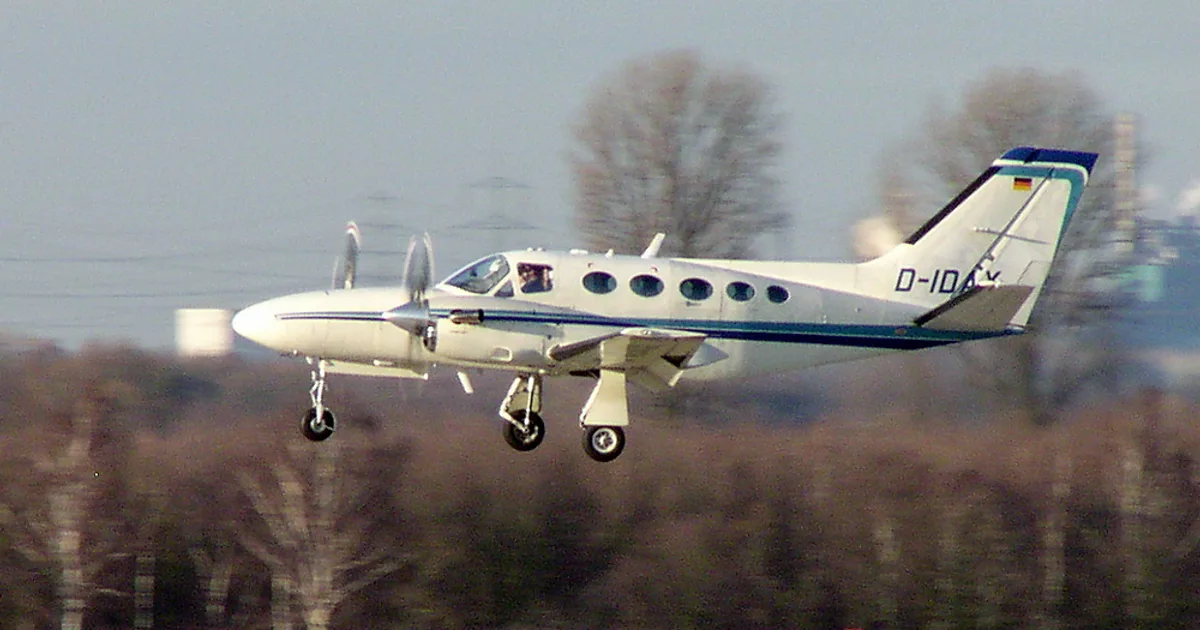

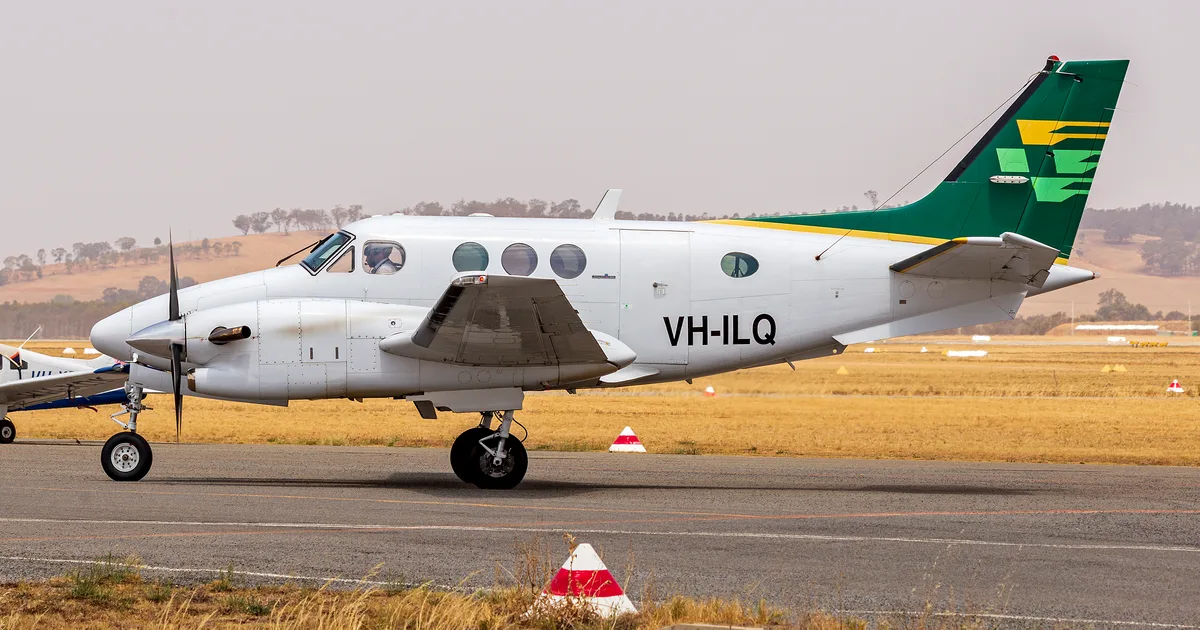
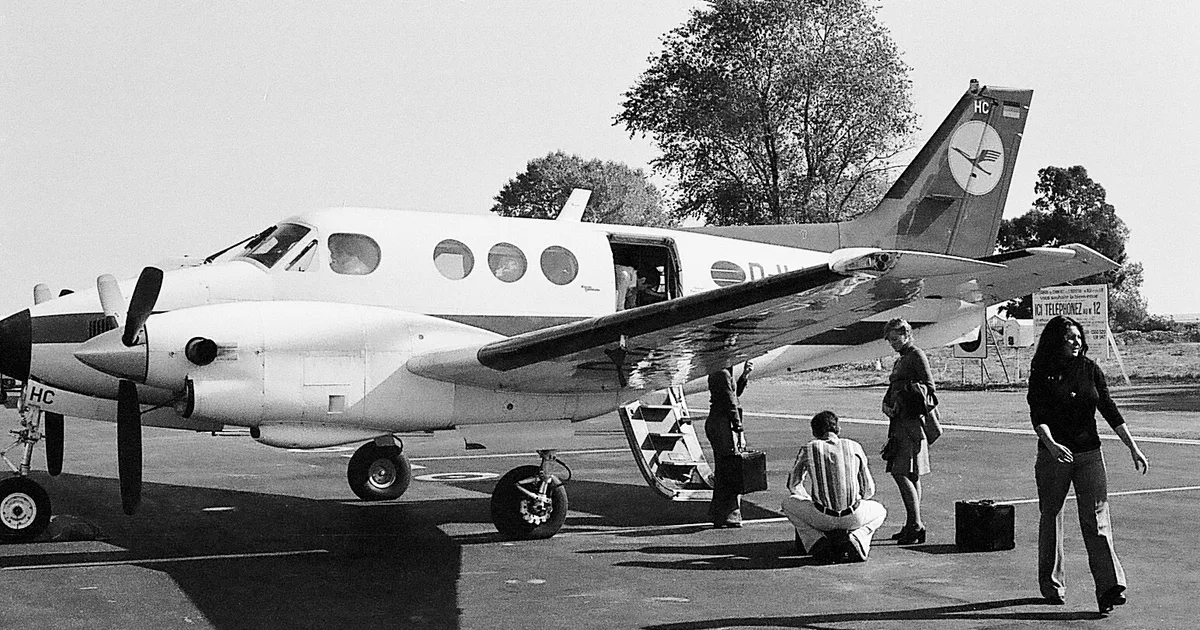
In this document
No Plans to Change: Jim Irwin’s Cessna 425
This article discusses the enduring appeal and operational history of Jim Irwin's Cessna 425. It highlights the aircraft's performance, features, and the owner's commitment to maintaining its operational status.
Bigger, Faster, Better: The Cessna 425 Conquest I
An overview of the Cessna 425 Conquest I, detailing its specifications, performance capabilities, and enhancements over previous models. The article emphasizes the aircraft's speed and efficiency in the general aviation market.
Replacing an Inop Oil Temp Gauge
A technical guide on troubleshooting and replacing a malfunctioning oil temperature gauge in the Cessna 425. The article provides step-by-step instructions and necessary tools for the replacement process.
Destination: Downstream
An article that explores flight planning and operational considerations for Cessna 425 pilots, focusing on optimizing routes and managing fuel efficiency during cross-country flights.
Safety notes
- Ensure all gauges are functioning properly before flight to avoid in-flight issues.
- Follow manufacturer guidelines for maintenance and repairs to ensure safety and compliance.
Full document text
Replacing an Inop OTG Celebrating 50 years of Aircraft Spruce & Specialty VOL 12 ISSUE 06 JUNE 2015 cessnaflyer.org Jim Irwin’s 425 42 page See us at our NEW AirVenture booth 3058 in Hangar C C E L E B R A T I N G 5 0 Y E A R S I NA V I A T I O N C E L E B R A T I N G 5 0 Y E A R S I NA V I A T I O N thth PRSRT STD US POSTAGE PAID PERMIT NO 5377 DENVER, CO CHANGE SERVICE REQUESTED CESSNA FLYER ASSOCIATION PO BOX 6203 ALTADENA, CA 91003 B/E Aerospace Ice Shield™ De-icing Systems For more information, please contact: Jack Samuels | Phone (951) 549-7789 | jacksamuels@aircraftspruce.com Cessna Flyer is the official publication of the Cessna Flyer Association. Cessna Flyer is published monthly by Avia- tion Group Limited, PO Box 6203, Altadena, CA 91003. POSTMASTER: Send address changes to Cessna Flyer, PO Box 6203, Altadena, CA 91003. Subscriptions, advertis- ing orders, and correspondence should be addressed to PO Box 6203, Altadena, CA 91003. Annual dues: $44.00 in the US; Canada and Mexico add $15.00 per year; all others add $25.00 per year (US Dollars only). Eighty per- cent (80%) of annual dues is designated for your magazine subscriptions. The information presented in Cessna Flyer is from many sources for this there can be no warranty or responsibility by the publisher as to accuracy, originality or complete- ness. The magazine is sold with the understanding that the publisher is not engaged in rendering product en- dorsements or providing instruction as a substitute for appropriate training by qualified sources. Cessna Flyer and Aviation Group Limited will not assume responsibility for any actions arising from any information published in Cessna Flyer. We invite comments and welcome any report of inferior products obtained through our advertis- ing, so corrective action may be taken. PO Box 6203 Altadena, CA 91003 Tel: 800.397.3920 www.cessnaflyer.org The Official Magazine of The Cessna Flyer Association PRESIDENT Jennifer Dellenbusch jen@aviationgroupltd.com VICE PRESIDENT / DIRECTOR OF SALES Kent Dellenbusch kent@aviationgroupltd.com MANAGING EDITOR Heather Skumatz heather@aviationgroupltd.com CREATIVE DIRECTOR Yee Chan EDITOR AT LARGE Thomas Block CONTRIBUTING EDITORS Mike Berry • Steve Ells • Lyn Freeman David Hipschman • Michael Leighton Charles Lloyd • John Loughmiller Dan Pimentel • John Ruley • Scott Sherer CONTRIBUTING PHOTOGRAPHERS Paul Bowen • Robb Gessert • Keith Wilson Vol. 12 Issue 06 JUNE 2015 CES SNA F LYE R (04) J U N E 2 015 It’s the number one aftermarket cylInder In the world. MillenniumC y l i n d e r s ® MillenniumC y l i n d e r s ® Millennium Cylinders is a registered trademark of Superior Air Parts, Inc. 3 7 8 4 5 2 1 9 6 The Superior mark signifies the feature is a Superior design or manufacturing innovation. advanced alumInum alloy heads Increased Port wall thIckness comPuter-Generated head fIn confIGuratIon ImProved coolInG very hIGh QualIty castInG throuGh hardened steel barrels ams6382 steel barrels advanced cylInder barrel choke volumetrIcally matched Ports they’re In-stock and ready for delIvery from your nearest mIllennIum cylInder dIstrIbutor 1 2 3 4 5 6 7 8 9 10 10 reasons why more aircraft owners put their trust in Millennium Cylinders. For more information about Millennium Cylinders, please contact an authorized distributor. For a complete list, visit our website or call: +1.800.277.5168 or +1.972.829.4600 superiorairparts.com 50 38 28 56 42 34 No Plans to Change: Jim Irwin’s Cessna 425 by Heather Skumatz Bigger, Faster, Better: The Cessna 425 Conquest I by Jerry Temple The Cessna 425 Conquest I by Michael Leighton Aircraft Spruce Celebrates 50 Years of Service to Aviation 1965-2015 by CFA Staff No OTG Equals AOG: Replacing an Inop Oil Temp Gauge by Hiram Lopez Destination: Downstream by Dan Pimentel THE VIEW FROM HERE Jennifer Dellenbusch LETTERS to the EDITOR CESSNA FLYER EVENTS LEFT COAST PILOT John Ruley QUESTIONS & ANSWERS Steve Ells AFFIRMATIVE ATTITUDE Dan Pimentel GET READY FOR AFFIRM- ATIVE ATTITUDE LIVE! Heather Skumatz NEWS ADVERTISER INDEX FLYER’S MARKETPLACE BACK WHEN: VINTAGE CESSNA ADVERTISING AND MARKETING 08 08 10 16 20 24 24 66 80 81 82 JUNE 2015 Cover: 1983 Cessna 425 Conquest Photo: Renee Strouse Photo: Renee Strouse General appreciation LETTERS to the EDITOR Send your letters to editor@cessnaflyer.org “Any Traffic, Please Advise” by Michael Leighton, May 2015 Dear Editor, I was taught never to use the word “for” in any communication as it could be confused with Runway 4. Believe me, it was quite a few taps on the head by my instructor—but I learned to never include that word. I think it was very good advice and served me well. Les Gwyn-Williams Verona, N.J. “Leaning Lessons: The science of operating your aircraft engine” by Steve Ells, April 2015 Good afternoon, I just finished reading the article in the April issue of your magazine. At the end, there is a note about ordering the Far West Aviation “Power Wheel” app for use on an iPhone or iPad. I went to the Apple Store and downloaded it to my iPhone. After loading, I tried to use it, get a feel for how it worked, and check if the leaning methods I use would agree. Problem is, the app does not work. I spent $4.99 and the thing will not let me enter any data, adjust settings, or be of any use whatsoever. I looked up Far West to try and get customer support but there is apparently no contacting them and no support for their product. I just thought I’d let you and the article’s author, Steve Ells, know about this issue. Bruce Hutchings Lancaster, N.H. Publisher’s reply Hi Bruce, I did some checking and was able to reach them via phone. In this issue we pay tribute to a mainstay of General Aviation: Aircraft Spruce & Specialty. This family-owned business has stayed true to its aviation roots throughout its rise from a small company to the powerhouse it is today. The Irwins have long been General Aviation advocates and do a lot—often
Show full textShow less
without seeking any credit—to help the industry. They have also been big sup- porters of Cessna Flyer Association since its start. You could say we’re fans. If you’re a fan of Aircraft Spruce or any of our other supporters, you can share your partiality with your fellow Flyers online through our Cessna Yellow Pages. Visit cessnaflyer.org/cessna-yellow-pages to see the list and start com- posing your “fan mail.” You can visit Aircraft Spruce at its three locations during its customer appre- ciation days. We’ve just missed the East event, which took place on May 2 in Peachtree City, Ga., but start planning now for next year. Aircraft Spruce Canada hosts its event on June 27 in Brantford, Ontario, Canada. For details, see the listing under Featured Events on page 10 of this issue. And here on the West Coast you can attend the event (and meet Cessna Flyer staff) on Oct. 10 at the Aircraft Spruce & Specialty headquarters and store in Corona, Calif. Speaking of events, our 11th annual Gathering at Waupaca is just around the corner. For details, see the ad on page 18 or visit CessnaFlyer. org/2015gathering. Don’t wait to sign up, space is limited! We want to see you there. Blue skies, Jennifer Dellenbusch THE VIEW FROM HERE CES SNA F LYE R (08) J U N E 2 015 continued on page 78... CES SNA F LYE R (10) J U N E 2 015 come early for a seat. For more informa- tion, visit oshbash.com. Oct 15 – 17 — Palm Springs, CA. Flying Aviation Expo. A world-class weekend of seminars and workshops, outdoor displays, indoor exhibits—and even an aircraft parade. Thousands of pilots and industry experts from around the world are expected to attend. Learn about new products, receive technical advice and par- ticipate in hands-on demonstrations. For more information, visit aviation-xpo.com. FEATURED EVENTS Jun 27 — Brantford, ON. Brantford Mu- nicipal (CYFD). Aircraft Spruce Canada Customer Appreciation Day. 8 am to 3 pm at Aircraft Spruce Canada, 150 Avia- tion Ave., Brantford, Ontario, Canada. Aircraft Spruce will go all-out by offering spectacular discounts on its most popular products and provide a chance for our loyal customers to meet our vendors. For more information, call 519-759-5017 or 877-795-2278. Aug 7–9 — Eastsound, WA. Orcas Island Airport (KORS). 31st Annual Eastsound Fly-in & Antique Car Show. Old-fashioned fun for the whole family! Free admission. Each year, 100 to 150 aircraft attend from around the country. Warbirds, experimentals, old-fashioned airplanes, local pilots and seaplanes, fly- ing demonstrations. Pancake breakfast held both days from 7 to 11 am. Also enjoy the Orcas Road Classics car club’s most widely known event: the annual car show in conjunction with the fly-in. Contact Dwight Guss, 360-317-5970 or email OrcasChapterEAA@gmail.com. Visit portoforcas.com/events. CFA EVENTS Jul 18–19, 2015 — Waupaca, WI. Waupa- ca Municipal (KPCZ). The 11th Annual Gathering in Waupaca. Saturday night cocktail reception, Sunday seminars, lunch and banquet. $75/person. Space is limited; sign up now. Call 800-397-3920, email kent@aviationgroupltd.com or visit CessnaFlyer.org/2015gathering. CFA SPONSORED EVENTS July 21 — Oshkosh, WI. Affirmative Attitude LIVE! Join Cessna Flyer colum- nist and Airplanista blogger Dan Pimentel from 5:30 to 7:30 pm as he hosts some very special guests: the impressive movers and shakers you’ve been reading about in the Affirmative Attitude column. Space is limited for this event held in the press tent on the EAA AirVenture grounds; SEND EVENTS to editor@cessnaflyer.org OTHER EVENTS Jun 13 – Myerstown, PA. Deck Airport (9D4). Lebanon Valley EAA Fly-in Break- fast. Sponsored by EAA Chapter 390. Breakfast served 7 to 11 am. Free Young Eagle flights for ages eight to 18. Visit 390.eaachapter.org. Jun 13 — Garberville, CA. Garberville Airport (O16). Fly-in Garberville. 9 am to 4 pm. Garberville Pilots Association invites all flyers for a pancake breakfast. A BBQ lunch will also be served at noon. Day-early flyers can either tent under the wings of their aircraft or shuttle off to the Benbow Inn. Contact Fred Baron, 707-923-2432. Jun 13 — Willoughby, OH. Lost Nation Municipal Airport (KLNN). 6th Annual Pancake Breakfast. 8 to 11 am at Classic Jet Center. Breakfast and Young Eagle rides presented by EAA Chapter 5. Breakfast is $8 for adults, $4 for kids ages three to 12; children under three eat free! Come see local aircraft and meet the pilots. For more info, visit classicjetctr. com or call 440-942-7092. Jun 13–14 — Windsor Locks, CT. Hartford Bradley International Airport (KBDL). FlightSimCon 2015. Annual aviation and flight simulation conference designed to bring pilots and flight simmers together in an interactive social setting. Attendees have the opportunity to meet other simulation enthusiasts, experience how online flight simulation can benefit student and rated pi- lots, and engage with exhibitors and speak- ers to learn about improving their desktop flight simulators. Cost is $60. 9:45 am to 3 pm. Contact Nicole Glander, 860-727-0050 or email contact@flightsimcon.com. Visit flightsimcon.com. Jun 14 — Mason, MI. Mason Jewett Field (KTEW). Dawn Patrol Pancake Breakfast. “All-U-Can-Eat” pancake breakfast (with eggs, sausage, juice and coffee) served from 7 to 11 am. Adults $6 and children 12 and under $3. Many homebuilt, antique, warbird and GA aircraft are expected along with a variety of exhibits and displays. Biplane rides and aircraft rides available (weather permitting). Parking and admis- sion to Mason Jewett Airport is FREE. Hosted by EAA Chapter 55. Contact Steve Houghton, 517-290-7528 or email vickie@ eaa55.org. Visit eaa55.org. Jun 19–20 — Green River, WY. Greater Green River Intergalactic Spaceport (48U). Spaceport Days. Fly-in with camping available on the field for both nights. A pancake breakfast on June 20 from 8 am to 12 pm with the Fraternal Order of Police and the American Legion. Flying poker run and pilot skills games with prizes. Pilots, please contact Barry for poker run registration and any other questions. Contact Barry Tippy, 307-871- 4645 or email btippy74@hotmail.com. Jun 19–21 — Wellsville, PA. Shreveport North (62PA). 26th Annual Father’s Day Fly-in. We welcome any aircraft capable of operating from a well maintained, lighted 70 x 2,600-foot turf runway. On the grounds of the Footlight Ranch, the fly-in features special barbecue chicken and New York steak dinners on Friday and Saturday, provided this year by the Dillsburg American Legion. Activities in- clude a parade of sports cars, pilot games, Bear-from-the-Air stuffed animal drop, food vendors and airplane rides. Snacks and lunch are available all weekend at the Crosswinds Café on the flight line, again provided by the American Legion. Flightline movies with free popcorn every 1-800-647-6148 • www.ffcfuelcells.com All FFC fuel bladders are manufactured with REGISTERED TSO-C80 constructions... KNOW what you are installing. Quality products at competitive prices. TSO-C80 FUEL CELLS CES SNA F LYE R (12) J U N E 2 015 • Boss 182 Lycoming IO-580 Engine Conversion • Gross Weight Increases to 3370 & 3500 lbs Wipaire has the cure for the common Skylane! GOT PERFORMANCE? www.wipaire.com South St. Paul, Minnesota 651.451.1205 352.323.4809 Leesburg, Florida Aircraft Sales ∙ Wipline Floats ∙ Aircraft Skis ∙ Modifications Paint ∙ Maintenance ∙ Interiors ∙ Avionics night. The volleyball courts and horse- shoe pits are available to all attendees. Camping and rustic bunkhouse avail- able. Contact Jerry Rosie, 717-243-7923 or email rosiejerryrosie@cs.com. Visit mdsfclub20.com. Jun 20 — Havana, IL. Havana Regional Airport (9I0). Havana’s Harvey Tap- scott Memorial Old Fashioned Pancake Breakfast and Fly-in. EAA Chapter 1420 is serving this pancake and sausage breakfast from 7 to 10:30 am. The fly-in runs until noon. Come for the food, stay for the airplanes. Nice mix of classics and experimental. Friendly atmosphere, smoothly-groomed sod strip and plenty of aircraft parking featuring the All-Girl Flight Line Review Crew—get parked by the best! Rain date June 27. Contact Mike Perkins, 217-725-0628 or email flybyewire@gmail.com. Jun 20–23 — Cookson, OK. Tenkiller Airpark (44M). Cookson Jubilee Fly-in Pancake Breakfast. 7:30 to 10 am. Great breakfast put on by EAA Chapter 1040. The Cookson Jubilee Music Festival is held adjacent to the airport on June 19 and 20. Aircraft tent camping is permit- ted on the airport with showers in the FBO. Fuel may be purchased by cash or check. Contact Valerie Westedt, 918-457- 4774 or email veedster@aol.com. Jun 20 — Carson City, NV. Carson City Airport (KCXP). Carson City Airport Open House and Fly-in. Come enjoy the beauty of the High Sierra, Lake Tahoe— and free food! Lots of new ramp space for General Aviation parking, free break- fast and lunch for fly-in pilots and plenty of good fellowship and fun. EAA Chapter 403 will be judging Experimental aircraft, and Kitplanes magazine will be award trophies for workmanship, paint designs and originality. Bring your best work to show off to other builders and the general public. Breakfast starts at 7 am, and lunch will be served from 10 am to 2 pm. Come early and spend the day—there will be plenty to see and do, or you can simply sit by your airplane and enjoy the clear mountain air and good conversation with other aviators. We hope to see you there! For further information, check out flycarsoncity.com. Please call 775-841- 2255 to RSVP. Jun 21 — Hamilton, NY. Hamilton Municipal (KVGC). Father’s Day Fly-in Pancake Breakfast. 8 am to 12 pm. Join in a family celebration that includes a pancake breakfast, airplane rides, classic cars, motorcycles, fire truck displays and musical entertainment. Kid’s Corner includes hot-air balloon walk, crafts and a petting zoo. Adults, $8 in advance ($10 at the door). Children ages 6-11, $5. Children ages five and under FREE! Co-sponsored by Hamilton Rotary Club and Hamilton Business Alliance. Contact Reg Wilson, 315-559-2306 or email reg@hamilton-realestate.com. Jun 21 — Wautoma, WI. Wautoma Municipal (Y50). EAA 1331 Cluckenfar- ten Fly-in. Chicken and beans and those little morsels to make it great! Come on out and join us for the fun! The fly-in starts at 10 am and only goes til the last chicken has been cooked! Contact Paul Paris, 920-295-2525 or email eaa1331@ yahoo.com. Visit eaa1331.org. Jun 27 —Mattaponi, VA. Middle Penin- sula Regional Airport (KFYJ). Bluegrass CES SNA F LYE R (14) J U N E 2 015 continued on pg 79... Aviation Group Ltd. 7.125”x4.9375 -- PRINT W H E R E A V I A T I O N I S A L I F E S T Y L E 2015 FLYING AVIATION EXPO | OCTOBER 15 –17 | PALM SPRINGS, CA —— register today at aviation-xpo.com —— W H E R E A V I A T I O N I S A L I F E S T Y L E Join FLYING Aviation Expo presented by Scheyden — the industry's unique event for pilots and aviation enthusiasts. Be treated to the ultimate experience from morning 'til night with over 300 brands featuring the newest market trends; the highly anticipated parade of planes; premier education and hands-on training; and sophisticated social events. Trade your chocks for S T A R T I N G B L O C K S . U. S . + 1 . 8 4 4 . 4 4 .T X TAV | I N T E R N AT I O N A L + 1 . 3 1 6 . 5 1 7. 8 2 7 0 © 2015 Cessna Aircraft Company. All rights reserved. TTx is a trademark of Textron Innovations Inc., used by permission. Garmin and G2000 are trademarks of Garmin International or associate companies. CESSNA TTx CESSNA TTx This beautiful sprinter was born with the heart of a racer. A twin-turbocharged racing powerplant that speeds the TTx™ to the top of its class at 235 knots. Elegant gull - wing doors float up to reveal sleek, custom cabin schemes and a Garmin® G2000™ flight deck. The all-composite airframe makes it tough enough for Utility Category certification. There’s also an economy cruise setting – but – really? On your mark. Get set. Go to Cessna.com to catch the TTx. nation. Usually, if you can’t make the airport you’re planning, it’s due to weather or winds. In case of weather, I could turn around and head back to (presumably) better weather where I was coming from; if the issue was wind, I’d have an option half an hour earlier on my planned route. Practicing in Flight Simulator let me visualize the route in great detail and get a feel for what it might look like with less- than-perfect weather. You can set weather in Flight Simulator to be anything you’d like—and during the last week before leav- ing, I was particularly concerned about the thunderstorms that always pop up on summer afternoons. One more backup: while I planned to use the electronic charts in the M1200, I wanted to have paper approach plates for the airports where I might be most likely to fly instrument approaches: my planned fuel and overnight stops, and prese- lected alternates. JeppView has a nice option to print those out, and my laser printer produced crisp-looking plates. (Better, in my opinion, than Jepp’s originals.) A one-inch binder held all the ones I’d need to cover the 4,000 nm round-trip. Other gizmos on the trip included a Garmin GPS 92 in a yoke mount and a Palm VIIx personal digital assistant (PDA) with a built-in wireless modem. (Remember those, from back in the days when cell phones only made calls?) I had software on the Palm VIIx that would let me view NEXRAD; now I can get that on my iPad using ForeFlight and a Stratus 2 ADS-B receiver. But just as in 2003, I suspect it won’t work well in the mountains, where it can be hard to get good line of sight with a ground station. We’re going to fly basically the same northerly route this time, though we won’t visit the Oshkosh area. We are plan- ning one major diversion to Rapid City, S.D. for air and ground tours of Mount Rushmore and Devils Tower National Monument in northeast Wyoming. And since the 1975 182P (N4696K) has long-range fuel tanks, I can plan longer legs— though I still plan to do most of our flying in the morning (with a shorter leg possible after lunch) given the prevalence of afternoon thunderstorms. I’m a lot more comfortable with the iPad and expect to make less use of paper backups this time. Eleven years ago, in the debut of Left Coast Pilot, I wrote about my experiences flying from California to West Virginia. I’m planning to do that trip again later this year, at my wife’s request—which makes it an appropriate time to review how previous trips went. Back in 1999, I took a three-week vacation and spent it fly- ing N5142L, a fixed-gear piston single, from Modesto, Calif. to Parkersburg, W.V. (my parents’ hometown) and back, taking a southerly route over New Mexico, Arizona and Texas. In 2003, I made the same trip—but this time took a more northerly route with a stop to attend AirVenture. Both times, I started my flight planning over a month before departure. For that first trip back East, I had to send away for a trip kit of paper charts—I got World Aeronautical Charts (WACs) and IFR Enroute charts for the entire route (plus extras to cover possible diversions) and either Sectional or Terminal Area Charts for every place I expected to land, plus approach plates. The charts alone filled one of my bags, and a ritual at each over- night stop was sorting through them to find the charts I’d need for the next leg. One major problem was that all of my IFR charts expired during the trip, so I would check in at FBOs and pilot shops along the way, buying new charts when I could find them. In 2003, I flew a retractable-gear aircraft and had a slightly more sophisticated setup: I’d just bought a Motion Computing M1200 Tablet PC, which was sort of an early version of what Microsoft now sells as the Surface tablet. I had Jeppesen’s JeppView and FliteMap software installed on the tablet, which gave me an electronic database containing the equivalent of all the paper charts I carried back in 1999. I was just a bit nervous, though, at the idea of betting the farm on something electronic—so about one week before leaving I bought a backup by subscribing to chart atlases from Air Chart Systems. I got the IFR and WAC chart atlas- es—IFR Enroute and area charts and a combination of WAC charts, plus partial Sectionals and Terminal Area Charts for Class C and B airspace, in two big spiral binders. Moving from one chart to the next was a little confusing at first—but with practice I got the hang of it. And boy, did I practice! After laying out the route, I practiced every leg and the primary instrument approach to each stop using Microsoft Flight Simulator. FliteMap was a big help with this. It has flight planning options that let you specify the maxi- mum terrain or MEA along your route. (That’s important when us Left Coast guys head east—there’s a minor obstacle called the Rocky Mountains!) I also selected alternates. My strategy for this was to look for an airport with an instrument approach within 70 nm (30 min- utes’ flying time in N16460) to the west of my intended desti- Planning a Long Cross-Country Preparing for a coast-to-coast trip in the summer of 2015. John Ruley LEFT COAST PILOT John Ruley LEFT COAST PILOT CES SNA F LYE R (16) J U N E 2 015 It’s a computer. It still works. Don’t be this guy. It’s time to upgrade. Your old GNS530 can be traded up to the Plug & Play IFD540 for less than you think! Flying Made Simple ™ IFD540 FMS/GPS/NAV/COM Plug & Play for GNS530! Call Brian for a value estimate 781-402-7520 The 11th Annual Gathering at Waupaca A full slate of seminars and workshops; a Sunday evening banquet and many other opportunities for socializing; raffle prizes; and two days of luxury motor coach transportation to AirVenture For more information or to register, visit CessnaFlyer.org/2015gathering or phone 800-397-3920 Make your hotel reservations now at Comfort Suites Foxfire in Waupaca by calling 715-942-0500 Space is limited, so sign up today! Participate in informative seminars with industry leaders. Participate in informative seminars with industry leaders. Participate in informative seminars with industry leaders. Fly in to beautiful Waupaca (KPCZ). Enjoy an evening banquet and socialize with your CFA friends. Enjoy an evening banquet and socialize with your CFA friends. Join us for our pre-OSH event July 18 & 19, 2015 Two days of luxury motor coach transportation to EAA AirVenture is also included. Flying Made Simple ™ IFD540 FMS/GPS/NAV/COM Built for Speed. www.IFD540.com "Going fast is my business. That’s why I chose Avidyne’s IFD540 for my GPS/NAV/COM upgrade. The direct replacement of my old 530 took no time at all, and entering flightplans is fast and easy." Bill Elliott IFD540 Customer NASCAR ® Legend Call Brian for more info 781-402-7520 Another option would be to take two iPads. (One of my partners does just that.) If we had an MFD in the panel that would show charts, I’d be comfortable using that as backup for my iPad, and vice versa. Just as in 2003, I plan to spend quite a few evenings simulat- ing legs for the route—and I’m going to add one additional pre- paratory step: an instrument proficiency check with my flight instructor just a week or so before our departure. We’re into the dry season now, and it has been quite a while since I’ve flown in any actual weather. Hood work isn’t a perfect substitute, but combined with time simulating the route, it should be helpful. I wish there was a site in my area where I could spend a day in a full-up flight simulator (excuse me—“advanced training device”—per the FAA). In 2003, I was able to spend a day at Proficient Flight in Waukesha, Wis. (they’ve since moved to Dodge County Airport (KUNU) in Juneau, Wis.) before proceeding east, and I’m very glad I did—the weather got progressively worse on those legs and the confidence I got in the simulator really paid off. John D. Ruley is an instrument-rated pilot and freelance writer. He holds a master’s degree from the University of North Dakota Space Studies program (space.edu) and is archivist for the Hubble Space Telescope (HST) operational history project. Ruley has been a volunteer pilot with ligainternational.org and angelflight. org, two charities which operate medical missions in northwest Mexico and provide medical patient transport, respectively. Send questions or comments to editor@cessnaflyer.org. Of course, electronics have improved almost beyond recogni- tion in the past 11 years. Instead of that clunky M1200 with its two-hour battery life, I’ve got an iPad running ForeFlight Mobile. Though I do miss FliteMap’s automatic routing, that gives me almost all of same flight planning capability. Instead of a portable GPS in a yoke mount, I’ve got a Garmin GNS 530 in the panel, and the iPad strapped to my leg as a moving map. Still, I’ve had enough experience to be a big believer in paper backups. Air Chart Systems went out of business a while ago, but I’ve found Sky-Nav chart atlases from Aviation Chart Co. to be a (mostly) acceptable substitute; the IFR atlas is quite usable. I also have Sky-Nav’s WAC chart digest, and while it’s okay, I miss the Terminal Area Charts and partial Sectionals that Air Charts offered for busy Class B and C airspace. Sky- Nav offers a four-volume set of bound Sectionals, and I may get those before the trip. Then there’s the question of what to use as a backup for approach plates. Just in the last year, I restarted a subscrip- tion for paper approach plates after finding myself without the plates I needed in a diversion, but buying a full set of plates for the entire country seems awfully wasteful. Twice during the 2003 trip I found myself dealing with instrument approaches for which I didn’t have a pre-printed plate. In one case, I used the M1200, and in the other I actually hand-drew a plate from the M1200 display and used that. I’m a lot more comfortable with the iPad and expect to make less use of paper backups this time; I may just go ahead and print them off as I did in 2003—and include some blank pages in case I have to make one up in an emergency! CES SNA F LYE R (19) J U N E 2 015 CES SNA F LYE R (20) J U N E 2 015 Left: The part number of the swivel assembly for a 1984 T210 is 1280111- 1. The ball end of this ball-and-socket assembly must be free to rotate without leaking fluid and maintain the seal through +/- 7 degrees of misalignment. Below: The same kind of pivot assembly is installed on all Cessna singles with tubular landing gear legs. Steve Ells QUESTIONS & ANSWERS Leaky brake pivots, and landing gear maintenance and inspection for Cessna 210s degrees of misalignment. Although brake fluid pressures never reach the 3,000 psi operating limit mandated in the design, it’s still pretty impressive that your pivots did their duty for 30 years before starting to leak. According to some information I have, the fluid seal in these assemblies is nothing more than a generic MS28775-010 hydraulic fluid O-ring backed up by a 140640-4 Teflon (AMS 3651-PTFE) backup ring. Other interior parts include a pair of aluminum bronze bearings, an aluminum bronze washer and assorted steel parts. The assembly can be dismantled by removing three roll pins; a new O-ring and backup ring can be purchased at any air- craft parts supply house. If you elect to try to rebuild this part, it must be tested after reassembly to the working pressure of 3,000 psi to ensure it doesn’t leak under pressure. Another option is to buy a rebuilt pivot assembly. I typed “1280111-1” into a search engine and found a number of these parts for sale on eBay. One supplier with 99.9 percent positive feedback advertises a remanufactured pivot assembly that’s sup- plied with a yellow tag for $500. As long as the parts are not worn or damaged, it might be worth it to buy a used one off eBay—or from a reputable air- plane salvage company—and work on it during a rainy day at the shop. CFA supporters Wentworth Aircraft and Preferred Airparts are two companies you can check with. Happy flying. Dear Steve, I fly a 1984 Cessna T210N. I have enjoyed flying this air- plane for over 20 years. It has added immeasurably to my enjoyment of life since I love to fly, to snow ski and to hike. I own a thriving business that’s situated in the Los Angeles Basin and my 210 permits me to spend my weekends on a ranch I own up near Hearst Castle. I fly down Monday morn- ing and fly back Thursday evening. Driving would take me two- and-a-half to three hours; flying it’s a 40-minute trip. I am willing and able to devote whatever it takes to maintain this airplane. I have a good service facility just 20 minutes from my home airport. Recently I noticed hydraulic fluid (bright red) seeping out of one of the drain holes in the bottom of the fuselage. The hole is located between where the two main landing gear legs attach to the fuselage. The brakes seemed okay—but knowing that brake systems aren’t supposed to leak, I took it in. The inspector at the shop told me that one of the brake swivels was leaking. I told him to go ahead and replace it. In fact, I told him to go ahead and replace the other one, too, figuring that they were both 30 years old. He did. When I got the bill, I was floored. These little swivels list for $1,481 each! Those two parts, plus the labor to install them, set me back around $3,000. I am pretty handy with tools and asked if the pivots could have been rebuilt. The shop manager told me he had heard of people rebuilding them, but he hadn’t ever done it. Do you have any information that might save me some money if I ever face a leaky brake pivot problem in the future? —Two-Ten Tom Dear Tom, You’re not the first 210 owner that has asked this same ques- tion. In fact, this same kind of pivot assembly is installed on all Cessna singles with tubular landing gear legs. The original part number of the swivel assembly for your T210 is 1280111; it’s now been updated to 1280111-1. List price is indeed $1,481. Yingling Aviation, a well-known Cessna shop in Wichita, sells new Cessna parts at discounted prices online; the site quotes a price of $1,258.85. It may be easier to get your mind around the cost of this part when you understand that it’s a ball and socket assembly. The ball part of this assembly must, by design, be free to rotate— without leaking fluid—as the gear leg pivots from the fully- extended position to the full gear-up position. The ball end must also maintain the seal through +/- 7 Hi Steve, I just got a 1967 T210. I’ve heard that these 210s are faster than the later ones, and I found a real clean one. An old-timer on the airport told me to get a landing gear mirror to make sure the nose landing gear is fully down. Where do I get one? And what do you know about the 1967 T210? Is it really fast? —Fast Fred NEW IC-A220 Engineered for the Serious Pilot Built upon history and innovation, Icom is proud to announce the new IC-A220 Air Band Panel Mount Radio. The A220 shares the same great features as the celebrated A210 with additional enhancements. Automatic squelch control with manual fine tuning capability. The bright white OLED display and back-lit keys are visible in any environment. Improved connectivity using the D-SUB 25-pin connector makes for easy installation. Engineered with the serious pilot in mind. www.icomamerica.com/avionics • Automatic Squelch Control • Bright White OLED Display and Backlit Keys • New D-Sub 25-pin Connector on Back Panel • Easy Channel Selection • Easy Installation Introducing Icom’s NEW IC-A220 ©2015 Icom America Inc. The Icom logo is a registered trademark of Icom Inc. 41874 Facebook “f” Logo CMYK / .eps Facebook “f” Logo CMYK / .eps CES SNA F LYE R (22) J U N E 2 015 Know your FAR/AIM and check with your mechanic before starting any work. Steve Ells has been an A&P/IA for 43 years and is a commer- cial pilot with instrument and multi-engine ratings. Ells also loves utility and bush-style airplanes and operations. He’s a former tech rep and editor for Cessna Pilots Association and served as associate editor for AOPA Pilot until 2008. Ells is the owner of Ells Aviation (EllsAviation.com) and lives in Paso Robles, Calif. with his wife Audrey. Send questions and comments to editor@cessnaflyer.org. Resources Aircraft salvage – CFA supporters Preferred Airparts preferredairparts.com Wentworth Aircraft wentworthaircraft.com New brake pivot assembly Yingling Aviation cessnadirect.com Gear door inspection mirror – CFA supporter Wilco Aircraft Parts wilcoaircraftparts.com Dear Fred, The 1967 Cessna T210 is the third iteration of Cessna’s high performance 210. The 210/T210G was the first cantilever con- figuration 210—the first 210 without wing struts. The wing design was changed to a modified laminar flow design and the wing was moved aft 4.5 inches. According to reports from the time, Cessna’s 1967 design was an even match for Beech’s Bonanza, which up until then had held an edge in speeds. On May 13, 1967, Walter Cable (of the Cable Airport (KCCB) family in Upland, Calif.) took a new 1967 T210G up to 43,669 feet MSL. The record still stands today for airplanes of that class. According to reports, the OAT fell to -60 degrees F during the attempt. Although there are many rumors circulating about problems with the landing gear and faulty operation of the landing gear doors on the 1967 210, I think they are all baloney. A techni- cian who knows about DC electrical circuits and low pressure hydraulic systems should have no problem. It’s essential to understand how the system works and how to rig the doors and sequencing switches. There are a lot of moving parts, but once the sequencing and switching is understood, maintaining the landing gear system isn’t that much of a mystery for a qualified technician. CFA supporter Wilco Aircraft Parts in Wichita sells a landing gear door inspection mirror for the 210, the 177RG, the 182RG and the 172RG. This mirror is mounted on a round inspection panel that’s secured to the bottom surface of the left or right wing (or both wings). All that’s required is to remove your existing inspection panel and install the panel with the mirror. The panel/mirror assem- bly is approved for installation by STC, and the price for each mirror assembly is $74.95, plus freight. Happy flying. The KMA 30 Bluetooth Audio Panel, KSN 770 WAAS- Enabled GPS/Nav Com and the KT 74 ADS-B-ready Mode S Transponder deliver modern air-transport grade functionality at a price that you can afford. And best of all, the BendixKing Trade-Up program allows you to cash in on the value of your older BendixKing avionics to help offset the cost of your retrofit. Plot your course to the future and great value. Contact your BendixKing dealer to find out more about the all new BendixKing avionics and your Trade-Up options. The BendixKing avionics stack delivers today’s best technology without costing a premium. BendixKing.com PUTTING YOU ON COURSE TO GREAT VALUE. TRADE↑UP Qualifying products include KMA 30 Bluetooth Audio Panel, KSN 770 WAAS-Enabled GPS/Nav Com and the KT 74 ADS-B-ready Mode S Transponder continued on page 26... continued on page 26... known accident ‘hot spots’ while working toward a future with unprecedented, low General Aviation fatal accident rates.” Based at DuPage Airport (KDPA) in suburban Chicago, Schwab has been interested in all things aviation since he was a child, and has been a pilot for over 40 years, with about 2,500 hours flown using his Commercial ASMEL with instrument rating. Schwab’s love for flying was fired up by U-Control gas model airplanes in the mid-1950s, and as a Boy Scout he earned an Aviation Merit Badge while continuing to build, fly (and yes, crash) model planes off and on until he earned his private ticket in 1976. For the last 30 years, Schwab has flown a gorgeous Cessna 195 Businessliner. He is President Emeritus of the International Cessna 195 Club, and transformed that type club from a social group to one focused on improving safety and maintenance practices for Cessna 190/195s. Anyone who has ever seen a Cessna 195 up close can relate to ging and other forms of electronic dissemination are welcome before, during and after the event. On Tuesday, July 21, with support from CFA, #Oshbash is presenting “Affirmative Attitude Live!”—a “live” version of Pimentel’s monthly column by the same name, from 5:30 to 7:30 p.m. at the Press HQ just north of the control tower on the AirVenture grounds. On stage that evening will be many of the GA advocates and volunteers that Pimentel has written about, and attendees can expect to hear from each of the invited guests about the work they do, what’s inspired them to take action, and much more. (See the lineup on page 26. —Ed.) If time allows, Pimentel will also take ques- tions from the audience. “My Affirmative Attitude column honors the extraor- dinary people in the aviation family that are making a difference in our GA world. With each one of these Affirmative Attitude columns, the one constant I’ve discovered is that if given sufficient time, all pilots will do something to give back to the aviation family. The key word here is “time”—and for those of us who have yet to reach retirement age, we need to fit our volunteerism and advocacy in between work, meetings and other obligations. When Coyle Schwab retired from a senior management position at a major telecommunications corporation in 2014, a door opened for him. Schwab was able to devote more time to being chairman of EAA’s Type Club Coalition (TCC). The TCC developed out of meetings held each summer at Oshkosh between leaders of many different type clubs as well as owners’ and builders’ groups. TCC acknowledges that many existing type clubs have already created effective training programs and developed best operating practices for their members. EAA’s mission and vision for its Type Club Coalition is to “leverage the knowledge and resources of the coalition to better prepare General Aviation pilots for flight risks associated with Contributing editor for Cessna Flyer, Airplanista blogger and private pilot Dan Pimentel hosts a social event every year at Oshkosh called #Oshbash. “#Oshbash,” said Pimentel, “began simply as a meetup of sev- eral people I knew from the #avgeek community on Twitter.” An #avgeek according to Pimentel is “someone that is as passionate about technology and social media as they are about aviation.” Pimentel’s simple idea—to get everyone who is already con- nected by a certain social media hashtag to physically show up to one room during Oshkosh—has really taken hold. This year, Cessna Flyer is in on the fun as an event sponsor. But Pimentel is quick to defer attention away from himself. “These #Oshbash events…[are] really about the people who show up,” he explained. No matter what format the event takes—and every year has been different—it is always a “celebration of the #avgeek, podcast- er, blogger and aviation social media communities,” said Pimentel. The event, typically scheduled for Tuesday night during the week of EAA AirVenture and held at the EAA Press HQ, attracts a dedicated group of #avgeeks, but heartily welcomes newcomers. There’s no need to stash your PED, either. Tweeting, blog- The Members Will Continue to Guide As the chairman of EAA’s Type Club Coalition, Coyle Schwab works on General Aviation’s behalf. Get ready for Affirmative Attitude Live! There may not be any skits broadcasting live from New York, but this July 21 event will keep your attention focused on the stage for another episode of this always-interesting, always-packed #Oshbash event. By Heather Skumatz David Hipschman HEADING BUG Dan Pimentel AFFIRMATIVE ATTITUDE Coyle Schwab (right) presents a tribute to former Cessna Chief Test Pilot Mort Brown at Brown’s memorial service. Looking on is Brown’s widow Sharon Brown. Photo courtesy Coyle Schwab #Oshbash host Dan Pimentel moderates the awards ceremony during the 2013 event at EAA’s Press HQ. Photo: Neil Reagan. CES SNA F LYE R (24) J U N E 2 015 avemco.com/CessnaFlyer *Not all coverages or products may be available in all jurisdictions. The description of coverage in these pages is for information purposes only. Actual coverages will vary based on local law requirements and the terms and conditions of the policy issued. The information described herein does not amend, or otherwise affect, the terms and conditions of any insurance policy issued by Avemco. In the event that a policy is inconsistent with the information described herein, the language of the policy will take precedence. Free hat offer not available in New Mexico. When you call Avemco Insurance Company, you know who answers the phone? An Avemco® Aviation Insurance Specialist at our home office in Frederick, Maryland. Somebody who knows a 180 from a 182. Somebody empowered to make decisions, solve problems and customize a policy based on what you fly and how you fly it. And, if you ever have a claim, Avemco can help you get back in the air fairly and quickly. Because we don’t simply insure Cessnas, we insure the people who love them. A subsidiary of HCC Insurance Holdings, Inc. ADS0126 (11/13) WE TREAT CESSNA OWNERS LIKE A NAME, NOT AN N NUMBER. Call (800) 822 9123 or visit avemco.com/CessnaFlyer Get a personalized quote and get a free hat. “These clubs offer a forum, virtual or otherwise, to bring together members for purposes of support in purchasing, building, owning and operating or maintaining their aircraft. But they also offer resources for technical issues that may arise during building or maintenance and can be a resource for assistance in obtaining or maintaining airworthiness.” The work of type clubs does not go unnoticed with government regulators. “FAA has long shown an interest in improving the safety of operation of all GA aircraft,” Schwab said, “including vintage and Experimental-Amateur Built (E-AB) types. The FAA and NTSB have engaged type clubs as a resource in researching accidents or maintenance difficulties, with an eye toward discovery of root cause and dissemination of information to owners. “One difficulty that governmental organizations face is the many different niches of GA, and the ability to get the word out to builders/owners/operators, particularly for certificated but orphaned aircraft or for E-AB aircraft. The Type Club Coalition aims to facilitate those efforts via its interface with member type clubs.” According to Schwab, the 37 organizations within the Type Club Coalition each face different issues, but one safety concern affects them all, and that is transition training. “Transition training is often a challenge for new owners,” explained Schwab, “and the ownership of relatively rare airplanes can present a challenge in finding a qualified CFI and methodology for a complete checkout. “If this challenge is not met, the result may be an accident early in the pilot’s experience curve. Type clubs often represent more uncommon aircraft, such as vintage taildraggers, warbirds and experimental non-certificated planes. Clubs for some of these have created syllabi to help in the transition; others have built lists of CFIs known to be effective in providing training.” Resources #Oshbash oshbash.com THE AFFIRMATIVE ATTITUDE LIVE! LINEUP Maj. Gen. Joe Vazquez. National Commander and CEO, Civil Air Patrol Coordinating 60,000 volunteers and 550 airplanes Katie Meyer, Volunteer Manager, EAA AirVenture The massive effort of EAA’s volunteer community Dianna Stanger. L-139 Albatros Project Plans for encouraging females to fly Ryan Pemberton. Pemberton and Sons Aviation The fine art of keeping vintage aircraft flying Pilots N Paws Pet Rescue Service (Speaker TBA) Orchestrating a nationwide network of volunteers Martha Phillips. International President, The Ninety-Nines Inspiring the next generation of female pilots Mark Spencer, Founder and CEO, FlyQuest Training students using a DCX MAX FC simulator Schwab’s love for this particular airplane. When asked why he flies a 195, his answer probably sounds like all others who own this make/model. “Well, gosh, they’re just beautiful,” Schwab answered, “and the character and sound of a radial engine just makes me smile every time I fly it, even after 30 years.” He continued, “I think that the 190/195 offers a very unique mixture of being a stately vintage aircraft that harkens to a simpler and perhaps more optimistic time combined with offering some real transportation value. If I can have only one airplane, it’s a perfect compromise!” The Type Club Coalition is an official program of EAA, and Schwab explains that while he is the current chairperson, Tom Turner of the American Bonanza Society was the first to lead the coalition. “The formation of the Type Club Coalition precedes my involvement,” said Schwab. “I see the core management as being the leaders from each of the member Type Clubs. The members will continue to guide the coalition in its mission; however, that mission may evolve as time goes on. “The logistics of the coalition are facilitated by EAA using Sean Elliott’s team, with key staffers at EAA HQ including Tom Charpentier and Mack Dickson,” Schwab explained. “These gentlemen all have broad and varied responsibilities at EAA, and the TCC is but one of their interests. EAA staff engagement is critical as it assures the program’s visibility and continuity. “Type clubs span a complete spectrum from the most informal small, local groups of friends all the way to professionally staffed and managed organizations,” he said. “They are formed by enthusiasts and builders or owners of a specific type of aircraft. These are regular people pushing their personal envelope to reach higher and accomplish more,” said Pimentel. “I invite you to come to #Oshbash and meet these movers and shakers. See what motivates them, and learn ways you can channel your passion for aviation into giving back to our flying community.” “As with the past three #Oshbash events, I expect a standing- room-only crowd,” Pimentel said. The 80 or so seats are expect- ed to fill by 5:15 p.m. Latecomers are welcome, as there is additional room in the breeze- way and outside between the HQ building and the Media Reception area, with audio broadcast over the Press HQ’s PA system. For those who are unable to attend in person on July 21, 2015, Pimentel expects live streaming of the event by David Allen via OtherPeoplesAirplanes.com. “I will be encouraging people to use Periscope or Meerkat to do live broadcasts, too,” he explained. “And, of course, anyone is welcome to Live Blog it or tweet during the event.” Pimentel makes no guarantees about any #Oshbash, except this: “it will be two fun hours spent with like-minded aviators, at the very epicenter of the aviation universe.” (However, CFA can guarantee there will be some surprises!) For CFA members who will be at Oshkosh, we’d like to extend to you a special invitation to this year’s #Oshbash. But get to the Press HQ early; that’s my recommendation. Heather Skumatz is managing editor for Cessna Flyer. Send questions or comments to editor@cessnaflyer.org. Affirmative Attitude continued from page 24... Affirmative Attitude Live! continued from page 24... continued on page 79... CES SNA F LYE R (26) J U N E 2 015 Right now there’s a lot going on in the skies over America. With Garmin Vantage ADS-B you’ll have the opportunity to fly through it all safer. So you have the ability to take more control of your safety and the safety of your passengers. Garmin Vantage offers more ADS-B solutions than anyone in the business. In fact, Garmin played a significant role in developing ADS-B, with exclusive features like TargetTrend™ that shows you the relative speed and trajectory of aircraft around you, and TerminalTraffic™ technology that shows other ADS-B equipped traffic in the airport environment. There’s even patented AutoSquawk technology that lets you automatically communicate with any transponder, without a costly upgrade. WIth Vantage from Garmin you’ll have the ability to know more. See more. Fly smarter. Go with the leader in ADS-B technology. See which solution is right for you at garmin.com/ADS-B. On any given day, 87,000 flights take off and land in the U.S. Maybe it’s time to take more control of your own safety. ©2015 Garmin Ltd. or its subsidiaries The basics Cessna 100 series aircraft with 24 volt electrical systems are equipped with a Rochester model 90213 Oil Temperature Gauge (OTG). The OTG shares the instrument case with a CHT gauge. The pair is known as an “instrument cluster case,” and is identified as Cessna part no. 624700081 model C669561-101. This type of instru- ment cluster is found in Cessna aircraft with Lycoming engines. A five-amp circuit breaker powers the dual CHT and OTG cluster. The breaker also feeds the fuel gauges. In the absence of CHT, OTG and fuel gauge indication(s)—first check the breaker. “R” is for “required” A Cessna 172RG Cutlass presented with the OTG gauge needle remaining inert on the left side during flight. For this model, the Equipment List contained in Section 6 of the POH (“Weight and Balance/Equipment List”) describes equip- ment, radios, gauges and instruments origi- nally installed by Cessna. Some of these must be operational before flight. In item D41 on this equipment list, there’s an “R” next to the OTG entry. You guessed it: the oil temperature gauge is required to be operational before a flight. Regulations FAR 91.403 is very clear: “The owner or operator of an aircraft is primarily responsible for maintaining that aircraft in an airworthy condition.” Just as important is FAR 43.13 (b). In short, this regulation states a person per- forming maintenance shall do the work in such a manner and use material equal to its original condition. This means you must fix an aircraft to the standard of its original approved condition, either with parts from the same manufacturer or through STC— regardless of who does the work. Equally important is Part 43 Appendix A and the definition of “authorized persons” under Part 43.17. Replacement of an oil temperature gauge is not preventive main- tenance and must be completed (or super- vised) and signed off by an A&P mechanic. (Per the author, the testing, removal and replacement of the OTG in this story was performed under IA supervision. —Ed.) OTG E Q U A L S AOG NO CES SNA F LYE R (28) J U N E 2 015 Identifying, removing and replacing the oil temperature gauge in 100 series Cessna aircraft with 24 volt electrical systems can be challenging. Here is a step-by-step survey of the process. Words and photos by Hiram Lopez Replacing an Inop Oil Temp Gauge Identification of OTG components The OTG is composed of a thermo- couple (sensor or “send” unit) model 3080-37, which is usually mounted in the rear center/upper part of the engine in front of the oil filter. The thermocouple is a variable resistor of 34 to 900 ohms encapsulated in a threaded brass probe that changes resistance value when the engine oil temperature climbs from ambient to near 200 degrees F. A wire from the top and hot side of the thermocouple runs through the fire- wall and connects to the send post of the OTG 90213 instrument. Testing First, ensure engine and master switch are off. Place an electrical short to ground on the thermocouple hot lead wire, and have an observer turn the master switch on briefly. (Remember, briefly!) Have the observer look at the OTG needle movement. Full scale deflection shows a work- ing OTG. During the shorted wire lead, the OTG white needle should move across the un- numbered green scale to under the red marked 245. This test separates thermo- couple from OTG operationally. With engine and master switch off, disconnect and tape the sensor wire from the thermocouple and place an ohmmeter on the 3080-37 sensor. At room tem- perature, a reading of near 900 ohms is acceptable. If the test is performed after engine shutdown, expect a reading of less than 100 ohms. Instrument cluster removal Remove the plastic nuts holding the instrument panel plastic cover. Remove the “Low Voltage” red lamp mounted on the cover. Two wires to the “Low Voltage” lamp are equipped with quick-disconnect plastic clips, hiding deep behind the instrument cluster, tie-wrapped to a wire bundle—and practically unreachable. Snipping the wires near the lamp will facilitate the plastic panel cover removal. Next remove two additional sets of easily identified, quick- disconnect polarized plugs near the bottom and center of the instru- ment panel cover. These four push/pull plastic connectors (two per wire), supply power to multiple 337 lamps illuminating each of the primary instruments. Half are mounted on the plastic cover, and half protrude from behind the instrument flight panel. Then loosen the nuts holding the instrument panel where all of the flight instruments are mounted. The flight You guessed it: the oil temperature gauge is required to be operational before a flight. A typical failure on a Rochester OTG is a burnt-out current limiting resistor. PowerFlite® Alternator Approved on Cessna 172R, 172S, 182S, 182T & T182T Direct identical FAA/PMA certified replacement • Identical mounting points and drive pulley • No modification necessary • Lower "Come-In Speed" • Competitive cores accepted • 2 year warranty The author returned a used OTG unit after visual inspec- tion showed that a current-limiting 100 ohms resistor was discolored from excessive heat. The OTG was tested by connecting it to a source of +/- 24 volts and to a 3080-37 thermocouple. A hair dryer blowing 180-degree air on the thermocouple brought the needle to the center on the green scale of the Rochester gauge. CES SNA F LYE R (30) J U N E 2 015 I returned a used OTG unit from one source after visual inspection showed that a current-limiting 100 ohms resistor was discolored from excessive heat. instruments have vacuum hoses (and wire harnesses are attached to the flight instruments) that restrict forward move- ment of the instrument panel. This can make it difficult to remove the cluster case of a failed OTG. The instrument cluster case is four inches long (with 3/8 inch mounting lips extending on either side), two inches high and one inch deep. The cluster is recessed into the instrument panel hole. The clus- ter case’s front face is flush against the instrument panel and held by two 8/32 #6 1.5-inch long screws with one-inch spacers; one on each side. Pulling the flight instrument panel forward less than an inch helps but pull- ing it further forward may impact the vacuum hoses’ seals—a risky maneuver. I’ve found that any additional pull to reach the nuts on either side and behind the instrument cluster case does not help. Engaging the nuts with an open-end wrench or box wrench proved unsuccess- ful for me; cutting the head of the screws frees the case for removal. The CHT and OTG dual cluster case is now free to come out the instrument panel hole, but hangs up by the short fifth wire that brings power to the clus- ter’s 337 night lamp. (When it was rein- stalled, this wire was extended by two inches to allow installing the CHT and OTG wires with the cluster case to tilt 90 degrees, facilitating access to the wire posts.) Next unscrew the cluster’s electrical posts to the three wires of the OTG and the three wires of the CHT. The A+ and Ground jumpers between CHT and OTG should remain with the cluster. Mark each wire to ensure correct reassembly. The CHT/OTG cluster should now easily come out through the front of the panel. The cluster case can be repainted at this time if desired. Finding a replacement OTG Cessna Aircraft lists a price of $2,975 for its CHT–OTG cluster. Cessna will not sell individual gauges—only the complete cluster. So I looked around at other sources. I returned a used OTG unit from one source after visual inspection showed that a current-limiting 100 ohms resistor in series with the voltage regulator chip 78L15A feeding 24 volts input was dis- colored from excessive heat. Also visible was an area on the printed circuit board of the OTG where the voltage regulator chip was mounted that exhibited discol- oration due to intense heat. It’s very important to thoroughly check for proper operation before you install any used OTG. If it passes a visual inspection, the OTG’s two coils driv- ing the needle can be tested by placing a magnetized screwdriver near the base and observing the needle deflect. A second unit from a different ven- dor showed no board discoloration and good needle deflection. The OTG was tested by connecting it to a source of +/- 24 volts and to a 3080-37 ther- mocouple. A hair dryer on high heat blowing 180-degree air on the 3080- 37 thermocouple brought the needle to the center on the green scale of the Rochester 90213 gauge. The OTG unit was left working for one hour at midscale deflection. A photo of the test setup is shown on page 30, bottom. Instrument cluster assembly Still on the bench, the replacement OTG and CHT units were mounted on the cluster bracket after carefully observ- ing the position of the keyed insulating nylon spacer washers. The instrument cluster case window was positioned to show the individual dials, and secured by connecting the two original small screws to their respective press-on-nuts on the bracket part. (One wonders why Rochester didn’t put two additional press-on nuts for mounting the cluster with spacer screws.) All wires for the A+, Ground, two Send leads, and night 337 lamp were reconnect- ed to their posts with double brass nuts. Instrument cluster mounting I decided the two nuts on the cluster bracket would be placed to accept the 1.5-inch brass mounting screws with spacers. (I’d earlier cut the screw heads to aid in removal.) It was difficult to restrict movement of the two nuts behind the instrument cluster’s extended lips with fingers or tools to an awaiting nut behind the cluster’s bracket. I abandoned the idea of using a 12-inch extension with a box wrench to hold the nuts from behind the panel for fear of stressing the wire bundles blocking the way by forcing the exten- sion to fit through. Instead, I took the approach of gluing a star washer and the nut onto the cluster bracket while it was on the bench. The nuts now secured, the cluster was easily mounted with the 1.5-inch screws and spacers and then mounted into the flight instrument panel hole. CES SNA F LYE R (31) J U N E 2 015 The innovative exclusive features of Tempest's Spark Plugs and Oil Filters makes Tempest the Supplier of Choice for Continental Motors! Selected by the Gold Standard Discover true engine performance, Upgrade your engine to Tempest today! Aviation Spin-On Oil Filter EXCLUSIVE FEATURE: Magnetic Secondary Filtration Aviation Spark Plug EXCLUSIVE FEATURE: Fired In Resistor - Guaranteed to Never Exceed 5k Ohms Low voltage lamp wires The two wires connecting this lamp to the alternator’s control unit were dis- connected during removal of the instru- ment panel cover. A working alternator will keep this lamp off with the aircraft engine running. To ensure wires are reconnected correctly, turn the master switch on and observe the lamp coming on when the engine is off. Return instrument cluster wires Returning all the wires to the instru- ment cluster proved easy after an initial labeling of all wires. The A+ lug-terminated wire is protect- ed with a rubber insulator, which also has a small hole atop where a plastic elon- gated spindle nut screwed on the A+ post protects the 24 volt source from shorting against other wires by proximity chafing. The seventh screw (not in line with the CHT/OTG screws/posts) powers the clus- ter’s 337 lamp socket. The CHT–OTG cluster case was then returned to the flight instrument panel hole with two 1.5-inch spacers and screws. The screws found awaiting nuts without having to pull the flight panel forward, which reduces the risk of flex- ing the vacuum hoses and wires. Instrument panel reinstallation Returning the flight instrument panel to its proper mounting required aligning it with screws projecting from the aircraft’s frontal frame and securing the mating nuts. The alternator’s control unit “Low Voltage” lamp wires needed to be recon- nected, and I accomplished this using #22 AWG back-to-back crimped jumpers. Flight instrument 337 lamp wires with polarized connectors were matched and snapped in. The replacement OTG was tested with a short ground runup of the engine followed by a short flight. Both the CHT and OTG needles moved shy of midscale during the tests. Know your FAR/AIM and check with your mechanic before starting any work. Hiram Lopez is retired from NASA. He holds FAA CFI-Instrument, MEI- Instrument and an Advanced Instrument Ground Instructor licenses. Lopez is a certified Aircraft Electronics Technician by the National Center for Aerospace & Transportation Technologies (ncatt. org). He is also licensed as a General Radiotelephone Operator through the FCC. Send questions or comments to editor@cessnaflyer.org. L ight as a L ight as a The McCauley Blackmac® Carbon propeller is now the official reference for “light.” The lightest certif ied propeller in its class and 50% lighter than aluminum. So, lighten up and improve the useful load of your airplane. Visit mccauley.textron.com or contact a sales rep: U.S. +1.800.621.PROP | INTERNATIONAL +1.316.831.4021 © 2015 Textron Aviation Inc. McCauley, its logo and Blackmac are © 2015 Textron Aviation Inc. McCauley, its logo and Blackmac are © 2015 Textron Aviation Inc. McCauley, its logo and Blackmac are registered trademarks of Textron Innovations Inc., used by permission. registered trademarks of Textron Innovations Inc., used by permission. registered trademarks of Textron Innovations Inc., used by permission. CES SNA F LYE R (32) J U N E 2 015 The replacement OTG was tested with a short ground runup of the engine followed by a short flight. This photo shows the working gauges after installation. Engine Preservation System Model Nos. AA1000EPS, AA1000EPS-INT (international version) Condensation build up inside your engine can and will cause oxidation, resulting in rusty corroded internal parts. Tempest’s engine preservation system (EPS) could save you hundreds of dollars in repairs by reducing engine condensation that results in corrosion. Kit Includes: EPS system, 1 lb of desiccant, oil filler adapters for both TCM and Lycoming. International version includes all this plus 220V convertor and all adapters for various plug-in styles. CES SNA F LYE R (33) J U N E 2 015 OTG Testing and Replacement Do’s and Don’ts Do work under the supervision of a mechanic or repairman if you are not authorized as one yourself. Do a ground short test to verify which—the OTG indicator or thermocouple—failed. Do label all wires removed and observe order of insulating nylon bushings, nuts and washers. Don’t risk flexing or shoving vacuum lines and wire bundles behind flight instrument panel. The CHT and OTG case comes out the front. Do inspect the replacement OTG unit thoroughly. Do test the OTG with a thermocouple; bench-check the OTG with hot air. Do test the Low Voltage lamp. Don’t fly without a working oil temperature gauge. 750 shp. The conversion is performed by a group of Blackhawk dealers. In addition, like most aircraft engine modifications, there are several other component additions that are part of the Blackhawk mod. (See “Blackhawk XP135A Engine Upgrade for Conquest I Aircraft” on the right for more informa- tion. —Ed.) New propellers, such as four-blade McCauley Blackmac props, often companion with the Blackhawk STC. Kal-Aero in Battle Creek, Mich., a Cessna propjet deal- er, had the first certi- fied upgrade to the 425. Other popular 425 mods are aft fuselage strakes, engine exhaust speed stacks and spoilers (speed brakes). Important features As far as the notion that the 425 was originally dubbed a 421C turboprop, this is absolutely untrue. It is a different aircraft. Aircraft based upon another air- craft’s original TCDS is a common prac- tice in all categories of aircraft design. However, a proven system is worth using again. For example, the 421C’s trailing link landing gear is an excellent landing gear system. The blow down method of emergency extension trumps cranking and pumping a problem landing gear. I am frequently asked about the 425’s tail area because of the fatal incident in develop a family of Conquest turboprops (as was done with the many Citation models). The typical buyer of a 425 was the owner of a Cessna 340A, 414A or 421B/C. The Cessna dealer that sold the twin would take it on trade and sell it to a first-time twin buyer or to the owner of a light twin, such as a 310R. An impor- tant sales element for use in persuading buyers was the fact that no FAA type rat- ing was required to pilot a 425. It is not a true jet and has a gross takeoff weight under 12,500 pounds. The reason to move up to a 425 has not changed since the early 1980s. More speed is always number one; greater loads, greater range and turbine engine reliability follow closely behind. (Plus, the desire to fly bigger, faster and more complicated aircraft seems to be part of the DNA of most pilots since the time of the Wright Brothers.) Modifications Since the 425’s introduction, several aftermarket conversions and modifica- tions have entered the market. The most significant upgrade, Blackhawk XP135A, is offered by Blackhawk Modifications Inc. of Waco, Tex. This bolt-on mod includes two factory-new Pratt & Whitney PT6A-135A engines rated at When people ask me to comment about the Cessna 425 Conquest I, I get flashbacks. Having been a market- ing type in what was then called the Commercial Marketing Division at Cessna Aircraft Co., I was a part of the introduction of the Corsair/Conquest I (425) and the Conquest II (441). I often tell customers considering the step up to a turboprop to “think Cessna 182.” By this I mean that for so many pilots, the 182 Skylane was a great first aircraft to own. They learned in a Cessna trainer, and then bought a 182. Therefore, for many owners of Cessna pressurized cabin-class piston powered twins, the 425 becomes the perfect “182-like” next step. The 425’s introduction When these aircraft were introduced, it was the heyday of General Aviation—and Beech had no jets. The King Air 200 was the hot selling turboprop at this time, and the 441 Conquest introduced in 1978 was Cessna’s answer to the King Air 200. But for many piston twin owners, the step up to a King Air 200 or C-441 was just too great. All too often, a corporate pilot was needed for those airplanes. The 425 Corsair was certified in 1980. A few years later, the 425 was changed to Conquest I and included certain improvements. At the same time, the 441 Conquest was renamed the Conquest II. The thinking was that Cessna might By Jerry Temple Photos courtesy Jerry Temple Aviation Inc. An important sales element for use in persuading buyers was the fact that no FAA type rating was required to pilot a 425. CES SNA F LYE R (34) J U N E 2 015 Bigger, Faster, Better: The Cessna 425 Conquest I This entry-level turboprop was a winner in 1981, and is still one today. Nov. 1977 (just two months after the intro- duction of the 441 Conquest). The accident investigation found a failed single trim tab actuator for the elevator control, and the Conquest fleet was grounded until a dual actuator fix was certified. From 425 unit number one, the eleva- tor trim tab actuator was a dual unit, but the question still comes up from time to time. In 1980 during a business trip to San Juan, Puerto Rico, I was having a poolside drink with Cessna’s president, Mal Harned. When I was asked about 425 sales, I commented about tail questions (this was only a few years since the 441 crash) and Harned, an engineer, said, “You can tell anyone that the 425’s tail is the most tested structure Cessna has ever built.” Buying a 425 today In today’s world of 425 sales, the number-one question is about Cessna’s aging aircraft program and supplemental inspection documents (SID). This safety program is centered around inspections meant to insure the structural soundness of aging aircraft. Like Service Bulletins, SIDs are option- al in the United States for Cessna piston twins; however, compliance is required for turbine powered aircraft. A signifi- cant price difference on what may appear as two similar 425s may be due to the status of SIDs. This entry-level turboprop is an easy- to-fly aircraft with simple systems and The reason to move up to a 425 has not changed since the early 1980s. More speed is always number one; greater loads, greater range and turbine engine reliability follow closely behind. Blackhawk XP135A Engine Upgrade for Conquest I Aircraft By Heather Skumatz “Blackhawk new engine upgrades can transform a Conquest I into an airplane with much higher performance, capabilities, safety and reliability,” says Bob Kromer, senior vice president of sales, marketing and customer support at Blackhawk Modifications Inc. When an owner is facing an engine overhaul decision, a Blackhawk new engine upgrade can be a life-extender and a performance enhancer. The choice of having brand-new engines that offer more horsepower at alti- tude can be an attractive option for long-term return on investment. The XP135A engine upgrade adds no weight and requires no modifica- tion to the airframe. Factory new Pratt & Whitney PT6A-135A engines simply replace the stock 450 hp Pratt & Whitney PT6A-112s. These PT6A-135A engines produce a full 450 hp to much higher altitudes due to internal components capable of withstanding higher operating temperatures and pressures. “The result is that a pilot is able to use the full horsepower to much higher altitude for both climb and cruise,” said Kromer. Climb performance with an XP135A upgrade is increased by 20 to 25 per- cent, according to Kromer. “Strong climb performance is a much-appreciat- ed benefit when there are mountains or inclement weather to overcome,” said Kromer. For an airplane equipped with a Blackhawk upgrade, a climb to FL240 can be made averaging 1,500 fpm in about 15 minutes. Cruise speeds are also higher. After an upgrade, the aircraft is capable or cruising between 275 and 285 ktas—a 20 to 30-knot increase over a Conquest I with stock engines. Because the often owner-flown Conquest I is for many pilots a personal possession (rather than part of a fleet), Blackhawk often works directly with the owner. “We enjoy talking to owners and pilots,” Kromer told me, “then we’ll find them an installation center.” Both Hartzell and McCauley props are approved with the Blackhawk XP135A upgrade and can be added at additional cost. Blackhawk has offered the Conquest I engine upgrade STC for over 15 years. To date, over 550 turbine-powered aircraft with upgrades from Blackhawk Modifications Inc. are flying worldwide. Heather Skumatz is managing editor for Cessna Flyer. Send questions or comments to editor@cessnaflyer.org. Resources Blackhawk Modifications Inc. blackhawk.aero continued on page 36... CES SNA F LYE R (35) J U N E 2 015 excellent performance, plus sound own- ership and operational costs. Moreover, the support system for qual- ity maintenance and pilot training is excellent. Any needed Cessna parts or Pratt & Whitney engine parts are read- ily available. A Conquest I is also highly customiz- able. Buyers often seek out aircraft with a newer interior, a modern panel and performance upgrades, or they plan to make those improvements after purchase. Either way, the 425 was a winner in 1981 and it’s still one in 2015. Jerry Temple founded Jerry Temple Aviation (JTA) in 1995. JTA provides pilots with hands-on service from the research stage to delivery and checkout. Before founding JTA, Temple worked for 20 years in several positions in the Cessna Aircraft system, including at the Cessna factory as well as in distributor and retail sales. Send questions or com- ments to editor@cessnaflyer.org. Navigate and create waypoints 100% global satellite coverage from Iridium Contract-free and annual plan options Plan, track, and share your journey Send and receive text messages Trigger an interactive SOS FLYING SOLO DOESN’T MEAN YOU HAVE TO GO IT ALONE. inReach Explorer — the world’s first satellite communicator with built-in navigation. inreachdelorme.com *Offer valid for $50 off inReach SE or $75 off inReach Explorer models. Satellite subscription plan is required to use inReach. Offer valid when purchased and activated between May 31 – July 15, 2015. Valid for US and EU customers only. Visit inreachdelorme.com/summer for full offer details. ...continued from page 35 CES SNA F LYE R (36) J U N E 2 015 1965 Flo Irwin starts a new business in the basement of family home in Fullerton, Calif. selling just one product: spruce lumber for aircraft builders. She takes orders by mail and phone, and hires one man to cut the spruce. A one-page flyer is the first Aircraft Spruce “catalog.” 1967-1969 Aircraft Spruce & Specialty Co. occupies a small building on Amerige Ave. in downtown Fullerton. Flo begins to carry other aircraft-related products and expands the catalog by a few pages every year. 1970-73 Aircraft Spruce moves to larger building at 128 W. Wilshire Ave. in Fullerton and now carries steel and aluminum tubing and sheets, hardware and an expanding range of products for homebuilders. Flo’s husband Bob Irwin leaves the aerospace industry to join Aircraft Spruce, and their son Jim Irwin starts as a parts packer and wood cut- ter during high school. 1973 Aircraft Spruce moves to a 1920s-era citrus packing warehouse at 201 W. Truslow Ave. in Fullerton. The build- ing provides 27,000 square feet and allows for a much larger product line. It will be the company’s home for the next 24 years. 1965 - 2015 IN Aircraft Spruce Celebrates 50 Years of Service to Aviation 1965-2015 CFA staff From a one-page flyer selling spruce created by Flo Irwin to a 1,000-page catalog, from an office in the basement of the family home to three regional warehouses shipping thousands of orders each week, here is a timeline of the first 50 years of Aircraft Spruce & Specialty Co. CES SNA F LYE R (38) J U N E 2 015 1975 Burt Rutan meets with Flo and Bob Irwin and asks them to buy large quantities of new materials such as epoxies, fiberglass and foams and to be a distributor for his new Vari-Eze design. They agree to the arrange- ment, and the experimental aircraft market takes a big leap forward. 1975-1983 Aircraft Spruce ships hundreds of Vari-Eze, Long-EZ and Quickie/Q2 kits to customers worldwide as the composite aircraft movement explodes. 1980 Jim and Nanci Irwin assume leadership of Aircraft Spruce. 1982 Aircraft Spruce becomes a major sponsor of Burt Rutan’s Voyager, culminating in the flight around the world in December 1986. 1983 Flo and Bob Irwin along with their son John Irwin move to Lake Havasu City, Ariz. and start a new manufac- turing company, ACS Products Co. ACS Products is a fully automated CNC machine shop that manufac- tures aircraft parts such as ignition switches, control cables, axles, oil separators and spinners. The company, now operated by John and Frances Irwin, remains a key supplier to Aircraft Spruce today. 1993 Aircraft Spruce Avionics opens at the Fullerton airport. It allows Aircraft Spruce to become a leading distributor for General Aviation avionics equipment. 1995 The avionics store moves to the Chino Airport (KCNO). 1996 Aircraft Spruce acquires Alexander Aeroplane in Griffin, Ga. and changes the name to Aircraft Spruce East. The 25,000 square foot facility allows for faster and more economical shipment of orders to Aircraft Spruce customers in the eastern United States. 1997 Aircraft Spruce West moves from the packing house in Fullerton to a new 60,000 square foot facility in Corona, Calif. This provides ample warehouse space for the company’s ongoing product line expansion, state-of-the-art office space and a much larger retail store. 2004 Aircraft Spruce East moves to a new 60,000 square foot facility in Peachtree City, Ga. in order to handle the tremendous growth the company is experiencing. Thousands of orders are now shipping from the California and Georgia facilities each week. CES SNA F LYE R (40) J U N E 2 015 2004-2009 Jim and Nanci Irwin’s sons, Mike, Jeff and Rob, join Aircraft Spruce follow- ing college. They quickly become key members of the management team. 2006 Aircraft Spruce Canada opens in Mississauga, Ontario and is the first international warehouse for Aircraft Spruce. This division moves to Brantford Airport in 2008, which allows the company to become one of the leading aircraft parts suppliers in Canada. 2006-2014 Aircraft Spruce continues to grow its product lines in the retail and wholesale markets and acquires several companies that help the com- pany cover all areas of the General Aviation industry. The company website is upgraded several times to provide customers with an efficient online ordering experience. Aircraft Spruce becomes a major sponsor for EAA and AOPA. 2015 Aircraft Spruce celebrates 50 years as a leading supplier to the Sport Aviation and General Aviation communities and ships products to customers in every corner of the world. Photo: Renee Strouse CES SNA F LYE R (42) J U N E 2 015 No Plans to Change: Jim Irwin’s Cessna 425 By Heather Skumatz The reliability and ease of operation of the PT6A engines as well as the incredible performance makes the Conquest the finest aircraft Jim Irwin, president of Aircraft Spruce & Specialty Co., has ever flown. Photo courtesy Jim Irwin CES SNA F LYE R (44) J U N E 2 015 “I’ve been involved with Aircraft Spruce my entire life, starting with sweeping floors as a 10-year-old when the company was founded at our family home in Fullerton, Calif. in 1965,” Irwin recalled. “As the company grew and moved to larger warehouses, I cut spruce lumber, cut metal and pulled and packed orders during high school, and then moved into office responsibilities.” Over 50 years, Aircraft Spruce has added many product lines, the catalog has grown to 1,000 pages, and the company has over 200 employees in three regional warehouses across North America. “We have been blessed with thousands of loyal customers worldwide and a very dedicated and hardworking staff here at Aircraft Spruce,” Irwin said. The couple’s four children—Mike, Krissy, Jeff and Rob—are all in management positions with the company, too. Of course he’s a pilot! “I earned my private pilot certificate at Chino Airport (KCNO) in 1976 and added an instrument rating the next year,” Irwin told me. “I purchased a Cessna T210 in 1983 which I owned for 10 years until our growing family made a larger plane a necessity,” he said. “We purchased a Cessna 340 in 1992, a Cessna 421C in 1997 and our current Cessna 425 Conquest in 2000. “I enjoy the whole line of Cessna air- craft,” Irwin commented. “We flew the 421 for four years, and [the 425] is even better, with more room.” Irwin’s number-one mentor in flying has always been his father. (Perhaps Jim’s sons can say the same, as Mike and Jeff are also pilots.) Irwin says his father Bob was always a confident but cautious pilot that taught him to respect procedures and weather. “I have tried to adopt his philosophy on flying as my own over the years, and have passed those same principles on to my sons,” he said. Irwin has 5,200 hours and has logged flights all around the United States and in Mexico. “Of course, the flight to Oshkosh each summer is always one we look forward to,” Irwin said. To addition to Jim Irwin’s own 50-year career with Aircraft Spruce, he’s been a private pilot since 1976. Irwin has always been partial to Cessnas, moving up in the predictable way through 200-, 300- and 400-series aircraft. Today, after 15 years of ownership in his 425, there’s nowhere else Irwin wants to go—that is, airplane-wise. Some may know Jim Irwin as presi- dent of Aircraft Spruce & Specialty Co. Others probably know him as one of the pilots of N425WT, a Cessna Conquest I aircraft that rolled off the line in 1982 for model year 1983. Still others likely know him as The Kid in the Backseat of the Vultee. “I grew up in an aviation family and have been fascinated with flying as long as I can remember,” Irwin said. “My dad, Bob, taught celestial navigation to bomb- er pilots in the Army Air Corps in World War II. He met my mom, Flo, shortly thereafter—and many of their early dates were flights in his surplus 1942 Vultee BT-13 around the L.A. basin. They mar- ried in 1953.” “I spent many weekends at Brackett Field in Pomona—and can still remember the thrill of riding in the backseat with the canopy open [and] the smell of that old airplane in the air,” he continued. “Flying with my dad is one of my fond- est memories of my childhood.” A true family business Irwin met his wife Nanci in high school, and the two married after col- lege. Irwin earned a business degree from Cal State Fullerton while Nanci gradu- ated from the University of Southern California in 1978. In 1980, Jim and Nanci became president and vice-president of Aircraft Spruce & Specialty Co.—the company that had been started by Irwin’s mother, Flo. Together Nanci and Jim have led the company to success for several decades. (For more about Aircraft Spruce & Specialty Co.’s first 50 years, see “Aircraft Spruce Celebrates 50 Years of Service to Aviation 1965-2015” on page 38 of this issue. —Ed.) IN Photo: Renee Strouse Irwin has 5,200 hours and has logged flights all around the United States and in Mexico. “Of course, the flight to Oshkosh each summer is always one we look forward to,” Irwin said. CES SNA F LYE R (46) J U N E 2 015 arrive at The World’s Greatest Aviation Celebration, Irwin flies a route from Chino (KCNO) to Denver Centennial (KAPA) and then on to Wittman Field (KOSH). Each leg is about three hours in the Conquest. You may be surprised to know that Jim Irwin takes a very traditional approach to flight planning. Though he has all kinds of avionics, software and other resources at his disposal, he revealed the following: “Paper charts work for me. I use the [avionics] for weather, but as far as flight planning… I do things on paper.” The aircraft with everything… “We were told that there was a very nice 425 at Palomar Airport (KCRQ) and found it to be in excellent condition in all respects. It was well maintained and always hangared,” he said. The Conquest is a company aircraft for Aircraft Spruce & Specialty Co. “I took my initial Conquest training at Flight Safety in Wichita during the worst snowstorm they had in years. It was actually better to be sweating it out in the simulator than to be outside that week!” Irwin said. “I have since taken my recurrent training at ProFlight in Carlsbad where Caleb Taylor and his staff have provided excellent classroom and sim training.” (ProFlight, LLC offers a variety of cours- es including Cessna supported initial and currency training for Cessna CJs as well as initial, currency and transition training for Conquest I and II pilots. —Ed.) … including a few changes Like anyone else, Irwin sometimes struggles with finding the time to fly. However, he can’t use the frustrations of Southern California traffic as any excuse. “Our Conquest is hangared at Chino Airport, which is about 15 minutes’ drive from Aircraft Spruce headquarters in Corona,” he explained. “Our avionics shop, Advantage Avionics, is housed in the same hangar building.” “The Conquest had original Collins nav/ coms when we purchased it, and we replaced these with Bendix King KX-165/155 radios immediately,” he explained. “In 2007 we upgraded to Garmin GNS 530/430 [GPS nav/coms] and in late 2014 replaced those with GTN 750/650 avionics which are loaded with great fea- tures,” he said. “Quite a change from the avionics that were in use 40 years ago when I began flying!” When I asked him how he likes the lat- est and greatest from Garmin, Irwin said, “I’m amazed at the size of the screen and the quality of the graphics; turning knobs Photo: Renee Strouse “People sometimes ask me, ‘Don’t you want to move to a jet?’ But I’m very comfortable in the 425. It’s easy to fly —and more economical.” CES SNA F LYE R (48) J U N E 2 015 Join Cessna Flyer columnist and Airplanista blogger Dan Pimentel for a fun evening with special guests and even some surprises! Meet fellow aviation enthusiasts and hear more from the impressive movers and shakers you’ve been reading about in the Affirmative Attitude column. Sponsored by Cessna Flyer Association July 21, 2015 | 5:30 to 7:30 pm AirVenture Press HQ (just north of the tower) [before] wasn’t a big deal, but I do like the touch screen. N425WT has about everything I would want in it now.” The Conquest is also well prepared for weather; the partners recently replaced the wing boots with Ice Shield boots. Irwin told me the boots look great and have proven very effective in icing condi- tions. “About the only thing we will need is a new interior and exterior paint at some point, although both are still in rea- sonably good shape,” he said. A Blackhawk upgrade from the operator’s perspective The performance on Irwin’s 425 has been upgraded too. “N425WT had the original PT6-112 engines when we pur- chased it in 2000,” he said. “We flew with these engines until they were timed out in 2009.” “We looked at the Blackhawk upgrade pretty extensively,” Irwin said. “We installed Blackhawk PT6A-135A engines and have been very pleased with the improved performance [of the Conquest]. From an operator standpoint, it’s great.” Though the engines changed in 2009, the props didn’t. “We could have had a four-blade prop option, but it does make the idle speed and taxi speeds higher,” he explained. “We kept the three-blade props, as they were relatively new.” The increased performance of the new engines has been very good. Irwin told me, “Cruise speed has increased from 250 KTAS to 265 KTAS in the mid-20 flight levels—and climb performance has improved dramatically as well. In addition, he said, “ITT temps remain much lower during climb and allow the pilot to maintain higher power setting without reaching temp limits.” (For details about Blackhawk’s XP135A engine upgrade, see “Blackhawk XP135A Engine Upgrade for Conquest I Aircraft” on page 35. —Ed.) “I flight plan for 500 pph fuel flow which provides a comfortable range of about 1,000 nm,” he said. “The reli- ability and ease of operation of the PT6 engines as well as the incredible per- formance of the Conquest makes it the finest aircraft I have flown and perfect for our flight profiles.” “But don’t you want a jet?” “People sometimes ask me, ‘Don’t you want to move to a jet?’ But I’m very comfortable in the 425. It’s easy to fly— and more economical.” Irwin uses his Conquest for business trips around the southwestern United #1 for Aircraft Parts Support Since 1984 Same-Day Worldwide Shipping We Price Match! Parts avionics EnginEs ProPs Over 5 MilliOn in-StOck PartS! Over 5 MilliOn in-StOck PartS! Search our Parts for Free 24/7 DoDSon.coM cAll uS toDAy At 785-878-8000 HartzellProp.com/TopProp Contact us at 800-942-7767 Cessna has created some of the hardest working, most robust, utility airplanes ever built. And Hartzell Propeller has been helping them achieve peak performance throughout their amazing history. 〉 2- and 3-blade Top Prop conversions for most Cessna aircraft, many utilizing blended airfoil scimitar blades 〉 Low noise 4-blade option for Cessna 441 Conquest 〉 Durable, high-performance 3- and 4-blade conversions for the 208 Caravan Experience the Hartzell Difference States as well as for flights to Oshkosh and Sun ‘n Fun. “We fly to Mexico quite often, as well as for weekend getaways to destinations in the western states,” he said. “I like that we’re not limited. We [can] go to Monterey [Calif.], Oregon, Seattle, Puerto Vallarta. In this aircraft, 700- to 1,000-mile trips are a pleasure.” “The Conquest has proven to be reli- able over the 15 years we have owned it with very reasonable maintenance costs. It has proven to be a very solid IFR aircraft which sheds light ice easily and which has the capability of topping most weather, even in the summer.” Appreciation for Cessna aircraft, General Aviation Clearly, Irwin has been partial to Cessnas during his 40 years of flying. Though he flies his father’s Navion Rangemaster as well, Irwin has no plans to sell the Conquest. “It is fun and easy to fly, and I look forward to many more years of great service from N425WT,” he said. Not only is the Conquest a business tool, it keeps the Irwin family closer. “My dad is now 95 years old and living in Lake Havasu City, Ariz., where my brother John also lives,” he said. “The Conquest makes the trip from Chino in about 50 minutes, making it easy to fly out to visit. It would be a six-hour drive, which makes you really appreciate General Aviation!” Heather Skumatz is managing editor for Cessna Flyer. Send questions or comments to editor@cessnaflyer.org. Resources Advantage Avionics advantageavionics.com Blackhawk Modifications, Inc. (CFA supporter) blackhawk.aero Garmin (CFA supporter) garmin.com Ice Shield De-Icing Systems (CFA supporter) iceshield.com ProFlight, LLC proflight.aero The Cessna 425 Conquest I CES SNA F LYE R (50) J U N E 2 015 Cessna got it right when it brought the Conquest I to market. It was designed to be simple to fly and an easy transition for a 400-series Cessna pilot to make. I flew in a Cessna 425 with an owner/ pilot as part of his annual training required by insurance. I was able to sample the aircraft’s handling and per- formance characteristics and observe a private pilot putting the machine through its paces. Remarkable features This particular aircraft featured all original radios with the exception of a Bendix/King KLN 90B GPS. All are coupled to the original autopilot—and it worked flawlessly. The starting of the plane is super- simple. Cessna engineered a generator assist feature that allows you to start one engine, turn on its generator, and then just start the second engine without fear of blowing a current limiter in the pro- cess. This makes for cooler starts and less juggling of the generators. Unlike most PT6-powered aircraft, the condition lever has only one position (“on”) and it turns the gas generator at 58 percent. Taking the props out of feather has them idling at 1,200 rpm. The engines are derated at 500 shaft hp, and at takeoff power the props are only turning 1,900 rpm. The runup is also a simple affair, very similar to what you would do on any piston airplane, with the addition of the auto-feather test. Auto-feather is a go/ Putting a Cessna 425 through its paces. Words and photos by Michael Leighton no-go item on the Conquest I. Pushing the power levers up to 1,200 pounds of torque, the plane accelerates smartly, quickly reaching its rotation speed of 96 knots. At anything other than gross weight on a 90-degree day, you can comfortably operate the plane in and out of 3,000 feet. On a hot day at gross weight, the accelerate-stop distance calculation is close to 3,500 feet, while the accelerate- go distance—the distance to clear a 50-foot obstruction after experiencing an engine failure at rotation and continuing the takeoff—is less than 3,000 feet. These are remarkable numbers especially compared to the Conquest I’s piston cous- ins, the 421 and 414. That, coupled with the amazing time between catastrophic failure rate of the PT6A (more than 36,000 hours) and its stable-as-a-table flight characteristics have earned the Conquest I a remarkable safety record. Some avia- tion writers of the time had nicknamed it “the baby carriage,” because it is about the easiest airplane to gain multi-engine turbine experience in. A realistic training session My student that day was a retired doc- tor who now runs a national drug testing consortium. He’d owned the Conquest I for over 14 years, and prior to that he’d owned a 421. I watched him as he put his 8,600-pound machine through 45-degree left and right bank turns, minimum controllable airspeed demon- strations in the clean and dirty configura- tions, and imminent stalls in the clean and dirty configuration. He nailed it all to commercial stan- dards despite holding only a private pilot certificate with instrument rating. His single-engine work was equally impres- sive, and we even executed a single engine go-around—something I would never do in a piston airplane. For those unfamiliar, a PT6A allows you to feather the prop while the engine continues to run, thus allowing the gen- erators and hydraulic pumps to remain online—and the prop can be taken out of feather quickly if needed. This allowed us more realistic training. The plane climbed at 280 fpm, which was exactly on book spec for the conditions. Approaches are simplified by pushing the props forward to 1,900 rpm first, then deploying approach flaps and land- ing gear to create the drag profile that gets you the descent rate you want. Because it’s a turboprop, you can chop the power without fear of shock-cooling the engines, so slam-dunk arrivals are actually fun as those big four-blade props become air brakes at flight idle. Landings are classic Cessna 400-series simple and the big oleo strut landing gear can absorb most minor misjudgments. Reverse makes short-field work look easy and gives the pilot confidence to operate on strips as short as 2,500 feet. The costs The 425 is subject to Cessna’s Supplemental Inspection Document (SID) program. Adherence is manda- tory on turboprop aircraft, and the SIDs require (among other things) the de-mating of the wing and tail from the fuselage to inspect for corrosion. Although very few problems have been uncovered in Cessna 425s, the inspec- tion must be done—and it can run into six figures if issues are uncovered. On the positive side, the Conquest I will allow you to take six passengers and luggage 1,000 nm with reserves in pressurized comfort at very close to 300 mph. The 5.0 psi differential cabin pres- surization system gives you a 10,000-foot cabin at nearly 28,000 feet on a standard day. That gets you on top of pretty much all the weather. I flew in a Cessna 425 with an owner/pilot and was able to sample the aircraft’s handling and performance characteristics... CES SNA F LYE R (52) J U N E 2 015 This particular Cessna 425 featured all original radios with the exception of a Bendix/King KLN 90B GPS. Auto-feather is a go/ no-go item on the Conquest I. The Conquest I allows you to take six passengers and luggage 1,000 nm with reserves in pressurized comfort at very close to 300 mph. Aircraft Covers, Inc. 800/777-6405 408/738-3959 bruce@aircraftcovers.com www.AircraftCovers.com Because FL 290 and above is subject to Reduced Vertical Separation Minimum (RVSM) protocol, few noncommercial aircraft are operated that high. (RVSM requires certain equipment on board and specialized crew training.) A Cessna 425 is typically happiest in the 21,000- to 24,000-foot range. As for fuel burn, you can figure 600 pounds of fuel the first hour and 400 pounds per hour every hour after that, which translates to 77 gph on a two- hour flight and 69 gph on a three-hour flight—but you are doing this at approxi- mately 253 knots true airspeed. And Jet-A typically costs less than 100LL fuel. Even though the turboprop world may not be for everyone, Cessna got it right when they brought the Conquest I to market. I asked my student if he would ever consider selling his plane, and he said, “Only if I am lucky enough to move up to a Citation!” That tells me he thinks pretty highly of his Conquest I. Michael Leighton is an 8,800-hour, three- time Master Flight Instructor, as well as an A&P mechanic. He operates an air- craft maintenance facility and flight train- ing company in Spartanburg, S.C. You can find him on the web at flymkleigh- ton.net. Send questions or comments to editor@cessnaflyer.org. I asked my student if he would ever consider selling his plane, and he said, “Only if I am lucky enough to move up to a Citation!” CES SNA F LYE R (54) J U N E 2 015 Do you have a Cessna story to share? Send it to editor@ CessnaFlyer.org Cessna 425 Conquest I SPECIFICATIONS General Characteristics Engines: (2) Pratt & Whitney PT6A-112, 450 shp Length: 35 feet, 10 inches Height: 12 feet, 7 inches Wingspan: 44 feet, 1 inch Fuel capacity: 372.8 gallons (366 gallons usable) Empty weight: 5,500 pounds MTOW: 8,600 pounds PERFORMANCE Takeoff ground roll: 2,400 feet Takeoff over 50-foot obstacle: 2,800 feet Accelerate-stop distance: 3,885 feet Accelerate-go distance: 3,465 feet Landing ground roll: 952 feet Landing over 50-foot obstacle: 2,482 feet Rate of climb: 1,861 fpm Rate of climb (one engine): 357 fpm Service ceiling: 33,400 feet Service ceiling (one engine): 17,200 feet The 5.0 psi differential cabin pressurization system gives you a 10,000-foot cabin at nearly 28,000 feet on a standard day. A Cessna 425 is typically happiest in the 21,000- to 24,000-foot range. As the LARGEST Single-Engine Cessna Used Parts Dealer IN THE W