Cessna. 1979 - TOPS Flying Club – Troy Oakland Pilots
CESSNA TURBO 210L · Flight Manual
Overview
The Cessna T-182 Turbo Skylane Pilot's Operating Handbook (POH) provides essential information for pilots operating the T-182 model. It includes detailed specifications, operating procedures, performance data, and safety information necessary for safe flight operations. This handbook is designed for both new and experienced pilots, offering guidance on preflight checks, emergency procedures, and performance calculations. The POH serves as a comprehensive reference for understanding the aircraft's systems and capabilities, ensuring that pilots can operate the T-182 efficiently and safely.
- Maximum takeoff weight: 3,100 lbs (1,406 kg)
- Cruise speed: 145 knots (167 mph)
- Stall speed (landing configuration): 54 knots (62 mph)
- Rate of climb: 1,000 feet per minute
- Fuel capacity: 65 gallons (246 liters)
Document
Source
Originally published by troyoaklandpilots.org. Sprinkle hosts a reference copy with an added summary, specifications and searchable full text.
Document details
- Type
- Flight Manual
- Pages
- 208
- File size
- 12 MB
- Publisher
- troyoaklandpilots.org
Specifications & performance
Extracted from this document.
Specifications
- Range (nm)
- 875
- Engine (hp)
- 235
- Propeller
- Constant Speed
- Engine model
- O-540-L3C5D
- Max speed (kt)
- 187
- Cruise speed (kt)
- 173
- Empty weight (lb)
- 1,764
- Fuel capacity (gal)
- 88
- Service ceiling (ft)
- 20,000
- Max takeoff weight (lb)
- 3,100
Performance
- Landing over 50ft
- 1,320
- Takeoff over 50ft
- 1,570
- Landing distance (ft)
- 600
- Takeoff distance (ft)
- 820
V-speeds
- VS1
- 54
- VSO
- 50
Weight & balance
- Useful load (lb)
- 1,346
- Max ramp weight (lb)
- 3,112
- Baggage allowance (lb)
- 200
- Basic empty weight (lb)
- 1,764
- Max landing weight (lb)
- 3,100
- Max takeoff weight (lb)
- 3,100
Common. One of the most common aircraft types we track.
Full essential library on file for the CESSNA TURBO 210L.
CESSNA TURBO 210L for sale now


Free — save the 210L to your watchlist and track it in one place.
More CESSNA TURBO 210Lmanuals & documents
See all 37 →- HARTZELL PROPELLER SERVICE BULLETIN INDEX - April 15, 2026Service Bulletins
- Cessna T210M, N761JU No & Type of Engines - GOV.UKOther Documents
- TURBO STATIONAIR HD - CessnaPerformance Data
- Alert Service Bulletin No. 210 Turbocharger Turbine Housing InspectionService Bulletins
- Cessna Turbo 210L Service BulletinService Bulletins
- FAA AD 2023-09-09 correction (with AMOC) - CASASupplemental Type Certificate
- OWNER/OPERATOR INFORMATION MANUALParts Catalog
- Service Bulletin: SB-001 Rev BService Bulletins
- Weight and Balance - Cessna 210N / Sn 210-63828Weight And Balance
- WINGS - MODEL 210 CARRY-THRU SPAR ONE-TIME EDDY CURRENT INSPECTIONService Bulletins
- Type Acceptance Report TAR 4/21B/25 – Cessna 210 SeriesType Certificate
- Savvy-Cessna-210-prebuy-checklist.pdfChecklist
If you fly the CESSNA TURBO 210L, you may also be researching these.


In this document
Aircraft Specifications
The Cessna T-182 Turbo Skylane features a maximum takeoff weight of 3,100 lbs (1,406 kg) and a useful load of approximately 1,200 lbs (544 kg). The aircraft is powered by a Lycoming IO-540-U4A5 engine, producing 235 horsepower. The fuel capacity is 65 gallons (246 liters), with 62 gallons (235 liters) usable.
Performance Data
The T-182 has a maximum cruise speed of 145 knots (167 mph) at 75% power. The stall speed in landing configuration is approximately 54 knots (62 mph). The rate of climb is about 1,000 feet per minute at sea level.
Operating Procedures
Pilots should perform a thorough preflight inspection, including checking fuel levels, oil levels, and control surfaces. The engine start procedure involves ensuring the mixture is rich, the throttle is open 1/4 inch, and the ignition switch is in the 'Start' position.
Emergency Procedures
In the event of an engine failure, pilots should establish best glide speed (approximately 70 knots) and look for a suitable landing area. If an emergency landing is necessary, maintain control of the aircraft and prepare for a landing approach.
Weight and Balance
Proper weight and balance calculations are critical for safe flight operations. The center of gravity limits for the T-182 must be adhered to, ensuring that the aircraft is loaded within specified limits for safe handling.
Safety notes
- Always perform a thorough preflight inspection before flight.
- Ensure weight and balance calculations are within limits.
- In case of engine failure, establish best glide speed immediately.
Full document text
LJT'S OPERATING HANDBOOK Cessna. 1979 TURBO Skylane RG CESSNA MODEL TR182 PILOT'S OPERATING HANDBOOK and FAA APPROVED AIRPLANE FLIGHT MANUAL CESSNA AIRCRAFT COMPANY 1979 MODEL TR182 THIS DOCUMENT MUST BE CARRIED IN THE AIRPLANE Serial No. R18200845 AT ALL TIMES. Registration No. N7372m THIS HANDBOOK INCLUDES THE MATERIAL REQUIRED TO BE FURNISHED TO THE PILOT BY CAR PART 3 AND CONSTITUTES THE FAA APPROVED AIRPLANE FLIGHT MANUAL. COPYRIGHT #1978 CESSNA AIRCRAFT COMPANY WICHITA, KANSAS, USA D1143-13PH-RPC-425-10/78 1 OCTOBER 1978 THIS MANUAL WAS PROVIDED FOR THE AIRPLANE IDENTIFIED ON THE TITLE PAGE ON. 122-79 SUBSEQUENT REVISIONS SUPPLIED BY CESSNA AIRCRAFT COMPANY MUST BE PROPERLY IN- SERTED. Annette Schmidt CESSNA AIRCRAFT COMPANY, PAWNEE DIVISION CESSNA MODEL TR182 CONGRATULATIONS CONGRATULATIONS .... Welcome to the ranks of Cessna owners! Your Cessna has been designed and constructed to give you the most in performance, economy, and comfort. It is our desire that you will find flying it, either for business or pleasure, a pleasant and profitable experience. This Pilot's Operating Handbook has been prepared as a guide to help you get the most pleasure and utility from your airplane. It contains information about your Cessna's equipment, operating procedures, and performance; and suggestions for its servicing and care. We urge you to read it from cover to cover, and to refer to it frequently. Our interest in your flying pleasure has not ceased with your purchase of a Cessna. World-wide, the Cessna Dealer Organization backed by the Cessna Customer Services Department stands ready to serve you. The following services are offered by most Cessna Dealer THE CESSNA WARRANTY, which provides coverage for parts and labor, is available at Cessna Dealers worldwide. Specific benefits and provisions of warranty, plus other important benefits for you, are contained in your Customer Care Program book, supplied with your airplane. Warranty service is available to you at authorized Cessna Dealers throughout the world upon presentation of your Customer Care Card which establishes your eligibility under the warranty. FACTORY TRAINED PERSONNEL to provide you with courteous expert service. FACTORY APPROVED SERVICE EQUIPMENT to provide you efficient and accurate workmanship. A STOCK OF GENUINE CESSNA SERVICE PARTS on hand when you need them. THE LATEST AUTHORITATIVE INFORMATION FOR SERVICING CESSNA AIR- PLANES, since Cessna Dealers have all of the Service Manuals and Parts Catalogs, kept current by Service Letters and Service News Letters, published by Cessna Aircraft Company. We urge all Cessna owners to use the Cessna Dealer Organization to the fullest. A current Cessna Dealer Directory accompanies your new airplane. The Directory is revised frequently, and a current copy can be obtained from your Cessna Dealer. Make your Directory one of your cross-country flight planning aids; a warm welcome awaits you at every Cessna Dealer. 1 October 1978 PERFORMANCE- SPECIFICATIONS CESSNA MODEL TR182 PERFORMANCE SPECIFICATIONS - SPEED: Maximum at 20,000 Ft Cruise, 75% Power at 20,000 Ft Cruise, 75% Power at 10.000 Ft CRUISE: Recommended lean mixture with fuel allowance for engine start, taxi, takeoff, climb and 45 minutes reserve at 45% power. 75% Power at 20,000 Ft 88 Gallons Usable Fuel 75% Power at 10.000 Ft 88 Gallons Usable Fuel Maximum Range at 20,000 Ft 88 Gallons Usable Fuel Maximum Range as 10,000 Ft 88 Callons Usable Fucl RATE OF CLIMB AT SEA LEVEL CERTIFICATED MAXIMUM OPERATING ALTITUDE TAKEOFF PERFORMANCE: Ground Roll Total Distance Over 50 Ft Obstacle LANDING PERFORMANCE: Ground Roll Total Distance Over 50-Ft Obstacle STALL SPEED (CAS): Flaps Up, Power Off Flaps Down, Power Off MAXIMUM WEIGHT: Ramp Takeoff or Landing STANDARD EMPTY WEIGHT: Turbo Skylane RC Turbo Skylane RG II MAXIMUM USEFUL LOAD: Turbo Skylane RO Turbo Skylane RG II BAGGAGE ALLOWANCE WING LOADING: Pounds/Sq Ft POWER LOADING: Pounds/HP FUEL CAPACITY: Total OIL CAPACITY + ENGINE: Turbocharged Avco Lycoming 235 HP at 2400 RPM PROPELLER: Constant Speed, Diameter " " " " 1 + " 187 KNOTS 173 KNOTS 158 KNOTS Range Time 875 NM 5,3 HRS Range 845 NM Time 5.4 HRS Range 1010 NM Time 8.1 HRS Range 1000 NM Time 8.5 HRS 1040 FTM 20,000 FT 820 FT 1570 FT 600 FT 1320 FT .54 KNOTS 50 KNOTS 3112 LBS 3100 LBS 1764 LBS 1815 LBS 1345 LBS 1297 LBS 200 LBS 17.8 13.2 02 GAL .9 QTS 0-540-LACSD .82 IN 1 October 1978 CESSNA MODEL TR182 COVERAGE/REVISIONS/ LOG OF EFFECTIVE PAGES COVERAGE The Pilot's Operating Handbook in the airplane at the time of delivery from Cessna Aircraft Company contains information applicable to the 1979 Model TR182 airplane designated by the serial number and registration number shown un the title Page of this handbook. REVISIONS Changes and/or additions to this handbook will be covered by revisions published by Cessna Aircraft Company. These revisions are distributed to all Cessna Dealers and to owners of S Registered aircraft according to FAA records at the time of revision issuance Revisions should be examined immediately upon receipt and incorporated in this handbook. NOTE It is the responsibility of the owner to maintain this handbook in a current status when it is being used for operational purposes. Owners should contact their Cessna Dealer whenever the revision statins of their handbook is in question. Arevision bar will extend the full length of new or revised text and/or illustrations added on new or presently existing pages. This bat will be located adjacent to the applicable revised area on the outer margin of the peste All revised pages will carry the revision number and rate on the applicable page. The following log of Lffective Pages provides the dates of issue for original and revised pages, and alating at all pages in the handbook. Pages affected by the current revision are indicated by an astensk preceding the pages listed. LOG OF EFFECTIVE PAGES Dates of issue for original and revised pages are: EATHLO Original
Show full textShow less
1 October 1978 Page Date Title. 1 October 1978 Assignment Record thru h 1 October 1978 1 October 1978 Page 6-2 Bank 6-thru 6-13. G-14 Blank Date 1 October 1978 1 October 1978 1 October 1978 1-1 thru 1-9 1-10 Blank 1 October 1978 1 October 1978 6-15 thru 6-25......... 6-26 Blank 1 October 1978 1 October 1978 2-1... 2-2 Blank 2-3 thru 2-11...c 2-12 Blank 3-1 thru 3-19... 3-20 Blank 1 October 1978 1 October 1978 1 October 1978 1 October 1978 1 October 1978 1 October 1978 4:1 thru 4-24…….. 1 October 1978 5.1...... 5-2 Blank 5-3 thru 5-29 1 October 1978 1 October 1978 1 October 1978 5 JO Blank 61 1 October 1978 1 October 1978 7-1 thru 7-49. 7-50 Blank 6-1 5-2 Blank. 8-3 thru 8-15. 8-16 Blank 9-1 thru 9-24ancem NOTE Refer to Section 9 Table of Contents for supplements applicable to optional systems 1 October 1978 1 October 1978 1 October 1976 1 October 1978 1 October 1978 1 October 1978 1 October 1978 1 October 1978 TABLE OF CONTENTS CESSNA MODEL TR182 TABLE OF CONTENTS SECTION GENERAL.... LIMITATIONS... EMERGENCY PROCEDURES. 1 2 3 NORMAL PROCEDURES....... .. 4 PERFORMANCE.. 5 WEIGHT & BALANCE/ EQUIPMENT LIST AIRPLANE & SYSTEMS DESCRIPTIONS...... 6 .....7 AIRPLANE HANDLING, SERVICE & MAINTENANCE SUPPLEMENTS 8 (Optional Systems Description 9 & Operating Procedures) 1 October 1978 CESSNA MODEL TR182 SECTION 1 GENERAL SECTION 1 GENERAL TABLE OF CONTENTS Page Three View Introduction Descriptive Data Engine Propeller 1-2 1-3 1-3 1-3 " 1-3 Fuel Oil 1-3 1-4 Maximum Certificated Weights Standard Airplane Weights Cabin And Entry Dimensions Baggage Space And Entry Dimensions 1-5 1-5 1-5 1-5 Specific Loadings 15. Symbols, Abbreviations And Terminology 1-6 General Airspeed Terminology And Symbols 1-6 Meteorological Terminology 1-7 Engine Power Terminology 1-7 Airplane Performance And Flight Planning Terminology 1-7 Weight And Balance Terminology 1-8 1 October 1978 1-1 SECTION 1 GENERAL CESSNA MODEL TR182 1-2 HVOT POINT MAX 82 8DD- 36.0 NOTES depresand as far as possible and flashing 7. Minimum turning radius in pevart point PIVOT POINT Figure 1-1. Three View 1 October 1978 CESSNA MODEL TR182 SECTION 1 GENERAL INTRODUCTION This handbook contains 9 sections, and includes the material required to be furnished to the pilot by CAR Part 3. It also contains supplemental data supplied by Cessna Aircraft Company. Section 1 provides basic data and information of general interest. It also contains definitions or explanations of symbols, abbreviations, and terminology commonly used. DESCRIPTIVE DATA ENGINE Number of Engines: 1. Engine Manufacturer: Avco Lycoming. Engine Model Number: 0-540-L3C5D. Engine Type: Turbocharged, direct-drive. air-cooled, horizontally- opposed, carburetor equipped, six-cylinder engine with 541.5 cu. in displacement. Horsepower Rating and Engine Speed: 235 rated BHP at 31 inches Hg and 2400 RPM. PROPELLER Propeller Manufacturer. McCauley Accessory Division. Propeller Model Number: B2D34C217/90DHB-8. Number of Blades: 2. Propeller Diameter. Maximum: 82 inches. Minimum: 80.5 inches. Propeller Type: Constant speed and hydraulically actuated, with a low pitch setting of 15.8" and a high pitch setting of 31.9" (30 inch station). FUEL Approved Fuel Grades (and Colors): 100LL Grade Aviation Fuel (Blue). 100 (Formerly 100/130) Grade Aviation Fuel (Green). 1 October 1978 1-3 SECTION 1 GENERAL Total Capacity: 92 gallons. Total Capacity Each Tank: 46 gallons. Total Usable: 88 gallons. CESSNA MODEL TR182 NOTE To ensure maximum fuel capacity when refueling and minimize cross-feeding when parked on a sloping surface. place the fuel selector valve in either LEFT or RIGHT position. OIL Oil Grade (Specification): MIL-L-6082 Aviation Grade Straight Mineral Oil: Use to replenish supply during first 25 hours and at the first 25-hour oil change. Continue to use until a total of 50 hours has accumulated or oil consumption has stabilized. NOTE The airplane was delivered from the factory with a corro- sion preventive aircraft engine oil. This oil should be drained after the first 25 hours of operation. MIL-L-22851 Ashless Dispersant Oil: This oil must be used after first 50 hours or oil consumption has stabilized. Recommended Viscosity For Temperature Range: MIL-L-6082 Aviation Grade Straight Mineral Oil: SAE 50 above 16°C (60°F). SAE 40 between -1°C (30°F) and 32°C (90°F). SAE 30 between -18°C (0°F) and 21°C (70°F). SAE 20 below -12°C (10°F). MIL-L-22851 Ashless Dispersant Oil: SAE 40 or SAE 50 above 16°C (60°F). SAE 40 between -1°C (30°F) and 32°C (90°F). SAE 30 or SAE 40 between -18°C (0°F) and 21°C (70°F). SAE 30 below -12°C (10°F). Oil Capacity: Sump: 8 Quarts. 1-4 Total: 9 Quarts. 1 October 1978 CESSNA MODEL TR182 SECTION 1 GENERAL MAXIMUM CERTIFICATED WEIGHTS Ramp: 3112 lbs. Takeoff: 3100 lbs. Landing: 3100 lbs. Weight in Baggage Compartment: Baggage Area "A" (or passenger on child's seat) - Station 82 to 110: 120 lbs. See note below. Baggage Area "B" - Station 110 to 134: 80 lbs. See note below. NOTE The maximum combined weight capacity for baggage areas A and B is 200 lbs.. STANDARD AIRPLANE WEIGHTS Standard Empty Weight, Turbo Skylane RG: 1764 lbs. Turbo Skylane RG II: 1815 lbs. Maximum Useful Load, Turbo Skylane RG: 1348 lbs. Turbo Skylane RG II: 1297 lbs. CABIN AND ENTRY DIMENSIONS Detailed dimensions of the cabin interior and entry door openings are illustrated in Section 6. BAGGAGE SPACE AND ENTRY DIMENSIONS Dimensions of the baggage area and baggage door opening are illustrated in detail in Section 6. SPECIFIC LOADINGS Wing Loading: 17.8 lbs./sq. ft. Power Loading: 13.2 lbs./hp. 1 October 1978 1-5 SECTION 1 GENERAL SYMBOLS, ABBREVIATIONS AND TERMINOLOGY CESSNA MODEL TR182 GENERAL AIRSPEED TERMINOLOGY AND SYMBOLS KCAS KIAS KTAS VFE VLE VLO VNO VNE Knots Calibrated Airspeed is indicated airspeed corrected for position and instrument error and expressed in knots. Knots calibrated airspeed is equal to KTAS in standard atmosphere at sea level. Knots Indicated Airspeed is the speed shown on the airspeed indicator and expressed in knots. Knots True Airspeed is the airspeed expressed in knots relative to undisturbed air which is KCAS corrected for altitude and temperature. Manuevering Speed is the maximum speed at which you may use abrupt control travel. Maximum Flap Extended Speed is the highest speed permissible with wing flaps in a prescribed extended position. Maximum Landing Gear Extended Speed is the maximum speed at which an airplane can be safely flown with the landing gear extended. Maximum Landing Gear Operating Speed is the maximum speed at which the landing gear can be safely extended or retracted. Maximum Structural Cruising Speed is the speed that should not be exceeded except in smooth air, then only with caution. Never Exceed Speed is the speed limit that may not be exceeded at any time. Stalling Speed or the minimum steady flight speed at which the airplane is controllable. Stalling Speed or the minimum steady flight speed at which the airplane is controllable in the landing configu ration at the most forward center of gravity. 1-6 1 October 1978 CESSNA MODEL TR182 SECTION 1 GENERAL Vy Best Angle-of-Climb Speed is the speed which results in the greatest gain of altitude in a given horizontal distance. Best Rate-of-Climb Speed is the speed which results in the greatest gain in altitude in a given time. METEOROLOGICAL TERMINOLOGY OAT Standard Tempera- ture Pressure Altitude Outside Air Temperature is the free air static temperature. It is expressed in either degrees Celsius or degrees Fah- renheit. Standard Temperature is 15°C at sea level pressure alti- tude and decreases by 2°C for each 1000 feet of altitude. Pressure Altitude is the altitude read from an altimeter when the altimeter's barometric scale has been set to 29.92 inches of mercury (1013 mb). ENGINE POWER TERMINOLOGY BHP RPM MP Brake Horsepower is the power developed by the engine. Revolutions Per Minute is engine speed. Manifold Pressure is a pressure measured in the engine" induction system and is expressed in inches of mercury (Hg). AIRPLANE PERFORMANCE AND FLIGHT PLANNING TERMINOLOGY Demon- strated Crosswind Velocity Usable Fuel Unusable Fuel GPH Demonstrated Crosswind Velocity is the velocity of the crosswind component for which adequate control of the airplane during takeoff and landing was actually demon- strated during certification tests. The value shown is not considered to be limiting. Usable Fuel is the fuel available for flight planning. Unusable Fuel is the quantity of fuel that can not be safely used in flight. Gallons Per Hour is the amount of fuel (in gallons) consumed per hour. 1 October 1978 1-7 SECTION 1 GENERAL CESSNA MODEL TR182 NMPG Nautical Miles Per Gallon is the distance (in nautical miles) which can be expected per gallon of fuel consumed at a specific engine power setting and/or flight configura- tion. g is acceleration due to gravity. WEIGHT AND BALANCE TERMINOLOGY Reference Datum Station Arm Moment Center of Gravity (C.G.) C.G. Arm C.G. Limits Standard Empty Weight Basic Empty Weight Useful Load Reference Datum is an imaginary vertical plane from which all horizontal distances are measured for balance purposes. Station is a location along the airplane fuselage given in terms of the distance from the reference datum. Arm is the horizontal distance from the reference datum to the center of gravity (C.G.) of an item. Moment is the product of the weight of an item multiplied by its arm. (Moment divided by the constant 1000 is used in this handbook to simplify balance calculations by reduc- ing the number of digits.) Center of Gravity is the point at which an airplane, or equipment, would balance if suspended. Its distance from the reference datum is found by dividing the total moment by the total weight of the airplane. Center of Gravity Arm is the arm obtained by adding the airplane's individual moments and dividing the sum by the total weight. Center of Gravity Limits are the extreme center of gravity locations within which the airplane must be operated at a given weight. Standard Empty Weight is the weight of a standard air- plane, including unusable fuel, full operating fluids and full engine oil. Basic Empty Weight is the standard empty weight plus the weight of optional equipment. Useful Load is the difference between ramp weight and the basic empty weight. 1-8 1 October 1978
What's in the CESSNA TURBO 210L TCDS
A Type Certificate Data Sheet (TCDS) is the FAA's record of what an aircraft type was approved as. It is the source of truth for weights, seating, fuel and the rules the design was certified against. Expand any line to see what it means.
240 CESSNA TURBO 210L parts for sale
See all →

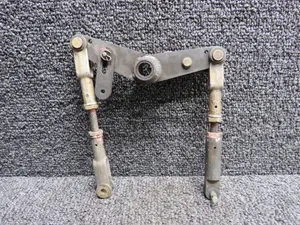
Parts listed for sale by vetted eBay sellers — confirmed on eBay at checkout.