FAA Safety Briefing May/June 2019
Cirrus SR22T G5 · Airworthiness Directives
Overview
The FAA Safety Briefing for May/June 2019 focuses on various aspects of general aviation safety, including updates on aircraft certification processes and safety programs. This issue highlights the transition to performance-based aircraft certification standards, particularly the changes to Part 23 regulations that affect general aviation aircraft like the Cirrus SR22T G5. The publication serves as a resource for pilots and aviation enthusiasts, providing insights into new safety equipment and regulatory changes that enhance operational safety. It also discusses the Non-Required Safety Enhancing Equipment (NORSEE) policy, which allows for the installation of various safety-enhancing technologies in aircraft.
- The FAA has shifted to performance-based aircraft certification standards to enhance innovation and safety.
- Part 23 changes allow for more flexible compliance methods for aircraft manufacturers.
- NORSEE policy enables the installation of non-mandatory safety-enhancing equipment in aircraft.
- General aviation safety initiatives focus on reducing common accident causes and improving pilot training.
- Pilots must be aware of the implications of using marijuana and its derivatives on their medical certification.
Document
Source
Originally published by www.faa.gov. Sprinkle hosts a reference copy with an added summary, specifications and searchable full text.
Document details
- Type
- Airworthiness Directives
- Year
- 2019
- Pages
- 40
- File size
- 4.6 MB
- Publisher
- www.faa.gov
Common. One of the most common aircraft types we track.
Most owners only have the POH. Here's the essential set for the Cirrus SR22T G5.
- Pilot's Operating Handbook / AFM
- Checklist
- Maintenance Manual
- Parts Catalog (IPC)
- Systems & Wiring
- Service Bulletins
- Type Certificate (TCDS)
Cirrus SR22T G5 for sale now
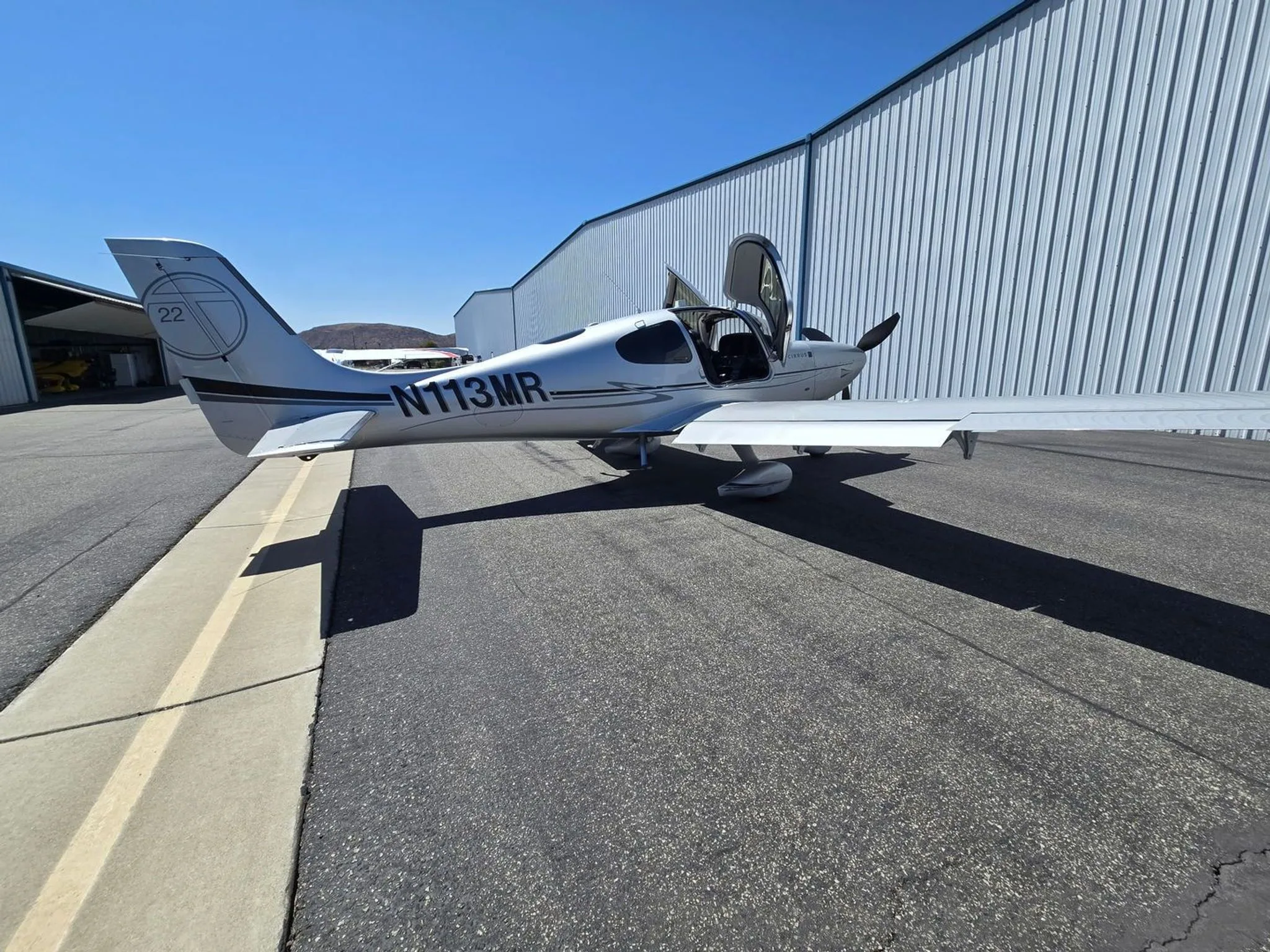


Free — save the SR22T to your watchlist and track it in one place.
More Cirrus SR22T G5manuals & documents
- AVIATION SERVICE DOCUMENT NOTIFICATIONService Bulletins
- smartCHECK V5.14 - ManualChecklist
- CIRRUS AIRCRAFT SR22T GTS G6Systems Description
- Weight and Balance RevisionWeight And Balance
- FAA Approved Model List (AML) STC SA02658SEType Certificate
- FAA Approved Model List (AML) STC SA01818WIType Certificate
- Cirrus SR22T G5: Fast, Efficient Traveler - Aviation ConsumerPerformance Data
- AAIB Bulletin: 3/2019 G-SRTT EW/G2018/06/09Service Bulletins
- 2015 CIRRUS SR22T G5 GTS (N9577P)Specifications
- Emergency Procedures for Cirrus SR22T G5Emergency Procedures
- Cirrus Perspective™ by Garmin – Cockpit Reference Guide for the SR22Avionics Manual
- PILOT’S OPERATING HANDBOOK AND FAA APPROVED AIRPLANE FLIGHT MANUAL for the CIRRUS DESIGN SR22Airworthiness Directives
If you fly the Cirrus SR22T G5, you may also be researching these.




In this document
Performance-Based Aircraft Certification
This section discusses the shift towards performance-based standards for aircraft certification, which aims to foster innovation and safety in general aviation. The changes to Part 23 regulations, effective since August 2017, allow manufacturers more flexibility in meeting safety standards, promoting the development of new technologies.
NORSEE Policy Overview
The NORSEE (Non-Required Safety Enhancing Equipment) policy provides guidelines for the installation of safety-enhancing equipment in aircraft. This includes avionics and systems that improve situational awareness and safety without being mandatory. The policy aims to reduce costs and enhance safety for aircraft owners.
General Aviation Safety Initiatives
The publication highlights various safety initiatives and programs aimed at improving general aviation safety. This includes the FAA Safety Team's efforts to address common causes of accidents and promote safer flying practices among pilots.
Updates on Regulatory Changes
This section reviews recent regulatory changes affecting general aviation, including updates on the FAA's General Aviation and Part 135 Survey, which collects data on aviation safety and operational practices.
Aeromedical Considerations
The aeromedical advisory section addresses concerns regarding the use of marijuana and its derivatives among pilots, emphasizing the importance of understanding FAA regulations and the potential implications for medical certification.
Safety notes
- Compliance with FAA regulations is critical for maintaining airworthiness and safety.
- Use of marijuana and its derivatives can impact medical certification and should be approached with caution.
Full document text
FAA SafetyBRIEFING May/June 2019 Your source for general aviation news and information PERFORMANCE-BASED AIRCRAFT CERTIFICATION TAKES OFF! You Have Choices A Guided Tour of Options for Aircraft Certification p 7 The Quiet Revolution What Part 23 Changes Mean For You p 8 NORSEE Turns Three A Look at How this FAA Safety Program is Performing p 11 faa.gov/news/safety_briefing @FAASafetyBrief Federal Aviation Administration FAA Safety Briefing is the FAA safety policy voice of non-commercial general aviation. The May/June 2019 issue of FAA Safety Briefing focuses on the future of aircraft certification. Feature articles focus on the advent of performance-based aircraft certification standards for general aviation that are helping to usher in a new era of innovation and safety. We’ll look at what the changes to part 23 mean to the future of the industry, as well as explore the benefits policies like NORSEE (Non- Required Safety Enhancing Equipment) can have for existing aircraft owners. Features 7 You Have Choices A Guided Tour of Options for Aircraft Certification by Susan Parson 8 The Quiet Revolution What Part 23 Changes Mean For You by James Williams 11 Seeing NORSEE How This Innovative Safety Enhancement Program is Performing by John Croft 16 The Transformation of Certification Adopting Consensus Standards for Light-Sport Aircraft by Jennifer Caron 19 Legally Aloft Review of Aircraft Certificates by Paul Cianciolo 22 Be a “Part” of Improving Aviation Safety A Look at Suspected Unapproved Parts by James P. Niehoff 25 Roll of Honor 2018’s Master Pilot and Master Mechanic Award Winners Departments 1 Jumpseat – an executive policy perspective 2 ATIS – GA news and current events 5 Aeromedical Advisory – a checkup on all things aeromedical 6 Condition Inspection – a look at specific medical conditions 15 Checklist – FAA resources and safety reminders 29 Drone Debrief – drone safety roundup 31 Nuts, Bolts, and Electrons – GA maintenance issues 32 Angle of Attack – GA safety strategies 34 Vertically Speaking – safety issues for rotorcraft pilots 35 Flight Forum – letters from the Safety Briefing mailbag 36 Postflight – an editor’s perspective Inside back cover FAA Faces – FAA employee profile 22 9 16 29 Cover photo courtesy of Textron Aviation Jumpseat RIC K DOMINGO E X ECU T I V E DIREC TOR, F L IGH T S TA NDA RDS SER V ICE May/June 2019 FAA Safety Briefing 1 Pilot’s Discretion Unleashing Creativity for Greater Safety My aviation career has primarily been in the airworthiness part of the Flight Standards Service, which I am now privileged to lead. One of the fre- quently used terms in this type of work is Alternative Method of Compliance (AMOC). AMOC refers to the fact that when it comes to compliance with an Airworthiness Directive (AD), the FAA can approve a range of approaches or techniques not specified in the AD to correct an unsafe condition on an aircraft or aircraft product. The FAA has recognized that the concept of finding alternative means to comply can apply more broadly. When it comes to safety in design, produc- tion, certification, and maintenance of aircraft, the agency historically took a highly prescriptive approach. Not only did we tell the community what to do, but we also had a lot to say about how it should be done. Sometimes a highly prescriptive approach is both necessary and appropriate. However, the FAA has increasingly moved to an emphasis on outcomes — performance — rather than methods. There is immense creativity in the industry. To unleash that creativity and allow for the kind of innovation that advances safety as well as technology, we needed a better approach. The key, of course, was to find ways to permit AMOC — an acronym I will temporarily adjust to signify “alternative means of creativity” — while ensuring that such creativity never runs amok in terms of aviation safety. Something New You are probably familiar with the changes that occurred in the summer of 2004, when the FAA published the Light-Sport Aircraft rule. The LSA rule marked a significant departure from the prescriptive approach, because it allowed for the use of industry consensus standards in the design, production, certification, and maintenance of new aircraft. Today you can see the results of this change by visiting almost any GA airport. In many ways, the LSA experience paved the way for the more recent overhaul of 14 CFR part 23, which is the most visible example of the FAA’s philosophical shift. This rule, which took effect in August 2017, offers both a better certification process for new aircraft incorporating innovative designs and technologies. For new aircraft, the rule eliminates the historical categories (e.g., utility, aerobatic, and com- muter) and replaces them with four levels of performance and risk. In addition, manufacturers can now use FAA-accepted consensus standards that provide flexibility in developing means of compliance. The migration from prescrip- tive standards (which can still be used) to perfor- mance-based standards makes the entire system more responsive, thus creating more incentives for industry to develop new products and technologies. You can read more about the new part 23 in this issue, and we’ll also review key points about the LSA rule. Something Old The FAA has also been busy finding ways to make it easier for owners to bring existing aircraft up to speed by incorporating safety enhancing equip- ment. Through the agency’s policy on Non-Required Safety Enhancing Equipment (NORSEE), you now have an alternative path to installing a range of avionics, electronic instruments, displays, and mechanical equipment that can enhance the safety of your aircraft. It reduces equipment costs by pro- viding flexibility to select various industry standards that suit their product, as long as it meets the FAA’s minimum design requirements. We’ll take a closer look in this issue. For equipment and changes that don’t qualify
Show full textShow less
for NORSEE treatment, the “old” options are still available. To help those who use these options, we’ll provide a guided tour of things like “337” approvals, Supplemental Type Certificates (STCs), and field approvals. These pages will also review important information on suspected unapproved parts (SUPs). Join us, and learn more about the wide range of options you now have. The FAA has increasingly moved to an emphasis on outcomes — performance — rather than highly prescriptive methods. ATIS AV I AT ION NE WS ROUNDUP 2 FAA Safety Briefing May/June 2019 Safer Flying in 57 Seconds The “57 Seconds to Safer Flying” is an instruc- tional video series produced by the FAA Safety Team (FAASTeam). Each episode is created to match the current month’s FAASTeam focus topic. Every topic comes from research and direction from the Gen- eral Aviation Joint Steering Committee (GAJSC) to help mitigate the most common causes of general aviation accidents. This video series introduces the topic of the month and attempts to generate an interest among airmen to research further into topics they find inter- esting and related to their type of flying. The intent in the brevity of each episode is to encourage more viewership into relevant safety related subjects such as a pilot or mechanic’s fitness to operate, or aero- nautical decision-making. Watch all the videos on the playlist at bit.ly/57secs, and make sure to subscribe to the FAA’s YouTube channel to get updates when new videos are published. Most Wanted List Released The National Transportation Safety Board (NTSB) released its 2019-2020 Most Wanted List (MWL) of Transportation Safety Improvements last February. The MWL is a tool the NTSB uses to identify the top safety improvements that can be made across all modes to prevent accidents, mini- mize injuries, and save lives in the future. Although general aviation was not specifically mentioned in the MWL, several listed areas are relevant to airmen, including: eliminating distractions; reducing fatigue- related accidents; improving the safety of part 135 aircraft flight operations; ending alcohol and other drug impairment in transportation; and strengthen- ing occupant protection. For more information on the Most Wanted List, go to ntsb.gov/safety/mwl and download their brochure. You can also check out their video at youtube/Cb1mlYHs-1g. FAA Completes Clearance Relay Initiative Flight Service will complete the Clearance Relay initiative on June 20 when it publishes the remaining phone numbers for pilots to obtain IFR clearances at public- and private-use airports from either the overlying Air Route Traffic Control Center (ARTCC) Flight Data Units, or an approach control facility. As part of the modernization efforts to streamline ser- vice delivery and increase efficiency, pilots now call directly to obtain or cancel an IFR clearance, reduc- ing the risk of potential errors. Last year, Flight Service formalized a process already in place by publishing phone numbers for 30 approach controls covering 667 public use airports, providing pilots direct contact with the controlling facility. Last fall, another 26 approach control facili- ties covering 226 public-use and 3,000 private-use airports had numbers published in the Chart Supple- ment, US and subscriber files. Leidos Flight Service will provide pilots with the name of the facility to contact or the correct phone number to obtain or cancel an IFR clearance. Pilots may continue to request clearances via radio from air traffic control or Flight Service. Beginning on June 20, you can find the phone numbers for clearance delivery in the remarks section of the entry for each airport in the Chart Supplement, US. This initiative does not affect pilots requesting clearances from Flight Service over Remote Communications Outlets (RCO), Ground Communications Outlets (GCO), or from locations in Alaska. For more information, visit go.usa.gov/x5wsR. May/June 2019 FAA Safety Briefing 3 Helicopter Ops See Safety Benefits of Integrating UAS and OPA Technology As part of its commitment to drive down the civil helicopter fatal accident rate, the United States Heli- copter Safety Team (USHST.org) has issued a report identifying how unmanned aircraft systems (UAS) and optionally piloted aircraft (OPA) technology can reduce fatalities in high-risk operations. The study by the USHST is part of a larger effort to implement data-driven safety enhancements that will slash the number of fatal helicopter accidents involving low-altitude flying, unintended flight into instrument meteorological conditions (IMC), and loss of control-inflight issues. In 10 of 52 fatal accidents thoroughly analyzed by the USHST, the team noted that integrating new technologies developed for UAS could have miti- gated the risks that emerged during the operation. Accordingly, the USHST recommends that industry and the FAA look toward opportunities to increase the use and integration of UAS and OPA to support manned operations in high-risk environments. The full report on integrating UAS and OPA tech- nologies, with all of the team’s recommendations, can be found at USHST.org/Reports. Drone ID Marking Change Owners and operators of small unmanned air- craft systems (sUAS) may no longer place or write registration numbers in an interior compartment. The rule became effective Feb. 25, 2019. When the FAA first required registration of small drones in 2015, the agency mandated that the registration marking be readily accessible and main- tained in readable condition. The rule granted some flexibility by permitting the marking to be placed in an enclosed compartment, such as a battery case, if it could be accessed without the use of tools. Subsequently, law enforcement officials and the FAA’s interagency security partners have expressed concerns about the risk a concealed explosive device Safety Enhancement Topics Please visit www.faa.gov/news/safety_briefing for more information on these and other topics. May: Mechanics for Pilots June: Regulatory Roadblock Reduction 4 FAA Safety Briefing May/June 2019 might pose to first responders upon opening a com- partment to find a drone’s registration number. The FAA thus believes this action will enhance safety and security by allowing a person to view the unique identifier without handling the drone. This does not alter the original acceptable methods of external marking, nor does it specify a particular external surface on which the registration number must be placed. The requirement is for the marking to be visible on inspection of the aircraft’s exterior. For more details, see the regulation at go.usa.gov/xEfvh. New AC for Part 91 Flight in RVSM Airspace Advisory Circular (AC) 91-85B, Authorization of Aircraft and Operators for Flight in Reduced Verti- cal Separation Minimum (RVSM) Airspace, was published in January 2019. It provides airworthiness and operational authorization guidance material for operators, pilots, certificate holders, and pro- gram managers conducting 14 CFR section 91.180 and 91.706 Reduced Vertical Separation Minimum (RVSM) operations. RVSM airspace is any airspace or route between flight level (FL) 290 and 410 inclusive where aircraft are separated vertically by 1,000 feet. This AC has been updated to include guidance on eligibility and compliance when operators seek RVSM authorization under the ADS-B Out provi- sions of part 91. Download AC 91-85B at bit.ly/2C7SiO2. FAA Survey Measures Safety and Determines Funding The FAA’s 41st annual General Aviation and part 135 Survey (GA Survey) is now underway, reporting on calendar year 2018. The GA Survey is the only source of information on the GA fleet, the number of hours flown, and the ways people use GA aircraft. Data from this survey will help determine fund- ing for infrastructure and service needs, assess the impact of regulatory changes, and measure aviation safety. And it’s not just governmental agencies that use this data; the GA industry and trade associations also rely on it for critical research and analysis. That’s why we encourage everyone who is contacted to respond to the survey so that aviation activity and safety information is accurate. For questions or additional information, please contact Tetra Tech toll-free at 1-800-826-1797 or email infoaviationsurvey@tetratech.com. ISSN: 1057-9648 FAA Safety Briefing May/June 2019 Volume 58/Number 2 Elaine L. Chao Secretary of Transportation Daniel K. Elwell Acting Administrator Ali Bahrami Associate Administrator for Aviation Safety Rick Domingo Executive Director, Flight Standards Service Susan Parson Editor Tom Hoffmann Managing Editor James Williams Associate Editor / Photo Editor Jennifer Caron Assistant Editor Paul Cianciolo Associate Editor / Social Media John Mitrione Art Director Published six times a year, FAA Safety Briefing, formerly FAA Aviation News, pro- motes aviation safety by discussing current technical, regulatory, and procedural aspects affecting the safe operation and maintenance of aircraft. Although based on current FAA policy and rule interpretations, all material is advisory or infor- mational in nature and should not be construed to have regulatory effect. Certain details of accidents described herein may have been altered to protect the privacy of those involved. The FAA does not officially endorse any goods, services, materials, or products of manufacturers that may be referred to in an article. All brands, product names, company names, trademarks, and service marks are the properties of their respective owners. All rights reserved. The Office of Management and Budget has approved the use of public funds for print- ing FAA Safety Briefing. CONTACT INFORMATION The magazine is available on the Internet at: http://www.faa.gov/news/safety_briefing Comments or questions should be directed to the staff by: ●● Emailing: SafetyBriefing@faa.gov ●● Writing: Editor, FAA Safety Briefing, Federal Aviation Administration, AFS-850, 800 Independence Avenue, SW, Washington, DC 20591 ●● Calling: (202) 267-1100 ●● Twitter: @FAASafetyBrief SUBSCRIPTION INFORMATION The Superintendent of Documents, U.S. Government Publishing Office, sells FAA Safety Briefing on subscription and mails up to four renewal notices. For New Orders: Subscribe via the Internet at https://bookstore.gpo.gov/products/ faa-safety-briefing, telephone (202) 512-1800 or toll-free 1-866-512-1800, or use the self-mailer form in the center of this magazine and send to Superintendent of Docu- ments, U.S. Government Publishing Office, Washington, DC 20402-9371. Subscription Problems/Change of Address: Send your mailing label with your comments/request to Superintendent of Documents, U.S. Government Publishing Office, Contact Center, Washington, DC 20408-9375. You can also call (202) 512-1800 or 1-866-512-1800 and ask for Customer Service, or fax your information to (202) 512-2104. U.S. Department of Transportation Federal Aviation Administration May/June 2019 FAA Safety Briefing 5 Aeromedical Advisory MICH A E L BE R R Y, M .D. F EDE R A L A IR SURGEON Marijuana and Derivatives What are the Aeromedical Implications? The Federal Air Surgeon’s office has received a number of inquiries about marijuana, due to the recent increase in the number of states around the country that have approved its use for medical and recreational purposes. Specifically, airmen are concerned about the safety of cannabidiol (CBD) oil use and how such use impacts an airman’s medical certificate. Be aware that federal law — not state law — governs FAA medical and pilot certification. First, we should note that commonly used terms within the context of marijuana can be confusing. The marijuana or cannabis plant contains more than 400 different chemicals and 60 cannabinoid compounds, all of which are absorbed when the whole leaf is smoked or ingested. The compound responsible for the euphoric, mind-altering effect is tetrahydrocannabinol (THC). Although the use of cannabis is legal for medical and/or recreational use in many states, the United States Drug Enforcement Agency (DEA) continues to classify the whole canna- bis plant as a Schedule I controlled substance, which is defined as “drugs with no currently accepted medical use and a high potential for abuse.” The U.S. Department of Transportation (DOT) drug test includes THC, and its presence at defined levels con- stitutes a positive drug test. More recently, interest has grown in other compounds derived from the cannabis plant that may have positive health benefits, but without the mind-altering features of THC. One such compound being widely marketed is CBD oil. In 2018, the FDA announced the approval of Epidiolex (cannabidiol), purified pharmaceutical grade CBD extract from the cannabis plant, for the treatment of seizures associ- ated with two rare and severe forms of epilepsy. As a FDA approved medication, it is subject to strict qual- ity control. In other words, you know what you are getting. Commercially available CBD, by contrast, is not regulated and may be contaminated with a variety of substances, most significantly, THC. Prod- uct labels are often inaccurate. Although most CBD products claim to have under 0.3-percent THC, they could contain high enough levels of THC to make a drug test positive. Use of CBD oil is not accepted as an affirmative defense against a positive drug test. Furthermore, despite legalization in some states, it remains uncertain whether marijuana has thera- peutic benefits that outweigh its health risks. There is evidence that marijuana adversely affects brain function both acutely and chronically, especially in younger individuals. It is generally agreed that cur- rently available marijuana products are more potent than those used in older research, which casts doubt on the reliability of that research. We need to understand much more before considering the use of mari- juana and its derivatives for airman cer- tificate holders. Please also be aware that no special issuances have been granted for conditions treated with medical marijuana. Dr. Michael Berry received an M.D. from the University of Texas Southwestern Medical School, and an M.S. in Preventive Medicine from Ohio State University. He is certified by the American Board of Preventive Medicine in Aerospace Medicine. He served as an FAA Senior Aviation Medical Examiner and Vice-President of Preventive and Aerospace Medicine Consultants for 25 years before joining the FAA. He also served as both a U.S. Air Force and NASA flight surgeon. For More Information: National Cancer Institute go.usa.gov/xEzFc U.S. FDA – Warning Letters and Test Results for CBD- related Products go.usa.gov/xEzFb We need to understand much more before considering the use of marijuana and its derivatives for airman certificate holders. Most airmen with mild or moderate arthritis of any type may qualify for an unrestricted medical certificate. Condition Inspection P E NN Y GIOVA NE T T I, D.O. Arthritis Arthritis is an ailment encompassing nearly 100 types of joint disease. It affects over 50 million Amer- icans of all ages. In general, arthritis-related diseases are characterized by joint pain and stiffness and, depending on the type, may also include swelling, redness, and later deformity. The disease process can involve any joint including the spine, but certain types are more common in small joints, while others target large joints. The four major types are: • osteoarthritis • inflammatory arthritis (most commonly rheumatoid and psoriatic) • infectious • metabolic (e.g., gout) Osteoarthritis is the most common type and is sometimes called degenerative joint disease. This is the arthritis of aging and its prevalence increases sharply after age 50. Other risk factors include obe- sity, prior trauma, and genetics. The actual cause is not known, but the disease involves many biochemical and structural changes within the joint thought to be a result of abnormal mechanics and low-grade inflammation. There is no cure, so treatments focus on controlling pain, minimizing joint damage, and maximizing motion and overall function. They may include exercise, weight loss, physical therapy, counter-irritant creams such as menthol, topical or oral anti-inflammatory drugs, acetaminophen, joint injections, and some- times surgery. Inflammatory arthritis is actually an autoim- mune disease caused by your body’s immune system attacking its own tissues, resulting in severe inflam- mation. This disease can impact many other organs, as well as joints. The actual cause of inflammatory arthritis is unknown, but it is thought to result from environmental triggers in a genetically susceptible individual. It is more common in women and is not age related. Treatment goals and therapy are similar to osteoarthritis; however, there is a whole class of drugs, called disease modifying anti-rheumatic drugs (DMARDs), available to treat this form of arthritis. Infectious arthritis may be caused by a variety of organisms, but is usually an acute process, and often responsive to antibiotics. Metabolic arthritis results from irritating sub- stances such as uric acid crystals creating inflamma- tion in the joint. The best prevention is to treat the underlying cause. Frequently Asked Questions Is it possible to get a medical certificate if I suffer from arthritis? Yes, most airmen with mild or moderate arthritis of any type may qualify for an unrestricted medical certificate. Specific criteria for Conditions AMEs Can Issue (CACI) are published in the online AME Guide. The FAA can consider Special issuance for those who don’t meet CACI criteria. What does the FAA consider in granting spe- cial issuance? The key factors are whether the disease is stable on an acceptable treatment regimen, pain is con- trolled, and there is adequate mobility. Are there any treatments or medications for arthritis that are disqualifying? The FAA accepts most commonly used medica- tions. However, use of opioid medications such as hydrocodone and oxycodone for pain control are disqualifying for routine use and have associated no-fly times for episodic use. Penny Giovanetti, D.O., received a bachelor’s degree from Stanford, a mas- ter’s in Environmental Health and Preventive Medicine from the University of Iowa and doctorate from Des Moines University. She completed a 27-year career as an Air Force flight surgeon. She is board certified in aerospace medicine, occupational medicine and physical medicine/rehabilitation. She is also a Fellow of the Aerospace Medical Association and a private pilot. 6 FAA Safety Briefing May/June 2019 May/June 2019 FAA Safety Briefing 7 You Have Choices A Guided Tour of Options for Aircraft Certification S U S A N PA R S O N When it comes to GA airplanes, having choices wasn’t always the case. At the time I started learning to fly in the early 1990s, the typical flight school fleet offered a choice between an old GA airplane and an older one. Nobody was making new GA airplanes for the training and recreational/personal aviation market, because the combination of product liability concerns and the high cost of certification created too many barriers. GARA Starts the Growth Things started to change after passage of the 1994 General Aviation Revitalization Act, a landmark piece of legislation that paved the way for Cessna and other manufacturers to restart production of small general aviation aircraft. Four years later, new versions of the venerable Cessna C172 Skyhawk began to appear. (Note: To honor the pilot who most ardently championed GARA, the first 100 new Skyhawks bore the letters “ES” at the end of the tail number. For more on this backstory, see the Jan/Feb 2010 issue of this magazine at go.usa.gov/xEx6N.) The introduction of “clean sheet” airframe designs from new companies like Cirrus and Dia- mond soon followed, along with the advent of “glass cockpit” avionics and highly capable autopilots for GA airplanes. Light-Sport Launches Expansion Implementation of the Sport Pilot/Light-Sport Aircraft rules in the summer of 2004 marked yet another watershed in the expansion of available air- craft choices. We all learned about “ASTM consensus standards,” and added acronyms like S-LSA (Spe- cial Light Sport Aircraft) and E-LSA (Experimental Light Sport Aircraft) to the aviation lexicon. We also learned to recognize and appreciate the incredible diversity these aircraft brought to the formerly forlorn fleet of aircraft for GA training and personal flying. But wait — there’s more. The safety and techno- logical advances these new designs brought to both airframes and avionics helped drive several more recent developments. After extensive consultation and collaboration between government and industry through the General Aviation Joint Steering Committee, in 2014 the FAA simplified the design approval require- ments for installing angle of attack (AOA) indica- tors into GA aircraft cockpits. The success of this initiative led the FAA to expand this approach to a broader range of equipment. Published in July 2016, the FAA’s Non-Required Safety Enhancing Equipment (NORSEE) policy includes avionics, electronic instruments, displays, and mechanical equipment for 14 CFR parts 23, 27, and 29 aircraft. Equipment approved as NORSEE can enhance overall situational awareness and pro- vide a range of information such as data, other than the aircraft primary system; independent warning, cautionary, or advisory indications; and additional occupant safety protection. Examples of NORSEE equipment include traffic advisory systems, terrain awareness and warning systems; attitude indicators; fire extinguishing systems; and autopilot or stability augmentation systems. The Big One — Part 23 Reform The next, and most recent, change in the air- craft certification landscape took place in August 2017, when the final rule overhauling airworthiness standards for general aviation airplanes took effect. With this rule, a substantial overhaul of 14 CFR part 23, the FAA intends to enable faster installation of innovative, safety-enhancing technologies into small airplanes, while reducing costs for the avia- tion industry. The performance-based standards approach in this rule recognizes that there is more than one way to deliver on safety, and it offers a way for industry and the FAA to collaborate on new and existing technologies and to keep pace with evolving aviation designs and concepts. A Guided Tour The number of options now available to aircraft owners (and potential owners) can be bewildering, so this issue of FAA Safety Briefing aims to offer a guided tour of this exciting landscape. In addition to taking a closer look at some of the topics described above, we will also review the more traditional areas (e.g., supplemental type certificates, field approvals) that may still be necessary in some cases. We invite you to join us on this journey! Susan Parson (susan.parson@faa.gov) is editor of FAA Safety Briefing and a Special Assistant in the FAA’s Flight Standards Service. She is an active general aviation pilot and flight instructor. 8 FAA Safety Briefing May/June 2019 Photo courtesy of Bye Aerospace The Quiet Revolution What Part 23 Changes Mean for You J A M E S W I L L I A M S Even the most rapid revolutions that seem to explode on the scene require years and some- times decades of groundwork to take off. The Internet is probably the most rapidly spreading world change in recent memory, but even that took decades of foundation building. Setting aside all of the basic computing technology that needed to be in place for the Internet to exist, economic and infrastructure conditions also had to be met. Those included a robust communications backbone, enough PCs in homes and offices to create an audi- ence, and enough capital to roll out the original Internet Service Providers. It was also essential to have a regulatory environment that would allow it. Only then did the “overnight revolution” succeed. The aircraft certification world has been in the midst of such a revolution for the last few years. The FAA’s role in this revolution includes a significant modification to 14 CFR part 23 (Airworthiness Stan- dards for Normal Category Airplanes), which covers airplanes weighing 19,000 lbs. or less and having 19 or fewer passenger seats. It includes the lower end of the commuter airplane world, but it is predomi- nantly a general aviation (GA) rule. While the origi- nal part 23 may not have had the same standards as part 25, which covers transport category airplanes, the two share a similarly prescriptive process and mindset. This process became increasingly frustrat- ing to many GA manufacturers. It also made innova- tion more difficult, as the procedures and processes were not adaptable for changing technology. But change was happening. Change Was in the Air A quiet revolution has been taking place in the FAA for some time on many fronts. You may have heard about it without even realizing it. These changes were gradually introduced into programs like Performance Based Navigation (PBN), Airman Certification Standards (ACS), the Compliance Pro- gram, and the focus of this article, the new part 23. The common thread is that these changes shift the focus from the process to the outcome. In part 23, the old rule was very focused on how the manufacturer gets to the outcome of a safe The eFlyer (formerly Sun Flyer) is a project that is enabled by the revised part 23. May/June 2019 FAA Safety Briefing 9 airplane. The regulation codified prescriptive design requirements, which meant that any deviation from that approach required a cumbersome approval process. These rules were introduced in the 1960s, and the ways we designed airplanes, at least GA ones, were fairly well established. Deviations from the norm were relatively rare. However, that changed as it became increasingly obvious to GA manufacturers (and pilots) that there were other (and better) ways of meeting the end goal: a safe airplane. However, the fact that all of the requirements were set forth in the regulation required manufacturers to either comply or request an exemption. It was also necessary for every manufacturer to do this for every certificate. The big change in part 23 was the removal of the prescriptive requirements that had previously been at the heart of the rule. The FAA replaced them with desired, end-state criteria. This approach puts the emphasis on the airplane’s or system’s safety performance, not on how well it does in a series of predefined tests. So now that we have these performance-based metrics, how do we ensure that they are met? That brings me to the other half of the new part 23, Means of Compliance (MOC). MOCing It Up Instead of having regulations with very specific methods of compliance, the new part 23 allows MOCs based on consensus standards. The FAA, industry, and other stakeholders worked together to develop MOCs that are a way — but not the only way — to demonstrate compliance with the regula- tion. Each element will have one or more MOCs for the applicant to use. If, for example, none of the previously approved MOCs work in your application, you can propose a new one. This flexibility allows for faster integration of new methods or technologies while still allowing for proper safety oversight. Let’s have a look at some real-world applications of these changes. Game Changer “The part 23 rewrite announcement was a complete game-changer for eFlyer,” said George Bye, CEO of Bye Aerospace. “We implemented an ambitious business plan, began raising investment capital, and set out to identify the best supply chain partners for this unique, all-electric flight training airplane opportunity.” If you’re a frequent reader, you might recall that a previous article (Ride the Lightning, Nov/ Dec 2018, page 18), featured Bye Aerospace’s eFlyer as a certification project to watch on the electric propulsion front. Bye’s first airplane, the eFlyer 2, is a two-seater targeted at the training market. The airplane has a cruising speed of 135 knots and a 3.5 hour maximum endurance with VFR and reserve. Bye Aero- space is also developing a four-seat version, the eFlyer 4, with a 150-knot cruising speed and a four-hour endurance. “The new regulation provides for a streamlined certification process, reducing cost and schedule to achieve certification and transition to produc- tion,” Bye explained. “Bye Aerospace is extremely pleased and grateful that the FAA had the insight and willingness to embrace the possibilities and the likelihood that electric propulsion truly is the future of aviation,” said Bye. “Our opinion of the change is positive.” Streamlining the Approval Process Aircraft manufacturers aren’t the only ones to reap the benefits of a revised part 23. “The part 23 rewrite and the associated ASTM consensus stan- dards have greatly benefitted Garmin, resulting in a more streamlined and safety-focused perspective,” explained Phil Straub, Garmin’s Executive Vice President and Managing Director of Aviation. “This has allowed Garmin to bring cost-effective, safety- The big change in part 23 was the removal of the prescriptive requirements that had previously been at the heart of the rule. The FAA replaced them with desired, end-state criteria. Photo courtesy of Piper Aircraft, Inc. enhancing technologies to a segment of the market that has expressed interest in low-cost solutions,” Straub continued. “Based on the demand and popu- larity of these products, such as the G5 electronic flight instrument and the GFC 500 autopilot, our customers have benefitted tremendously from the part 23 rewrite.” According to Straub, the most valuable aspect of the rule change is the replacement of prescriptive requirements with standards more proportional to the actual risk involved with light airplanes. “For example, requirements such as those related to HIRF [high-intensity radiated field] and lightning, and which affect light GA very differently than transport category aircraft, have been revised to focus on safety objectives. This further streamlines the approval and certification process for Garmin.” Straub also explained that the rewrite opens great opportunity. “As I’ve shared by our example, the industry is already benefiting,” he said. “The full benefit will take time, particularly for aircraft manu- facturers to create aircraft designs that raise the safety bar by complying with regulations in innova- tive ways that were previously discouraged.” Garmin is only one prominent example of how this change can enable innovation, improve cost, and more importantly, enhance safety. Improving Situational Awareness One of the more interesting concepts that the new part 23 enhanced is EZ Fly. EZ Fly is an exciting program to improve GA safety by leveraging technol- ogy to create an intuitive user interface that reduces pilot workload. To translate that into a less academic parlance, the idea is to use increased automation to move the pilot’s limited attention away from imme- diate mechanical tasks and toward overall manage- ment of the flight. This approach could dramatically improve situational awareness and provide more mental bandwidth for aeronautical decision-making. The EZ Fly concept combines a number of com- ponents including sensors, control laws, displays, and a simplified pilot interface with full envelope protection. One of the key concepts is Advanced Flight Control Systems (AFCS). AFCS are more than just fly-by-wire (FBW) systems. AFCS blend aircraft stabilization (such as stability augmentation) with basic aircraft control. But accomplishing that goal requires researching a number of supporting tech- nologies and making them economically viable for GA. This is a joint effort by the FAA, NASA, academia, and industry and is no small task. The expected out- come is not a discrete system or set of components, but a MOC that would allow manufacturers to use these systems in future projects. EZ Fly is also part of a larger effort called Simpli- fied Vehicle Operations (SVO). SVO has an end goal of fully automated flight operations, which has great potential to address key safety issues such as Loss of Control. But there are a number of challenges between where we are today and that goal. EZ Fly may offer a step toward that end state. Part 23 is an important enabler of not only this research and development, but also the technology’s eventual integration into finished products. The Flight Path The foundation has been firmly laid. The regula- tions are now in place to facilitate the future. Research is underway to enable introduction of technology. As noted, it will take time for the benefits to work their way to the average pilot. Rest assured, though, that the creativity unleashed in this quiet revolution will likely lead to solutions nobody saw coming. We may not know exactly what that tomorrow will look like — but that’s part of the excitement. Stay tuned! James Williams is FAA Safety Briefing’s associate editor and photo editor. He is also a pilot and ground instructor. Photos courtesy of Garmin 10 FAA Safety Briefing May/June 2019 Garmin GFC 500 Autopilot May/June 2019 FAA Safety Briefing 11 NORSEE Seeing Benefits How This Innovative FAA Safety Enhancement Program Is Performing J O H N C R O F T When Rosen Sunvisor Systems displayed its wares at the annual Sun ‘N Fun International Fly-In and Expo in April, a new product with an unusual identifier on the label — NORSEE — was on sale. NORSEE refers to the FAA policy statement for Non-Required Safety Enhancing Equipment, part of the required labeling for Rosen’s new visor for the Piper Navajo. I Can See Clearly Now The Navajo visor is Rosen’s first NORSEE prod- uct and, based on the company’s experience so far, it is the likely forerunner of many similar products. The Oregon-based company is a household name in visors for aircraft, with certified products available for most U.S.-made general aviation aircraft, as well as all Boeing commercial jetliners. Three years after NORSEE’s debut, the FAA Safety Briefing magazine team caught up with the FAA officials overseeing NORSEE and two manufacturers who are now using the streamlined process to see how the program is progressing. We found success in certain key areas. We also discovered that the FAA is learning a great deal about how to improve the nascent program, which allows non-traditional avia- tion companies to produce non-essential safety prod- ucts for certified aircraft. As of the end of February 2019, the FAA had issued about a dozen approvals for safety equipment ranging from USB panel-mounted chargers to iPad mounts to a multi-function display. About a half-dozen other projects are in the pipeline at any given time, according to John Ras- panti, an aerospace engineer in the Chicago Aircraft Certification Office (ACO). The Chicago ACO is cur- rently the focal point for all NORSEE applications. As program manager of NORSEE, Raspanti reviews and disseminates the information to the appropriate FAA lines of business. Launched in 2016, NORSEE allows a streamlined approval process for certain non-essential equip- ment that can enhance the safety of general aviation fixed-wing and rotary-wing aircraft. Included are traffic and terrain advisory systems, attitude indica- tors, weather advisories, crashworthiness improve- ments and stability augmentation systems. NORSEE evolved from an earlier policy (AIR100- 14-110-PM01) which uses ASTM standards (F3011- 13), to make it easier for manufacturers to gain approval for angle-of-attack systems. It is designed to enable a lower-cost, faster route to the type certifi- cated (TC) aircraft market for a broad range of safety equipment that historically have required Technical Standard Orders (TSO) to approve the product and supplemental type certification (STC) to install it. Anthony Vilante, an FAA aerospace engineer in the Certification Procedures Branch, wrote both poli- cies, which were designed to streamline the approval process for owners to install lower cost, non-certified safety equipment. Photo courtesy of Garmin 12 FAA Safety Briefing May/June 2019 Companies applying for NORSEE approval can select various industry standards, such as ASTM, that suit their product as long as the equipment meets minimum design requirements established by the FAA. Applicants may also utilize applicable portions of existing FAA Advisory Circulars and TSO standards. The applicant’s paperwork includes man- ufacturing and quality control information as well as safety analyses proving that the product will not affect primary systems on the aircraft. After the Chicago ACO reviews and finds the application and the sup- porting documents acceptable, it sends the applicant a letter of approval that provides instructions on their respon- sibilities as the design approval holder, including how they must maintain quality control of the product. How the product gets installed is up to the manufacturer (per installation instructions approved by the FAA) and the buyer and, in some cases, the buyer’s airframe and powerplant mechanic. The installer is responsible for following the installation instructions, which may require a calibration or pull- test, for example. “We always say that if you can turn a screwdriver, you can install most of our STC’d sun visors,” said Gary Hanson, field engineer for Rosen Sunvisor Systems. “If you’re not comfortable, have a mechanic do it, with a logbook entry.” Even though owners can install the visors themselves, Hanson recommended that they have their mechanic review the installation and fill out a Form 337 (Major Repair and Alteration) to more thoroughly document the history of changes made to the aircraft. “It can help if you sell (the air- craft),” said Hanson. Opening the Door Vilante said NORSEE has opened the door for low-cost safety enhancing equipment to enter the general aviation market, in part from manufacturers who have not previously built certified equipment through the rigorous FAA processes. He added that going forward, NORSEE will be the “umbrella that catches all safety-enhancing add-ons that do not fit into the field approval, STC, Parts Manufacturer Approval or type certificate areas.” NORSEE approval is based on the premise that it offers safety benefits that outweigh the potential risks of devices with a minor failure effect. Liberty University’s School of Aeronautics began installing Alpha Systems Eagle angle of attack (AOA) indicators in its flight training fleet starting in 2012 under the predecessor policy to NORSEE. Photo by Mike Collins, (c) AOPA. Used with permission. May/June 2019 FAA Safety Briefing 13 That unfamiliarity has added to the workload. Raspanti, who runs the NORSEE program part-time, has spent a good deal of his time helping new appli- cants, about half of whom have never worked with the FAA, through the process. Vilante said most of the applications received have been for “relatively generic” safety equipment, like carbon monoxide detectors and outside air temperature gauges, equipment that normally would cost a little more to purchase and install. Some complex applications — like multi-axis autopilots which use servos to control primary flight controls — were considered a major change to type design that require an STC, and therefore did not qualify as NORSEE. Others did not address the primary goal, boosting safety. “NORSEE approval is based on the premise that it offers safety benefits that outweigh the potential risks of devices with a minor failure effect,” said Vilante, adding that any failures of the equipment should not result in a reduction in safety. As the intricacy in operation, functionality, and installation increases, the potential safety risks stemming from the failure of integrated and com- plex systems also increases and the FAA has to focus more intently on the relationship between safety benefits and potential risks. As a result, more com- plex equipment generally requires more time and resources to evaluate. In the avionics area, some applications have pushed the limits of the NORSEE policy. Devices approved so far include small, multi-function gauges that provide information on attitude, angle-of-attack, G loads, and other information. Is It Working? Manufacturers who have tried the new process said it can drastically cut the cost and effort to get a product to market, and in some cases, the time it takes to get to market. “Our first approval took one and a half months from start to finish,” said Rosen’s Hanson of the com- pany’s NORSEE applications. “STCs typically take one and a half to two years to complete.” Along with the reduced approval time, the NORSEE certification itself is less expensive. “An STC costs a couple of thousand dollars to process, primarily because we’re required to use FAA desig- nees to perform and review analyses,” said Hanson. Manufacturing costs are equivalent to the company’s certified products as all parts are made the same way. Will Rosen be able to pass lower costs along to customers? “We don’t know yet,” said Hanson. What is certain is that Rosen has more NORSEE applications in the pipeline. “We have another one in right now and we plan to do two more in the next three months or so,” he said. “I have high hopes that NORSEE is going to be a good way for us to go,” said Hanson, “because we have fairly simple products that pilots love and want.” Jeff Bethel, owner and founder of avionics company, AeroVonics, said the cost of creating and getting a product to market will be about 90-percent less for NORSEE than for the traditional STC route, although he could not say the same about the time it takes to complete the process. AeroVonics, which gained NORSEE approval for its multifunction dis- play in October 2018, has arguably the most complex device approved under the policy to date. The AV-20 provides angle-of-attack, G-meter, attitude, airspeed, and other information on a 2-inch display. As the complexity of a NORSEE component increases, the review and approval time also increases. The time to complete a NORSEE approval is also dependent on the applicant’s previous knowledge and experience with FAA certification processes. Each NORSEE project requires one-on- one help and guidance to develop the NORSEE documentation. “There is a learning curve, but after the applicant has demonstrated the ability to provide the required documentation needed for NORSEE, we expect the approval times to decrease,” Raspanti said. The AV-20 provides angle of attack, G-meter, attitude, airspeed, and other information on a 2-inch display. 14 FAA Safety Briefing May/June 2019 “For Rosen Sun Visors, we worked together on the NORSEE documents for the initial approval.” If future NORSEE applications mirror the same format, Ras- panti said he expects approvals for similar sun visors on other aircraft to achieve more timely approvals. One improvement that has been implemented is the help and guidance provided by Raspanti to inex- perienced NORSEE applicants. “It was apparent they needed help in preparing the letters, design stan- dards, and installation documentation for a NORSEE device,” he said. We provide guidance to help those applicants with little to no engineering experience develop NORSEE documentation that will be accept- able to the FAA. “What John is doing is building a basis for a gen- eral template to go along with these approvals,” said Vilante. “He’s developing a common denominator on what everyone should have in their data package. The approvals will occur on a case-by-case basis.” The NORSEE policy envisions other ACO branches “eventually” joining the program so that applicants can apply through their local offices. For now, though, everything is being routed through the Chicago ACO branch to ensure consistency in evaluating the applications and to develop a docu- mentation process that will mature “as we get more exposure to various NORSEE products coming to the market,” said Vilante. John Croft is an FAA certified flight instructor and a writer/editor in the NextGen Updates and Messaging Branch. Croft uses ADS-B in the Piper Archer he co-owns with two other pilots, and he regularly flies a small team of FAA communicators to talk to pilots and other stakeholders about ADS-B. Learn More FAA’s NORSEE Approval List faa.gov/aircraft/air_cert/design_approvals/norsee NORSEE Policy Statement (PS-AIR-21.8-1602) go.usa.gov/xEGg7 May/June 2019 FAA Safety Briefing 15 Checklist SUS A N PA R SON A Strategy of (and for) Innovation "Moving with the times is an important idea for strategy today." — Denise Morrison "Innovation requires an experimental mindset." — Denise Morrison Recently-retired Campbell’s Soup CEO Denise Morrison may have been thinking about soup when she uttered these words, but they certainly apply to aviation. As anyone in the GA community can attest, aviation does not — indeed cannot — stand still, and every segment of the industry has repeatedly proven that innovation comes from willingness to experiment. When it comes to many things, including the design, production, and certification of aircraft, the FAA has not historically had a reputation for things like innovation or willingness to experiment. On the contrary — the traditional certification process for part 23 seemed designed to do anything BUT move with the times. There are good reasons for caution. The agency has a significant responsibility, and there ARE designs and ideas that quite literally shouldn’t fly. Times and mindsets have changed. The FAA has made significant strides toward moving ahead with the times and being more open to “alternative means of compliance” for integrity of design and production. This mindset is consistent with the FAA’s broader emphasis on risk-based decision-making, as well as on the determination to avoid stifling indus- try’s ability to be creative and innovative. The “mission statement” for this particular FAA Safety Briefing column is to help develop awareness of FAA activities and resources relevant to the general aviation community. In that spirit, let’s take a look at some of the GA-related certification material you can find — at no cost, of course — on the FAA’s website. General Aviation Fleet Modernization Efforts: Review and download this handy one-pager (go. usa.gov/xE84M) for a visual overview of the FAA Aircraft Certification Service’s focus areas for both retrofit of the existing fleet and future R&D efforts, such as advanced “refuse to crash” autopilots and future automation. Topics in the retrofit category include propulsion enhancements, advanced flight displays, autopilot and envelope protection systems, engine monitoring systems, fuel gauge systems, ADS-B In/Out, attitude indicators, angle of attack indicators, and non-required safety enhanc- ing equipment (NORSEE). Non-Required Safety Enhancing Equipment (NORSEE) Policy: We will cover NORSEE in greater detail elsewhere in this issue, but take a look at the NORSEE policy statement (go.usa.gov/xE82C) for a description of the purpose and overall applicability. You will also want to review the approved equip- ment page (go.usa.gov/xE822), which is updated on a regular basis to list specific items covered under the NORSEE policy. General Aviation Fuel: Avgas is the only remaining lead-containing transportation fuel. There are increasing concerns about lead emissions from small aircraft. To help “get the lead out,” the FAA is supporting the research of alternate fuels at its Wil- liam J. Hughes Technical Center in Atlantic City. We are working with the aircraft and engine manufactur- ers, fuel producers, the EPA and industry associa- tions to overcome technical and logistical challenges to developing and deploying a new, unleaded fuel. faa.gov/about/initiatives/avgas. Part 23 Reform: You can read the full text of the revised Airworthiness Standards for Normal, Util- ity, Acrobatic, and Commuter Category Airplanes at go.usa.gov/xE82Z, but for a quick summary, the FAA’s webpage (go.usa.gov/xE82K) provides a broad overview, and you will find additional informa- tion elsewhere in this issue. The part 23 reform is important because its flexible, forward-looking use of performance-based standards recognizes multiple avenues to safety in aircraft design and production. AIR Transformation Impact: In 2017, both the FAA Flight Standards Service and the FAA Aircraft Certification Service (AIR) implemented changes in organizational structure and culture (go.usa.gov/ xE829). We have previously described the Flight Standards (FS) changes in some detail (adobe. ly/2xL0cZC). The AIR Transformation is a compre- hensive change in the way AIR does business. The traditional focus is on compliance, which defines the expected level of safety. The AIR Transforma- tion is a conscious decision to shift emphasis to up front planning, development of performance-based standards and means of compliance, and a robust, risk-based systems oversight program. Susan Parson (susan.parson@faa.gov) is editor of FAA Safety Briefing and a Special Assistant in the FAA’s Flight Standards Service. She is an active general aviation pilot and flight instructor. 16 FAA Safety Briefing May/June 2019 The Transformation of Certification Adopting Consensus Standards for Light-Sport Aircraft J E N N I F E R C A R O N “I look for the consensus because the consensus drives the policy into new places.” — Catherine Ashton. Catherine Ashton’s quote speaks directly to the spirit of the time — 2002 — when the FAA made the decision to use industry-developed consen- sus standards for the design, manufacture, airwor- thiness certification, and maintenance of a new, and emerging category of light-sport aircraft. Back then, manufacturers of single-seat, light- weight ultralight vehicles were creating larger, heavier, and faster two-seater ultralights at a rapid pace. With two seats and affordable, innovative designs, these heavy ultralights were all the rage, and consumers were clamoring to buy and fly these exciting creations that required neither aircraft nor pilot certifications. But these new ultralights were caught between two worlds; they were too heavy to operate as ultra- light vehicles under part 103 (often referred to as “fat ultralights”) and impractical to certify under part 23. Not only was part 23 certification impractical for the fixed wing designs, vehicles such as powered para- chutes, weight-shift control, and gyroplanes were not airplanes as defined by part 1, and were therefore ineligible for certification under part 23. In effect, they were not airworthy for sport or recreational flight. The Un-Certified Dimension There were no standards in place to regulate the design and manufacturing of these “fat-ultralights,” and pilots were flying them without any training, certification, or maintenance safeguards to follow. Coupled with an increasing number of accidents and incidents, the FAA faced a growing safety concern. To borrow from Catherine Ashton’s quote — it was time to drive the policy into new places! The New Location for Certification Enter consensus standards. In 2004, the FAA published a new rule that created the Light-Sport Aircraft (LSA) category. This rule not only created a new classification for what were previously con- sidered heavy ultralights, but it also introduced, for the very first time, the use of industry-developed consensus standards acceptable to the FAA to address aircraft design, production, airworthiness, and maintenance for Special (S-LSA), and Experi- mental (E-LSA) kit built aircraft. Note: Amateur-built aircraft, and amateur-builts that meet the definition of an LSA, do not require compliance with consensus standards. Instead, amateur-built aircraft receive experimental airworthiness certificates. E-LSA kit built aircraft are different in that they are only pro- duced to the standard, but they must be assembled by the builder according to the assembly instructions. May/June 2019 FAA Safety Briefing 17 E-LSA kit-builts also cannot be used for compensation or hire (including flight training), because to qualify for an experimental certificate, there must first have been an S-LSA version of that same make and model. The FAA moved to the use of consensus standards not only to leverage existing industry experience, but also to provide a less costly and less restrictive means for certification, increase the level of safety of these aircraft, close gaps in previous regulations, and create a means to accommodate new aircraft designs. Applying consensus standards to the process creates flexibility, improves process efficiency, reduces cost for the manufacturer and consumer, and enhances safety. In fact, some would argue that the success of the LSA rule inspired the recent re- write of part 23 to use consensus standards as well. Sounds great, right? But what exactly are these consensus standards? How do they work? Do they really save money? And how does their use enhance safety? A Sense of Consensus In a nutshell, industry-developed consensus standards set the guidelines for a product. They’ve been around for a long time, and are widely used today in almost all U.S. industries. If you’ve ever owned a mechanical tool set with SAE and metric tools, then you’re already familiar with consensus standards. SAE International (for- merly the Society of Automotive Engineers), develops technical standards for tools, equipment, and even horsepower ratings for the automotive industry. In the aviation industry, Congress and the Office of Management and Budget (OMB) mandated the use of consensus standards. OMB Circular A-119 directed agencies “to use voluntary consensus stan- dards, in lieu of government-unique standards, … to eliminate the government’s cost in developing stan- dards, to decrease the cost of goods, and to promote efficiency and economic competition through the harmonization of standards.” To facilitate the development of standards for S-LSA and E-LSA kit aircraft, the industry chose ASTM International (formerly, American Society for Testing and Materials), a not-for-profit organization that is one of the largest voluntary standards devel- oping organizations in the world. The Creation of Consensus ASTM serves as a forum for technical com- mittees that develop and maintain standards. The technical committees are comprised of experts and industry members that work together on a consen- sus basis to develop these standards. Technical Committee F37 on Light-Sport Aircraft established the first set of consensus standards for the 2004 LSA rule. Today, we recognize the F37 Com- mittee as the standards developing body for S-LSA and E-LSA kit aircraft. Approximately 175 volun- teers, including stakeholders, FAA representatives, and consumers meet twice a year to develop and maintain standards in design, performance, quality acceptance testing, and safety monitoring. A Standard is Born The committee reviews the proposed standards it develops and then takes a vote for approval. Any negative votes require written settlement, with final approval of all draft standards by consensus, i.e., general agreement. And, voila! A new or revised set of standards is created and ready for publishing. To Accept or Not Despite the committee’s consensus, and approval by the standards body, these approved con- sensus standards are not ready for use by the light- sport aircraft industry for airworthiness certification. In fact, all ASTM-approved consensus standards are voluntary. It’s up to the FAA to make the final deci- sion to accept or not accept the approved standards for airworthiness certification of light-sport aircraft. Here’s how that works. The F37 Committee submits all the approved, new, and revised LSA consensus standards to FAA subject matter experts for review. Whenever a new consensus standard comes out that applies to LSA, or there’s a revision to an existing standard, the FAA has to review it. The FAA has the option to accept, or not accept, any ASTM approved consensus standard received from the F37 Committee. Additionally, the FAA does not approve consen- sus standards. They are accepted or not accepted. Here’s why. If you look at the difference between aircraft that are designed under FAA type certificates (TCs) and production certificates (PCs), and LSAs, the The FAA moved to the use of consensus standards not only to leverage existing industry experience, but also to provide a less costly and less restrictive means for certification, increase the level of safety of these aircraft, close gaps in previous regulations, and create a means to accommodate new aircraft designs. 18 FAA Safety Briefing May/June 2019 answer is clear. Aircraft type-certificated to part 23 must meet FAA-specific design and testing require- ments. These aircraft must then meet FAA-specific quality and production requirements under part 21 to be eligible for airworthiness certification. Since they must comply with these FAA regulations, they are FAA-approved aircraft. LSAs, on the other hand, are built to industry-consensus standards. LSAs are eligible for an airworthiness certificate based on the manufacturer’s statement of compliance to industry standards, without the FAA’s issuance of a TC and PC. Without FAA-specific requirements for issuance of TCs and PCs for LSAs, the FAA will only accept, and not approve, the industry-specific standards. A Standard is Adopted The FAA identifies the FAA-accepted consensus standards in the Federal Register by an FAA notice of availability (NOA). The NOA includes the effec- tive date for the new or revised standards to be used for new manufactured aircraft and the end date for using the existing ones. It also includes a 30-day request for com- ments from the public. Any com- ments received are coordinated with the F37 Committee for consideration in future standards revisions. The FAA adopts the new and revised standards as acceptable for airwor- thiness certification and mandatory for manufactur- ers to follow. Consensus Standards in Action An LSA manufacturer must use the current, FAA- accepted consensus standards to design and manu- facture its new aircraft. Existing aircraft are maintained to the consensus standards effective on their date of manufacture. To see a list of the latest FAA-accepted standards, and information on previously accepted standards, visit faa.gov/aircraft/gen_av/light_sport. Manufacturers are responsible for their finished products and are required to sign a statement of com- pliance for each LSA aircraft and kit they produce. This statement of compliance designates that the aircraft complies with all FAA-accepted, and appli- cable LSA standards. FAA Designated Airworthiness Representatives inspect the aircraft to verify it is in a condition for safe operation and that the manufac- turer certifies that it does in fact meet the standards. To comply with the regulations, LSA manufac- turers must: design the aircraft to meet the consen- sus standard; document the required maintenance and inspection procedures along with the aircraft’s flight training supplement; maintain a quality assur- ance system that meets the consensus standard; and have a process in place to monitor and correct safety-of-flight issues. Ultimately, the certification and continuing airworthiness of an LSA aircraft is the manufacturer’s responsibility. Consensus Standards and You Airworthiness certification of LSAs by consen- sus standards provides a number of benefits for the flying public. A major benefit is the cost sav- ings passed along to the consumer. Airworthiness certification is less costly and less restrictive than the FAA-standard airworthiness process, provid- ing LSA manufacturers greater flexibility with their designs and more freedom to develop cost-effective technologies. In addition, manufacturers can test the compliance of their products against these standards themselves, which saves money and time. Another plus is that as the LSA industry con- tinues to develop new designs and models, airwor- thiness certification by consensus provides living guidance that embraces change and allows manu- facturers to bring new products to the market much faster. That’s great news for the LSA enthusiast. Best of all, with consensus standards new safety- enhancing technology is cheaper to introduce, and it gets to market faster. That makes LSAs safer for you, and for everyone in the airspace. Jennifer Caron is an assistant editor for FAA Safety Briefing. She is a certi- fied technical writer-editor in aviation safety and flight standards. Applying consensus standards to the process creates flexibility, improves process efficiency, reduces cost for the manufacturer and consumer, and enhances safety. Learn More To see the new or revised consensus standards up for public comment, visit www.federalregister.gov and search consensus standards, light-sport. For more on the F37 Light-Sport Technical Committee, visit www.astm.org/COMMITTEE/F37.htm. May/June 2019 FAA Safety Briefing 19 Legally Aloft Review of Aircraft Certificates PAU L C I A N C I O L O Understanding the basics of aircraft certification can help you make sound decisions affecting the airworthiness and operation of the aircraft you own or rent. To help explain this, let’s take a look at the FAA’s role in how aircraft are designed, produced, and maintained. Type Certificates A type certificate is a necessary step along the path to producing and selling aircraft to the public. It serves as FAA approval of an aircraft type design, which includes the aircraft’s airworthiness and oper- ating limitations. To obtain this certification, a company must show that the aircraft design complies with FAA stan- dards. These standards lay the groundwork for safe handling qualities, structural integrity, systems reli- ability, and other characteristics that many of us take for granted in the aircraft we fly. One of the key ways a company shows compliance with the airworthi- ness standards is through testing, such as on-ground wing structural tests or inflight spin tests. The FAA’s role is to examine the type design, as well as oversee and verify the tests that demonstrate a product com- plies with FAA standards. If you want to add new technology, modify, or change the design of a type-certificated aircraft, you need a supplemental type certificate (STC) issued. Obtaining an STC typically requires a great deal of work for both the applicant and the FAA, especially for new technology that has not previously been approved on a type-certificated aircraft. All of this work is for a good reason. When you carry out an approved modification on your aircraft, you expect it to be safe and compliant with appropriate airwor- thiness standards. Once the FAA determines that the applicant has demonstrated compliance with the airworthi- ness standards, including any special conditions issued specifically for the project, the FAA issues an STC. The FAA can also issue special conditions when it determines that the airworthiness regulations do not contain adequate or appropri- ate safety standards because of a novel or unusual design feature, such as an inflatable airbag system on multiple- place and single-place side-facing seats (i.e., seats positioned in the airplane with the occupant facing 90 degrees to the direction of airplane travel). Production Certificates If a company wants to consistently reproduce a type-certificated aircraft that it manufactures for sale to the public, then the FAA must issue a produc- tion certificate. The intent of production certifica- tion is to ensure that each product conforms to its type design and is in a condition for safe operation. The FAA conducts ongoing audits and evaluations to make sure the company’s production system contin- ues to meet standards. When it comes to determining if an aircraft is airworthy, the PIC is always the final decision-maker. Photos: left-courtesy of Piprer Aircraft, right-courtesy of Cirrus Duluth 20 FAA Safety Briefing May/June 2019 A parts manufacturer approval (PMA) is a com- bined design and production approval for modifica- tion and replacement parts. It allows a manufacturer to produce and sell these parts for installation on type-certificated aircraft. Airworthiness Certificates During preflight, checking that the aircraft has an appropriate and current airworthiness certificate displayed onboard is the pilot’s responsibility. Many factors can affect the condition of the airworthiness certificate after issu- ance, and it is the pilot’s responsibility to determine that an aircraft is airworthy before flight. Two things you’ll want to verify is that an aircraft must always: 1. conform to its type certificate along with any approved changes to the type design, and 2. be in a condition for safe operation. Not all airworthiness certificates are the same. Let’s have a look at the different kinds you may encounter. There are two different classifications of FAA airworthiness certificates: standard airworthiness certificates (allowing seven categories of operation), and special airworthiness certificates (with eight spe- cialized categories). A standard airworthiness certificate (FAA form 8100-2 displayed in the aircraft) is the FAA’s official authorization allowing for the operation of type-cer- tificated aircraft in the following categories: normal, utility, acrobatic, commuter, transport, manned free balloon, or a special class. The certificate remains valid as long as the aircraft meets its approved type design; is in a condition for safe operation; and main- tenance, preventive maintenance, and alterations are performed in accordance with Title 14 Code of Fed- eral Regulations (14 CFR) parts 21, 43, and 91. A special airworthiness certificate (FAA Form 8130-7) is the FAA’s authorization for the operation of aircraft in specialized categories as outlined in 14 CFR section 21.175. These eight categories are: primary (e.g., personal use aircraft), restricted (e.g., agricultural, forest/wildlife conservation, aerial survey, or patrol), multiple (restricted plus one or more other categories except primary), limited, light- sport (e.g., for special light-sport aircraft made in accordance with consensus standards), experimen- tal (e.g., research and development; crew training; exhibition; air racing; demonstrating compliance with regulations; operating amateur-built, primary kit-built, or experimental light-sport aircraft), special flight permit, and provisional. For more details about each of these categories, see go.usa.gov/xEGs2. An experimental certificate for research and development, showing compliance with regula- tions, crew training, or market surveys is effective for one year after the date of issue or renewal unless the FAA prescribes a shorter period. The duration of an experimental certificate issued for operating amateur-built aircraft, exhibition, air-racing, operat- ing primary kit-built aircraft, or operating light-sport aircraft is unlimited, unless the FAA establishes a specific period for good cause. Safe design and construction are only part of the picture when it comes to safe aircraft. You can help keep your aircraft airworthy — safe and in conformance with its type design — by maintaining and operating it according to its airworthiness and operating limitations. Repairs and Alterations Two actions that can affect conformance with the type certificate of an aircraft are repairs and alterations, which are defined as follows: A “repair” is an action taken to return an aircraft to its current type design, and therefore to an airwor- thy status. Typical repairs include replacing defective parts, such as a vacuum pump; or making approved sheet metal repairs, such as repairing damage from a bird or deer strike. An “alteration” is any action that changes or modifies the original type design. For example, an Safe design and construction are only part of the picture when it comes to safe aircraft. You can help keep your aircraft airworthy — safe and in conformance with its type design — by maintaining and operating it according to its airworthiness and operating limitations. alteration might involve installation of an engine or propeller not included in the type design. When a repair or an alteration affects the aircraft’s weight and balance, structural strength, performance, powerplant operation, or flight char- acteristics or operations, it is deemed to be a “major” repair or alteration. Anyone who performs required maintenance and inspections, preventative maintenance, repairs, or alterations must document their work. The pilot is responsible for ensuing repairs have been appro- priately documented before operating the aircraft. You should be able to locate the entries for required maintenance, inspections, and preventive main- tenance in the aircraft’s maintenance records. For anything that qualifies as a major repair or major alteration, the aircraft maintenance records require a completed FAA Form 337. A field approval is one of the means used by the FAA to approve technical data used to accomplish a major repair or major alteration. It is an approval through an authorized FAA Aviation Safety Inspector (airworthiness) of technical data and/or installations used to accomplish a major repair or major alteration. This type of approval may be accomplished for one- time approval, and the inspector approves the repair or alteration by signing block 3 of FAA Form 337. Return to the Sky The FAA’s Aircraft Certification Service is respon- sible for overseeing the design, production, and orig- inal airworthiness certification of civil aircraft and related products. Maintenance personnel approve the aircraft for return to service, but it is the pilot-in- command (PIC) who actually returns the aircraft to service by flying it. When it comes to determining if an aircraft is airworthy, the PIC is always the final decision-maker. Paul Cianciolo is an associate editor and the social media lead for FAA Safety Briefing. He is a U.S. Air Force veteran, and a rated aircrew member and volunteer public affairs officer with Civil Air Patrol. Learn More FAA’s Aircraft Certification Page faa.gov/aircraft/air_cert 22 FAA Safety Briefing May/June 2019 Be a “Part” of Improving Aviation Safety A Look at Suspected Unapproved Parts J A M E S P. N I E H O F F The reality of unscrupulous people trying to dupe unsuspecting mechanics, owners, and/ or operators into buying unapproved aircraft parts is very real, and the GA community needs to remain staunchly aware of these practices. Adding to this concern is the confusion when it comes to understanding the differences that exist among aero- nautical parts. Despite a repeated history of lessons learned, the FAA continues to confront this issue and remains committed to advocating the importance of using approved parts. Part and Parcel To better understand the issue, let’s start by explaining how aircraft parts are classified. There are three main categories: approved parts, unapproved parts, and suspected unapproved parts. Approved parts: A part can be called “approved” if it has been produced in accordance with one of the following: type certificate (TC), supplemental type certificate (STC), parts manufacturing approval (PMA), technical standard order (TSO), owner produced parts, standard parts, or other process approved by the Administrator. Unapproved parts: These are parts that we know were not produced in accordance with any of the approved methods previously listed. These would include automotive parts, hardware store bolts, etc. Suspected Unapproved Parts (SUPs): These parts resemble approved aircraft parts, but they were not produced in accordance with an approved method. This can also include parts that may have been approved but can no longer be traced to that approved method. For some additional context into the issues with SUPs, let’s expand on the acceptable methods used to deem a part “approved.” Seal of Approval Type Certificate (TC): An aircraft manufacturer receives a TC from the FAA when it demonstrates that its newly designed aircraft meets all of the cur- rent aircraft certification rules. The FAA will issue a production certificate (PC) to a manufacturer when its established production demonstrates that each aircraft produced conforms to its TC, or type design. All parts and pieces associated with that aircraft are “FAA Approved.” Certification of aircraft by the FAA ensures that commercial and general aviation air- craft meet the highest safety standards, from initial design to retirement. Even standard parts like these bolts can be easily counterfeited. Inspect using industry standards to ensure conformity. May/June 2019 FAA Safety Briefing 23 The reality of unscrupulous people trying to dupe unsuspecting mechanics, owners, and/or operators into buying unapproved aircraft parts is very real, so the GA community needs to remain staunchly aware of these practices. Supplemental Type Certificate (STC): An STC is a TC issued when an applicant has received FAA approval to modify an aeronautical product from its original design. The STC, which incorporates the related TC by reference, approves not only the modi- fication, but also how that modification affects the original design. In other words, to modify an aircraft from its original type design, you will need an STC. Think floats, wing extensions, short takeoff and land- ing (STOL) kits, engine conversions, etc. Parts Manufacturer Approval (PMA): A PMA is a combined design and production approval for modification and replacement articles. It allows a manufacturer to produce and sell these articles for installation on type certificated products. FAA Orders 8110.42 and 8120.22 prescribe the approval procedures for FAA personnel and guides applicants in the approval process. An Approved Model Listing (AML), which should accompany a PMA, lists all of the aircraft on which that part is approved for use. The AML is your installation approval. Technical Standard Order (TSO): A TSO is a minimum performance standard for specific materi- als, parts, and appliances used on civil aircraft. A TSO authorization is authorization to manufacture a material, part, or appliance to a TSO standard. Receiving a TSO authorization is both a design and production approval. However, receiving a TSO authorization is not an approval to install and use the article in the aircraft. Rather, it just means that the article meets the specific TSO, and it authorizes the applicant to manufacture it. There are many current published TSOs. Think seat belts, life vests, emer- gency locator transmitters, airspeed indicators, etc. Owner-produced parts: This is a subject all on its own, so I won’t cover it in detail here. The FAA does make provisions in the regulations for aircraft owners to produce parts for installation on their own aircraft. However, you cannot produce in surplus and sell any parts made in this manner to other owners. This action would require a PMA or other FAA approval. See 14 CFR section 21.9(a) (5) & (6) and Advisory Circular (AC) 20-62E for additional infor- mation. There is also an article on owner-produced parts from the Jul/Aug 2002 issue of this magazine available here: https://adobe.ly/2Y2eB1j. Standard Parts: When you hear this term, you might be inclined to think of something simple, like regular nuts and bolts. In fact, other types of parts, as well as materials used to produce aviation parts, may fall under the “standard part” category. A stan- dard part is a part or material that conforms to an established industry or U.S. government-published specification. The FAA bases the acceptance of a standard part as an approved part on the certifica- tion standards used to design and produce that part (usually an independent established set of specifica- tions and criteria.) Think Air Force/Navy (AN), Mili- tary Standard (MS), National Aerospace Standard (NAS), Society of Automotive Engineers (SAE), etc., to include nuts, bolts, hoses, plumbing lines and fit- tings, sheet metal, rivets, etc. Any other process approved by the Administrator: The bottom line here is that there should be a paper trail showing a connection to that FAA approval. Think field approval, etc. Terms to Know Now that you have a better idea of the different types of aeronautical parts and what makes them officially “approved,” let’s talk about how to identify and report a SUP. The differences can be subtle. To help with the FAA’s ability to investigate as well as educate the aviation community on SUPs, the agency formed a SUP Program Office in 1995. The FAA’s Flight Standards Service (FS) assumed initial responsibility for the program, but in 2012 it was transferred to the Aircraft Certification Service (AIR). Today, the FAA’s Office of Audit and Evaluation processes all FAA Hotline complaints (more on that later) and forwards all SUP related reports to focal points in both AIR and FS for evaluation. These individuals then work together to properly classify the report and assign it for investigation, as determined by the details of the case. From the perspective of the SUP office, there seems to be a lot of confusion regarding SUPs. That’s understandable, because it is a nuanced issue. It also uses terminology that overlaps into other aspects of the aviation industry, making it hard to differentiate among those terms. Here are a few, real-world examples that illus- trate some of this confusion: Use of Known Unapproved Parts: We received a report that identified the use of grade 8 hardware store bolts in place of approved standard aircraft hardware. This error was obvious and easy to spot; the reporter spelled out the issue and included numerous photos to document the error. The 24 FAA Safety Briefing May/June 2019 intentional use of known unapproved parts in place of approved aircraft parts is a case of “improper maintenance” and is not a SUP case. Ultimately, we assigned this case to the local Flight Standards Dis- trict Office (FSDO) for investigation. Quality Escape: This term means that a produc- tion certificate holder makes an error and ships a part that does not conform to the type design. There may be a variety of reasons for this occurrence. For example, there may have been a missed step in the part’s manufacturing process, which was then missed by quality control. This is not a SUP case, but it gets immedi- ate attention from the FAA’s Aircraft Certifica- tion personnel to identify and fix the problem. Approved Parts Installed in Unapproved Places: This is another instance of “improper mainte- nance” rather than a SUP case. When you install an approved part in the wrong place, it does not lose its classification as an approved part if it has not lost traceability to its approved roots. Counterfeit Parts: These are unapproved parts manufactured and sold without FAA approval. You should report them to the FAA as a SUP. There may be obvious, or not so obvious, visual clues to help you spot these parts. The FAA aggressively investi- gates these cases and works closely with the Office of Inspector General (OIG) and law enforcement offi- cials to ensure proper adjudication. There are cases of this nature that have resulted in significant civil penalties and/or jail time for those involved. Play Your Part As an aircraft owner, operator, or mechanic, you play an important role in ensuring the integ- rity of aeronautical products, especially when it comes to determining the quality, eligibility, and traceability of aircraft parts. One tool you can use to report any instances of SUP is the FAA’s Hotline Program (hotline.faa.gov). The hotline is a national reporting system established to receive reports of potential unapproved parts entering the aviation system primarily at the supply and repair level of aircraft maintenance. You can also report SUP via mail, and the SUP Report form is available at faa.gov/aircraft/safety/programs/sups. Please note that you can no longer report a SUP by phone. If the SUP office receives a hotline report that is ultimately classified as something other than a SUP, please don’t think it gets ignored or discarded. Instead, the SUP focal points evaluate each report, make the appropriate classification change, and rec- ommend assignment to the appropriate FAA office. The FAA investigates all cases. An excellent resource for dealing with a poten- tial SUP case is FAA Advisory Circular (AC) 21-29, Detecting and Reporting Suspected Unapproved Parts (see Learn More at the end of this article for a link). This AC provides detailed guidance on how to iden- tify unapproved parts, as well as prevent the procure- ment, acceptance, and installation of such parts. It is important for all airmen to remain vigilant on this issue. If you identify a SUP, we are here to support you. So please send us a report. James Niehoff is an FAA aviation safety inspector and the SUP Focal Point with the Aircraft Maintenance Division’s Special Programs Branch. As an aircraft owner, operator, or mechanic, you play an important role in ensuring the integrity of aeronautical products, especially when it comes to determining the quality, eligibility, and traceability of aircraft parts. Learn More Advisory Circular 21-29, Detecting and Reporting Suspected Unapproved Parts go.usa.gov/xEzM3 Advisory Circular 20-62, Eligibility, Quality, and Identification of Aeronautical Replacement Parts go.usa.gov/xEzMY Sign Up For Unapproved Parts Notifications! To receive an email alert when new FAA UPNs are posted to the FAA Suspected Unapproved Parts UPN webpage: ● ■ Go to this website: bit.ly/2Wrvbpo ● ■ Enter an email address and click on Submit You are now subscribed to receive FAA UPN alerts through GovDelivery. May/June 2019 FAA Safety Briefing 25 Roll of Honor 2018 Wright Brothers Master Pilot Award The FAA’s most prestigious award for pilots is the Wright Brothers Master Pilot Award. It is named in honor of the first U.S. pilots, the Wright brothers, to recognize pilots who have demonstrated professionalism, skill, and aviation expertise by maintaining safe operations for 50 or more years. In 2018, we recognized the following master pilots. For more about the award, go to faasafety.gov/content/MasterPilot. Sherman Bear AK John Carricaburu AK Norman Lee AK Kenneth Nestler AK Michael Pannone AK Myles Thomas AK George Walters AK ——— Herbert Valencia AL ——— Ronald Bauman AR Paul Guiley, Jr AR Larry Imel AR William Keener AR Donald Kephart AR Randall Willis AR ——— Ralph Aguirre AZ Brian Beulen AZ Robert Brock AZ Douglas Burke AZ Patricia Forbes AZ David Forbes AZ Richard Frazier AZ Albert Gardner AZ Wayne Green AZ Robert Hansen AZ Rory Hansen AZ Michael Hewitt AZ Earl Huffmaster AZ Richard Kendall AZ Lawrence Minch AZ Blair Parker AZ William Rapley, Jr AZ Alan Roberts AZ William Schuchter AZ Larry Stoffers AZ Rich Tichacek AZ William Winslow, Jr AZ ——— Stergios Rapis CA Ronald Allen CA Willis Allen CA Douglas Avazian CA John Barnes CA James Brannan CA Thomas Buscemi, Jr CA Wayne Bush CA George Cawthra CA Michael Church CA Martin Coda CA Edward Cohn CA Billy Davis CA James Deitschman CA Andre Dressler CA John Eddy, III CA Rick Emerian CA Ernie Ganas CA Wallace Goltry CA Warren Goyer CA Raymond Hanna CA J. Elmore Heitman CA Robert Hitchcock, II CA Hervey Hodgson CA Terence Honikman CA Charles Hosmer CA Richard Jordan CA Orin Koukol CA Jerry McKneely CA Randall McKnelly CA Edward Miyamoto CA Robert Morgan CA Stephen Parker CA Gene Ratkowski CA Brian Rennie CA Gary Richards CA Daniel Rihn CA J. Norman Sanders CA Thomas Schulz CA Peter Schutte CA Robert Scott CA Brett Stephens CA Donald Terry CA Robert Tomlinson CA Harry Walker CA Guy Watson CA Bruce Witmer CA Randy Zahn CA ——— Andrew Gambardella, Jr CO Ronald Gerber CO Richard Janitell CO Frank Niehus CO Bruce Oaster CO Chester Peek CO Tracy Perry CO Paul Sciera CO Terrence Terrill CO Joseph Tumminaro CO James Turnbull CO James Van Namee CO ——— John Ackerman CT Charles Couture CT Joseph Gauthier CT Roy Parkinson CT Sandy Sanderson CT ——— Paul Sayther DE ——— James Britton FL Jeffrey Abrams FL Bussey Allsup FL Melvin Anderman FL Walter Bates FL Russell Boteilho FL James Britton FL Anton Castrillo FL James Cianci FL William Clarke FL Larry Collins FL Larry Connor FL Edward Cox FL Peter Culhane FL Gordon Czelusta FL James Davenport FL Samuel Dawson FL David Dechant FL Roger Dibble FL William Duncan FL Stephen Emme FL Robert Farrar FL Diane Fisher FL William Franklin FL John Fuller FL Robert Gandt FL Joseph Grashorn FL Dennis Haber FL Richard Hensch FL Luther Hipps, Jr FL Jens Hoyt FL Robert Iba FL William Jabour FL Richard Kendel FL David Kozeruba FL Ralph Loewinger FL Stephen Martin FL Charles McConkey FL Terry Meek FL William Merkin Fl Roy Miller FL Michael Mitchell FL James Morehead FL Volker Mulling FL John Murray FL Arthur Paige FL James Piccoli FL Lawrence Ploucha FL Richard Porter FL Kenneth Qualls FL Thomas Renfro FL James Renfro FL Sherrell Roberts FL William Royal, Sr FL Laurence Rubin FL Andy Rughani FL Harry Ruhsam FL Arthur Saluk FL John Scholl FL Thomas Sheehan, Jr FL Richard Sheppard FL Harry Squires FL John Stott FL Raymond Ulrich FL Thomas Vanderheyden FL Eugene Walsh FL John Wilson FL Edward Wilson FL William Zollinger FL ——— John Brooke GA Henry Cicci GA Danny Cox GA Vernon Darley, II GA Terrance Dorondo GA Andrew Dotson GA Paul Ellis GA Ernest Epps GA Joe Harrelson GA Robert Lindley, Jr GA Robert Maione GA Clifford Manning GA Clifford Padgett GA Jesse Payton GA Carleton Roberson GA Larry Short GA David Swanson GA ——— James Butterfield IA William Fitch IA Nicholas Hildreth IA Carl Johnson IA ——— Michael Anderson ID James Eyre, Sr ID Laurence Hettinger ID Robert Hoff ID John Hook ID Johnny Stewart ID Bruce Whittig ID ——— Edward Ban IL Walter Cwian IL Dean Del Bene IL John Friling IL Gene Gear IL Richard Hansen IL John Humphrey IL Jon Jefferies IL Richard Larson IL Robert Luman, Jr IL John Magon IL Robert Mark IL Robert McDaniel IL John McHugh IL Peter McVay IL Mark Pasqualino IL Edward Quedens IL Elmer Rullman, III IL Edwin Simon IL Dennis Smalley IL Edwin Thomas IL Ronald Thompsen IL Richard Tichy IL Simon Vancina IL 26 FAA Safety Briefing May/June 2019 Roll of Honor George Yundt, III IL ——— Philip Allison IN John Bizal IN Geral Calvert IN Conrad Gerdes IN James Hacker, Sr IN John Haynes IN Roger Kneeland IN George Mock IN John Schofield IN James Spore IN Francis Tucker IN Ronald Walker IN John Wesley IN ——— Dennis Chesnut KS Thomas Deutsch KS William Gross KS Marvin Hesket KS Jay Johnson KS Earl King KS Robert Mika KS George Rhoades, II KS Rex Russell KS Francis Stringer KS John Wittenborn KS ——— Alan Davis KY Robert Dearing KY Peyton Hoge, IV KY Marcus Norton KY Robert Poe KY John Uhl KY ——— Theodore Cohen LA Alan Malone LA Craig Mays LA Palmer Sullins, Jr LA John Torrance LA Sammy Whatley LA ——— Nina Anderson MA William Arsenault MA Robert Gould MA David Lithgow MA ——— Frederic Clarke, Jr MD Richard Clarke MD John Cutcher MD Richard Garrity MD John Kostyk MD Gary Marville MD Joseph Oswald MD Terrell Otis MD Frank Phillips, Jr MD Raymond Stinchcomb, Jr MD ——— John Gobel ME ——— Charles Blaylock MI Robert Buttleman MI William Clark MI Philip Coulson MI Thomas Dancey MI Lawrence Froede MI Peter Greenfield MI Adrian Hakari MI Sherwood Harrington MI Barry Kadans MI Keith Kobet MI Fred Layne MI Charles Lee MI Robert Lutz MI Bijan Moazami MI Charles Opie MI Milton Opie, III MI George Opie MI Milton Ovie, III MI Terry Pender MI Dennis Peterson MI Gary Randolph MI Hugo Ritzenthaler MI Robert Rodenhouse, Jr MI E. Barry Rogers MI David Rosebraugh MI Nihl Storey MI John Swantek MI Daniel Unger MI Sharon Von Maur MI Richard Von Maur MI Monte Zerbe MI ——— Richard Bihler MN Richard Cross MN Duane Janssen MN Robert Jondahl MN David Kneeland MN Robert Lund MN Loren Morey MN Paul Satran MN Robert Swenson MN Duane Wething MN Robert Wiplinger MN ——— Laton Allison MO Larry Alsup MO David Bradley MO Ronald Brown MO John Brown MO Joseph DeBettencourt MO Samuel Dyer MO Larry Freiheit MO James Gatschet MO James Glass MO Esther Grupenhagen MO Richard Horowitz MO William Humphrey, Jr MO Don Jacobs MO Lee Lane MO Thomas Loftin MO Ralph McClurg MO Elmer Myers MO Gayle Myers MO Johnny Preston MO Ron Rodgers MO Bernard Schweiger MO Steven Struyk MO Charles Williams MO James Williams MO Richard Williams MO ——— George Cricenti MS William McDonough, Jr MS Robert McEachern MS ——— Frank Hale MT John Hutchison MT William Lepper MT Jeffrey Morrison MT Charles Rogers MT Steven Tostenrud MT ——— Robert Bauer NC David Bonivtch NC Anthony Bruno NC Wilbur Chronister NC John Collins NC Harald Fiedler NC Ernest Hughes NC Thomas Meade NC Bruce Mowery, Jr NC Alan Nesbitt NC John Oys NC Charles Pflum NC Thomas Reich NC George Ronan, III NC Evan Smith NC Dennis Yates NC ——— Jerome Behm ND Lynn Larson ND William Little ND Ray Thompson ND ——— Lyle Bender NE Reece Peterson NE Michael Sides NE ——— John Belletete NH Norman Ellard NH Jesse Elliott NH ——— Joseph Kollar NJ Leonard Levy NJ Harold Olson NJ John Pacitti NJ Norman Schenck NJ William Spych, Jr NJ Joseph Tordella NJ ——— Robert Adams NM Teddy Adams NM Alfred Castillo NM Billy D’Spain NM John Grosso NM Johnny Oakley NM Kenneth Oden NM James Robins NM ——— Johnny Burke NV James Carragher NV David De Leuil NV Perry DiLoreto NV Michael Moore NV Lee Salz NV ——— Moses Acee NY Larry Ciszak NY Stephen Cohn NY Lawrence Coon NY Stanley Edwards NY Ronald Fast NY J.C. Follender-Birns NY Richard Giannotti NY Albert Larmann, Jr NY James Lawliss NY Michael Scott NY John Weidman NY John Word NY Alexander Zawaski, Jr NY Lawrence Zingesser NY ——— Myron Ashcraft OH James Frederick OH John Held OH Lanny Jines OH William Leff OH Michael Reed OH Kenneth Rider OH Philip Talbott OH Lee Thiel OH Patricia Wagner OH ——— Alan Glad OK Michael Harris OK William Hartsell OK Arturo Hernandez OK Mark Jacobs OK James Seignious OK Leroy Wall OK ——— George DeMartini OR Dallas Enger OR John Glenn OR Bruce Gustafson OR Fred Leonetti OR John Lynch, IV OR Penn Stohr OR ——— Alfred Bennett, Jr PA Douglas Braun PA Richard Buffington PA Thomas Johnston, Jr PA Harold Kulp PA Nils Mantzoros PA James Mehling PA Harold Ryan PA Michael Stephan PA David Stouffer PA Carl Tookey PA John Toomey PA Edward Wolfe PA ——— Harold Burg SC Dale Eisenman SC Richard Hegenberger SC Walter Johnson SC Homer Keisler SC Robert Sleigher SC David Stanton SC Lional Ward SC Jeffrey Warren SC James Wilson SC ——— Billy Davis SD James Huls SD Kenneth Thomson SD ——— Raymond Axley TN May/June 2019 FAA Safety Briefing 27 2018 Lee Bridges TN Kenneth Chapline TN Bruce Cheever, II TN Chuck Clapper TN Stephen Dee TN James Eng TN Edward Hasch, Jr TN Robert Herrick TN Virgil Jackson TN Robert Joles TN William Lardent TN Robert Lau TN Emery Lewis TN Eugene May TN Donald McDonald TN Dennis Miller TN Peter Neff TN Lonnie Phillips TN Linwood Stevenson TN Henry Williamson, Jr TN ——— George Arbuckle TX Mel Asberry TX James Averett TX David Badal TX Wm. Dave Baker, Sr TX Jack Ballard TX Stephen Barati TX Barbara Baron TX John Boatright TX Dan Brouse TX Jack Brouse TX George Brown TX James Buick TX Ronald Burton TX Buddy Candelario TX Patrick Cannon TX C. Paul Carter TX Jerry Chipman TX Richard Clark TX Roger Clayton TX James Cross TX Richard Crowe TX Mark Danielson TX John Davis TX Daniel Dill TX Robert Dowgialo TX Charles Edwards TX Philip Feuge TX David Fields TX Joseph Fooshee, III TX Harry Fowler TX Richard Gordon TX Patrick Gray TX David Guggemos TX Michael Hance TX Gary Harber TX William Hartman TX Durwood Heinrich TX Reginald Higgins TX Frank Hinds TX Stephen Humphrey TX James Hurst TX Harry Johnson, III TX James Kelley TX John Kennedy TX Earl Koester, II TX Leo Lemoine TX Harold LeSage, Jr TX Rufus Lewis TX Bennie Lueders TX Louis Lust TX Jon McCoy TX William McNease TX Michael Mills TX Mike Mohler TX Carol Morris TX Robert Moudy, III TX David Murray TX Roger Neumann TX William Newell TX Ronald O’Dea TX Fred Oberlender TX John Oliver TX Robert Owsley TX David Pace TX David Palmer TX Gerard Pearson TX Kenneth Peck TX Ann Pelleegreno TX John Peroyea, II TX Harold Phillips TX Robert Poland TX James Porter TX John Pulls TX Jack Ramsey TX Deborah Rihn-Harvey TX Duncan Rowland TX Patricia Schroeder TX William Sears TX Charles Seefluth TX David Smith TX William Smith, II TX Robert Snowden TX Gregory Squires TX Thomas Stanley TX Paul Tekell TX Robert Tekell TX Dana Thomason TX Virgil Thompson TX Howard Tobin TX William Vorderbruggen TX David Wagner TX Frank Walley, III TX Meredith Whillock TX Johnnie Whitaker TX Lee Wilkinson TX Stephen Wright TX ——— Frederick Baugh UT Archie Francis UT Stephen Guenard UT William Holbrook UT Bryan
What's in the Cirrus SR22T G5 TCDS
A Type Certificate Data Sheet (TCDS) is the FAA's record of what an aircraft type was approved as. It is the source of truth for weights, seating, fuel and the rules the design was certified against. Expand any line to see what it means.
1,001 Cirrus SR22T G5 parts for sale
See all →
Parts listed for sale by vetted eBay sellers — confirmed on eBay at checkout.