HONDA HA-420 Model Guide
HONDA HA-420 · Model Guide
Overview
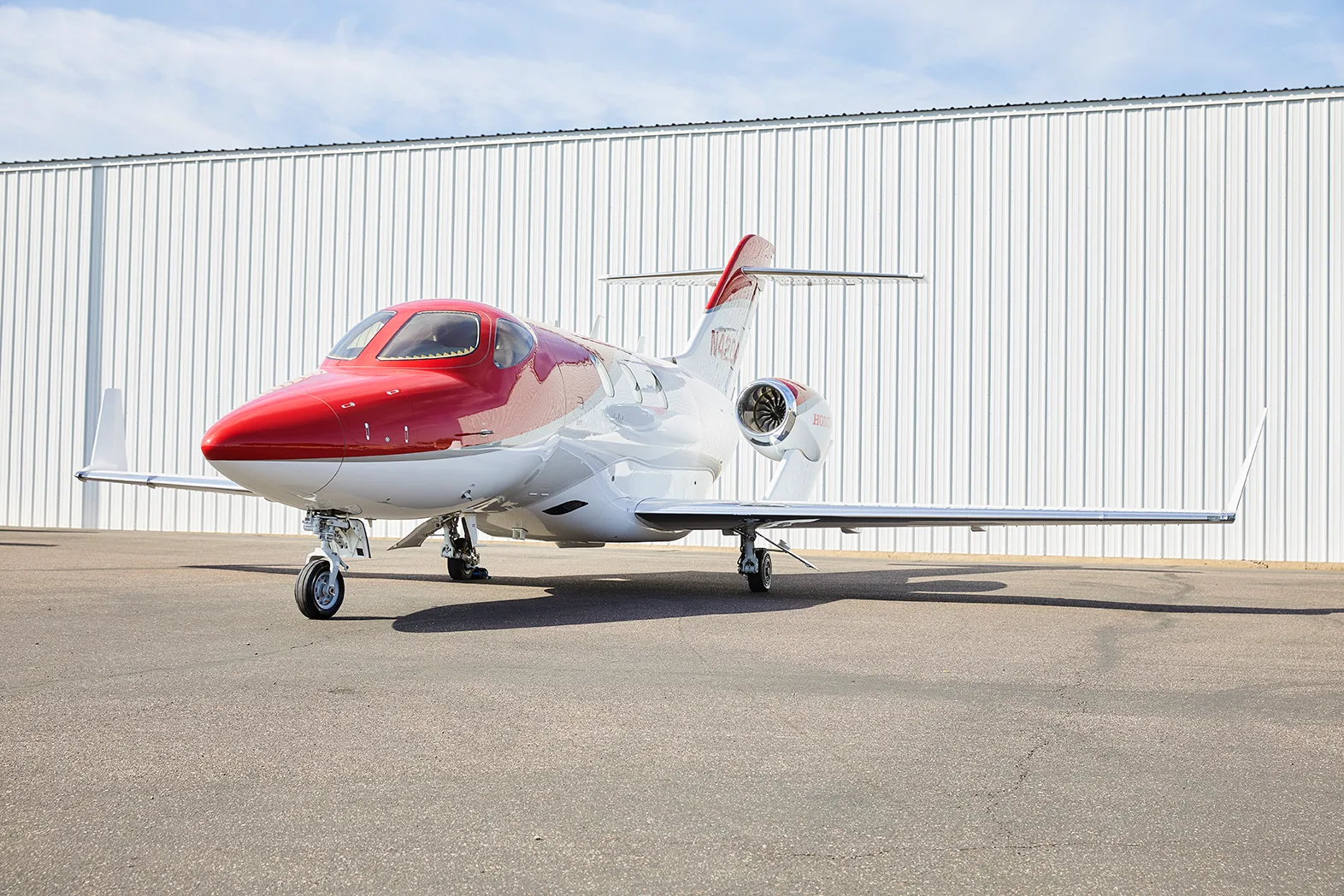
The HONDA HA-420 is a twin-turbofan jet. The sample maintenance report shows two HF120-H1A engines. Registry figures for the whole HA-420 family are up to 6 passengers, 1100 nm range, 389 kt cruise, 41000 ft ceiling and 4100 kg MTOW. Use the AFM for your own aircraft's limits.
- Family-level registry data: up to 6 passengers, up to 1100 nm range, up to 389 kt cruise, ceiling up to 41000 ft.
- AFM TR 01.1 applies to serials 42000011 through 42000089 not modified by SB-420-32-001. It requires power brake valve leak checks.
- Dispatch is prohibited with a known leaking power brake valve until SB-420-32-001 actions are done.
- The sample status report lists a 6000 hour structure life limit and 600 hour scheduled inspections. Check the records of any aircraft you buy.
Summary written by AI from the source document. Check the original before relying on it. See which parts of Sprinkle are written by AI.
Reference only, not for flight. Use the current approved manual for your aircraft. See terms, section 5.
Document
Source
Copy found at sprinkle.com. Sprinkle hosts a reference copy with an added summary, specifications and searchable full text.
Document details
- Type ·
- Model Guide
- Year ·
- 2026
- File size ·
- 52 KB
- Copy found at ·
- sprinkle.com
Specifications & performance
Extracted from this document.
Performance
- Family max range (nm) ·
- 1,100
- Family max cruise speed (kt) ·
- 389
- Family max service ceiling (ft) ·
- 41,000
What are the headline numbers for the HONDA HA-420?
The registry data covers the whole HONDA HA-420 family: up to 6 passengers, up to 1100 nm range, up to 389 kt cruise and a ceiling up to 41000 ft. Max takeoff weight is up to 4100 kg. These are family maxima, not guaranteed figures for one airframe.
What known brake issue should I ask about?
On the HONDA HA-420, a leaking power brake valve can cause pedal fade and pull to one side. AFM TR 01.1 requires checks before every flight and landing. Ask whether SB-420-32-001 has been done.
How does anti-skid failure affect landing?
On the HONDA HA-420, an anti-skid failure means landing distance increases by 50% on a dry runway. With light braking it increases by 100% on a wet runway. Pilots are told to choose a dry runway.
What do maintenance records show?
A sample HONDA HA-420 status report lists two HF120-H1A engines, a 600 hour inspection package and a 6000 hour structure life limit. Check that the records of the aircraft you are buying are current.
What is the HONDA HA-420 Model Guide?
The HONDA HA-420 Model Guide is a model guide for the HONDA HA-420, dated 2026.
What year was the HONDA HA-420 Model Guide published?
The HONDA HA-420 Model Guide — the HONDA HA-420 model guide on file — is dated 2026.
Common. More common than 89% of the aircraft models we track.
Most owners only have the POH. Here's the essential set for the HONDA HA-420.
- Pilot's Operating Handbook / AFM
- Checklist
- Maintenance Manual
- Parts Catalog (IPC)
- Systems & Wiring
- Service Bulletins on file
- Type Certificate (TCDS)
HONDA HA-420 for sale now


Free — save the HA-420 to your watchlist and track it in one place.
More HONDA HA-420manuals & documents
If you fly the HONDA HA-420, you may also be researching these.



In this document
Power brake valve leak check (TR 01.1)
TR 01.1 (16 February 2018) applies to serials 42000011 through 42000089 not modified by SB-420-32-001. Before every flight and every landing, hold both brake pedals down. A pedal that keeps sinking indicates a leaking valve, which can cause brake fade and a pull to one side. Do not dispatch until SB-420-32-001 is done. Ask for proof of compliance.
Anti-skid failure and braking
With ANTI-SKID FAIL, the AFM says to select a dry runway. Landing distance rises 50% on dry and 100% on wet using light braking. Any braking above light on a wet runway could blow tires and cause loss of directional control. Normal brakes may not be available, so the emergency brake handle is pulled gradually. About ten applications are available with a fully charged system.
Pre-buy checks and records
The Japanese flight-test checklist walkaround includes brake wear pins, tires and struts. Left and right struts should not differ by more than 1.5 inches. It also covers fuel drains, static wicks, engine inlets and ice detectors. The sample status report (S/N 42000217, 196.4 hours) shows a structure life limit of 6000 hours and a 600 hour inspection package. It also lists items due at 2400 hours.
Summary written by AI from the source document. Check the original before relying on it. See which parts of Sprinkle are written by AI.
Safety notes
- Do not dispatch with a known leaking power brake valve. Perform SB-420-32-001 first.
- On a leaking valve landing, choose a long, wide, dry runway with minimal crosswind. Use rudder and nosewheel steering to hold the centerline.
- Asymmetric braking can still occur even if the pre-landing brake check passes. Be ready for a pull to one side.
Summary written by AI from the source document. Check the original before relying on it. See which parts of Sprinkle are written by AI.
Full document text
HONDA HA-420 Model Guide The HONDA HA-420 is a twin-turbofan jet. The sample maintenance report shows two HF120-H1A engines. Registry figures for the whole HA-420 family are up to 6 passengers, 1100 nm range, 389 kt cruise, 41000 ft ceiling and 4100 kg MTOW. Use the AFM for your own aircraft's limits. • Family-level registry data: up to 6 passengers, up to 1100 nm range, up to 389 kt cruise, ceiling up to 41000 ft. • AFM TR 01.1 applies to serials 42000011 through 42000089 not modified by SB-420-32-001. It requires power brake valve leak checks. • Dispatch is prohibited with a known leaking power brake valve until SB-420-32-001 actions are done. • The sample status report lists a 6000 hour structure life limit and 600 hour scheduled inspections. Check the records of any aircraft you buy. Power brake valve leak check (TR 01.1) TR 01.1 (16 February 2018) applies to serials 42000011 through 42000089 not modified by SB-420-32-001. Before every flight and every landing, hold both brake pedals down. A pedal that keeps sinking indicates a leaking valve, which can cause brake fade and a pull to one side. Do not dispatch until SB-420-32-001 is done. Ask for proof of compliance. Anti-skid failure and braking With ANTI-SKID FAIL, the AFM says to select a dry runway. Landing distance rises 50% on dry and 100% on wet using light braking. Any braking above light on a wet runway could blow tires and cause loss of directional control. Normal brakes may not be available, so the emergency brake handle is pulled gradually. About ten applications are available with a fully charged system. Pre-buy checks and records The Japanese flight-test checklist walkaround includes brake wear pins, tires and struts. Left and right struts should not differ by more than 1.5 inches. It also covers fuel drains, static wicks, engine inlets and ice detectors. The sample status report (S/N 42000217, 196.4 hours) shows a structure life limit of 6000 hours and a 600 hour inspection package. It also lists items due at 2400 hours. Safety notes: • Do not dispatch with a known leaking power brake valve. Perform SB-420-32-001 first. • On a leaking valve landing, choose a long, wide, dry runway with minimal crosswind. Use rudder and nosewheel steering to hold the centerline. • Asymmetric braking can still occur even if the pre-landing brake check passes. Be ready for a pull to one side.