Weight & Balance for Mooney M10 Cadet
Mooney M10 Cadet · Weight And Balance
Overview
This document provides critical information regarding the weight and balance specifications for the Mooney M10 Cadet aircraft. It is intended for pilots and aviation enthusiasts who need to understand the loading limits and weight distribution for safe flight operations. The manual outlines the maximum takeoff weight, empty weight, and the necessary calculations for determining the center of gravity, which is essential for maintaining aircraft stability during flight. Additionally, it includes tables and diagrams to assist in the accurate assessment of weight and balance before flight.
- Maximum takeoff weight: 2,400 lbs (1,088 kg)
- Empty weight: approximately 1,450 lbs (658 kg)
- CG limits: 34.0 to 38.0 inches from the leading edge of the wing
- Perform weight and balance calculations before each flight
- Distribute weight evenly to maintain aircraft stability.
Document
Source
Originally published by schallmolab.umn.edu. Sprinkle hosts a reference copy with an added summary, specifications and searchable full text.
Document details
- Type
- Weight And Balance
- Pages
- 180
- File size
- 10 MB
- Publisher
- schallmolab.umn.edu
Common. Rarer than 4% of the aircraft models we track.
Most owners only have the POH. Here's the essential set for the Mooney M10 Cadet.
- Pilot's Operating Handbook / AFM
- Checklist
- Maintenance Manual
- Parts Catalog (IPC)
- Systems & Wiring
- Service Bulletins
- Type Certificate (TCDS)
Mooney M10 Cadet for sale now

Free — save the M10 to your watchlist and track it in one place.
More Mooney M10 Cadetmanuals & documents
- MOONEY INTERNATIONAL CORPORATIONPilot's Operating Handbook
- Airplane Flight Manual for Mooney M10 CadetFlight Manual
- Sky-Tec Flyweight™ Starters & Solenoids Aircraft Fit GuideWiring Diagram
- California Power Systems CatalogChecklist
- LAND AND HOLD SHORT OPERATIONSPilot's Operating Handbook
- Mooney M10 Cadet ChecklistChecklist
- Supplement to Monthly CatalogChecklist
- Mooney M10 Cadet ChecklistChecklist
- Aviation Instructor's Handbook (FAA-H-8083-9)Training Manual
- Emergency Procedures for the Mooney M10 CadetEmergency Procedures
- Aircraft Types by Model Number/NameSystems Description
- Weight & Balance for Mooney M10 CadetWeight And Balance
In this document
Weight Limits
The maximum takeoff weight for the Mooney M10 Cadet is 2,400 lbs (1,088 kg). The maximum landing weight is also 2,400 lbs. It is crucial for pilots to adhere to these limits to ensure safe flight operations.
Empty Weight
The empty weight of the Mooney M10 Cadet is approximately 1,450 lbs (658 kg). This weight includes the airframe, engine, and all standard equipment, but does not include fuel or passengers.
Center of Gravity (CG) Limits
The center of gravity limits for the Mooney M10 Cadet are specified as 34.0 inches to 38.0 inches from the leading edge of the wing at the root. Maintaining the CG within these limits is vital for aircraft stability.
Weight and Balance Calculations
Pilots must perform weight and balance calculations before each flight. This involves adding the weights of the pilot, passengers, baggage, and fuel to ensure that the total weight does not exceed the maximum takeoff weight and that the CG remains within limits.
Loading Instructions
The manual provides detailed loading instructions, emphasizing the importance of distributing weight evenly throughout the aircraft to avoid adverse effects on performance and handling.
Safety notes
- Exceeding weight limits can lead to compromised aircraft performance and safety.
- Improper weight distribution can affect the aircraft's handling characteristics.
Full document text
Nov. 11–15 Washington, DC TUESDAY SCIENTIFIC SESSION LISTING:438–626 • Indicated a real or perceived conflict of interest, see page 149 for details. Indicates a high school or undergraduate student presenter. * Indicates abstract’s submitting author Tues. AM Neuroscience 2017 | Tuesday AM | 1 Complete Session Listing Tuesday AM LECTURE Walter E. Washington Convention Center 438. Bridge Over Troubled Synapses: C1q Proteins, Glud Receptors, and Beyond — CME Tue. 8:30 AM - 9:40 AM — Hall D Speaker: M. YUZAKI, Keio Univ. Sch. of Med. The C1q complement family has emerged as a new class of synaptic organizers. C1q is shown to regulate synapse elimination. In the cerebellum, Cbln1 binds to its pre- and postsynaptic receptors neurexin (Nrx) and the δ2 glutamate receptor (GluD2), respectively. The Nrx/Cbln1/GluD2 tripartite complex across the synaptic gap is essential not only for synapse formation, but also for synaptic plasticity. Similar mechanisms are beginning to be revealed for other Cbln- and C1q-like proteins in various circuits in the forebrain. SYMPOSIUM Walter E. Washington Convention Center 439. Tau Homeostasis and Toxicity in Neurodegeneration — CME Tue. 8:30 AM - 11:00 AM — Ballroom A Chair: L. GAN Co-Chair: K. ASHE Microtubule-binding protein tau has emerged as a central player in neurodegenerative diseases. Imbalanced tau proteostasis, characterized with accumulation and spread, is linked with neuronal and synaptic toxicity. The aim of the symposium is to discuss how tau proteostasis becomes dysregulated and how tau becomes toxic. The symposium will focus on the post-translational mechanisms, as well as cell autonomous and non-cell autonomous forms of regulation in both animal models and human stem cells. 8:30 439.01 Introduction. 8:35 439.02 ● Tau lifespan in neurodegenerative diseases. B. T. HYMAN. Massachusetts Gen. Hosp. 9:10 439.03 ● Insights into regulation of tau proteostasis in human stem cell models of dementia. R. LIVESEY. Univ. of Cambridge. 9:45 439.04 Caspase-2 cleavage of tau reversibly impairs memory. K. H. ASHE. Univ. of Minnesota. 10:20 439.05 Critical role of tau acetylation in tau homeostasis and toxicity. L. GAN. Gladstone Institutes, UCSF. 10:55 439.06 Closing Remarks. SYMPOSIUM Walter E. Washington Convention Center 440. Exciting New Tools and Technologies Emerging From the BRAIN Initiative — CME Tue. 8:30 AM - 11:00 AM — Ballroom C Chair: J. A. GORDON The BRAIN Initiative seeks to reveal how brain cells and circuits dynamically interact in time and space to shape our perceptions and behavior. BRAIN investigators are accelerating the development and application of new tools and neurotechnologies to tackle these challenges. This symposium highlights advances that will enable exploration of how the brain records, stores, and processes vast amounts of information, shedding light on the complex links between brain function and behavior. 8:30 440.01 Introduction. 8:35 440.02 High density carbon fiber electrode array for the detection of electrophysiological and dopaminergic activity. C. A. CHESTEK. Univ. of Michigan. 9:10 440.03 Multi-scale, multi-modal imaging of spontaneous activity in mice. M. C. CRAIR. Yale Univ. 9:45 440.04 Magnetic nanotransducers for wireless neural excitation. P. ANIKEEVA. MIT. 10:20 440.05 Sonogentics: A non-invasive method for manipulating neurons. S. CHALASANI. The Salk Inst. For Biol. Studies. 10:55 440.06 Closing Remarks. MINISYMPOSIUM Walter E. Washington Convention Center 441. Glia-Neuron Interactions Regulate Sleep — CME Tue. 8:30 AM - 11:00 AM — Ballroom B Chair: P. J. SHIROMANI Co-Chair: M. FRANK Current models of sleep-wake regulation are neuron- centric and cannot explain key aspects of sleep. This minisymposium will present research showing that sleep network models need to be revised to include glia. The session will present new evidence gathered using innovative methods that prove a glial-neuron network modulates sleep architecture and homeostatic sleep drive. This also explains why sleep is necessary, a topic of interest to everyone. 8:30 441.01 Introduction. 8:35 441.02 Optogenetic activation of astroglia induce sleep in mice. C. A. BLANCO-CENTURION. Med. Univ. of South Carolina. 8:55 441.03 Wakefulness stimulates D-serine release from astrocytes. P. G. HAYDON. Tufts Univ. Sch. of Med. 9:15 441.04 Conserved glial mechanisms in sleep architecture and regulation. M. FRANK. Washington State University, Spokane. 9:35 441.05 Glial adenosine acts on A1 receptors to regulate sleep drive. R. W. GREENE. UTSW & VAMC. 2 | Society for Neuroscience • Indicated a real or perceived conflict of interest, see page 149 for details. Indicates a high school or undergraduate student presenter. * Indicates abstract’s submitting author 9:55 441.06 Activation of the glymphatic system during sleep: A function of sleep. M. NEDERGAARD. Univ. Rochester. 10:15 441.07 Sleep loss induces structural changes in astrocytes. M. BELLESI. Univ. of Wisconsin-Madison. 10:35 441.08 Closing Remarks. MINISYMPOSIUM Walter E. Washington Convention Center 442. The Structure and Function of Specific Cell-Cell Interactions in Neural Development: Protocadherins and Atypical Cadherins — CME Tue. 8:30 AM - 11:00 AM — 145B Chair: J. D. JONTES Co-Chair: J. A. WEINER Cell-cell interactions control nearly every process underlying neural circuit assembly. Protocadherins and atypical cadherins comprise a large and diverse group of molecules within the cadherin superfamily that mediate intercellular interactions in a broad range of developmental contexts. This minisymposium will explore recent advances in understanding the structure, function, and disease- associated disruption of these diverse cell-surface proteins. 8:30 442.01 Introduction. 8:35 442.02 The outs and ins of protocadherins in dendrite arborization. J. A. WEINER. The Univ. of Iowa. 8:55 442.03 Dscam masks adhesion mediated by classical
Show full textShow less
cadherins and protocadherins. A. M. GARRETT. The Jackson Lab. 9:15 442.04 The role of d-protocadherins in the assembly of functional neural networks. J. D. JONTES. Ohio State Univ. 9:35 442.05 The ins and outs of Fat3-dependent neuronal morphogenesis. L. V. GOODRICH. Harvard Med. Sch. 9:55 442.06 Sound perception and brain wiring enabled by exceptional cadherins. M. SOTOMAYOR. Ohio State Univ. 10:15 442.07 Molecular logic of neuronal self-avoidance through protocadherin interactions. R. RUBINSTEIN. Columbia Univ. 10:35 442.08 Closing Remarks. MINISYMPOSIUM Walter E. Washington Convention Center 443. Good Vibrations: Genetic, Neural, and Behavioral Links Between Auditory and Tactile Perception — CME Tue. 8:30 AM - 11:00 AM — 146A Chair: J. M. YAU Co-Chair: S. HAEGENS While the neural systems underlying perception have been well-studied, it remains debatable whether our senses rely on supramodal mechanisms. Recent evidence suggests that circuits traditionally considered modality-dedicated may support multiple senses. This minisymposium addresses the relationship between audition and touch — senses that signal by mechanotransduction. The speakers will consider cross-species evidence for links between audition and touch spanning genetics, neurophysiology, and behavior. 8:30 443.01 Introduction. 8:35 443.02 Do common genes govern tactile and auditory performance? G. LEWIN. Max-Delbrück Ctr. for Mol. Med. (MDC). 8:55 443.03 Auditory-tactile interactions in mouse somatosensory cortex. D. H. O’CONNOR. The Johns Hopkins Univ. Sch. of Med. 9:15 443.04 Where and how in the cerebral cortex do single neurons process more than one sensory modality during perceptual judgments? J. VERGARA. Inst. de Fisiología Celular, Natl. Autonomous Univ. of Mexico & El Colegio Nacional. 9:35 443.05 The role of the beta rhythm in supramodal information processing. S. HAEGENS. Columbia Univ. Col. of Physicians and Surgeons. 9:55 443.06 Neural correlates of auditory-tactile integration in meter perception. J. HUANG. Johns Hopkins Univ. 10:15 443.07 Distributed representations of auditory and tactile frequency in the human brain. J. M. YAU. Baylor Col. of Med. 10:35 443.08 Closing Remarks. MINISYMPOSIUM Walter E. Washington Convention Center 444. Functional Diversity of Prefrontal Cortical Regions and Networks — CME Tue. 8:30 AM - 11:00 AM — 151B Chair: D. E. MOORMAN Co-Chair: S. HEILBRONNER The prefrontal cortex (PFC) is a complex structure that plays diverse roles in cognition and emotion and is disrupted in multiple diseases. Despite decades of research into rodent PFC, there is no formal model of how its heterogeneous anatomy predicts its multifaceted role in behavior and disease. This minisymposium will present recent research using a range of modern techniques to advance new perspectives on the intersection between structure and function in medial and orbital PFC networks. 8:30 444.01 Introduction. 8:35 444.02 Connectivity reveals PFC homologies across rodents and nonhuman primates. S. R. HEILBRONNER. Univ. of Rochester. 8:55 444.03 Functional heterogeneity in the rat prefrontal cortex supports correctly timed responses. I. DIESTER. Albert Ludwigs Univ. Freiburg. 9:15 444.04 Prefrontal cortical encoding of valence and action. D. E. MOORMAN. Univ. of Massachusetts Amherst. 9:35 444.05 Toggling between actions and habits: Involvement of the orbitofrontal cortex. S. L. GOURLEY. Emory Univ. 9:55 444.06 Time-dependent regulation of fear memories: Focus on prefrontal cortical circuits. F. H. DO MONTE. The Univ. of Texas Hlth. Sci. Ctr. 10:15 444.07 The infralimbic cortex: What does it actually do during cocaine-seeking behavior? R. T. LALUMIERE. Univ. of Iowa. 10:35 444.08 Closing Remarks. • Indicated a real or perceived conflict of interest, see page 149 for details. Indicates a high school or undergraduate student presenter. * Indicates abstract’s submitting author Tues. AM NANOSYMPOSIUM Neuroscience 2017 | Tuesday AM | 3 BASIC-TRANSLATIONAL-CLINICAL ROUNDTABLE Walter E. Washington Convention Center 445. ● Advances and Challenges in Deep Brain Stimulation — CME Tue. 8:30 AM - 11:00 AM — 206 Organizer: A. M. LOZANO Speakers: P. BROWN, C. C. McINTYRE, P. L. STRICK More than 160,000 patients have received deep brain stimulation (DBS), mostly for Parkinson's disease. This session will provide an overview of new DBS applications and discuss some of the emerging mechanisms and biological effects being discovered. The overall aim is to identify areas that require further exploration to optimize DBS therapy and to develop novel directions for this technology. LECTURE Walter E. Washington Convention Center 446. Processing Gustatory Information in Drosophila — CME Tue. 10:00 AM - 11:10 AM — Hall D Speaker: K. SCOTT, Univ. of California, Berkeley. The gustatory system is intimately associated with feeding decisions, allowing animals to identify food that is caloric, and avoid toxic substances. Drosophila melanogaster detects many of the same taste compounds as mammals and provides an excellent model system for comparative studies of gustatory processing. This lecture will discuss how taste information is encoded in neural circuits and how activity in taste circuits is modulated by internal states to regulate feeding behavior. LECTURE Walter E. Washington Convention Center 447. Diversified Spinal and Brain Circuits for Locomotor Behavior — CME Tue. 11:30 AM - 12:40 PM — Hall D Speaker: O. KIEHN, Karolinska Institutet and Univ. of Copenhagen. The capacity for movement is at the center of most behaviors. Of movements, locomotion is one of the most fundamental. It requires complex coordination, temporal alteration, and dynamic control. This lecture will focus on recent work that has elucidated the functional diversification of locomotor circuits needed to perform these roles. The lecture will show that spinal locomotor networks are composed of molecularly defined circuit modules adapted to produce changes in timing and coordination of locomotion. The lecture will also address the role of designated brainstem circuits involved in gating or context-dependent selection of the motor behavior. NANOSYMPOSIUM 448. Neuronal Differentiation Mechanisms Theme A: Development Tue. 8:00 AM – Walter E. Washington Convention Center, 156 8:00 448.01 A systems level view on miR-124 function during neuronal differentiation from human iPS cells. L. K. KUTSCHE*; D. M. GYSI; R. PETRI; K. LENK; K. NOWICK; J. JAKOBSSON; V. BUSSKAMP. CRTD, Univ. of Leipzig, Wallenberg Neurosci. Ctr. 8:15 448.02 Investigation of the mechanisms underlying gyrification of the cerebral cortex using ferrets. H. KAWASAKI*; Y. SHINMYO; T. TODA. Sch. of Med, Kanazawa Univ. 8:30 448.03 PIWI protein regulates retinoic acid-mediated neuronal differentiation of human embryonic carcinoma cells. C. S. SUBHRAMANYAM*; Q. HU. Natl. Univ. Singapore, Natl. Univ. of Singapore. 8:45 448.04 Bicistronic 2A-peptide-based co-expression reporter knock-in hiPSC lines revealed gene expression profiles during human photoreceptor differentiation. K. HOMMA*. Keio Univ. Sch. of Med. 9:00 448.05 Cellular diversity in the developing human brain. A. BHADURI*; T. NOWAKOWKSI; A. POLLEN; B. ALVARADO; C. SANDOVAL-ESPINOSA; A. KRIEGSTEIN. Univ. of California San Francisco. 9:15 448.06 Combined substance use on adult endogenous neural stem cell differentiation and metabolic enzyme expression. E. L. MCGRATH*; C. SCHLAGAL; J. GAO; T. DUNN; R. FOX; S. STUTZ; K. T. DINELEY; B. KAPHALIA; K. A. CUNNINGHAM; P. WU. UTMB, Univ. of Texas Med. Br., Univ. of Texas Med. Br. Dept. of Neurol., Univ. of Texas Med. Br. at Galveston, Univ. of Texas Med. Br. at Galveston, UTMB. 9:30 448.07 FGFR activity regulates adult hippocampal neurogenesis through two intracellular mediators. M. GRONSKA*; J. M. HEBERT. Albert Einstein Col. of Med. 9:45 448.08 ● Inter-individual variation in genes governing human hippocampal progenitor differentiation is associated with hippocampal volume in adulthood. T. POWELL*; T. MURPHY; S. H. LEE; R. R. DUARTE; H. LEE; D. SMEETH; J. PRICE; G. BREEN; S. THURET. King’s Col. London. 10:00 448.09 Human foetal cholinergic neurons isolated from nucleus basalis of Meynert express functional cholinergic receptors whose activation modulates neuronal excitability. E. COPPI*; I. FUSCO; F. PEDATA; A. MORELLI; A. M. PUGLIESE; G. VANNELLI. Univ. of Florence, Univ. of Florence, Univ. of Florence. 10:15 448.10 ▲ Functional maturation of tangled cells into glutamatergic neurons within the adult mouse piriform cortex. D. DANNEHL; M. BELLES; P. ROTHENEICHNER; R. KÖNIG; B. BENEDETTI; C. KREUTZER; P. ZAUNER; L. AIGNER; J. NACHER; M. ENGELHARDT; S. COUILLARD- DESPRES*. Heidelberg Univ., Spinal Cord Injury and Tissue Regeneration Ctr. Salzburg (SCI-TReCS), Paracelsus Med. Univ., Univ. of Valencia, Paracelsus Med. Univ. 4 | Society for Neuroscience • Indicated a real or perceived conflict of interest, see page 149 for details. Indicates a high school or undergraduate student presenter. * Indicates abstract’s submitting author NANOSYMPOSIUM 10:30 448.11 Using single neuron RNA-seq to study the role of the transcription factor Ikaros in striatal development. P. SANDERS*; G. BOMBAU; M. GALOFRE CENTELLES; A. GUILLAUMET-ADKINS; G. RODRIGUEZ-ESTEBAN; H. HEYN; J. M. CANALS. Univ. of Barcelona - IDIBAPS, Univ. of Barcelona, Univ. of Barcelona, Neurosci. Institute, Univ. of Barcelona, Networked Biomed. Res. Ctr. for Neurodegenerative Disorders (CIBERNED), Ctr. Nacional de Análisis Genómico (CNAG-CRG) - Ctr. for Genomic Regulation (CRG), Univ. Pompeu Fabra (UPF). 10:45 448.12 Pairing your Sox: Cross species function of Sox11 in neural development. K. S. SINGLETON*; J. JIN; C. CHEN; M. J. DONOGHUE; E. M. SILVA. Georgetown Univ., Georgetown Univ. 11:00 448.13 Branching patterns of immature neurons in Long-Evans rats exposed to enriched environment. C. B. UZOKWE*. Univ. of Jos, Univ. of the Witwatersrand. NANOSYMPOSIUM 449. Dendrite Morphogenesis Theme A: Development Tue. 8:00 AM – Walter E. Washington Convention Center, 152A 8:00 449.01 Semaphorin 6A elaborates direction-selective retinal circuits in an unexpected way. R. E. JAMES*; M. P. BROWN; A. L. KOLODKIN. Johns Hopkins Univ. Sch. of Med. 8:15 449.02 A scaffold for cGMP-activity is necessary for dendrite formation during neuronal polarization. J. SZCZURKOWSKA*; S. LEE; M. SHELLY. Stony Brook Univ. 8:30 449.03 The effect of Pou4f1/Brn3a on the dendritic morphology of mouse retinal ganglion cells. V. V. MUZYKA*; T. C. BADEA. Natl. Eye Inst., Natl. Eye Inst. 8:45 449.04 TP5 regulates the neuronal dendritic spine number, shape and neurotransmitter receptor contents. S. P. YADAV*; M. BHASKAR; N. D. AMIN; S. SKUNTZ; C. A. WINTERS; P. GRANT; H. C. PANT. NIH, NIH. 9:00 449.05 Experience-dependent regulation of dendritic arborization in primary visual cortex. S. E. RICHARDS*; A. R. MOORE; S. SAXENA; S. PARADIS; S. D. VAN HOOSER. Brandeis Univ., Brandeis Unviersity, Indian Inst. of Sci., Brandeis Univ. 9:15 449.06 miR-125b toggles dynamics and structure of dendritic filopodia in developing hippocampal neurons. R. IYER*; T. KIM; Y. KIM; M. E. KANDEL; J. W. MITCHELL; G. POPESCU; M. U. GILLETTE. Univ. of Illinois At Urbana- Champaign, Univ. of Illinois at Urbana-Champaign, Univ. of Illinois At Urbana-Champaign, Univ. of Illinois at Urbana- Champaign. 9:30 449.07 A screen to identify cell surface molecules that coordinate with semaphorin-1a to target olfactory projection neuron dendrites to the destined glomeruli in the Drosophila antennal lobe. H. YU*; H. SHEN. Academia Sinica, Inst. Cell. & Organ. Biol. 9:45 449.08 Canonical Wnt signaling regulates dendritic arbor development of layer II pyramidal neurons in the rat retrosplenial cortex. B. VIALE; L. CONSTANTHIN; V. PETRENKO; R. BOCCHI; A. CONSTESTABILE; P. SALMON; J. Z. KISS*. Univ. of Geneva, Dept. of Neurosciences. 10:00 449.09 In situ visualization of protein interactions reveals Cdc42’s coordination of cytoskeletal pathways during dendrite morphogenesis. N. SHARIFAI*; A. CHIBA; D. KAMIYAMA. Univ. of Miami, Univ. of Georgia. NANOSYMPOSIUM 450. Advances in Understanding Rett Syndrome Pathophysiology Theme A: Development Tue. 8:00 AM – Walter E. Washington Convention Center, 140A 8:00 450.01 ● Dendrimer nanoparticle delivery of antioxidant N-acetyl cysteine improves cognition in female MeCP2- deficient mice. E. S. SMITH*; C. L. O’FERRALL; M. E. BLUE; S. KANNAN. Johns Hopkins Univ. Sch. of Med., Kennedy Krieger Inst. 8:15 450.02 ● Pridopidine treatment recovers gait abnormalities and rescues impaired BDNF expression in a Rett syndrome mouse model. M. GEVA*; J. DREYMANN; S. BARASH; T. HANANIA; A. ORBACH; D. LAIFENFELD; I. GROSSMAN; R. LAUFER; M. R. HAYDEN. Teva, PsychoGenics Inc. 8:30 450.03 Altered hippocampal inputs to the mPFC result in deficits in social behaviors in Rett syndrome mice. M. PHILLIPS*; L. POZZO-MILLER. Univ. of Alabama At Birmingham, Univ. Alabama-Birmingham. 8:45 450.04 Medial ganglionic eminence and cortical organoids model human brain development and interneuron migration . Y. XIANG*; Y. TANAKA; B. PATTERSON; Y. KANG; G. GOVINDAIAH; N. ROSELAAR; B. CAKIR; K. KIM; A. P. LOMBROSO; S. HWANG; M. ZHONG; E. G. STANLEY; A. ELEFANTY; J. R. NAEGELE; S. LEE; S. M. WEISSMAN; I. PARK. Dept. of Genetics, Yale Sch. of Med., Yale Stem Cell Center, Yale Sch. of Med., Dept. of Neurology, Univ. of Arkansas for Med. Sci., Dept. of Biology, Program in Neurosci. and Behavior, Wesleyan Univ., Dept. of Cell Biology, Yale Sch. of Med., Murdoch Childrens Res. Institute, The Royal Children’s Hosp., Dept. of Paediatrics, Fac. of Medicine, Dent. and Hlth. Sciences, Univ. of Melbourne Parkville, Dept. of Anat. and Developmental Biology, Fac. of Medicine, Nursing and Hlth. Sciences, Monash Univ. 9:00 450.05 Hippocampal circuit dysfunction underlies fear memory deficits in Rett syndrome mice. L. HE*; C. WU; R. T. ASH; S. HAO; Y. SUN; J. TANG; D. JI; X. JIANG; H. Y. ZOGHBI. Baylor Col. of Med., Jan and Dan Duncan Neurolog. Res. Inst., Howard Hughes Med. Inst., Baylor Col. of Med., Baylor Col. of Med., Baylor Col. of Med. 9:15 450.06 Rescue of mTOR/AKT pathway deficits in Rett syndrome mouse model : Translational potential for therapeutic strategy. S. RANGASAMY*; B. GERALD; L. LLACI*; J. DODSON*; G. MILLS*; M. STRINGER*; D. KABRA*; V. NARAYANAN*. Translational Genomics Res. Inst. (TGen), Ctr. for Rare Childhood Disorders (C4RCD), Translational Genomics Res. Inst. (TGen), Phoenix, AZ, United States. 9:30 450.07 Perineuronal nets in a mouse model of Rett syndrome: Regulation by activity and disease in hippocampus. K. CARSTENS*; D. J. LUSTBERG; G. M. ALEXANDER; S. M. DUDEK. NIEHS, NIEHS, Natl. Inst. of Envrn. Hlth. Sci., Natl. Inst. of Env. Hlth. Sci., NIH. • Indicated a real or perceived conflict of interest, see page 149 for details. Indicates a high school or undergraduate student presenter. * Indicates abstract’s submitting author Tues. AM NANOSYMPOSIUM Neuroscience 2017 | Tuesday AM | 5 9:45 450.08 Altered intracellular chloride level leads to reduced inhibition and cortical network deficits in Rett Syndrome. K. LI*; R. V. RIKHYE; C. LI; Z. FU; M. SUR. MIT, Janelia Farm, Broad Inst. of MIT and Harvard, Broad Inst. of MIT and Harvard, MIT. 10:00 450.09 Total RNA-sequencing of Rett syndrome autopsy samples to facilitate preclinical target identification. R. G. GOGLIOTTI*; N. M. FISHER; B. J. STANSLEY; C. K. JONES; C. W. LINDSLEY; P. J. CONN; C. M. NISWENDER. Vanderbilt Univ. 10:15 450.10 Rett syndrome gene therapy improves survival and ameliorates behavioral phenotypes in MeCP2 null mice. S. POWERS*; C. MIRANDA; C. DENNYS-RIVERS; A. HUFFENBERGER; L. BRAUN; F. RINALDI; S. SOLANO; K. KINLEY; N. WEIN; K. FOUST; K. MEYER; B. KASPAR. Nationwide Children’s Hosp., The Ohio State Univ. 10:30 450.11 The role of the cytoskeleton in mitochondrial trafficking in Rett syndrome. W. GOLD*; L. CANTRILL; N. BAHRAM SANGANI; B. LAW; V. SHAHEN; J. CHRISTODOULOU. NSW Ctr. For Rett Syndrome Res., Discipline of Paediatrics & Child Health, Univ. of Sydney, Microscope Facility, Kids Res. Institute, Children’s Hosp. at Westmead, Sydney, Chair of Genomic Medicine, Dept. of Paediatrics, Univ. of Melbourne, Neurodevelopmental Genomics Res. Group, Murdoch Childrens Res. Inst. 10:45 450.12 Cell type-specific analysis of gene expression in Rett syndrome by single-cell RNA sequencing. W. RENTHAL*; L. BOXER; E. LI; S. HRVATIN; A. NAGY; M. E. GREENBERG. Harvard Med. Sch., Harvard Med. Sch. 11:00 450.13 Generation and analysis of MECP2 mutant marmoset. N. KISHI*; K. SATO; M. OKUNO; T. ITOU; H. J. OKANO; E. SASAKI; H. OKANO. RIKEN BSI, Keio Univ. Sch. of Med., CIEA, Jikei Univ. Sch. of Med. NANOSYMPOSIUM 451. Astrocytes: Disease Mechanisms Theme B: Neural Excitability, Synapses, and Glia Tue. 8:00 AM – Walter E. Washington Convention Center, 150B 8:00 451.01 Inhibiting EGFR/mTORC1 signaling in optic nerve astrocytes as a novel strategy for the treatment of persistent fetal vasculature (PFV) disease. M. YAZDANKHAH*; T. LUO; I. BHUTTO; R. GREBE; P. SHANG; S. MISHRA; G. LUTTY; S. HOSE; J. S. ZIGLER, Jr; D. SINHA. Wilmer Eye Inst. 8:15 451.02 Glial-neuronal signaling mechanisms underlying the neuroinflammatory effects of manganese. K. A. POPICHAK*; M. F. AFZALI; K. S. KIRKLEY; R. B. TJALKENS. Colorado State Univ. 8:30 451.03 Cell polarity in astrocytes - resolving the role of the scaffolding protein Par3 in astrocytes for better or for worse. H. M. JAHN*; J. GÖBEL; M. BERGAMI. CECAD, Ctr. for Mol. Med. 8:45 451.04 Exosomes derived from ischemic astrocytes promote neurovascular protective effects in vitro. A. ZACHAREK*; M. CHOPP; J. CHEN. Henry Ford Hosp., Henry Ford Hosp. 9:00 451.05 Astrocyte activation and disruption of the neurovascular unit in systemic sepsis and Alzheimer disease. C. E. BOND*; D. B. HOOVER. Ferrum Col., East Tennessee State Univ. 9:15 451.06 Role of reactive astrocytes in multiple sclerosis. R. R. MASVEKER*; B. BIELEKOVA; P. KOSA; J. MILSTEIN. NIH, NINDS / NIH. 9:30 451.07 Astrocytic aldehyde dehydrogenase 7a1 (ALDH7A1) protects the brain from oxidative stress; impairment destabilizes development of prefrontal excitatory/ inhibitory balance and adult affective behavior. T. E. FAUST*; W. XIN; A. AGARWAL; T. CASH-PADGETT; S. SAHA; S. DESHPANDE; D. WOOD; C. DAVIS; A. BONCI; D. E. BERGLES; H. JAARO-PELED; A. SAWA. Johns Hopkins Univ. Dept. of Psychiatry and Behavioral Sci., Johns Hopkins Univ., Washington State University-Spokane, Natl. Inst. On Drug Abuse, Johns Hopkins Univ. Sch. Med., Johns Hopkins Univ., Johns Hopkins Univ. NANOSYMPOSIUM 452. Cognitive Aging and Memory Theme C: Neurodegenerative Disorders and Injury Tue. 8:00 AM – Walter E. Washington Convention Center, 143A 8:00 452.01 Cognitive and white matter microstructure consequences of Alzheimer’s disease pathology in an episodic memory system during cognitive aging. H. OH*; A. LEVITANUS; K. LE. Columbia Univ., Columbia Univ., Barnard Col. 8:15 452.02 The association of total brain, hippocampal and ventricular volumes with subject and informant clinical dementia rating scale scores. M. KITNER-TRIOLO; S. E. KANDIGIAN; Y. AN; S. M. RESNICK*. NIA/NIH, Vassar Col., Natl. Inst. On Aging. 8:30 452.03 Effects of age-related tau and amyloid deposition on domain-specific memory function. A. MAAß*; D. BERRON; T. J. MELLINGER; R. K. BELL; K. SWINNERTON; S. L. BAKER; E. DUZEL; W. J. JAGUST. German Ctr. for Neurodegenerative Dis., Univ. of California, Otto-von-Guericke Univ., Lawrence Berkeley Natl. Lab. 8:45 452.04 Brain dopamine and tau pathology affect different aspects of memory performance in cognitively normal older adults. A. S. BERRY*; V. D. SHAH; K. N. SWINNERTON; T. J. MELLINGER; M. HSU; W. J. JAGUST. E O Lawrence Berkeley Natl. Lab., Univ. of California Berkeley / Lawrence Berke, UC Berkeley, Univ. of California, Berkeley, UC Berkeley. 9:00 452.05 Examining associations between regional tau deposition, white matter microstructure, and cognition in normal aging. S. N. LOCKHART*; A. MAASS; S. M. MARKS; S. L. BAKER; W. J. JAGUST. Univ. of California Berkeley, Lawrence Berkeley Natl. Lab. 9:15 452.06 Early accumulation of beta-amyloid drives tau deposition and memory decline in preclinical Alzheimer’s disease. S. L. LEAL*; S. N. LOCKHART; A. MAASS; R. K. BELL; W. J. JAGUST. Univ. of California, Berkeley. 9:30 452.07 Metabolic inefficiency in early life predicts the spatial pattern of amyloid-β in late life. K. ARNEMANN*; W. JAGUST. Univ. of California Berkeley, Lawrence Berkeley Natl. Lab. 9:45 452.08 In vivo tau pathology predicts impaired NREM sleep oscillations and associated memory function in aging. J. R. WINER*; B. A. MANDER; R. F. HELFRICH; A. MAAß; R. T. KNIGHT; W. J. JAGUST; M. P. WALKER. Univ. of California Berkeley, Univ. of California Berkeley, Otto-von- Guericke Univ. Magdeburg. 6 | Society for Neuroscience • Indicated a real or perceived conflict of interest, see page 149 for details. Indicates a high school or undergraduate student presenter. * Indicates abstract’s submitting author NANOSYMPOSIUM 10:00 452.09 Longitudinal cognition in older adults with superior memory performance and preserved brain morphometry. T. M. HARRISON*; S. L. BAKER; W. J. JAGUST. UC Berkeley, Lawrence Berkeley Natl. Lab., UC Berkeley. 10:15 452.10 Modifiable contributors to cognitive reserve. R. HENSON*; L. K. TYLER; F. MATTHEWS; R. KIEVIT; D. CHAN; C. CAN; M. SHAFTO. Med. Res. Council, Univ. of Cambridge, Inst. of Hlth. and Society, MRC Cognition & Brain Sci. Unit, Dept. of Clin. Neurosciences, Univ. of Cambridge. 10:30 452.11 Preserved intrinsic functional connectivity in the default mode and salience networks contributes to youthful memory in superaging. J. ZHANG*; A. TOUROUTOGLOU; J. M. ANDREANO; B. C. DICKERSON; L. F. BARRETT. Northeastern Univ., Massachusetts Gen. Hosp., Massachusetts Gen. Hosp., Massachusetts Gen. Hosp. Dept. of Neurol. 10:45 452.12 ● ▲ Associations between simple EEG spectral measures and cognitive function in older adults. J. DREO*; M. KURAN; L. ZEVNIK; J. REJEC; Z. PIRTOŠEK. Lab. For Cognitive Neurosci., BLCKB applied neuroscience. 11:00 452.13 ▲ Impaired slow oscillation and sleep spindle coupling predicts memory deficits in older adults. R. F. HELFRICH*; B. A. MANDER; M. P. WALKER; R. T. KNIGHT. Univ. of California Berkeley. 11:15 452.14 Hippocampal gray matter integrity declines in healthy aging and relates to mnemonic discrimination. A. VENKATESH*; N. HUFFMAN; S. M. STARK; C. E. STARK; I. J. BENNETT. Univ. of California, Riverside, Univ. of California Irvine. NANOSYMPOSIUM 453. Alzheimer’s Disease: Neuroinflammation and Immune Actions Theme C: Neurodegenerative Disorders and Injury Tue. 8:00 AM – Walter E. Washington Convention Center, 146C 8:00 453.01 iPS-derived glia for the study of neuroinflammatory mechanisms. W. W. POON*; E. M. ABUD; C. FIMBRES; S. SHEKARCHI; E. MARTINEZ; A. LIANG; R. JAIN. UC-Irvine, UC-Irvine, UC-Irvine. 8:15 453.02 ● Retinal amyloid-related inflammatory biomarkers for Alzheimer’s disease. M. KORONYO-HAMAOUI*; Y. KORONYO; D. FUCHS; E. BARRON; S. R. VERDOONER; C. A. MILLER; D. R. HINTON; K. L. BLACK. Cedars-Sinai Med. Ctr., Cedars-Sinai Med. Ctr., USC, NeuroVision Imaging (NVI), USC Keck Sch. of Med., USC Keck Sch. of Med. 8:30 453.03 Effects of TLR4 inhibition on metabolic and neural consequences of diet-induced obesity. V. A. MOSER*; M. F. UCHOA; C. J. PIKE. USC. 8:45 453.04 Exposure to traffic-related air pollution particulate matter impacts brain activities. T. E. MORGAN*; M. CACCIOTTOLO; N. C. WOODWARD; C. D’AGOSTINO; A. HAGHANI; N. SAFI; F. SHIRMOHAMMADI; R. JOHNSON; H. ALLAYEE; C. SIOUTAS; C. E. FINCH. USC, USC, USC. 9:00 453.05 Voluntary exercise reduces ER stress and neuroinflammatory, behavioral and lysosomal dysfunction in tau transgenic mice. S. A. FRAUTSCHY*; S. HU; M. R. JONES; F. YANG; P. CHEN; G. M. COLE. UCLA, Greater Los Angeles Veterans Admin., UCLA. 9:15 453.06 Ibuprofen suppresses aberrant tau kinases and ptau. G. M. COLE*; S. HU; M. JONES; P. KIM; S. A. FRAUTSCHY. UCLA, VA Med. Ctr., UCLA/ W LA VA Med. Ctr., UCLA/WLA VA Med. Ctr., UCLA/WLA VA Med. Ctr. 9:30 453.07 Elevation of inflammation mediators in synaptosomes from AD and Down’s syndrome cortex. T. V. BILOUSOVA; D. FAKHRUTDINOV; S. A. FRAUTSCHY; K. GYLYS*. UCLA, Mary S. Easton Ctr. for Alzheimer’s Dis. Res., Dept of Neurology, UCLA David Geffen Sch. of Med., UCLA, Mary S. Easton Ctr. for Alzheimer’s Dis. Res. 9:45 453.08 ● ABCA-1 agonist treatment as a potential therapeutic for ApoE4 hypolipidation and impaired ABCA- 1 activity in Alzheimer’s disease. H. YASSINE; V. RAWAT; A. BOEHM-CAGAN; A. N. FONTEH; D. BUENNAGEL; J. JOHANSSON; J. BIELICKI; H. C. CHUI, 90033; D. M. MICHAELSON; M. G. HARRINGTON. USC, Tel Aviv Univ., Huntington Med. Res. Inst., Artery Therapeut., UC Berkeley, Tel-Aviv Univ. 10:00 453.09 Sub-chronic to chronic high-fat diet feeding affects cognitive function, inflammation and insulin signalling in the brain. P. A. DENVER*; V. A. GAULT; P. L. MCCLEAN. UCLA, Ulster Univ., Ulster Univ., Ulster Univ. 10:15 453.10 Dietary n-6 linoleic acid (high LA diet) and its n-6 metabolite DPAn-6 attenuate neuroinflammation and promote amyloid-β clearance. Q. MA*; B. TETER; M. R. JONES; T. MORIHARA; S. A. FRAUTSCHY; G. M. COLE. UCLA, Veteran’s Admin. Med. Ctr. (Greater Los Angeles Healthcare System, GLAHS), Geriatric Res. Educ. and Clin. Ctr. (GRECC), Osaka Univ. Sch. Med. 10:30 453.11 Long-term exercise delays onset of cognitive decline in a mouse model of Alzheimer's disease: Analysis of changes in hippocampal neurogenesis and neuroinflammation. A. M. KELLY*; S. M. RYAN; R. HENNESSY; M. A. LYNCH. Trinity Col. Dublin. NANOSYMPOSIUM 454. Preclinical Therapeutic Strategies for Neurodegenerative Disease I Theme C: Neurodegenerative Disorders and Injury Tue. 8:00 AM – Walter E. Washington Convention Center, 144A 8:00 454.01 Immunotherapeutic targeting of corticotropin- releasing hormone in Alzheimer’s disease. H. S. FUTCH*; B. D. MOORE; P. E. CRUZ; T. B. LADD; V. Q. TRUONG; P. CHAKRABARTY; Y. LEVITES; T. E. GOLDE. Univ. of Florida, Univ. of Florida, Col. of Medicine, Univ. of Florida. 8:15 454.02 Neurotransmission spanning the Alzheimer’s disease continuum: Glutamatergic tone, cognition, and early intervention. E. R. HASCUP*; S. O. BRODERICK; K. N. HASCUP. Southern Illinois Univ. Sch. of Med., Southern Illinois Univ. Sch. of Med. 8:30 454.03 The pivotal role of spleen tyrosine kinase in the pathobiology of Alzheimer’s disease. J. E. SCHWEIG*; H. YAO; D. BEAULIEU-ABDELAHAD; G. AIT-GHEZALA; M. MULLAN; F. CRAWFORD; D. PARIS. Roskamp Inst. 8:45 454.04 Riluzole, but not LY379268, is an effective prodromal treatment in the AβPP/PS1 model of Alzheimer’s disease. K. N. HASCUP*; S. O. BRODERICK; E. R. HASCUP. Southern Illinois Univ. Sch. of Med., Southern Illinois Univ. Sch. of Med., Southern Illinois Univ. Sch. of Med. • Indicated a real or perceived conflict of interest, see page 149 for details. Indicates a high school or undergraduate student presenter. * Indicates abstract’s submitting author Tues. AM NANOSYMPOSIUM Neuroscience 2017 | Tuesday AM | 7 9:00 454.05 Theraputic effect of PD-1/PD-l1 axis checkpoint blockade in tau and amyloid-beta mouse models of Alzheimer’s disease. N. ROSENZWEIG*; K. BARUCH; M. SCHWARTZ. Weizmann Inst. of Sci. 9:15 454.06 ● Engineered zinc finger protein transcription factors as a next-generation platform for single gene regulation throughout the central nervous system. B. ZEITLER*; K. MARLEN; Q. YU; H. NGUYEN; I. ANKOUDINOVA; S. DEVOS; S. WEGMANN; L. ZHANG; J. C. MILLER; E. J. REBAR; B. T. HYMAN; H. S. ZHANG; M. C. HOLMES; B. E. RILEY. Sangamo Therapeutics, Inc., Massachusetts Gen. Hosp. 9:30 454.07 ● Dynamic characterization of brain uptake of tau antibodies, their entry into neurons and efficacy in clearing tau aggregates in live animals by two-photon imaging. Q. WU*; Y. LIN; J. GU; E. M. SIGURDSSON. New York Univ. Sch. of Med., New York Univ. Sch. of Med. 9:45 454.08 ● Tau and astrocyte pathology are reduced in a mouse model of tauopathy following pazopanib treatment. M. JAVIDNIA*; M. L. HEBRON; C. E. MOUSSA. Georgetown Univ., Georgetown Univ. 10:00 454.09 Inhibition of β-secretase activity prevents accumulation of amyloid-β (Aβ), but does not block Tau phosphorylation and aggregation in a neuronal cell culture model of sporadic Alzheimer’s disease. V. MURESAN*; Z. LADESCU MURESAN. Rutgers The State Univ. of New Jersey. 10:15 454.10 Large animal evaluation of clinical scale methods for focused ultrasound treatments of Alzheimer’s disease. R. M. JONES; M. A. O’REILLY; L. DENG; K. LEUNG; D. MCMAHON; K. HYNYNEN*. Univ. of Toronto / Sunnybrook Res. Inst., Sunnybrook Res. Inst. 10:30 454.11 Fasudil, a Rho kinase inhibitor, as a preventative therapeutic for Alzheimer’s disease. M. WILLEMAN*; P. SHUKLA; A. L. SINIARD; M. DE BOTH; T. WANG; T. DUNCKLEY; P. PIRROTTE; S. ODDO; M. HUENTELMAN. Arizona State Univ., Translational Genomics Res. Inst., Arizona Alzheimer’s Consortium, Evelyn F. McKnight Brain Inst. at the Univ. of Arizona. NANOSYMPOSIUM 455. Alpha-Synuclein: Models and Mechanisms Theme C: Neurodegenerative Disorders and Injury Tue. 8:00 AM – Walter E. Washington Convention Center, 147A 8:00 455.01 PrPC mediates alpha-Synuclein synaptic dysfunction in the hippocampus. T. F. OUTEIRO*; D. G. FERREIRA; H. V. MIRANDA; M. SCHMITZ; I. ZERR; L. V. LOPES. Univ. Med. Ctr. Goettingen, Chronic Dis. Res. Center, NOVA Med. Sch., Inst. de Medicina Molecular, Fac Med. Lisbon. 8:15 455.02 Molecular investigations into the presynaptic functions of synucleins. S. S. CHANDRA*; K. J. VARGAS. Yale Univ. 8:30 455.03 Pathogenic synergy between PARK14/ Ca2+signaling and α-synuclein aggregation in a new bigenic mouse model of age-dependent Parkinson’s disease. V. M. BOLOTINA*; A. YEN; F. NIPA; J. W. SHIM; M. CHESSELET; E. MASLIAH. Boston Univ. Sch. of Med., UCLA, Natl. Inst. of Aging. 8:45 455.04 Alpha-Galactosidase deficiency in Parkinson’s disease brain is associated with the pathologic accumulation of alpha-synuclein. J. J. SHACKA*; M. NELSON; M. BOUTIN; T. TSE; X. OUYANG; J. ZHANG; C. AURAY- BLAIS. Univ. of Alabama At Birmingham, Univ. of Alabama at Birmingham, Univ. of Sherbrooke. 9:00 455.05 ▲ Comparative analysis of the sensitivity and specificity of ser(P)-129 α-synuclein monoclonal antibodies. S. CHANDRA*; V. DELIC; X. HU; V. KRENDELCHTCHIKOVA; A. B. WEST. Univ. of Alabama At Birmingham. 9:15 455.06 ● Identifying PET imaging biomarkers of alpha- synuclein pathology. K. HERFERT*; N. LANDECK; L. KUEBLER; A. MAURER; F. SCHMIDT; A. LEONOV; S. RYAZANOV; C. GRIESSINGER; A. GIESE; D. KIRIK; B. J. PICHLER. Werner Siemens Imaging Ctr., Brain Repair And Imaging In Neural Systems (BRAINS) Unit, Lund Univ., Werner Siemens Imaging Ctr., MODAG GmbH, Max Planck Inst. for Biophysical Chem., Ctr. for Neuropathology and Prion Research, Ludwig-Maximilians-University. 9:30 455.07 Quantification of molecular and functional changes in a rat model of Parkinson’s disease using a simultaneaous PET/fMRI protocol. L. KUEBLER*; K. HERFERT; N. LANDECK; A. MAURER; M. AMEND; A. THIELCKE; S. BUSS; S. MARCIANO; R. STUMM; H. F. WEHRL; D. KIRIK; B. J. PICHLER. Univ. of Tübingen, Lund Univ. 9:45 455.08 Direct association of alpha-synuclein oligomers and calcium binding protein 1 mediate the aberrant form of calcium-induced calciuim release from IP3 receptor. K. YAMAMOTO*; Y. IZUMI; H. SAWADA. Utano Natl. Hosp., Grad. Sch. of Pharmaceut. Sciences, Kyoto Univ., Utano Natl. Hosp. 10:00 455.09 ● Potent small molecule Parkin activators for treating Parkinson’s disease. P. ARSENAULT; M. KUMAR; I. SOKIRNIY; F. WANG; B. CUNNION; J. WU; D. STERNER; J. WEINSTOCK; M. MATTERN; V. L. DAWSON; T. M. DAWSON; S. KUMAR*. Progenra, Johns Hopkins Univ. Inst. for Cell Engin., Progenra Inc, Johns Hopkins Univ. Sch. Med. 10:15 455.10 Stimulation of Sonic Hedgehog (Shh) signaling reduces formation and display of L-Dopa induced dyskinesia (LID) in models of Parkinson's disease (PD). L. B. MALAVE*; A. H. KOTTMANN. Ctr. For Discovery and Innovation, CUNY, Neurosci. Collaborative, CUNY, Molecular, Cellular, and Biomed. Sci., CUNY Sch. of Med. NANOSYMPOSIUM 456. Application of Imaging Techniques in Neurodegenerative Diseases Theme C: Neurodegenerative Disorders and Injury Tue. 8:00 AM – Walter E. Washington Convention Center, 152B 8:00 456.01 Mapping the subcortical to cortical spread of degeneration in preclinical Alzheimer’s disease. T. W. SCHMITZ*; R. N. SPRENG. McGill Univ. 8:15 456.02 A novel phasing analysis for amnestic and non- amnestic phenotypes of Alzheimer’s disease. F. DA RE*; J. S. PHILLIPS; S. X. XIE; L. DRATCH; C. FERRARESE; D. J. IRWIN; C. T. MCMILLAN; E. LEE; L. M. SHAW; J. Q. TROJANOWSKI; D. A. WOLK; M. GROSSMAN. Univ. of Pennsylvania, Univ. of Milano-Bicocca, Univ. of Pennsylvania, Univ. of Milano-Bicocca, Ospedale San Gerardo, Univ. of Pennsylvania. 8 | Society for Neuroscience • Indicated a real or perceived conflict of interest, see page 149 for details. Indicates a high school or undergraduate student presenter. * Indicates abstract’s submitting author NANOSYMPOSIUM 8:30 456.03 HFE mutations alter white matter diffusion and relaxation parametrics in Alzheimer’s disease. C. J. PURNELL; J. WANG; P. J. ESLINGER; Q. X. YANG; J. R. CONNOR; M. D. MEADOWCROFT*. The Pennsylvania State Univ. - Col. of Med., The Pennsylvania State Univ. - Col. of Med., The Pennsylvania State Univ. - Col. of Med. 8:45 456.04 Distinct spatiotemporal patterns of resting state neuronal synchronizations in Alzheimer’s disease. K. RANASINGHE*; J. CHA; L. B. HINKLEY; A. J. BEAGLE; A. LA; D. MIZUIRI; S. HONMA; V. BOURAKOVA; W. J. JAGUST; J. F. HOUDE; B. MILLER; G. D. RABINOVICI; K. A. VOSSEL; S. S. NAGARAJAN. Univ. of California San Francisco, Univ. of California San Francisco, UC San Francisco, Univ. od California San Francisco, Univ. of California San Francisco, UC Berkeley, UCSF, Univ. of Minnesota, UCSF. 9:00 456.05 Cerebral microbleed characterization in autosomal dominant Alzheimer disease. N. JOSEPH- MATHURIN*; E. MCDADE; T. BLAZEY; K. KANTARCI; C. JACK; K. FRIEDRICHSEN; Y. SU; B. GORDON; R. HORNBECK; B. ANCES; M. RAICHLE; V. BUCKLES; K. PAUMIER; J. MORRIS; R. BATEMAN; T. BENZINGER. Washington Univ. In St Louis, Mayo Clin. 9:15 456.06 FTP tau PET imaging in semantic variant primary progressive aphasia. B. C. DICKERSON*; S. MAKARETZ; M. QUIMBY; J. COLLINS; N. MAKRIS; S. MCGINNIS; A. SCHULTZ; N. VASDEV; K. JOHNSON. Massachusetts Gen. Hosp. Dept. of Neurol., Massachusetts Gen. Hosp. Dept. of Neurol., Massachusetts Gen. Hosp. Dept. of Neurol. 9:30 456.07 Resting state brain dynamics identify behavioural variant frontotemporal dementia. K. A. TSVETANOV*; J. B. ROWE. Univ. of Cambridge, Univ. of Cambridge, Med. Res. Council Cognition and Brain Sci. Unit. 9:45 456.08 PiB-PET and pathological assessment of beta- amyloid in frontotemporal dementia syndromes. R. H. TAN*; J. KRIL; Y. YANG; J. HODGES; V. VILLEMAGNE; J. KWOK; L. M. ITTNER; G. M. HALLIDAY. The Univ. of Sydney, Discipline of Pathology, Sydney Med. School, The Univ. of Sydney, Australia, Dept. of Mol. Imaging and Therapy, Ctr. for PET, Austin Hlth., Univ. of New South Wales, The Univ. of Sydney. 10:00 456.09 Brain functional network impairments and abnormal processing at rest in Gulf War Illness: A resting state fMRI study. K. GOPINATH*; U. SAKOGLU; B. A. CROSSON; R. HALEY. Emory Univ., Univ. of Houston Clear- Lake, Atlanta VA Med. Ctr., Univ. of Texas Southwestern Med. Ctr. NANOSYMPOSIUM 457. Therapeutics for Affective Disorders: Development, Delivery, and Animal Models Theme G: Motivation and Emotion Tue. 8:00 AM – Walter E. Washington Convention Center, 147B 8:00 457.01 Superadditive neuromodulation induced by focused ultrasound-induced blood-brain barrier opening combined with intravenous GABA antagonists. W. XIONG*; T. HE; C. WANG; X. FENG; C. TSAI; H. LIU; H. LAI. Zhejiang Univ., Chang Gung Univ. 8:15 457.02 ● Anc80L65 as a new gene transfer tool for the central nervous system. E. HUDRY*; E. ANDRES-MATEOS; E. P. LERNER; A. VOLAK; O. COHEN; B. T. HYMAN, MD,PhD; L. H. VANDENBERGHE. MGH, Harvard Med. Sch., Massachusetts Eye and Ear Infirmary, Massachusetts Gen. Hosp. - Harvard, Massachusetts Gen. Hosp. and NeuroDiscovery Ctr., Massachusetts Gen. Hosp., Schepens Eye Res. Inst. and Massachusetts Eye and Ear Infirmary. 8:30 457.03 Novel Mixed surface PAMAM dendrimers cross the blood-brain barrier when systemically administered to C57BL/6J mice. B. SRINAGESHWAR*; S. T. PERUZZARO; M. M. ANDREWS; K. JOHNSON; A. HIETPAS; B. CLARK; C. MCGUIRE; E. D. PETERSEN; J. KIPPE; A. N. STEWART; O. V. LOSSIA; A. AL-GHARAIBEH; A. ANTCLIFF; R. CULVER; D. SWANSON; G. L. DUNBAR; A. SHARMA; J. ROSSIGNOL. CENTRAL MICHIGAN UNIVERSITY, Central Michigan Univ., Central Michigan Univ., Central Michigan Univ., Central Michigan Univ., Central Michigan Univ., Field Neurosciences Inst. Lab. 8:45 457.04 The dynamics of intrathecal bolus and solute entrance into perivascular spaces. M. PAPISOV*; V. BELOV; J. APPLETON; B. DURCANOVA; D. LEVINE. Shriners Hosp. For Children - Boston, Massachusetts Gen. Hosp., Harvard Med. Sch. 9:00 457.05 Epigenetic modulation of synaptic plasticity promotes resilience against stress disorder and depression. G. M. PASINETTI*; S. RUSSO; J. WANG. Icahn Sch. of Med. at Mount Sinai, James J Peters VA Med. Ctr., Icahn Sch. of Med. at Mount Sinai. 9:15 457.06 Large retrospective study of electroconvulsive therapy investigates therapeutic effects associated with postictal suppression and anesthesia type. W. M. INGRAM*; S. POLER; F. T. NAHI; S. L. LARSON. Geisinger Hlth. Syst., Geisinger Hlth. Syst., Geisinger Hlth. Syst., Geisinger Hlth. Syst. 9:30 457.07 Characterization of DHCA as a novel microbiome-derived epigenetic modifier in attenuation of inflammatory response in human PBMCs. J. WANG*; G. PASINETTI. Icahn Sch. of Med. At Mount Sinai, James J Peters VA Med. Ctr. 9:45 457.08 ● Modulation of thalamo-cortical activity by ketamine in rats. M. AMAT FORASTER*; P. CELADA; A. A. JENSEN; N. PLATH; F. ARTIGAS; K. F. HERRIK. Lundbeck A/S, IIBB-CSIC, IDIBAPS, CIBERSAM, SYMBION Sci. Park. 10:00 457.09 The GTPase RhoA mediates negative outcomes to stress in the nucleus accumbens. M. E. FOX*; R. CHANDRA; T. C. FRANCIS; H. NAM; M. ENGELN; M. LOBO. Univ. of Maryland Baltimore. NANOSYMPOSIUM 458. Social Decision-Making Theme H: Cognition Tue. 8:00 AM – Walter E. Washington Convention Center, 150A 8:00 458.01 Neural prediction of community support providers. Y. LEONG*; S. MORELLI; R. CARLSON; M. KULLAR; J. ZAKI. Stanford Univ., Univ. of Illinois, Chicago. • Indicated a real or perceived conflict of interest, see page 149 for details. Indicates a high school or undergraduate student presenter. * Indicates abstract’s submitting author Tues. AM NANOSYMPOSIUM Neuroscience 2017 | Tuesday AM | 9 8:15 458.02 First person experience in virtual reality modulates cortical synchronization and connectivity during perception of approaching social threat. A. W. DE BORST*; M. V. SANCHEZ-VIVES; M. SLATER; B. DE GELDER. Maastricht Univ., IDIBAPS (Institut D’Investigacions Biomediques August Pi I Sunyer), ICREA, Univ. of Barcelona, Univ. of Barcelona. 8:30 458.03 Cooperation and trust between identity groups: An fMRI study. S. HONG*; A. MOORE; N. ROBERTS; K. NICOL; L. CRAM. Univ. of Edinburgh, Univ. of Edinburgh, Univ. of Edinburgh, Univ. of Edinburgh. 8:45 458.04 Neural correlates of being imitated and imitating: A hyperscanning fMRI study. K. MIYATA*; T. KOIKE; E. NAKAGAWA; T. HARADA; M. SUMIYA; N. SADATO. Natl. Inst. For Physiological Sci. 9:00 458.05 Why and how inter-individual neural synchronization occur by joint attention? Inter-individual network-level Hebbian learning account. T. KOIKE*; H. C. TANABE; S. ADACHI-ABE; E. NAKAGAWA; S. OKAZAKI; A. T. SASAKI; K. SHIMADA; S. K. SUGAWARA; H. K. TAKAHASHI; K. YOSHIHARA; N. SADATO. Natl. Inst. for Physiological Sci., Nagoya Univ. Grad. Sch. of Envrn. Studies, Tokyo Med. and Dent. Univ., Waseda Univ., RIKEN Ctr. for Life Sci. Technologies, Univ. of Fukui, Kao Corp., Kyushu Univ. 9:15 458.06 Computational models differentiate between the social learning strategies of typically developing adolescents and adolescents with autism. G. ROSENBLAU*; C. W. KORN; A. DUTTON; D. LEE; K. PELPHREY. George Washington Univ., Yale Univ., Univ. Med. Ctr. Hamburg- Eppendorf, Yale Univ. Sch. of Med. 9:30 458.07 Learning to approach or avoid in anticipation of rewards and losses: Insights across the human lifespan. M. BETTS*; M. GUITART MASIP; I. APOSTALOVA; R. BUCHERT; V. PEROSA; K. KRAUEL; J. TEGELBECKERS; A. RICHTER; H. AMTHAUER; E. DUZEL. German Ctr. For Neurodegenerative Dis. (DZNE), Aging Res. Center/ Karolinska Inst., Univ. Med. Ctr. Hamburg - Eppendorf, Inst. Cognitive Neurol. and Dementia Res., Otto von Guericke Univ., Leibniz Inst. For Neurobio., Charité – Universitätsmedizin Berlin. 9:45 458.08 Children’s brains respond more to winning money than food, regardless of weight status. S. ADISE*; C. F. GEIER; N. J. ROBERTS; A. M. CAPRIO; C. BELKO; N. A. REIGH; C. N. WHITE; K. L. KELLER. The Pennsylvania State Univ., The Pennsylvania State Univ., The Pennsylvania State Univ., Missouri. 10:00 458.09 The social value of positive autobiographical memory retrieval. M. E. SPEER*; V. MAI; M. R. DELGADO. Rutgers Univ. Newark. 10:15 458.10 Paying to seek or avoid social interactions. J. W. SCHULTZ*; G. CHAKKOUR; A. FRANKE; R. HURLEMANN. Univ. of Bonn, Univ. Clin. Bonn, Univ. of Bonn, Univ. of Bonn Med. Ctr. 10:30 458.11 How the brain uses reward distributions to compute inequality and value. F. GESIARZ*; J. E. DE NEVE; T. SHAROT. Univ. Col. London, Univ. of Oxford. 10:45 458.12 Neuro-representational accounts for process- dependent fairness decisions. R. AOKI*; T. IMAI; S. SUZUKI; K. IZUMA; Y. YOMOGIDA; K. IIJIMA; R. ADOLPHS; C. F. CAMERER; K. NAKAHARA; K. MATSUMOTO. Kochi Univ. of Technol., Caltech, Tohoku Univ., Univ. of York, Tamagawa Univ. POSTER 459. Cell Cycle Mechanisms in Neurogenesis I Theme A: Development Tue. 8:00 AM – Walter E. Washington Convention Center, Halls A-C 8:00 A1 459.01 ▲ RNA-binding protein Musashi1 inhibits let-7 miRNA activity in neural stem/progenitor cells. K. KUSANO*; T. IMAI; H. KAWAHARA; H. INOUE; H. OKANO. Keio Univ. Sch. of Med., Keio Girls Senior High Sch., Keio Univ. Sch. of Med., Kanazawa Univ. Grad. Sch. of Med. 9:00 A2 459.02 ▲ Intrauterine and neonatal undernourishment deregulate microRNAs that controlling genes transcription that promote to proliferation, development and migration of the oligodendrocyte. P. RAMÍREZ-OROZCO; M. LARA-LOZANO; J. C. GUADARRAMA-OLMOS; I. JIMÉNEZ-ESTRADA; M. GONZÁLEZ-MAYA; J. A. GONZALEZ-BARRIOS*. Escuela de Dietética y Nutrición del ISSSTE, CINVESTAV, Hosp Regional Octubre, ISSSTE, Hosp Regional Octubre, ISSSTE. 10:00 A3 459.03 The hippocampal neurovascular niche development is affected in fgfr1 mutant mice. R. GARCIA- LOPEZ; A. POMBERO; A. ESTIRADO; S. MARTINEZ*. Inst. de Neurociencias, Univ. de Murcia, Inst. De Neurociencias. UMH-CISC. 11:00 A4 459.04 An embryonically expressed 40kD Carboxypeptidase E variant regulates gene expression and neuronal proliferation. L. XIAO*; X. YANG; Y. LOH. Section On Cell. Neurobiology, NICHD, NIH. 8:00 A5 459.05 Prenatal stress on Gad1-heterozygotes perturbs GABAergic neurogenesis, GABAergic synapse formation and behavioral phenotypes. A. FUKUDA*; T. WANG; A. SINHA; Y. YANAGAWA; T. KAWAI; K. HATA. Hamamatsu Univ. Sch. Med., Gunma Univ. Grad. Sch. of Med., Natnl. Res. Inst. Child Hlth. Dev. 9:00 A6 459.06 Tissue-specific regulation of gene expression by Pax6 in the developing mouse forebrain. Z. KOZIC*; I. QUINTANA-URZAINQUI; D. J. PRICE. Univ. of Edinburgh. 10:00 A7 459.07 The sole role of PRPS-1 in the regenerative processes after experimental stroke. K. DANIELYAN*; R. D. VARDANYAN; A. SIMONYAN; A. S. SAGYAN. H. Buniatian Inst. of Biochem., YSU, H Buniatian Inst. of Biochem. 11:00 A8 459.08 Enhanced Nrf2 expression improves neural stem cell function during a critical aging period. A. ANNADURAI*; M. J. CORENBLUM; S. RAY; K. KIRWAN; A. REED; C. A. BARNES; L. MADHAVAN. Univ. of Arizona, Univ. of Arizona, Univ. of Arizona. 8:00 DP01/A9 459.09 (Dynamic Poster) Microglial cells intimately interact with multiple cell types in the proliferative zones of the fetal primate cerebral cortex. S. C. NOCTOR*; A. F. TARANTAL; N. BARGER. UC Davis, UC Davis, Univ. of California, Davis - MIND Inst. 9:00 A10 459.10 A multimodal single-cell approach identifies intercellular signaling networks in the developing human neocortex. S. MAYER*; J. CHEN; D. VELMESHEV; U. EZE; B. ALVARADO; M. PAREDES; C. E. CUNHA; A. R. KRIEGSTEIN. Univ. of California, San Francisco. 10 | Society for Neuroscience • Indicated a real or perceived conflict of interest, see page 149 for details. Indicates a high school or undergraduate student presenter. * Indicates abstract’s submitting author POSTER 460. Migration During Neurogenesis Theme A: Development Tue. 8:00 AM – Walter E. Washington Convention Center, Halls A-C 8:00 B1 460.01 JNK signaling is required for the directed migration of cortical interneurons. S. E. HICKLING*; A. K. MYERS; M. P. WILSON; E. S. TUCKER. West Virginia Univ., West Virginia Univ. 9:00 B2 460.02 Elucidating the roles of Jnk1, Jnk2, and Jnk3 in cortical interneuron development. J. G. CLEMENTE*; A. K. MYERS; K. M. STAKE; E. S. TUCKER. West Virginia Univ., West Virginia Univ. 10:00 B3 460.03 Meningeal neural precursors contribute to cortical neurogenesis in aging mice. A. PINO*; S. DOLCI; S. ZORZIN; E. LLORENS-BOBADILLA; S. ZHAO; C. LANGE; G. PANUCCIO; S. VINCKIER; S. WYNS; A. BOUCHÉ; M. GIUGLIANO; M. DEWERCHIN; A. MARTIN- VILLALBA; P. CARMELIET; F. BIFARI; I. DECIMO. Univ. of Verona, German Cancer Res. Ctr. (DKFZ), Vesalius Res. Center, VIB, Univ. of Antwerp, Swiss Federal Inst. of Technol., Univ. of Sheffield, Univ. of Milan. 11:00 B4 460.04 Redox dysregulation in the effects of prenatal stress on GABAergic progenitor migration in embryonic brain. J. BITTLE*; H. GION; K. MAPUSKAR; M. MCCORMICK; M. DAILEY; D. SPITZ; H. STEVENS. Univ. of Iowa. 8:00 B5 460.05 The role of microglia and pia mater in malformations of cerebellar development. S. S. KULKARNI*; M. PEREZ-POUCHOULEN; M. M. MCCARTHY; R. L. RAMOS. New York Inst. of Technol. Col. of Osteop, Univ. of Maryland Sch. of Med., Univ. of Maryland Sch. of Med. 9:00 B6 460.06 Drebrin regulates cytoskeletal dynamics in migratory GnRH neurons through interacting with CXCR4. Y. SHAN*; S. WRAY. NIH. 10:00 B7 460.07 Neuromesodermal progenitor- neural stem cells exhibit adhesive and collective migration properties during trunk elongation. M. R. SHAKER*; J. LEE; W. SUN. Korea Univ. Col. of Med., Korea Univ., Brain Korea 21, Korea Univ. 11:00 B8 460.08 Regulation of cortical principal neuron migration by KCC2. M. PUSKARJOV*; M. MAVROVIC; P. UVAROV; L. VUTSKITS; K. KAILA. Univ. of Helsinki, Univ. of Geneva Med. Sch. 8:00 B9 460.09 Ephrin-B expression in inhibitory neurons controls cortical excitatory-inhibitory homeostasis and seizure activity. A. TALEBIAN; R. BRITTON; S. AMMANUEL; J. R. GIBSON; M. HENKEMEYER*. UT Southwestern. 9:00 B10 460.10 Dual origin of enteric neurons in vagal schwann cell precursors and the sympathetic neural crest. I. ESPINOSA MEDINA*; B. JEVANS; F. BOISMOREAU; Z. CHETTOU; H. ENOMOTO; T. MÜLLER; C. BIRCHMEIER; A. J. BURNS; J. BRUNET. HHMI Janelia Res. Campus, IBENS, UCL Great Ormond Street Inst. of Child Hlth., RIKEN Ctr. for Developmental Biol., Max-Delbrück-Center for Mol. Med. 10:00 B11 460.11 Effects of alcohol abuse on proliferating cells, neural stem cells and immature cells in the adult human hippocampus. T. WARDI LE MAITRE*; G. DHANABALAN; N. BOGDANOVIC; K. ALKASS; H. DRUID. Karolinska Institutet, Karolinska Institutet, Forensic Medicine, Karolinska Institutet. 11:00 B12 460.12 The role of Camdi during GnRH cell migration. H. CHO*. NIH/NINDS. 8:00 B13 460.13 Impact of energy consumption and autophagy on neuronal migration. C. BRESSAN*; M. SNAPYAN; S. LABRECQUE; J. KLAUS; D. GAGNON; M. PARENT; P. DE KONINCK; S. P. ROBERTSON; S. CAPPELLO; A. SAGHATELYAN. CERVO Brain Res. Ctr., Univ. Laval, Max Planck Inst. of Psychiatry, Dunedin Sch. of Med. 9:00 B14 460.14 New neuronal migration: Spatial distribution in the Nidopallium Caudale (NC) of the adult avian brain. M. A. ATAMNA*; A. HEFETZ; A. BARNEA. Tel- Aviv Univ., Tel-Aviv Univ., The Open Univ. of Israel. 10:00 B15 460.15 Conditional knockout of paxillin disrupts the morphology and speed of migrating neurons and is associated with delayed cortical layer formation. M. RASHID*; J. BELMONT; D. CARPENTER; C. TURNER; E. OLSON. SUNY Upstate Med. Univ., SUNY Upstate Med. Univ., SUNY Upstate Med. Univ. 11:00 B16 460.16 Alternative splicing of Disabled-1 controls multipolar-to-bipolar transition of migrating neurons in the neocortex. B. ZH*; W. WANG; Z. ZHANG; Y. HU; F. MENG; F. WANG; H. LOU; L. ZHU; R. GODBOUT; S. DUAN; Z. GAO. Zhejiang Univ., Univ. of Alberta. 8:00 B17 460.17 ▲ Isolating deterministic, stochastic and directional persistence elements of migrating neurons: time-lapse analysis of in vitro cultures of GABAergic and glutamatergic cortical neurons. E. S. MORSCH*; D. RAYÊE*; M. LOURENÇO*; B. MOTA; P. GARCEZ. Univ. Federal Do Rio De Janeiro, Univ. Federal Do Rio De Janeiro, Physics Institute, UFRJ Ctr. de Tecnologia, Av. Athos da Silveira Ramos, 149, Rio de Janeiro, Brazil, Inst. of Biomed. Sciences, UFRJ Ctr. de Ciências da Saude, Av. Brg. Trompowski, s/n, Rio de Janeiro, Brazil. 9:00 B18 460.18 Developmental nicotine exposure and GABA neuron development. M. M. MARTIN*; D. M. MCCARTHY; P. G. BHIDE. Florida State Univ., Florida State Univ. Col. of Med. POSTER 461. Stem Cell Applications and Neural Reprograming Theme A: Development Tue. 8:00 AM – Walter E. Washington Convention Center, Halls A-C 8:00 B19 461.01 Differentiation of human induced pluripotent stem cell (hiPSC)-derived neurons in mouse hippocampal slice cultures. T. HIRAGI*; M. ANDOH; T. ARAKI; T. SHIRAKAWA; T. ONO; R. KOYAMA; Y. IKEGAYA. Grad Sch. Pharma Sci, Univ. Tokyo, Mitsubishi Tanabe Pharma Corp., Mitsubishi Tanabe Pharma Corp. 9:00 B20 461.02 Motor neurons derived from human embryonic stem cells- a human cell model for amyotrophic lateral sclerosis. T. R. RAJU*; R. SUMITHA; V. M. MANJUNATHA; K. SABITHA; P. A. ALLADI; A. NALINI; R. T. LAXMI; C. B. K. SAGAR; B. W. KRAMER; T. SATHYAPRABHA. Natl. Inst. Mentl Hlth. Neurosci, Natl. Inst. of Mental Hlth. and Neurosciences, Natl. Inst. of Mental Hlth. and Neurosciences, Natl. Inst. of Mental Hlth. and Neurosciences, Natl. Inst. of Mental Hlth. and Neurosciences, Natl. Inst. of Mental Hlth. and Neurosciences, Sch. of Mental Hlth. and Neuroscience, Maastricht Univ. Med. Center, The Netherlands. • Indicated a real or perceived conflict of interest, see page 149 for details. Indicates a high school or undergraduate student presenter. * Indicates abstract’s submitting author Tues. AM Neuroscience 2017 | Tuesday AM | 11 10:00 B21 461.03 ● Stemdiff cerebral organoid kit: A new tool for the culture of 3-D brain organoids derived from human pluripotent stem cells. V. M. LEE*; L. H. CHEW; A. AÑONUEVO; S. LLOYD-BURTON; A. C. EAVES; T. E. THOMAS; S. A. LOUIS. STEMCELL Technologies Inc, BC Cancer Agency. 11:00 B22 461.04 Characterization of Caudal Cell Mass (CCM): A key to understanding secondary neurulation in chick embryo. V. KIM*; A. ZAIDI; S. KIM; K. WANG; J. LEE. Seoul Natl. Univ. Col. of Med., Seoul Natl. Univ. Children’s Hosp., Seoul Natl. Univ. Col. of Med. 8:00 B23 461.05 More efficient differentiation of iPSC derived neurons with controlled release of BDNF. D. C. BUTLER; S. LOTZ; S. K. GODERIE; E. H. STANTON; N. S. Z. KOTB; A. MESSER*; S. TEMPLE. Neural Stem Cell Inst., NeuraCell Core Facility. 9:00 B24 461.06 Default patterning of human pluripotent stem cells results in pan-cortical and CGE/LGE-like subpallial specification. C. FLORUTA*; M. FISCHER; R. DU; H. KANG; J. L. STEIN; J. P. WEICK. Univ. of New Mexico, Univ. of New Mexico, Univ. of New Mexico, Univ. of New Mexico, Univ. of North Carolina Sch. of Med. 10:00 B25 461.07 Augmented stem cell potential in response to environmental enrichment is seen in juveniles but not adults. K. CHANDLER*; H. DOSSO; N. SALMASO. Carleton Univ., Child Study Center, Yale Univ. 11:00 B26 461.08 Retinal organoids derived from human pluripotent stem cells exhibit a defined ganglion cell layer and allow for the modeling of glaucomatous autophagy deficits and neurodegeneration. K. LANGER*; A. SRIDHAR; H. TSENG; J. S. MEYER. IUPUI, Indiana University-Purdue Univ. Indianapolis, Duke Univ. 8:00 B27 461.09 Wnt5a regulates proliferation and differentiation of adult neural progenitor cells and morphological development of the derived neurons. S. B. ARREDONDO; F. GUERRERO; J. JENSEN-FLORES; D. B. BUSTAMANTE; L. VARELA-NALLAR*. Ctr. Inv. Biomedicas, Univ. Andres Bello. 9:00 B28 461.10 Developmental characterization of human induced neurons. L. GIAM*; X. DU; I. T. HULL; T. C. SUDHOF. Stanford Univ. 10:00 B29 461.11 Global gene expression changes associated with neuronalisation of the cortically-derived neural stem cell line CTX0E16: Potential implications for neurodevelopmental diseases. R. R. DUARTE*; T. R. POWELL; G. ANDERSON; D. F. NIXON; G. BREEN; S. LEE; R. M. MURRAY; N. J. BRAY; D. P. SRIVASTAVA. King’s Col. London, George Washington Univ., Cardiff Univ. Sch. of Med. 11:00 B30 461.12 Molecular and functional characterization of hiPSCs derived dopaminergic neurons. C. ÜBERBACHER*. EURAC Res. 8:00 B31 461.13 Lineage reprogramming of astroglia into different neurons. M. CHOUCHANE*; A. FARIAS; D. MOURA; M. HILSCHER; R. LEAO; M. COSTA. UCSF, UFRN, Vienna Univ. of Technol. 9:00 B32 461.14 A role of the SHH-GLI pathway in neuronal reprogramming in the adult mouse spinal cord. L. WANG*; C. ZHANG. Univ. of Texas Southwestern Med. Ctr. 10:00 B33 461.15 Comparative transcriptome and gene regulation in iPSC-derived organoids and donor-identical brain tissue. S. SCUDERI*; A. AMIRI; G. COPPOLA; F. WU; D. FRANJIC; N. SESTAN; M. GERSTEIN; S. WEISSMAN; A. ABYZOV; F. M. VACCARINO. Yale Univ., Yale Univ., Yale Univ. Sch. Med., Yale Univ., Yale Univ., Mayo Clin., Yale Univ. 11:00 B34 461.16 ● Generation and rapid maturation of cortical layer V glutamatergic neurons from human iPSCs. B. DUNGAR; K. XU; M. HENDRICKSON; Z. DU*. BrainXell Inc. 8:00 B35 461.17 Optimization of factors in protocols to differentiate iPSCs to midbrain dopamine neurons for Parkinson’s disease. T. M. OSBORN*; R. THOMAS; D. DINESH; E. FERRARI; J. A. KORECKA; J. PRUSZAK; O. ISACSON; P. J. HALLETT. McLean Hospital/Harvard Med. Sch., Univ. of Freiburg. 9:00 B36 461.18 Nrf2 as a biomarker of oxidative stress induced by rotenone in a human iPSC neuronal model. F. PISTOLLATO*; D. ZAGOURA; D. CANOVAS-JORDA; A. PRICE. Directorate Gen. Joint Res. Ctr. 10:00 B37 461.19 Role of FKBP5 disinhibition in neuronal development: Cerebral organoids as a model for stress- related disorders. S. MARTINELLI*; C. CRUCEANU; R. DI GIAIMO; C. KYROUSI; S. CAPPELLO; E. B. BINDER. Max Planck Inst. of Psychiatry. 11:00 B38 461.20 Extensive axonal outgrowth and pathfinidng from retinal ganglion cells derived from human pluripotent stem cell-derived retinal organoids. C. FLIGOR*; A. SRIDHAR; K. LANGER; Y. REN; V. M. SLUCH; D. ZACK; D. M. SUTER; J. S. MEYER. IUPUI, Indiana University- Purdue Univ. Indianapolis, IUPUI, Purdue Univ., Johns Hopkins Sch. of Med., Johns Hopkins Univ., Purdue Univ. 8:00 B39 461.21 Improved functional maturation of induced pluripotent stem cell-derived neurons with neonatal mouse astrocyte co-culture, forced cell cycle exit and enhanced GABA and calcium signaling. F. W. LISCHKA; Q. Z. ZHOU; A. G. EFTHYMIOU; M. D. NIEVES; N. MCCORMACK; M. WILKERSON; G. SUKUMAR; C. L. DALGARD; M. L. DOUGHTY*. USUHS, Uniformed Services Univ. of the Hlth. Sci., Icahn Sch. of Med. at Mount Sinai, Uniformed Services Univ. of the Hlth. Sci., Uniformed Services Univ. of the Hlth. Sci., Uniformed Services Univ. of the Hlth. Sci., Uniformed Services Univ. of the Hlth. Sci. 9:00 B40 461.22 Vascular regeneration by reprogramming of ng2-derived angiogenic cells in the inner ear. X. SHI*, Dr.; X. WANG. Oregon Hlth. & Sci. Univ. 10:00 B41 461.23 An elite model of reprogramming - Neural Crest cells are the preferred origin for cell Reprogramming. A. FAHMY*; J. XU; I. BROKHMAN; B. L. COLES-TAKABE; D. J. VAN DER KOOY. Univ. of Toronto, Univ. of Toronto, Univ. of Toronto, Univ. Toronto. 11:00 B42 461.24 ● Calcium handling assays with human iPSC-derived neuronal cell types. K. KIM; K. MANGAN; M. HANCOCK; K. OELSTROM*; S. DU; C. CARLSON. Cell. Dynamics Intl., Hamamatsu. 8:00 B43 461.25 Differentiation and enrichment of subtypes of cortical interneurons using human induced pluripotent stem cell derived serum free embryoid bodies. R. M. DERANIEH*; M. W. NESTOR. Hussman Inst. For Autism. 12 | Society for Neuroscience • Indicated a real or perceived conflict of interest, see page 149 for details. Indicates a high school or undergraduate student presenter. * Indicates abstract’s submitting author POSTER 462. Autism: Environment and Pathology Theme A: Development Tue. 8:00 AM – Walter E. Washington Convention Center, Halls A-C 8:00 B44 462.01 Temporal processing deficits and other behavioral abnormalities in the valproic acid model of autism spectrum disorder. W. E. DECOTEAU*; E. BRETON; M. DEMERS-PEEL; E. L. MORGAN; A. M. NICHOLSON; S. PALIC; C. J. POULIN; A. ROBINSON; S. SIKANDAR; A. E. FOX. St. Lawrence Univ., St. Lawrence Univ., St. Lawrence Univ. 9:00 B45 462.02 Epigenetics, DNA methylation, and potential biomarkers for fetal alcohol spectrum disorders. S. AMIRI; C. OLSON; W. XU; G. HICKS; J. R. DAVIE; M. RASTEGAR*. Univ. of Manitoba. 10:00 B46 462.03 Maternal antibodies in Autism spectrum disorder: Toward protection studies. L. BRIMBERG*; S. MADER; D. COMOLETTI; P. HUERTA; B. VOLPE; B. DIAMOND. The Feinstein Inst. for Med. Res., Feinstein Inst. for Med. Res., Robert Wood Johnson Med. Sch. 11:00 B47 462.04 Maternal factors promote autism-like behaviors in offspring. J. HUH*. Univ. of Massachusetts Med. Sch. 8:00 B48 462.05 Maternal P2X7 receptors drive offspring autism-like behaviour in mice. B. SPERLAGH*; G. HORVÁTH; L. OTROKOCSI; Á. KITTEL. Inst. of Exptl. Med. 9:00 B49 462.06 Prenatal air pollution and maternal stress alters brain development in the anterior cingulate cortex and motor cortex. C. L. BLOCK*; J. J. RAMIREZ; C. EROGLU; S. D. BILBO. Duke Univ., Duke Univ., Duke Univ, DUMC, Harvard Med. School/MGH. 10:00 B50 462.07 ▲ The effects of maternal hyperglycemia on behavioral neurodevelopment in mice. S. HAIDERY*; L. THOMPSON; L. RUSSO; S. TRIMARCHI; J. BUSCINI; S. UGGIANO; S. GUARIGLIA. St. Josephs By the Sea HS, CUNY Col. of Staten Island/Saint Joseph by the Sea High Sch. 11:00 B51 462.08 Sex-bias in a mouse model of maternal antibody induced Autism Spectrum Disorder. A. GATA GARCIA*; A. PORAT; B. T. VOLPE; B. DIAMOND. Feinstein Inst. for Med. Res., Hofstra Northwell Sch. of Med., Feinstein Inst. for Med. Res., Feinstein Inst. For Med. Res. 8:00 B52 462.09 Altered dopaminergic markers in the basal ganglia in autism. K. SUBRAMANIAN*; J. SOGHOMONIAN; C. BRANDENBURG; K. ZHANG; I. SULKAJ; B. RANDOLPH; G. J. BLATT. Hussman Inst. for Autism, Boston Univ. Sch. of Med., Boston Univ. 9:00 B53 462.10 Mitochondrial dysfunction and oxidative stress in rat brain prenatally exposed to valproic acid. K. MATSUO*; Y. YABUKI; K. FUKUNAGA. Tohoku Univ. Grad Sch. of Pharm Sci. 10:00 B54 462.11 A novel role of S100B in neuronal trace metal homeostasis associated with dysregulation of autism-associated signaling pathways. S. HAGMEYER*; J. S. CRISTÓVÃO; T. M. BOECKERS; C. M. GOMES; A. M. GRABRUCKER. Univ. Limerick, Dept. of Biol. Scie, Neurocenter of Ulm Univ., Univ. de Lisboa, Ulm Univ. 11:00 B55 462.12 Embryonic exposure to fluoxetine selectively reduces communication and increases anxiety in male mice while increasing repetitive behaviors in both sexes. M. P. LEUSSIS*; E. A. PETERSON; A. POWERS. Emmanuel Col. 8:00 B56 462.13 Volatile organic chemical exposure affects general development and CNS cell type marker gene expression in zebrafish embryos. B. S. CARTER*; D. L. THOMAS; Y. Z. PRYOR; J. G. RUFFATTO. Oberlin Col. 9:00 B57 462.14 Comparison of irisin plasma levels in autistic patients to control in Jordan. M. N. ALDAHABI*; Z. ALKAYED; L. ALZGHOUL; N. ABU TARBOUSH. Univ. of Jordan, Univ. of jordan, Univ. of Jordan. 10:00 B58 462.15 A preliminary investigation on prenatal stress and associated risk factors for development of autism spectrum disorder. S. GOVINDARAJ*; P. KANAGASABAI; R. RAJAN. Univ. of Madras, Swabhimaan. 11:00 B59 462.16 Association of zinc deficiency with gastro-intestinal abnormalities in an Autism Spectrum Disorder mouse model. A. SAUER*; T. M. BOECKERS; A. M. GRABRUCKER. Univ. of Ulm, Univ. of Limerick. 8:00 B60 462.17 Elevated microglial populations in the cerebral cortex in autism spectrum disorders. M. S. MANIERKA*. Univ. of Nevada Reno. 9:00 B61 462.18 Optogenetic stimulation of the basal forebrain parvalbumin neurons rectified excitation-inhibition imbalance in an animal model of autism. J. H. LEE; S. G. LEE; C. YEON; J. JUNG; J. LEE; T. KIM*. Gwangju Inst. of Sci. and Technol. (GIST), Gwangju Inst. of Sci. and Technol. 10:00 B62 462.19 Maternal immune activationwith a TLR7 agonist results in a distinct behavioral phenotype with relevanceto neurodevelopmental psychiatric disorders. J. O. ROBBINS; E. L. MOKLER; C. J. MCDOUGLE; G. MISSIG; W. A. CARLEZON*, Jr. McLean Hospital, Harvard Med. Sch., Lurie Ctr. for Autism. 11:00 B63 462.20 Impaired Purkinje neuron dendritic development and motor dysfunction in a VPA-induced mouse autism model. R. WANG; J. TAN; Y. ZHENG; L. ZHANG*. Jinan Univ. 8:00 B64 462.21 Sleep, epileptiform activity, and EEG metrics to assess immune mouse models of autism spectrum disorder (ASD). G. MISSIG*; E. L. MOKLER; J. O. ROBBINS; A. J. ALEXANDER; C. J. MCDOUGLE; W. A. CARLEZON, Jr. McLean Hosp., Lurie Ctr. for Autism, MGH. 9:00 B65 462.22 Lower serum 25-hydroxycalciferol levels in autistics compared to healthy controls in Jordan. L. ALZGHOUL*; M. ODEH; O. ABU HANTASH; M. ALDAHABI; L. AL-EITAN. The Univ. of Jordan, The Univ. of Jordan, Jordan Univ. of Sci. and Technol. 10:00 C1 462.23 Developmental exposure to Prozac combined with maternal tryptophan depletion sex dependently worsens social behavior in adolescent mice. V. GARBARINO*; M. T. EDWARDS; L. F. FERREIRA; T. SANTOS; M. A. JAVORS; L. C. DAWS; G. G. GOULD. Univ. of Texas Hlth. San Antonio, Univ. of Texas Hlth. San Antonio, Univ. of Texas Hlth. San Antonio. • Indicated a real or perceived conflict of interest, see page 149 for details. Indicates a high school or undergraduate student presenter. * Indicates abstract’s submitting author Tues. AM Neuroscience 2017 | Tuesday AM | 13 POSTER 463. Neurodevelopmental Disorders: Molecular and Cellular Mechanisms I Theme A: Development Tue. 8:00 AM – Walter E. Washington Convention Center, Halls A-C 8:00 C2 463.01 Implication of MUNC18-1- gene abnormalities in neurodevelopmental disorders. K. NAGATA*; N. HAMADA; H. TABATA. Inst. For Developmental Research, Aichi Human Service Ctr. 9:00 C3 463.02 Folate receptor 1 is necessary for neural plate cell apical constriction during neural tube formation. O. A. BALASHOVA; O. VISINA; L. N. BORODINSKY*. Univ. of California Davis, Univ. of California Davis, Univ. of California Davis. 10:00 C4 463.03 IGFBP3 deficiency leads to behavior impairment with monoaminergic dysfunction. M. ITOH*; H. DAI. Natl. Ctr. of Neurol. and Psychiatry, Natl. Ctr. of Neurol. and Psychiatry. 11:00 C5 463.04 Conditional Dnmt3a deletion in cortical pyramidal neurons alters DNA methylation and gene expression in mouse frontal cortex and hippocampus. E. A. MUKAMEL*; J. LI; C. LUO; R. CASTANON; J. R. NERY; J. LUCERO; K. UM; J. R. ECKER; M. BEHRENS. Univ. of California San Diego, UCSD, Salk Inst. For Biol. Studies, Salk Inst. for Biol. Studies, Salk Inst., The Salk Inst. For Biol. Studies, Howard Hughes Med. Inst., The Salk Inst. CNL-S. 8:00 C6 463.05 Environmental enrichment differentially influences transcription and epigenetic regulation in mouse dorsal vs. ventral dentate gyrus. C. L. KEOWN*; J. LI; X. WEN; N. O’TOOLE; U. BHATTACHARYYA; C. ANACKER; J. DIORIO; M. J. MEANEY; E. A. MUKAMEL; T. ZHANG. UCSD, McGill Univ., McGill Univ., Singapore Inst. for Clin. Sci. 9:00 C7 463.06 Phenotypic characterization of a pyramidal-cell specific de novo methyltransferase Dnmt3a knock out mouse. A. PINTO-DUARTE*; J. LI; C. LUO; B. BUI; T. J. SEJNOWSKI; S. B. POWELL; E. MUKAMEL; J. R. ECKER; M. BEHRENS. The Salk Inst. For Biol. Studies, UCSD, UCSD, The Salk Inst. For Biol. Studies, Howard Hughes Med. Inst., UCSD, UCSD. 10:00 C8 463.07 Sex and brain-region specific influences of prenatal stress and lead exposure on permissive and repressive post-translational histone modifications from embryonic development through adulthood. G. VARMA*; M. SOBOLEWSKI; D. ANDERSON; D. CORY-SLECHTA; J. SCHNEIDER. Thomas Jefferson Univ., Univ. of Rochester Sch. of Med. 11:00 C9 463.08 Investigating the role of the schizophrenia risk gene ZNF804A in early brain development. Y. ZHOU*; F. DONG; Y. MAO. Penn State Univ. 8:00 C10 463.09 In vivo assessment of infection route and vulnerability of neural progenitors to Zika virus. S. M. SHELTON*; K. N. PETERS; A. R. SOUCY; J. H. CONNOR; T. F. HAYDAR. Boston Univ., Boston Univ. 9:00 C11 463.10 Identifying potential biomarkers and mechanisms associated with anesthetic-induced neurotoxicity in nonhuman primate. C. WANG*; C. WANG; X. HAN; F. LIU; Q. GU; S. LIU; T. A. PATTERSON; M. G. PAULE; J. P. HANIG; W. SLIKKER, Jr. Natl. Ctr. for Toxicological Res., Ctr. for Metabolic Origins of Disease, Sanford Burnham Prebys Med. Discovery Inst. at Lake Nona, Ctr. for Drug Evaluation and Research/FDA, Natl. Ctr. for Toxicological Res. 10:00 C12 463.11 Paternal aging-induced DNA methylation in sperm: Possible effect on gene expression and behavior in offspring. N. OSUMI*; K. YOSHIZAKI; R. KIMURA; T. KOIKE; S. OKI; T. KIKKAWA; H. INADA; K. MOCHIZUKI; T. KONO; Y. MATSUI. Tohoku Univ. Grad Sch. Med., AMED-CREST, Tokyo Univ. of Agr., Grad. Sch. of Med. Sciences, Kyushu Univ., Inst. of Development, Aging and Cancer, Tohoku Univ. 11:00 C13 463.12 Early developmental childhood leukodystrophy study via gene editing. S. KUMAR; C. SHIEH; N. SUWANNA; R. MATALON; J. DE VELLIS*. UCLA, UCLA, Mahidol Univ., UTMB Children’s Hosp., UCLA. 8:00 C14 463.13 Loss of PlxnA2-rasGAP forward signaling impairs the development of the dentate neurogenic niche and leads to schizophrenia-like behaviors. X. ZHAO*; R. KOHEN; R. PARENT; Y. DUAN; M. J. KORN; D. F. DOLAN; J. M. PARENT; G. G. MURPHY; R. J. GIGER. Univ. of Michigan, Univ. of Michigan, Univ. of Michigan, Univ. of Michigan, VA Ann Arbor Healthcare Syst., Univ. of Michigan. 9:00 C15 463.14 Alteration of cortical-striatal circuits in a new genetic mouse model of infantile spasms and seizures. A. PIRONE*; C. DULLA; M. JACOB. Tufts Med. Sch. 10:00 C16 463.15 The dominant negative effects of genetic mutations identified in developmental delay. J. LEE*; S. LIM; C. CHEON. KRIBB, Pusan Natl. Univ. Children’s Hosp. 11:00 C17 463.16 Integrative and rapid discovery of wiring molecules. B. I. LIU; N. E. ALBRECHT*; D. JIANG; C. A. BURGER; F. LI; J. WANG; S. KIM; C. HSU; S. KALAGA; U. UDENSI; C. ASOMUGHA; R. BOHAT; A. GASPERO; K. MAY; L. LIN; M. J. JUSTICE; S. YAMAMOTO; J. R. SEAVITT; A. L. BEAUDET; M. E. DICKINSON; M. A. SAMUEL. Baylor Col. of Med., Baylor Col. of Med., Baylor Col. of Med., Texas Children’s Hosp., Baylor Col. of Med., Baylor Col. of Med., The Peter Gilgan Ctr. for Res. and Learning. 8:00 C18 463.17 mTOR-dependent ULK1phosphorylation is rapamycin resistant in neural- derived cells. A. M. SOKOLOV*; D. M. FELICIANO. Clemson Univ., Clemson Univ. 9:00 C19 463.18 Making sense of nonsense-mediated decay in neurodevelopmental disorders. J. L. JOHNSON*; L. G. STOICA GHITA; P. ZHU; S. A. BUFFINGTON; A. BHATTACHARYA; G. STINNET; E. ONORATI; N. T. EISSA; R. PAUTLER; B. T. PORSE; M. COSTA-MATTIOLI. Baylor Col. of Med., Baylor Col. of Med., Baylor Col. of Med., Baylor Col. of Med., Univ. of Copenhagen, Baylor Col. of Med. 10:00 C20 463.19 Expression profiling of autism- related genes and their associated antisense transcripts in medial prefrontal cortex and striatum during mouse brain development. B. KOC; R. SCHMUCKI; D. MALHOTRA; B. J. HALL*. F. Hoffmann-La Roche Ltd. 14 | Society for Neuroscience • Indicated a real or perceived conflict of interest, see page 149 for details. Indicates a high school or undergraduate student presenter. * Indicates abstract’s submitting author 11:00 C21 463.20 Hyper-excitation during critical developmental periods results in psychiatric behavioral phenotypes. W. E. MEDENDORP*; A. PAL; R. RIDGELL; U. HOCHGESCHWENDER. Central Michigan Univ., Central Michigan Univ., Central Michigan Univ. 8:00 C22 463.21 GNAS, a new epigenetic player in cortical neurodevelopment and sleep architecture. C. GARCIA-GARCIA*; E. BALZANI; C. CHIABRERA; E. ALBANESI; M. MAZZI; F. NICASSIO; L. CANCEDDA; V. TUCCI. Inst. Italiano di Tecnologia, Ctr. for Genomic Science, IIT. 9:00 C23 463.22 Inducible knockout of Lis1 in adult mice causes death following a progressive decline in autonomic functions. T. J. HINES*; S. SAHU; J. L. TWISS; D. S. SMITH. Univ. of South Carolina. 10:00 C24 463.23 Mosaic mutations contribute to autism spectrum disorder risk. R. BARNARD*; D. R. KRUPP; S. A. EVANS; Y. DUFFOURD; R. M. MULQUEEN; R. BERNIER; J. RIVIÈRE; E. FOMBONNE; B. J. O’ROAK. Oregon Hlth. and Sci. Univ., Univ. Bourgogne Franche-Comté, Univ. of Washington, McGill Univ. 11:00 C25 463.24 Descending control dysfunctions related to pain hypersensitivity in a pharmacological mouse model of attention deficit hyperactivity disorder (ADHD). O. BOUCHATTA; M. LANDRY*; S. BA M’HAMED; R. B. BENAZZOUZ; N. KEREKES; P. FOSSAT; M. BENNIS. Univ. Bordeaux, Univ. Cadi Ayyad, Univ. West. 8:00 C26 463.25 Further evidence supporting a role of the dyslexia susceptibility gene KIAA0319 in neuronal migration revealed by a novel technique that investigates cellular forces. R. DIAZ*; N. M. KRONENBERG; P. LIEHM; A. MARTINELLI; M. C. GATHER; S. PARACCHINI. Univ. of St Andrews, Univ. of St Andrews. 9:00 C27 463.26 A disintegrated interface in the prefrontal cortex of a rat animal model for the attention deficit hyperactivity disorder (ADHD). E. CARBONI; A. G. SADILE*; D. VALLONE; L. A. RUOCCO; C. TRENO; U. A. GIRONI CARNEVALE; G. BOATTO; A. TINO. Univ. of Cagliari, Univ. of Campania Luigi Vanvitelli, Karlsruhe Inst. of Technol. (KIT), Univ. of Sassari, Inst. di Cibernetica “ICIB CNR Pozzuoli”. POSTER 464. Animal Models of Brain: Environment Interactions Theme A: Development Tue. 8:00 AM – Walter E. Washington Convention Center, Halls A-C 8:00 C28 464.01 Extrasynaptic GABAA receptors in age-related differences to ethanol responsively during social interaction. J. M. CARTER; C. A. DANNENHOFFER; D. F. WERNER*; L. P. SPEAR. Binghamton Univ. 9:00 C29 464.02 ● In adolescence, elevation of GABA activity in the dentate granule cell induced by neonatal maternal separation is related with reduction of dentate gyrus-CA3 synaptic plasticity, anxiety- and aggressive-like behavior. S. SHIN*; S. MIN. Eulji Univ. 10:00 C30 464.03 Adolescent stress induces long-lasting increases in social anxiety: A role for basolateral amygdala kappa opioid receptors. M. R. DIAZ*; J. HERMAN; T. DEAK; E. I. VARLINSKAYA. Binghamton Univ., Binghamton Univ. - SUNY, Binghamton University-SUNY, Binghamton Univ. 11:00 C31 464.04 Nandrolone during adolescence increase sensitization to cocaine in juvenile, but not in adult male rats. J. A. FREIRE, Mr.; C. J. RIVERO, Mr.; A. C. SEGARRA*. Univ. of Puerto Rico. 8:00 C32 464.05 ▲ Akt signaling is involved in neonatal stress-induced autistic-like behaviors. X. ZHANG*; Z. ZHOU. Southeast Univ. 9:00 C33 464.06 Interacting effects of caffeine and nicotine on anxiety-like behavior but not on locomotion and conditioned place preference. A. D. TAVARES*; P. H. L. ROCHA; F. NUNES; A. C. MANHAES; C. C. FILGUEIRAS; A. R. CARVALHO; Y. A. VILLAÇA. Univ. Do Estado Do Rio De Janeiro, Faculdade de Formação de Professores - UERJ. 10:00 C34 464.07 Puberty-dependent and puberty- independent regulation of exploration, novelty seeking, and social motivation across adolescent development. R. F. KYNE; Q. E. CARROLL; L. M. BROWN; K. C. SCHATZ; A. C. HO; L. LIN; M. J. PAUL*. Univ. at Buffalo, SUNY, Univ. at Buffalo, SUNY. 11:00 C35 464.08 Ketamine treatment during late adolescent impairs with structure-specificity the inhibitory synaptic transmission and working memory during adulthood. M. PÉREZ LIZAMA*, SR; C. MORALES; O. SANTANDER; I. GOMEZ; P. R. MOYA; M. FUENZALIDA. Univ. De Valparaiso, Univ. De Valparaiso. 8:00 C36 464.09 Developmental regulation of prefrontal plasticity by endocannabinoid-CB1R signaling in vivo. H. M. MOLLA*; D. R. THOMASES; K. Y. TSENG. The Chicago Med. Sch. At RFUMS. 9:00 C37 464.10 ● Prenatal ethanol exposure reduces sensitivity to the aversive effects of ethanol in adolescence and increases later preference for a 5% ethanol solution in males but not females. J. K. GORE-LANGTON*; L. P. SPEAR. Binghamton Univ. 10:00 C38 464.11 The role of microglia in comorbidity between adolescent asthma and anxiety. J. I. CAULFIELD*; S. A. CAVIGELLI. The Pennsylvania State Univ., Pennsylvania State Univ. 11:00 C39 464.12 The role of redox dysregulation in behavior and perineuronal net formation after prenatal stress. P. ABBOTT*; H. E. STEVENS. Univ. of Iowa, Univ. of Iowa. 8:00 C40 464.13 Estrogen modulates ethanol-induced memory deficit in post-pubertal female rats. R. SIRCAR*; J. TRAVIS. New York City Col. of Technol., The City Col. of New York. 9:00 C41 464.14 Environmental enrichment promotes generation of new oligodendrocytes and attenuates hypoxia-induced perinatal white matter injury. T. FORBES*; B. JABLONSKA; V. GALLO. Children’s Natl. Hlth. Syst., Children’s Natl. Med. Ctr., Children’s Natl. Med. Ct. 10:00 C42 464.15 Prevent the onset of cognitive deficits induced by cannabis abuse during adolescence: Benefits of 5-HT6/mTOR pathway early blockade. C. BECAMEL*; C. BERTHOUX; E. DOUCET; J. BOCKAERT; P. MARIN. Inst. of Functional Genomic. 11:00 C43 464.16 Conditioned inhibition as a mechanism for enhancing fear regulation during adolescence. H. C. MEYER*; F. S. LEE. Weill Cornell Med. • Indicated a real or perceived conflict of interest, see page 149 for details. Indicates a high school or undergraduate student presenter. * Indicates abstract’s submitting author Tues. AM Neuroscience 2017 | Tuesday AM | 15 8:00 C44 464.17 ▲ Impact of juvenile cannabinoid receptor targeting on adult restrictive-repetitive behaviors and cytokine expression. C. AMAYA; M. LEONARD; L. FERREIRA; N. A. WITT; H. XIA; S. T. SCHULTZ; G. G. GOULD*. UT Hlth., UT Hlth., 59th Med. Wing Sci. and Technol. 9:00 C45 464.18 Maternal nicotine exposure elicits multigenerational nicotine preference and sex-specific behavioral anomalies in adolescent mice. J. M. BUCK*; H. C. O’NEILL; J. A. STITZEL. Univ. of Colorado Boulder, Univ. of Colorado Boulder Inst. for Behavioral Genet., Univ. of Colorado Boulder Inst. for Behavioral Genet. 10:00 C46 464.19 ▲ Chronic Methylphenidate exposure in adolescent rats promotes reversible decreases in [3H] MK-801 binding. K. JALLOH*; J. HAMILTON; M. HADJIARGYROU; D. KOMATSU; P. THANOS. Res. Inst. On Addictions, New York Inst. of Technol., Stony Brook Univ. POSTER 465. Nicotinic Acetylcholine Receptors: Physiology and Function Theme B: Neural Excitability, Synapses, and Glia Tue. 8:00 AM – Walter E. Washington Convention Center, Halls A-C 8:00 C47 465.01 Alpha7 nicotinic acetylcholine receptor silent agonists, but not agonists, reduce LPS- induced TNF-alpha release from primary microglia cells. J. D. MIKKELSEN*; M. SØRENSEN; L. PINBORG. Univ. Copenhagen - Rigshospitalet. 9:00 C48 465.02 ● Exploring the role of lynx2, a cholinergic modulator, in anxiety mechanisms: A mouse to human correlative study. K. R. ANDERSON*; H. WANG; J. M. MIWA. Lehigh Univ. 10:00 C49 465.03 α-Conotoxin antagonism extended to subunit interfaces outside of conventional nicotinic acetylcholine receptor agonist binding sites. B. EATON*; S. CHRISTENSEN; J. MCINTOSH; P. WHITEAKER. Barrow Neurolog. Inst., Univ. of Utah, George E. Whalen Veterans Affairs Med. Ctr., Univ. of Utah. 11:00 C50 465.04 Nicotinic acetylcholine receptors (nAChR) control the release of norepinephrine in the mouse spinal cord. P. SCHOLZE*; F. GRÖSSL; S. HUCK. Med. Univ. Vienna. 8:00 C51 465.05 Mecamylamine stimulates dorsal raphe serotonergic neurons by increasing glutamate release. O. HERNANDEZ; S. P. MIHAILESCU*. Fac. of Medicine, UNAM, Fac. of Medicine, UNAM. 9:00 C52 465.06 Nicotinic modulation modelling of hierarchal inhibitory circuit control over resting state ultra-slow dynamics in the prefrontal cortex: Application to schizophrenia-related pathology. M. E. ROOY*; F. KOUKOULI; U. MASKOS; B. S. GUTKIN. Ecole Normale Supérieure, Inst. Pasteur, Inst. Pasteur, Group For Neural Theory, LNC INSERM U960, Ecole Normale Superieure. 10:00 C53 465.07 Walking in the chemical space combined with functional study to identify new molecules active at the α7 neuronal nicotinic acetylcholine receptors. S. BERTRAND*; T. SCHAER; C. DELALANDE; K. MEIER; D. BERTRAND; J. REYMOND. Hiqscreen, Univ. of Bern. 11:00 C54 465.08 Characterization and utilization of PhotoActivatable Nicotine (PA-Nic) for interrogation of the subcellular expression patterns of nicotinic acetylcholine receptors (nAChRs). M. C. ARVIN*; S. BANALA; N. M. BANNON; X. JIN; Y. WANG; J. J. MARSHALL; K. R. GEE; A. CONTRACTOR; H. A. LESTER; Y. KOZOROVISKIY; R. M. DRENAN; L. D. LAVIS. Northwestern Univ., Janelia Res. Campus, Howard Hughes Med. Inst., Northwestern Univ., Northwestern Univ., Mol. Probes, ThermoFisher, Caltech. 8:00 C55 465.09 Novel α3β2 neuronal nicotinic acetylcholine receptor stable transfection cell line with inducible promoter to change subunit expression ratios. S. N. SUDWEEKS*; A. SEGO. Brigham Young Univ., Brigham Young Univ. 9:00 C56 465.10 GTS-21 has cell-specific anti- inflammatory effects that are independent of α7 nicotinic receptors. B. K. GARG; R. H. LORING*. Northeastern Univ., Northeastern Univ. 10:00 C57 465.11 ▲ Levamisole, a positive allosteric modulator for the α3β4 nicotinic acetylcholine receptors prevents weight gain in CD-1 mice on a high fat diet. A. A. PANDYA*; J. A. LEWIS; J. L. YAKEL. UAF, Natl. Inst. of Envrn. Hlth. Sci. 11:00 C58 465.12 α7 nAChRs regulate the cytoskeleton through calcium-activated calpain. J. KING*; E. K. BAK, 22030; N. KABBANI. George Mason Univ., Krasnow Inst. 8:00 C59 465.13 The antinociceptive effects of desformylflustrabromine in rat model of acute pain. F. DEBA; M. K. VANNOY; S. L. PETERSON; A. K. HAMOUDA*. Texas A&M Hlth. Sci. Ctr. 9:00 C60 465.14 Region-specific changes in nAChR subunit expression following chronic co-application of nicotine with either (-)-menthol or (±)-menthol in the murine brain. M. J. MULCAHY*; S. M. HUARD; J. H. WANG; H. A. LESTER. Caltech, Caltech. 10:00 C61 465.15 Neurosteroid modulation of α4β2* nicotinic acetylcholine receptors in the prefrontal cortex. B. Y. CHUNG*; C. D. C. BAILEY. Univ. of Guelph. 11:00 C62 465.16 A hierarchy of interneuronal nicotinic receptors in mouse prefrontal cortex and ultra-slow fluctuations. F. KOUKOULI; M. E. ROOY; J. CHANGEUX; U. MASKOS*. Inst. Pasteur, Ecole Normale Supérieure, Inst. Pasteur, Inst. Pasteur. 8:00 C63 465.17 Synthesis of α-conotoxin analogs using non-natural amino acids to selectively target α3β2 nicotinic acetylcholine receptors. A. J. HONE*; J. GAJEWIAK; J. MCINTOSH. Univ. of Utah, Univ. Utah. 9:00 D1 465.18 Characterizing acetylcholine signaling in glioblastoma. E. G. THOMPSON*; H. SONTHEIMER. Virginia Tech-Carilion Res. Inst., Univ. of Alabama- Birmingham, Virginia Tech. Sch. of Neurosci. 10:00 D2 465.19 Paternal nicotine exposure transgenerationally alters gene expression in the cholinergic signaling pathway. M. G. KUTLU*; R. COLE; J. TUMOLO; V. V. PARIKH; T. J. GOULD. Penn State Univ., Temple Univ., Temple Univ., Temple Univ., Penn State. 16 | Society for Neuroscience • Indicated a real or perceived conflict of interest, see page 149 for details. Indicates a high school or undergraduate student presenter. * Indicates abstract’s submitting author POSTER 466. Non-NMDA Receptors Theme B: Neural Excitability, Synapses, and Glia Tue. 8:00 AM – Walter E. Washington Convention Center, Halls A-C 8:00 D3 466.01 AMPA-receptor specific biogenesis complexes control synaptic transmission and intellectual disability. J. SCHWENK; A. BRECHET; S. BOUDKKAZI; G. ZOLLES; W. BILDL; A. KULIK; U. SCHULTE; L. COLLEAUX; R. ABOU JAMRA; B. FAKLER*. Inst. of Physiol., INSERM UMR 1163, Inst. IMAGINE, Inst. of Human Genet. 9:00 D4 466.02 ● Functional characterization of the potent AMPA positive allosteric modulator S 47445. S. BRETIN*; L. DANOBER; T. SCHAER; S. BERTRAND; D. C. BERTRAND. Inst. de Recherches Internationales Servier, Inst. de Recherches Servier, Hiqscreen. 10:00 D5 466.03 AMPA and kainate receptors differentially modulate navigation in C. elegans. P. J. MALDONADO-CATALA*; P. BROCKIE; J. MELLEM; D. MADSEN; A. V. MARICQ. Univ. of Utah, Univ. of Utah. 11:00 D6 466.04 FRRS1L associates with dynein vesicles and is critical for glutamatergic synaptic transmission. W. HAN*; H. WANG; J. LI; X. GU; W. LU. NIH/ NINDS. 8:00 D7 466.05 An insensitive kainate receptor mediates reliable signaling in the retina. S. H. DEVRIES*. Northwestern Univ. 9:00 D8 466.06 Förster Resonance Energy Transfer (FRET) analysis of the structural organization of the intracellular domain of homomeric and heteromeric AMPA receptors. L. G. DORVIL; A. HAFFNER; D. CHOQUET; A. S. KRISTENSEN*. Univ. of Copenhagen, Max Planck Inst. for Brain Res., UMR 5297 CNRS Univ. de Bordeaux, Univ. of Copenhagen. 10:00 D9 466.07 GluD1 plays a key role in slow glutamatergic transmission in midbrain dopamine neurons. L. TRICOIRE*; N. BENAMER; F. MARTI; R. LUJAN; R. HEPP; G. FRÉBOURG; S. PONS; U. MASKOS; P. FAURE; Y. HAY; B. LAMBOLEZ. Univ. Pierre Et Marie Curie-CNRS- INSERM, Univ. Pierre Et Marie Curie-CNRS-INSERM, Inst. de Investigación en Discapacidades Neurológicas, Univ. Pierre Et Marie Curie-CNRS-INSERM, Inst. Pasteur. 11:00 D10 466.08 Bidirectional modulation of heteromeric acid-sensing ion channel 1a/3 channels by zinc. X. CHU*; Q. JIANG. Univ. of Missouri Kansas City, Univ. of Missouri- kansas City. 8:00 D11 466.09 CMPDA is a novel potent positive allosteric AMPA receptor modulator affecting synaptic transmission and plasticity with distinct effects in SorCS3- deficient hippocampus. M. M. HOLM*; B. MORENO-LÓPEZ; V. GARCÍA-MORALES. Aarhus Univ., Univ. of Cádiz. 9:00 D12 466.10 SynDIG4/Prrt1 is required for excitatory synapse development and plasticity underlying cognitive function. E. DIAZ*; L. MATT; L. M. KIRK; G. CHENAUX; D. J. SPECA; K. R. PUHGER; M. C. PRIDE; M. QNEIBI; T. HAHAM; Y. STERN-BACH; J. L. SILVERMAN; J. N. CRAWLEY; J. W. HELL. UC Davis Sch. of Med., UC Davis Sch. of Med., The Hebrew Univ. of Jerusalem. 10:00 D13 466.11 Spatial assembly of heteromeric AMPA receptors. Y. SHI*. Nanjing Univ. 11:00 D14 466.12 ABHD6 negatively regulates the surface delivery and synaptic function of AMPA receptors. M. WEI*. Peking Univ. 8:00 D15 466.13 Emergence of circuit and behavioral deficits following conditional AMPAR deletion in CGE-derived interneurons. G. AKGUL*; C. J. MCBAIN. Natl. Inst. of Hlth., NIH. POSTER 467. Calcium Channel Modulation Theme B: Neural Excitability, Synapses, and Glia Tue. 8:00 AM – Walter E. Washington Convention Center, Halls A-C 8:00 D16 467.01 Cav2.1 changes its number and relative distribution to the molecular machinery after stimulation in cerebellar parallel fibre-Purkinje cell synapses. H. HARADA*; Y. NAKAMURA; K. BEPPU; K. MATSUI; M. WATANABE; H. SAKAMOTO; S. NAMIKI; K. HIROSE; R. SHIGEMOTO. IST Austria, The Jikei Univ. Sch. of Med., Tohoku Univ. Grad. Sch. of Med., Hokkaido Univ. Sch. Med., The Univ. of Tokyo, Grad. Sch. of Med. 9:00 D17 467.02 Molecular basis for CaMKII targeting to an L-type Ca2+ channel nanodomain that is required for neuronal excitation-transcription coupling. X. WANG*; T. L. PERFITT; C. R. MARKS; S. WANG; T. NAKAGAWA; A. LEE; D. A. JACOBSON; R. J. COLBRAN. Vanderbilt Univ., Vanderbilt Univ., Vanderbilt Univ., Univ. of Iowa, Univ. of Iowa. 10:00 D18 467.03 Epigenetic modification of the CACNA1B gene controls exon choice during splicing of CaV2.2 pre-mRNA in nociceptors to affect CaV2.2 channel function in normal and in chronic pain states. E. J. LOPEZ SOTO*; D. LIPSCOMBE. Brown Univ., Brown Univ. 11:00 D19 467.04 ▲ High-throughput chemical screening identifies SGM-45 as a selective inhibitor of N-type voltage- gated (Cav2.2) channels. A. DÓRAME*; Z. SHUJA; V. GOKHALE; X. YANG; Y. JI; A. MOUTAL; Y. WANG; L. A. CHEW; S. S. BELLAMPALLI; T. W. VANDERAH; M. KHANNA; H. M. COLECRAFT; R. KHANNA. Univ. of Arizona, Columbia Univ. 8:00 D20 467.05 T-type calcium channels associate with FMRP to regulate calcium influx in Purkinje cells. C. SZALAY*; H. ASMARA; A. RIZWAN; X. ZHAN; G. SAHU; R. W. TURNER. Univ. of Calgary, Univ. of Calgary, Univ. of Calgary. 9:00 D21 467.06 Phosphorylation of Cav1.2 on S1928 uncouples the L-type Ca2+ channel from the beta-2 adrenergic receptor. J. L. PRICE*; T. PATRIARCHI; H. QIAN; M. NAVEDO; J. W. HELL. Univ. of California Davis, UC Davis, Univ. of Iowa. 10:00 D22 467.07 Cdk5 regulates GABA release at striato-nigral terminals by inhibiting L-type calcium channels activity. S. LOYA*; M. RODRÍGUEZ; R. GONZALEZ; A. SANDOVAL; R. FÉLIX; R. CABALLERO; D. ERLIJ; B. FLORÁN. Ctr. De Investigación Y Estudios Avanzados Del Inst. Politécnico Nacional, Hosp. Manuel Gea Gonzalez, Biología Celular y Mol. CINVESTAV-IPN, Univ. of Michigan, SUNY Downstate Med. Ctr. • Indicated a real or perceived conflict of interest, see page 149 for details. Indicates a high school or undergraduate student presenter. * Indicates abstract’s submitting author Tues. AM Neuroscience 2017 | Tuesday AM | 17 11:00 D23 467.08 Homology-guided mutational analysis reveals the functional requirements for antinociceptive specificity of CRMP2-derived peptides targeting N-type voltage-gated (CaV2.2) channels. S. CAI*; A. MOUTAL; W. LI; Y. WANG; W. JU; S. LUO; L. F. MOUTAL; S. P. MILLER; J. HU; E. DUSTRUDE; T. VANDERAH; V. GOKHALE; M. KHANNA; R. KHANNA. Univ. of Arizona, Univ. of Arizona. 8:00 D24 467.09 ▲ Sustained relief of ongoing experimental neuropathic pain by a CRMP2 peptide aptamer with low abuse potential. L. A. CHEW*; J. Y. XIE; X. YANG; Y. WANG; C. QU; Y. WANG; L. M. FEDERICI; S. D. FRITZ; M. S. RIPSCH; M. R. DUE; A. MOUTAL; M. KHANNA; F. A. WHITE; T. W. VANDERAH; P. L. JOHNSON; F. PORRECA; R. KHANNA. Univ. of Arizona, Univ. of Arizona, Xi’an Jiaotong Univ., Indiana Univ. Sch. of Med., Indiana Univ. Sch. of Med., Lilly. 9:00 D25 467.10 ▲ Dissecting the role of the CRMP2-Neurofibromin complex on pain behaviors. S. BELLAMPALLI*; X. YANG; A. MOUTAL; Y. WANG; A. DORAME; L. A. CHEW; E. T. DUSTRUDE; B. S. SCHMUTZLER; M. KHANNA; C. M. HINGTGEN; T. VANDERAH; R. KHANNA. Univ. of Arizona, UNiversity of Arizona, Indiana Univ., UNiversity of Arizona. 10:00 D26 467.11 Modulation of N-type Ca2+ currents by agmatine in rat celiac ganglion neurons. Y. KIM*; S. CHUNG. Yonsei Univ. Col. of Med. 11:00 D27 467.12 Regulation of CaV3.2 channels by Cyclin dependent kinase 5 (Cdk5). A. CALDERÓN-RIVERA*; A. SANDOVAL; R. GONZÁLEZ-RAMÍREZ; R. FELIX. CINVESTAV, FES-Iztacala UNAM, FES Iztacala UNAM, Dept. of Mol. Biol. and Histocompatibility, “Dr. Manuel Gea González” Gen. Hospital, Ministry of Hlth. 8:00 D28 467.13 Adrenergic signaling promotes T-type Ca2+ channel mediated oscillatory discharges in nucleus ambiguus neurons. I. AIBA*; J. L. NOEBELS. Baylor Col. of Med. 9:00 D29 467.14 The N-type voltage-gated Ca2+ channel is a novel substrate of the ubiquitin E3 ligase Parkin. L. GRIMALDO*; A. SANDOVAL; E. GARZA-LÓPEZ; R. FELIX. Ctr. for Res. and Advanced Studies of the Na, Natl. Autonomous Univ. of Mexico (UNAM), Univ. of Iowa. 10:00 D30 467.15 GHSR1a constitutive activity reduces high- and low-voltage gated calcium channel surface density in a CaVβ dependent manner. E. R. MUSTAFA*; E. LOPEZ SOTO; V. MARTÍNEZ DAMONTE; S. RODRÍGUEZ; D. LIPSCOMBE; J. RAINGO. Multidisciplinary Inst. of Cell Biol., Brown Univ. POSTER 468. Calcium Channels Theme B: Neural Excitability, Synapses, and Glia Tue. 8:00 AM – Walter E. Washington Convention Center, Halls A-C 8:00 D31 468.01 Visualizing native N-type calcium channels. A. C. DOLPHIN*; K. RAMGOOLAM; M. NIETO- ROSTRO. UCL, UCL. 9:00 D32 468.02 Mesoscopic cortical calcium dynamics during wakefulness, natural sleep, and anesthesia. L. BRIER*; E. C. LANDSNESS; P. W. WRIGHT; A. Q. BAUER; G. BAXTER; J. LEE; J. P. CULVER. Washington Univ. In St. Louis, Washington Univ. In St. Louis, Washington Univ. In St. Louis, Washington Univ. In St. Louis. 10:00 D33 468.03 Short-term plasticity of thalamocortical excitatory and inhibitory synaptic transmission in a mouse model of familial hemiplegic migraine: An excitation-inhibition imbalance revealed. A. TOTTENE; D. PIETROBON*; M. FAVERO. Univ. Padova, Univ. of Verona. 11:00 D34 468.04 Development of T-type calcium channel bursting in thalamic association pathway precedes sensory pathways. Q. MIAO*; J. L. NOEBELS. Dept. of Neurol., Dept. of Neurosci., Dept. of Mol. and Human Genet. 8:00 D35 468.05 Medial to lateral density gradient of T-type calcium currents in substantia nigra dopamine neurons. S. JAGANNATH*; K. M. COSTA; J. ROEPER. Goethe Univ. Frankfurt, Intl. Max Planck Res. Sch. for Neural Circuits, Max Planck Inst. for Brain Res. 9:00 D36 468.06 “Leaky” ryanodine receptors: Potential role in age-related cognitive decline and the pathogenesis of Alzheimer’s disease. D. DATTA*; A. F. T. ARNSTEN; C. D. PASPALAS. Yale Univ. 10:00 D37 468.07 T-type calcium channels contribute to neuronal excitability within the ventral tegmental area. M. E. TRACY*; S. TODOROVIC. Univ. of Colorado-Denver. 11:00 D38 468.08 Cav3.1 channels are important for isoflurane inhibition of neuronal excitability in the central medial thalamic nucleus. T. TIMIC STAMENIC*; S. TODOROVIC. Univ. of Colorado Denver, Anschutz Med. Ca. 8:00 D39 468.09 Exaggerated homeostatic adaptation to inactivity in Timothy Syndrome. S. D. SUN*; B. S. SUUTARI; N. MANDELBERG; B. LI; N. CHENOUARD; R. W. TSIEN. New York Univ., NYU Langone Med. Ctr. 9:00 D40 468.10 Attenuated L-type Ca2+ currents, inactivation gating and action potential firing in adrenal chromaffin cells of a Timothy syndrome mouse model (TS2- neo) with autistic traits. E. CARBONE*; C. CALORIO; L. GUARINA; D. GAVELLO; A. MARCANTONI; P. DEFILIPPI; F. BALZAC; E. TURCO; G. C. L. BETT; R. L. RASMUSSON. Univ. of Turin, The State Univ. of New York. 10:00 D41 468.11 Local CaV1 L-type calcium channel activity synergistically signals to the nucleus. N. MANDELBERG*; B. LI; R. W. TSIEN. New York Univ. Sch. of Med., New York Univ. 11:00 D42 468.12 Alterations of the Cav1.4 C-terminal automodulatory domain unmasks an atypical form of calmodulin regulation on Ca2+-dependent inactivation and activation. B. WILLIAMS*; A. LEE. Univ. of Iowa, Univ. of Iowa. 8:00 D43 468.13 Rewiring of bipolar cells in a mouse model of congenital stationary night blindness type 2. I. KILICARSLAN*; H. SEITTER; E. STRETTOI; A. KOSCHAK. Univ. of Innsbruck, Italian Natl. Res. Council (CNR). 9:00 D44 468.14 Light induced ganglion cell responses in Cav1.4 mutant mouse retinas. L. ZANETTI*; H. SEITTER; A. KOSCHAK. Leopold Franzens Univ. Für Innsbruck. 10:00 D45 468.15 α2δ-4 is required for maintaining the molecular and structural organization of rod and cone photoreceptor synapses. A. LEE*; V. KEROV; J. LAIRD; M. JOINER; D. SOH; J. HAGEN; S. GARDNER; B. WILLIAMS; T. YOSHIMATSU; S. BHATTARAI; T. PUTHUSSERY; N. ARTEMYEV; A. DRACK; R. O. WONG; S. BAKER. Univ. of Iowa, Univ. of Iowa, Univ. of Washington, Univ. of Iowa, OHSU. 18 | Society for Neuroscience • Indicated a real or perceived conflict of interest, see page 149 for details. Indicates a high school or undergraduate student presenter. * Indicates abstract’s submitting author 11:00 D46 468.16 Mechanisms of modulating dendritic spine morphology by CaV1.3 L-type calcium channels. R. I. STANIKA*; J. STRIESSNIG; M. CAMPIGLIO; G. J. OBERMAIR. Med. Univ. Innsbruck, Univ. of Innsbruck. 8:00 D47 468.17 Tissue-specific and developmental expression of Cav1.3 splice isoforms in the I-II linker. B. LACARUBBA*; A. BUNDA; K. SAVAGE; T. FOXALL; A. S. ANDRADE. Univ. of New Hampshire,
4 Mooney M10 Cadet parts for sale
See all →

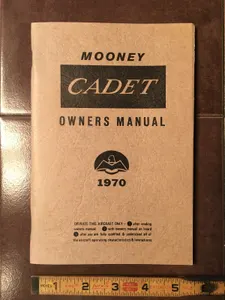

Parts listed for sale by vetted eBay sellers — confirmed on eBay at checkout.