PARTENAVIA P-68 B Model Guide
PARTENAVIA P-68 B · Model Guide
Overview
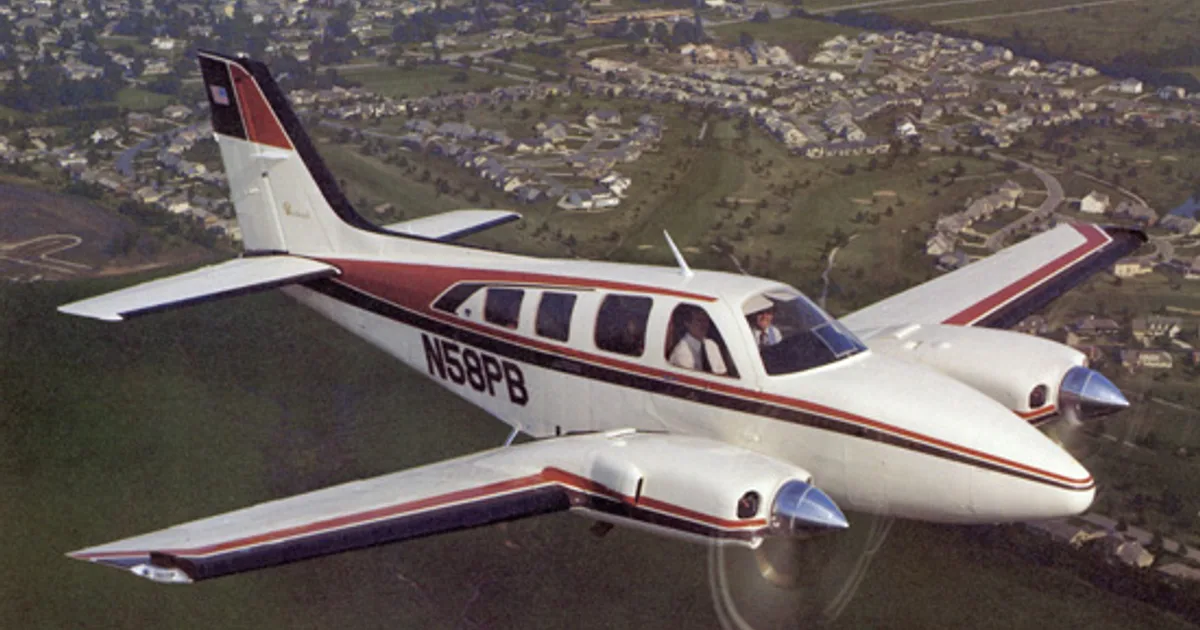
PARTENAVIA P-68 B (P68B Victor) is a twin-engine piston aircraft, certified in the normal category. It has two 200 hp Lycoming IO-360 engines with Hartzell constant-speed, feathering propellers. The flight manual gives a maximum takeoff weight of 4321 lbs, or 4387 lbs under the weight-increase appendix. The library lists it as single-engine, but the flight manual describes two engines.
- Two Lycoming IO-360 engines, each limited to 200 hp and 2700 RPM, with 51.5 gal usable fuel per tank.
- Maximum takeoff weight is 4321 lbs. An appendix allows 4387 lbs, with a maximum landing weight of 4167 lbs.
- Manual cruise data: 166 kts at 75% power burning 20.6 gph, or 150 kts at 55% burning 16.0 gph.
- Aerobatics and spins are prohibited. Demonstrated crosswind is 25 kts.
Summary written by AI from the source document. Check the original before relying on it. See which parts of Sprinkle are written by AI.
Reference only, not for flight. Use the current approved manual for your aircraft. See terms, section 5.
Document
Source
Copy found at sprinkle.com. Sprinkle hosts a reference copy with an added summary, specifications and searchable full text.
Document details
- Type ·
- Model Guide
- Year ·
- 2026
- File size ·
- 49 KB
- Copy found at ·
- sprinkle.com
Specifications & performance
Extracted from this document.
Specifications
- Engine power (hp) ·
- 200
- Max baggage (lb) ·
- 400
- Max landing weight (lb) ·
- 4,100
- Max takeoff weight (lb) ·
- 4,321
- Usable fuel per tank (gal) ·
- 51.5
- Propeller diameter (in) ·
- 72
- Basic operating weight (lb) ·
- 2,909
- Unusable fuel per tank (gal) ·
- 2.5
Performance
- Fuel burn 55 percent (gph) ·
- 16
- Fuel burn 65 percent (gph) ·
- 18.3
- Fuel burn 75 percent (gph) ·
- 20.6
- Demonstrated crosswind (kt) ·
- 25
- Cruise speed 55 percent (kt) ·
- 150
- Cruise speed 65 percent (kt) ·
- 159
- Cruise speed 75 percent (kt) ·
- 166
V-speeds
- MANOEUVRING_KTS ·
- 125
- NEVER_EXCEED_KTS ·
- 193
- STALL_FLAPS_0_KTS ·
- 65
- STALL_FLAPS_35_KTS ·
- 60
- MIN_CONTROL_SPEED_KTS ·
- 62
- BEST_RATE_OF_CLIMB_KTS ·
- 90
- MAX_STRUCTURAL_CRUISING_KTS ·
- 153
- BEST_SINGLE_ENGINE_CLIMB_KTS ·
- 88
Weight & balance
- Aft cg limit (in) ·
- 20.7
- Max landing weight (lb) ·
- 4,100
- Max takeoff weight (lb) ·
- 4,321
- Basic operating weight (lb) ·
- 2,909
- Forward cg limit light (in) ·
- 10.2
- Appendix max landing weight (lb) ·
- 4,167
- Appendix max takeoff weight (lb) ·
- 4,387
- Forward cg limit max weight (in) ·
- 12.8
How much fuel does the PARTENAVIA P-68 B carry?
The PARTENAVIA P-68 B manual lists 51.5 US gal usable in each tank, with 2.5 gal unusable per tank. It also gives total tank capacity as 103 US gal.
What cruise speed and fuel burn can I expect?
For the PARTENAVIA P-68 B, the manual gives 166 kts TAS at 75% power burning 20.6 gph, 159 kts at 65% burning 18.3 gph, and 150 kts at 55% burning 16.0 gph. Conditions are ISA, zero wind.
What is the maximum weight?
The PARTENAVIA P-68 B basic manual gives 4321 lbs takeoff and 4100 lbs landing. The appendix raises these to 4387 lbs and 4167 lbs. Where the appendix conflicts with the basic manual, the appendix overrides it.
What is the PARTENAVIA P-68 B Model Guide?
The PARTENAVIA P-68 B Model Guide is a model guide for the PARTENAVIA P-68 B, dated 2026.
What year was the PARTENAVIA P-68 B Model Guide published?
The PARTENAVIA P-68 B Model Guide — the PARTENAVIA P-68 B model guide on file — is dated 2026.
Common. More common than 89% of the aircraft models we track.
Most owners only have the POH. Here's the essential set for the PARTENAVIA P-68 B.
- Pilot's Operating Handbook / AFM
- Checklist
- Maintenance Manual
- Parts Catalog (IPC)
- Systems & Wiring
- Service Bulletins on file
- Type Certificate (TCDS)
PARTENAVIA P-68 B for sale now
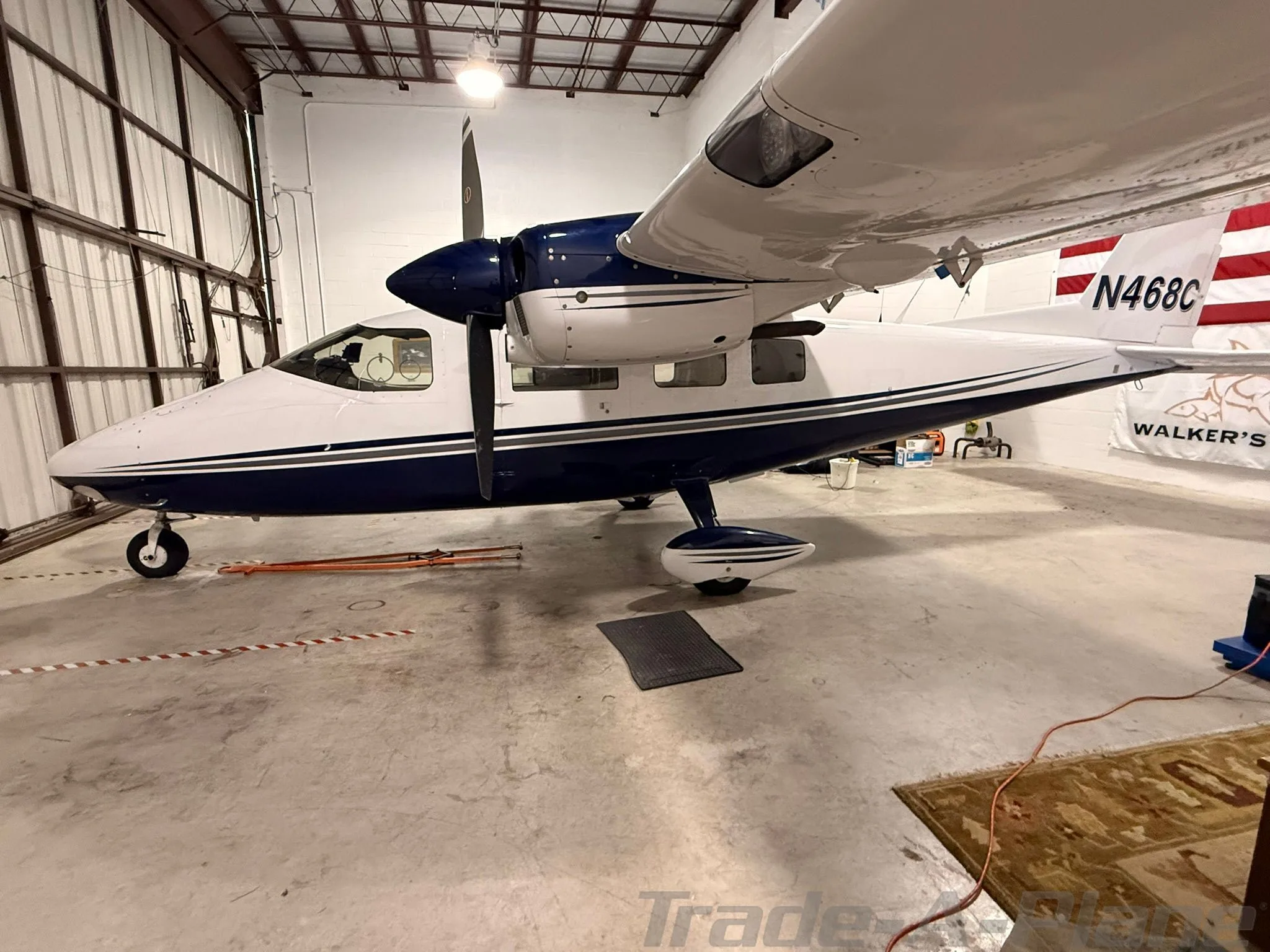
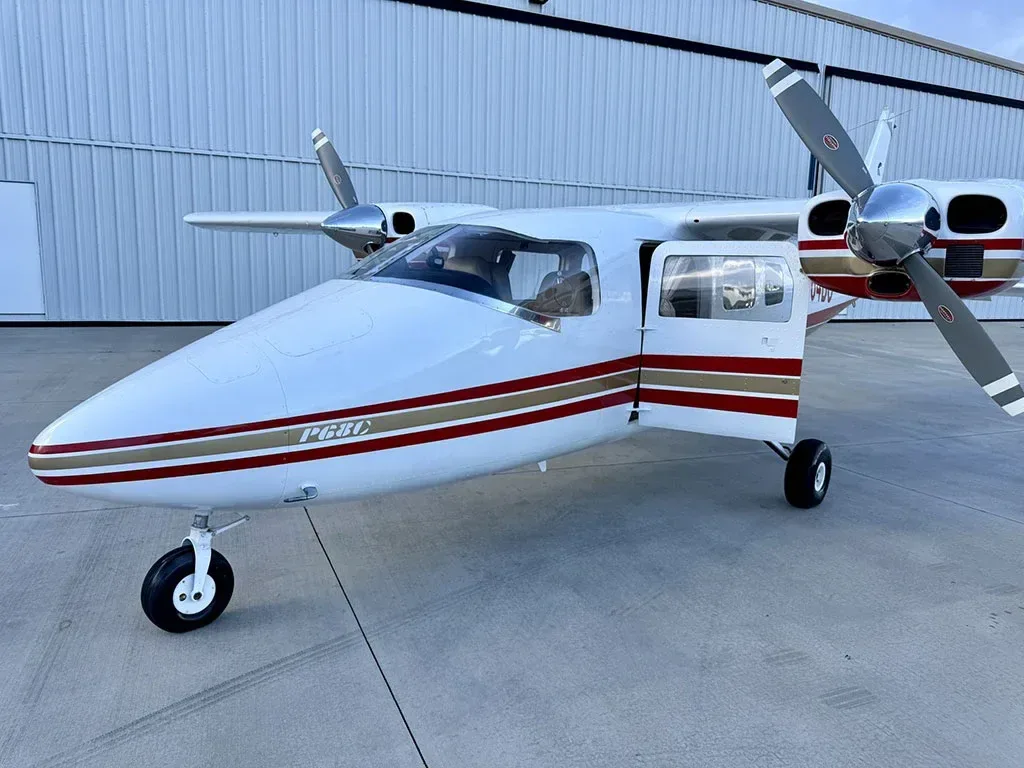
Free — save the 68 to your watchlist and track it in one place.
More PARTENAVIA P-68 Bmanuals & documents
Related documents
- P68 & P68B VICTOR FLIGHT MANUALPARTENAVIA P-68 B · Weight & Balance
- Vulcanair P-68 R Model GuideVulcanair P-68 R · Model Guide
- PIAGGIO P-180 AVANTI II Model GuidePIAGGIO P-180 AVANTI II · Model Guide
- CESSNA 172B Model GuideCESSNA 172B · Model Guide
- CESSNA 172P SKYHAWK Model GuideCESSNA 172P SKYHAWK · Model Guide
If you fly the PARTENAVIA P-68 B, you may also be researching these.





In this document
Engines, fuel and loading
Engines are Lycoming IO-360-A1B or A1B6, each 200 hp at 2700 RPM, on 100/130 minimum grade avgas. Each tank holds 51.5 gal usable and 2.5 gal unusable. Basic operating weight in the manual is 2909 lbs. A cabin placard (older serials) gives maximum baggage as 400 lbs.
What to check before buying
Confirm which flight manual applies: this one is valid up to serial number 152, and placards and fuel selectors differ between serials up to 122 and 123-152. Check whether the weight-increase appendix is fitted. Check the CG against the limits. Check the propeller RPM markings and the supplements fitted, such as de-icing, auxiliary tanks and autopilot.
Family context
The registry covers the whole Partenavia 68 family, not this variant. Across variants it shows up to 1100 nm range, up to 171 kt cruise, up to 25500 ft service ceiling and up to 10 passengers. Use the flight manual figures for this variant.
Summary written by AI from the source document. Check the original before relying on it. See which parts of Sprinkle are written by AI.
Safety notes
- Aerobatic manoeuvres, including spins, are prohibited. Minimum single-engine control speed is 62 KIAS.
- Avoid continuous operation between 2100 and 2350 RPM (IO-360-A1B only). Avoid rapid taxi turns with 1/4 fuel or less in each tank.
- Do not lower flaps with the cargo door open. Stall warning is inoperative with battery and alternators off.
Summary written by AI from the source document. Check the original before relying on it. See which parts of Sprinkle are written by AI.
Full document text
PARTENAVIA P-68 B Model Guide PARTENAVIA P-68 B (P68B Victor) is a twin-engine piston aircraft, certified in the normal category. It has two 200 hp Lycoming IO-360 engines with Hartzell constant-speed, feathering propellers. The flight manual gives a maximum takeoff weight of 4321 lbs, or 4387 lbs under the weight-increase appendix. The library lists it as single-engine, but the flight manual describes two engines. • Two Lycoming IO-360 engines, each limited to 200 hp and 2700 RPM, with 51.5 gal usable fuel per tank. • Maximum takeoff weight is 4321 lbs. An appendix allows 4387 lbs, with a maximum landing weight of 4167 lbs. • Manual cruise data: 166 kts at 75% power burning 20.6 gph, or 150 kts at 55% burning 16.0 gph. • Aerobatics and spins are prohibited. Demonstrated crosswind is 25 kts. Engines, fuel and loading Engines are Lycoming IO-360-A1B or A1B6, each 200 hp at 2700 RPM, on 100/130 minimum grade avgas. Each tank holds 51.5 gal usable and 2.5 gal unusable. Basic operating weight in the manual is 2909 lbs. A cabin placard (older serials) gives maximum baggage as 400 lbs. What to check before buying Confirm which flight manual applies: this one is valid up to serial number 152, and placards and fuel selectors differ between serials up to 122 and 123-152. Check whether the weight-increase appendix is fitted. Check the CG against the limits. Check the propeller RPM markings and the supplements fitted, such as de-icing, auxiliary tanks and autopilot. Family context The registry covers the whole Partenavia 68 family, not this variant. Across variants it shows up to 1100 nm range, up to 171 kt cruise, up to 25500 ft service ceiling and up to 10 passengers. Use the flight manual figures for this variant. Safety notes: • Aerobatic manoeuvres, including spins, are prohibited. Minimum single-engine control speed is 62 KIAS. • Avoid continuous operation between 2100 and 2350 RPM (IO-360-A1B only). Avoid rapid taxi turns with 1/4 fuel or less in each tank. • Do not lower flaps with the cargo door open. Stall warning is inoperative with battery and alternators off.