Piper PA-16 Clipper Model Guide
Piper PA-16 Clipper · Model Guide
Overview
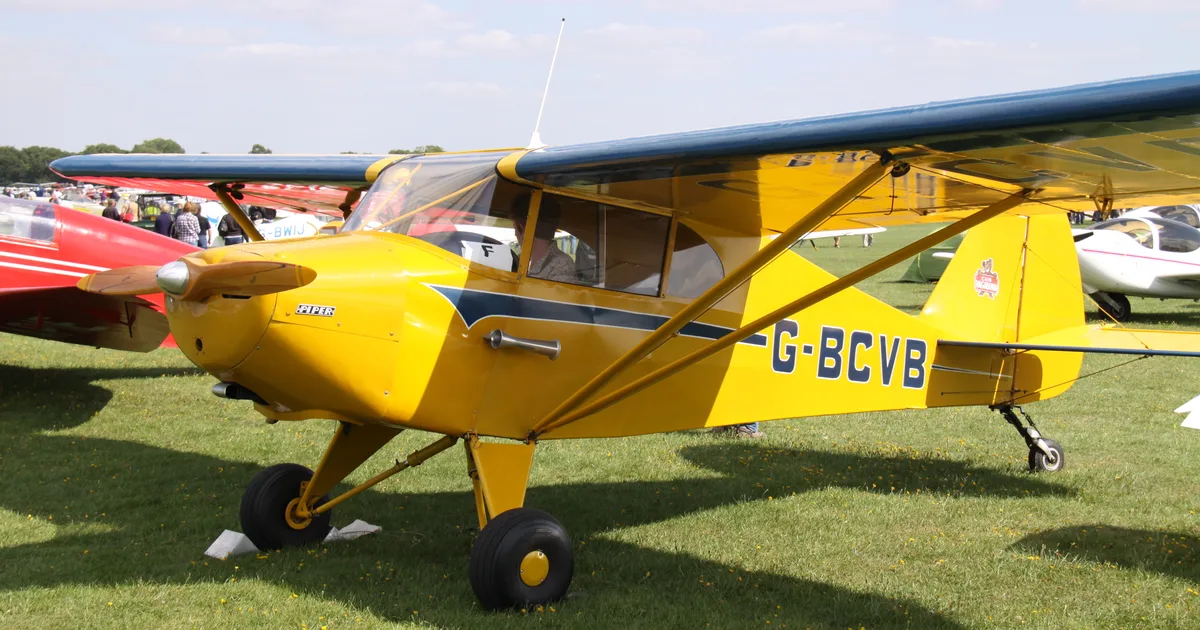
The Piper PA-16 Clipper is a four-place, tailwheel, single-engine piston airplane built in 1949 and 1950. It is a lengthened PA-15 Vagabond with a rear seat and a Lycoming O-235-C1 engine. It is steel-tube and fabric, with no flaps and a basic panel. Registry data for the PA-16 and PA-16S family show range of up to 260 nm.
- Carries four on 108 hp: 1,650 lb normal-category max weight and 750 lb useful load, leaving 570 lb for people and bags with full fuel.
- Pilot report: about 105 knots cruise at 6.2 gph, about 600 fpm loaded climb, and 30 gallons of fuel for about 4.5 hours to dry tanks.
- Gentle on grass and in landings, but an uncoordinated stall can cause a vicious rolloff and a loss of several hundred feet.
- Check brake adjustment first: one owner blamed a ground loop on poorly adjusted brakes.
Summary written by AI from the source document. Check the original before relying on it. See which parts of Sprinkle are written by AI.
Reference only, not for flight. Use the current approved manual for your aircraft. See terms, section 5.
Document
Source
Copy found at sprinkle.com. Sprinkle hosts a reference copy with an added summary, specifications and searchable full text.
Document details
- Type ·
- Model Guide
- Year ·
- 2026
- File size ·
- 47 KB
- Copy found at ·
- sprinkle.com
Specifications & performance
Extracted from this document.
Specifications
- Seats ·
- 4
- Engine ·
- Lycoming O-235-C1
- Wing tank (gal) ·
- 18
- Rated power (hp) ·
- 108
- Max baggage (lb) ·
- 50
- Takeoff power (hp) ·
- 115
- Fuel capacity (gal) ·
- 30
- Fuselage tank (gal) ·
- 12
Performance
- Fuel burn (gph) ·
- 6.2
- Climb rate (fpm) ·
- 600
- Cruise speed (kt) ·
- 105
V-speeds
- NEVER_EXCEED_KTS ·
- 122
- MANEUVERING_NORMAL_KTS ·
- 91
- MANEUVERING_UTILITY_KTS ·
- 94
- MAX_STRUCTURAL_CRUISING_KTS ·
- 102
Weight & balance
- Useful load (lb) ·
- 750
- Fuel weight full (lb) ·
- 180
- Pa 16s max weight (lb) ·
- 1,738
- Max takeoff weight (lb) ·
- 1,650
- Payload with full fuel (lb) ·
- 570
- Utility category max weight (lb) ·
- 1,400
How many people does the Piper PA-16 Clipper carry?
The Piper PA-16 Clipper seats four, with a 50 lb baggage limit. With full fuel, 570 lb remains for people and baggage. In utility category the rear seat is not used.
What engine and fuel does the Piper PA-16 Clipper use?
The Piper PA-16 Clipper uses a Lycoming O-235-C1 on 80 minimum octane gasoline. It is rated 115 hp at 2800 rpm for one minute and 108 hp at 2600 rpm otherwise. Fuel is 30 gallons, gravity fed.
What are the Piper PA-16 Clipper's main handling risks?
The Piper PA-16 Clipper has no stabilizer camber, so an uncoordinated stall can cause a sharp rolloff. Poorly adjusted brakes can lead to ground loops. Visibility is poor in flight.
What is the Piper PA-16 Clipper Model Guide?
The Piper PA-16 Clipper Model Guide is a model guide for the Piper PA-16 Clipper, dated 2026.
What year was the Piper PA-16 Clipper Model Guide published?
The Piper PA-16 Clipper Model Guide — the Piper PA-16 Clipper model guide on file — is dated 2026.
Common. More common than 89% of the aircraft models we track.
Most owners only have the POH. Here's the essential set for the Piper PA-16 Clipper.
- Pilot's Operating Handbook / AFM
- Checklist
- Maintenance Manual
- Parts Catalog (IPC)
- Systems & Wiring
- Service Bulletins on file
- Type Certificate (TCDS)
Free — save the PA-16 to your watchlist and track it in one place.
More Piper PA-16 Clippermanuals & documents
- Airworthiness Directives; Various Aircraft Equipped With Wing Lift StrutsType Certificate
- AIRCRAFT SPECIFICATION NO. 1A1Pilot's Operating Handbook
- FAA Historical Chronology, 1926-1996Supplemental Type Certificate
- Piper Clipper PA-16Pilot's Operating Handbook
- Emergency Procedures for the Piper PA-16 ClipperEmergency Procedures
- PA-16 PARTS MANParts Catalog
Related documents
- Piper Clipper PA-16Piper PA-16 Clipper · Pilot's Operating Handbook
- Piper PA-15 Vagabond Model GuidePiper PA-15 Vagabond · Model Guide
- Piper PA-22 Tri-Pacer Model GuidePiper PA-22 Tri-Pacer · Model Guide
- PIPER PA-28-160 Model GuidePIPER PA-28-160 · Model Guide
- Piper PA-12 Super Cruiser Model GuidePiper PA-12 Super Cruiser · Model Guide
If you fly the Piper PA-16 Clipper, you may also be researching these.


In this document
What to check when buying
Check brake adjustment and tailwheel steering. The aileron cables are exposed and the tail is wire-braced. The fuselage-tank gauge is hard to read. The rear seat is a steel-tube-and-fabric hammock. Confirm the aircraft carries a current weight and balance report and equipment list. Few were fitted for IFR.
Variants and limits
The PA-16 has 4 seats, a 1650 lb normal limit and a 1400 lb utility limit; the rear seat is not used in utility category. The PA-16S has 3 seats, a 1738 lb limit, normal category only, and 2600 rpm for all operations. Eligible serial numbers are 16-1 and up. Piper makes it for spare parts only.
How it flies
It lifts off at about 50 mph, then climbs at about 75 mph. Target 75 mph on base and 65 to 70 on final; the manual calls for 65 mph and anything over 75 is too fast. Controls stay effective in crosswinds. Expect poor in-flight visibility, so work to look for traffic.
Summary written by AI from the source document. Check the original before relying on it. See which parts of Sprinkle are written by AI.
Safety notes
- Placard by the fuel valve: the fuselage tank must be full until the wing tank is empty. Pilot literature is inconsistent on which tank to use first.
- The horizontal stabilizer has no camber. A stall with the ball off-center gives a vicious rolloff, which is most serious if entered low.
- Acrobatics, including spins, are prohibited in Normal Category. Baggage is limited to 50 lbs.
Summary written by AI from the source document. Check the original before relying on it. See which parts of Sprinkle are written by AI.
Full document text
Piper PA-16 Clipper Model Guide The Piper PA-16 Clipper is a four-place, tailwheel, single-engine piston airplane built in 1949 and 1950. It is a lengthened PA-15 Vagabond with a rear seat and a Lycoming O-235-C1 engine. It is steel-tube and fabric, with no flaps and a basic panel. Registry data for the PA-16 and PA-16S family show range of up to 260 nm. • Carries four on 108 hp: 1,650 lb normal-category max weight and 750 lb useful load, leaving 570 lb for people and bags with full fuel. • Pilot report: about 105 knots cruise at 6.2 gph, about 600 fpm loaded climb, and 30 gallons of fuel for about 4.5 hours to dry tanks. • Gentle on grass and in landings, but an uncoordinated stall can cause a vicious rolloff and a loss of several hundred feet. • Check brake adjustment first: one owner blamed a ground loop on poorly adjusted brakes. What to check when buying Check brake adjustment and tailwheel steering. The aileron cables are exposed and the tail is wire-braced. The fuselage-tank gauge is hard to read. The rear seat is a steel-tube-and-fabric hammock. Confirm the aircraft carries a current weight and balance report and equipment list. Few were fitted for IFR. Variants and limits The PA-16 has 4 seats, a 1650 lb normal limit and a 1400 lb utility limit; the rear seat is not used in utility category. The PA-16S has 3 seats, a 1738 lb limit, normal category only, and 2600 rpm for all operations. Eligible serial numbers are 16-1 and up. Piper makes it for spare parts only. How it flies It lifts off at about 50 mph, then climbs at about 75 mph. Target 75 mph on base and 65 to 70 on final; the manual calls for 65 mph and anything over 75 is too fast. Controls stay effective in crosswinds. Expect poor in-flight visibility, so work to look for traffic. Safety notes: • Placard by the fuel valve: the fuselage tank must be full until the wing tank is empty. Pilot literature is inconsistent on which tank to use first. • The horizontal stabilizer has no camber. A stall with the ball off-center gives a vicious rolloff, which is most serious if entered low. • Acrobatics, including spins, are prohibited in Normal Category. Baggage is limited to 50 lbs.