Northwest Mobilization Guide
Piper PA-42 Cheyenne III · Checklist
Overview
The Northwest Mobilization Guide provides comprehensive guidelines for the use of aircraft in various operational scenarios, particularly in firefighting and tactical support missions. It outlines the procedures for utilizing cooperator aircraft, mission flights, and the coordination of aviation resources during emergencies. This document is essential for pilots, dispatchers, and aviation managers involved in wildfire response and other urgent missions. It emphasizes the importance of safety, communication, and adherence to established protocols to ensure effective and efficient operations in the field.
- Cooperator aircraft must have written approval for federal fire missions.
- Mission flights require special pilot endorsements and may involve complex operations.
- Aircraft must be documented on the Aircraft Flight Request/Schedule form before takeoff.
- Pilots must adhere to sterile cockpit protocols during critical flight phases.
- Communication with dispatch is crucial for safety and operational efficiency.
Document
Source
Originally published by gacc.nifc.gov. Sprinkle hosts a reference copy with an added summary, specifications and searchable full text.
Document details
- Type
- Checklist
- Year
- 2022
- Pages
- 28
- File size
- 515 KB
- Publisher
- gacc.nifc.gov
Common. Rarer than 4% of the aircraft models we track.
Most owners only have the POH. Here's the essential set for the Piper PA-42 Cheyenne III.
- Pilot's Operating Handbook / AFM
- Checklist
- Maintenance Manual
- Parts Catalog (IPC)
- Systems & Wiring
- Service Bulletins
- Type Certificate (TCDS)
Piper PA-42 Cheyenne III for sale now
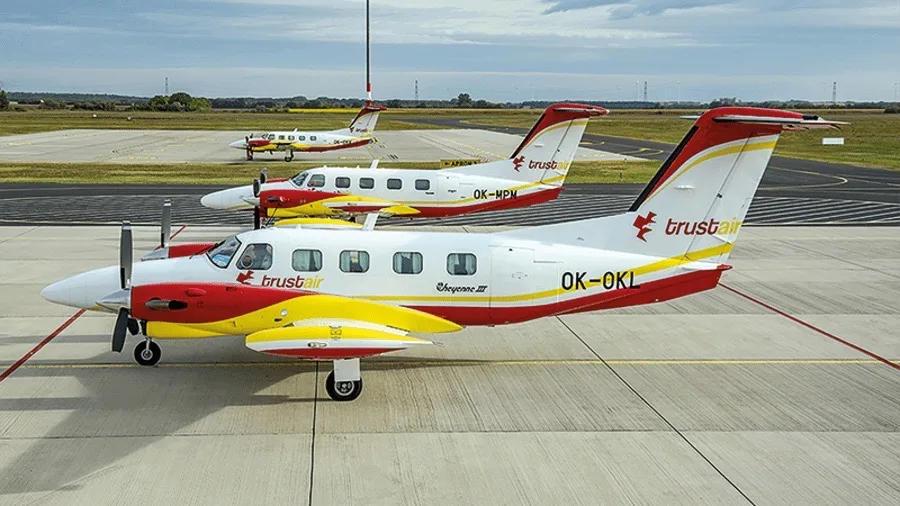
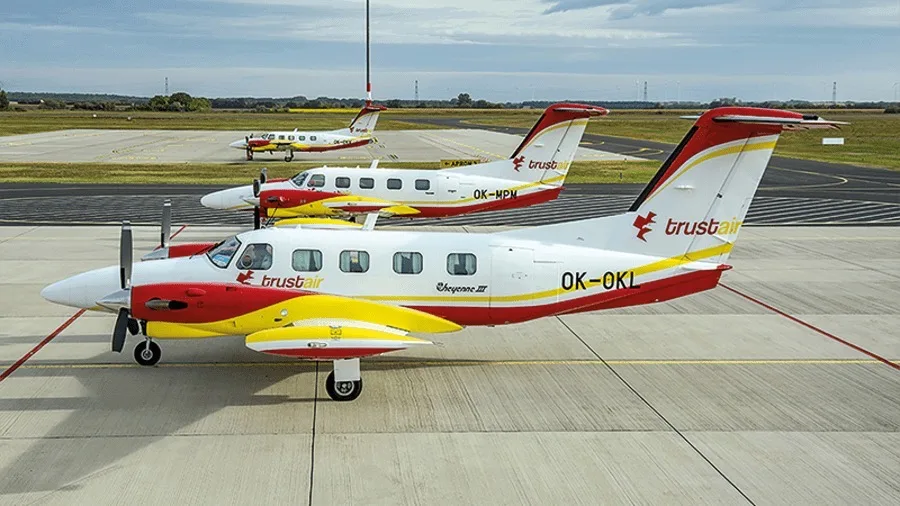
Free — save the PA-42 Cheyenne III to your watchlist and track it in one place.
More Piper PA-42 Cheyenne IIImanuals & documents
See all 13 →- CUSTOMER SERVICE OWNER PUBLICATIONS CATALOGWiring Diagram
- CUSTOMER SERVICE OWNER PUBLICATIONS CATALOGTraining Manual
- CUSTOMER SERVICE OWNER PUBLICATIONS CATALOGParts Catalog
- Aircraft Wheel & BrakeWeight And Balance
- AIRWORTHINESS DIRECTIVE AD/PA-42/13 Amdt 1Airworthiness Directives
- AIRWORTHINESS BULLETIN AWB 32-005 Issue : 1 Lubrication of Landing Gear – Piper AircraftService Bulletins
- Piper Service Bulletin No. 1041Service Bulletins
- SCHEDULE OF AIRWORTHINESS DIRECTIVESService Bulletins
- Propeller Specifications and STC Kit ContentsPilot's Operating Handbook
- Airplane Flight Manual SupplementFlight Manual
- Aircraft Dispatcher Reference GuideOther Documents
- Goodrich® De-IcersSystems Description
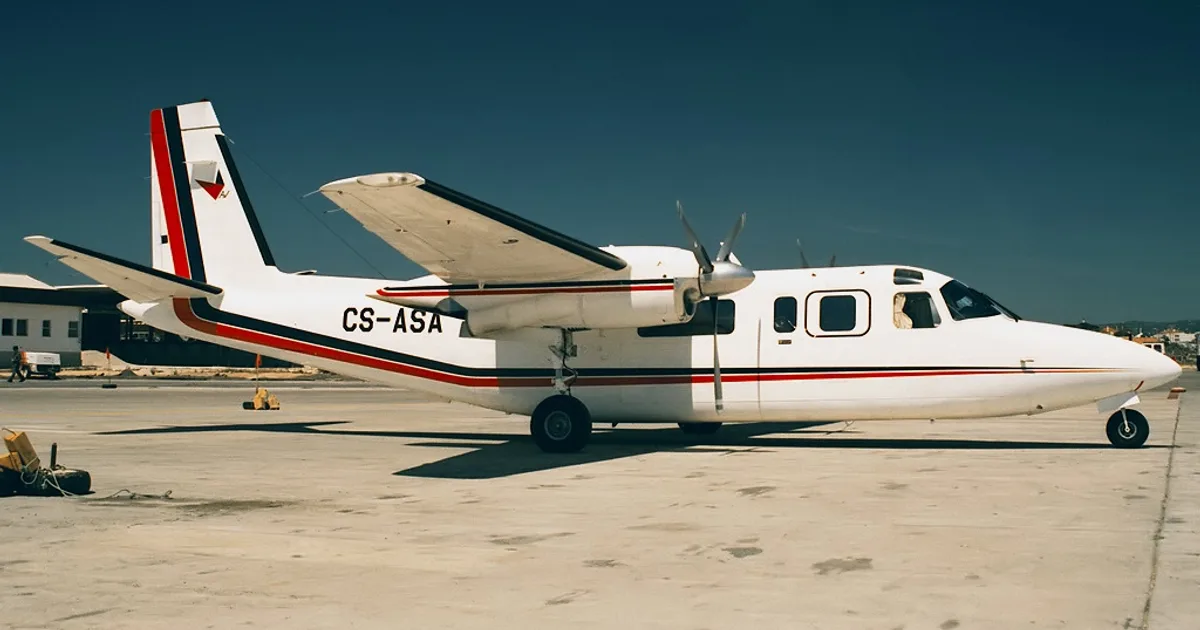
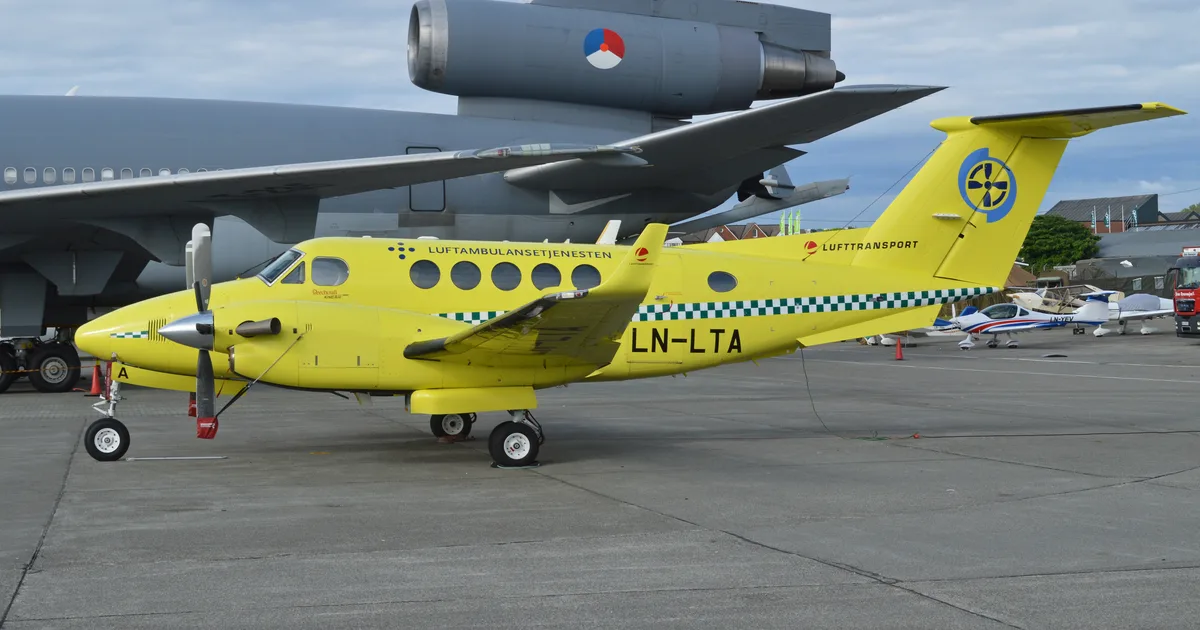
If you fly the Piper PA-42 Cheyenne III, you may also be researching these.
In this document
Cooperator Aircraft Usage
The guide specifies conditions under which cooperator aircraft can be utilized on federal fires, including the need for written approval from the USDA Forest Service or Department of the Interior. It outlines the requirements for cooperator-owned or operated aircraft, emphasizing the necessity of cooperative agreements and compliance with NWCG standards.
Mission Flights
Mission flights are defined as operations that do not conform to standard point-to-point flights. These may include aerial firefighting, reconnaissance, and logistical support. The guide stresses that such flights may require special pilot endorsements and training.
Aircraft Assignment and Mobilization
The document details the process for ordering additional aircraft from adjacent units or through NWCC, particularly during heightened preparedness levels. It outlines the criteria for aircraft assignment, including the types of airtankers and special capabilities required for specific missions.
Flight Management Procedures
All point-to-point flights must be documented using the Aircraft Flight Request/Schedule form. The guide emphasizes the importance of communication between pilots and dispatchers, particularly during critical phases of flight such as takeoff and landing.
Safety and Communication Protocols
The guide outlines the sterile cockpit concept, requiring pilots to focus on FAA communications and traffic awareness during critical phases of flight. It specifies the need for pilots to monitor specific frequencies and maintain communication with dispatchers.
Safety notes
- All aircraft and pilots must be approved and carded by the USDA Forest Service or Office of Aviation Services.
- Failure to comply with communication protocols can lead to safety risks during flight operations.
Full document text
Aircraft Chapter 50 Northwest Mobilization Guide 51 May 2022 CHAPTER 50 AIRCRAFT Aircraft may be used for a wide range of activities, including point to point transport of personnel, equipment, and supplies. Tactical use may include applications such as retardant delivery, helicopter logistical and tactical support, air tactical and lead plane operations, suppression or pre-suppression reconnaissance, and aerial ignition. For more information review the National Aviation Safety and Management Plan at: https://www.iat.gov/docs/USDA_NASMP_2021_2022.pdf COPPERATOR AIRCRAFT Cooperator aircraft (State contracted, State owned, State managed National Guard aircraft, county, city, or other) may be used on federal fires under the following conditions: ➢ Cooperator contracted aircraft also on an existing federal contract with federal aircraft and pilot cards may be utilized on federally protected lands when cooperative agreements are in place and the aircraft have been approved by USDA Forest Service/Department of the Interior letter. ➢ Cooperator exclusive use contracted aircraft not on an existing federal contract may be considered for approval on a case-by-case basis when cooperative agreements are in place. Approval will be by USDA Forest Service/Department of the Interior letter. ➢ Cooperator-owned or cooperator-operated aircraft may be utilized on federally managed fires when cooperative agreements are in place and the aircraft have been approved by USDA Forest Service/Department of the Interior letter. Cooperator-owned or -operated aircraft meeting requirements of the NWCG Standards for Interagency Cooperator Type 2 and Type 3 Helicopters or other applicable NWCG standards may be utilized on federally protected lands when cooperative agreements are in place and the aircraft have been approved by USDA Forest Service/Department of the Interior letter. ➢ The pilot and aircraft have been approved in writing for the mission by either the Forest Service or the Office of Aviation Services (OAS). ➢ There exists a written MOU (Memorandum of Understanding), Interagency Agreement, or other document that authorizes use and payment for the mission. ➢ The cooperator aircraft will be operated within limitations specified in the written approval. ➢ The cooperator aircraft will be used only in situations where federal aircraft are not reasonably available. ➢ The cooperator aircraft will be released when federal aircraft become reasonably available. The use of Cooperator aircraft must involve a “significant and imminent threat to life or property” documented daily on the Cooperator Aircraft Use Validation Worksheet (National Interagency Mobilization Guide Ch. 80 Forms) to document the justification for aircraft utilization. https://www.nifc.gov/nicc/logistics/coord_forms.htm AIRCRAFT MOBILIZATION Refer to National Mobilization Guide Ch. 50 Units requiring aviation services other than those assigned to them, through preapproved agreements, or within their dispatch boundaries, can order additional aircraft from adjacent units or through NWCC. At Preparedness Levels 3-5, NWCC will coordinate aircraft assignment and utilization in the Northwest Area. The control of the aircraft assigned to a unit will remain with the local unit. In situations where the Northwest Multi-Agency Coordinating Group (NWMAC) has been activated, the NWMAC will coordinate Aircraft Chapter 50 Northwest Mobilization Guide 52 May 2022 with NWCC and local units on allocation and prioritization of aviation resources. AIRCRAFT ASSIGNED Aircraft assigned will remain in the Geographic Area until released or reallocated by the NICC. The following selection factors will be used considered when ordering aircraft: ➢ Airtanker: Types 1 & 2 LATs, VLATs, or SEAT (closest resource, regardless of geographic area boundary). ➢ Special flights/capabilities, to include, short-haul, STEP (single-skid toe in exit procedures), aerial ignition, rappel, hoist, etc. ➢ Special equipment, bucket vs. tank, tundra pads, floats, etc. MISSION FLIGHTS Mission flights (also known as FS Special Use Mission flights) are defined as flights not meeting the definition of point-to-point flight. A mission flight requires work to be performed in the air (retardant, water delivery, fire reconnaissance, or smokejumper delivery), through a combination of ground and aerial work (delivery of personnel and/or cargo from helibases to helispots or unimproved landing sites, rappelling or cargo let-down, or horse herding). Special Use Mission Flights may require special pilot endorsements, flight evaluations, training, and/or specialized aircraft equipment. AIRCRAFT SOURCES Sources for aircraft include agency-owned aircraft, Exclusive-Use and Call-When Needed (CWN) or On- Call Light Fixed Wing Aircraft and Helicopters. These aircraft may be ordered through established dispatch channels. Forest Service T3 CWN helicopter contractors are assigned to a Host Forest Unit for administrative purposes and processing of Flight Invoices. Refer to CWN listings for helicopters and light fixed wing aircraft at website: http://www.fs.usda.gov/detail/r6/fire-aviation/?cid=fsbdev2_027111 DOI Bureaus may use the Office of Aviation Services (OAS) aircraft source list at website: https://www.doi.gov/aviation/aqd/aviation_resources Rental aircraft are signed up by the OAS under an Aircraft Rental Agreement (ARA). Cooperator and military may be utilized provided an agreement and approval are in place. Currently, Forest Service must contact the OAS Flight Coordination Center for assistance with the source list resources: call Vicky Johnston 208-334-9314 or Richard Davis 208-334- 9315. All aircraft and pilots must be approved and carded by either USDA Forest Service (USFS) or Office of Aviation Services (OAS). Passengers of rental or contract aircraft are personally responsible for checking the aircraft and pilot approval certificates. The Aircraft Approval Certificate must be in the aircraft and the
Show full textShow less
pilot must carry a Pilot Approval Certificate. If either is missing or not current, do not use the aircraft. FLIGHT MANAGEMENT PROCEDURES Refer to National Mobilization Guide Ch. 50 All point-to-point flights will be documented on the Aircraft Flight Request/Schedule form (NW Mobilization Guide Ch. 80). The pilot or manager is responsible for completion of the form and providing it to their current dispatch prior to take off. Dispatch will be responsible for relaying to receiving units either by fax or electronic mail. Verbal and AFF flight following is not required enroute when an FAA flight plan has been filed. STERILE COCKPIT/NEAR AIRPORTS Aircraft Chapter 50 Northwest Mobilization Guide 53 May 2022 All aircraft with agency communication radios will monitor FAA VHF air traffic frequencies and agency guard frequency (for emergency only) within 5 miles of controlled or uncontrolled airport. A standard protocol for flight following communications related to the sterile cockpit environments is as follows: Departing aircraft will contact flight follower prior to taxi. (This ensures that flight follower is aware of pending aircraft movement, that radios work, and that the frequencies are correct.) Upon takeoff and landing, pilots must concentrate on Federal Aviation Administration (FAA) communications and traffic awareness. Dispatch communications may remain unanswered during these operations. Contact will be established/re-established once practical and safe. Sterile cockpit duration may vary depending on airspace and communications complexity. In general, count on five nautical miles as a sterile cockpit guideline. Dispatchers should refrain from attempting contact during this time. For helicopters, sterile cockpit also occurs after the helicopter pilot has made radio contact with ground personnel for current ground conditions prior to landing or initiating mission operations. There should be no talking in the aircraft during takeoff and /or landing unless the pilot requests input on clearance or hazards Flight manager or pilot will advise flight follower of position and intent to land. At completion of taxi and prior to shut down, flight manager or pilot will advise follower that the flight is terminated. On departure air tankers will stop communicating on agency frequencies after reporting “rolling”. All other aircraft will stop operation on agency radios before entering the active runway, or before rolling or before lifting off (helicopters). Once the aircraft has flown 5 nautical miles from the airport resume routine check-in and communication procedures on agency radios. On arrival all aircraft will cease communicating on agency frequencies (except for emergencies) at a distance of 5 nautical miles from the airport. The pilot will radio the dispatcher and advise they are either under FAA control or 5 nautical miles from landing. After landing, and once clear of the active runway, communication with dispatch or the base may resume. There may be occasions where a wildfire occurs within 5 nautical miles of an airport making it impossible to maintain the sterile cockpit until departing. Under these circumstances, the departing aircraft shall maintain a sterile cockpit until departing the traffic pattern and reaching final altitude. At this time the aircraft may resume any “mission required” communications on agency frequencies. The pilot will continue to monitor FAA VHF air traffic frequency until engaged in the firefighting activity but should continue to monitor the FAA VHF frequency. Upon completion of the wildfire mission or after being released, the pilot shall immediately select and monitor the FAA VHF frequency, if not already monitoring it, and maintain a sterile cockpit until aircraft has taxied to stop. SENDING UNITS In addition to responsibilities in National Mobilization Guide Ch. 50 the Sending Units are to: ➢ Ensure that all personnel are properly briefed on flight following procedures ➢ Ensure all personnel are familiar with aviation safety requirements prior to being transported in fixed-wing or rotor-wing aircraft ➢ Order an approved/carded aircraft from a vendor that meets safety/performance requirements and Aircraft Chapter 50 Northwest Mobilization Guide 54 May 2022 cost effectiveness for transport of personnel/cargo. Ensure the pilots file an FAA VFR or IFR flight plan. ➢ Flight following the aircraft to its final destination in communication with the pilot and/or flight manager. Advise the pilot of any exception to routine flight following procedures: i.e. alternate telephone numbers, etc. ➢ Obtain ATD (Actual Time of Departure) from initial departure airport, from pilot/vendor or flight manager. ➢ Communicate to NWCC through established dispatch channels all flight plans that cross dispatch zone boundaries. ➢ Notify receiving units and NWCC of any delays/advances of a flight plan exceeding 30 minutes. ➢ Initiate search procedures for overdue aircraft. Utilize agency Aviation Mishap Response Plan as appropriate and notify NWCC of overdue aircraft. ➢ Advise Unit Aviation Manager when pilot/or fight manager do not comply with their responsibilities as outlined in the unit aviation plan. ➢ Initiate an aircraft SAFECOM report if appropriate. RECEIVING UNITS In addition to responsibilities in National Mobilization Guide Ch. 50, the Receiving Units are to: ➢ Notify the sending unit of any aircraft that has not arrived within 30 minutes of ETA. If problems are encountered contacting the sending/originating unit, contact NWCC. ➢ Assist in the search for overdue aircraft. Advise NWCC of action taken. AUTOMATED FLIGHT FOLLOWING (AFF) PROCEDURES Refer to National Mobilization Guide Ch. 50 AIRCRAFT ACCIDENT/INCIDENT REPORTING Personnel shall report immediately all aircraft accidents/ incident to appropriate agency/department officials.1-800-4-MISHAP (1-800-464-7427) SAFECOMS are to be submitted through interagency webpage: https://www.safecom.gov/ Internal follow-up phone calls must also be immediately made to the appropriate Agency State or Regional Aviation Manager or Regional Aviation Safety Manager (USFS). Reports to the FAA may be made directly with the Western Region Operations Center at 425-227-1999. This is a 24 hour number for Accident and Incident Response. OVERDUE AND MISSING AIRCRAFT If an aircraft fails to arrive at its destination or fails to check in on the prescribed interval, initiate the Interagency Mishap Response Guide and Checklist. AIRTANKERS Refer to National Mobilization Guide Ch. 50 There are 5 types of airtankers: TYPE CAPACITY (minimum) VLAT 8,000 gallons or more TY1 3000 to 5,000 gallons Aircraft Chapter 50 Northwest Mobilization Guide 55 May 2022 TY2 1800 to 2,999 gallons TY3 800 to 1,799 gallons TY4 Up to 799 gallons AIRTANKER USE IN OPTIONAL AND POST SEASON PERIODS Refer to National Mobilization Guide Ch. 50 AIRTANKER DISPATCHES (LOADED VS EMPTY) Ordering Units may request airtankers loaded or empty. Some aircraft have capabilities and flight limitations which may preclude the dispatch of loaded air tankers (2-hour maximum flight when loaded, except for the VLATs). AIRTANKER BASES Refer to Airtanker Dispatch Guide Map, National Mobilization Guide Ch. 80 Northwest Airtanker Bases have Host Dispatch Centers and associated units. The units listed in the following table may order air tankers directly from the Host Dispatch Office. Units outside this association may order these aircraft as specified in Northwest Area Neighborhood Concept, NW Mobilization Guide Ch. 10 to the dispatch offices identified as follows: BASE HOST UNITS AND DISPATCH CENTERS Medford RVC UPF, EIC, KFC, SUF, KNF (R- 5), SRF (R-5), LFC, MED, CBD, ROD, ORS, CDF THRU KNF/SRF, NZF WITH FOLLOW UP NWC Redmond COC EIC, MAF, CCC-MHF, SUF, COC, LFC, SAD, BIC, VAD, ORS, KFC, GPF, UPF, WSA La Grande BMC MAF, UMF, WWF, ORS, BIC, PAF(R-4), NPF(R-1), VAD Klamath Falls LFC COC, RRF,LFC, KFC, CNP, BNP, UKR, UPF, ORS, KNF(R- 5) NZF WITH FOLLOW UP THRU NWC, CDF (IA ONLY) Moses Lake CWC COF, PSC, CCC-GPF, CWC, COA, YAA, SPA, SPD, CDP, COR, LPR, TBR, WAS, IPF(R-4) Host Base Dispatcher will send the Billing Forest a copy of the Resource Order, with estimated costs as soon as completed. For USFS incidents, the Billing Forest is referred to as “Fire Forest”. See Aircraft Chapter 50 Northwest Mobilization Guide 56 May 2022 more about Fire Forest Concept in NWMG 10. Host Base Dispatchers should refer to Forest Service Handbook 6509 .11K for billing procedures to USFS Units and Cooperators. STATE COOPERATOR AIRTANKERS The State of Oregon Department of Forestry has a contract Next Generation airtanker. These airtankers are approved to be used on federal land. Refer to Oregon Department of Forestry Air Tanker Operations Plan. USE OF NON-FEDERALLY APPROVED AIRCRAFT Under Clause 27 of the 2014-2019 Master Cooperative Fire Protection Agreement, Independent Action, any agency may assign its respective aircraft to an incident in which a wildfire is deemed a threat to lands under its jurisdiction. In such instances, the resulting interagency mix of aircraft sharing the same airspace is allowed as long as common communications, command/control, and on-scene operating procedures exist to ensure a safe and efficient aviation operation. If the decision is made to use an unapproved aircraft, the Line Officer must call the Agency Duty Officer (BLM: 503-808-2775 / USDA: 503-808-2729) and advise him/her of the risk-informed decision and document the decision. The Agency Duty Officer will then contact the Coordinator on Duty at the NWCC to notify them of the decision. The local dispatch center, in coordination with the NWCC, will attempt to replace the unapproved aircraft with an approved federal aircraft as soon as possible and make the appropriate notification. For additional questions please contact Robert Roth, Pacific Northwest Regional Aviation Officer, at 503-808-2359 or robert.roth@usda.gov, or the BLM State Aviation Manager Vacant 916-969-9685 MODULAR AIRBORNE FIREFIGHTING SYSTEMS (MAFFS) Refer to National Mobilization Guide Ch. 50 SINGLE ENGINE AIRTANKERS (SEATS) Refer to National Mobilization Guide Ch. 50 and Standards for Airtanker Base Operations. WATER SCOOPERS Water Scoopers will be ordered as a ATM3 - Airtanker, Type 3 (Multi Engine) with Scooper capability feature in IROC. The capability should also be defined in the “Special Needs” block of the Resource Order as scooper capability. LEAD PLANES Refer to National Mobilization Guide Ch. 50 Lead planes are considered National Interagency Resources. Three USFS leased lead planes based out of Redmond: Tail # Make/Model Passenger Flight Rate Per hour N64GT King Air 90 6 $652.00 N556MC King Air 200 8 $767.00 N904JG King Air 90 6 $652.00 Aircraft Chapter 50 Northwest Mobilization Guide 57 May 2022 The Aerial Supervision Module (ASM) is a fixed wing platform with two (2) crew members who perform air attack and lead operations. They are trained to work as a team. NORTHWEST LEAD PLANE/ASM PILOTS PILOT CALL SIGN STATUS HOME BASE Ralph Sweeny Lead 6-1 L Redmond Trevor Stellrecht Lead 6-3 L,M,A,E Redmond Phil Schreffler Lead 6-6 L Redmond Ryen Farnsworth Lead 6-8 T Redmond Status Legend: L= Lead plane Qualified M=MAFFS Qualified A=Qualified ASM and Lead plane E=Evaluator FE=Final Evaluator T= In training For a list of all Lead Plane and ASM Pilots refer to: http://www.nifc.gov/nicc/logistics/aviation/Lead_Planes.pdf NORTHWEST AIR ATTACK PLATFORMS/PILOTS HOST LOCATION ATGS AIRCRAFT BMC La Grande Todd Pease 616 COC Redmond Jeremy Cowie 601 CWC Wenatchee Vacant 617 LFC Klamath Falls Danny Williams 602 VAD Ontario Mike Spellman 631 RVC Medford Mike Demello 610 SMOKEJUMPER AIRCRAFT All smokejumper aircraft in the Northwest Area will be identified by using the Aircraft Identifier listed below. For a list of all Smokejumper Aircraft refer to: http://www.nifc.gov/nicc/logistics/aviation/Smokejumper_Aircraft.pdf AIRCRAFT ID TAIL # TYPE BASE FLIGHT RATE Jump 63 N163Z SD3-60 Redmond $2280.00/hr. Aircraft Chapter 50 Northwest Mobilization Guide 58 May 2022 Jump 45 N145Z SD3-60 Redmond $2280.00/hr. Jump 09 N109BH Casa 212 Winthrop $1906.00/hr. SMOKEJUMPER INITIAL ATTACK (IA) REQUESTS Initial Attack smokejumpers should be launched immediately upon receipt of order via phone, email, resource order or Aircraft Dispatch form (TARO). When the order is generated in IROC the request will be for an A- #, “Load, Smokejumper, Initial Attack”. Notification to NWCC will be made within 15 minutes of dispatch. Aircraft delivering smokejumpers should return to a designated airport or return to the sending base before the end of the pilot’s daily flight or duty limitations. If assigned in IROC, aircraft will be released in IROC at the end of its duty day to the dispatch center that is responsible for that given base. Any new requests will be ordered via IROC through established dispatching channels. SMOKEJUMPER PREPOSITION REQUESTS Smokejumper preposition requests will be ordered in IROC on an Aircraft request as, “SMIA-Load, Smokejumper, Initial Attack”, on an order. The aircraft, when remaining at prepositioned base, will be added as a subordinate on the IA Load. The duration of preposition may be negotiated prior to launch between the requesting unit, sending unit and NWCC. Preposition loads should be released within a reasonable time frame if they are not utilized or otherwise negotiated with management (i.e. long term, spike base, etc.) SMOKEJUMPER BOOSTER REQUEST When ordering a booster of jumpers, the request should be placed as individual Overhead requests, as “Overhead, SMKJ-Smokejumper”. The mode of transportation may be filled using jump ships, driving, charter aircraft or commercial travel and can be negotiated between the requesting and sending unit with notification to the GACC. If smokejumper aircraft are used to deliver boosters, the load should travel in a jump ready configuration. See NW Mobilization Guide Ch. 20 for more information on smokejumper booster requests. PARACARGO REQUESTS Para cargo is ordered as Aircraft, FWCA-Fixed Wing, Cargo through the IROC system. The request will be made through IROC as well as a TARO with specific information on drop site, frequencies, etc. The specifics of requested supplies will be given to the ordering dispatch center, and if possible, directly to the Smokejumper Base that will be filling the Para cargo order. Each jump base may have a different process for filling the orders and may request S-numbers to back fill their supplies. AERIAL SUPERVISION Per National Mobilization Guide Ch. 50, Lead planes, Exclusive Use Air Tactical Aircraft, and ASMs are National Resources. Areas administering these aircraft will make them available for wildland fire assignments when requested by NICC and approved by the parent agency. Requests for Lead planes may be filled with an ASM. AERIAL SUPERVISION ROLES AND RESPONSIBILITIES In the Northwest Area the following resources will be considered Tactical Aviation Resources: Airtanker, Heli-tanker, SEAT, Lead Plane, ASM, Air Attack Platform, Smokejumper, Rappel and Heli- tack Operations ordered from neighboring geographic units utilizing the border agreements for initial Aircraft Chapter 50 Northwest Mobilization Guide 59 May 2022 attack without going through NICC. Resources are ordered using the Tactical Aviation Resource Order form (TARO) with a follow up order in IROC. Refer to NW Mobilization Guide Ch. 80, Forms. AIR ATTACK/TACTICAL GROUP SUPERVISOR (ATGS) AIRCRAFT An Air Attack Module is a fixed or rotor wing aircraft that is comprised of a pilot and an ATGS for initial and extended attack fire. This includes responding to incidents outside of assigned dispatch center and GACC boundaries when requested. Normal dispatch procedures will be followed. See National Mobilization Guide Ch. 50. To ensure consistent utilization, rotation, and management of the exclusive use ATGS fleet, please refer to Interagency Standards for Fire and Aviation Operations Ch. 16, Aviation Operations and Resources located at. https://www.nifc.gov/standards/guides/red-book Ch.16. Exclusive Use (EU) Air Attack Modules are Nationally funded Regionally managed and Locally hosted. Exclusive Use Air Attack Modules will meet the needs in the PNW through application of closest forces dispatching, responding to initial attack and extended attack within the Region. Needs for Air Attack Modules should: be based on current/predicted fire conditions, anticipate increased need and will be managed with coordinated orders through NWCC. (See Aerial Supervision Ops plan). LEAD PLANES (LP) Refer to National Mobilization Guide Ch. 50 and the Standards for Aerial Supervision (SAS) PMS 505 Lead planes are National Initial Attack resources. They are ordered through normal dispatch channels and can be diverted to a higher priority incident. The Incident Commander (IC) or the ATGS have discretion to request a Lead plane (LP)/Aerial Supervision Module (ASM) prior to an order for airtankers to assess ability to deliver retardant in difficult terrain. See Lead Plane (LP) /Aerial Supervision Module (ASM) pilot list for information regarding pilots, identifiers and pilot qualifications. Lead plane call signs initiate with “Lead” (for example: L-63 = Lead Six Three). AERIAL SUPERVISION MODULES (ASM) Refer to National Mobilization Guide Ch. 50 and Standards for Aerial Supervision (SAS) PMS 505 ASM Modules are national resources and are ordered through normal dispatch channels like standard Lead planes. An ASM is a two-person crew functioning in the same aircraft as a Lead Plane and an Aerial Supervision platform. The ASM crew consists of a Lead Plane Pilot (LPIL) and an Air Tactical Supervisor (AITS). The ASM crew has received specialized training and can perform the functions of a low-level lead plan, traditional air attack or both, depending on the needs of the incident. See Lead Plane (LP)/ASM pilot list for information regarding pilots, identifiers and pilot qualifications. Forest Service Lead plane pilots, operating in the ASM configuration, adapt their call sign to reflect the ASM module configuration and initiate with “Bravo” rather than “Lead” (for example: B-63 =Bravo Six Three). HELICOPTER COORDINATOR (HLCO) The HLCO module consists of a pilot and a qualified HLCO. Generally, HLCO work out of a helicopter and cannot supervise fixed wing aircraft. The intent is that when the HLCO position is ordered that they will perform the Helicopter Coordinator function in a helicopter within the same block altitude as the rotor wing aircraft they are supervising. Though the task can be done from fixed wing aircraft, the work of a HLCO is best performed within the same altitude block as the aircraft being supervised. DISPATCHING AVIATION RESOURCES On Dispatch of Tactical Aviation resources, the Host Dispatch Office will send a commit message to all NW area units and NWCC using electronic mail. Tactical aviation resources will be ordered based on the closest forces concept. Units requesting Aircraft Chapter 50 Northwest Mobilization Guide 60 May 2022 tactical aviation resources will provide the following information on the TARO and/or in IROC. 1. Legal Description of fire. 2. Latitude and Longitude of fire. 3. Radio Frequencies to be used. 4. Ground Contact and/or air attack call sign. 5. Flight Hazards (Military Training Routes, Special Use Airspace etc.). 6. Other Aircraft in area. 7. Reload Base for Air tankers, SEATS, and Heli-tankers Site. 8. 2 VOR’s and DME AERIAL SUPERVISION REQUIREMENTS The use of a lead plane (LP) or ASM greatly increases the effectiveness, economy, and safety of air operations. The following table is found in the Interagency Aerial Supervision Guide Ch.3 which is available at: https://www.nwcg.gov/sites/default/files/publications/pms505.pdf When aerial supervision resources are co-located with retardant aircraft, they will be launched together on the initial order to maximize safety, effectiveness, and efficiency of incident operations. Incidents with three or more aircraft assigned will have aerial supervision ordered. Federal policy dictates additional requirements as listed below. For more information refer to Interagency Standard for Fire and Fire Aviation Operations (Redbook) Ch. 16. Incident Aerial Supervision Requirements ***ASM can perform all LEAD missions. Note: Deviations from this table can be authorized by the agencies through local mitigations. SITUATION HLCO LEAD ATGS / ASM*** Three or more aircraft assigned to incident If no ATGS AND only rotor wing If no ATGS AND only fixed-wing ORDERED Fixed-Wing Low-Level Operations in Low Light conditions. N/A REQUIRED IF NO ATGS REQUIRED IF NO LPIL MAFFS / VLAT N/A REQUIRED N/A Airtanker not IA carded N/A REQUIRED N/A Level 2 SEAT operating on an incident with more than one other tactical aircraft on scene. N/A REQUIRED IF NO ATGS REQUIRED IF NO LPIL Foreign Government Aircraft N/A REQUIRED IF NO ATGS REQUIRED IF NO LPIL Congested Area Fight Operations ORDERED ORDERED REQUIRED Periods of marginal weather, poor visibility or turbulence. REQUIRED IF NOT ATGS /ASM REQUIRED IF NO ATGS REQUIRED Active Duty (Non-National Guard) Military Helicopter Operations. ORDERED N/A REQUIRED IF NO HLCO Night Helicopter water dropping operations with 2 or more helicopters. ORDERED if no ATGS* N/A ORDERED unless HLCO is on scene and does not require additional supervision.* Aircraft Chapter 50 Northwest Mobilization Guide 61 May 2022 When requested by airtanker, helicopters, ATGS,LPIL, ASM. REQUIRED REQUIRED REQUIRED Definitions of key aerial supervision terms ➢ Required: Aerial supervisory resources that shall be over the incident when specified air tactical operations are being conducted. ➢ Ordered: Aerial supervisory resources shall be ordered by the incident host. (Air tactical operations may be continued while the aerial supervision resource is enroute to the incident. Operations can be continued if the resource is not available). TACTICAL AVIATION RESOURCES PRIORITIZATION The criteria listed below will be used to set prioritization of airtankers, SEATs, and Heli-Tankers. When requesting one of the above resources, the requesting unit will note the appropriate criteria number and threat on the resource order in the Special Needs box in IROC. Airtanker, SEATs, and Heli-Tanker Criteria for Prioritization. 1. Imminent threat to human life 2. Imminent threat to communities, communities’ infrastructure, historically significant cultural resources, commercial businesses, and principal residences 3. Threats to other structures and improvements such as seasonal homes, cabins, and high value outbuilding 4. Threats to natural resources 5. Threats to low value structures TACTICAL AND RECONNAISSANCE AIRCRAFT Refer to National Mobilization Guide Ch. 50 HELICOPTERS HELICOPTER TYPES Attributes Type 1 Type 2 Type 3 Useful load at 59 F at sea level 5,000 pounds 2,500 pounds 1,200 pounds Passenger seats 15 or more 9-14 4-8 Retardant or water carrying capability 700 gallons 300 gallons 100 gallons Maximum gross takeoff/landing weight 12,501 pounds 6,000-12,500 pounds Up to 6,000 pounds HELICOPTERS CALL-WHEN-NEEDED (CWN) Refer to National Mobilization Guide Ch. 50 Type 3 helicopters may be ordered through established dispatch channels. Forest Service CWN helicopter contractors are assigned to a Host Forest Unit for administrative purposes and processing of Flight Invoices. Refer to website for CWN listing: Aircraft Chapter 50 Northwest Mobilization Guide 62 May 2022 http://www.fs.usda.gov/detail/r6/fire-aviation/?cid=fsbdev2_027111 All agencies may use OAS aircraft source list for hiring type 3 helicopters. AMD website: https://www.doi.gov/aviation/aqd/aviation_resources Please note, at time of printing this website is only available through BLM Bison Connect. CWN Type 1 and Type 2 helicopters are National Resources and are administered by NICC. All ordering of Type 1 and 2 helicopters will be done through normal dispatch channels to NICC. CWN helicopters do not come with a module. When ordering, identify a helicopter manager in the Special Needs box. Helicopter managers and/or modules will meet the assigned helicopter off-site from the incident prior to performing work. Reassignments of these helicopters will require prior approval from NICC. EXCLUSIVE USE CONTRACT HELICOPTERS Refer to National Mobilization Guide Ch. 50 Forest Service Exclusive Use Helicopters may be moved to an alternate base of operations with prior concurrence of the NWCC Emergency Operations Manager. These actions are taken at the direction of the host unit after checking with their Neighboring Units and Cooperators before committing helicopters to other projects. The following actions require prior approval from the NWCC Emergency Operations Manager: ➢ Any planned action which makes the helicopter unavailable for dispatch for 30 minutes or more ➢ Assignment to a project fire ➢ Placing a backup helicopter on duty ➢ Reassignment to a new base of operation for 2 or more days ➢ Pre, post, and regular season “Add-on” helicopters when Agency Exclusive Use Helicopters are dispatched off unit, they will depart with their normal daily staffing unless additional personnel and/or equipment have been authorized. USFS TYPE 1 AND TYPE 2 HELICOPTERS All USFS CWN and EU T1/T2 Helicopters & modules (helitack/rappellers), are National Resources, prepositioned and allocated by the NICC/National Aircraft Coordinator, in alignment with the NMAC and Agency prioritization and direction. FS EU helicopter utilization is closely monitored. In some cases, underutilized resources will be reallocated nationally, to higher priority incidents or geographic areas. When requested by the NICC, GACCs will make these aircraft available to the NICC. As such, if a GACC has a need to backfill behind a FS EU helicopter, that GACC will show the need by placing a request to the NICC. In no situation, will a GACC remove a FS EU helicopter from another geographic area, without coordination with the NICC and/or the National Aircraft Coordinator. The standard 14-day assignment applies to the crew and not the helicopter platform. Modules leaders are expected to rotate their crew in order to maintain helicopter availability. Extenuating circumstances will be honored and coordinated with the USFS National Aircraft Coordinator. For additional direction please reference the NWCG Standards for Helicopter Operations and the FSM 5700. INITIAL ATTACK- LOAD RAPPELLERS When rappellers are needed for initial attack with aircraft, they are to be requested in IROC as “Load, Rappeller, Initial Attack” on an Aircraft request. All Initial Attack Orders will be honored when rappellers are available. Aircraft Chapter 50 Northwest Mobilization Guide 63 May 2022 The sending unit will fill the request with a roster in IROC by ordering the aircraft with subordinates, with name and agency identification, through the established ordering channels. This information can be acquired after the aircraft is airborne. Any intent to retain rappellers which have not been utilized as an IA load, will be negotiated between the sending and receiving rappel base in concurrence with the NICC and the GACCs. GACCs pre-positioning rappellers when multiple starts are occurring or predicted will specify the anticipated duration. If not deployed during this period, rappellers will be made available for higher priorities, unless longer duration is negotiated between the sending and receiving rappel bases in concurrence with the NICC and the GACCs. Rappellers held as boosters after release from the first IA assignment will be placed on an Overhead order using individual “O” requests. Rappellers recovered and mobilized to another assignment, internally or across Geographic Area boundaries, will also be placed on an Overhead order. Aircraft delivering Initial Attack Rappellers will return to the sending base or a designated location before the end of the pilot’s daily flight or duty limitations. Any intent or necessity to retain the aircraft will be negotiated between NICC and the GACCs. If the aircraft is retained past the first operational period, it will be placed on an Aircraft request through established ordering channels. LARGE FIRE SUPPORT-RAPPELLERS The U.S. Forest Service National Helicopter Rappel Program’s primary mission is initial attack. Rappel crews may be utilized for large fire support, all-hazard incident operations, and resource management objectives. Rappel crews are well equipped to respond to extended attack incidents and critical need missions on large fires. Extended attack incidents that utilize rappel crews to fill critical positions, should order replacement personnel for those positions in case the aircraft and crew are reassigned. STATE OF WASHINGTON HELICOPTERS The State of Washington Department of Natural Resources (WADNR) has USFS inspected and approved helicopters and pilots for transporting external cargo and conducting bucket operations within specified limitations. USDI agencies may utilize WADNR helicopters and pilots in accordance with OAS acceptance of USFS approval. Washington DNR pilots and aircraft are “Approved” for use each year by means of a “Cooperator Aircraft Letter of Approval” issued by the USFS Regional Aviation Officer and OAS on dual Agency Letterhead. The letter is required to be carried onboard all WAS aircraft utilized on Federal incidents. This letter lists all approved aircraft, service vehicles, pilots, and authorized missions. Helibase or helicopter managers must use this letter to verify approvals and qualification prior to assignment of any duties. Washington Department of Natural Resources Manual requirements apply to WADNR personnel and equipment regarding Personal Protective Equipment (PPE), load calculations, flight following and flight/duty limitations. Only the pilot may be onboard during external load operations. HELICOPTER EMERGENCY MEDEVAC EXTRACTION ORDERING PROCEDURES If a helicopter medevac extraction (short-haul or hoist) is needed in Oregon or Washington, refer to the Emergency Medical Evacuation information on the NWCC website for contacts, map, and ordering procedures for approved and available interagency and cooperator medevac and extraction resources: Mount Rainer and North Cascades National Parks will have one short-haul resource available between Aircraft Chapter 50 Northwest Mobilization Guide 64 May 2022 the two parks for local and extended response in Washington. Contact Puget Sound Interagency Communication Center 425-783-6150. Some years the Oregon National Guard (ORARNG) has been willing to relocate and provide exclusive support for wildland fire operations in Oregon. When the ORARNG is able to provide this service via Oregon Department of Forestry through Op Plan Smokey, ordering protocols for medevac and extraction will be posted on the NWCC website Emergency Medical Evacuation page (see link above). When approved interagency and cooperator aircraft are not available, refer to the Emergency Helicopter Extraction Source List (EHE Source List) for other capable aircraft and ordering procedures. In Oregon, the county sheriff local to the incident is responsible for emergency rescue responses. When in need of non-interagency resources from the EHE Source List in Oregon, initiate an order by calling 911 in the county in which the incident occurs. In Washington, Forests/Units may coordinate with the local county sheriff or go direct to the Air Force Rescue Coordination Center (AFRCC). AFRCC serves as the single agency responsible for coordinating inland search and rescue activities and can be reached at 1-800-851- 3051. Refer to Appendix 4 of the EHE Source List for a checklist of information AFRCC must have before activating any extraction resource. There are no guaranteed time frames for helicopter extractions. Refer to: For line personnel emergency medevacs, contact your host dispatch or IMT to coordinate medical transport. OREGON AND WASHINGTON ARMY NATIONAL GUARD HELICOPTERS To order Oregon (ORARNG) or Washington Army National Guard (WAARNG) helicopters for work on federal fires, the USFS will place requests through Oregon Department of Forestry or Washington Department of Natural Resources, respectively which then place the request with the respective state’s Office of Emergency Management. Refer to JFHO ORNG EMERGENCY OPERATIONS PLAN; OPERATION SMOKEY for specifics on how the ORARNG are activated and ordered. LARGE TRANSPORT AIRCRAFT Refer to National Mobilization Guide Ch. 50 AIRBORNE THERMAL INFRARED (IR) FIRE MAPPING Refer to National Mobilization Guide Ch. 50 INFRARED SERVICES/ PACIFIC NORTHWEST Infrared mapping services are available for use on any wildland fire activity and are obtained through NWCC in accordance with the National Infrared Operation Plan. Requests to NWCC will be via resource order in IROC and will have a completed Infrared Scanner Request in NIROPS. 2022 WESTERN U.S. STANDARD AIR TO GROUND FREQUENCIES FOR AIR AMBULANCE/AIR MEDEVAC ON WILDLAND FIRE INCIDENTS Map is now posted at: https://www.frames.gov/documents/fire-ops-maps/fire-and- aviation/2022/WesternUS_StandardAG_MedEvac_2022_up20220311.pdf These VMED Frequencies are used by private air ambulances and air bases and air resources should be aware of them. UNMANNED AIRCRAFT SYSTEMS Aircraft Chapter 50 Northwest Mobilization Guide 65 May 2022 UAS or “drones” may be used by federal agencies on incidents and projects in accordance with agency policy, and only with prior planning, consultation, and approval by the respective regional and national level agency Aviation Managers. Unmanned Aircraft Systems (UAS) are considered aircraft and therefore must adhere to USFS/DOI policy (including approval and carding of aircraft and pilots). UAS include everything from hand operated devices weighing less than a pound to aircraft the size of commercial airliners. UAS include any aircraft used, or intended to be used, for flight in the air with no onboard pilot. When UAS are flown for USFS/DOI work or benefit, FAA, USFS, and DOI regulations apply. Units wishing to utilize UAS must have a plan in place for how they are going to collect, process, and disseminate data gathered by a UAS. Consult with your Unit Aviation Officer or the Regional/State aviation staff to assist in selecting and ordering the aircraft best suited for the mission. The following minimum standards apply: All aircraft (to include UAS) purchase, lease, or acquisition must follow agency procurement policy and procedures. DOI and USFS UAS policy and operational Guidelines for use of UAS is dynamic and there are differences in agency policies. In support of fire management goals and objectives, the NWCG Standards for Fire Unmanned Aircraft Systems Operations (PMS 515) (https://www.nwcg.gov/sites/default/files/publications/pms515.pdf) must be adhered to for both USFS/DOI. USFS USFS POLICY AND STANDARDS • FSM 5700 - The FSM 5700, with an effective date of September 25, 2017, is the current UAS policy for Aviation Management. • FSH 5709.16_10 - This handbook covers the requirements of contract UAS pilots. As well as the experience and training standards for employees and inspection forms. • FSH 5709.16_20 - Covers the Employee pilot requirements and carding requirements • FSH 5709.16_30 - Defines sUAS operation requirements. • FSH 5709.16_40 - Defines airworthiness, avionics, and aircraft standards for approval. USFS UAS OPERATIONS STANDARDS UAS flights under USFS operational control must adhere to USFS policy and regulations regarding their use. Guidance can be found in FSM 5713.7, the USFS National Aviation Safety and Management Plan and the Forest Service Standards for Unmanned Aircraft System Operations Guide FIRE UAS POLICY • PMS 515 - Fire Unmanned Aircraft Systems Operations standardizes the processes and procedures for interagency use of Unmanned Aircraft Systems (UAS). • PMS 505 - The NWCG Standards for Aerial Ignition (NSAI) establishes the standards for approved aerial ignition operations for use by all cooperating natural resource agencies • PSD Operations - The NIAC Memo 21-01 for Approval to Test and Evaluate Unmanned Aircraft Systems with Payloads. • Interagency Standards for Fire and Fire Aviation Operations - These standards provide interagency guidance for all interagency fire and aviation activities, including the use of UAS and incursion protocols on wildfires. Aircraft Chapter 50 Northwest Mobilization Guide 66 May 2022 • USFS Authorization to Leverage DOI UAS - Letter from the Director Fire and Aviation Management that allowed the USFS to leverage the DOI's UAS fleet and pilot carding system without the need for re-inspection. • Chiefs Letter April 17, 2020 - Reducing Employee Exposure to Aerial Prescribed Fire Operations. FAA UAS POLICY • Part 107 UAS is governed by the FAA and is covered under 14 CFR part 107. This covers all UAS flying within the United States and unmanned aircraft under 55 pounds. • Certificate of Authorization Operation of small Unmanned Aircraft Systems (UASs) weighing less than 55 pounds in Class G airspace for the purpose of public aircraft operations DOI UAS flights under DOI operational control must adhere to DOI policy and regulations regarding their use. Guidance can be found in 350-353 Departmental Manuals and Operational Procedures Memoranda 11: https://www.doi.gov/aviation/library/opm DOI UAS ORDERING PROCESS There is an on-call UAS Coordinator available to answer questions regarding UAS capabilities and to help determine the type of UAS (1-4) and overhead (UASP, UASD, UASM, or UASL) to order. The UAS Coordinator can be reached @ 208-387-5335. The purpose of this position is to provide information to decision makers/ordering units. Prioritization of UAS resources is beyond the scope of this position and should be performed in accordance with established local/GACC/national procedures. For ordering direction refer to: Interagency Unmanned Aircraft System (UAS) Program https://uas.nifc.gov/uas-ordering KEY POINTS FOR ALL AGENCIES ➢ Personally owned UAS or model aircraft may not be used by federal agencies or their employees for interagency fire and resource project use. ➢ Unmanned Aircraft Systems (UAS) Incident UAS missions may be conducted on a small scale by agency owned UAS and an agency crew or on a larger scale by vendor owned and operated UAS with agency support. ➢ Agency owned UAS are ordered as standard overhead with the UAS defined in the Special Needs block in IROC. ➢ Vendor owned (CWN) UAS are ordered as an Aircraft number in IROC. The ordering unit can contact the UAS Fire Coordinator at 208-387-5335 with ordering questions. The Coordinator can help the local unit determine needs and order specifics. ➢ An emergency COA (ECOA) can only be issued by the FAA if the proponent already has an existing COA for their aircraft. Flight operations within an active Temporary Flight Restriction (TFR) require a Special Government Interest Waiver (SGI) or Emergency Certificate of Waiver or Authorization (ECOA) and must be requested through the National BLM/FS UAS Program Manager or designee in coordination with the FAA. ➢ UAS aerial ignition is approved for interagency use in support of wildland fire (wildfire and prescribed fire). UAS aerial Ignition is conducted by authorized agency personnel in accordance with DOI, USFS, OAS, and NWCG policy/standards. UAS agency aerial ignition personnel Aircraft Chapter 50 Northwest Mobilization Guide 67 May 2022 possess the UASP or UASP (T) qualification in IQCS/IROC. They are also carded to operate the aerial ignition payload by OAS. ➢ UAS aerial ignition is ordered through established dispatch process. A typical order is two UASP. Special Needs: Aerial Ignition qualified personnel equipped with M600/Ignis 2 and kit. Contact the UAS Coordinator (fire) to discuss UAS Aerial Ignition or the ordering process. 208-387-5335. Please see: Interagency Unmanned Aircraft System (UAS) Program (https://uas.nifc.gov) for further information ➢ IMTs must notify the agency administrator prior to use of UAS. A modification to the Delegation of Authority should be considered. ➢ Cooperators wishing to fly UAS on federally managed incidents must have a Cooperator letter issued by DOI or USFS. ➢ The use of any UAS (including model or remote-controlled aircraft) for compensation is considered a “commercial” operation per the FAA. Commercial UAS operators must have a Section 333 Exemption and COA or Part 107 certification issued by the FAA. A list of companies with valid 333 Exemptions can be found here: https://www.faa.gov/uas ➢ The FAA has established guidelines for hobbyists who fly model and remote-controlled aircraft via Advisory Circular 91-57. Model aircraft are to be flown only for recreation or hobby purposes. For further information, refer to: https://www.faa.gov/uas/getting_started/model_aircraft/ Additional information can be found on the FAA website: https://www.faa.gov/uas/getting_started/ AIRSPACE COORDINATION TEMPORARY FLIGHT RESTRICTIONS (TFR) FAR 91.137 Refer to National Mobilization Guide Ch. 50 Temporary airspace restrictions will be established when incident related aviation activities present potential conflict with other aviation activities in the airspace. To prevent congestion of nonessential aircraft over a disaster area, the Unit Dispatcher will: 1. Create a request for the TFR in IROC under Aircraft, as well as completing the TFR request form. 2. Place the IROC request to NWCC, along with a faxed copy of the completed TFR request form. The current TFR request form is available at: http://gacc.nifc.gov/nwcc/content/pdfs/tfr.pdf The FAA requires that latitude/longitude information for TFR’s must be provided in degrees, minutes and seconds, including reference to north latitude and west longitude. If seconds’ information is not available, add 2 zeros to the description. Do not use spaces, commas, or other symbols in the description. Example: ddmmssN/dddmmssW or 450700N/1175005W. For Circular TFR’s: Submit the center point of the TFR (typical circular TFR will be 5 nautical mile radius with an elevation of 5,000ft AGL), dispatchers will coordinate with incident to increase or decrease as necessary. For Polygon TFR’s: The corner points should be listed in a clockwise sequence around the requested TFR beginning with the northwestern corner to avoid “bow tie” depictions. TFRs involving Military Training Routes or Special Use Airspace require additional notification of that closure to the scheduling military base. When restrictions are no longer needed, unit dispatchers will cancel, or downsize the TFR with NWCC. MILITARY TRAINING ROUTES AND SPECIAL USE AIRSPACE Aircraft Chapter 50 Northwest Mobilization Guide 68 May 2022 Military Training Routes and Special Use Airspace often present conflicts with incident related aviation. Aviation activities will be identified by local units and the DOD units will be contacted for deconfliction. When requesting the interruption of MTR/MOA, Unit Dispatchers need to contact the scheduling activity/agency. For Military Training Routes, phone numbers of all scheduling activities are located in DOD AP-1B. For Special Use Airspace (Military Operations Areas, etc.), the name of the controlling FAA ARTCC is found on the appropriate aeronautical sectional chart. Local unit dispatch centers have direct contact numbers for specific military airspace managers for the purpose of deconflicting each SUA. Refer to National Mobilization Guide Ch. 50 and the Interagency Airspace Coordination Guide for more information: https://www.nwcg.gov/sites/default/files/publications/pms520.pdf AIRSPACE COORDINATION It is essential that all personnel involved in flight planning and aviation operations read, understand, and implement the procedures outlined in the Interagency Airspace Coordination Guide Ch. 2. Roles and Responsibilities located at: https://www.nwcg.gov/sites/default/files/publications/pms520.pdf. It is the Incident’s Host Units responsibility to initiate de-confliction procedures for flights involving Military Training Routes or Special Use Airspace also as outlined in Chapter 2. Knowing and applying the appropriate procedures will enhance aviation safety when our use of the National Airspace System is coordinated with the FAA, DoD, and other users. AIRSPACE BOUNDARY MANAGEMENT PLAN Aerial operations on, or adjacent to agency/cooperator boundaries and areas where a neighboring agency/cooperator provides fire suppression on lands administered by the adjoining agency/cooperator (mutual aid, shared or exchanged initial attack areas or zones) require increased management and coordination. The requirement for increased management and coordination is due to the possibility of two or more agencies/cooperators conducting simultaneous, uncoordinated aviation operations within those areas that would unknowingly put the responding aircraft within close proximity to one another, placing aircraft and crews at risk. The purpose of this plan is to identity such boundaries and initial attack zones and provide a means of communication, coordination, and airspace de-confliction within those areas. AIRSPACE BOUNDARY GUIDELINES AND PROCEDURES An imaginary 10-mile-wide “neutral air” corridor will center on agency/cooperator boundaries. The neutral air for mutual or exchanged initial attack areas or zones will encompass the whole zone. ➢ Any agency conducting aerial operations within a corridor or zone will immediately notify the adjoining agency/ cooperator of such operations. This is accomplished to and from dispatch offices prior to the commencement of operations and when operations cease. Examples of aerial operations include recon, fire suppression missions, special aviation projects, resource management flights, helicopter logging, etc. ➢ Agency aircraft will establish contact on the assigned air-to-air frequency. Should contact not be made, the contact air-to-air frequency will be Air Guard 168.625 MHZ Tx Tone 110.9. This frequency will be designated for initial contact and coordination between converging aircraft within corridors and zones only when contact is not otherwise possible. Because this frequency is programmed as the default receive frequency in all agency and contract aircraft FM radios, and is intended for initial contact and emergency purposes only, it is imperative that this frequency not be used for tactical or logistical purposes. If Air Guard is used to establish initial contact, aircraft are expected to switch to an alternate frequency (e.g. the local or incident air-to-air frequency, etc.) ➢ When aircraft from two or more adjoining agencies/cooperators are being committed to the same Aircraft Chapter 50 Northwest Mobilization Guide 69 May 2022 general area of a corridor/zone: • Considering complexity, dispatch an Air Tactical Group Supervisor (ATGS) • Approaching aircraft will establish air-to-air frequency contact prior to entering the area • Aircraft rely upon dispatch centers for current relevant information. Therefore, coordination between dispatch centers must occur prior to dispatch. ➢ When an aircraft is dispatched to an incident within a corridor/zone and no other aircraft are known to be present the approaching aircraft will: • Attempt to establish contact on the assigned frequency. If unsuccessful, Air Guard frequency 168.625 MHZ Tx Tone 110.9 will be used. • Perform a high-level recon prior to low-level. • Practice “see and avoid”. ➢ The dispatch initiating the flight will notify and coordinate with the adjoining agency/cooperator dispatch. ➢ Temporary Flight Restrictions (TFRs) within or in close proximity to corridors/zones will be coordinated and information shared between the responsible dispatch offices. AVIATION BOUNDARY OPERATIONS CHECKLIST The boundary zone between adjacent jurisdictional agencies has the potential for conflicted airspace when more than one center or agency dispatches aviation resources to these areas. The definition of boundary zone area for the purposes of conflicting airspace will be defined as an area 5 nautical miles either side of jurisdictional boundaries. Aviation Dispatchers are responsible for assuring that agency aircraft dispatched to initial or extended attack incidents leave their bases with accurate mission information. IF AIRCRAFT ARE CROSSING OR WORKING IN CLOSE PROXIMITY TO UNIT BOUNDARIES, USE THE FOLLOWING CHECKLIST: HAVE NEIGHBORING DISPATCH CENTERS BEEN NOTIFIED OF YOUR RESPONSE? Yes No HAVE COMMON FREQUENCIES BEEN ASSIGNED TO ALL RESPONDING AIRCRAFT? Yes No IF EXTENDED ATTACK, HAVE DISPATCH CENTERS AGREED ON THE SINGLE ORDER POINT FOR INCIDENT RESOURCES? Yes No ARE FLIGHT CREWS AWARE OF ORDER POINT AND FLIGHT FOLLOWING CENTER? Yes No DO YOU HAVE AN EXISTING TEMPORARY FLIGHT RESTRICTION (TFR) ON YOUR UNIT? HAVE YOU NOTIFIED COOPERATING AGENCIES? Yes No ARE THERE MILITARY TRAINING ROUTES, (MTR) OR SPECIAL-USE AIRSPACE (SUA) IN THE INCIDENT AREA? HAVE FLIGHT CREWS BEEN INFORMED? Yes No ARE THERE MILITARY TRAINING ROUTES, (MTR) OR SPECIAL-USE AIRSPACE (SUA) IN THE INCIDENT AREA? HAVE FLIGHT CREWS BEEN INFORMED? Yes No AIRCRAFT WILL NOT BE DISPATCHED UNTIL CHECKLIST HAS BEEN COMPLETED AND INITIALED BY AIRCRAFT DISPATCHER. NEWS MEDIA AIRCRAFT Manned aircraft carrying properly accredited news media are legally allowed inside a Fire TFR after filing Aircraft Chapter 50 Northwest Mobilization Guide 70 May 2022 a flight plan and coordinating entry with the Incident Air Operations supervisor (ATGS or AOBD) in accordance with 14 CFR 91.137 (c.). Access to TFRs by media UAS still requires additional permits and waivers issued to the media by the FAA. AIRSPACE CONFLICTS REPORTING Violations of airspace restrictions must be reported immediately by telephone to the Seattle Air Route Traffic Control Center or Salt Lake City Air Route Traffic Control Center (ARTCC). (Note: Salt Lake City ARTCC is the Center to contact for certain areas in far southeast Oregon. Refer to a low altitude IFR chart to determine the location of boundary lines between adjacent ARTCCs). The ARTCC can provide immediate response to identify the reported aircraft and initiate follow-up action. The key is immediate telephone notification. Violations need to be reported immediately to a Unit Aviation Officer (UAO) who will follow normal incident reporting procedures and follow up by submitting a SAFECOM report form. For further information, refer to the Interagency Standards for Airspace Coordination Ch. 8. CRITICAL AIRSPACE CONTACTS Refer to NW Mobilization Guide Ch. 70 FAA TEMPORARY CONTROL TOWER OPERATIONS Air Traffic Control Specialists or Mobile Air Traffic Tower (MATC) assistance may be requested from the FAA when Air Operations in support of an incident becomes too complex or unsafe at uncontrolled airports or helibases. Requests will be sent to NWCC via a resource order in IROC and will be accompanied with a Temporary Tower Request Form completed electronically. Refer to: http://gacc.nifc.gov/nrcc/dispatch/aviation/temporary_tower_request.pdf. See Interagency Standards for Airspace Coordination, A lead time of 24 hours is requested by the FAA. Ordering procedures and financial information is outlined within the FAA’s Western Service Area agreement. NWCC does not forward the request to NICC but will contact the FAA’s WSA Regional Operations Center (ROC) at 425-227-2200 and ask to speak to a duty officer regarding a Temporary Tower order. The ROC will connect NWCC with the appropriate FAA Duty officer. The ROC is the primary point of contact for the FAA for this request. NWCC will forward the Temporary Tower Request Form along with the aircraft resource order to the FAA duty officer at the time of the request. In addition, refer to Interagency Standards for Airspace Coordination Ch. 11 for a helpful checklist that aids in the ordering and set up process of a temporary tower. The FAA will order a frequency for the Temporary Tower internally. If the FAA cannot supply radios, the incident COML will need to order radios. AIRPORT CLOSURES When the need for an airport closure is identified, contact should be made with the appropriate Agency Aviation Manager or Aviation Safety Manager for information and assistance. Reference the Interagency Standards for Airspace Coordination. BLASTING ACTIVITY The Department of Defense is concerned that electronic warfare equipment on certain military aircraft could initiate a premature explosion of blasting equipment. Blasting operations using NONEL (Non Electric Blasting Caps) are not at risk; but Fireline Explosives Operations using “EBC” (Electric Blasting Caps) are at risk of premature detonation under a variety of circumstances which could cause debris to affect low flying aircraft. Advance notice (24 hours) of planned blasting activity should be forwarded to appropriate DOD Scheduler. Local Dispatch centers are also encouraged to request a NOTAM (D) from an FAA Flight Service Station. More information about blasting NOTAMs can be found in the Interagency Standards for Airspace Coordination. Aircraft Chapter 50 Northwest Mobilization Guide 71 May 2022 TEMPORARY EMERGENCY RADIO FREQUENCY ASSIGNMENTS When the aircraft communication load on a going fire is too congested to be handled by existing fire and air operation networks, temporary emergency frequencies may be obtained from NICC as follows: 1. Unit Dispatcher should request FAA VHF Air to Air frequency through NWCC on an Aircraft Resource Order in IROC. NWCC will place the order with NICC to obtain frequencies. 2. When the frequency is no longer needed, notify NWC and the center will close the order with NICC. DEDICATED RADIO FREQUENCIES Refer to National Mobilization Guide Ch. 20 and the Pacific Northwest Interagency Aviation Frequency Guide. SUNRISE/SUNSET TABLE These tables should be maintained at the local dispatch center and can be furnished upon request. AIRPORT GUIDE The following airport guide has been prepared as a reference guide for dispatchers within the Northwest Area. The purpose of the guide is to assist these individuals in determining suitable airports for mobilization and demobilization of incident personnel. The guide is NOT intended to substitute the pilot’s responsibility for flight planning. Information about unlisted airports and airfields can be found at https://www.airnav.com/. For official, current airport information, consult the FAA Chart Supplement book which is updated every 56 days and available to download at: https://www.faa.gov/air_traffic/flight_info/aeronav/digital_products/dafd/ Aircraft Chapter 50 Northwest Mobilization Guide 72 May 2022 OREGON AIRPORT GUIDE City Latitude/ Longitude Elevation Runway length/width/surface Nite/ILS Approved Fuel FBO (Phone) Available Astoria (AST) 46 09/123 52 015 5796/100/ Asphalt Y/Y Avgas/Jet Port of Astoria (503-861-1222) Baker City (BKE) 44 50/117 48 3373 5085/100/Asphalt Y/N Avgas/Jet Baker Aircraft (541-523-5663) Bend (BDN) 44 05/121 11 3459 5201/75/Asphalt Y/N Avgas/Jet Leading Edge (541-388-0019) Burns (BNO) 43 35/118 57 4148 5100/75/Asphalt Y/N Avgas/Jet City of Burns. (541-573-6139) Corvallis (CVO) 44 29/123 17 249 5900/150/Asphalt Y/Y Avgas/Jet Corvallis Aero Services (541-753-4466) Eugene (EUG) 44 07/123 13 373 8009/150/Asphalt Y/Y Avgas/Jet Atlantic Aviation (541-688-9291) Florence (6S2) 45 58/124 06 50 3000/60/Asphalt Y/N Avgas/Jet Florence Airport (541-997-8069) Gold Beach (4S1) 42 24/124 25 20 3200/75/Asphalt Y/N Avgas/Jet Port of Gold Beach (541-247-6269) Grant Pass (3S8) 42 30/123 23 1130 4000/75/Asphalt Y/N Avgas/Jet Pacific Aviation (541-479-2230) John Day (GCD) 44 24/118 58 3702 5220/60/Asphalt Y/N Avgas/Jet Admin Bldg. (541-575-1151) Joseph (JSY) 45 21/117 15 4126 5200/60/Asphalt Y/N Avgas/Jet OR Dept. of Aviation (503-387-4880) Klamath Falls (LMT) 42 09/121 43 4095 10302/150/Asphalt Y/Y Avgas/Jet Century Aviation Services (541-882-4681) La Grande (LGD) 45 17/118 00 2717 6261/100/Asphalt Y/N Avgas/Jet Admin Bldg. (541-963-6615) Lakeview (LKV) 42 09/120 23 4734 5318/100/Asphalt Y/N Avgas/Jet Lake County Airport (541-947-4222) Madras (S33) 44 40/121 09 2437 5100/75/Asphalt Y/N Avgas/Jet Berg Air (541-475-4899) Medford (MFR) 42 22/122 52 1335 8800/150/Asphalt Y/Y Avgas/Jet Jet Center North (541-770-5314) Newport (ONP) 44 34/124 03 160 5398/150/Asphalt Y/Y Avgas/Jet Admin Bldg. (541-867-7422) North Bend (OTH) 43 25/124 14 17 5980/150/Asphalt Y/Y Avgas/Jet Coos Aviation (541-756-5181) Ontario (ONO) 44 01/117 00 2193 5006/100/Asphalt Y/N Avgas/Jet Frazier Aviation (541-889-9197) Pendleton (PDT) 45 41/118 50 1497 6300/150/Asphalt Y/Y Avgas/Jet Pendleton Aviation (541-276-3313) Portland (PDX) 45 35/122 35 30 11000/150/Asphalt Y/Y Avgas/Jet Atlantic Aviation(503-331-4220) Redmond (RDM) 44 15/121 08 3081 7038/150/Asphalt Y/Y Avgas/Jet Leading Edge (541-504-3848) Roseburg (RBG) 43 13/123 23 529 4600/100/Asphalt Y/N Avgas/Jet West OR Flying Services (541-673-4722) Salem (SLE) 44 54/123 00 214 5811/150/Asphalt Y/Y Avgas/Jet Salem Air (541-364-0111) Sixes (5S6) 42 51/124 31 214 5100/150/Asphalt N/N None None The Dalles (DLS) 45 37/121 09 247 5097/150/Asphalt Y/Y Avgas/Jet Gorge Aviation Service (509-767-0005) Troutdale (TTD) 45 39/122 24 039 5399/150/Asphalt Y/Y Avgas/Jet Gorge Winds Aviation (503-661-1044) Vale (S49) 43 57/117 15 2249 3872/65/Gravel N/N None None Aircraft Chapter 50 Northwest Mobilization Guide 73 May 2022 WASHINGTON AIRPORT GUIDE City Latitude/ Longitude Elevation Runway length/width/surface Nite/ILS Approved Fuel FBO (Phone) Available Bellingham (BLI) 48 47/122 32 170 6701/150/Asphalt Y/Y Avgas/Jet Bellingham Aviation Services (360-676-7624) Boeing (BFI) 47 31/122 18 018 10001/200/Asphalt Y/Y Avgas/Jet Signature Flight Support (206-763-0350) Burlington (BVS) 48 28/122 25 144 5477/100/Asphalt Y/N Avgas/Jet Corporate Air (360-757-7757) Chehalis (CLS) 46 40/122 58 173 5000/150/Asphalt Y/N Avgas/Jet Chehalis-Centralia Airport (360-748-1230) Chewelah (1S9) 48 18/117 44 2075 3446/48/Asphalt N/N None None Deer Park (DEW) 47 58/117 25 2210 6100/75/Asphalt Y/N Avgas/Jet Deer Park Airport (509-276-3379) Electric City (3W7) 47 55/119 04 1590 4200/75/Asphalt N/N None None Ellensburg (ELN) 47 01/120 27 1763 5500/150/Asphalt Y/N Avgas/Jet Mid State Aviation (509-962-7850) Everett (PAE) 47 54/122 16 606 9010/150/Asphalt Y/Y Avgas/Jet Everett Jet (425-355-6600) Felts Field (SFF) 47 40/117 19 1953 4500/150/Asphalt Y/Y Avgas/Jet Western Aviation (509-939-8197) Hoquiam (HQM) 46 58/123 56 018 5000/150/Asphalt Y/Y Avgas/Jet Port of Grays Harbor (360-533-9544) Moses Lake (MWH) 47 12/119 19 1185 13502/200/Asphalt Y/Y Avgas/Jet Million Air (509-762-2222) Olympia (OLM) 46 58/122 54 206 5419/150/Asphalt Y/Y Avgas/Jet Jorgensen Air Service (360-754-4043) Omak (OMK) 48 27/119 31 1305 4654/150/Asphalt Y/N Avgas/Jet Terminal (509-826-6270) Pasco (PSC) 46 15/119 07 407 7700/150/Asphalt Y/Y Avgas/Jet Bergstrom (509-547-6271) Port Angeles Angeles (CLM) 48 07/123 29 291 6347/150/Asphalt Y/Y Avgas/Jet Rite Bros. (360-452-6226) Republic (R49) 48 43/118 39 2519 3498/60/Asphalt N/N None None Seattle (SEA) 47 27/122 18 433 11900/150/Asphalt Y/Y Avgas/Jet ASIG (206-433-5481) Spokane (GEG) 47 37/117 31 2372 9000/150/Asphalt Y/Y Avgas/Jet Signature Flight Support (509-455-5204) Walla Walla (ALW) 46 05/118 17 1191 6528/150/Asphalt Y/Y Avgas/Jet Sullinair Aircraft (509-529-4243) Wenatchee (EAT) 47 23/120 12 1245 5500/150/Asphalt Y/Y Avgas/Jet Executive Flight (509-884-1545) Winthrop (S52) 48 25/120 08 1694 5049/75/Asphalt Y/N Avgas/Jet Smokejumper Aviation (509-322-1630) Yakima (YKM) 46 34/120 32 1095 7603/150/Asphalt Y/Y Avgas/Jet McCormack Air Center (509-248-1680) Aircraft Chapter 50 Northwest Mobilization Guide 74 May 2022 NORTHWEST HELIBASE INFORMATION Base Name Latitude/Longitude Elevation (Feet) Home Unit Agency Burns 43 35 /118 57 4144 Burns BLM Chelan 47 52/119 55 1263 Wenatchee USFS Clearwater 46 12/117 34 5650 Umatilla USFS Ellensburg 47 01/120 31 1760 WA-SES State of Washington Enumclaw 47 10/121 59 WA-SPS State of Washington Ft. Rock 43 26/120 50 4520 Lakeview BLM Gerber 42 12/121 08 4930 Lakeview BLM Grande Ronde 45 17/118 16 2705 La Grande USFS John Day 44 24/116 57 3700 Malheur USFS Lakeview 42 09/120 23 4734 Lakeview BLM Merlin 42 30/123 23 1122 Siskiyou USFS Oakridge 43 45/122 30 1420 Willamette USFS Olympia 46 58/122 54 206 WA-WAS State of Washington Prineville 44 17/120 54 3246 Prineville USFS Ochoco Tupper 45 04/119 29 4100 Umatilla USFS Vale 44 01/117 00 2190 Vale BLM Wenatchee 47 23/120 12 1249 Wenatchee USFS AIRCRAFT TYPE AND CAPABILITES GUIDE FIXED WING AIRCRAFT INFORMATION – SINGLE ENGINE Make/Model Length (ft) Wing Span (ft) Cruise Speed (kts/mph) Payload (lbs) Number of Seats Required Runway Length (ft) Cessna 172 27 36 105/120 600 3 1500 Cessna 180 26 36 140/160 800 3 1500 Aircraft Chapter 50 Northwest Mobilization Guide 75 May 2022 Cessna 182 28 36 150/170 900 3 1500 Cessna 182RG 28 36 120/140 1100 3 1500 Cessna 185 26 36 109/125 1100 3 1700 Cessna 205 28 36 135/155 900 5 2000 Cessna 206 28 36 130/160 1100 5 1500 Cessna 207 32 36 130/160 1100 6 2000 Cessna 208 38 52 175/180 2500 8-12 2000 Cessna 210 28 37 155/190 1000 6 2000 Cessna 210 (Turbo) 28 37 165/190 1500 6 2500 Piper PA-18 Supercub 23 35 100/115 600 1 500 Piper PA-32R Lance 28 33 135/155 1100 5 2000 Beech Bonanza 26 34 165/190 950 4-5 2000 DHC-Beaver (Floats) 30 48 100/115 1400 6 1700 Aircraft Chapter 50 Northwest Mobilization Guide 76 May 2022 TWIN ENGINE Make/Model Length (ft) Wing Span (ft) Cruise Speed (kts/mph) Payload (lbs) Number of Seats Required Runway Length (ft) Cessna 337 Skymaster 30 38 148/170 600 3 2000 Cessna 340 43 38 182/210 900 5 3000 Cessna 414 36 44 174/200 900 5 3000 Cessna 421 Golden Eagle 34 40 191/220 1600 7-9 3000 Cessna 441 Conquest I/II 39 49 252/290 1400 8 3000 Piper PA-23 Aztec 31 37 174/200 1000 5 2000 Piper PA-31 Chieftain 35 41 217/250 1800 8 3000 Piper PA-31T2 CheyennellXL 37 43 208/240 1300 7 3000 Piper PA-34 Seneca 29 39 190/230 1100 5 2000 Piper PA-42 Cheyenne II 43 48 273/315 2000 11 3300 Piper PA-42 Cheyenne II 43 48 295/340 2000 11 3300 Piper PA-44 Seminole 28 39 165/190 600 3 2000 Beech Craft Baron 55 55 38 187/215 1000 5 2000 Beech Craft Baron 58/P 30 38 187/215 1000 5 3000 Beech Craft King Air 90/100 36/40 50 226/260 1300 6 3000 Beech Craft King Air 200/350 44 55 278/320 2200 9-12 3300 Aero Commander 500 35 45 169/195 1100 5 3000 Aero Commander 690 44 47 247/285 1200 7 3000 Aero Commander 840 44 49 247/285 1600 9 3000 Partenavia P-68 31 39 161/185 1100 5 1600 Islander BN-2 36 49 130/150 2000 10 1500 DC-3 Turbo 58 96 182/210 5900 20-30 2000 Sherpas SD3-60 58 75 170/195 5000 20 3000 DHC-6 Twin Otter 53 65 148/170 3000 15-19 1500 Aircraft Chapter 50 Northwest Mobilization Guide 77 May 2022 Make/Model Length (ft) Wing Span (ft) Cruise Speed (kts/mph) Payload (lbs) Number of Seats Required Runway Length (ft) Casa 212 50 62 169/195 3400 19 2500 MU-II 34 40 300/345 3350 9 1800 AIRTANKERS Make/Model Type Retardant Load (gal) Length (ft) Wing Span (ft) Cruise Speed (kts/mph) DC-10 1 9400 182 165.4 521/600 BAE-146 1 3000 93.8 86 300/345 MD-87 1 3000 130 107 489/563 C-130 MAFFS 1 3000 99 133 239/275 Civilian C-130 1 4000 99 133 239/275 B737 1 4000 110 117 430/475 CL-415 3 1300 65 94 164/189 AT802 4 700 35.5 59 160/184 HELICOPTERS TYPE I Make/Model Length (ft) Rotor Diameter (ft) Bucket Size (gal) Cruise Speed (kts/mph) Number of Seats K-Max (K1200) 52 48 900 80/92 N/A Bell 214 B-1 62 52 660/880 140/160 15-20 Blackhawk UH-60 65 54 660 145/167 14-17 Sikorsky S61N 73 62 900 120/138 N/A Boeing Vertol 107 83 50 900-1000 120/138 N/A Aircraft Chapter 50 Northwest Mobilization Guide 78 May 2022 Boeing 234 (CH-47) 99 60 3000 135/185 N/A Sikorsky S-64 Skycrane 89 72 2000 80/92 N/A TYPE II Make/Model Length (ft) Rotor Diameter (ft) Bucket Size (gal) Cruise Speed (kts/mph) Number of Seats Bell 204B UH-1B 55 48 240 90/104 Restricted Bell 205 A-1 57 48 324 90/104 14 Bell 212 58 48 324 100/115 13 Bell 412 56 48 420 110/115 13 Sikorsky S-58T 42 56 420 90/104 12-18 TYPE III Make/Model Length (ft) Rotor Diameter (ft) Bucket Size (gal) Cruise Speed (kts/mph) Number of Seats MD-500 (Hughes) 31 26 96-108 120/138 4 Bell 206 III Jet Ranger 39 33 96-108 97/112 3 Bell L-3 Long Ranger 43 37 96-144 110/127 6 AS-350 D-1 B3 43 35 108-144 108/124 4 AS-350 B-2 Ecureuil 43 35 240 125/144 5 AS-355 F-1 Twin Star 43 35 108-144 115/132 4 SA-315 B Lama 43 36 108 80/92 4 SA-316B Alouette lll 42 36 144 80/92 6
124 Piper PA-42 Cheyenne III parts for sale
See all →

Parts listed for sale by vetted eBay sellers — confirmed on eBay at checkout.