Parts Catalog for the Robinson R44 Raven I
Robinson R44 Raven I · Parts Catalog
Overview
This document serves as a Parts Catalog specifically for the Robinson R44 Raven I helicopter. It provides detailed information on the various components, parts, and assemblies that make up the aircraft. The catalog is intended for use by maintenance personnel, parts distributors, and operators of the R44 Raven I, ensuring they have access to the correct part numbers and descriptions necessary for maintenance and repair. The document is structured to facilitate easy navigation through the parts listings, including diagrams and illustrations where applicable, to assist in the identification and ordering of parts.
- The catalog is specifically for the Robinson R44 Raven I.
- Includes detailed parts listings with part numbers and descriptions.
- Features diagrams and illustrations for easy identification of parts.
- Provides ordering information for parts and components.
- Includes maintenance recommendations to ensure aircraft safety and performance.
Document
Source
Originally published by www.doe.mass.edu. Sprinkle hosts a reference copy with an added summary, specifications and searchable full text.
Document details
- Type
- Parts Catalog
- Pages
- 196
- File size
- 2.3 MB
- Publisher
- www.doe.mass.edu
Common. Rarer than 4% of the aircraft models we track.
Most owners only have the POH. Here's the essential set for the Robinson R44 Raven I.
- Pilot's Operating Handbook / AFM
- Checklist
- Maintenance Manual
- Parts Catalog (IPC)
- Systems & Wiring
- Service Bulletins
- Type Certificate (TCDS)
Robinson R44 Raven I for sale now



Free — save the R44 Raven I to your watchlist and track it in one place.
More Robinson R44 Raven Imanuals & documents
See all 17 →- R44 SPARE PARTS PRICE LISTChecklist
- In-flight break-up, Robinson R44 Raven I helicopter, VH-NBYOther Documents
- R44 SERVICE BULLETIN SB-107BService Bulletins
- ROBINSON MODEL R44 II SECTION 7 SYSTEMS DESCRIPTIONSystems Description
- ATSB Transport Safety Report: Aviation Occurrence Investigation AO-2018-006Other Documents
- AAIB Bulletin: 10/2018 G-CTFL and G-HYND EW/G2018/05/07Other Documents
- AAIB Bulletin: 1/2017Other Documents
- Instructions for Continued Airworthiness for “The Alaska Rack” External Load RacksParts Catalog
- AAIB Bulletin: 11/2016Other Documents
- ATSB Transport Safety ReportOther Documents
- 2016 ROBINSON R44 RAVEN II | SN 13942 | ZT-RBKSpecifications
- Briefings / Checks ROBINSON R 44 RAVEN IChecklist
If you fly the Robinson R44 Raven I, you may also be researching these.








In this document
Introduction
The introduction outlines the purpose of the Parts Catalog, emphasizing its role in supporting maintenance and repair operations for the Robinson R44 Raven I. It highlights the importance of using genuine parts to maintain the aircraft's performance and safety.
Parts Listings
This section contains detailed listings of all parts available for the Robinson R44 Raven I. Each entry includes part numbers, descriptions, and applicable notes regarding compatibility and usage.
Diagrams and Illustrations
Diagrams and illustrations are provided throughout the catalog to assist users in identifying parts and understanding their placement within the aircraft. These visuals are crucial for effective maintenance and assembly.
Ordering Information
This section provides guidance on how to order parts, including contact information for authorized dealers and instructions for ensuring the correct parts are ordered.
Maintenance Recommendations
The catalog includes recommendations for maintenance practices related to the parts listed, ensuring that operators are aware of best practices for keeping the R44 Raven I in optimal condition.
Safety notes
- Always use genuine parts to maintain aircraft safety and performance.
- Refer to the maintenance recommendations to avoid improper installation of parts.
Full document text
i ENGLISH LANGUAGE ARTS AND LITERACY Grades Pre-Kindergarten to 12 Massachusetts Curriculum Framework – 2017 This document was prepared by the Massachusetts Department of Elementary and Secondary Education Board of Elementary and Secondary Education Members Mr. Paul Sagan, Chair, Cambridge Mr. James Morton, Vice Chair, Boston Ms. Katherine Craven, Brookline Dr. Edward Doherty, Hyde Park Dr. Roland Fryer, Cambridge Ms. Margaret McKenna, Boston Mr. Michael Moriarty, Holyoke Dr. Pendred Noyce, Boston Mr. James Peyser, Secretary of Education, Milton Ms. Mary Ann Stewart, Lexington Mr. Nathan Moore, Chair, Student Advisory Council, Scituate Mitchell D. Chester, Ed.D., Commissioner and Secretary to the Board The Massachusetts Department of Elementary and Secondary Education, an affirmative action employer, is committed to ensuring that all of its programs and facilities are accessible to all members of the public. We do not discriminate on the basis of age, color, disability, national origin, race, religion, sex, or sexual orientation. Inquiries regarding the Department’s compliance with Title IX and other civil rights laws may be directed to the Human Resources Director, 75 Pleasant St., Malden, MA, 02148, 781-338-6105. © 2017 Massachusetts Department of Elementary and Secondary Education. Permission is hereby granted to copy any or all parts of this document for non-commercial educational purposes. Please credit the “Massachusetts Department of Elementary and Secondary Education.” Massachusetts Department of Elementary and Secondary Education 75 Pleasant Street, Malden, MA 02148-4906 Phone 781-338-3000 TTY: N.E.T. Relay 800-439-2370 www.doe.mass.edu Dear Colleagues, I am pleased to present to you the Massachusetts Curriculum Framework for English Language Arts and Literacy adopted by the Board of Elementary and Secondary Education in March 2017. This Framework is built upon the foundation of the 2010 Massachusetts Curriculum Framework for English Language Arts and Literacy, as well as earlier versions of our Massachusetts English Language Arts Frameworks published since 1997. The current Framework incorporates improvements suggested by Massachusetts educators after six years of experience in implementing the 2010 standards in their classrooms. These revised pre-kindergarten to grade 12 standards are based on research and effective practice, and will enable teachers and administrators to strengthen curriculum, instruction, and assessment. The 2017 standards draw from the best of prior Massachusetts English Language Arts and Literacy Curriculum Frameworks, and represent the input of hundreds of the Commonwealth’s pre-K–12 and higher education faculty. The 2017 standards embody the Commonwealth’s commitment to providing all students with a world-class education. This revision of the Framework retains the strengths of the previous frameworks and includes these improved features: • Increased coherence among the Reading, Writing, Speaking and Listening, and Language Standards. • Incorporation of instructional examples from the 2001 Massachusetts standards. • Stronger demonstrations of how literacy instruction—particularly in the early elementary years—is intertwined with learning in mathematics, science, social studies, the arts, and other subjects of a well-balanced curriculum. • Higher ambitions for student achievement, including standards that were written to provide more rigorous preparation for college, careers, and civic participation. • Numerous classroom instructional examples and samples of authentic student writing from Massachusetts classrooms to clarify the meaning of the standards. In the course of revising these standards, the Department received many valuable comments and suggestions. I want to thank everyone who contributed their ideas, enthusiasm, and determination to make the standards useful for students, families, educators, and the community. In particular, I am grateful to the members of the ELA/Literacy Standards Review Panel and to our Content Advisors, for giving their time generously to the project of improving learning standards for Massachusetts students. I am proud of the work that has been accomplished. We will continue to collaborate with schools and districts to implement the 2017 Massachusetts Curriculum Framework for English Language Arts and Literacy over the next several years. All Massachusetts frameworks are subject to continuous review and improvement for the benefit of the students of the Commonwealth. We hope you will find this Framework useful in building a strong ELA/literacy curriculum for your school or district. A well- rounded ELA curriculum should expose students to a rich diversity of high-quality, authentic literature from multiple genres, cultures, and time periods. The purpose of teaching literature is not only to sharpen skills of comprehension and analysis, but also to instill in students a deep appreciation for art, beauty, and truth, while broadening their understanding of the human condition from differing points of view. Reading and discussing important works of prose and poetry will also help students develop empathy for others while learning about who they are as individuals and members of a wider civilization and world. Thank you again for your ongoing support and for your commitment to achieving the goal of improved achievement for all students. Sincerely, Mitchell D. Chester, Ed.D. Commissioner of Elementary and Secondary Education Massachusetts Department of Elementary and Secondary Education 75 Pleasant Street, Malden, Massachusetts 02148-4906 Massachusetts Curriculum Framework for English Language Arts and Literacy 1 Table of Contents Acknowledgments ......................................................................................................................................................6
Show full textShow less
Introduction ................................................................................................................................................................9 Guiding Principles for English Language Arts and Literacy Programs .................................................................. 15 Students Who Are Ready for College, Careers, and Civic Participation .............................................................. 17 College and Career Readiness and Civic Preparation .......................................................................................... 18 Standards for English Language Arts & Literacy in History/Social Studies, Science, Mathematics, and Technical Subjects Pre-K through Grade 5 ....................... 20 College and Career Readiness Anchor Standards for Reading ............................................................................ 21 College and Career Readiness Anchor Standards for Writing ............................................................................. 22 College and Career Readiness Anchor Standards for Speaking and Listening..................................................... 24 College and Career Readiness Anchor Standards for Language .......................................................................... 25 Pre-K Pre-K Reading Standards ......................................................................................................................................... 26 Pre-K Reading Standards for Literature [RL] ........................................................................................................ 26 Pre-K Reading Standards for Informational Text [RI] .......................................................................................... 26 Pre-K Reading Standards for Foundational Skills [RF] ......................................................................................... 27 Pre-K Writing Standards [W] ................................................................................................................................... 28 Pre-K Speaking and Listening Standards [SL] .......................................................................................................... 29 Pre-K Language Standards [L] .................................................................................................................................. 29 Kindergarten Kindergarten Reading Standards ............................................................................................................................. 31 Kindergarten Reading Standards for Literature [RL] ........................................................................................... 31 Kindergarten Reading Standards for Informational Text [RI] .............................................................................. 31 Kindergarten Reading Standards for Foundational Skills [RF] ............................................................................. 32 Kindergarten Writing Standards [W] ....................................................................................................................... 33 Kindergarten Speaking and Listening Standards [SL] .............................................................................................. 34 Kindergarten Language Standards [L] ..................................................................................................................... 35 Grade 1 Grade 1 Reading Standards ..................................................................................................................................... 37 Grade 1 Reading Standards for Literature [RL] .................................................................................................... 37 Grade 1 Reading Standards for Informational Text [RI] ...................................................................................... 37 Grade 1 Reading Standards for Foundational Skills [RF] ..................................................................................... 38 Massachusetts Curriculum Framework for English Language Arts and Literacy 2 Grade 1 Writing Standards [W] ............................................................................................................................... 39 Grade 1 Speaking and Listening Standards [SL] ...................................................................................................... 40 Grade 1 Language Standards [L] .............................................................................................................................. 41 Grade 2 Grade 2 Reading Standards ..................................................................................................................................... 43 Grade 2 Reading Standards for Literature [RL] .................................................................................................... 43 Grade 2 Reading Standards for Informational Text [RI] ...................................................................................... 43 Grade 2 Reading Standards for Foundational Skills [RF] ..................................................................................... 44 Grade 2 Writing Standards [W] ............................................................................................................................... 45 Grade 2 Speaking and Listening Standards [SL] ...................................................................................................... 46 Grade 2 Language Standards [L] .............................................................................................................................. 48 Grade 3 Grade 3 Reading Standards ..................................................................................................................................... 50 Grade 3 Reading Standards for Literature [RL] .................................................................................................... 50 Grade 3 Reading Standards for Informational Text [RI] ...................................................................................... 50 Grade 3 Reading Standards for Foundational Skills [RF] ..................................................................................... 51 Grade 3 Writing Standards [W] ............................................................................................................................... 52 Grade 3 Speaking and Listening Standards [SL] ...................................................................................................... 54 Grade 3 Language Standards [L] .............................................................................................................................. 55 Grade 4 Grade 4 Reading Standards ..................................................................................................................................... 58 Grade 4 Reading Standards for Literature [RL] .................................................................................................... 58 Grade 4 Reading Standards for Informational Text [RI] ...................................................................................... 58 Grade 4 Reading Standards for Foundational Skills [RF] ..................................................................................... 59 Grade 4 Writing Standards [W] ............................................................................................................................... 60 Grade 4 Speaking and Listening Standards [SL] ...................................................................................................... 62 Grade 4 Language Standards [L] .............................................................................................................................. 63 Grade 5 Grade 5 Reading Standards ..................................................................................................................................... 66 Grade 5 Reading Standards for Literature [RL] .................................................................................................... 66 Grade 5 Reading Standards for Informational Text [RI] ...................................................................................... 66 Grade 5 Reading Standards for Foundational Skills [RF] ..................................................................................... 67 Grade 5 Writing Standards [W] ............................................................................................................................... 68 Grade 5 Speaking and Listening Standards [SL] ...................................................................................................... 70 Massachusetts Curriculum Framework for English Language Arts and Literacy 3 Grade 5 Language Standards [L] .............................................................................................................................. 71 Resources for Implementing the Pre-K–5 Standards ............................................................. 74 Range, Quality, and Complexity of Student Reading Pre-K–5 ............................................................................. 79 Qualitative Analysis of Literary Texts for Pre-K–5: A Continuum of Complexity ................................................. 80 Qualitative Analysis of Informational Texts for Pre-K–5: A Continuum of Complexity ....................................... 81 Texts Illustrating the Range, Quality, and Complexity of Student Reading Pre-K–5 ........................................... 82 Sample Text Set for the Elementary Grades: Water ............................................................................................ 83 Key Cumulative Language Standards, Grades 3–12 ............................................................................................ 84 Standards for English Language Arts Grades 6 through 12 ................................................. 85 College and Career Readiness Anchor Standards for Reading ............................................................................ 86 College and Career Readiness Anchor Standards for Writing ............................................................................. 87 College and Career Readiness Anchor Standards for Speaking and Listening..................................................... 88 College and Career Readiness Anchor Standards for Language .......................................................................... 89 Grade 6 Grade 6 Reading Standards ..................................................................................................................................... 90 Grade 6 Reading Standards for Literature [RL] .................................................................................................... 90 Grade 6 Reading Standards for Informational Text [RI] ...................................................................................... 90 Grade 6 Writing Standards [W] ............................................................................................................................... 91 Grade 6 Speaking and Listening Standards [SL] ...................................................................................................... 93 Grade 6 Language Standards [L] .............................................................................................................................. 94 Grade 7 Grade 7 Reading Standards ..................................................................................................................................... 96 Grade 7 Reading Standards for Literature [RL] .................................................................................................... 96 Grade 7 Reading Standards for Informational Text [RI] ...................................................................................... 97 Grade 7 Writing Standards [W] ............................................................................................................................... 97 Grade 7 Speaking and Listening Standards [SL] .................................................................................................... 100 Grade 7 Language Standards [L] ............................................................................................................................ 100 Grade 8 Grade 8 Reading Standards ................................................................................................................................... 102 Grade 8 Reading Standards for Literature [RL] .................................................................................................. 102 Grade 8 Reading Standards for Informational Text [RI] .................................................................................... 102 Grade 8 Writing Standards [W] ............................................................................................................................. 103 Grade 8 Speaking and Listening Standards [SL] .................................................................................................... 105 Grade 8 Language Standards [L] ............................................................................................................................ 106 Massachusetts Curriculum Framework for English Language Arts and Literacy 4 Grades 9–10 Grades 9–10 Reading Standards............................................................................................................................ 108 Grades 9–10 Reading Standards for Literature [RL] .......................................................................................... 108 Grades 9–10 Reading Standards for Informational Text [RI] ............................................................................. 108 Grades 9–10 Writing Standards [W]...................................................................................................................... 109 Grades 9–10 Speaking and Listening Standards [SL] ............................................................................................. 111 Grades 9–10 Language Standards [L] .................................................................................................................... 112 Grades 11–12 Grades 11–12 Reading Standards ......................................................................................................................... 115 Grades 11–12 Reading Standards for Literature [RL] ........................................................................................ 115 Grades 11–12 Reading Standards for Informational Text [RI] ........................................................................... 115 Grades 11–12 Writing Standards [W].................................................................................................................... 116 Grades 11–12 Speaking and Listening Standards [SL] ........................................................................................... 119 Grades 11–12 Language [L] ................................................................................................................................... 119 Resources for Implementing the Grades 6–12 Standards for English Language Arts ..................................................................................................................... 121 Range, Quality, and Complexity of Student Reading in English Language Arts, Grades 6–12........................... 124 Qualitative Analysis of Literary Texts for Grades 6–12: A Continuum of Complexity ...................................... 125 Qualitative Analysis of Informational Texts for Grades 6–12: A Continuum of Complexity............................. 126 Texts Illustrating the Range, Quality, and Complexity of Student Reading in English Language Arts, Grades 6–12 .................................................................................. 127 Sample Text Set for Middle School Language Arts: Powerful Friendships ........................................................ 128 Key Cumulative Language Standards, Grades 3–12 .......................................................................................... 129 Standards for Literacy in the Content Areas Grades 6 through 12 ................................ 130 College and Career Readiness Anchor Standards for Reading .......................................................................... 131 College and Career Readiness Anchor Standards for Writing ........................................................................... 132 College and Career Readiness Anchor Standards for Speaking and Listening................................................... 134 Grades 6–8 Grades 6–8 Reading Standards.............................................................................................................................. 135 Grades 6–8 Reading Standards for Literacy in the Content Areas: History/Social Studies [RCA-H].................. 135 Grades 6–8 Reading Standards for Literacy in the Content Areas: Science and Career and Technical Subjects [RCA-ST] ........................................................................................ 135 Grades 6–8 Writing Standards for Literacy in the Content Areas [WCA] .............................................................. 136 Grades 6–8 Speaking and Listening Standards for Literacy in the Content Areas [SLCA] ..................................... 139 Grades 9–10 Massachusetts Curriculum Framework for English Language Arts and Literacy 5 Grades 9–10 Reading Standards............................................................................................................................ 141 Grades 9–10 Reading Standards for Literacy in the Content Areas: History/Social Studies [RCA-H]................ 141 Grades 9–10 Reading Standards for Literacy in the Content Areas: Science and Career and Technical Subjects [RCA-ST] ........................................................................................ 141 Grades 9–10 Writing Standards for Literacy in the Content Areas [WCA] ............................................................ 142 Grades 9–10 Speaking and Listening Standards for Literacy in the Content Areas [SLCA] ................................... 144 Grades 11–12 Grades 11–12 Reading Standards ......................................................................................................................... 146 Grades 11–12 Reading Standards for Literacy in the Content Areas: History/Social Studies [RCA-H].............. 146 Grades 11–12 Reading Standards for Literacy in the Content Areas: Science and Career and Technical Subjects [RCA-ST] ........................................................................................ 146 Grades 11–12 Writing Standards for Literacy in the Content Areas [WCA] .......................................................... 147 Grades 11–12 Speaking and Listening Standards for Literacy in the Content Areas [SLCA] ................................. 149 Resources for Implementing the Grades 6–12 Standards for Literacy in the Content Areas ...................................................................................................... 151 Qualitative Analysis of Informational Texts for Grades 6–12: A Continuum of Complexity............................. 154 Appendix A: Application of the Standards for English Learners and Students with Disabilities ................... 155 English Learners ................................................................................................................................................. 155 Students with Disabilities................................................................................................................................... 156 Appendix B: A Literary Heritage .................................................................................................................... 158 I. Suggested Authors, Illustrators, and Works from the Ancient World to the Late Twentieth Century .......... 158 II. Suggested Authors and Illustrators from the Late Twentieth and Early Twenty-First Centuries .................. 164 III. Suggested Authors of Contemporary and Historical World Literature ........................................................ 170 Appendix C: Glossary of Terms ...................................................................................................................... 172 Appendix D: Resources and Bibliography...................................................................................................... 187 Massachusetts Curriculum Framework for English Language Arts and Literacy 6 Acknowledgments Massachusetts Curriculum Frameworks for English Language Arts and Literacy and Mathematics Review Panel, 2016–2017 Rachel Barlage, Lead English Teacher, Chelsea High School, Chelsea Public Schools Jennifer Berg, Assistant Professor of Mathematics, Fitchburg State University Tara Brandt, Mathematics Supervisor, K–12, Westfield Public Schools Jennifer Camara-Pomfret, English Teacher, Seekonk High School, Seekonk Public Schools Tricia Clifford, Principal, Mary Lee Burbank School, Belmont Public Schools Linda Crockett, Literacy Coach, Grades 6–8, Westfield South Middle School, Westfield Public Schools Linda Dart-Kathios, Mathematics Department Chairperson, Middlesex Community College Linda Davenport, Director of K–12 Mathematics, Boston Public Schools Beth Delaney, Mathematics Coach, Revere Public Schools Lisa Dion, Manager of Curriculum, Data and Assessment, New Bedford Public Schools Tom Fortmann, Community Representative, Lexington Oneida Fox Roye, Director of English Language Arts and Literacy, K–12, Boston Public Schools Andrea Gobbi, Director of Academic Programs, Shawsheen Valley Technical High School Donna Goldstein, Literacy Coach, Coelho Middle School, Attleboro Public Schools Andrea Griswold, Grade 8 English Teacher, Mohawk Trail Regional Middle and High School, Mohawk Trail/Hawlemont Regional School District Susan Hehir, Grade 3 Teacher, Forest Avenue Elementary School, Hudson Public Schools Anna Hill, Grade 6 English Language Arts Teacher, Charlton Middle School, Charlton Public Schools Sarah Hopson, K–4 Math Coach, Agawam Elementary Schools, Agawam Public Schools Nancy Johnson, Grades 7–12 Mathematics Teacher and Department Head, Hopedale Jr.-Sr. High School, Hopedale Public Schools (retired); President, Association of Teachers of Mathematics in Massachusetts Patty Juranovits, Supervisor of Mathematics, K–12, Haverhill Public Schools Elizabeth Kadra, Grades 7 & 8 Mathematics Teacher, Miscoe Hill Middle School, Mendon-Upton Regional School District Patricia Kavanaugh, Middle School Mathematics Teacher, Manchester-Essex Middle and High School, Manchester-Essex Regional School District John Kucich, Associate Professor of English, Bridgewater State University David Langston, Professor of English/Communications, Massachusetts College of Liberal Arts Stefanie Lowe, Instructional Specialist, Sullivan Middle School, Lowell Public Schools Linda McKenna, Mathematics Curriculum Facilitator, Leominster Public Schools Eileen McQuaid, 6–12 Coordinator of English Language Arts and Social Studies, Brockton Public Schools Matthew Müller, Assistant Professor of English, Berkshire Community College Raigen O'Donohue, Grade 5 Teacher, Columbus Elementary School, Medford Public Schools Eileen Perez, Assistant Professor of Mathematics, Worcester State University Laura Raposa, Grade 5 Teacher, Russell Street Elementary School, Littleton Public Schools Danika Ripley, Literacy Coach, Dolbeare Elementary School, Wakefield Public Schools Heather Ronan, Coordinator of Math and Science, PK–5, Brockton Public Schools Fran Roy, Chief Academic Officer/Assistant Superintendent, Fall River Public Schools Melissa Ryan, Principal, Bourne Middle School, Bourne Public Schools Karyn Saxon, K–5 Curriculum Director, English Language Arts and Social Studies, Wayland Public Schools Jeffrey Strasnick, Principal, Wildwood Early Childhood Center and Woburn Street Elementary School, Wilmington Public Schools Kathleen Tobiasson, Grades 6 & 7 English Teacher, Quinn Middle School, Hudson Public Schools Brian Travers, Associate Professor of Mathematics, Salem State University Nancy Verdolino, K–6 Reading Specialist and K–6 English Language Arts Curriculum Chairperson, Massachusetts Curriculum Framework for English Language Arts and Literacy 7 Hopedale Public Schools; President, Massachusetts Reading Association Meghan Walsh, Grade 3 Teacher, John A. Crisafulli Elementary School, Westford Public Schools Rob Whitman, Professor of English, Bunker Hill Community College Kerry Winer, Literacy Coach, Oak Hill Middle School, Newton Public Schools Joanne Zaharis, Math Lead Teacher/Coach, Sokolowski School, Chelsea Public Schools Content Advisors English Language Arts and Literacy Bill Amorosi, ELA/Literacy Consultant Mary Ann Cappiello, Lesley University Erika Thulin Dawes, Lesley University Lorretta Holloway, Framingham State University Brad Morgan, Essex Technical High School Deborah Reck, ELA/Literacy Consultant Jane Rosenzweig, Harvard University Mathematics Richard Bisk, Worcester State University Andrew Chen, EduTron Corporation Al Cuoco, Center for Mathematics Education, EDC Sunny Kang, Bunker Hill Community College Maura Murray, Salem State University Kimberly Steadman, Brooke Charter Schools External Partner Jill Norton, Abt Associates Massachusetts Executive Office of Education Tom Moreau, Assistant Secretary of Education Massachusetts Department of Higher Education Susan Lane, Senior Advisor to the Commissioner Massachusetts Department of Elementary and Secondary Education Jeffrey Wulfson, Deputy Commissioner Heather Peske, Senior Associate Commissioner Center for Instructional Support Alexia Cribbs Lisa Keenan Ronald Noble Office of Literacy and Humanities Rachel Bradshaw, Lead Writer, ELA/Literacy David Buchanan Mary Ellen Caesar Susan Kazeroid Helene Levine Tracey Martineau Lauren McBride Susan Wheltle, Consultant Office of Science, Technology/Engineering, and Mathematics Anne Marie Condike Anne DeMallie Jacob Foster Melinda Griffin Meto Raha Ian Stith Leah Tuckman Cornelia Varoudakis, Lead Writer, Mathematics Barbara Libby, Consultant Office of Educator Development Matthew Holloway Office of English Language Acquisition and Academic Achievement Fernanda Kray Sara Niño Office of Special Education Planning and Policy Teri Williams Valentine Lauren Viviani Office of Planning, Research, and Delivery Matthew Deninger Commissioner’s Office Jass Stewart Massachusetts Curriculum Framework for English Language Arts and Literacy 8 Office of Student Assessment Services Mary Lou Beasley Catherine Bowler Amy Carithers Haley Freeman Simone Johnson Jennifer Malonson Elizabeth Niedzwiecki Jennifer Butler O’Toole Michol Stapel James Verdolino Daniel Wiener Massachusetts Curriculum Framework for English Language Arts and Literacy 9 Introduction The Origin of these Standards: 1993–2010 The Massachusetts Education Reform Act of 1993 directed the Commissioner and Department of Education to create academic standards in a variety of subject areas. Massachusetts adopted its first set of English language arts (ELA) standards in 1997 and revised them in 2001. In 2007 the Massachusetts Department of Elementary and Secondary Education (ESE) convened a team of educators to revise the 2001 English Language Arts Curriculum Framework, and when in 2009 the Council of Chief State School Officers (CCSSO) and the National Governors Association (NGA) began a multi-state standards development project called the Common Core State Standards initiative, the two efforts merged. The pre-K–12 Massachusetts Curriculum Framework for English Language Arts and Literacy, a new framework that included both the Common Core State Standards and unique Massachusetts standards and features, was adopted by the Boards of Elementary and Secondary Education and Early Education and Care in 2010. A similar process unfolded for mathematics. Review of ELA/Literacy and Mathematics Standards, 2016–2017 In November 2015, the Massachusetts Board of Elementary and Secondary Education voted to move forward with development of Massachusetts’s own next-generation student assessment program in ELA/literacy and mathematics. In conjunction with this action, the Board supported a plan to convene review panels comprised of Massachusetts pre-K–12 teachers and higher education faculty “to review the current ELA/literacy and mathematics curriculum frameworks and identify any modifications or additions to ensure that the Commonwealth's standards match those of the most aspirational education systems in the world, thus representing a course of study that best prepares students for the 21st century.” In February 2016, ESE appointed a panel of Massachusetts educators from elementary, secondary, and higher education to review the ELA/literacy and mathematics standards and suggest improvements based on their experiences using the standards for five years to guide pre-K–12 curriculum, instruction, assessment, and educator preparation. Additional comment on the standards was sought through public presentations and surveys and from content-area advisors in mathematics and ELA/literacy. Public response to the Framework draft published in December 2016 shaped the current Framework. Revisions preserve the best in previous Massachusetts curriculum frameworks while incorporating suggestions for strengthening the standards. To increase clarity, more than 100 instructional examples have been added, some originating in previous Massachusetts ELA/literacy frameworks and others linked to analyses of authentic student writing. To increase coherence, there are stronger connections among the ELA/literacy standards, as well as more explicit links to literacy in other subject areas. Some standards take a more ambitious stance than in the previous Framework toward preparing students for the world beyond high school. New resources on evaluating text complexity and creating text sets have been added. The Glossary has been refined to reflect the usage of terms in the standards. A new Introduction emphasizes the role of literacy in a well-rounded curriculum and reflects the Definition of College and Career Readiness and Civic Preparation adopted by the Massachusetts Boards of Elementary and Secondary and Higher Education in 2016. Thus the 2017 Framework draws from the best of prior Massachusetts standards and represents the wisdom of hundreds of the Commonwealth’s pre-K–12 and higher education faculty. The 2017 standards embody the Commonwealth’s commitment to providing all students with a world-class education. Massachusetts Curriculum Framework for English Language Arts and Literacy 10 The Literate Person of the Twenty-First Century As a natural outgrowth of meeting the charge to define college and career readiness and civic preparation, the standards also lay out a vision of what it means to be a literate person in this century. Indeed, the skills and understandings students are expected to demonstrate have wide applicability outside the classroom or workplace. Students who meet the standards readily undertake the close, attentive reading that is at the heart of understanding and enjoying complex works of literature. They habitually perform the critical reading necessary to navigate the staggering amount of information available today both in print and digitally. They actively seek the wide, deep, and thoughtful engagement with high-quality literary and informational texts that builds knowledge, enlarges experience, and broadens worldviews. They reflexively demonstrate the cogent reasoning and use of evidence that is essential to both private deliberation and responsible citizenship in a democratic republic. Students who meet the standards develop the skills in reading, writing, speaking, and listening that are the foundation for any creative and purposeful expression in language. College and Career Readiness (CCR) and Grade-Specific Standards The CCR standards anchor the document and define general, cross-disciplinary literacy expectations that must be met for students to be prepared to enter college and the workforce ready to succeed. The pre-K–12 grade- specific standards define end-of-year expectations and a cumulative progression designed to enable students to meet college and career readiness expectations no later than the end of high school. Individual CCR anchor standards are identified by strand, CCR status, and number (R.CCR.6, for example, is the sixth CCR anchor standard for the Reading strand). Strand coding designations are found in brackets at the top of the page, to the right of the full strand title. Individual grade-specific standards are identified by strand, grade, and number (or number and letter, where applicable): for example, RI.4.3 stands for Reading: Informational Text, grade 4, standard 3; and W.5.1a stands for Writing, grade 5, standard 1a. Grade Levels for Pre-K–8; Grade Bands for 9–10 and 11–12 Except for the grades 6–8 standards for literacy in the content areas, the standards use individual grade levels in pre-kindergarten through grade 8 to provide useful specificity. For grades 9–12, standards for both ELA and literacy in the content areas use two-year bands to allow schools and districts flexibility in high school course design. The pre-kindergarten standards apply to children who are older four- and younger five-year-olds. A majority of these students attend education programs in a variety of settings: community-based early care and education centers, family day care, Head Start programs and public preschools. In this age group, the foundations of language, speaking and listening, reading, and writing are formed during conversations, play, informal drama, and experience with real objects and situations. An Integrated Model of Literacy Although the standards are divided into Reading, Writing, Speaking and Listening, and Language strands for conceptual clarity, the processes of communication are closely connected, as reflected throughout this document. There are cross-references among the standards for Reading, Writing, Speaking and Listening, and Language, as well as numerous examples that show how standards may be combined in effective instruction. The standards emphasize the importance for all students (and particularly English learners) of learning general academic vocabulary, sometimes called “Tier Two” words, such as affect, analyze, argue, average, compose, conclude, contradict, culture, effect, explain, foundation, image, integrate, method, percent, region, research, Massachusetts Curriculum Framework for English Language Arts and Literacy 11 translate, transpose, or vision. These abstract concepts are broadly used across disciplines and sometimes have different meanings depending on the academic context. Literacy in the Context of a Well-Rounded Curriculum The standards in this Framework are focused on English language arts and literacy. But to be truly literate, students need to acquire wide-ranging knowledge of the world learned through a well-balanced curriculum. Content knowledge is the indispensable companion to improved reading comprehension, since a child needs background knowledge about a topic in order to identify the main ideas and details of an informational text, or to understand how and why events unfold in a historical novel.1 All through the elementary grades, students need to be immersed in classrooms, schools, and libraries that provide a wide variety of books and media at different levels of complexity in a variety of genres—both literature and nonfiction. They need daily activities in which they develop language skills, mathematical understanding and fluency, understanding of experimentation and observation in science, creative experience in visual and performing arts, and the ability to interact with the community in a variety of ways. The pre-K–5 standards include expectations for reading, writing, speaking, listening, and language applicable to a range of subjects, including ELA, social studies, science, mathematics, the arts, and comprehensive health. The standards insist that instruction in reading, writing, speaking, listening, and language be a shared responsibility within the school. This is particularly important in middle and high schools, where students encounter a number of teachers from different academic departments daily. The grades 6–12 standards are divided into two sections: one for ELA; and the other for history/social studies, science, mathematics, and career and technical subjects. This division reflects the unique, time-honored place of ELA teachers in developing students’ literacy skills and literary understandings while at the same time recognizing that teachers in other disciplines have a particular role in developing students’ capacity for reading and writing informational text. To achieve a well-rounded curriculum at all grade levels, the standards in this Framework are meant to be used with the standards of the Massachusetts Curriculum Frameworks for Mathematics, History and Social Science, Science and Technology/Engineering, the Arts, Comprehensive Health and Physical Education, Foreign Languages, Digital Literacy and Computer Science, and, in grades 9–12, Career/Vocational Technical Education. Part of the motivation for the standards’ interdisciplinary approach to literacy is extensive research establishing that students who wish to be college and career ready must be proficient in reading complex informational text independently in a variety of content areas. Most of the required reading in college and workforce training programs is informational in structure and challenging in content; postsecondary education programs typically provide students with both a higher volume of such reading than is generally required in pre-K–12 schools and comparatively little scaffolding. It should be noted that recent revisions of the Massachusetts Curriculum Frameworks for Science and Technology/Engineering (2016) and Mathematics (2017) also highlight literacy in their Guiding Principles and Practice Standards. The reason for placing literacy standards and guiding principles in each discipline’s framework is twofold: first, this approach allows each discipline to articulate the literacy skills that are most 1 See Liana Heitin in Education Week (Cultural Literacy Creator Carries on Campaign, October 12, 2016) and Daniel Willingham in American Educator (How Knowledge Helps, Spring 2006). Massachusetts Curriculum Framework for English Language Arts and Literacy 12 appropriate to college and career readiness in that field; second, educators in each subject area will be able to easily locate standards and guiding principles for incorporating literacy within the frameworks they consider their own. As the Massachusetts curriculum frameworks in other areas are revised in the future, educators from each subject area will likely be asked to address disciplinary literacy in their fields of study. Reading and Listening in the Framework: A Balance of Extended and Shorter Texts Students are expected to read extended texts: well-written, full-length novels, plays, long poems, and informational texts chosen for the importance of their subject matter and excellence in language use. Students build stamina by reading extended texts because such works often explore complex topics in ways that shorter texts cannot. Learning to persist in the reading of extended texts predisposes students to reading for pleasure as adults and prepares them for academic reading in college, technical and professional reading in the workplace, and reading about issues of civic importance in the community. Reading full-length works of fiction, drama, poetry, or literary nonfiction allows students to see how an author creates complex characters who change over time in response to other characters and events. In full-length informational texts, authors explore a topic in depth, with levels of argument, evidence, and analysis impossible in shorter texts. Moreover, these longer literary and informational texts often address challenging concepts and philosophical questions. But of course there is also a place for shorter texts, both in adult reading and in the curriculum. Literate adults keep current on world, national, and local events and pursue personal and professional interests by reading and listening to a host of articles, editorials, journals, and digital material. Teachers can build that habit in students and add coherence to the curriculum by ensuring that students read and listen to related shorter texts, such as articles or excerpts of longer works that complement an extended text. These shorter texts can serve a number of purposes, such as building background knowledge, providing a counterargument to the extended text, or providing a review or critical analysis of the longer text. Shorter selections can also show how the extended text’s topic is treated in another literary genre or medium, such as film or visual arts. A well-designed curriculum also makes room for student choice. Classroom, school, and public libraries play a vital role in making available a wide range of books available that allow students to pursue their own interests, develop a preference for certain authors, and cultivate a love of reading. Text Complexity and the Growth of Reading Comprehension The Reading Standards place equal emphasis on the sophistication of what students read and the skill with which they read. Standard 10 defines a grade-by-grade “staircase” of increasing text complexity that rises from beginning reading to the college and career readiness level. Whatever they are reading, students must also show a steadily growing ability to discern more from and make fuller use of text, including making an increasing number of connections among ideas and between texts; considering a wider range of textual evidence; and becoming more sensitive to inconsistencies, ambiguities, and poor reasoning in texts. Critical Approaches to Analysis in the Framework All successful reading involves understanding the main ideas, themes, and details of a work. Reading Standards 1 through 3, under the cluster heading Key Ideas and Details, embody this idea. There are many approaches to critical reading; the Framework focuses on the two described below. Massachusetts Curriculum Framework for English Language Arts and Literacy 13 1. Formal Analysis or Close Reading This approach focuses on determining what a complex text means by examining word choice and the structure of sentences. Most effectively applied to poetry or other short complex texts with multiple layers of meaning and nuanced vocabulary, or to excerpts from larger complex texts, this method of analysis is not appropriate for reading an entire extended text, because it slows readers and potentially leads them to miss an author’s overarching ideas while focusing on details of vocabulary and syntax. Close reading is also an inappropriate and unnecessary approach to reading texts that are easy to understand.2 These are readily accessible texts for a grade level, characterized by literal ideas presented in a straightforward manner, with uncomplicated sentence structure and familiar vocabulary. In English language arts classes, close reading is often a prerequisite to composing literary analyses. Close reading often involves re-reading a difficult passage several times in order to determine meaning—a useful practice to learn in grades K–12 and one that skilled readers employ automatically. This approach informs the wording of Reading Standards 4 to 6, grouped together under the cluster heading Craft and Structure. By design, these standards are echoed in Language Standards 1 through 6, which deal with standard English conventions, language and style, and vocabulary development. 2. Comparative Analysis This approach is based on the concept that a reader gains understanding of a text by setting it in a broader context. This often means comparing it to other texts and seeking similarities and differences among them. A variety of comparisons can be used, including, at the simplest level, comparing what the words in picture books say to what the pictures show. Other forms of comparison involve multiple works by one author, multiple texts on a similar topic or theme by different authors, multiple examples within and across genres, or multiple interpretations of a similar theme across media (e.g., print and video). Comparative analysis can also include examining the historical, political, and intellectual contexts of a work as well as using information from an author’s biography in an interpretation. This approach informs the wording of Reading Standards 7 through 9, with the cluster heading Integration of Knowledge and Ideas. Writing in the Framework Teachers expect students to write in school every day—short pieces about what they have read that might be completed in one sitting, and longer compositions that might take a week to a month or longer, with time for research, synthesizing information from multiple texts, drafting, revising, and editing. Cluster headings in the Writing Standards therefore include Range of Writing, Research to Build and Present Knowledge, and Production and Distribution of Writing. The first three Writing Standards, under the cluster heading Text Types and Purposes, address in detail the components of writing opinions or arguments, explanations, and narratives. The intent of these standards is to promote flexibility, not rigidity, in student writing. Many effective pieces of writing blend elements of more than one text type in service of a single purpose: for example, an argument may rely on anecdotal evidence, a short story may function to explain some phenomenon, or a literary analysis may use explication to develop an argument. In addition, each of the three types of writing is itself a broad category encompassing a variety of 2 See Timothy Shanahan at shanahanonliteracy.com (A Fine Mess: Confusing Close Reading and Text Complexity, August 3, 2016) and Marilyn Adams in American Educator (Advancing Our Students' Language and Literacy: The Challenge of Complex Texts, Winter 2010–2011). Massachusetts Curriculum Framework for English Language Arts and Literacy 14 texts: for example, narrative poems, short stories, and memoirs represent three distinct forms of narrative writing. To develop flexibility and nuance in their own writing, students need to read a wide range of complex model texts. It is also important that students can discuss evidence from texts in formulating their ideas or positions, as well as demonstrate awareness of competing ideas or positions. The Writing Standards are therefore closely linked to the Reading and Speaking and Listening Standards. They are also intertwined with the Language Standards, which include the essential conventions of standard written and spoken English and aspects of vocabulary development, but also approach language as a matter of craft, style, and informed choice among alternatives. Speaking and Listening in the Framework Students are expected to discuss their school experiences in the curriculum daily with their peers, their teachers, and their families. Speaking and Listening Standards 1 through 3 address conversation, collaboration, responding to media, and gaining information through listening and viewing and by identifying speakers’ points of view and evaluating their reasoning. Standards 4 through 6 address preparing and presenting oral and media presentations. The Speaking and Listening Standards are closely related to preparation for participation in civic life. They also, like the Writing Standards, link to the Language Standards’ expectations for making informed and effective choices in language use. Research in the Framework Research, addressed most explicitly in Writing Standards 7 through 9, involves identifying a topic; selecting and narrowing a research question; identifying, reading, and evaluating source materials; and using these materials as evidence in an explanation or argument. Though the Writing Standards address the process of research most comprehensively, other strands also link to various components of academic research: for example, Reading Standard 7 and Speaking and Listening Standard 2 both focus on integrating content from diverse sources. Language in the Framework The Language Standards address the use of standard English conventions (Standards 1–3) and the development of vocabulary (Standards 4–6). Standard 6 emphasizes the importance of developing both general academic and domain-specific vocabulary as a cumulative process. The term “general academic vocabulary” refers to high- frequency words and phrases that are used broadly across disciplines in mature academic discourse and that sometimes have distinctly different meanings depending on the discipline and context. This category includes words such as affect, analyze, argue, average, coincidence, compose, conclude, contradict, culture, effect, explain, foundation, image, integration, masterpiece, method, percent, region, research, and translate. “Domain- specific vocabulary” words and phrases are relatively low-frequency terms that have a single, albeit important, meaning and are primarily used within one discipline. This category includes words and phrases such as glacier, personification, parallelogram, Revolutionary War, and abstract painting. Literature on language acquisition often refers to words used in everyday conversation as “Tier One” words, general academic vocabulary as “Tier Two” words, and domain-specific vocabulary as “Tier Three” words.3 Teachers of all disciplines should pay attention to making sure students understand the “Tier Two” words they 3 See Beck, I. L., McKeown, M. G., & Kucan, L. (2002). Bringing words to life: Robust vocabulary instruction. New York, NY: Guilford. Massachusetts Curriculum Framework for English Language Arts and Literacy 15 encounter and can use them properly when speaking and writing. “Tier Three” vocabulary is best taught as students study individual subjects in the curriculum. What the ELA/Literacy Framework Does and Does Not Do The standards define what all students are expected to know and be able to do, not how teachers should teach. While the standards focus on what is most essential, they do not describe all that can or should be taught. A great deal is left to the discretion of teachers and curriculum developers and coordinators. No set of grade-level standards can reflect the great variety of abilities, needs, learning rates, and achievement levels in any given classroom. The standards define neither the support materials some students may need, nor the advanced materials others should have. It is also beyond the scope of the standards to define the full range of supports appropriate for English learners and for students with disabilities. Still, all students must have the opportunity to learn and meet the same high standards if they are to access the knowledge and skills that will be necessary in their post-high-school lives. The standards should be read as allowing for the widest possible range of students to participate fully from the outset and with appropriate accommodations to ensure maximum participation of students with disabilities. For example, for students with disabilities reading should allow for the use of Braille, screen-reader technology, or other assistive devices, while writing should include the use of a scribe, computer, or speech-to-text technology. In a similar manner, speaking and listening should be interpreted broadly to include sign language. While the ELA and content area literacy components described herein are critical to college, career, and civic readiness, they do not define the whole of readiness. Students require a wide-ranging, rigorous academic preparation and, particularly in the early grades, attention to such matters as social, emotional, and physical development and approaches to learning. Guiding Principles for English Language Arts and Literacy Programs The following principles are philosophical statements that underlie the standards and resources in this curriculum framework. They should guide the design and evaluation of English language arts and literacy programs in schools and the broader community. Programs guided by these principles will prepare students for colleges, careers, and their lives as productive citizens. Guiding Principle 1 Students should receive explicit instruction in skills, including phonics and decoding. Explicit skill instruction is especially important in narrowing opportunity gaps. Guiding Principle 2 To become successful readers, students need to develop a rich academic vocabulary and broad background knowledge. Guiding Principle 3 Educators should help students develop a love of reading by: • Selecting high-quality works of literature and nonfiction. • Reading aloud in class. Massachusetts Curriculum Framework for English Language Arts and Literacy 16 • Providing students with ample opportunity and encouragement for sustained independent reading, both for school and on their own. Guiding Principle 4 Students should be exposed to complex and challenging texts at their grade level and above, with extra support and scaffolding as needed, reflecting high expectations for all students. Guiding Principle 5 Students should read a diverse set of authentic texts balanced across genres, cultures, and time periods. Authentic texts are intact and unadapted texts in their original complexity; they are texts composed for purposes other than being studied in school. Guiding Principle 6 Students should have frequent opportunities for discussing and writing about their readings in order to develop critical thinking skills and to demonstrate understanding. Guiding Principle 7 Reading well-crafted texts is an essential foundation for developing effective writing skills. Guiding Principle 8 Developing the ability to write well demands regular practice across multiple forms and genres of writing and opportunities to write for a variety of audiences, including expository, analytical, persuasive, narrative, and creative writing, as well as explicit instruction in vocabulary and standard English conventions. Guiding Principle 9 Educators and families should view each other as resources who are both invested in supporting students’ skills in reading, writing, speaking and listening. Guiding Principle 10 Social and emotional learning can increase academic achievement, improve attitudes and behaviors, and reduce emotional distress. Students should practice recognizing aspects of themselves in texts (self-awareness), struggling productively with challenging texts (self-management), tailoring language to audience and purpose (social awareness), grappling vicariously with choices faced by others (responsible decision making), and collaborating respectfully with diverse peers (relationship skills). Guiding Principle 11 Educators should select works of fiction and nonfiction that instill in students a deep appreciation for art, beauty, and truth, while broadening their understanding of the human condition from differing points of view. Reading, discussing, and writing about high-quality prose and poetry should also help students develop empathy for one another and a sense of their shared values and literary heritage, while learning about who they are as individuals and developing the capacity for independent, rigorous thinking. Massachusetts Curriculum Framework for English Language Arts and Literacy 17 Students Who Are Ready for College, Careers, and Civic Participation The descriptions that follow are not standards themselves but instead offer a portrait of students who meet the standards set out in this document. They demonstrate independence. Students can, without significant scaffolding, comprehend and evaluate complex texts across a range of types and disciplines, and they can construct effective arguments and convey intricate or multifaceted information. Likewise, students are able independently to discern a speaker’s key points, request clarification, and ask relevant questions. They build on others’ ideas, articulate their own ideas, and confirm they have been understood. Without prompting, they demonstrate command of standard English and acquire and use a wide- ranging vocabulary. More broadly, they become self-directed learners, effectively seeking out and using resources to assist them, including teachers, peers, and print and digital reference materials. They build strong content knowledge. Students establish a base of knowledge across a wide range of subject matter by engaging with works of quality and substance. They become proficient in new areas through research and study. They read purposefully and listen attentively to gain both general knowledge and discipline-specific expertise. They refine and share their knowledge through writing and speaking. They respond to the varying demands of audience, task, purpose, and discipline. Students adapt their communication in relation to audience, task, purpose, and discipline. They set and adjust purpose for reading, writing, speaking, listening, and language use as warranted by the task. They appreciate nuances, such as how the composition of an audience should affect tone when speaking and how the connotations of words affect meaning. They also know that different disciplines call for different types of evidence (e.g., documentary evidence in history and experimental evidence in science). They comprehend as well as critique. Students are engaged and open-minded—but discerning—readers and listeners. They work diligently to understand precisely what an author or speaker is saying, but they also question an author’s or speaker’s assumptions and premises and assess the veracity of claims and the soundness of reasoning. They value evidence. Students cite specific evidence when offering an oral or written analysis or interpretation of a text. They use relevant evidence when supporting their own points in writing and speaking, making their reasoning clear to the reader or listener, and they constructively evaluate others’ use of evidence. They use technology and digital media strategically and capably. Students employ technology thoughtfully to enhance their reading, writing, speaking, listening, and language use. They tailor their searches online to acquire useful information efficiently, and they integrate what they learn using technology with what they learn offline. They are familiar with the strengths and limitations of various technological tools and mediums and can select and use those best suited to their communication goals. Massachusetts Curriculum Framework for English Language Arts and Literacy 18 They come to understand other perspectives and cultures. Students appreciate that the twenty-first-century classroom and workplace are settings in which people from often widely divergent cultures and who represent diverse experiences and perspectives must learn and work together. Students actively seek to understand other perspectives and cultures through reading and listening, and they are able to communicate effectively with people of varied backgrounds. They evaluate other points of view critically and constructively. Through reading great classic and contemporary works of literature representative of a variety of periods, cultures, and worldviews, students can vicariously inhabit worlds and have experiences much different than their own. College and Career Readiness and Civic Preparation Preparation for success in the world after high school ideally begins when children are very young. Students’ families and their preschool, elementary, and middle school teachers shape aspirations and build academic foundations. Teachers and families prepare students to participate fully in society and to pursue a career or college education. Young children frequently dream about what they will be when they grow up, and as they get a little older, many pursue interests in and out of school that might lead them to become scientists, teachers, artists, doctors, journalists, government leaders, business owners, fashion designers, entrepreneurs, or members of any number of other skilled and creative vocations. Skillful educators at all grade levels are always aware that their actions and attitudes will shape students' capacities to succeed after high school. The Massachusetts Boards of Elementary and Secondary and Higher Education adopted a definition of college and career readiness in 2013 and amended it in 2016 to include a section on civic preparation. The definition reads, in part: "Massachusetts students who are college and career ready and prepared for civic life will demonstrate the knowledge, skills, and abilities that are necessary to successfully complete entry-level, credit-bearing college courses; participate in certificate or workplace training programs; enter economically viable career pathways; and engage as active and responsible citizens in our democracy." The Massachusetts definition identifies the following key knowledge and academic skills for English language arts: • Read and comprehend a range of sufficiently complex texts independently. • Write effectively when using and/or analyzing sources. • Build and present knowledge through research and the integration, comparison, and synthesis of ideas. • Use context to determine the meaning of words and phrases. In addition, to be prepared for civic participation, students need key knowledge, skills, and dispositions related to English language arts and literacy, including: • Core civic content knowledge and the ability to apply that knowledge to different circumstances and settings. • Civic intellectual skills, including the ability to identify, assess, interpret, describe, analyze, and explain matters of concern in civic life. Massachusetts Curriculum Framework for English Language Arts and Literacy 19 • Civic participatory skills, including knowing how to work collaboratively in groups and organizational settings, interface with elected officials and community representatives, communicate perspectives and arguments, and plan strategically for civic change. • Civic dispositions, including interpersonal and intrapersonal values, virtues, and behaviors, respect for freedom of speech and thought, respect for others, commitment to equality, capacity for listening, and capacity to communicate in ways accessible to others. Massachusetts Curriculum Framework for English Language Arts and Literacy 20 Standards for English Language Arts & Literacy in History/Social Studies, Science, Mathematics, and Technical Subjects Pre-K through Grade 5 ANCHOR STANDARDS Reading Writing Speaking and Listening Language STANDARDS BY GRADE LEVEL Pre-K Kindergarten Grade 1 Grade 2 Grade 3 Grade 4 Grade 5 RESOURCES FOR IMPLEMENTING Pre-K–5 STANDARDS Massachusetts Curriculum Framework for English Language Arts and Literacy 21 College and Career Readiness Anchor Standards for Reading The pre-K–5 standards on the following pages define what students should understand and be able to do by the end of each grade. They correspond to the College and Career Readiness (CCR) anchor standards below by number. The CCR and grade-specific standards are necessary complements—the former providing broad standards, the latter providing additional specificity—that together define the skills and understandings that all students must demonstrate. Key Ideas and Details 1. Read closely to determine what a text states explicitly and to make logical inferences from it; cite specific textual evidence when writing or speaking to support conclusions drawn from a text. 2. Determine central ideas or themes of a text and analyze their development; summarize the key supporting details and ideas. 3. Analyze how and why individuals, events, and ideas develop and interact over the course of a text. Craft and Structure 4. Interpret words and phrases as they are used in a text, including determining technical, connotative, and figurative meanings, and analyze how specific word choices shape meaning or tone. 5. Analyze the structure of texts, including how specific sentences, paragraphs, and larger portions of a text relate to each other and the whole. 6. Assess how point of view or purpose shapes the content and style of a text. Integration of Knowledge and Ideas 7. Integrate and evaluate content presented in diverse media and formats, including visually and quantitatively, as well as in words.4 8. Delineate and evaluate the argument and specific claims in a text, including the validity of the reasoning as well as the relevance and sufficiency of the evidence. 9. Analyze how two or more texts address similar themes or topics in order to build knowledge or to compare the approaches the authors take. 4 Please see “Research to Build and Present Knowledge” in Writing and “Comprehension and Collaboration” in Speaking and Listening for additional standards relevant to gathering, assessing, and applying information from print and digital sources. Note on range and content of student reading To build a foundation for college and career readiness, students must read widely and deeply from among a broad range of high-quality, increasingly challenging literary and informational texts. Through extensive reading of stories, dramas, poems, and myths from diverse cultures and different time periods, students gain literary and cultural knowledge as well as familiarity with various text structures and elements. By reading texts in history/social studies, science, mathematics, and other disciplines, students build a foundation of knowledge in these fields that will also give them the background to be better readers in all content areas. Students can gain this foundation only when the curriculum is intentionally and coherently structured to develop rich content knowledge within and across grades. Students also acquire the habits of reading independently and closely, which are essential to their future success. Massachusetts Curriculum Framework for English Language Arts and Literacy 22 Range of Reading and Level of Text Complexity 10. Independently and proficiently read and comprehend complex literary and informational texts.5 College and Career Readiness Anchor Standards for Writing The pre-K–5 standards on the following pages define what students should understand and be able to do by the end of each grade. They correspond to the College and Career Readiness (CCR) anchor standards below by number. The CCR and grade-specific standards are necessary complements—the former providing broad standards, the latter providing additional specificity—that together define the skills and understandings that all students must demonstrate. Text Types and Purposes 1. Write arguments to support claims in an analysis of substantive topics or texts, using valid reasoning and relevant and sufficient evidence. 2. Write informative/explanatory texts to examine and convey complex ideas and information clearly and accurately through the effective selection, organization, and analysis of content. 3. Write narratives to develop experiences or events using effective literary techniques, well-chosen details, and well- structured sequences. Production and Distribution of Writing 4. Produce clear and coherent writing in which the development, organization, and style are appropriate to task, purpose, and audience. 5. Develop and strengthen writing as needed by planning, revising, editing, rewriting, or trying a new approach. 6. Use technology to produce and publish writing and to interact and collaborate with others. Research to Build and Present Knowledge 7. Conduct short as well as more sustained research projects based on focused questions, demonstrating understanding of the subject under investigation. 8. When conducting research, gather relevant information from multiple print and digital sources, assess the credibility and accuracy of each source, and integrate the information while avoiding plagiarism. 9. Draw evidence from literary or informational texts to support analysis, interpretation, reflection, and research. 5 Measuring text complexity involves a qualitative evaluation of the text, a quantitative evaluation of the text, and matching reader to text and task. See the Pre-K–5 resource section in this Framework for more information regarding range, quality, and complexity of student reading for grades pre-K–5. Appendix A of the Common Core State Standards also discusses text complexity in depth, and the Massachusetts Model Curriculum Unit Project provides examples of complex texts and tasks. Note on range and content of student writing To build a foundation for college and career readiness, students need to learn to use writing as a way of offering and supporting opinions, demonstrating understanding of the subjects they are studying, and conveying real and imagined experiences and events. They learn to appreciate that a key purpose of writing is to communicate clearly to an external, sometimes unfamiliar audience, and they begin to adapt the form and content of their writing to accomplish a particular task and purpose. They develop the capacity to build knowledge on a subject through research and to respond analytically to literary and informational sources. To meet these goals, students must devote significant time and effort to writing, producing numerous pieces over short and extended time frames throughout the year. Massachusetts Curriculum Framework for English Language Arts and Literacy 23 Range of Writing 10. Write routinely over extended time frames (time for research, reflection, and revision) and shorter time frames (a single sitting or a day or two) for a range of tasks, purposes, and audiences. Massachusetts Curriculum Framework for English Language Arts and Literacy 24 College and Career Readiness Anchor Standards for Speaking and Listening The pre-K–5 standards on the following pages define what students should understand and be able to do by the end of each grade. They correspond to the College and Career Readiness (CCR) anchor standards below by number. The CCR and grade-specific standards are necessary complements— the former providing broad standards, the latter providing additional specificity—that together define the skills and understandings that all students must demonstrate. Comprehension and Collaboration 1. Prepare for and participate effectively in a range of conversations and collaborations with diverse partners, building on others’ ideas and expressing their own clearly and persuasively. 2. Integrate and evaluate information presented in diverse media and formats, including visually, quantitatively, and orally. 3. Evaluate a speaker’s point of view, reasoning, and use of evidence and rhetoric. Presentation of Knowledge and Ideas 4. Present information, findings, and supporting evidence such that: • Listeners can follow the line of reasoning. • The organization, development, vocabulary, and style are appropriate to task, purpose, and audience. 5. Make strategic use of digital media and visual displays of data to express information and enhance understanding of presentations. 6. Adapt speech to a variety of contexts and communicative tasks, demonstrating command of formal English when indicated or appropriate. Note on range and content of student speaking and listening To build a foundation for college and career readiness, students must have ample opportunities to take part in a variety of rich, structured conversations—as part of a whole class, in small groups, and with a partner. Being productive members of these conversations requires that students contribute accurate, relevant information; respond to and develop what others have said; make comparisons and contrasts; and analyze and synthesize a multitude of ideas in various domains. New technologies have broadened and expanded the role that speaking and listening play in acquiring and sharing knowledge and have tightened their link to other forms of communication. Digital texts confront students with the potential for continually updated content and dynamically changing combinations of words, graphics, images, hyperlinks, and embedded video and audio. Massachusetts Curriculum Framework for English Language Arts and Literacy 25 College and Career Readiness Anchor Standards for Language The pre-K–5 standards on the following pages define what students should understand and be able to do by the end of each grade. They correspond to the College and Career Readiness (CCR) anchor standards below by number. The CCR and grade-specific standards are necessary complements—the former providing broad standards, the latter providing additional specificity—that together define the skills and understandings that all students must demonstrate. Conventions of Standard English 1. Demonstrate command of the conventions of standard English grammar and usage when writing or speaking. 2. Demonstrate command of the conventions of standard English capitalization, punctuation, and spelling when writing. Knowledge of Language 3. Apply knowledge of language to understand how language functions in different contexts, to make effective choices for meaning or style, and to comprehend more fully when reading or listening. Vocabulary Acquisition and Use 4. Determine or clarify the meaning of unknown and multiple-meaning words and phrases by using context clues, analyzing meaningful word parts, and consulting general and specialized reference materials, as appropriate. 5. Demonstrate understanding of figurative language, word relationships, and nuances in word meanings. 6. Acquire and use accurately a range of general academic and domain-specific words and phrases sufficient for reading, writing, speaking, and listening at the college and career readiness level; demonstrate independence in gathering vocabulary knowledge. Note on range and content of student language use To build a foundation for college and career readiness, students must gain control over many conventions of standard English grammar, usage, and mechanics as well as learn other ways to use language to convey meaning effectively. They must also be able to determine or clarify the meaning of grade-appropriate words encountered through listening, reading, and media use; come to appreciate that words have nonliteral meanings, shadings of meaning, and relationships to other words; and expand their vocabulary in the course of studying content. The inclusion of Language Standards in their own strand should not be taken as an indication that skills related to conventions, effective language use, and vocabulary are unimportant to reading, writing, speaking, and listening; indeed, they are inseparable from such contexts. Massachusetts Curriculum Framework for English Language Arts and Literacy 26 Pre-K Reading Standards Pre-K Reading Standards for Literature [RL] The following standards offer a focus for instruction each year and help ensure that students gain adequate exposure to a range of texts and tasks. Rigor is also infused through the requirement that students read increasingly complex texts through the grades. Students advancing through the grades are expected to meet each year’s grade-specific standards and retain or further develop skills and understandings mastered in preceding grades. Pre-K is for older 4-year-olds to younger 5-year-olds. Key Ideas and Details 1. With prompting and support, ask and answer questions about a story or poem read aloud. 2. With prompting and support, retell a sequence of events from a story read aloud. 3. With prompting and support, act out characters and events from a story or poem read aloud. Craft and Structure 4. With prompting and support, ask and answer questions about unfamiliar words in a story or poem read aloud. (See pre-kindergarten Language Standards 4–6 on applying knowledge of vocabulary to reading.) 5. Show awareness of the rhythmic structure of a poem or song by clapping or through movement. 6. With prompting and support, “read” the illustrations in a picture book by describing a character or place depicted, or by telling how a sequence of events unfolds. Integration of Knowledge and Ideas 7. With prompting and support, make predictions about what happens next in a picture book after examining and discussing the illustrations. For example, students listen as their teacher reads Jump, Frog, Jump by Robert Kalan. When each creature comes to the pond and hints at the next hazard for Frog, the teacher pauses in the reading and asks students to use the pictures and their prior knowledge to make a prediction about what will happen next. (RL.PK.6, RL.PK.7) 8. (Not applicable.) 9. With prompting and support, make connections between a story or poem and their own experiences. Range of Reading and Level of Text Complexity 10. Listen actively as an individual and as a member of a group to a variety of age-appropriate literature read aloud. Pre-K Reading Standards for Informational Text [RI] Key Ideas and Details 1. With prompting and support, ask and answer questions about an informational text read aloud. 2. With prompting and support, recall important facts from an informational text after hearing it read aloud. For example, students participate in discussions about the senses of sight, hearing, taste, touch, and smell. They listen to read-alouds of a number of books on the topic, such as Aliki’s My Five Senses, learn new vocabulary, and draw pictures and dictate words to show the importance of one of the senses. (RI.PK.2, RI.PK.4, W.PK.2, L.PK.6) 3. With prompting and support, represent or act out concepts learned from hearing an informational text read aloud (e.g., make a skyscraper out of blocks after listening to a book about cities or, following a read-aloud on animals, show how an elephant’s gait differs from a bunny’s hop). Massachusetts Curriculum Framework for English Language Arts and Literacy 27 Craft and Structure 4. With prompting and support, ask and answer questions about unfamiliar words in an informational text read aloud. (See pre-kindergarten Language Standards 4–6 on applying knowledge of vocabulary to reading.) 5. (Begins in kindergarten or when the individual child is ready.) 6. With prompting and support, “read” illustrations in an informational picture book by describing facts learned from the pictures (e.g., how a seed grows into a plant). Integration of Knowledge and Ideas 7. With prompting and support, describe important details from an illustration or photograph. 8. (Begins in kindergarten or when the individual child is ready.) 9. With prompting and support, identify several books on a favorite topic or several books by a favorite author or illustrator. Range of Reading and Level of Text Complexity 10. Listen actively as an individual and as a member of a group to a variety of age-appropriate informational texts read aloud. Pre-K Reading Standards for Foundational Skills [RF] These standards are directed toward fostering students’ understanding and working knowledge of concepts of print, the alphabetic principle, and other basic conventions of the English writing system. A research- and evidence-based scope and sequence for phonological and phonics development and the complete range of foundational skills are not ends in and of themselves. They are necessary and important components of an effective, comprehensive reading curriculum designed to develop proficient readers with the capacity to comprehend texts across a range of types and disciplines. Instruction should be differentiated: as students become skilled readers, they will need much less practice with these concepts. Struggling readers may need more or different kinds of practice. The point is to teach students what they need to learn and not what they already know—to discern when particular children or activities warrant more or less attention. Note: In pre-kindergarten and kindergarten, children are expected to demonstrate increasing awareness and competence in the areas that follow. Print Concepts 1. With guidance and support, demonstrate understanding of the organization and basic features of printed and written text: books, words, letters, and the alphabet. a. Handle books respectfully and appropriately, holding them right-side-up and turning pages one at a time from front to back. b. (Begins in kindergarten or when the individual child is ready.) c. (Begins in kindergarten or when the individual child is ready.) d. Recognize and name some uppercase letters of the alphabet and the lowercase letters in their own name. 2. With guidance and support, demonstrate understanding of spoken words, syllables, and sounds (phonemes). a. With guidance and support, recognize and produce rhyming words (e.g., identify words that rhyme with /cat/ such as /bat/ and /sat/). b. With guidance and support, segment words in a simple sentence by clapping and naming the number of words in the sentence. c. Identify the initial sound of a spoken word and, with guidance and support, generate several other words that have the same initial sound. d. (Begins in kindergarten or when the individual child is ready.) e. (Begins in kindergarten or when the individual child is ready.) Massachusetts Curriculum Framework for English Language Arts and Literacy 28 Phonics and Word Recognition 3. Demonstrate beginning understanding of phonics and word analysis skills. a. Link an initial sound to a picture of an object that begins with that sound and, with guidance and support, to the corresponding printed letter (e.g., link the initial sound /b/ to a picture of a ball and, with support, to a printed or written “B”). b. (Begins in kindergarten or when the individual child is ready.) c. Recognize their own name and familiar common signs and labels (e.g., STOP). d. (Begins in kindergarten or when the individual child is ready.) Fluency 4. (Begins in kindergarten or when the individual child is ready.) Pre-K Writing Standards [W] The following standards offer a focus for instruction each year to help ensure that students gain adequate mastery of a range of skills and applications. Each year in their writing, students should demonstrate increasing sophistication in all aspects of language use, from vocabulary and syntax to the development and organization of ideas, and they should address increasingly demanding content and sources. Students advancing through the grades are expected to meet each year’s grade-specific standards and retain or further develop skills and understandings mastered in preceding grades. The expected growth in student writing ability is reflected both in the standards themselves and in the collections of annotated student writing samples in Appendix C of the Common Core State Standards and the Massachusetts Writing Standards in Action Project. Pre-K is for older 4- year-olds to younger 5-year-olds. Text Types and Purposes Note: The intent of Writing Standards 1–3 is to ensure flexibility, not rigidity, in student writing. Many effective pieces of writing blend elements of more than one text type in service of a single purpose: for example, an argument may rely on anecdotal evidence, a short story may function to explain some phenomenon, or a literary analysis may use explication to develop an argument. In addition, each of the three types of writing is itself a broad category encompassing a variety of texts: for example, narrative poems, short stories, and memoirs represent three distinct forms of narrative writing. Finally, although the bulk of writing assigned in school should address the purposes described below, other forms of writing—for example, lists and notes, descriptive letters, personal reflections—should have a place in the classroom as well. To develop flexibility and nuance in their own writing, students need to engage with a wide range of complex model texts (see Reading Literature Standard 10 and Reading Informational Text Standard 10) and study authors who have written successfully across genres (see Appendix B: A Literary Heritage). 1. Dictate words to express a preference or opinion about a topic (e.g., “I would like to go to the fire station to see the truck and meet the firemen.”). 2. Use a combination of dictating and drawing to supply information about a topic. For example, students draw pictures to show how they planted tulip bulbs in the school garden in the fall. They dictate words and sentences about the soil in the garden, the tools they used, and what the bulbs will become in the spring. 3. Use a combination of dictating and drawing to tell a story. Production and Distribution of Writing 4. (Begins in grade 1.) 5. (Begins in kindergarten or when the individual child is ready.) 6. Recognize that digital tools (e.g., computers, mobile phones, cameras) are used for communication and, with guidance and support, use them to convey messages in pictures and/or words. Massachusetts Curriculum Framework for English Language Arts and Literacy 29 Research to Build and Present Knowledge 7. (Begins in kindergarten or when the individual child is ready.) 8. (Begins in kindergarten or when the individual child is ready.) 9. (Begins in grade 4.) Range of Writing 10. (Begins in kindergarten or when the individual child is ready.) Pre-K Speaking and Listening Standards [SL] The following standards offer a focus for instruction each year to help ensure that students gain adequate mastery of a range of skills and applications. Students advancing through the grades are expected to meet each year’s grade-specific standards and retain or further develop skills and understandings mastered in preceding grades. Pre-K is for older 4-year-olds to younger 5-year-olds. Comprehension and Collaboration 1. Participate in collaborative conversations with diverse partners during daily routines and play. a. Observe and use appropriate ways of interacting in a group (e.g., taking turns in talking, listening to peers, waiting to speak until another person is finished talking, asking questions and waiting for an answer, gaining the floor in appropriate ways). b. Continue a conversation through multiple exchanges. For example, students practice holding conversations with one another when they are playing being shopkeepers and customers in a store, when they are getting ready for snack time, when they are counting blocks, or when they are in a circle discussing which books they liked the best that day at school. 2. Recall information for short periods of time and retell, act out, or represent information from a text read aloud, a recording, or a video (e.g., watch a video about birds and their habitats and make drawings or constructions of birds and their nests). 3. Ask and answer questions in order to seek help, get information, or clarify something that is not understood. Presentation of Knowledge and Ideas 4. Describe personal experiences; tell stories. 5. Create representations of experiences or stories (e.g., drawings, constructions with blocks or other materials, clay models) and explain them to others. 6. Speak audibly and express thoughts, feelings, and ideas. Pre-K Language Standards [L] The following standards offer a focus for instruction each year to help ensure that students gain adequate mastery of a range of skills and applications. Students advancing through the grades are expected to meet each year’s grade-specific standards and retain or further develop skills and understandings mastered in preceding grades. For example, though sentence fragments may receive the most attention in grade 4, more nuanced discussions of the topic should develop throughout the later grades as students continue to analyze speakers’ and authors’ sentence structure, vary syntax for effect in their own speaking and writing, and more. Pre-K is for older 4-year-olds to younger 5-year-olds. Conventions of Standard English 1. Demonstrate command of the conventions of standard English grammar and usage when speaking. Sentence Structure and Meaning Massachusetts Curriculum Framework for English Language Arts and Literacy 30 a. Demonstrate the ability to speak in complete sentences and to form questions using frequently occurring nouns, verbs, question words, and prepositions; name and use in context numbers 0– 10 (see pre-kindergarten mathematics standards for Counting and Cardinality). For example, a student uses full sentences to tell the class about her new puppy, including how she played with the puppy, where he likes to sleep, and what he eats. (SL.PK.4, L.PK.1) 2. (Begins in kindergarten.) Knowledge of Language 3. (Begins in grade 2.) Vocabulary Acquisition and Use 4. Ask and answer questions about the meanings of new words and phrases introduced through books, activities, and play. a. With guidance and support, generate words that are similar in meaning (e.g., happy/glad, angry/mad). 5. With guidance and support from adults, explore word relationships and nuances in word meanings. a. Demonstrate understanding of concepts by sorting common objects into categories (e.g., sort objects by color, shape, texture). b. (Begins in kindergarten.) c. Apply words learned in classroom activities to real-life examples (e.g., name places in school that are fun, quiet, or noisy). d. (Begins in kindergarten.) 6. Use words and phrases acquired through conversations, listening to books read aloud, activities, and play. Massachusetts Curriculum Framework for English Language Arts and Literacy 31 Kindergarten Reading Standards The following standards offer a focus for instruction each year and help ensure that students gain adequate exposure to a range of texts and tasks. Rigor is also infused through the requirement that students read increasingly complex texts through the grades. Students advancing through the grades are expected to meet each year’s grade-specific standards and retain or further develop skills and understandings mastered in preceding grades. Kindergarten Reading Standards for Literature [RL] Key Ideas and Details 1. With prompting and support, ask and answer questions about key details in a text. 2. With prompting and support, retell familiar stories, including key details. For example, after hearing their teacher read and show the illustrations in Gerald McDermott’s picture book version of a traditional African tale, Anansi the Spider, students retell the folktale about the clever spider Anansi and draw pictures to illustrate characters and their interactions at important points in the story. (RL.K.2, RL.K.3, W.K.3) 3. With prompting and support, identify characters, settings, and major events in a story. Craft and Structure 4. Ask and answer questions about unknown words in a text. (See kindergarten Language Standards 4–6 on applying knowledge of vocabulary to reading.) 5. Recognize common types of texts and characteristics of their structure (e.g., story elements in books; rhyme, rhythm, and repetition in poems). For example, students read with their teacher two texts about foods that are made, eaten, and enjoyed all around the world: pancakes. The two texts are Tomie DePaola’s book Pancakes for Breakfast and Christina Rossetti’s poem “Mix a Pancake.” After discussing the two texts, students explain how they knew from the structure of each work that the first text was a story and the second a poem. (RL.K.5, SL.K.1) 6. With prompting and support, explain that reading the cover or title page is how to find out who created a book; name the author and illustrator of a book and define the role of each in telling the story. Integration of Knowledge and Ideas 7. With prompting and support, describe the relationship between illustrations and the story in which they appear (e.g., what moment in a story an illustration depicts). 8. (Not applicable.) 9. With prompting and support, compare and contrast the adventures and experiences of characters in familiar stories. Range of Reading and Level of Text Complexity 10. Actively engage in group reading activities with purpose and understanding. Kindergarten Reading Standards for Informational Text [RI] Key Ideas and Details 1. With prompting and support, ask and answer questions about key details in a text. 2. With prompting and support, identify the main topic and retell key details of a text. 3. With prompting and support, describe the connection between two individuals, events, ideas, or pieces of information in a text. Craft and Structure Massachusetts Curriculum Framework for English Language Arts and Literacy 32 4. With prompting and support, ask and answer questions about unknown words in a text. (See kindergarten Language Standards 4–6 on applying knowledge of vocabulary to reading.) 5. Identify the front cover, back cover, and title page of a book. 6. Name the author and illustrator of a text and define the role of each in presenting the ideas or information in the text. Integration of Knowledge and Ideas 7. With promptin
775 Robinson R44 Raven I parts for sale
See all →

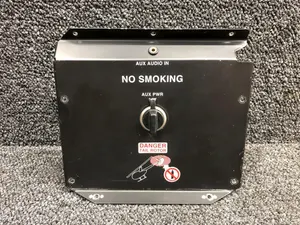



Parts listed for sale by vetted eBay sellers — confirmed on eBay at checkout.