Key facts
- Registration
- N7470
- Year built
- 1969
- Make and model
- Boeing 747
- Serial number
- 20235
- Airframe hours
- Not published
- Location
- Seattle, USA
- Register status
- Not published
5 of 7 fields published · Sources: listings on museumofflight · Last checked 2026-11-24
Description
The seller's own words, from the listing. Not checked by Sprinkle.
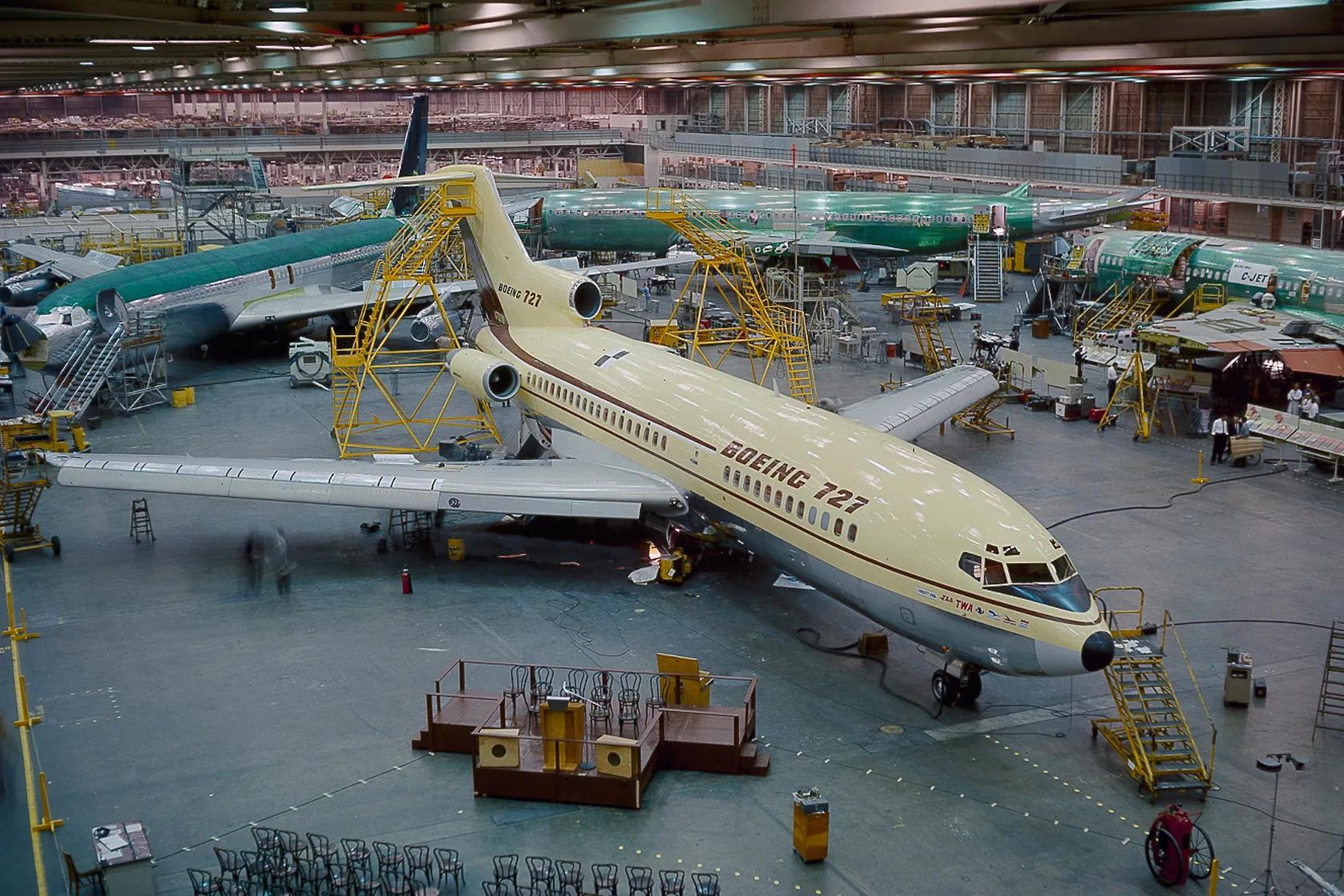
The growing worldwide demand for air travel during the 1960s led Boeing to launch the 747, the first wide-body jet. Developing what was then the world's largest passenger aircraft was a formidable undertaking, requiring the company to risk much of its net worth. But the gamble paid off – over 1,500 units have been produced.
With its massive size and signature upper deck "hump," the iconic 747 is one the most recognizable aircraft in the world. It triggered a revolution in air travel and represents a significant milestone in the evolution of aviation design. The leviathan 747 required an all-new factory, which was built almost simultaneously with the first 747 at Paine Field in Everett, Washington.
Show the full descriptionShow less
First flight occurred on February 9, 1969, followed by an extensive test program. The first 747 engine, the Pratt & Whitney JT9D, was an equally challenging engineering effort; it experienced numerous problems in initial service. The 747 quickly became a mainstay of the world’s international airlines.
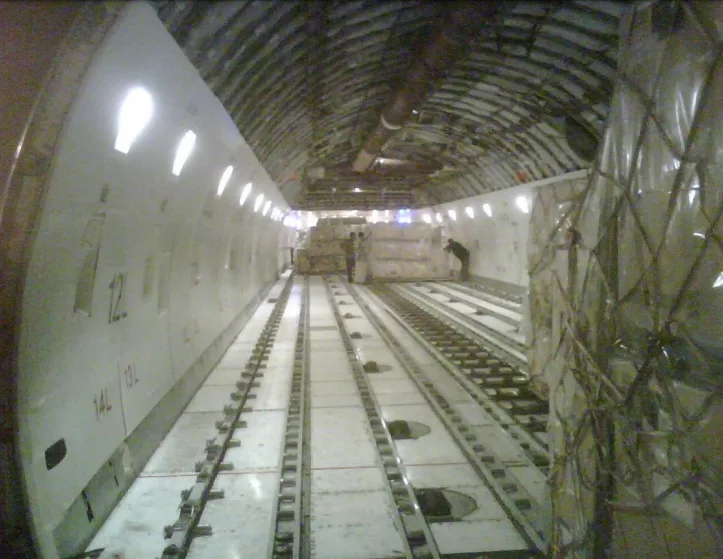
Continued development in the ensuing years has increased payload, range, and capability with multiple 747 variants. A freighter model, with a large nose cargo door, allows outsized payloads to be carried. A "Combi" was soon offered to allow simultaneous carriage of passengers and cargo on the main deck.
A shortened version (747SP) debuted in 1976, capable of very long range flights. The 747-300 followed in 1982, with an extended upper deck. In 1989, a major upgrade was introduced in the form of the 747-400, with a modernized two-crew flight deck and improved performance.
The 747-8, with all-new wings and engines, entered service in 2011. The airplane proved to be highly flexible, performing many missions that were not part of its original design specifications. Two 747-100s were modified to become Shuttle Carrier Aircraft for the NASA Space Shuttle Program.
Several aircraft were produced to serve as U.S. Air Force "command post" platforms, designated E-3 and E-4. In 1990, two 747-200Bs were modified as VC-25As to serve as Air Force One, the U.S. Presidential aircraft. Other unique modifications include the enlarged "Dreamlifter" for 787 components, the YAL-1A Airborne Laser Testbed, and the Stratospheric Observatory for Infrared Astronomy (SOFIA).
The Museum's aircraft was the first 747 ever built, known as RA001. After 747 certification testing, the aircraft served for many years as a company testbed for technology development and new engine programs for other Boeing commercial jets, including the Pratt & Whitney PW4000 for the Boeing 777. Planning for eventual donation to the Museum began in the mid-1980s.
The aircraft's final flight occurred on April 6, 1995, when Boeing officially donated RA001 to the Museum after 5,300 flight hours. Still configured in its flight test configuration, it was extensively restored in 2013 and 2014.
Serial Number: 20235 Registration: N7470 Wingspan: 195.67ft Length: 231ft Height: 63ft Wing Area: 5 500.00ft² Empty Weight: 370,816lbs Gross Weight: 735,000lbs Cruise Speed: 640mph Power Plant: Four Pratt & Whitney JT9D, 43,500 lbs. thrust each Range: 6,000miles 360˚ Panoramas Cockpit Lounge Lower Bay Matterport 3D Tour Boeing 747 Matterport 3D Tour
Mentioned in the description
- Airframe total time
- 5,300 hr
- “after 5,300 flight hours”
Read from the seller's words above; each fact shows the words it came from. Not part of the listing's stated fields.
Full specifications
3 of 20 published: airframe, engines, propellers, equipment and inspections.
Show all specificationsHide specifications
Airframe
- Year built
- 1969
- Serial number
- 20235
- Total time airframe: the hours the aircraft itself has flown since it was built.
- Not published
- What the aircraft can carry: its maximum takeoff weight minus its empty weight. People, bags and fuel all come out of it.
- Not published
- Paint
- Not published
- Interior
- Not published
- The aircraft’s maintenance records. Missing logbooks usually lower what buyers will pay.
- Not published
- Damage history, as the seller states
- Not published
Engine
- Engine: total time
- Not published
- Since major overhaul: the hours an engine or propeller has run since it was last fully overhauled.
- Not published
- Time between overhauls: the engine maker’s recommended hours between major overhauls. A guideline for most private owners, not a legal limit.
- Not published
- A pay-by-the-hour plan that covers the cost of engine maintenance and overhaul. Enrollment can transfer to a buyer.
- Not published
Propeller
- Since major overhaul: the hours an engine or propeller has run since it was last fully overhauled.
- Not published
Equipment
- Avionics
- Not published
- Equipment that broadcasts the aircraft’s position to air traffic control and other aircraft. Required in most US controlled airspace since 2020.
- Not published
- Wi-Fi
- Not published
- Hangared
- Not published
- Seats
- 495
Inspections
- The inspection most US private aircraft need once within each 12 calendar months to stay airworthy.
- Not published
- Next inspection due
- Not published
As the listing states. Damage history is the seller's own declaration. NTSB reports, where Sprinkle can match them, are shown separately.
Also useful for this aircraft
The seller
Museum of Flight
The dealer advertising this aircraft. Their other aircraft are on their page.