Key facts
- Registration
- N13347
- Year built
- 1933
- Make and model
- Boeing 247
- Serial number
- 1729
- Airframe hours
- Not published
- Location
- Seattle, USA
- Register status
- Not published
5 of 7 fields published · Sources: listings on museumofflight · Last checked 2026-11-24
Description
The seller's own words, from the listing. Not checked by Sprinkle.
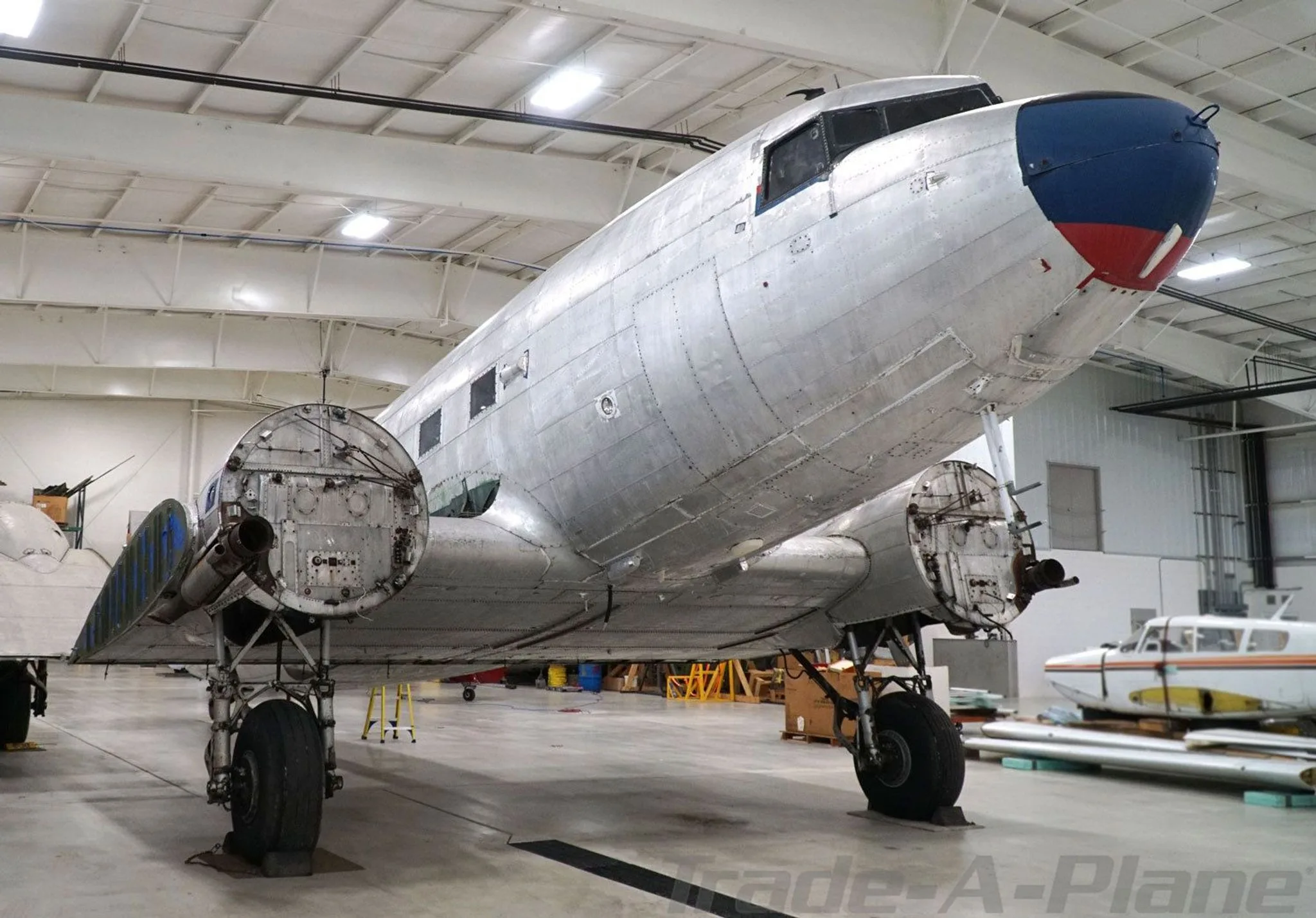
The Boeing 247 is considered to be the first modern airliner. Its sleek, low-wing, all-metal, retractable-gear, twin-engine design marked the beginning of a new era in air transport. It was comparatively fast, safe, and economical to operate, which allowed the 247 to outperform its predecessors -- most notably, the Boeing Model 80A-1 and Ford Tri-Motor.
The 247 incorporated several other technical innovations that set it ahead of the curve in terms of passenger comfort and ease of operation. The cabin was insulated to suppress noise and regulate temperature. The pneumatic wing de-icer boots allowed for in-flight deicing.
Show the full descriptionShow less
Trim tabs greatly reduced pilot workload. With these features, the 247 greatly outdistanced its competition in the burgeoning air transport market. A total of 75 Model 247s were built, with United Air Lines (UAL) securing exclusive rights to the first 60 units.
In response to UAL's cornering of the 247 market, rival TWA turned to Douglas Aircraft to request a new plane that could compete with, and possibly even outperform, the Model 247. The result of this challenge was the development of one of the most significant planes in aviation history, the Douglas DC-3. The Museum's Boeing 247 was delivered to Pacific Air Transport, a UAL company, on July 26, 1933.
It later flew with Pennsylvania Central Airlines, then with the Canadian Department of Munitions and Royal Canadian Air Force from 1940 to 1941. After serving with Maritime Central Airways in Canada and Columbia Airlines in the U.S., the aircraft was sold to Aerovias Occidentales, S.A. in Costa Rica, where a nose-over accident led to a two-year grounding.
The plane eventually returned to the United States in the 1950s, flying as a crop-duster and cloud-seeding machine under several owners. By the 1960s, it was again grounded, this time in Taft, California. Acquired by the Pacific Northwest Aviation Historical Foundation (the predecessor of The Museum of Flight), the plane was repaired and returned to its Seattle birthplace, where it flew at Northwest airshows in the late 1960s and early 1970s.
Grounded once again for a variety of issues, it was thoroughly restored in the early 1990s and maintained an airworthy condition until its final flight on April 26, 2016, from Paine Field in Everett to Boeing
Field. Serial Number: 1729 Registration: N13347 Wingspan: 74.00ft Length: 52ft Height: 12ft Wing Area: 836.13ft² Empty Weight: 9,144lbs Gross Weight: 13,650lbs Maximum Speed: 200mph Cruise Speed: 189mph Power Plant: Two Pratt & Whitney S1H1-G "Wasp" 550 horsepower engines Range: 745miles 360˚ Panoramas Cockpit Cabin Matterport 3D Tour Boeing 247D Matterport 3D Tour
Full specifications
3 of 20 published: airframe, engines, propellers, equipment and inspections.
Show all specificationsHide specifications
Airframe
- Year built
- 1933
- Serial number
- 1729
- Total time airframe: the hours the aircraft itself has flown since it was built.
- Not published
- What the aircraft can carry: its maximum takeoff weight minus its empty weight. People, bags and fuel all come out of it.
- Not published
- Paint
- Not published
- Interior
- Not published
- The aircraft’s maintenance records. Missing logbooks usually lower what buyers will pay.
- Not published
- Damage history, as the seller states
- Not published
Engine
- Engine: total time
- Not published
- Since major overhaul: the hours an engine or propeller has run since it was last fully overhauled.
- Not published
- Time between overhauls: the engine maker’s recommended hours between major overhauls. A guideline for most private owners, not a legal limit.
- Not published
- A pay-by-the-hour plan that covers the cost of engine maintenance and overhaul. Enrollment can transfer to a buyer.
- Not published
Propeller
- Since major overhaul: the hours an engine or propeller has run since it was last fully overhauled.
- Not published
Equipment
- Avionics
- Not published
- Equipment that broadcasts the aircraft’s position to air traffic control and other aircraft. Required in most US controlled airspace since 2020.
- Not published
- Wi-Fi
- Not published
- Hangared
- Not published
- Seats
- 13
Inspections
- The inspection most US private aircraft need once within each 12 calendar months to stay airworthy.
- Not published
- Next inspection due
- Not published
As the listing states. Damage history is the seller's own declaration. NTSB reports, where Sprinkle can match them, are shown separately.
Also useful for this aircraft
The seller
Museum of Flight
The dealer advertising this aircraft. Their other aircraft are on their page.