Key facts
- Registration
- N30RC
- Year built
- 1929
- Make and model
- Aeronca C-2
- Serial number
- 301-23
- Airframe hours
- Not published
- Location
- Seattle, USA
- Register status
- Not published
5 of 7 fields published · Sources: listings on museumofflight · Last checked 2026-11-24
Description
The seller's own words, from the listing. Not checked by Sprinkle.
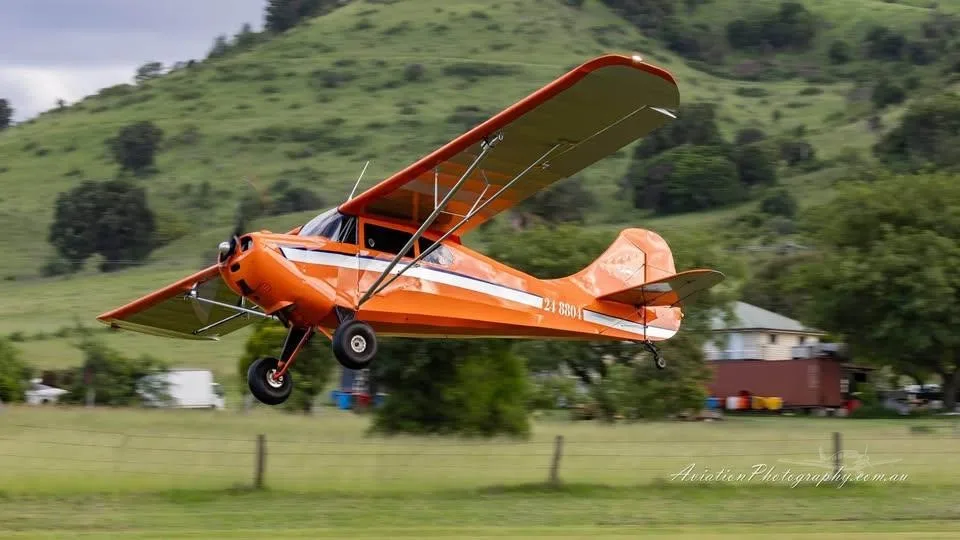
The Aeronca C-2 wasn't fast, big, or powerful, but it was one of the first American airplanes to be affordable and practical for the average person to own. Essentially a powered glider, it heralded the dawn of general aviation in the United States, paving the way for later types such as the Piper J-3 Cub. The pilot sat on a bare plywood seat with five instruments, a stick, and rudder pedals in front of him.
If the pilot wanted a heater or brakes, that cost extra. The little plane had odd, almost comical lines that earned it the nickname "The Flying Bathtub." Aeronca sold 164 C-2s in 1930 and 1931, in the depths of the Great Depression.
Show the full descriptionShow less
What became the C-2 was derived from the U.S. Army Air Service GL-2 glider designed by Jean Roche, a French-born engineer at McCook (later Wright) Field in Dayton, Ohio. Roche’s next design, this time with an engine, was built with the help of John Dohse and Harold Morehouse. In September 1925, both plane and inexperienced pilot Dohse made their first flights.
Dohse and Morehouse eventually left Dayton to pursue other interests (Dohse went on to work for Boeing in Seattle), and Roche was left to find a way to produce his successful little plane. In 1929, he sold his design to the Aeronautical Corporation of America ("Aeronca") of Cincinnati, Ohio, and after some refinement, it became the first of many Aeronca C-2s and follow-on designs. The airplane’s powerplant followed a circuitous route.
First, Roche installed a borrowed Henderson motorcycle engine, but it couldn't get the plane off the ground. Roche next turned to Harold Morehouse, who had designed a small engine to pump ballast air into a blimp. It was modified and installed for the airplane’s first flights.
When a crash destroyed that engine, another was fashioned by Roy Poole and Robert Galloway. For C-2 production, the Poole-Galloway engines were fabricated by the Govro-Nelson Company, assembled at Aeronca, and called Aeronca E-107s. The Museum's restored 1929 C-2 was owned by Robert Cansdale and donated in 1986. It has an Aeronca E-113 36-horsepower engine that was typically used to power heavier Aeronca C-3s.
Serial Number: 301-23 Registration: N30RC Wingspan: 36.00ft Length: 20ft Height: 8ft Wing Area: 142.00ft² Empty Weight: 398lbs Gross Weight: 672lbs Maximum Speed: 80mph Cruise Speed: 65mph Power Plant: One Aeronca E-107A, 26 h.p. engine (Currently equipped with an Aeronca E-113 ) Range: 240miles
Full specifications
3 of 20 published: airframe, engines, propellers, equipment and inspections.
Show all specificationsHide specifications
Airframe
- Year built
- 1929
- Serial number
- 301-23
- Total time airframe: the hours the aircraft itself has flown since it was built.
- Not published
- What the aircraft can carry: its maximum takeoff weight minus its empty weight. People, bags and fuel all come out of it.
- Not published
- Paint
- Not published
- Interior
- Not published
- The aircraft’s maintenance records. Missing logbooks usually lower what buyers will pay.
- Not published
- Damage history, as the seller states
- Not published
Engine
- Engine: total time
- Not published
- Since major overhaul: the hours an engine or propeller has run since it was last fully overhauled.
- Not published
- Time between overhauls: the engine maker’s recommended hours between major overhauls. A guideline for most private owners, not a legal limit.
- Not published
- A pay-by-the-hour plan that covers the cost of engine maintenance and overhaul. Enrollment can transfer to a buyer.
- Not published
Propeller
- Since major overhaul: the hours an engine or propeller has run since it was last fully overhauled.
- Not published
Equipment
- Avionics
- Not published
- Equipment that broadcasts the aircraft’s position to air traffic control and other aircraft. Required in most US controlled airspace since 2020.
- Not published
- Wi-Fi
- Not published
- Hangared
- Not published
- Seats
- 1
Inspections
- The inspection most US private aircraft need once within each 12 calendar months to stay airworthy.
- Not published
- Next inspection due
- Not published
As the listing states. Damage history is the seller's own declaration. NTSB reports, where Sprinkle can match them, are shown separately.
Also useful for this aircraft
The seller
Museum of Flight
The dealer advertising this aircraft. Their other aircraft are on their page.