
C152 Performance
Weight & Balance for the Cessna 152
PDF, 14 pages, 4.5 MB, from Sprinkle’s own files.
What it covers
This document provides weight and balance information specifically for the Cessna 152 aircraft. It includes data on the mass of various components such as the pilot, passengers, baggage, and fuel, along with their corresponding arm measurements and moments. The document is intended for pilots and aviation enthusiasts who need to ensure the aircraft is loaded within safe limits for flight. It also includes safety factors to consider when calculating weight and balance, ensuring that the aircraft remains within operational limits during flight.
Key points
- Maximum baggage weight for Baggage 1 is 120 lbs and for Baggage 2 is 40 lbs.
- Fuel weight is calculated at 6 lbs per US gallon.
- G-BOLV has a total weight of 1234 lbs with an arm of 31.49 inches.
- Safety factors of x 1.33 and x 1.43 should be applied to weight calculations.
- Always refer to the aircraft tech log for the latest weight and balance data.
Main sections
Weight & Balance Data
The document outlines the weight and balance data for the Cessna 152, including the basic empty weight and maximum allowable weights for passengers and baggage. It specifies the mass of the pilot, front passenger, and baggage, along with fuel calculations. For example, the maximum baggage weight is 120 lbs for Baggage 1 and 40 lbs for Baggage 2.
Aircraft Specific Weights
The document lists specific weights for different Cessna 152 aircraft, including G-BOLV, G-BYFA, and G-BGFX. For instance, G-BOLV has a mass of 1234 lbs, an arm of 31.49 inches, and a moment of 38860 in-lbs. These figures are current as of December 2011 and should be cross-referenced with the aircraft's technical log for the latest data.
Safety Factors
Safety factors are provided to ensure that the aircraft is loaded within safe operational limits. The document mentions safety factors of x 1.33 and x 1.43, which are critical for pilots to consider when calculating weight and balance.
Safety notes
- Ensure that the total weight does not exceed the maximum allowable limits for safe flight.
- Always verify the latest weight and balance data from the aircraft's technical log before flight.
The document’s text
Show the text read from the PDF
C152 Performance Safety Factor: x 1.33 Safety Factor: x 1.43 -- 1 of 14 -- Mass (Lbs) Arm Aft Datum (Inches) Moment (In-‐Lbs) Basic Empty Pilot 39.00 Front Passenger 39.00 Baggage 1 (Max 120 Lbs) 64.00 Baggage 2 (Max 40 Lbs) 84.00 Fuel (1 USG = 6 Lbs) 40.00 TOTAL C152 Weight & Balance Aircraft Mass (Lbs) Arm Aft Datum (Inches) Moment (In-‐Lbs) G-‐BOLV** 1234 31.49 38860 G-‐BYFA** 1237 31.55 39032 G-‐BGFX** 1211 29.50 35722 **Figures current December 2011. Refer to aircraft tech log for latest data.** -- 2 of 14 -- PA28-‐161 Cadet Performance -- 3 of 14 -- PA28-‐161 Cadet Performance -- 4 of 14 -- PA28-‐161 Cadet Performance -- 5 of 14 -- Mass (Lbs) Arm Aft Datum (Inches) Moment (In-‐Lbs) Basic Empty Pilot 80.50 Front Passenger 80.50 Rear Passengers 118.10 Baggage (Max 50 Lbs) 142.80 Fuel (1 USG = 6 Lbs) 95.00 TOTAL PA28-‐161 Cadet Weight & Balance Aircraft Mass (Lbs) Arm Aft Datum (Inches) Moment (In-‐Lbs) G-‐BPJS** 1502.5 85.16 127952.8 **Figures current May 2012. Refer to aircraft tech log for latest data.** -- 6 of 14 -- PA28-‐161 Performance Safety Factor: x 1.33 Safety Factor: x 1.33 -- 7 of 14 -- PA28-‐161 Performance Safety Factor: x 1.33 Safety Factor: x 1.33 -- 8 of 14 -- PA28-‐161 Performance Safety Factor: x 1.43 Safety Factor: x 1.43 -- 9 of 14 -- Mass (Lbs) Arm Aft Datum (Inches) Moment (In-‐Lbs) Basic Empty Pilot 80.50 Front Passenger 80.50 Rear Passengers 118.10 Baggage (Max 200 Lbs) 142.80 Fuel (1 USG = 6 Lbs) 95.00 TOTAL PA28-‐161 Weight & Balance Aircraft Mass (Lbs) Arm Aft Datum (Inches) Moment (In-‐Lbs) G-‐ELZY** 1541 84.86 130764 **Figures current December 2011. Refer to aircraft tech log for latest data.** -- 10 of 14 -- PA28-‐181 Performance Safety Factor: x 1.33 Safety Factor: x 1.33 -- 11 of 14 -- PA28-‐181 Performance Safety Factor: x 1.33 Safety Factor: x 1.33 -- 12 of 14 -- PA28-‐181 Performance Safety Factor: x 1.43 Safety Factor: x 1.43 -- 13 of 14 -- Mass (Lbs) Arm Aft Datum (Inches) Moment (In-‐Lbs) Basic Empty Pilot 80.50 Front Passenger 80.50 Rear Passengers 118.10 Baggage (Max 200 Lbs) 142.80 Fuel (1 USG = 6 Lbs) 95.00 TOTAL PA28-‐181 Weight & Balance Aircraft Mass (Lbs) Arm Aft Datum (Inches) Moment (In-‐Lbs) G-‐OODW** 1590.5 86.703 137901 **Figures current December 2011. Refer to aircraft tech log for latest data.** -- 14 of 14 --
Read from the PDF by machine, so tables and diagrams come out rough. The PDF is the document.
More Cessna 152 documents
All 50 →- Aircraft Weight & Balance Form OPF-006
This document is a Weight & Balance form specifically for the Cessna 152 aircraft. It provides essential information regarding the loading parameters, maximum gross weights, and standard passenger weights for both summer and winter seasons. The document outlines how to calculate the total weight of the aircraft, including empty weight, pilot and passenger weights, baggage, and fuel. It also includes a section on Vref calculations, which are crucial for determining the appropriate approach speed during landing. This form is intended for pilots and ground crew to ensure safe loading and compliance with weight limitations.
- Weight and Balance for Cessna 152
This document provides detailed instructions and tables for calculating the weight and balance of the Cessna 152, specifically for aircraft N49827. It includes the basic empty weight, maximum allowable weights for fuel, passengers, and baggage, as well as guidelines for ensuring the center of gravity (CofG) remains within safe limits. The document is intended for pilots and instructors to ensure safe loading and operation of the aircraft. It emphasizes the importance of accurate calculations to maintain compliance with weight limits and to ensure safe flight operations.
- Cessna 152 Weight & Balance Sheet
The Cessna 152 Weight & Balance Sheet provides essential information for pilots to ensure that the aircraft is loaded correctly and remains within its weight and center of gravity (CG) limits during flight operations. This document outlines the calculations necessary to determine the aircraft's CG at takeoff and landing, as well as the maximum allowable weights for various configurations. It is crucial for pilots and ground crew to understand these parameters to maintain safety and performance standards. The sheet includes specific weight values, fuel calculations, and a graphical representation of CG limits, which are vital for flight planning and operational compliance.
- Weight & Balance for Cessna 152
The Cessna Model 152 is a two-seat, single-engine aircraft that is widely used for flight training and personal flying. This section of the manual provides detailed procedures for establishing the aircraft's weight and balance, which are critical for safe operation. It includes guidelines for weighing the aircraft, calculating the center of gravity (C.G.), and understanding the implications of loading configurations. The manual emphasizes the importance of adhering to weight limits and C.G. specifications to ensure optimal performance and safety during flight operations.
- Cessna 152 Model Guide
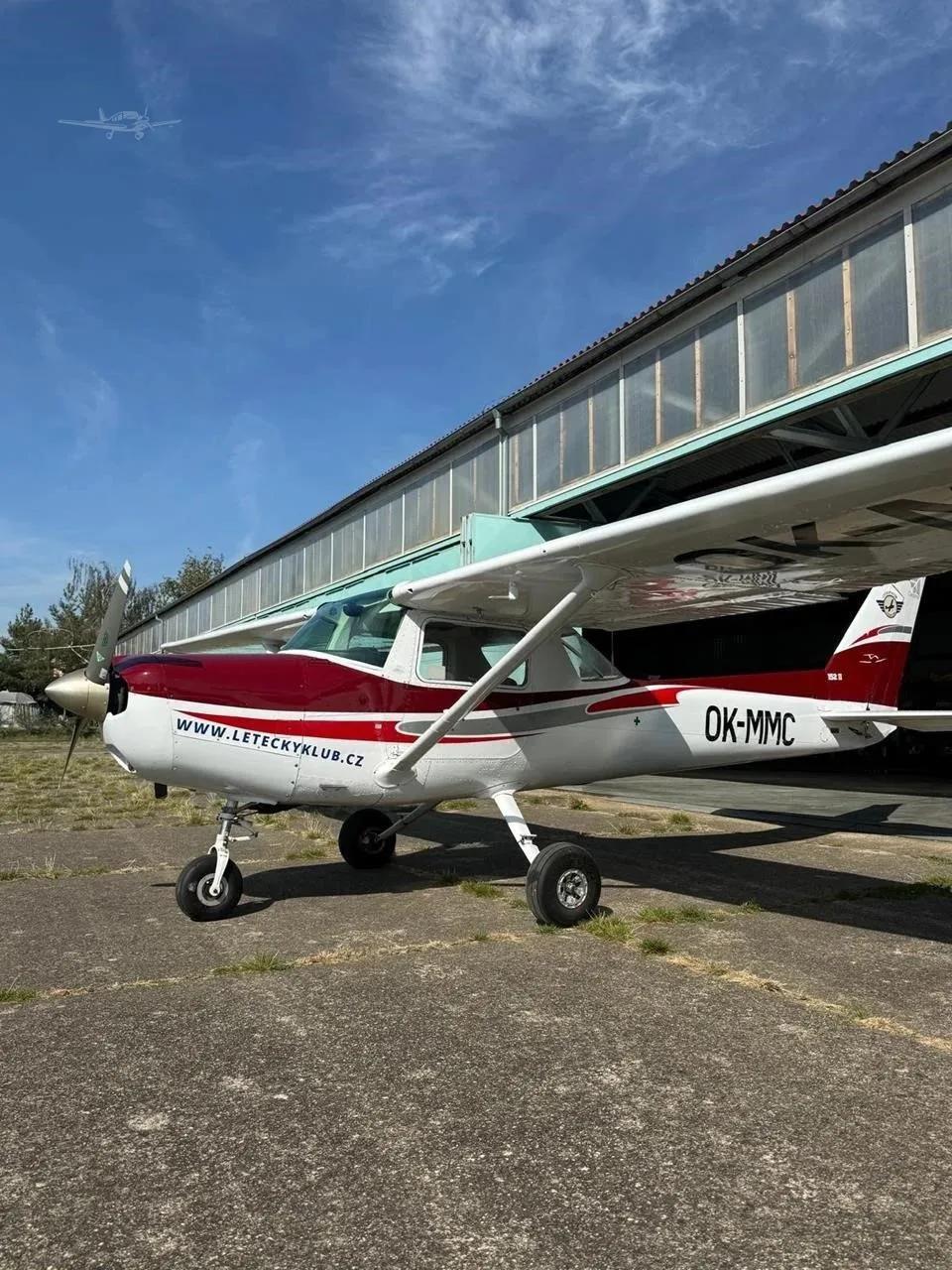
The Cessna 152 is a two-seat, single-engine piston trainer built from 1978 to 1985. It has fixed tricycle gear and a 110 hp Avco Lycoming engine (O-235-L2C) driving a fixed-pitch propeller. Maximum takeoff weight is 1670 lbs, and it cruises at about 107 knots. It suits a buyer who wants a simple, economical two-seater for training or local flying. It is not a heavy hauler. The Cessna 152 has known inspection items on the tail and flap actuators, so buy it with a records and airworthiness-directive review.
- Instructions for Continued Airworthiness
This document provides instructions for the continued airworthiness of the McFarlane Aviation PMA replacement vertical fin fittings (P/N MC0431148-1) that are eligible for installation on Cessna 150 and 152 aircraft. It details the installation, removal, and replacement procedures for the vertical fin fittings, which are critical components that attach to the vertical and horizontal stabilizers. The document emphasizes the importance of proper installation by qualified personnel and outlines the necessary tools and procedures to ensure safety and compliance with FAA regulations. It also references relevant Cessna service manuals for additional operational control and maintenance guidance.
- Cessna 152 Checklist
The Cessna 152 is a two-seat, single-engine aircraft that is widely used for flight training and personal flying. Known for its reliability and ease of handling, the Cessna 152 features a high-wing design and a tricycle landing gear configuration. This checklist provides a comprehensive preflight and operational guide for pilots to ensure safety and compliance before and during flight operations. It covers critical areas such as interior and exterior checks, engine start procedures, and emergency protocols, making it an essential tool for pilots operating this aircraft model.
- Quick Reference Handbook Textron/cessna 152 II SP-WBL
This Quick Reference Handbook is designed specifically for the Textron/Cessna 152 II, providing essential information for flight training. It includes operational speeds, performance data, and checklists tailored for the Cessna 152 II model. The handbook is intended for use by pilots and flight training personnel, ensuring that critical procedures and performance metrics are easily accessible during flight operations. The document emphasizes safety and operational efficiency, with detailed sections on normal and emergency procedures, performance limitations, and preflight checks.
Cessna 152 for sale now
View all 27 for sale →Aircraft that this weight & balance covers, listed on the sites Sprinkle reads. Asking prices, not sales. Cessna 152 asking prices by year built.


Also useful for the Cessna 152
From Sprinkle’s library of aircraft documents. PDFs open from Sprinkle’s own files. Read Aug 7, 2026.
Want this document taken down? Request removal