
Type Acceptance Report TAR 99/11 — Cessna 180 Series
Other Documents for the Cessna 180
PDF, 13 pages, 53 KB, from Sprinkle’s own files.
What it covers
This Type Acceptance Report provides an overview of the Cessna 180 Series aircraft, detailing its certification status in New Zealand. It confirms that the Cessna 180 and its variants have received type acceptance based on validation of the FAA Type Certificate number 5A6. The report outlines the aircraft's compliance with New Zealand operational rules and the necessary requirements for obtaining an Airworthiness Certificate. It serves as a reference for aviation authorities, aircraft operators, and maintenance personnel regarding the certification and operational standards applicable to the Cessna 180 Series.
Key points
- Maximum Certified Takeoff Weight (MCTOW) for Model 180: 2550 lb (1156 kg); for Model 180B-F: 2650 lb (1202 kg); for Model 180K: 2950 lb (1338 kg).
- Engine options include Continental O-470-A, O-470-J for Model 180; O-470-K for Models 180-180B; O-470-L, O-470-R for Models 180C-180F; O-470-U for Model 180K.
- The Cessna 180 Series was produced from 1953 to 1981, with various model updates and improvements over the years.
- Type Certificate number 5A6 issued by the FAA covers all models of the Cessna 180 Series.
- The report confirms that no special requirements for import into New Zealand are necessary for the Cessna 180 Series.
Main sections
Executive Summary
The Cessna Model 180 Series has been granted New Zealand Type Acceptance based on FAA Type Certificate number 5A6. This acceptance allows for the issuance of an Airworthiness Certificate in the Standard Category, provided all operational requirements are met. The report is updated only when a revision application is received.
Aircraft Certification Details
The Cessna 180 Series includes models 180, 180A, 180B, 180C, 180D, 180E, 180F, 180G, 180H, 180J, and 180K. The Maximum Certified Takeoff Weight (MCTOW) varies from 2550 lb (1156 kg) for the Model 180 to 2950 lb (1338 kg) for the Model 180K. The aircraft is powered by various Continental O-470 engines depending on the model.
NZCAR §21.43 Data Requirements
The report outlines the compliance with NZCAR Part 21B requirements, including the necessary documentation for type acceptance. It details the airworthiness design standards and the environmental standards applicable to the Cessna 180K.
New Zealand Operational Rule Compliance
The report reviews compliance with New Zealand operational requirements, confirming that the Cessna 180 Series meets the necessary standards for airworthiness and operational safety.
The document’s text
Show the text read from the PDF
Aircraft Certification Unit Type Acceptance Report TAR 99/11 – Revision 2 Cessna 180 Series -- 1 of 13 -- -- 2 of 13 -- Type Acceptance Report Rev.2 : x April 2018 TAR 99/11 — Cessna 180 Series i TABLE OF CONTENTS EXECUTIVE SUMMARY 1 1. INTRODUCTION 1 2. AIRCRAFT CERTIFICATION DETAILS 2 3. APPLICATION DETAILS AND BACKGROUND INFORMATION 4 4. NZCAR §21.43 DATA REQUIREMENTS 5 5. NEW ZEALAND OPERATIONAL RULE COMPLIANCE 8 ATTACHMENTS 9 APPENDIX 1 9 -- 3 of 13 -- -- 4 of 13 -- Type Acceptance Report Rev.2 : 12 March 2019 TAR 99/11 — Cessna 180 Series 1 Executive Summary New Zealand Type Acceptance has been granted to the Cessna Model 180 Series based on validation of FAA Type Certificate number 5A6. There are no special requirements for import. All models listed under the FAA type certificate have been type accepted in New Zealand, which are now eligible for the issue of an Airworthiness Certificate in the Standard Category in accordance with NZCAR §21.177, subject to any outstanding New Zealand operational requirements being met. (See Section 5 of this report for a review of compliance of the basic type design with the operating Rules.) NOTE: The information in this report was correct as at the date of issue. The report is generally only updated when an application is received to revise the Type Acceptance Certificate. For details on the current type certificate holder and any specific technical data, refer to the latest revision of the State-of-Design Type Certificate Data Sheet referenced herein. 1. Introduction This report details the basis on which Type Acceptance Certificate No.18/21B/12 was granted in the standard category in accordance with NZCAR Part 21 Subpart B. Specifically, the report aims to: (a) Specify the foreign type certificate and associated airworthiness design standard used for type acceptance of the model(s) in New Zealand; and (b) Identify any special conditions for import applicable to any model(s) covered by the Type Acceptance Certificate; and (c) Identify any additional requirements which must be complied with prior to the issue of a NZ Airworthiness Certificate or for any subsequent operations. The report covers all models included on the State-of-Design type certificate which have been granted type acceptance in New Zealand. Appendix 1 details which models have been type accepted in accordance with the provisions of CAR Part 21B and which were certificated prior to that under NZCAR Section B.9 and are now type accepted under the transitional arrangements of Part 21 Appendix A(c). -- 5 of 13 -- Type Acceptance Report TAR 99/11 — Cessna 180 Series Rev.2 : 12 March 2019 2 2. Aircraft Certification Details (a) State-of-Design Type and Production Certificates: Manufacturer: Cessna Aircraft Company Type Certificate Holder: Textron Aviation Inc. (since July 29, 2015) Type Certificate: 5A6 Issued by: Federal Aviation Administration Production Approval: Delegation Option Manufacturer No. CE-1 FAA Production Certificate No.4 (b) Models Covered by the Part 21B Type Acceptance Certificate: (i) Model: 180, 180A, 180B, 180C, 180D, 180E, 180F MCTOW: 2550 lb. [1156 kg] – Model 180 2650 lb. (1202 kg) – Model 180B through 180F Max. No. of Seats: 4 Noise Standard: Not Applicable Engine: Continental O-470-A or O-470-J – Model 180 Continental O-470-K – Model 180 through 180B Continental O-470-L or O-470-R – 180C through 180F Type Certificate: E-273 Issued by: Federal Aviation Administration Propeller: Hartzell HC82XF-x/8x33 Type Certificate: P-878 Issued by: Federal Aviation Administration Hartzell HCA2XF-1 or BHCA2XF-x/8x33 Type Certificate: P-908 Issued by: Federal Aviation Administration McCauley 2A36C/90M-x Type Certificate: P-880 Issued by: Federal Aviation Administration McCauley 2A34C or 2A34C66/90A(T)-x Type Certificate: P3EA Issued by: Federal Aviation Administration McCauley 2A34C203/90DCA-x Type Certificate: P3EA Issued by: Federal Aviation Administration -- 6 of 13 -- Type Acceptance Report Rev.2 : 12 March 2019 TAR 99/11 — Cessna 180 Series 3 (ii) Models: 180G, 180H, 180J, 180K MCTOW: 2800 lb. (1270 kg) Max. No. of Seats: 6 Noise Standard: FAR Part 36 (Model 180K) Engine: Continental O-470-L or O-470-R – Model 180G and 180H Continental O-470-R or O-470-S – Model 180J Continental O-470-U – Model 180K Type Certificate: E-273 Issued by: Federal Aviation Administration Propeller: McCauley 2A36C/90M-x – Model 180G and 180H Type Certificate: P-880 Issued by: Federal Aviation Administration McCauley 2A34C/90A-x or 2A34C66/90AT-x McCauley 2A34C201/90DA-x or 2A34C203/90DCA-x Type Certificate: P3EA Issued by: Federal Aviation Administration McCauley 2A34C204/90DCB-x – Model 180K Type Certificate: P3EA Issued by: Federal Aviation Administration NOTES: 1. Refer to FAA TCDS 5A6 for specific applicability of engine and propeller combinations to individual aircraft models. 2. Refer to Advisory Circular 21-1 Appendix 2 for the New Zealand type acceptance status of any engines and propellers listed above. -- 7 of 13 -- Type Acceptance Report TAR 99/11 — Cessna 180 Series Rev.2 : 12 March 2019 4 3. Application Details and Background Information There have been many examples of the Cessna 180 in New Zealand prior to 1995 when CAR Part 21 was introduced, and those particular model years or serial number ranges were therefore deemed to have a type acceptance certificate under the transitional arrangements of Part 21 Appendix A(c). The first application for New Zealand type acceptance under Part 21B was for the Model 180E, from the aircraft importer, Mr Kim Christophers dated 15 September 1998. The first-of-type example was ZK-TUA serial number 51144. The Cessna 180 series is a single-engine high-wing tailwheel all-metal utility monoplane designed as a larger and heavier companion to the earlier Cessna 170. It first flew in 1952 and was in production between 1953 and 1981. Type Acceptance Certificate No.99/11 was granted on 21 September 1998 to the Cessna 180E based on validation of FAA Type Certificate 5A6. Specific applicability is limited to the coverage provided by the operating documentation supplied. There are no special requirements for import into New Zealand. This report was raised to Revision 1 under CAA Work Request 12/21B/22 to include the 1978 180K model, and the opportunity was also taken to update to the latest format. The application was from Sunair Aviation Ltd dated 25 May 2012. The first-of-type example was ZK-DKP serial number 18052966, and type acceptance was granted on 4 July 2012. This report was raised to Revision 2 to add all the other variants and model years of the 180 Series not previously included in the existing type acceptance. This was at the request of the type certificate holder, who has provided access to all technical publications. The Cessna Model 180 was developed as a high-performance version of the 170 with six- cylinder engine and increased size vertical and horizontal tails. The 1952 prototype was a modified 170B, with a new engine, a rectangular fin with a dorsal fairing, and reshaped side windows. Other changes included improvements to the steering, cowling, optional wheel fairings, and a new wing tip design. The usual Cessna annual Model changes followed. A revised instrument panel was adopted for the 1959 180B. The 180E is the 1961 model 180 with minor changes from the previous 180D. These were mostly cosmetic but included dual-outlet ports in the fuel tanks and optional 84-gallon capacity tanks. The 1964 180G and on used the Model 185 fuselage, wings, landing gear and utility seat to offer 6-place seating with an additional cabin window on each side. The camber-lift wing with bonded leading edges was introduced on the 1973 180J. The 180K, the last production version, is largely similar to preceding models but introduced the O-470-U engine (no power increase) and was the first model certificated against noise requirements. The first example of the Cessna Model 180 in New Zealand was serial number 30537, which was registered ZK-AZZ as one of a batch of six in August 1953. -- 8 of 13 -- Type Acceptance Report Rev.2 : 12 March 2019 TAR 99/11 — Cessna 180 Series 5 4. NZCAR §21.43 Data Requirements The type data requirements of NZCAR Part 21B Para §21.43 have been satisfied by supply of the following documents: (1) State-of-Design Type certificate: FAA Type Certificate Number 5A6 FAA Type Certificate Data Sheet No. 5A6 at Revision 68 dated Sept. 11, 2015 – Model 180 approved December 23, 1952 – Model 180A approved December 17, 1956 – Model 180B approved August 22, 1958 – Model 180C approved July 8, 1959 – Model 180D approved June 14, 1960 – Model 180E approved September 21, 1961 – Model 180F approved June 25, 1962 – Model 180G approved July 19, 1963 – Model 180H approved June 17, 1964 – Model 180J approved October 13, 1972 – Model 180K approved August 19, 1976 (2) Airworthiness design requirements: (i) Airworthiness Design Standards: The certification basis of the Model 180 Series up to the Model 180B is Part 3 of the Civil Air Regulations dated November 1, 1949, as amended by 3-1 through 3-8, except paragraphs §3.265 and §3.668 of 3-7. For the Models 180C through 180H this was updated to CAR 3 at Amendment 3-12, except again paragraphs §3.265 of 3-7 and §3.668 of 3-3. For the Models 180J and 180K CAR 3 subpart B was at Amendment 3-5. For the 1979 Model 180K and on FAR 23 paragraph §23.1559 effective March 1, 1978 was added. This is an acceptable certification basis in accordance with NZCAR Part 21B Para §21.41 because CAR 3 was the predecessor of FAR 23, which is the basic standard for Normal Category aircraft called up under CAR Part 21 Appendix C. There are no non-compliances and no additional special conditions have been prescribed by the Director under §21.23. (ii) Special Conditions: Nil (iii) Equivalent Level of Safety Findings: 1976 180J and 180K: CAR 3.757 Airspeed Indicator; CAR 3.778(a) Operating Limitations – The use of indicated instead of calibrated airspeed was accepted provided the approved calibration data given in the POH is available to the pilot. ASI calibration data must be predicated on flight test. (iv) Airworthiness Limitations: See the Aircraft Maintenance Manual. -- 9 of 13 -- Type Acceptance Report TAR 99/11 — Cessna 180 Series Rev.2 : 12 March 2019 6 (3) Aircraft Noise and Engine Emission Standards: (i) Environmental Standard: The Model 180K has been certificated for noise under FAR Part 36 including Amendments 36-1 through 36-6. (ii) Compliance Listing: See Advisory Circular 36-1H Appendix 7 and Flight Manual (Section 4). Model: MTOW: Engine: Propeller: RPM: Noise Levels MdbA CdbA 180K 2950 O-470-U C2A34C204 2400 73.0 70.0 (4) Certification Compliance Listing: Cessna Report No. 700 – Type Record for: Model 180 Cessna Report No. 722: Weight & Balance (Models 180, Landplane & Seaplane) Cessna Report No. 723: Flutter Survey Report S-107: Investigation of 3/4" Spring for Australian Agricultural Model 180 Report No. 754: Take-Off, Landing and Level Flight Performance (180 Seaplane) Report 755: Take-Off, Landing and Level Flight Performance (Model 180) Cessna 180B – Type Record Cessna Report No. 702: Type Record – Fuselage Analysis (Cessna 180C) Cessna DM 180D-0: Type Inspection Report Model 180D Report No. S-180E-33: Structures Substantiation Summary (Model 180E) Report No. S-180G-0: Basic Data (Model 180G) Report No: S-180G-33: Structures Substantiation Summary (Model 180G) Cessna Report No: S-180H-33: Structures Substantiation Summary (Model 180H) Report No. S-180J-33: Substantiation, Critical Loads, Structural Materials Summary, Model 180J Report No. DM-180J-0: Certification of the 1975 Model Changes (Model 180J) (5) Flight Manual: CAA AIR Cessna Number: Publication: Title: AIR 3068 P131-13 Model 180 (1953-1954) Owner's Manual AIR 3069 P132-13 Model 180 (1955) Owner's Manual AIR 3070 P133-13 Model 180 (1956) Owner's Manual AIR 2991 P136-13 Model 180A (1957-1958) Owner's Manual AIR 3037 P170-13 Model 180B (1959) Owner's Manual AIR 3071 P198-13 Model 180C (1960) Owner's Manual AIR 3039 P231-13 Model 180D (1961) Owner's Manual AIR 2634 D127-13 Model 180E (1962) Owner's Manual AIR 3705 D158-13 Model 180F (1963) Owner's Manual AIR 3706 D210-13 Model 180G (1964) Owner's Manual AIR 3036 D264-13 Model 180H (1965) Owner's Manual AIR 3707 D335-13 Model 180H (1966) Owner's Manual AIR 3049 D413-13 Model 180H (1967) Owner's Manual AIR 3048 D521-13 Model 180H (1968) Owner's Manual AIR 3708 D692-13 Model 180H (1969) Owner's Manual -- 10 of 13 -- Type Acceptance Report Rev.2 : 12 March 2019 TAR 99/11 — Cessna 180 Series 7 AIR 3709 D765-13 Model 180H (1970) Owner's Manual AIR 3710 D946-13 Model 180H (1971-1972) Owner's Manual AIR 2760 D1000-13 Model 180J (1973) Owner's Manual AIR 2761 D1020-13 Model 180J (1974) Owner's Manual AIR 2764 D1040-13 Model 180J (1975) Owner's Manual AIR 2002 D1061-13 Model 180J (1976) Pilot's Operating Handbook AIR 2629 D1086-13 Model 180K (1977) Pilot's Operating Handbook AIR 3221 D1113-13 Model 180K (1978) Pilot's Operating Handbook AIR 2092 D1140-13PH Model 180K (1979) Pilot's Operating Handbook AIR 3711 D1175-13PH Model 180K (1980) Pilot's Operating Handbook AIR 2509 D1195-13PH Model 180K (1981) Pilot's Operating Handbook (6) Operating Data for Aircraft, Engine and Propeller: (i) Maintenance Manual: Cessna 100 Series (1953-1962) Service Manual – Publication D138-13 Cessna 100 Series (1963-1968) Service Manual – Publication D637-13 Cessna 180/185 (1969-1980) Service Manual – Publication D2000-13 Cessna 180/185 (1981-1985) Service Manual – Publication D2067-13 (ii) Current service Information: Cessna Service Bulletins (iii) Illustrated Parts Catalogue: Cessna 180 (1953-62) and 182 (1956-61) Parts Catalog – Publication P259-12 Cessna 180/185 (1961-1973) Parts Catalog – Publication P527-12 Cessna 180/185 (1974-1985) Parts Catalog – Publication P699-12 (7) Agreement from manufacturer to supply updates of data in (5) and (6): Textron Aviation Publications are now available through the Textron Aviation Technical Publications website at https://ww2.txtav.com (8) Other information: Equipment List, Model 180H Equipment List, Model 180J -- 11 of 13 -- Type Acceptance Report TAR 99/11 — Cessna 180 Series Rev.2 : 12 March 2019 8 5. New Zealand Operational Rule Compliance Compliance with the retrospective airworthiness requirements of NZCAR Part 26 is a prerequisite for the grant of a type acceptance certificate. Civil Aviation Rule Part 26 Subpart B – Additional Airworthiness Requirements Appendix B - All Aircraft PARA: REQUIREMENT: MEANS OF COMPLIANCE: B.1 Marking of Doors and Emergency Exits To be determined on an individual aircraft basis B.2 Crew Protection Requirements – CAM 8 Appdx. B # .35 Not Applicable – Agricultural Aircraft only Compliance with the following additional NZ operating requirements has been reviewed and were found to be covered by either the original certification requirements or the basic build standard of the aircraft, except as noted: Civil Aviation Rule Part 91 Subpart F – Instrument and Equipment Requirements PARA: REQUIREMENT: MEANS OF COMPLIANCE: 91.505 Seating and Restraints – Safety belt/Shoulder Harness CAR §3.715 91.507 Pax Information Signs – Smoking, safety belts fastened Not Applicable – Less than 10 passenger seats 91.509 Min. VFR (1) ASI (2) Machmeter (3) Altimeter (4) Magnetic Compass (5) Fuel Contents (6) Engine RPM (7) Oil Pressure CAR §3.655(a)(1) Not Applicable CAR §3.655(a)(2) CAR §3.655(a)(3) CAR §3.672 CAR §3.655(b)(1)(iv) CAR §3.655(b)(1)(ii) (8) Coolant Temp (9) Oil Temperature (10) Manifold Pressure (11) Cylinder Head Temp. (12) Flap Position (13) U/c Position (14) Ammeter/Voltmeter N/A – Air cooled CAR §3.655(b)(1)(iii) N/A – Fixed-Pitch N/A – less than 250 hp CAR §3.338 N/A – Fixed undercarriage CAR §3.681 91.511 Night VFR Instruments and Equipment Operational requirement – Compliance as applicable 91.513 VFR Communication Equipment Operational requirement – Compliance as applicable 91.517 IFR Instruments and Equipment Operational requirement – Compliance as applicable 91.519 IFR Communication and Navigation Equipment Operational requirement – Compliance as applicable 91.523 Emergency Equipment: (a) More Than 9 pax – First Aid Kits per Table 7 – Fire Extinguishers per Table 8 (b) More than 20 pax – Axe readily accessible to crew (c) More than 61 pax – Portable Megaphones per Table 9 Not Applicable – Less than 10 passenger seats Not Applicable – Less than 10 passenger seats Not Applicable – Less than 20 passenger seats Not Applicable – Less than 61 passenger seats 91.529 ELT – TSO C126 406 MHz after 22/11/2007 Operational requirement – Compliance as applicable 91.531 Oxygen Indicators – Volume/Pressure/Delivery Operational requirement – Compliance as applicable 91.533 Oxygen for non-Pressurised Aircraft Not fitted as standard 91.541 SSR Transponder and Altitude Reporting Equipment Operational requirement – Compliance as applicable 91.543 Altitude Alerting Device – Turbojet or Turbofan Not Applicable – Not turbo jet or turbofan powered 91.545 Assigned Altitude Indicator Operational requirement – Compliance as applicable A.15 ELT Installation Requirements To be determined on an individual aircraft basis Civil Aviation Rule Part 135 Subpart F – Instrument and Equipment Requirements PARA: REQUIREMENT: MEANS OF COMPLIANCE: 135.355 Seating / Restraints – Shoulder harness flight-crew seats Operational requirement – Compliance as applicable 135.357 Additional Instruments (Powerplant and Propeller) Has all instruments required under FAR §23.1305 135.359 Night Flight Landing light, Pax compartment Operational requirement – Compliance as applicable 135.361 IFR Operations Speed, Alt, spare bulbs/fuses Operational requirement – Compliance as applicable 135.363 Emergency Equipment (Part 91.523 (a) and (b)) Operational requirement – Compliance as applicable 135.367 Cockpit Voice Recorder N/A – Only for 2-crew helicopters with more than 10 pax 135.369 Flight Data Recorder Not Applicable – Less than 10 passenger seats 135.371 Additional Attitude Indicator Not Applicable – Not turbo jet or turbofan powered -- 12 of 13 -- Type Acceptance Report Rev.2 : 12 March 2019 TAR 99/11 — Cessna 180 Series 9 NOTES: 1. A Design Rule reference in the Means of Compliance column indicates the Design Rule was directly equivalent to the CAR requirement, and compliance is achieved for the basic aircraft type design by certification against the original Design Rule. 2. The CAR Compliance Tables above were correct at the time of issue of the Type Acceptance Report. The Rules may have changed since then and compliance should be checked individually. 3. Some means of compliance above are specific to a particular model/configuration. Compliance with Part 91/119 operating requirements should be checked in each case, particularly oxygen system capacity and emergency equipment. Attachments The following documents form attachments to this report: Three-view drawings Cessna Model 180 Skywagon Copy of FAA Type Certificate Data Sheet 5A6 Sign off …………………………………….. ……………………………............... David Gill Checked – Jason Ashworth Team Leader Airworthiness Team Leader Product Certification Appendix 1 List of Type Accepted Variants: Model: Applicant: CAA Work Request: Date Granted: 180, A, B, C, D, H, J AC 21-1.2/NZCAR Part 21 App. A(c) 180K (1977, 1979, 1981) AC 21-1.2/NZCAR Part 21 App. A(c) 180E K Christophers 99/21B/11 21 September 1998 180K (1978) Sunair Aviation Ltd 12/21B/22 9 July 2012 180F, 180G Textron Aviation Inc 18/21B/12 12 March 2019 -- 13 of 13 --
Read from the PDF by machine, so tables and diagrams come out rough. The PDF is the document.
More Cessna 180 documents
All 32 →- CESSNA 180 Model Guide
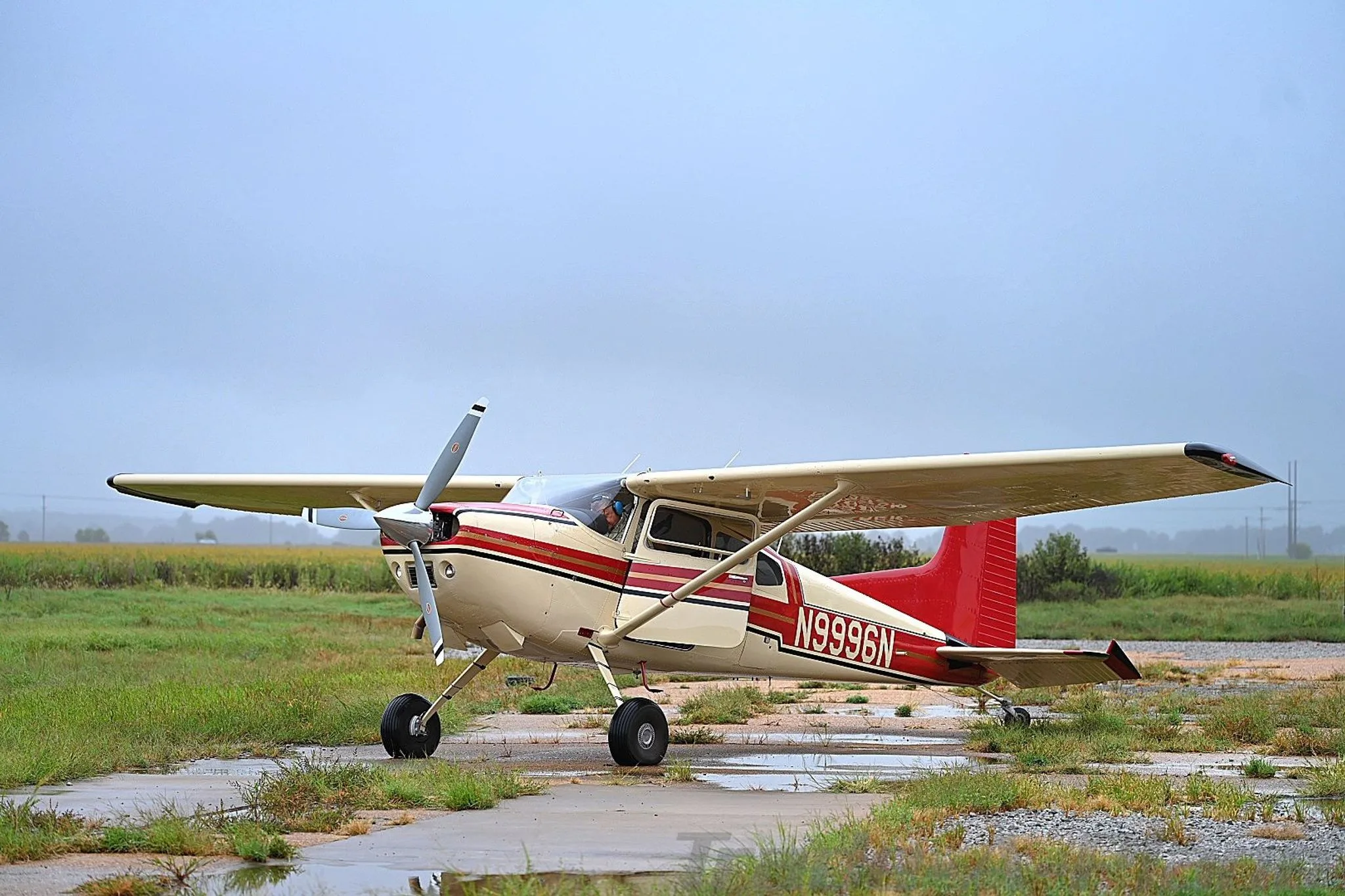
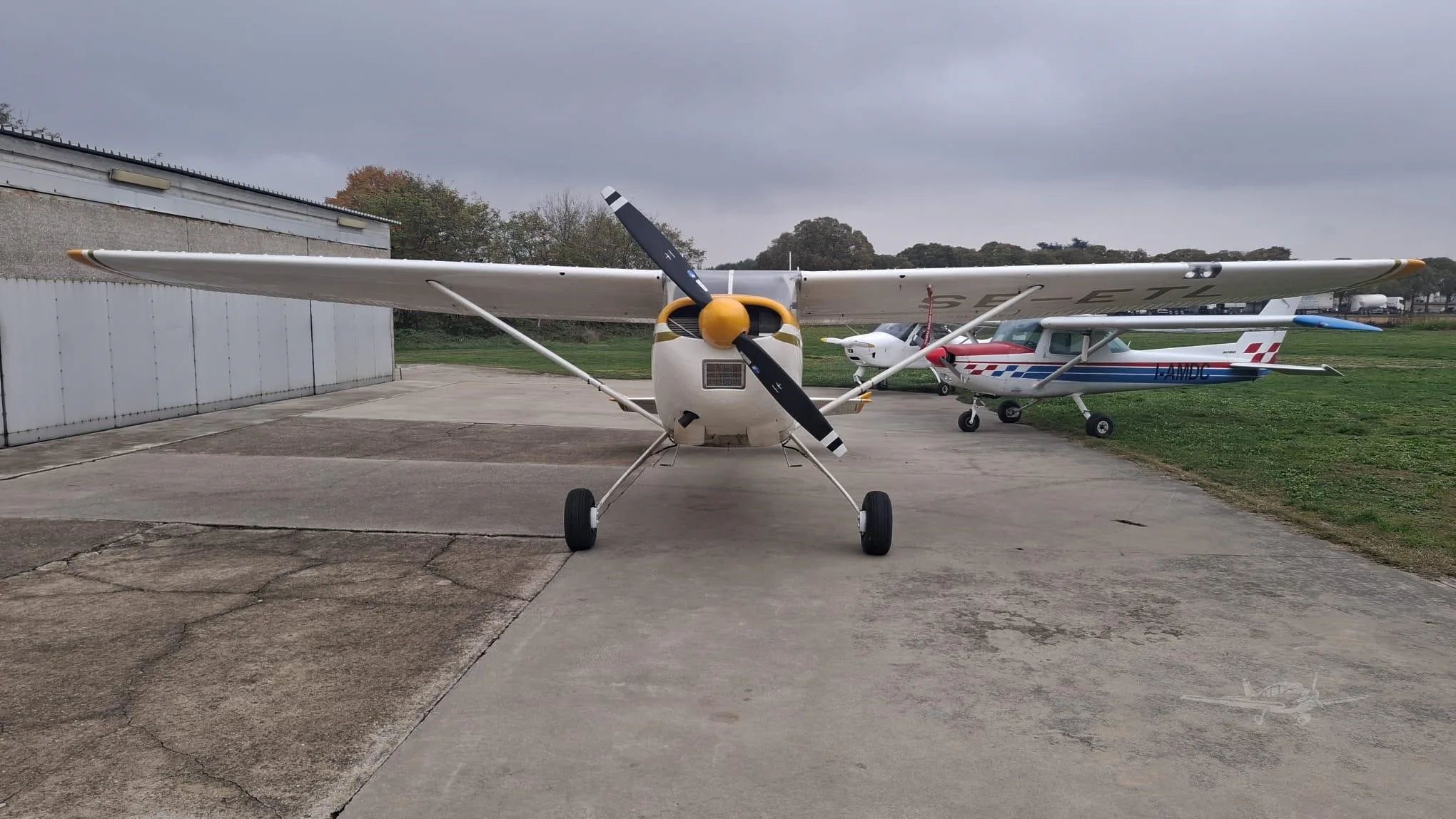
The CESSNA 180 (Skywagon) is a single-engine piston, tailwheel utility airplane. The figures below come mainly from the 1979 Model 180K handbook: a Continental O-470-U of 230 BHP, a constant-speed McCauley propeller, 84 gallons usable fuel and an 2800 lb takeoff weight. The type spans Models 180 through 180K. Early models seat 4 and the 180G through 180K seat 6. Weights, engines and equipment differ a lot between years. The library record for this model lists a 300 hp IO-520 and a 3525 lb maximum takeoff weight. That does not match the 180K handbook or the type data, so check any airplane against its own papers.
- Instructions For Continued Airworthiness - Hartzell Propeller
This document provides Instructions for Continued Airworthiness (ICA) for Cessna 180 and 180K aircraft, as well as Cessna 182 and F182 models, equipped with Continental O-470 engines and utilizing a Hartzell DHC-G2YF-1BFP/F8068+2 propeller. It outlines the maintenance requirements, airworthiness limitations, and propeller specifications necessary for compliance with FAA regulations. The ICA serves as a supplement to the existing Cessna service manuals, detailing specific procedures and time limits for maintenance checks. This document is essential for aircraft owners, maintenance personnel, and operators to ensure the continued safety and airworthiness of their aircraft.
- SEB-34-33-Stall-Warning-Horn-180-185-188.pdf
This service bulletin, SEB-34-33, addresses the replacement of the stall warning horn for various Cessna models, including the A185F. It provides detailed instructions for the removal of the original stall warning horn and the installation of a new stall warning horn and bracket. The bulletin is applicable to a range of Cessna models, specifically those listed in the Effectivity section. Compliance with this bulletin is optional and can be performed at the owner's discretion. The document emphasizes the importance of following the outlined procedures to ensure proper installation and functionality of the new components. It also includes information on parts availability and labor hours required for the modification.
- AD 2020-21-22 - McFarlane Aviation
This document is an Airworthiness Directive (AD) issued by the FAA for various Textron Aviation Inc. aircraft models, including the Cessna 185. The directive addresses safety concerns related to cracks in the tailcone and horizontal stabilizer attachment structure. It mandates inspections and potential repairs to ensure the structural integrity of these components, which are critical for safe flight. The AD is effective from December 7, 2020, and applies to all affected aircraft regardless of their service history. The document outlines compliance requirements, inspection intervals, and the necessary actions to rectify identified issues, ensuring continued airworthiness of the aircraft.
- Airworthiness Directive Schedule - Cessna 180 Series - CAA
This document is an Airworthiness Directive (AD) schedule for the Cessna 180 series aircraft, including models 180A through 180K. Issued on November 26, 2020, it outlines mandatory compliance requirements for various modifications, inspections, and maintenance tasks necessary to ensure the continued airworthiness of these aircraft. The ADs are applicable to specific serial number ranges and address issues such as structural integrity, fuel system safety, and electrical system modifications. This document serves as a critical reference for aircraft owners, operators, and maintenance personnel to maintain compliance with safety regulations and ensure the safety of flight operations.
- Cessna 172-180
This document is a checklist for the Cessna 172P aircraft, detailing preflight inspections, emergency procedures, and operational guidelines. It includes essential contact information, airspeeds for safe operation, and specific steps for engine start and takeoff.
- Cessna 180 Weight & Balance
This document provides installation instructions for the Airfilm Camera Systems Wing Strut Utility Mount (AFWM) designed for Cessna aircraft models 172, 180, 182, and 206. The AFWM allows for the attachment of external payloads, such as cameras and sensors, with a maximum weight of 50 lbs and a frontal area of 1.0 ft². The document details the installation process, including necessary tools, materials, and safety considerations. It also includes weight and balance information for proper aircraft loading after installation. The instructions are intended for aircraft mechanics and operators who need to install or remove the AFWM system on the specified Cessna models.
- Vizion Install Appendix E C180, C182-C182D, C185
This document serves as an installation guide for the Vizion PMA Autopilot system specifically for the Cessna 180, 182, 182D, and 185 aircraft models. It provides detailed instructions on wiring harness installation, servo installation, and autopilot settings. The guide is intended for use by aviation technicians and pilots who are familiar with aircraft systems and installation procedures. Key sections include materials lists, step-by-step installation instructions, and settings for the autopilot system to ensure proper functionality. Safety notes regarding compatibility with existing systems, such as the Robertson STOL system, are also included.
Cessna 180 for sale now
View all 23 for sale →Aircraft that this other documents covers, listed on the sites Sprinkle reads. Asking prices, not sales. Cessna 180 asking prices by year built.

Also useful for the Cessna 180
From Sprinkle’s library of aircraft documents. PDFs open from Sprinkle’s own files. Read Apr 15, 2026.
Want this document taken down? Request removal