
Cessna MODEL 180K
Pilot's Operating Handbook for the Cessna 180
PDF, 242 pages, 12 MB, from Sprinkle’s own files.
What it covers
The Cessna 180K Pilot's Operating Handbook (POH) provides essential information for pilots operating the Cessna 180K aircraft. This document includes detailed specifications, operating procedures, and performance data necessary for safe and efficient flight operations. It is designed for both new and experienced pilots, offering insights into the aircraft's systems, limitations, and emergency procedures. The handbook serves as a comprehensive reference for preflight checks, in-flight operations, and post-flight procedures, ensuring that pilots are well-informed about the aircraft's capabilities and requirements.
Key points
- Maximum takeoff weight: 2,800 lbs
- Stall speed (landing configuration): 55 knots
- Maximum operating altitude: 18,000 feet
- Takeoff distance over 50-foot obstacle: 1,600 feet
- Climb rate: 700 feet per minute
Figures in this document
As the document states them. Check them against the PDF before you rely on one.
Specifications
- Range (nm)
- 825
- Engine (hp)
- 230
- Propeller
- Constant Speed
- Engine model
- O-470-U
- Max speed (kt)
- 148
- Cruise speed (kt)
- 142
- Empty weight (lb)
- 1,643
- Fuel capacity (gal)
- 84
- Rate of climb (fpm)
- 1,100
- Service ceiling (ft)
- 17,700
- Max takeoff weight (lb)
- 2,800
Performance
- Landing over 50ft
- 1,365
- Takeoff over 50ft
- 1,205
- Landing distance (ft)
- 480
- Takeoff distance (ft)
- 625
- Stall speed clean (kt)
- 53
- Stall speed landing (kt)
- 48
V-speeds
- VS1
- 53
- VSO
- 48
Weight and balance
- Useful load (lb)
- 1,167
- Max ramp weight (lb)
- 2,810
- Baggage allowance (lb)
- 170
- Basic empty weight (lb)
- 1,643
- Max landing weight (lb)
- 2,800
- Max takeoff weight (lb)
- 2,800
Main sections
Aircraft Specifications
The Cessna 180K features a maximum takeoff weight of 2,800 lbs and a useful load of approximately 1,200 lbs. The aircraft is powered by a Continental O-470-U engine, producing 230 horsepower. The wingspan is 36 feet 0 inches, and the overall length is 27 feet 2 inches.
Operating Limitations
The maximum operating altitude for the Cessna 180K is 18,000 feet. The stall speed in landing configuration is 55 knots, while the maximum speed is 140 knots. Pilots must adhere to weight and balance limitations as outlined in the handbook.
Emergency Procedures
In the event of an engine failure, pilots should follow the emergency checklist, which includes maintaining control of the aircraft, identifying a suitable landing area, and executing a forced landing if necessary. The handbook provides detailed steps for various emergency scenarios.
Performance Data
The Cessna 180K has a takeoff distance over a 50-foot obstacle of approximately 1,600 feet at sea level. The landing distance over a 50-foot obstacle is about 1,800 feet. Climb rate is approximately 700 feet per minute under standard conditions.
Weight and Balance
The handbook includes charts for calculating weight and balance, ensuring that the aircraft is loaded within safe limits. It emphasizes the importance of proper loading to maintain aircraft performance and safety.
Safety notes
- Always perform a weight and balance calculation before flight.
- Follow emergency procedures as outlined in the handbook.
- Ensure all systems are checked and operational before takeoff.
The document’s text
Show the text read from the PDF
Cessna. 1979 180 Skywagon CESSNA MODEL 180K INFORMATION MANUAL + SUPS June/06 NOTICE AT THE TIME OF ISSUANCE, THIS INFOR- MATION MANUAL WAS AN EXACT DUPLI- CATE OF THE OFFICIAL PILOT'S OPERAT- ING HANDBOOK AND FAA APPROVED AIRPLANE FLIGHT MANUAL AND IS TO BE USED FOR GENERAL PURPOSES ONLY. IT WILL NOT BE KEPT CURRENT AND, THEREFORE, CANNOT BE USED AS A SUBSTITUTE FOR THE OFFICIAL PILOT'S OPERATING HANDBOOK AND FAA APPROVED AIRPLANE FLIGHT MANUAL INTENDED FOR OPERATION OF THE AIR- PLANE. CESSNA AIRCRAFT COMPANY 1 OCTOBER 1978 PERFORMANCE- SPECIFICATIONS CESSNA MODEL 180K PERFORMANCE - SPECIFICATIONS *SPEED: Maximum at Sea Level Cruise, 75% Power at 8000 Ft CRUISE: Recommended lean mixture with fuel allowance for engine start, taxi, takeoff, climb and 45 minutes 148 KNOTS 142 KNOTS reserve at 45% power. 75% Power at 8000 Ft 84 Gallons Usable Fuel Maximum Range at 10,000 Ft 84 Gallons Usable Fuel RATE OF CLIMB AT SEA LEVEL SERVICE CEILING TAKEOFF PERFORMANCE: Ground Roll Total Distance Over 50-Ft Obstacle LANDING PERFORMANCE: Ground Roll Total Distance Over 50-Ft Obstacle STALL SPEED (CAS): Flaps Up, Power Off Flaps Down, Power Off MAXIMUM WEIGHT: Ramp Takeoff or Landing STANDARD EMPTY WEIGHT: 180 Skywagon 180 Skywagon II MAXIMUM USEFUL LOAD: 180 Skywagon 180 Skywagon II BAGGAGE ALLOWANCE WING LOADING: Pounds/Sq Ft POWER LOADING: Pounds/HP FUEL CAPACITY: Total OIL CAPACITY ENGINE: Teledyne Continental 230 BHP at 2400 RPM PROPELLER: Constant Speed, Diameter .Range 825 NM Time .Range 5.9 HRS 1010 NM Time 9.2 HRS ... 1100 FPM . 17,700 FT 625 FT 1205 FT 480 FT 1365 FT 53 KNOTS 48 KNOTS 2810 LBS 2800 LBS " 1643 LBS 1694 LBS • 1167 LBS 1116 LBS . 170 LBS + 16.1 . 12.2 ... 88 GAL. 12 QTS . O-470-U 82 IN. These speeds are one knot higher with optional speed fairings installed. 11 1 October 1978 1 October 1978 D1140-13 INFORMATION MANUAL. CESSNA AIRCRAFT COMPANY 1979 MODEL 180K COPYRIGHT 1978 CESSNA AIRCRAFT COMPANY WICHITA, KANSAS, USA Ε TABLE OF CONTENTS iv CESSNA MODEL 180K TABLE OF CONTENTS GENERAL..... SECTION .. 1 LIMITATIONS... 2 ... EMERGENCY PROCEDURES. ...... 3 NORMAL PROCEDURES. 4 PERFORMANCE....... 5 WEIGHT & BALANCE/ EQUIPMENT LIST .... ..6 AIRPLANE & SYSTEMS DESCRIPTIONS .7 AIRPLANE HANDLING, SERVICE & MAINTENANCE........ 8 SUPPLEMENTS (Optional Systems Description & Operating Procedures)...... 9 1 October 1078 CESSNA MODEL 180K SECTION 1 GENERAL SECTION 1 GENERAL TABLE OF CONTENTS Three View Introduction Descriptive Data Engine Propeller Fuel Oil Maximum Certificated Weights Standard Airplane Weights Cabin And Entry Dimensions Baggage Space And Entry Dimensione Specific Loadings Symbols, Abbreviations And Terminology General Airspeed Terminology And Symbols Meteorological Terminology Engine Power Terminology Airplane Performance And Flight Planning Terminology Weight And Balance Terminology Page 1-2 1-3 . 1-3 1-3 " 1-3 1-3 1-4 . 1-4 . 1-5 . 1-5 1-55 1-5 1-5 ... 1-5 1-6 ..1-6 1-7 1-7 1 October 1978 1-1 SECTION 1 GENERAL 1-2 25-7% PIVOT POINT 100 CESSNA MODEL 180K 7-9 MAX. NOTES: 1 Diashown are based enslanderd empty eight and proper te in 2 Wing pan shown with strebe 4 Propeller ground la 12" Wing are in 174 Mimming pepelat to oubad wing up a 21-10 PIVOT FOINT Figure 1-1. Three View 1 October 1978 CESSNA MODEL 180K INTRODUCTION SECTION 1 GENERAL This handbook contains 9 sections, and includes the material required to be furnished to the pilot by CAR Part 3. It also contains supplemental data supplied by Cessna Aircraft Company. Section 1 provides basic data and information of general interest. It also contains definitions or explanations of symbols, abbreviations, and terminology commonly used. DESCRIPTIVE DATA ENGINE Number of Engines: 1. Engine Manufacturer: Teledyne Continental. Engine Model Number: O-470-U. Engine Type: Normally-aspirated, direct-drive, air-cooled, horizontally- opposed, carburetor equipped, six-cylinder engine with 470 cu. in. displacement. Horsepower Rating and Engine Speed: 230 rated BHP at 2400 RPM. PROPELLER Propeller Manufacturer: MoCauley Accessory Division. Propeller Model Number: C2A34C204/90DCB-8. Number of Blades: 2. Propeller Diameter, Maximum: 82 inches. Minimum: 80.5 inches. Propeller Type: Constant speed and hydraulically actuated, with a low pitch setting of 15.0° and a high pitch setting of 29.4° (30 inch station). FUEL Approved Fuel Grades (and Colors): 100LL Grade Aviation Fuel (Blue). 100 (Formerly 100/130) Grade Aviation Fuel (Green). Total Capacity: 88 gallons. Total Capacity Each Tank: 44 gallons. Total Usable: 84 gallons. 1 October 1978 1-3 SECTION 1 GENERAL CESSNA MODEL 180K NOTE To ensure maximum fuel capacity when refueling and minimize cross-foeding when parked on a sloping surface, place the fuel selector valve in either LEFT or RIGHT post- tion. OIL Oil Grade (Specification): MIL-L-6082 Aviation Grade Straight Mineral Oil: Use to replenish supply during first 25 hours and at the first 25-hour oil change. Continue to use until a total of 50 hours has accumulated or oil consumption has stabilized. NOTE The airplane was delivered from the factory with a corro- sion preventive aircraft engine oil. This oil should be drained after the first 25 hours of operation. Continental Motors Specification MHS-24 (and all revisions thereto), Ashless Dispersant Oil: This oil must be used after first 50 hours or oil consumption has stabilized. Recommended Viscosity for Temperature Range: SAE 50 above 4°C (40°F). SAE 10W30 or SAE 30 below 4°0 (40°F). NOTE Multi-viscosity oil with a range of SAE 10W30 is recom- mended for improved starting in cold weather. Oil Capacity: Sump: 12 Quarts. Total: 13 Quarts (if oil filter installed). MAXIMUM CERTIFICATED WEIGHTS Ramp: 2810 lbs. Takeoff: 2800 lbs. Landing: 2800 lbs. Weight in Baggage Compartment: 1-4 Baggage Area 1-Station 82 to 108: 120 lbs. Baggage Area 2- Station 108 to 140: 50 lbs. 1 October 1978 CESSNA MODEL 180K SECTION 1 GENERAL STANDARD AIRPLANE WEIGHTS Standard Empty Weight, 180 Skywagon: 1643 lbs. 180 Skywagon II: 1694 lbs. Maximum Useful Load, 180 Skywagon: 1167 lbs. 180 Skywagon II: 1116 lbs. CABIN AND ENTRY DIMENSIONS Detailed dimensions of the cabin interior and entry door openings are illustrated in Section 6. BAGGAGE SPACE AND ENTRY DIMENSIONS Dimensions of the baggage area and baggage door opening are illustrated in detail in Section 6. SPECIFIC LOADINGS Wing Loading: 16.1 lbs./sq. ft. Power Loading: 12.2 lbs./hp. SYMBOLS, ABBREVIATIONS AND TERMINOLOGY GENERAL AIRSPEED TERMINOLOGY AND SYMBOLS KCAS KIAS KTAS VA VFE 1 October 1978 Knots Calibrated Airspeed is indicated airspeed corrected for position and instrument error and expressed in knots. Knots calibrated airspeed is equal to KTAS in standard atmosphere at sea level. Knots Indicated Airspeed is the speed shown on the airspoed indicator and expressed in knots. Knots True Airspeed is the airspeed expressed in knots relative to undisturbed air which is KCAS corrected for altitude and temperature. Manuevering Speed is the maximum speed at which you may use abrupt control travel. Maximum Flap Extended Speed is the highest speed permissible with wing flaps in a prescribed extended position. 1-5 SECTION 1 GENERAL CESSNA MODEL 180K VNO VNE Vs vx Vy Maximum Structural Cruising Speed is the speed that should not be exceeded except in smooth air, then only with caution. Never Exceed Speed is the speed limit that may not be exceeded at any time. Stalling Speed or the minimum steady flight speed at which the airplane is controllable. Stalling Speed or the minimum steady flight speed at which the airplane is controllable in the landing configu- ration at the most forward center of gravity. Best Angle-of-Climb Speed is the speed which results in the greatest gain of altitude in a given horizontal distance. Best Rate-of-Climb Speed is the speed which results in the greatest gain in altitude in a given time. METEOROLOGICAL TERMINOLOGY OAT Standard Tempera- ture Pressure Altitude Outside Air Temperature is the free air statio temperature. It is expressed in either degrees Celsius or degrees Fahrenheit. Standard Temperature is 15°C at sea level pressure alti- tude and decreases by 2°C for each 1000 feet of altitude. Pressure Altitude is the altitude read from an altimeter when the altimeter's barometrio scale has been set to 29.92 inches of mercury (1013 mb). ENGINE POWER TERMINOLOGY BHP RPM MP Brake Horsepower is the power developed by the engine. Revolutions Per Minute is engine speed. Manifold Pressure is a pressure measured in the engine's induction system and is expressed in inches of mercury (Hg). 1-6 1 October 1978 CESSNA MODEL 180K SECTION 1 GENERAL AIRPLANE PERFORMANCE AND FLIGHT PLANNING TERMINOLOGY Demon- strated Crosswind Velocity Demonstrated Crosswind Velocity is the velocity of the crosswind component for which adequate control of the airplane during takeoff and landing was actually demon- strated during certification tests. The value shown is not considered to be limiting. Usable Fuel Usable Fuel is the fuel available for flight planning. Unusable Fuel GPH NMPG g Unusable Fuel is the quantity of fuel that oan not be safely used in flight. Gallons Per Hour is the amount of fuel (in gallons) consumed per hour. Nautical Miles Per Gallon is the distance (in nautical miles) which can be expected per gallon of fuel consumed at a specific engine power setting and/or flight configura- tion. g is acceleration due to gravity. WEIGHT AND BALANCE TERMINOLOGY Reference Datum Station Arm Moment Center of Gravity (C.G.) 1 October 1978 Reference Datum is an imaginary vertical plane from which all horizontal distances are measured for balance purposes. Station is a location along the airplane fuselage given in terms of the distance from the reference datum. Arm is the horizontal distance from the reference datum to the center of gravity (C.G.) of an item. Moment is the product of the weight of an item multiplied by its arm. (Moment divided by the constant 1000 is used in this handbook to simplify balance calculations by reduc- ing the number of digits.) Center of Gravity is the point at which an airplane, or equipment, would balance if suspended. Its distance from the reference datum is found by dividing the total moment by the total weight of the airplane. 1-7 SECTION 1 GENERAL CESSNA MODEL 180K C.G. Arm C.G. Limits Standard Empty Weight Basic Empty Weight Useful Load Maximum Ramp Weight Maximum Takeoff Weight Maximum Landing Weight Tare Center of Gravity Arm is the arm obtained by adding the airplane's individual moments and dividing the sum by the total weight. Center of Gravity Limits are the extreme center of gravity locations within which the airplane must be operated at a given weight. Standard Empty Weight is the weight of a standard air- plane, including unusable fuel, full operating fluids and full engine oil. Basic Empty Weight is the standard empty weight plus the weight of optional equipment. Useful Load is the difference between ramp weight and the basic empty weight. Maximum Ramp Weight is the maximum weight approved for ground maneuver. (It includes the weight of start, taxi and runup fuel.) Maximum Takeoff Weight is the maximum weight approved for the start of the takeoff run. Maximum Landing Weight is the maximum weight approved for the landing touchdown. Tare is the weight of chooks, blocks, stands, etc. used when weighing an airplane, and is included in the scale read- ings. Tare is deducted from the scale reading to obtain the actual (net) airplane weight. 1-8 1 October 1978 CESSNA MODEL 180K SECTION 2 LIMITATIONS SECTION 2 LIMITATIONS TABLE OF CONTENTS Introduction .. Airspeed Limitations Airspeed Indicator Markings Power Plant Limitations Power Plant Instrument Markings Weight Limits. Center Of Gravity Limits. Maneuver Limits Flight Load Factor Limits Kinds Of Operation Limits Fuel Limitations. Other Limitations Flap Limitations Placards Page 2-3 . . 2-4 " . 2-4 . 2-5 . 2-5 . 2-6 . 2-7 . 2-7 1. 2-7 . 2-7 " 2-7 2-8 . 2-8 2-8 1 October 1978 2-1/(2-2 blank) CESSNA MODEL 180K INTRODUCTION SECTION 2 LIMITATIONS Section 2 includes operating limitations, instrument markings, and basic placards necessary for the safe operation of the airplane, its engine, standard systems and standard equipment. The limitations included in this section and in Section 9 have been approved by the Federal Aviation Administration. Observance of these operating limitations is required by Federal Aviation Regulations. NOTE Refer to Section 9 of this Pilot's Operating Handbook for amended operating limitations, operating procedures, performance data and other necessary information for airplanes equipped with specific options. NOTE The airspeeds listed in the Airspeed Limitations chart (figure 2-1) and the Airspeed Indicator Markings chart (figure 2-2) are based on Airspeed Calibration data shown in Section 5 with the normal statio source. If the alternate statio source is being used, ample margins should be observed to allow for the airspeed calibration variations between the normal and alternate static sources as shown in Section 5. Your Cessna is certificated under FAA Type Certificate No. 5A6 as Cessna Model No. 180K. 1 October 1978 2-3
Read from the PDF by machine, so tables and diagrams come out rough. The PDF is the document.
More Cessna 180 documents
All 32 →- Cessna-180-Owners-Manual-1964.pdf - JasonBlair.net
This Owner's Manual is designed for the Cessna 180K, providing essential information for pilots to operate the aircraft safely and efficiently. It covers the aircraft's performance specifications, operating procedures, and maintenance guidelines. The manual emphasizes the importance of familiarizing oneself with the aircraft's systems and controls to maximize performance and safety. Pilots are encouraged to read the manual thoroughly and refer to it frequently to ensure a comprehensive understanding of the aircraft's capabilities and requirements.
- Cessna 180K POH
This Pilot's Operating Handbook (POH) is designed specifically for the Cessna 180K aircraft. It serves as a comprehensive guide for pilots, providing essential information on the aircraft's operation, performance, and limitations. The handbook includes detailed sections on normal and emergency procedures, performance data, weight and balance calculations, and maintenance guidelines. It is an indispensable resource for both new and experienced pilots operating the Cessna 180K, ensuring safe and efficient flight operations.
Pilot's Operating HandbookPDF · 76 pages · 4.5 MB of Cessna 180K POH, opens in a new tabRequest removal of Cessna 180K POH - Your 1959 CESSNA
This Pilot's Operating Handbook (POH) is specifically designed for the Cessna 180K, providing essential information for pilots operating this aircraft. It includes detailed specifications, operational procedures, performance data, and safety guidelines necessary for safe and efficient flight operations. The handbook serves as a comprehensive reference for both experienced pilots and those new to the Cessna 180K, ensuring they have the necessary information at their fingertips to operate the aircraft effectively. Key sections cover preflight checks, emergency procedures, and performance calculations, among others, making it a vital resource for flight planning and execution.
Pilot's Operating HandbookPDF · 56 pages · 53 MB of Your 1959 CESSNA, opens in a new tabRequest removal of Your 1959 CESSNA - CESSNA 180 Model Guide
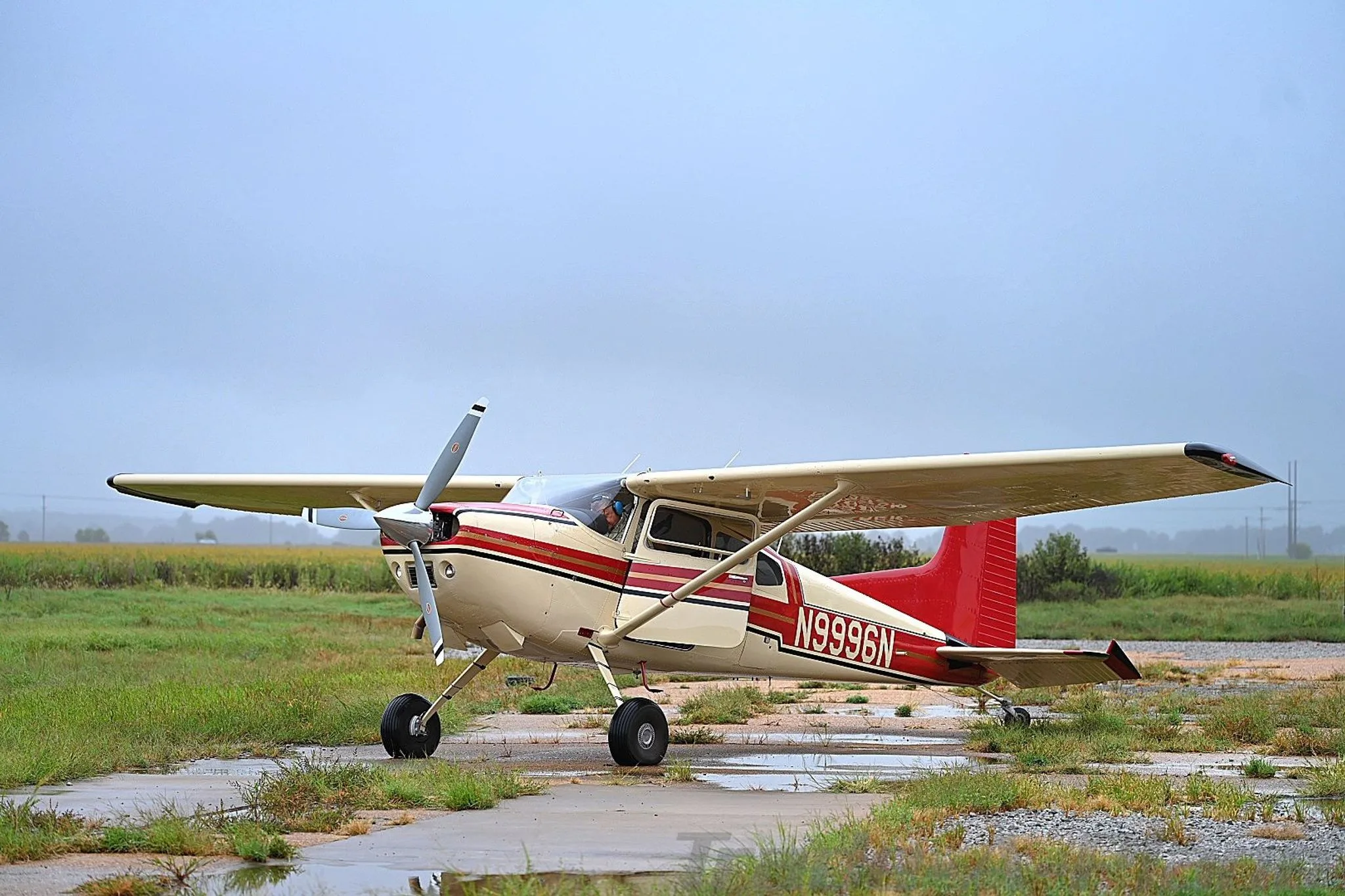
The CESSNA 180 (Skywagon) is a single-engine piston, tailwheel utility airplane. The figures below come mainly from the 1979 Model 180K handbook: a Continental O-470-U of 230 BHP, a constant-speed McCauley propeller, 84 gallons usable fuel and an 2800 lb takeoff weight. The type spans Models 180 through 180K. Early models seat 4 and the 180G through 180K seat 6. Weights, engines and equipment differ a lot between years. The library record for this model lists a 300 hp IO-520 and a 3525 lb maximum takeoff weight. That does not match the 180K handbook or the type data, so check any airplane against its own papers.
- Instructions For Continued Airworthiness - Hartzell Propeller
This document provides Instructions for Continued Airworthiness (ICA) for Cessna 180 and 180K aircraft, as well as Cessna 182 and F182 models, equipped with Continental O-470 engines and utilizing a Hartzell DHC-G2YF-1BFP/F8068+2 propeller. It outlines the maintenance requirements, airworthiness limitations, and propeller specifications necessary for compliance with FAA regulations. The ICA serves as a supplement to the existing Cessna service manuals, detailing specific procedures and time limits for maintenance checks. This document is essential for aircraft owners, maintenance personnel, and operators to ensure the continued safety and airworthiness of their aircraft.
- SEB-34-33-Stall-Warning-Horn-180-185-188.pdf
This service bulletin, SEB-34-33, addresses the replacement of the stall warning horn for various Cessna models, including the A185F. It provides detailed instructions for the removal of the original stall warning horn and the installation of a new stall warning horn and bracket. The bulletin is applicable to a range of Cessna models, specifically those listed in the Effectivity section. Compliance with this bulletin is optional and can be performed at the owner's discretion. The document emphasizes the importance of following the outlined procedures to ensure proper installation and functionality of the new components. It also includes information on parts availability and labor hours required for the modification.
- AD 2020-21-22 - McFarlane Aviation
This document is an Airworthiness Directive (AD) issued by the FAA for various Textron Aviation Inc. aircraft models, including the Cessna 185. The directive addresses safety concerns related to cracks in the tailcone and horizontal stabilizer attachment structure. It mandates inspections and potential repairs to ensure the structural integrity of these components, which are critical for safe flight. The AD is effective from December 7, 2020, and applies to all affected aircraft regardless of their service history. The document outlines compliance requirements, inspection intervals, and the necessary actions to rectify identified issues, ensuring continued airworthiness of the aircraft.
- Airworthiness Directive Schedule - Cessna 180 Series - CAA
This document is an Airworthiness Directive (AD) schedule for the Cessna 180 series aircraft, including models 180A through 180K. Issued on November 26, 2020, it outlines mandatory compliance requirements for various modifications, inspections, and maintenance tasks necessary to ensure the continued airworthiness of these aircraft. The ADs are applicable to specific serial number ranges and address issues such as structural integrity, fuel system safety, and electrical system modifications. This document serves as a critical reference for aircraft owners, operators, and maintenance personnel to maintain compliance with safety regulations and ensure the safety of flight operations.
Cessna 180 for sale now
View all 23 for sale →Aircraft that this pilot's operating handbook covers, listed on the sites Sprinkle reads. Asking prices, not sales. Cessna 180 asking prices by year built.


Also useful for the Cessna 180
From Sprinkle’s library of aircraft documents. PDFs open from Sprinkle’s own files. Read Aug 7, 2026.
Want this document taken down? Request removal