
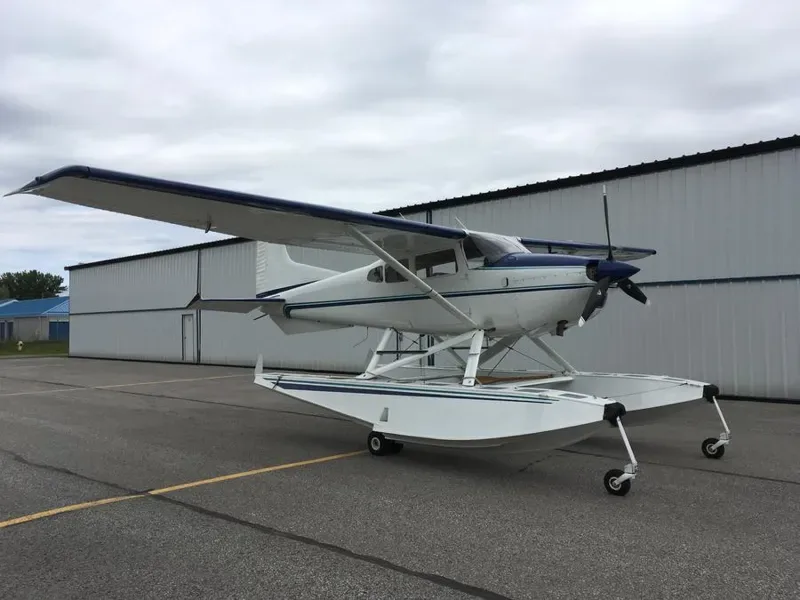
N900JB Cessna C-185
Checklist for the Cessna 185
PDF, 7 pages, 85 KB, from Sprinkle’s own files.
What it covers
This document serves as a checklist for the Cessna 185, specifically tailored for various operational scenarios including taxiing, takeoff, and landing procedures. It provides detailed steps for normal, rough water, crosswind, confined area, and glassy water operations. The checklist is designed for pilots to ensure safety and efficiency during flight operations, emphasizing critical parameters such as power settings, flap configurations, and airspeeds. The document is structured to facilitate quick reference during flight, ensuring that pilots can adhere to best practices and maintain situational awareness.
Key points
- Empty Weight: 2456 lbs
- Max Gross Weight: 3350 lbs
- Power settings for takeoff: Full power for all types
- Normal landing airspeed: 60-65 knots
- Flap settings for normal takeoff: 20 degrees (2 notches)
Figures in this document
As the document states them. Check them against the PDF before you rely on one.
Specifications
- Engine model
- Continental IO-520
- Empty weight (lb)
- 2,456
- Max takeoff weight (lb)
- 3,350
Weight and balance
- Basic empty weight (lb)
- 2,456
- Max takeoff weight (lb)
- 3,350
Main sections
Taxi Checklists
The taxi checklists outline procedures for different taxiing scenarios: Idle Taxi, Step Taxi, and Plow Taxi. Each checklist emphasizes the importance of ensuring the area is clear, setting the trim, and adjusting power settings appropriately. For example, during Step Taxi, the power should be initially set to full, accelerating to 35-40 knots before reducing to 20-22 inches of manifold pressure.
Takeoff Checklists
The takeoff checklists detail procedures for various takeoff conditions, including Normal, Rough Water, Crosswind, Confined Area, and Glassy Water takeoffs. Each procedure specifies flap settings, power settings, and critical airspeeds. For instance, during a Normal Takeoff, flaps should be set to 20 degrees, and power should be set to full.
Landing Checklists
The landing checklists cover Normal, Rough Water, Crosswind, Confined Area, and Glassy Water landings. Each section provides specific parameters for downwind, base, and final approaches, including recommended airspeeds and flap settings. For example, during a Normal Landing, the recommended airspeed on final is 60-65 knots with 20 degrees of flaps.
Safety notes
- Ensure area is clear before taxiing, taking off, or landing.
- Maintain proper power settings during all phases of flight.
The document’s text
Show the text read from the PDF
N900JB Cessna C-185 Con$nental IO-520 Empty Weight 2456 Max Gross 3350 PK 3050A Floats – 3050lbs buoyancy per float Taxi Checklists: Idle Taxi Flaps up Gear up Area clear Rudders down Trim set S1ck back Power: Idle Step Taxi Flaps up Gear up Area clear Rudders Up Trim set S1ck back Power: Full ini1ally; accelerate to 35-40kts then 20”-22” MP Plow Taxi Flaps up Gear up Area clear Rudders down Trim set S1ck back Power: 1500rpm ini1ally, then 2200rpm and ini1ate leF turn -- 1 of 7 -- Takeoff Checklists: Normal Takeoff Flaps 20 (2 notches) Gear up Area clear Rudders Up Trim set S1ck back Power: Full Rough Water Takeoff Flaps 30 (3 notches) Gear Up Area clear Rudders Up Trim set S1ck back Power: Full; maintain higher than normal step aJtude. AFer liFoff, remain in ground effect too build airspeed. Crosswind Takeoff Flaps 20 (2 notches) Gear up Area clear Rudders down Trim set S1ck back Power: Full, then raise water rudders. Maintain tack on water un1l liFoff -- 2 of 7 -- Confined Area Takeoff Flaps 20 (2 notches) Gear up Area clear Rudders down Trim set S1ck back Power: Full, then raise water rudders. Accelerate to 35-40kts, then ini1ate leF turn Glassy Water Takeoff Flaps 20 (2 notches) Gear up Area clear Rudders up Trim set S1ck back Power: Full; accelerate to Vr and apply leF aileron to raise right float out of water; upon rota1on, pitch for high performance climb for 2-3 seconds, then pitch for Vy *For all takeoffs, pull power and prop to 25”/2500 rpm aUer establishing posi$ve rate and raising flaps* -- 3 of 7 -- Landing Checklists: Normal Landing Downwind: 500’ 17” MP Prop Full Forward 10 degrees flaps (first notch) Airspeed 70-75kts “Gear UP for water landing” Base: 400’ 17” MP 20 degrees flaps (second notch) Airspeed 70-75kts “Gear UP for water landing” Final: 300’ 14” MP un1l touchdown 20 degrees flaps (second notch) Airspeed 60-65kts “Gear UP for water landing” AFer touchdown, power idle and s1ck back Rough Water Landing Downwind: 500’ 17” MP Prop Full Forward 10 degrees flaps (first notch) Airspeed 70-75kts “Gear UP for water landing” -- 4 of 7 -- Base: 400’ 17” MP 20 degrees flaps (second notch) Airspeed 70-75kts “Gear UP for water landing” Final: 300’ 15” MP un1l touchdown 30 degrees flaps (second notch) Airspeed 60-65kts “Gear UP for water landing” AFer touchdown, power idle and s1ck back Crosswind Landing Downwind: 500’ 17” MP Prop Full Forward 10 degrees flaps (first notch) Airspeed 70-75kts “Gear UP for water landing” Base: 400’ 17” MP 20 degrees flaps (second notch) Airspeed 70-75kts “Gear UP for water landing” -- 5 of 7 -- Final: 300’ 14” MP un1l touchdown 20 degrees flaps (second notch) Airspeed 60-65kts “Gear UP for water landing” AFer touchdown, power idle and s1ck back Confined Area Landing Downwind: 500’ abeam shoreline 17” MP Prop Full Forward 10 degrees flaps (first notch) Airspeed 70-75kts “Gear UP for water landing” Base: 400’ 17” MP 20 degrees flaps (second notch) Airspeed 70-75kts “Gear UP for water landing” Final: 300’ 17” MP un1l obstacle cleared, then idle 20 degrees flaps (second notch) Airspeed 60-65kts “Gear UP for water landing” AFer touchdown, power idle and s1ck back -- 6 of 7 -- Glassy Water Landing Downwind: 500’ abeam LVR 17” MP Prop Full Forward 10 degrees flaps (first notch) Airspeed 70-75kts “Gear UP for water landing” Base: 400’ 17” MP 20 degrees flaps (second notch) Airspeed 70-75kts “Gear UP for water landing” Final: 300’ 17” MP un1l threshold made, then idle 20 degrees flaps (second notch) Airspeed 60-65kts “Gear UP for water landing” Round out 50’-100’ above threshold, then 3 P’s: Pitch: Normal landing aJtude Power: 16” – 18” MP Pa1ence: Hold pitch un1l touchdown, making slight power adjustments AFer touchdown, power idle and s1ck back -- 7 of 7 --
Read from the PDF by machine, so tables and diagrams come out rough. The PDF is the document.
More Cessna 185 documents
All 30 →- Cessna 185 Check List
This document is a checklist specifically for the Cessna 185, designed to assist pilots in conducting preflight inspections, engine starts, takeoffs, landings, and emergency procedures. It provides a structured approach to ensure that all critical steps are followed to maintain safety and operational efficiency. The checklist is divided into sections that guide the pilot through various phases of flight, from preflight checks to shutdown procedures. Each section includes specific tasks that must be completed, ensuring that the aircraft is ready for safe operation.
- CESSNA 185 Model Guide
The CESSNA 185 is a single-engine piston, high-wing, tailwheel utility aircraft with six seats. The library data lists a Continental IO-520-D engine of 300 hp, a McCauley D3A34C403 propeller and a maximum takeoff weight of 3350 lbs. Library figures give a 130 kt cruise and an 820 nm range. It is also common as a floatplane, so check which gear and tank configuration a given airplane has.
- Service Bulletin No. SB24-01 | Aircraft Spruce
This Service Bulletin No. SB24-01, issued in January 2025, addresses the inspection and replacement of ACS Products Company keyed ignition switches for various aircraft models, including the Reims-Cessna F172. The bulletin outlines the reasons for the inspection, compliance requirements, and detailed instructions for pilots and mechanics. It emphasizes the importance of ensuring the integrity of ignition switches to prevent unintended engine startups, which could pose serious safety risks. The document provides specific compliance timelines and recommendations for regular testing of the ignition switches to maintain safety standards.
- Supervisory Handbook On The Validation Of Irb Rating Systems
This document serves as a supervisory handbook on the validation of Internal Ratings Based (IRB) rating systems, primarily aimed at competent authorities overseeing financial institutions within the European Union. It outlines best practices and methodologies for validating IRB rating systems to ensure robust credit risk measurement. The handbook emphasizes the importance of harmonizing supervisory practices across institutions and provides a comprehensive framework for assessing model performance, data quality, and the overall validation process. It is designed to guide authorities in evaluating the effectiveness of rating systems and ensuring compliance with regulatory requirements.
- Parts Manual 4000 Floats On Cessna 185 & 206 Series
This document is a parts manual for the Wipline Model 4000 amphibian and seaplane floats specifically designed for the Cessna 185 and Cessna 206 series aircraft. It provides detailed parts information, assembly instructions, and specifications for the floats, including hull assemblies, skins, and various components necessary for installation and maintenance. The manual is intended for aircraft owners, maintenance personnel, and parts suppliers who require accurate and comprehensive information regarding the float systems for these aircraft models. It includes a log of revisions, ensuring users have access to the most current information and part numbers.
- MICRO SWITCH V15 Series Basic Switch Datasheet
This document provides detailed specifications for the Honeywell MICRO SWITCH V15 Series Basic Switch. It is designed for applications requiring reliable and cost-effective switch solutions. The datasheet outlines various features, electrical ratings, and mechanical characteristics of the switch, making it suitable for engineers and designers looking for flexible and certified switch options. The document includes information on circuitry, operating forces, agency certifications, and mounting dimensions, ensuring users have comprehensive data for integration into their systems.
- Cessna 185 Maintenance Manual
This service manual provides comprehensive maintenance and operational guidelines for the Wipline Model 4000 amphibious and seaplane floats specifically designed for the Cessna A185E, A185F, and 206 series aircraft. It covers various aspects of float maintenance, including hull maintenance, corrosion prevention, float handling, and the operation of the retract system. The manual is intended for aircraft maintenance personnel and pilots who operate these floats, ensuring they understand the necessary procedures for safe and effective float operation and maintenance. Key sections include detailed instructions on float hull maintenance, handling and jacking procedures, and a thorough inspection checklist to ensure the integrity and safety of the float systems.
- Installation Instructions Supplemental Type Certificate SA04491CH
This document provides installation instructions for the Hartzell Propeller on Cessna non-turbocharged models including the 180, 182, 185, and 206 series. It is intended for installers and maintenance personnel responsible for modifying these aircraft with the specified propeller. The manual outlines the necessary tools, consumables, and procedures for safely removing the existing propeller and installing the new Hartzell model. It also includes important safety warnings and cautions to ensure compliance with FAA regulations and safe operational practices.
Cessna 185 for sale now
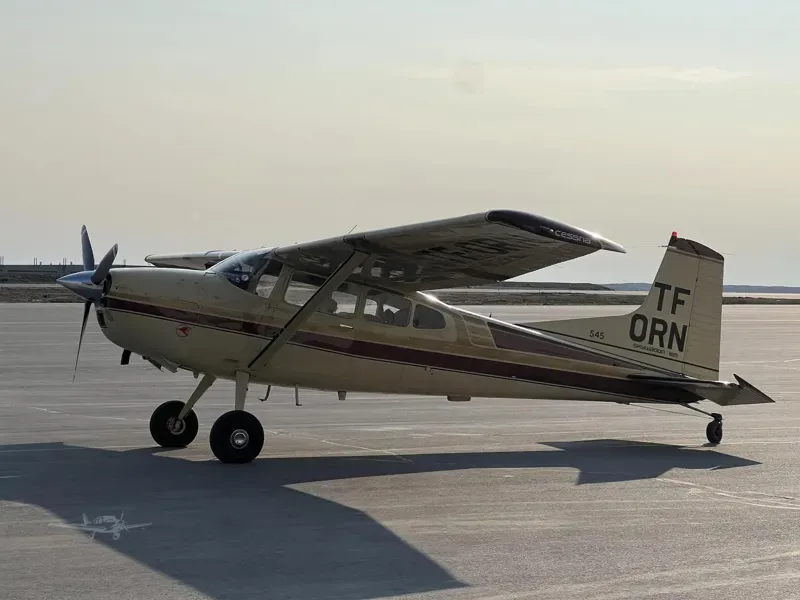
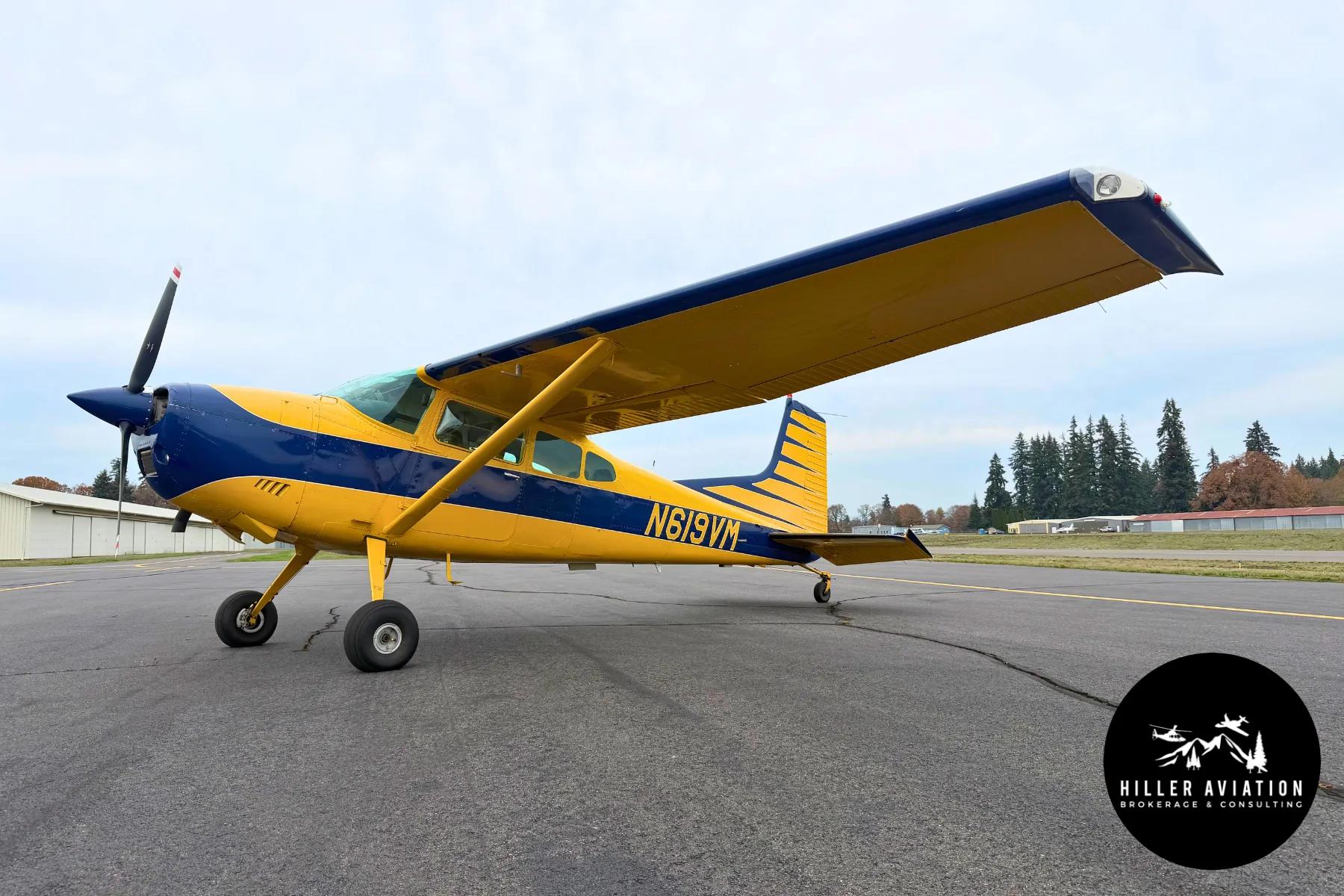
View all 44 for sale →Aircraft that this checklist covers, listed on the sites Sprinkle reads. Asking prices, not sales. Cessna 185 asking prices by year built.
Also useful for the Cessna 185
From Sprinkle’s library of aircraft documents. PDFs open from Sprinkle’s own files. Read Jul 1, 2026.
Want this document taken down? Request removal