Checklist _Cessna T210L - Touring Machine Company
CESSNA 210 · Checklist
Overview
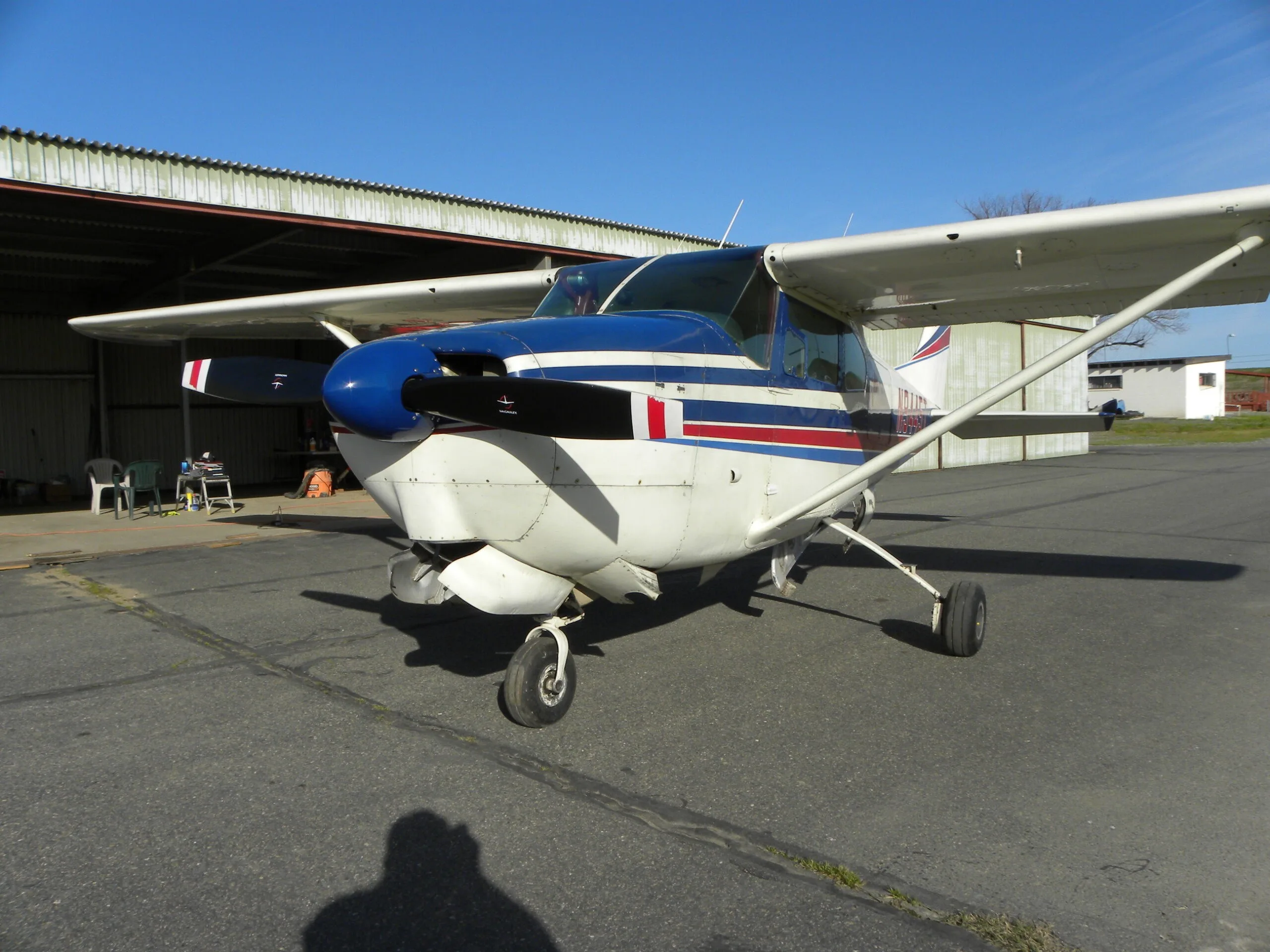
This document is a checklist specifically designed for the Cessna T-210 aircraft. It provides a comprehensive guide for pilots to follow during various phases of flight, including pre-flight inspections, engine start procedures, taxiing, takeoff, climb, cruise, landing, and shutdown. Each section outlines critical steps and checks that ensure the aircraft is operated safely and efficiently. The checklist is structured to facilitate quick reference and is essential for both new and experienced pilots operating the Cessna T-210.
- Fuel flow should be 25-30 lbs/hr during engine start.
- Climb at Vy of 110 MPH to pattern altitude.
- Cruise at 120-130 MPH, leaning to 20 gph at the top of the green.
- Landing gear should be down at 21" MP during approach.
- Maximum airspeed for landing gear extension is 160 MPH.
Document
Source
Originally published by www.touringmachine.com. Sprinkle hosts a reference copy with an added summary, specifications and searchable full text.
Document details
- Type
- Checklist
- Pages
- 10
- File size
- 59 KB
- Publisher
- www.touringmachine.com
Common. Rarer than 1% of the aircraft models we track.
Most owners only have the POH. Here's the essential set for the CESSNA 210.
CESSNA 210 for sale now


Free — save the 210 to your watchlist and track it in one place.
More CESSNA 210manuals & documents
See all 28 →- Service Bulletin SB-14 - McFarlane AviationService Bulletins
- In-flight break-up involving Cessna 210N, VH-TFTOther Documents
- Fuel starvation involving Cessna T210M, VH-MYWOther Documents
- Engine failure and collision with terrain involving Cessna P210N ...Other Documents
- AIRWORTHINESS BULLETIN Cessna Single Engine Electro-Hydraulic Undercarriage Retraction SystemsService Bulletins
- Request for Legal Interpretation of 14 C.F.R. §§ 91.403(c) and 43.16 Concerning Whether Requirements in an Airworthiness Limitations Section (ALS) Developed By a Design Approval Holder (DAH) and Approved by the Federal Aviation Administration (FAA) as a Change to Type DesignMaintenance Manual
- Backdoor Rulemaking? | Savvy AviationMaintenance Manual
- ATSB Transport Safety ReportOther Documents
- SERVICE LETTER SEL-29-01 Revision 1: Hydraulic Power Pack InspectionWiring Diagram
- cessna-skycatcher-checklist.pdf - Empyrean AeroChecklist
- Airplane Upset Recovery Training Aid Revision 2Training Manual
- Airworthiness Directive AD/CESSNA 210/69 Amdt 2Airworthiness Directives
If you fly the CESSNA 210, you may also be researching these.


In this document
Exterior Inspection / Pre-Start
This section covers the initial checks before starting the engine. Pilots should check for water in the fuel, ensure fuel levels are adequate, confirm doors are latched, and verify that seat and shoulder belts are secured. The section also includes checks for fuses, avionics master switch, trim settings, fuel selector positions, and cowl flaps.
Start / Pre-Taxi
This section outlines the procedures for starting the engine and preparing for taxi. Key steps include turning the key, monitoring oil pressure, and setting the fuel boost. Pilots should also check the transponder settings and ensure communication with ground control.
Pre-Takeoff / Takeoff
In this section, pilots are instructed to set the flaps, verify the mixture setting, and ensure the aircraft is configured for takeoff. It emphasizes the importance of checking for traffic and maintaining the correct airspeed during the takeoff roll.
Climb / Cruise
This section provides guidance on maintaining proper airspeeds during climb and cruise phases. It includes specific airspeed targets and engine settings to optimize performance and fuel efficiency.
Landing / Shutdown
The landing section details the necessary checks and configurations for a safe landing, including gear and flap settings. The shutdown procedures are also outlined, ensuring that all systems are properly turned off after landing.
Safety notes
- Always check for water in fuel before starting the engine.
- Monitor oil pressure for at least 30 seconds after engine start.
- Ensure all doors are latched before takeoff.
Full document text
Exterior Inspection Pre-Start Check Fuel for water Battery side of Master—ON Check fuel Levels. Charts out Mixture—RICH Doors latched Prop—IN Seat and Shoulder Belts Throttle—⅓ to ½″ Fuses Push and hold fuel boost RHS Avionics Master—OFF Fuel flow 25-30 lbs/hr Trim for takeoff Fuel Switch Fuel Selector—SET Left—OFF Cowl Flaps—OPEN Right—MIDDLE (Low) Rotating Beacon—ON Throttle ¼″ Start Pre-Taxi Note Time Set GPSS or VOR for 430 Clear Transponder—GND & 1200 Turn Key Get ATIS 10 sec max Set Altimeter and verify with 20 sec cool down field elevation 1000 RPM Check oil and engine temps Oil Pressure—30 sec max Check Marker Beacon Fuel Boost—OFF Ground & Tower in Comm Alternator—ON (Ammeter +) Check Static Port Radio Master Gear Green and Horn works Lean Aggressively Call w/ location & ATIS for taxi Taxi Runup Test brakes - 3´ and stop Feet on brakes Controls free & correct Throttle 1700 RPM Position controls for wind Suction in green 5″ Set DG Magnetos In Turns 150 RPM Max drop Check ball and TC 50 RPM Max difference Check HI Cycle Prop Set Transponder if required Check oil temp and pressure Vacuum Gauge in Green Check engine temp Cycle Autopilot GPS/VORs set if required Radios—Tower and Approach Pre-Takeoff Takeoff Set Bug on HI to Rwy Verify Heading matches runway Set Flaps Slight Back Pressure Mixture—RICH Ailerons for wind, Right Rudder Lights, Camera, Action Airspeed alive, RPM max Landing Light & Strobe Lift nose 70-80 MPH Transponder—Alt Tap brakes then Gear Up Check for traffic Flaps up—Rate-of-Climb pos Climb Vy-110 MPH to Pattern Flaps Pattern Alt Normal 10° Reduce Throttle & Prop Soft Field 10° Cruise Climb—120-130 MPH Climb Cruise Airspeed 120-130 MPH Lean to 20 gph at top of Green Check CHT’s and TIT Landing Light—OFF Scan agressively Check Heading Indicator Check Temps TIT 1380 Max Cowl Flaps Slightly Open CHT 350 Max Change Tanks every ½ Hour 22/24 lean to 18.5 gph Pre-Landing Landing C-FARTS RAAGS at all pattern positions Compass and HI Report—when req’d Fuel Selector—Most Airspeed ATIS Altitude Runway in use Gear Traffic Pattern Alt Scan Aggressively Safety Lights Gear 160 MPH MAX Seat Belts 1st Notch 160 MPH MAX Loose Items 2nd Notch 120 MPH MAX 3rd Notch 120 MPH MAX Pattern Airspeeds and Power Settings Level Flight - 17″ MP (21″MP gear down) ~100 MPH ILS - 16″ drop gear when needle is at top of circle Non-Precision - 15″ -5° pitch. Drop gear at FAF Downwind - 17″ MP and 100 MPH Numbers - 15″ MP and 90 MPH 1 Notch of Flaps Base - 15″ MP and 85 MPH 2 Notches Final - 15″ MP and 80 MPH 3 Notches Threshold - Touch over Idle and 70 ➙ 62 MPH Landing—On Runway Landing—Off Runway Flaps—UP Cowl Flaps Open Ailerons into wind Lean Landing Light—OFF Transponder—OFF Contact Ground with Position Shutdown TIT 70’s Avionics—OFF Mixture, Master, Mags Keys on Dash Hot Start—More than 5 minutes and less than 1 hour Throttle all the way IN Mixture all the way OUT Aux Pump—HIGH 2 minutes Switch Tanks Prime Mixture in with pump running until Fuel Flow Peaks Throttle—¼″ Boost pump low Crank engine—momentary boost pump may be required Retard throttle to 1000 RPM (Based on CPA tech note 010) Speeds—MPH VX 90 VY 110 VA 135 Heavy VA 110 Very Light VNE 1225 Normal 79-190 VSO 65 VS1 75 Category A VFE 160 20°-30° 120 VGE 160
What's in the CESSNA 210 TCDS
A Type Certificate Data Sheet (TCDS) is the FAA's record of what an aircraft type was approved as. It is the source of truth for weights, seating, fuel and the rules the design was certified against. Expand any line to see what it means.
5,519 CESSNA 210 parts for sale
See all →

Parts listed for sale by vetted eBay sellers — confirmed on eBay at checkout.