CAP – Cessna Short- and Soft-Field Operations
CESSNA 210N · Checklist
Overview
This document serves as a guide for short- and soft-field takeoff and landing operations specifically for the Cessna 210N. It outlines standards, procedures, and techniques derived from the Airplane Flying Manual (AFM) and Pilot's Operating Handbook (POH). The content is designed for pilots undergoing flight evaluations and transition training, emphasizing risk management and decision-making in challenging operational environments. The document provides detailed instructions on executing short- and soft-field takeoffs and landings, highlighting common errors and best practices to enhance safety and performance.
- Use all available runway for short-field takeoff.
- Maintain a slightly nose-high attitude during takeoff.
- Touch down on main wheels first during short-field landings.
- Avoid reconfiguring flaps until clear of the runway.
- Practice short/soft takeoffs and landings on longer runways for safety.
Document
Source
Originally published by www.gocivilairpatrol.com. Sprinkle hosts a reference copy with an added summary, specifications and searchable full text.
Document details
- Type
- Checklist
- Year
- 2017
- Pages
- 29
- File size
- 1.9 MB
- Publisher
- www.gocivilairpatrol.com
Common. One of the most common aircraft types we track.
Most owners only have the POH. Here's the essential set for the CESSNA 210N.
- Pilot's Operating Handbook / AFM
- Checklist
- Maintenance Manual
- Parts Catalog (IPC)
- Systems & Wiring
- Service Bulletins
- Type Certificate (TCDS)
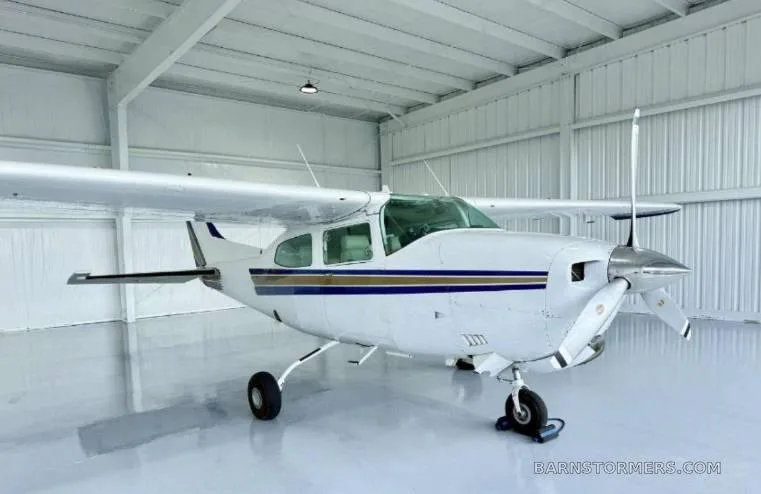
CESSNA 210N for sale now
Free — save the 210N to your watchlist and track it in one place.
More CESSNA 210Nmanuals & documents
See all 13 →- CHECKLISTS - Aircraft SpruceChecklist
- CHECKMATE CHECKLISTS - Aircraft SpruceChecklist
- SERVICE TABLE OF LIMITS AND TORQUE VALUE RECOMMENDATIONSV Speeds Reference
- Loading SummaryWeight And Balance
- B&C Standby Alternator System for the Cessna 210Wiring Diagram
- Wheels up landing involving Cessna 210, VH-UPNOther Documents
- TYPE ACCEPTANCE CERTIFICATEType Certificate
- EASA STC no. STC holderTraining Manual
- SCHEDULE OF AIRWORTHINESS DIRECTIVESAirworthiness Directives
- Interior Maintenance Manual Illustrated Parts Catalog Model 750Parts Catalog
- Cessna T210N - AirMartSpecifications
- Airplane Flight ManualFlight Manual
If you fly the CESSNA 210N, you may also be researching these.


In this document
Short-Field Takeoff Techniques
This section details the procedures for executing a short-field takeoff, including using all available runway, setting flaps according to the POH, and maintaining a slightly nose-high attitude during takeoff. It emphasizes the importance of reaching obstacle clearance speed at 50 feet AGL and keeping the landing gear and flaps in takeoff position until clear of obstacles.
Short-Field Landing Techniques
The landing techniques for short fields focus on using the recommended airspeed and flap settings from the POH, managing power to control the glide path, and ensuring a touchdown on the main wheels first. It advises against reconfiguring flaps until clear of the runway to minimize control risks.
Common Errors in Short-Field Operations
This section outlines frequent mistakes made during short-field takeoffs and landings, such as improper flap usage, premature lift-off, and poor airspeed control. It stresses the importance of adhering to checklist protocols to avoid these errors.
Soft-Field Takeoff Techniques
Soft-field takeoff procedures involve taxiing with full aft yoke, using a rolling takeoff, and maintaining a nose-high attitude. The section advises on lifting off at the lowest possible airspeed and accelerating in ground effect until reaching safe flap retraction speed.
Soft-Field Landing Techniques
For soft-field landings, pilots are instructed to hold the airplane off the surface as long as possible while controlling descent with power. The goal is to touch down at or near stall speed with minimal sink and to keep the nose wheel off the ground as long as feasible.
Safety notes
- Never attempt to save a landing; make the go-around decision early.
- Instructor/Check Pilot must always guard the controls.
Full document text
CAP – Cessna Short- and Soft-Field Operations 1 February 2017 Cessna Aircraft Short & Soft Field Takeoff & Landing Techniques CAP – Cessna Short- and Soft-Field Operations 1 February 2017 Objectives / Content • For short- and soft-field takeoff and landing operations in CAP Cessna aircraft, review: – Standards (from ACS) – Procedures (from POH/AFM) – Techniques (from experience) – Risk management and decision-making for short- and soft-field operations CAP – Cessna Short- and Soft-Field Operations 1 February 2017 The information in this briefing is intended to serve as a departure point for discussion during CAP flight evaluations and transition training. It should not be interpreted or used as a substitute for the detailed information provided in the Airplane Flying Manual or Pilot’s Operating Handbook for each aircraft model. CAP – Cessna Short- and Soft-Field Operations 1 February 2017 ACS – Short-Field Takeoff Standards CAP – Cessna Short- and Soft-Field Operations 1 February 2017 Short-Field Procedures (POH/AFM) Takeoff Landing For Your Specific Model Aircraft CAP – Cessna Short- and Soft-Field Operations 1 February 2017 Short Field Takeoff Techniques • Use all available runway for takeoff • Set flaps per the POH • Use a Static Takeoff • Hold the brakes while setting takeoff power with yoke slightly aft of neutral to keep weight off nose wheel • After brake release, vary elevator control as necessary to maintain slightly nose high sight picture • Approaching rotation speed, the airplane should be firmly and smoothly lifted off the surface to a pitch attitude that will result in reaching obstacle clearance speed at 50’ AGL • The landing gear and flaps should remain in takeoff position until clear of obstacles (or as recommended by the manufacturer) 6 CAP – Cessna Short- and Soft-Field Operations 1 February 2017 Short Field Takeoff Common Errors • Improper use of flaps • Failure to use all available runway • Lift-off or rotation premature • Improper application of power • Poor directional control on takeoff • Brakes improperly used during takeoff • Failure to firmly rotate at the specified rotation speed and achieve Obstacle Clearance Speed at 50’ AGL per the POH • Failure to maintain appropriate climb speed 7 CAP – Cessna Short- and Soft-Field Operations 1 February 2017 ACS – Short-Field Landing Standards CAP – Cessna Short- and Soft-Field Operations 1 February 2017 Short Field Landing Techniques • In smooth air, use the airspeed and flap setting recommended in the POH with enough power to control glide path • In turbulent air, slightly higher airspeeds should be used • Once clear of obstacles, smoothly reduce power and maintain airspeed by lowering the nose • Touchdown should be made on the main wheels first with the power off • Immediately after touchdown, lower the nose and apply heavy braking as required (simulate heavy braking for training) • For maximum brake effectiveness, retract flaps and apply maximum brake pressure without sliding the tires 9 (Recommend not reconfiguring flaps until clear of runway to reduce risk of loss of control) CAP – Cessna Short- and Soft-Field Operations 1 February 2017 Short Field Landing Common Errors • Required landing distance exceeds available runway length • Poor airspeed control • Landing configuration established late • Power control and monitoring inadequate • Unstable approach • Improper use of flaps • Failure to trim properly • Ignoring checklist • Hard impact or bounce at touchdown • Excessive brake application • Go-around situation not recognized 10 CAP – Cessna Short- and Soft-Field Operations 1 February 2017 Short Field Landing Errors 11 CAP – Cessna Short- and Soft-Field Operations 1 February 2017 Short Field Landing Errors 12 CAP – Cessna Short- and Soft-Field Operations 1 February 2017 Short Field Landing Errors 13 CAP – Cessna Short- and Soft-Field Operations 1 February 2017 ACS – Soft-Field Takeoff Standards CAP – Cessna Short- and Soft-Field Operations 1 February 2017 Soft-Field Procedures (POH/AFM) Takeoff Landing For Your Specific Model Aircraft CAP – Cessna Short- and Soft-Field Operations 1 February 2017 Soft Field Takeoff Techniques • Taxi on soft surfaces with full aft yoke • Set flaps per the POH • Use a rolling takeoff (do not stop while setting takeoff power) with yoke slightly aft of neutral to keep weight off nose wheel • Smoothly increase power to maximum as airspeed increases • Vary elevator control as airspeed increases to maintain slightly nose high sight picture • Lift off at lowest possible airspeed and lower nose to accelerate in ground effect until a safe flap retraction speed is reached per the POH • If obstacles are present, accelerate in ground effect until reaching the obstacle clearance speed per the POH • Once obstacles are cleared, increase to a safe flap retraction speed per the POH 16 CAP – Cessna Short- and Soft-Field Operations 1 February 2017 Techniques - The Right Attitude 17 • Sight picture from cockpit for takeoff. • Note end of runway on nose. Very important: This attitude for takeoff and landing prevents tail strikes and provides a visual reference for directional control. Attitude for takeoff: • Note nose wheel just off ground • 7-8 degrees nose up CAP – Cessna Short- and Soft-Field Operations 1 February 2017 Techniques - The Wrong Attitude 18 At this attitude, you cannot see the runway resulting in a tail strike. An attitude of 12.5 degrees will result in a tail strike CAP – Cessna Short- and Soft-Field Operations 1 February 2017 Soft Field Takeoff Common Errors • Improper use of flaps • Airplane stopped on runway prior to takeoff • Improper application of power • Poor directional control on takeoff • Brakes improperly used during takeoff • Excessive pitch attitude • Drifting uncontrolled during initial climb • Touchdown inadvertently after lift-off 19
Show full textShow less
CAP – Cessna Short- and Soft-Field Operations 1 February 2017 Soft Field Takeoff Errors 20 CAP – Cessna Short- and Soft-Field Operations 1 February 2017 Soft Field Takeoff Errors 21 CAP – Cessna Short- and Soft-Field Operations 1 February 2017 ACS – Soft-Field Landing Standards CAP – Cessna Short- and Soft-Field Operations 1 February 2017 Soft Field Landing Techniques • Use a normal landing technique (i.e. flap setting appropriate for runway and wind conditions) • Hold the airplane 1-2’ off the surface as long as possible while dissipating airspeed. Add power to control descent rate. – Power controls rate of descent – Retarding power abruptly will result in a hard landing • Touch down at or near stall speed, under power with minimum sink, slightly tail low to prevent nosing over • Hold the nose wheel off the surface as long as possible • Taxi on soft surfaces with full aft yoke 23 CAP – Cessna Short- and Soft-Field Operations 1 February 2017 Soft Field Landing Common Errors • Required landing distance exceeds available runway length • Poor airspeed control • Landing configuration established late • Throttle closed too abruptly or quickly • Unstable approach • Improper use of flaps • Failure to trim properly • Excessive descent rate • Hard impact or bounce at touchdown • Nose wheel lowered prematurely • Brakes improperly used • Go-around situation not recognized 24 CAP – Cessna Short- and Soft-Field Operations 1 February 2017 Soft Field Landing Errors 25 CAP – Cessna Short- and Soft-Field Operations 1 February 2017 Soft Field Landing Errors 26 CAP – Cessna Short- and Soft-Field Operations 1 February 2017 Soft Field Landing Errors 27 CAP – Cessna Short- and Soft-Field Operations 1 February 2017 Soft Field Landing Errors 28 CAP – Cessna Short- and Soft-Field Operations 1 February 2017 Risk Management Reminders • Threshold Questions: – Do I really need to operate from a short or soft field? – If so, am I current, capable, and proficient in these operations? – Are there crosswind or gusty wind conditions? – Consider doing practice short/soft takeoffs and landings on a long, wide runway to have more options available in case things go sour • Reminders: – Establish & maintain a stabilized approach – Keep sight picture on end of the runway – Never attempt to save a landing – Make the go-around decision early – Instructor/Check Pilot must always guard the controls! 29
What's in the CESSNA 210N TCDS
A Type Certificate Data Sheet (TCDS) is the FAA's record of what an aircraft type was approved as. It is the source of truth for weights, seating, fuel and the rules the design was certified against. Expand any line to see what it means.
64 CESSNA 210N parts for sale
See all →

Parts listed for sale by vetted eBay sellers — confirmed on eBay at checkout.