
Emergency Procedures for Cessna 402C
Emergency Procedures for the Cessna 402C
PDF, 5 pages, 203 KB, from Sprinkle’s own files.
What it covers
This document outlines the emergency procedures for the Cessna 402C aircraft. It is intended for pilots operating this aircraft, providing critical information on handling various emergency situations. The procedures cover engine failures during takeoff and flight, as well as responses to in-flight fires and emergency descents. Each procedure is designed to ensure the safety of the aircraft and its occupants, detailing specific actions to take under different circumstances.
Key points
- Maximum take-off weight: 6850 lbs
- Va: 150 KIAS, Vne: 235 KIAS, Vfe: 180 KIAS
- Engine failure during takeoff requires immediate throttle closure and braking as needed
- In-flight engine fire requires shutting off auxiliary fuel pumps and securing the engine
- Emergency descent involves throttles idle, propellers full forward, and mixtures adjusted for smooth operation
Main sections
Operating Limitations
This section provides essential operating limitations for the Cessna 402C, including airspeeds in knots (KIAS) for various maneuvers such as Va (150 KIAS), Vne (235 KIAS), and Vfe (180 KIAS). It also lists weight limitations, with a maximum take-off weight of 6850 lbs and a maximum baggage weight of 350 lbs. Engine operating limitations include a maximum continuous power of 325 HP and a maximum RPM of 2700.
Engine Securing Procedure
In the event of an engine failure, the procedure begins with closing the throttle, setting the mixture to idle cut-off, and feathering the propeller. This is crucial for securing the inoperative engine and ensuring the safety of the flight.
Engine Failure During Takeoff
If an engine failure occurs during takeoff with speed below 95 KIAS or with the gear down, the pilot must close the throttles immediately and apply brakes or land as required. This quick response is vital for maintaining control of the aircraft.
Engine Failure After Takeoff
For engine failure after takeoff with speed above 91 KIAS, the procedure involves setting the mixtures to full rich, propellers full forward, and throttles full forward, while checking that the landing gear is up. This ensures optimal performance from the operative engine.
In-Flight Engine Fire
In case of an in-flight engine fire, the procedures include turning off both auxiliary fuel pumps, securing the appropriate engine, and feathering the propeller. These steps are critical to managing the emergency and preventing further escalation.
Emergency Descent
The emergency descent procedure involves reducing throttle to idle, setting propellers full forward, and adjusting mixtures for smooth engine operation. The landing gear should be up, and a moderate bank should be initiated to facilitate a controlled descent.
Safety notes
- Always verify fuel quantity and oil pressure before securing an inoperative engine.
- In case of engine failure, maintain control of the aircraft by adjusting power and pitch as necessary.
The document’s text
Show the text read from the PDF
1 DEPARTAMENTO “SEGURIDAD OPERACIONAL” SUBDEPARTAMENTO “LICENCIAS” “CESSNA C – 402 C” “CC–COV y CC–CLV” A.- OPERATING LIMITATIONS 1.- Limitations (KIAS) 3.- Weights (LBS) Va 150 Maximum TAKE-OFF 6850 Vne 235 Maximum Baggaje FWD 350 Vfe (Approch 15°) 180 Vle 180 4.- Engine (Maximum Continuous Power) Vno 205 Engine Operating Limitations Vmca 80 Reason HP o BHP 325 Vx 84 Maximum RPM 2700 Vy 109 Vsse 95 Cylinder Head Temperature (°F) Vxse 95 Maximum 460 Vyse 104 Nonmal 200-460 Emergency Descent 149/230 Vapp (Flap DN) 95 Oil Temperature (°F) Max Cross Wind 15 Maximum 240 Normal 75-240 2.- Fuel (U.S. GAL) Type to Use 100-0/100ll Oil Pressure (PSI) Total Capacity 213,4 Maximum 100 Usable Fuel 204,0 Minimum 10 Fuel Pressure (PSI) Maximum 18,5 Minimum 3 -- 1 of 5 -- 2 B.- EMERGENCIES PROCEDURES 1.- ENGINE SECURING PROCEDURE Throttle CLOSE Mixture IDLE CUT–OFF Propeller FEATHER 2.- ENGINE FAILURE DURING TAKEOFF(Speed Below 95 KIAS or Gear Down) Throttles CLOSE INMEDIATELY Brake or Land and Brake AS REQUIRED 3.- ENGINE FAILURE AFTER TAKEOFF (Speed Above 91 KIAS or Up) Mixtures FULL RICH Propellers FULL FORWARD Throttles FULL FORWARD Landing Gear CHECK UP Inoperative Engine: Throttle CLOSE Mixture IDLE CUT–OFF Propeller FEATHER -- 2 of 5 -- 3 4.- ENGINE FAILURE DURING FLIGHT (Speed Above Vmca) Inoperative Engine DETERMINE Operative Engine ADJUST AS REQUIRED Before Securing Inoperative Engine: Fuel Flow CHECK Fuel Selector MAIN TANKS Fuel Quantity CHECK Oil Pressure and Oil Temperature CHECK Magneto Switch CHECK ON Mixture ADJUST 5.- ENGINE FAILURE DURING FLIGHT (Speed Below Vmca) Rudder APPLY Power REDUCE TO STOP TURN Pitch Attitude LOWER NOSE TO ACELERATE ABOVE Vmca Inoperative Engine Propeller FEATHER Operative Engine INCREASE POWER -- 3 of 5 -- 4 6.- FIRE ON THE GROUND (Engine Start, Taxi and Takeoff With Sufficient Distance Remaining To Stop) Throttles CLOSE Brakes AS REQUIRED Mixtures IDLE CUT–OFF Battery OFF Magnetos Switch OFF 7.- INFLIGHT WING OR ENGINE FIRE Both Auxiliary Fuel Pumps OFF Operative Engine Fuel Selector MAIN TANK Emergency Crossfeed Shutoff OFF (PULL UP) Appropriate Engine SECURE Throttle CLOSE Mixture IDLE CUT–OFF Propeller FEATHER Fuel Selector OFF -- 4 of 5 -- 5 8.- EMERGENCY DESCENT a.- Preference Procedure Throttles IDLE Propellers FULL FORWARD Mixtures ADJUST FOR SMOOTH ENGINE OP Wing Flaps UP Landing Gear UP Moderate Bank INITIATE b.- In Turbulence Atmospheric Conditions Throttles IDLE Propellers FULL FORWARD Mixtures ADJUST Wing Flaps DOWN 45º Landing Gear DOWN Moderate Bank INITIATE -- 5 of 5 --
Read from the PDF by machine, so tables and diagrams come out rough. The PDF is the document.
More Cessna 402C documents
All 14 →- CESSNA 402C Model Guide
The CESSNA 402C is a low-wing, twin-engine piston airplane with retractable tricycle landing gear. It has two six-cylinder TSIO-520-VB turbocharged engines rated at 325 hp each. It is certified for single-pilot operation and can carry up to ten people in passenger configuration. Maximum takeoff weight is 6,850 lb. Buyers should focus on wing spar, wastegate, exhaust and landing gear history.
- AAIB Bulletin: 5/2022 VQ-TIN AAIB-27492
This document is an accident report concerning the Cessna 402C, registration VQ-TIN, which experienced a landing gear failure during a commercial flight. The report details the circumstances leading to the accident, including the pilot's actions, the aircraft's condition, and the subsequent investigation findings. It emphasizes the importance of following checklists and conducting thorough pre-flight checks to ensure safety. The report serves as a critical reminder for pilots about the potential consequences of neglecting standard operating procedures and the need for vigilance in flight operations.
- Aviation Investigation Final Report
This document is an Aviation Investigation Final Report concerning the accident of a Cessna 402C aircraft, registration N88833, which occurred on September 9, 2021, near Provincetown, Massachusetts. The report details the circumstances surrounding the accident, including the flight's operational context, the pilot's actions, and the environmental conditions at the time. It highlights the critical factors that contributed to the accident, including the pilot's decision-making during an unstable approach and the impact of weather conditions. The report serves as a comprehensive analysis for aviation safety and operational procedures, aimed at pilots, operators, and aviation safety professionals.
- AAIB Bulletin: 3/2018 N603AB EW/C2017/02/02
This document is an accident report from the AAIB concerning the Cessna 402C aircraft with registration N603AB. The report details an incident that occurred on February 11, 2017, at Virgin Gorda Airport, where the aircraft was unable to stop after landing, resulting in extensive damage but no injuries to the occupants. The report investigates the circumstances surrounding the accident, including the aircraft's maintenance history, pilot experience, and operational procedures. It highlights concerns regarding the brake system's performance and the operator's maintenance practices, leading to safety recommendations for the Federal Aviation Administration (FAA).
- AD/CESSNA 400/120 Fitting - Wing Attach - Lower Forward Carry Through Spar (Left and Right Wings)
This document is an Airworthiness Directive (AD) issued by the Civil Aviation Safety Authority of Australia, specifically addressing safety concerns related to the Cessna 400 series aircraft, including the Cessna 402C. The directive mandates inspections of wing fittings manufactured by J&R Aerospace, which have been identified as potentially unsafe due to susceptibility to stress corrosion cracking. The AD outlines the requirements for initial and repetitive inspections based on the hours of service or calendar time since installation. This document is crucial for maintaining the airworthiness of affected aircraft and ensuring pilot and passenger safety.
- Cessna 402C
This document provides a maintenance overview for the Cessna 402C, focusing on the exhaust system and its components. It outlines inspection schedules, procedures, and part numbers for various exhaust system components. The information is intended for maintenance personnel and pilots who need to ensure the airworthiness of the exhaust system. Key maintenance intervals and specific inspection criteria are detailed to help maintain the aircraft's performance and safety.
Systems Description · 2010PDF · 1 page · 208 KB of Cessna 402C, opens in a new tabRequest removal of Cessna 402C - Special Airworthiness Information Bulletin Saib: CE-10-48
This Special Airworthiness Information Bulletin (SAIB) provides important information for owners, operators, and maintenance personnel of Cessna Model 402C airplanes. It highlights caution statements that will be added to the aircraft maintenance manual regarding the correct assembly of the main landing gear (MLG) torque links. The bulletin addresses a safety concern following an incident where a Cessna 402C veered off the runway due to the detachment of the right MLG torque links. The bulletin emphasizes the importance of proper washer configuration during assembly to prevent similar occurrences. The revised caution notes are expected to be included in the maintenance manual in the third quarter of 2011.
- Emergency Airworthiness Directive
This document is an Emergency Airworthiness Directive (AD) issued by the FAA concerning the Cessna Models 402C and 414A. It addresses critical safety concerns related to cracking in the wing spars of these aircraft. The directive mandates immediate inspections and outlines specific procedures to detect and correct potential structural failures that could lead to loss of control during flight. The document is intended for all owners and operators of the affected aircraft models and emphasizes the importance of compliance with the outlined inspection protocols to ensure safety and airworthiness.
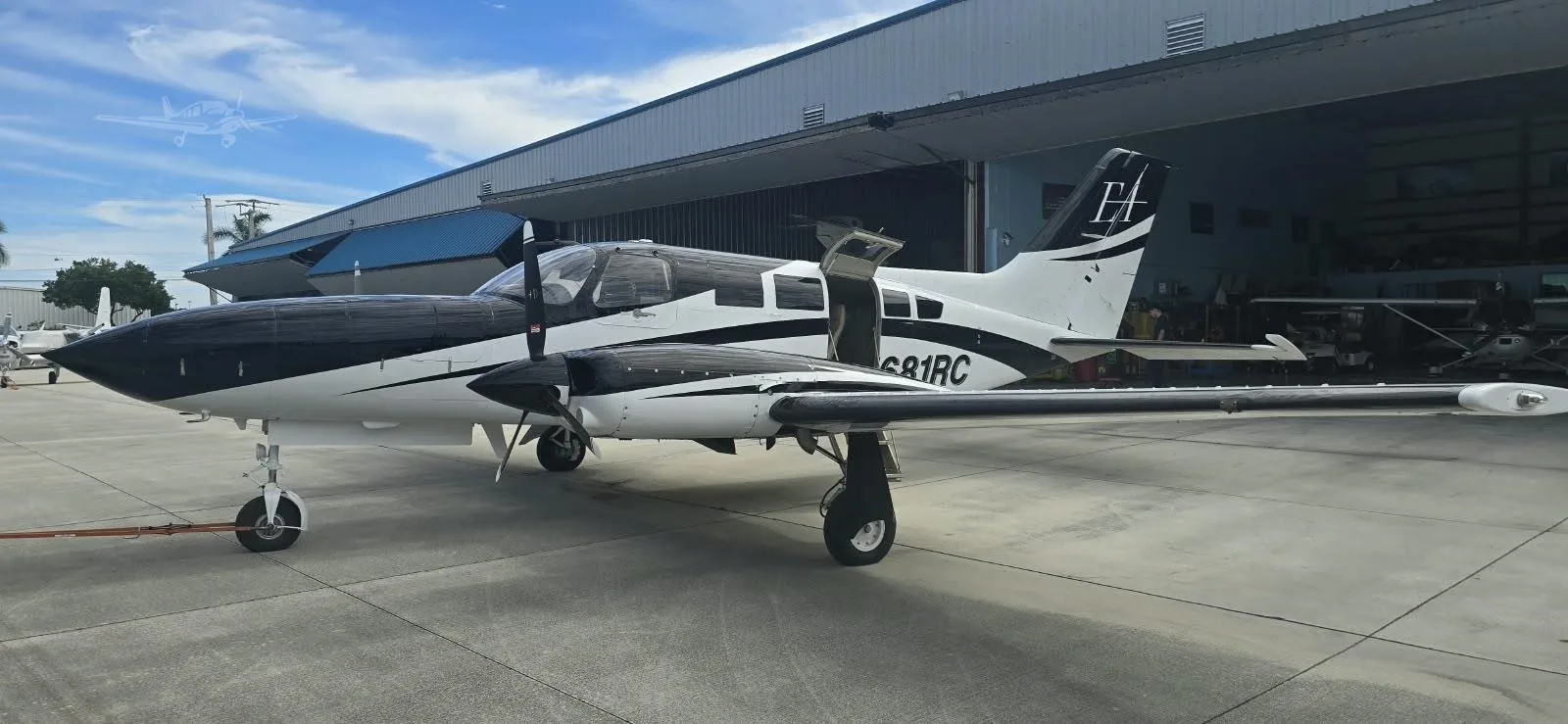
Cessna 402 for sale now
View all 6 for sale →Aircraft that this emergency procedures covers, listed on the sites Sprinkle reads. Asking prices, not sales. Cessna 402 asking prices by year built.


Also useful for the Cessna 402C
From Sprinkle’s library of aircraft documents. PDFs open from Sprinkle’s own files. Read Mar 10, 2026.
Want this document taken down? Request removal