CESSNA 550 Citation II Model Guide
CESSNA 550 Citation II · Model Guide
Overview
The CESSNA 550 Citation II is a twin-turbofan business jet powered by Pratt & Whitney Canada engines. It is certificated for single-pilot operation, and the 1988 AOPA flight report calls it an airplane that puts less pressure on a pilot than a light piston single. The library and registry records for this model are empty, so the figures below come from that flight report and from supplier, FAA and regulator documents. The flight-test figures are from one 1988 demonstration flight and are not a certified performance table.
- Single-pilot certificated. Fuel handling is simple: each engine feeds from the wing on its own side, and crossfeed is needed only in engine-out operation.
- In the 1988 test takeoff at 12,200 lb, 1,330 ft elevation and 35 degrees C, balanced field length was 3,600 ft. V1 was 101 kt, rotation 102 kt and V2 109 kt.
- The Honeywell electronic flight instrument and global navigation package in the test airplane needs substantial detailed training. Confirm which avionics a given airplane has.
- The standard air-cycle air conditioning leaves the cabin warm and the flight deck hot on the ground on a hot day. Freon air conditioning was an option, and an R134a retrofit is documented.
- Aftermarket support is documented: FAA MMEL Rev 11 (05/01/2024), Cleveland wheel and brake conversion, stretcher STC, LED wing light kits and an air conditioning STC.
Summary written by AI from the source document. Check the original before relying on it. See which parts of Sprinkle are written by AI.
Reference only, not for flight. Use the current approved manual for your aircraft. See terms, section 5.
Document
Source
Copy found at sprinkle.com. Sprinkle hosts a reference copy with an added summary, specifications and searchable full text.
Document details
- Type ·
- Model Guide
- Year ·
- 2026
- File size ·
- 53 KB
- Copy found at ·
- sprinkle.com
Specifications & performance
Extracted from this document.
Specifications
- Main gear tread (ft) ·
- 17.6
- Fuel capacity per wing (gal) ·
- 373
Performance
- Test elevation (ft) ·
- 1,330
- Balanced field length (ft) ·
- 3,600
V-speeds
- V1_KTS ·
- 101
- V2_KTS ·
- 109
- ROTATION_KTS ·
- 102
- INITIAL_CLIMB_KTS ·
- 180
- BEST_ENGINE_OUT_CLIMB_KTS ·
- 143
Weight & balance
- Test takeoff weight (lb) ·
- 12,200
Can the CESSNA 550 Citation II be flown single-pilot?
Yes. The 1988 AOPA report says the CESSNA 550 Citation II is certificated for single-pilot operation, and the cockpit is designed for it. The report also says the avionics need detailed training.
What runway did the CESSNA 550 Citation II need in the 1988 test?
At 12,200 lb takeoff weight, 1,330 ft elevation and 35 degrees C, the balanced field length for the CESSNA 550 Citation II was 3,600 ft. This was one demonstration flight, not a certified table.
What pilot type rating applies to the CESSNA 550 Citation II?
The FAA Flight Standardization Board report lists the CESSNA 550 Citation II under TCDS A22CE with the CE-500 pilot type rating.
How does the CESSNA 550 Citation II handle hot weather on the ground?
With the standard air-cycle machine, the cabin is warm and the flight deck hot on a hot day. Freon air conditioning was an option on the CESSNA 550 Citation II, and an R134a retrofit (STC SA2698SW) is documented.
What is the CESSNA 550 Citation II Model Guide?
The CESSNA 550 Citation II Model Guide is a model guide for the CESSNA 550 Citation II, dated 2026.
What year was the CESSNA 550 Citation II Model Guide published?
The CESSNA 550 Citation II Model Guide — the CESSNA 550 Citation II model guide on file — is dated 2026.
Common. More common than 95% of the aircraft models we track.
Full essential library on file for the CESSNA 550 Citation II.
CESSNA 550 Citation II for sale now
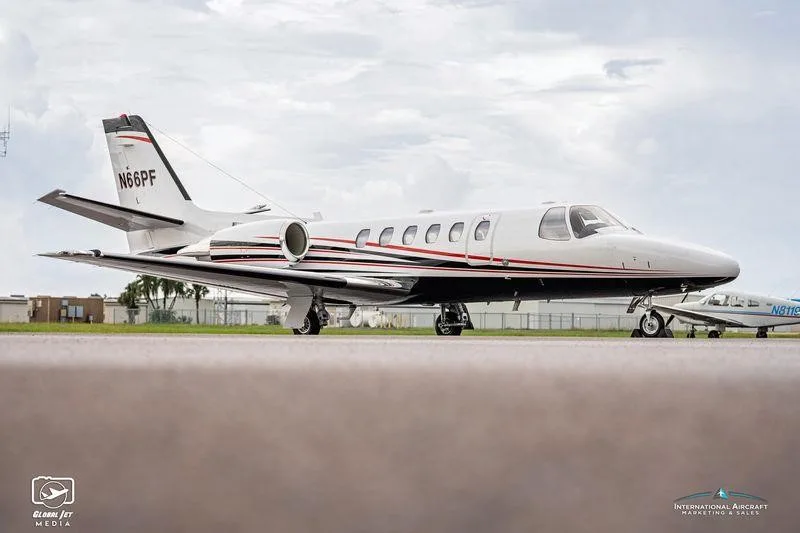

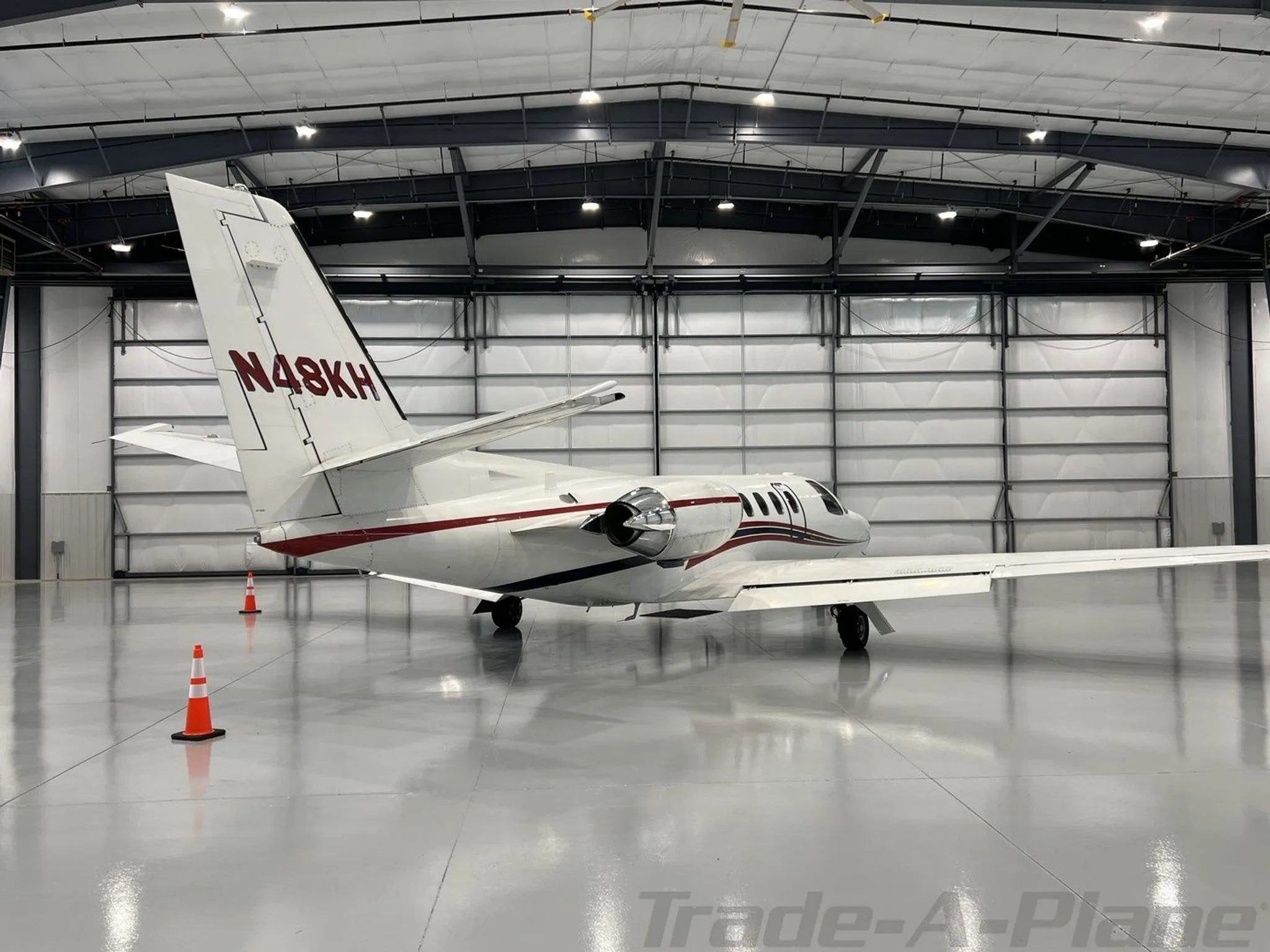
Free — save the 550 to your watchlist and track it in one place.
More CESSNA 550 Citation IImanuals & documents
See all 31 →- Installation Instructions for Citation Sunbeam LED Wing Landing/Taxi/Recognition LightsWiring Diagrams
- APPENDIX 1 to AMC for CAR-66 AIRCRAFT TYPE RATINGS FOR CAR-66 AIRCRAFT MAINTENANCE ENGINEER’S LICENCESupplemental Type Certificate
- Master Minimum Equipment List (MMEL)Other Documents
- INSTALLATION MANUAL FUEL/AIR DATA COMPUTERPerformance Data
- Type Acceptance Report TAR 10/21B/23 – Cessna 501-551Other Documents
- Cessna Citation CE-550 JT-15 Note Taking GuideChecklist
- Type Acceptance Report TAR 10/21B/12 – Cessna 500/550/560Other Documents
- PARTS LIST 199-164 CONVERSION KITParts Catalog
- AAIB Bulletin: 1/2010 G-JBIZ EW/C2008/03/02Other Documents
- Airworthiness Directives for CESSNA 550 Citation IIAirworthiness Directives
- WAAS/LASS Update to ICG WG-ASupplemental Type Certificate
- Maintenance ManualParts Catalog
Related documents
- Cessna Citation II Model GuideCessna Citation II · Model Guide
- 1986 CESSNA CITATION SIICessna Citation SII · Systems Description
- Cessna Citation V Model GuideCessna Citation V · Model Guide
- Cessna Citation 500 Model GuideCessna Citation 500 · Model Guide
- Cessna Citation SII Model GuideCessna Citation SII · Model Guide
If you fly the CESSNA 550 Citation II, you may also be researching these.
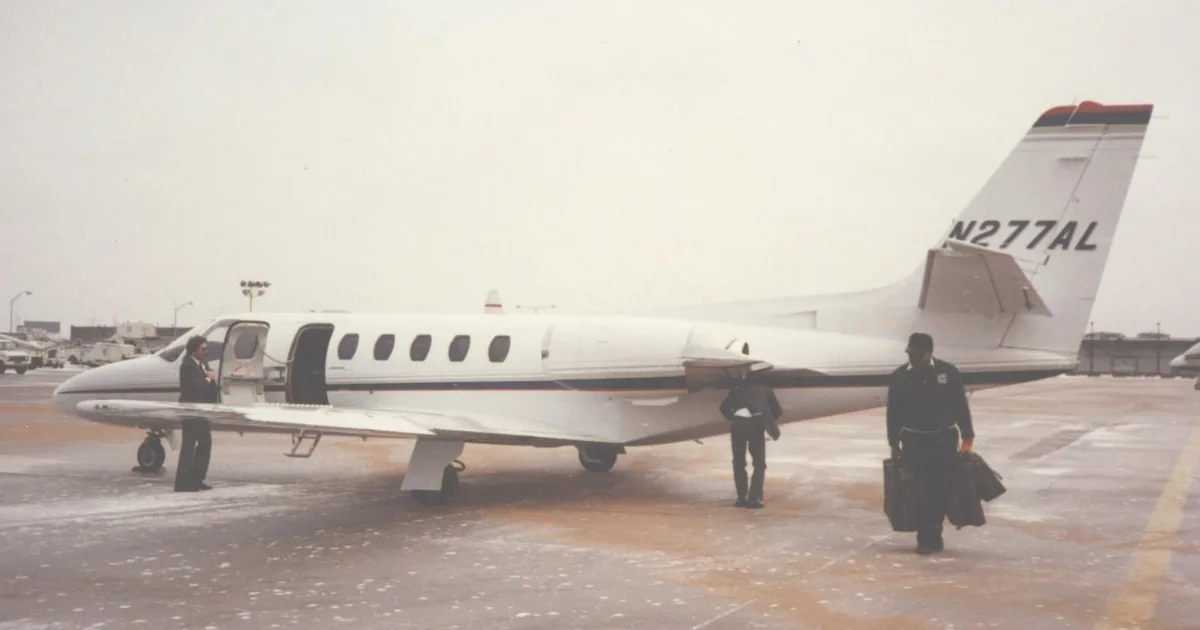

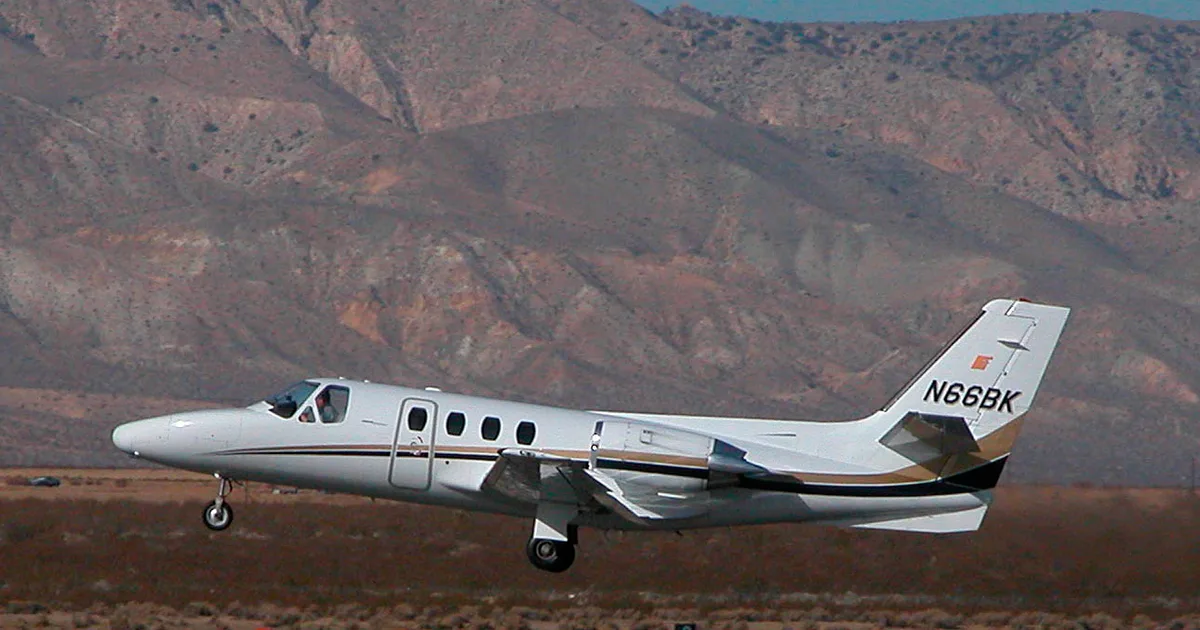
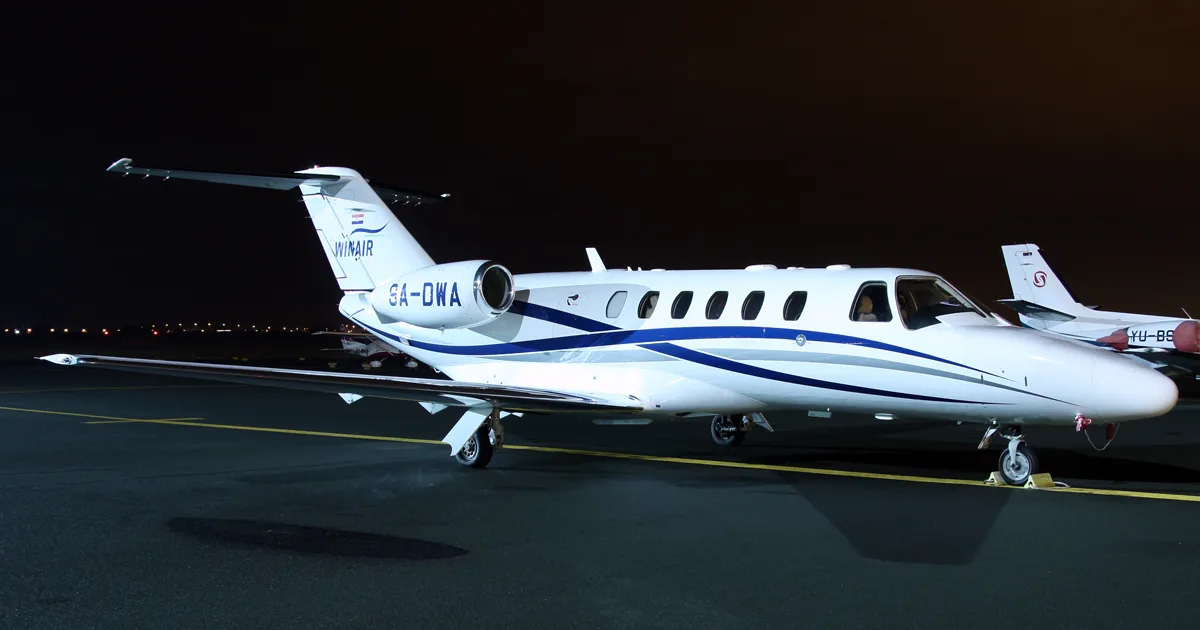
In this document
Operation and handling
The 1988 AOPA report says handling qualities were given as much attention as economy and performance, and the cockpit is designed for single-pilot approval. Start the engines with the starter button and introduce fuel when N1 reaches 8 percent. Main gear tread is 17.6 ft, so taxi down the yellow line on pavement. The aircraft is approved for sod field operations. Controls are light. The only time you are rushed to trim is on acceleration after takeoff, and a climb to 180 kt needs substantial retrimming.
Systems, avionics and cabin comfort
The tested airplane had a Honeywell electronic flight instrument system with flight director functions and a global navigation system. The report says full training is needed to operate it safely. The FAA Flight Standardization Board report notes a Universal EFI-890R avionics retrofit (STC ST03947AT) evaluated in Model 550 serial numbers 550-0001 through 550-0505 and 550-0550 through 550-0800. Standard air conditioning is an air-cycle machine. The Keith Products R134a vapor-cycle system (STC SA2698SW) is documented for the Citation 550, and its manual lists a service bulletin for refrigerant conversion to R134A.
Regulatory and type rating notes
The FSB report lists the 550 (Citation II, and Citation Bravo depending on serial number) under TCDS A22CE with pilot type rating CE-500. The Model 551 Citation II (the SP version, a separate model under TCDS A27CE) is listed in a New Zealand type acceptance report with maximum takeoff weight 12,500 lb, 11 seats maximum and JT15D-4 engines. Do not assume those 551 figures apply to a 550. The FAA Master Minimum Equipment List for 500-series Citations, which includes the 550, is at Revision 11, dated 05/01/2024.
Documented modifications and support
Documented options include a Cleveland Wheels & Brakes conversion kit (Parker 199-164, STC SA1297GL for Models 500 and 550). It is for aircraft with 10 inch main wheels and power anti-skid, and it uses phosphate ester hydraulic fluid. A stretcher and attendant seating kit is available under STC SA52RM and SA126RM, and it installs on the existing seat rails. A Whelen Sunbeam LED wing light kit (LSM-500-176, released 2-20-25) covers 550s with dual or single taxi light configurations. Check which kit matches the airplane's light setup.
Safety notes
- Before every takeoff, brief the engine-failure case. In the test, an engine failure below V1 (101 kt) meant abort, and above it the takeoff continued.
- Single-pilot operation is permitted, but the report says a solo pilot may want another pair of hands and eyes during takeoff. Do not fly the avionics suite without detailed training.
- Hot-day ground operation with the standard air-cycle air conditioning leaves the flight deck hot, so check the cooling system condition and whether an upgrade has been installed.
- The brake and wheel conversion kit applies only to models with power anti-skid and 10 inch main wheels. It requires phosphate ester hydraulic fluid. Confirm the installed brake and hydraulic fluid type before servicing.
Full document text
CESSNA 550 Citation II Model Guide The CESSNA 550 Citation II is a twin-turbofan business jet powered by Pratt & Whitney Canada engines. It is certificated for single-pilot operation, and the 1988 AOPA flight report calls it an airplane that puts less pressure on a pilot than a light piston single. The library and registry records for this model are empty, so the figures below come from that flight report and from supplier, FAA and regulator documents. The flight-test figures are from one 1988 demonstration flight and are not a certified performance table. • Single-pilot certificated. Fuel handling is simple: each engine feeds from the wing on its own side, and crossfeed is needed only in engine-out operation. • In the 1988 test takeoff at 12,200 lb, 1,330 ft elevation and 35 degrees C, balanced field length was 3,600 ft. V1 was 101 kt, rotation 102 kt and V2 109 kt. • The Honeywell electronic flight instrument and global navigation package in the test airplane needs substantial detailed training. Confirm which avionics a given airplane has. • The standard air-cycle air conditioning leaves the cabin warm and the flight deck hot on the ground on a hot day. Freon air conditioning was an option, and an R134a retrofit is documented. • Aftermarket support is documented: FAA MMEL Rev 11 (05/01/2024), Cleveland wheel and brake conversion, stretcher STC, LED wing light kits and an air conditioning STC. Operation and handling The 1988 AOPA report says handling qualities were given as much attention as economy and performance, and the cockpit is designed for single-pilot approval. Start the engines with the starter button and introduce fuel when N1 reaches 8 percent. Main gear tread is 17.6 ft, so taxi down the yellow line on pavement. The aircraft is approved for sod field operations. Controls are light. The only time you are rushed to trim is on acceleration after takeoff, and a climb to 180 kt needs substantial retrimming. Systems, avionics and cabin comfort The tested airplane had a Honeywell electronic flight instrument system with flight director functions and a global navigation system. The report says full training is needed to operate it safely. The FAA Flight Standardization Board report notes a Universal EFI-890R avionics retrofit (STC ST03947AT) evaluated in Model 550 serial numbers 550-0001 through 550-0505 and 550-0550 through 550-0800. Standard air conditioning is an air-cycle machine. The Keith Products R134a vapor-cycle system (STC SA2698SW) is documented for the Citation 550, and its manual lists a service bulletin for refrigerant conversion to R134A. Regulatory and type rating notes The FSB report lists the 550 (Citation II, and Citation Bravo depending on serial number) under TCDS A22CE with pilot type rating CE-500. The Model 551 Citation II (the SP version, a separate model under TCDS A27CE) is listed in a New Zealand type acceptance report with maximum takeoff weight 12,500 lb, 11 seats maximum and JT15D-4 engines. Do not assume those 551 figures apply to a 550. The FAA Master Minimum Equipment List for 500-series Citations, which includes the 550, is at Revision 11, dated 05/01/2024. Documented modifications and support Documented options include a Cleveland Wheels & Brakes conversion kit (Parker 199-164, STC SA1297GL for Models 500 and 550). It is for aircraft with 10 inch main wheels and power anti-skid, and it uses phosphate ester hydraulic fluid. A stretcher and attendant seating kit is available under STC SA52RM and SA126RM, and it installs on the existing seat rails. A Whelen Sunbeam LED wing light kit (LSM-500-176, released 2-20-25) covers 550s with dual or single taxi light configurations. Check which kit matches the airplane's light setup. Safety notes: • Before every takeoff, brief the engine-failure case. In the test, an engine failure below V1 (101 kt) meant abort, and above it the takeoff continued. • Single-pilot operation is permitted, but the report says a solo pilot may want another pair of hands and eyes during takeoff. Do not fly the avionics suite without detailed training. • Hot-day ground operation with the standard air-cycle air conditioning leaves the flight deck hot, so check the cooling system condition and whether an upgrade has been installed. • The brake and wheel conversion kit applies only to models with power anti-skid and 10 inch main wheels. It requires phosphate ester hydraulic fluid. Confirm the installed brake and hydraulic fluid type before servicing.