Cessna Citation Bravo Model Guide
Cessna Citation Bravo · Model Guide
Overview
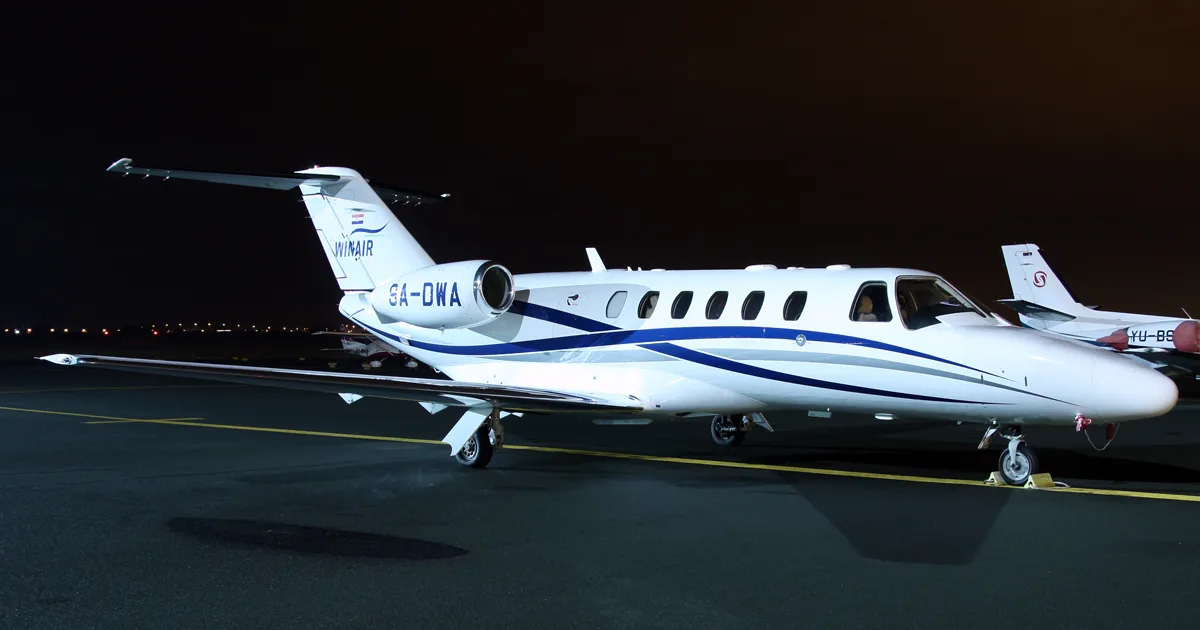
The Cessna Citation Bravo is a twin-turbofan light business jet built from 1997 to 2006. It uses Pratt & Whitney PW530A engines and Honeywell Primus 1000 avionics. Library data lists 7 to 9 seats, and listed examples are configured for 8 or 11 passengers. Over the Citation II it adds standard thrust reversers, trailing-link landing gear and a quieter cabin.
- Max takeoff weight is 14,800 lbs and max ramp weight is 15,000 lbs. A 500 lb weight increase in 1997 added up to 215 miles of seats-full range.
- Family-level context only: Citation 550 models reach up to 2300 nm range, 403 kt cruise and 45000 ft ceiling. These are not Bravo-specific figures.
- Fuel figures differ by source (4,800, 4,824 and 4,860 lbs). Confirm against the specific aircraft's weight and balance.
- CAE initial training is 13 days with 46 hrs of ground school and 28 hrs in the simulator. Recurrent courses run 4 or 5 days.
Summary written by AI from the source document. Check the original before relying on it. See which parts of Sprinkle are written by AI.
Reference only, not for flight. Use the current approved manual for your aircraft. See terms, section 5.
Document
Source
Copy found at sprinkle.com. Sprinkle hosts a reference copy with an added summary, specifications and searchable full text.
Document details
- Type ·
- Model Guide
- Year ·
- 2026
- File size ·
- 50 KB
- Copy found at ·
- sprinkle.com
Specifications & performance
Extracted from this document.
Specifications
- Cabin width (ft) ·
- 4.9
- Cabin door height (in) ·
- 50.7
- Cabin max headroom (in) ·
- 56.3
- Aft baggage capacity (lb) ·
- 500
Performance
- Max tailwind (kt) ·
- 10
- Max crosswind (kt) ·
- 15
- Rate of climb (fpm) ·
- 2,500
- Service ceiling (ft) ·
- 43,000
V-speeds
- VMCA_KTS ·
- 78
- VMCG_KTS ·
- 89
- VB_TURBULENCE_KTS ·
- 180
- VFE_FULL_DOWN_KTS ·
- 174
- VFE_UP_TO_15_DEG_KTS ·
- 200
- VMO_ABOVE_8000_FT_KTS ·
- 275
- VMO_BELOW_8000_FT_KTS ·
- 260
Weight & balance
- Max ramp weight (lb) ·
- 15,000
- Max landing weight (lb) ·
- 13,500
- Max takeoff weight (lb) ·
- 14,800
- Max zero fuel weight (lb) ·
- 11,300
- Typical basic operating weight (lb) ·
- 9,375
How many people does the Cessna Citation Bravo seat?
Library data lists 7 to 9 seats for the Cessna Citation Bravo. Listed examples are set up for 8 or 11 passengers, so check the actual layout. The wider Citation 550 family goes up to 12 passengers.
What are the Cessna Citation Bravo's key weights?
The Cessna Citation Bravo's listed weights are 15,000 lbs max ramp, 14,800 lbs max takeoff, 13,500 lbs max landing and 11,300 lbs max zero fuel. A typical basic operating weight is 9,375 lbs.
What engines does the Cessna Citation Bravo use, and when are they overhauled?
The Cessna Citation Bravo uses two Pratt & Whitney PW530A turbofans. One listing shows overhaul at 8,000 hours, and another shows overhaul due in 1591 hours. Check each engine's status and program enrollment.
What training does the Cessna Citation Bravo need?
CAE offers Cessna Citation Bravo courses in a Level D simulator in Dallas. Initial is 13 days with 46 hrs of ground school and 28 hrs of simulator. Recurrent courses run 4 or 5 days.
What is the Cessna Citation Bravo Model Guide?
The Cessna Citation Bravo Model Guide is a model guide for the Cessna Citation Bravo, dated 2026.
What year was the Cessna Citation Bravo Model Guide published?
The Cessna Citation Bravo Model Guide — the Cessna Citation Bravo model guide on file — is dated 2026.
Common. More common than 95% of the aircraft models we track.
Most owners only have the POH. Here's the essential set for the Cessna Citation Bravo.
- Pilot's Operating Handbook / AFM
- Checklist
- Maintenance Manual
- Parts Catalog (IPC)
- Systems & Wiring
- Service Bulletins on file
- Type Certificate (TCDS)
Cessna Citation Bravo for sale now
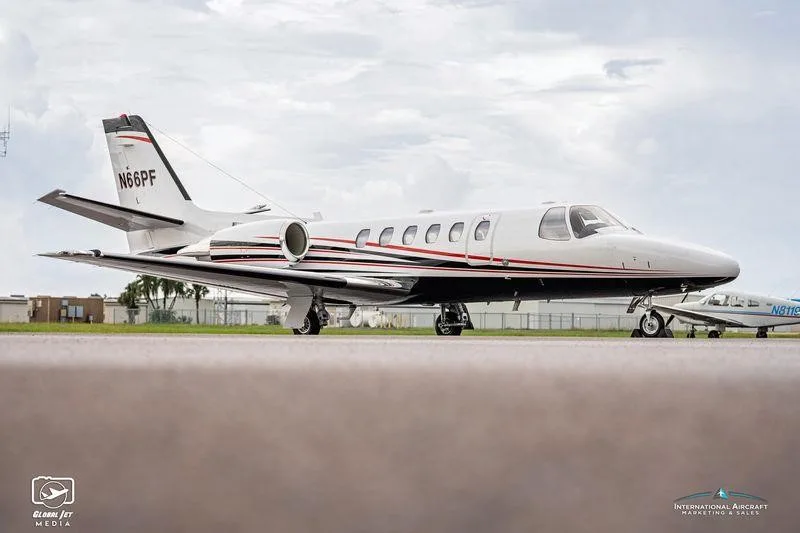

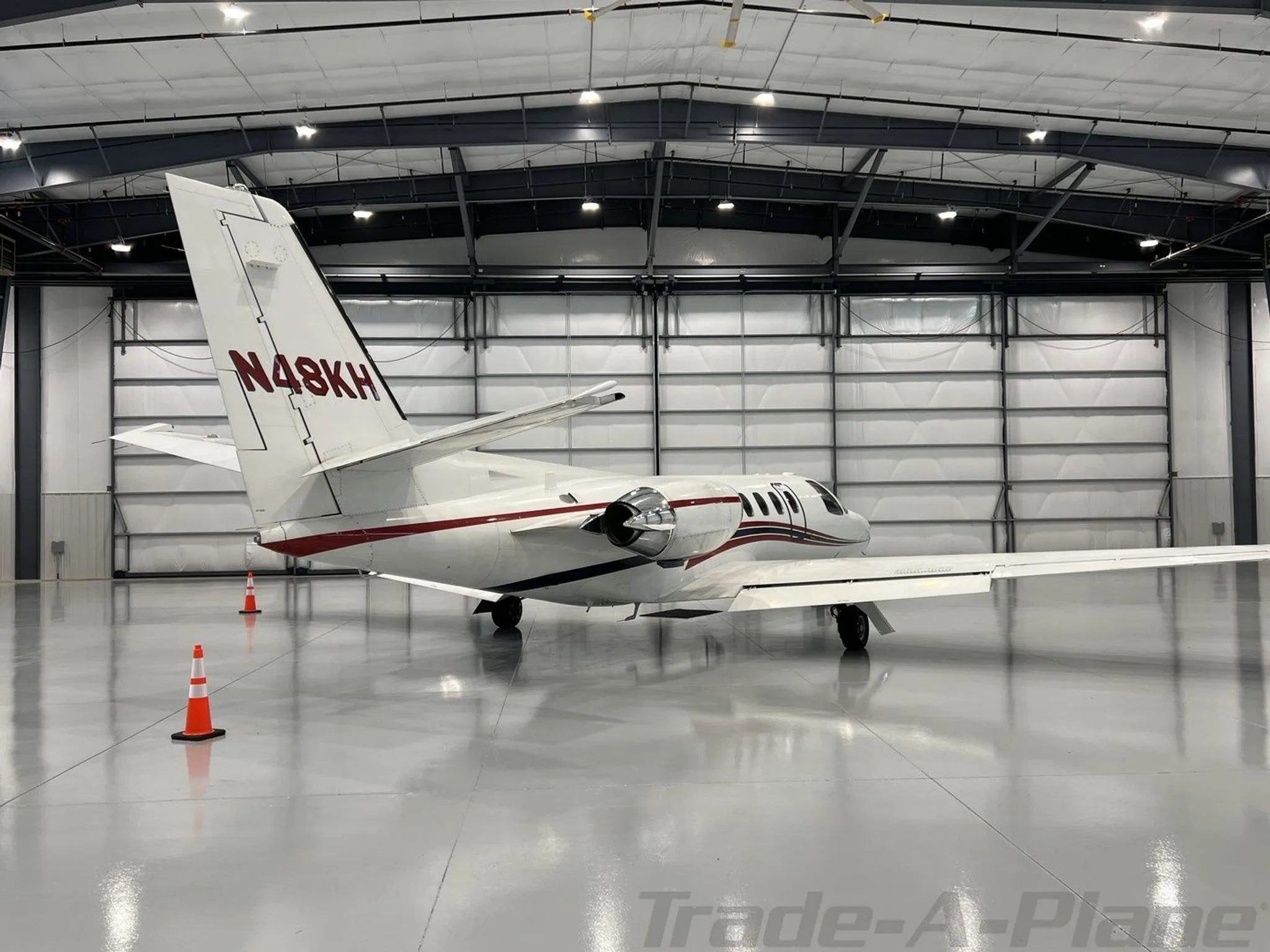
Free — save the 550 to your watchlist and track it in one place.
More Cessna Citation Bravomanuals & documents
- AAIB Bulletin: G-CGEI EW/G2012/04/12Other Documents
- 2001 CESSNA CITATION BRAVOSystems Description
- Specifications and SummarySpecifications
- Cessna Citation BravoFlight Manual
- Cessna Citation II BravoChecklist
- Cessna Citation Bravo Avionics ManualAvionics Manual
- Cessna Citation Bravo C-550 Emergency ProceduresEmergency Procedures
- Pilot TrainingEmergency Procedures
- Wiring Diagram for Cessna Citation BravoWiring Diagrams
Related documents
- Cessna Citation BravoCessna Citation Bravo · Flight Manual
- Cessna Citation II BravoCessna Citation Bravo · Checklist
- CESSNA 550 Citation II Model GuideCESSNA 550 Citation II · Model Guide
- Specifications and SummaryCessna Citation Bravo · Specifications
- Cessna Citation V Model GuideCessna Citation V · Model Guide
If you fly the Cessna Citation Bravo, you may also be researching these.
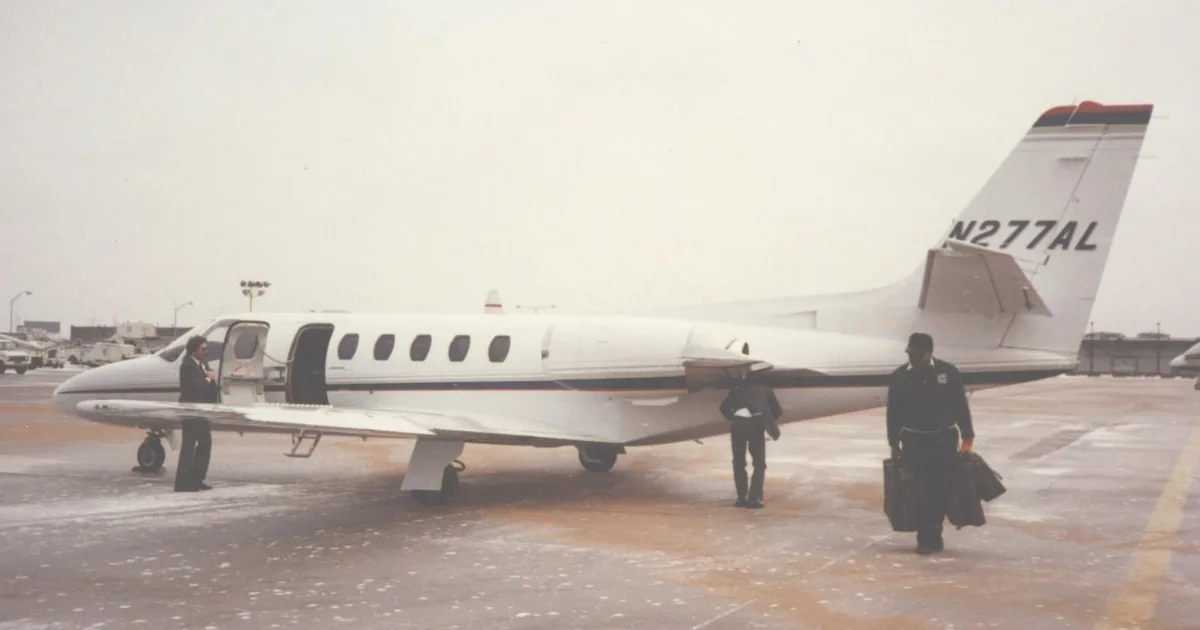

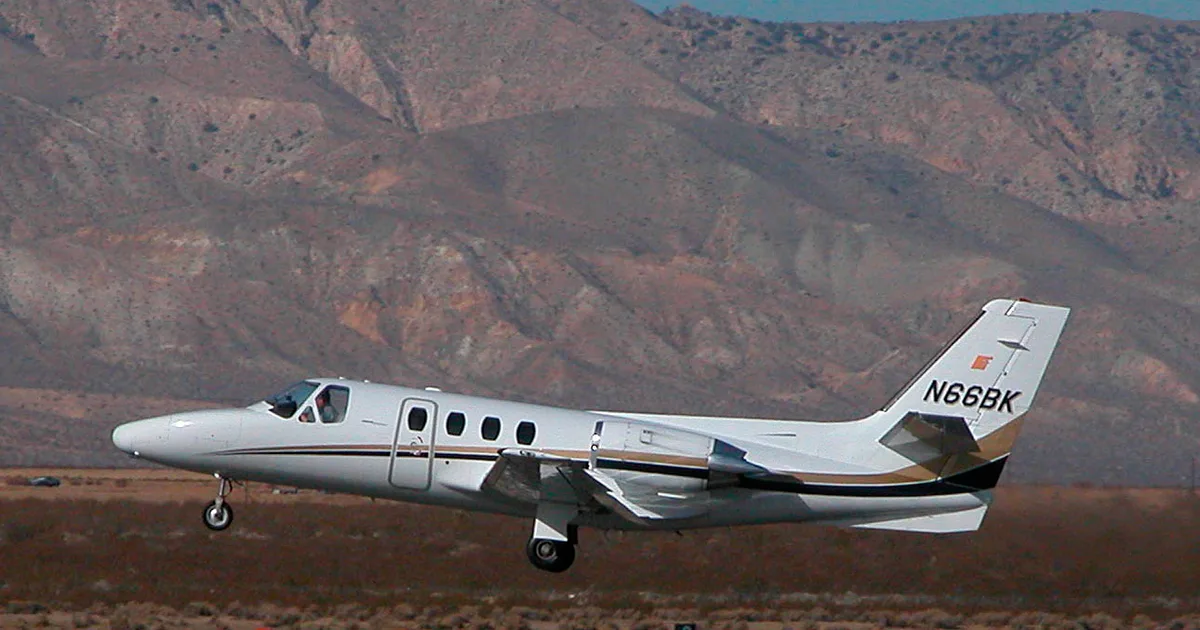
In this document
What it carries
The cabin has a 4.9-foot cross-section with 56.3 inches of maximum headroom. The aft lavatory has only 47.6 inches. The unpressurized aft baggage compartment holds 500 pounds. With full fuel, the Bravo can carry seven 170-pound passengers with 22 pounds of luggage each. Listed examples seat 8 (the lavatory is belted as the 8th seat) or 11 in a high-density layout.
Condition and maintenance to check
Two listed 2001 examples show the range. One has 5,839 hours and 4,809 landings, with engine overhaul at 8,000. The other has 6,684 hours and 8515 cycles, with overhaul due in 1591 hours and engines not enrolled in a program. Both track maintenance on CAMP. Phases 1-4 recur every 24 months/300 hrs, and Phase 5 every 36 months/1,200 hrs.
Systems and avionics
The Cessna Citation Bravo has Honeywell Primus 1000 avionics with three displays and dual AZ-850 air data computers. Two primary pitot-static systems feed them, and a third backs up the standby instruments. Thrust reversers are standard. The pressurization differential relief valves act at 8.9 psi. Listed examples add Garmin 650/750 FMS, RVSM and ADS-B, so verify equipment on the specific aircraft.
Safety notes
- 2012 UK incident: nose gear failed to extend and no cause was found. A right main gear uplock hydraulic leak was found. Check gear rigging and hydraulics.
- Limits: max crosswind 15 kt, max tailwind 10 kt, Mmo 0.700, Vmca 78 and Vmcg 89 KIAS.
- Inadvertent thrust reverser deployment: abort below V1. Above V1, continue, use emergency stow, and stay at or below 125 KIAS until it stows.
Full document text
Cessna Citation Bravo Model Guide The Cessna Citation Bravo is a twin-turbofan light business jet built from 1997 to 2006. It uses Pratt & Whitney PW530A engines and Honeywell Primus 1000 avionics. Library data lists 7 to 9 seats, and listed examples are configured for 8 or 11 passengers. Over the Citation II it adds standard thrust reversers, trailing-link landing gear and a quieter cabin. • Max takeoff weight is 14,800 lbs and max ramp weight is 15,000 lbs. A 500 lb weight increase in 1997 added up to 215 miles of seats-full range. • Family-level context only: Citation 550 models reach up to 2300 nm range, 403 kt cruise and 45000 ft ceiling. These are not Bravo-specific figures. • Fuel figures differ by source (4,800, 4,824 and 4,860 lbs). Confirm against the specific aircraft's weight and balance. • CAE initial training is 13 days with 46 hrs of ground school and 28 hrs in the simulator. Recurrent courses run 4 or 5 days. What it carries The cabin has a 4.9-foot cross-section with 56.3 inches of maximum headroom. The aft lavatory has only 47.6 inches. The unpressurized aft baggage compartment holds 500 pounds. With full fuel, the Bravo can carry seven 170-pound passengers with 22 pounds of luggage each. Listed examples seat 8 (the lavatory is belted as the 8th seat) or 11 in a high-density layout. Condition and maintenance to check Two listed 2001 examples show the range. One has 5,839 hours and 4,809 landings, with engine overhaul at 8,000. The other has 6,684 hours and 8515 cycles, with overhaul due in 1591 hours and engines not enrolled in a program. Both track maintenance on CAMP. Phases 1-4 recur every 24 months/300 hrs, and Phase 5 every 36 months/1,200 hrs. Systems and avionics The Cessna Citation Bravo has Honeywell Primus 1000 avionics with three displays and dual AZ-850 air data computers. Two primary pitot-static systems feed them, and a third backs up the standby instruments. Thrust reversers are standard. The pressurization differential relief valves act at 8.9 psi. Listed examples add Garmin 650/750 FMS, RVSM and ADS-B, so verify equipment on the specific aircraft. Safety notes: • 2012 UK incident: nose gear failed to extend and no cause was found. A right main gear uplock hydraulic leak was found. Check gear rigging and hydraulics. • Limits: max crosswind 15 kt, max tailwind 10 kt, Mmo 0.700, Vmca 78 and Vmcg 89 KIAS. • Inadvertent thrust reverser deployment: abort below V1. Above V1, continue, use emergency stow, and stay at or below 125 KIAS until it stows.