
AAIB Bulletin: 4/2016
Service Bulletins for the Cessna Citation CJ2+
PDF, 6 pages, 298 KB, from Sprinkle’s own files.
What it covers
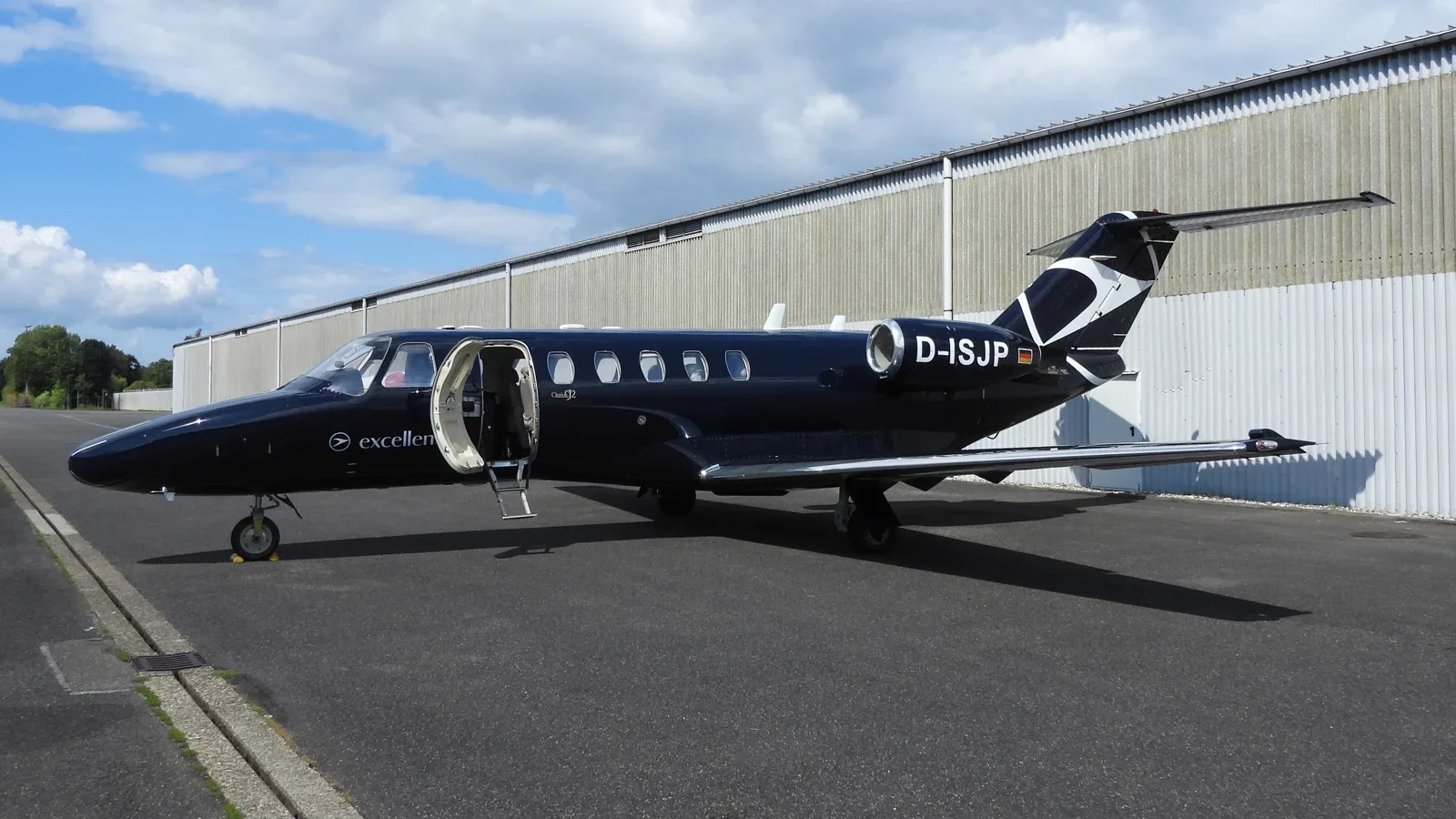
This document is an AAIB Bulletin detailing an incident involving the Cessna Citation CJ2, registration D-ISJP. The bulletin outlines the circumstances of the incident, including the flight crew's approach to Blackpool Airport and the misidentification of Warton Aerodrome. It provides a comprehensive analysis of the events leading to the incident, including communication exchanges between the flight crew and air traffic control (ATC). The bulletin serves as a report for aviation safety and aims to highlight the importance of clear communication and situational awareness in aviation operations.
Key points
- Aircraft involved: Cessna Citation CJ2, D-ISJP
- Incident date: March 27, 2015
- Total flight crew experience: Commander - 12,000 hours; Co-pilot - 250 hours
- Misidentified approach: Warton Aerodrome instead of Blackpool Airport
- Key communication failure: Incorrect readbacks and lack of situational awareness
Main sections
Incident Overview
The bulletin describes an incident involving the Cessna Citation CJ2, D-ISJP, which occurred on March 27, 2015. The aircraft was on a positioning flight from Bournemouth to Blackpool with two crew members on board. During the approach, the crew mistakenly lined up with Runway 25 at Warton Aerodrome instead of Runway 28 at Blackpool Airport. The incident highlights the importance of situational awareness and communication in aviation.
Flight Crew Experience
The commander of the aircraft had a total of 12,000 flying hours, with 5,500 hours on the Cessna Citation CJ2. The co-pilot had 250 flying hours, with 50 hours on type. This flight was part of the co-pilot's line training, which may have contributed to the misidentification of the airfields.
Communication Breakdown
The bulletin details several communication exchanges between the flight crew and ATC. At critical points, the crew failed to read back instructions correctly, leading to confusion about their position and intended approach. The lack of standard radio telephony discipline was identified as a contributing factor to the incident.
ATC Coordination
Warton ATC became aware of the aircraft's misidentification and offered to provide radar vectoring. However, Blackpool ATC did not utilize this option, which could have resolved the situation earlier. The bulletin emphasizes the need for effective coordination between ATC units.
Conclusions and Recommendations
The analysis concludes that the incident was primarily due to a lack of situational awareness and communication errors. It recommends improved training for flight crews on radio communication and situational awareness to prevent similar incidents in the future.
Safety notes
- Ensure clear communication and readbacks with ATC to avoid misunderstandings.
- Maintain situational awareness, especially when approaching multiple airfields.
The document’s text
Show the text read from the PDF
50 ©Crown copyright 2016 AAIB Bulletin: 4/2016 D-ISJP EW/G2015/03/13 INCIDENT Aircraft Type and Registration: Cessna Citation CJ2, D-ISJP No & Type of Engines: 2 Williams FJ44-3A-24 turbofan engines Year of Manufacture: 2001 Date & Time (UTC): 27 March 2015 at 1440 hrs Location: Warton Aerodrome, Preston, Lancashire Type of Flight: Commercial Air Transport Persons on Board: Crew - 2 Passengers - None Injuries: Crew - None Passengers - N/A Nature of Damage: None Commander’s Licence: Commercial Pilot’s Licence Commander’s Age: 51 years Commander’s Flying Experience: 12,000 hours (of which 5,500 were on type) Last 90 days - 80 hours Last 28 days - 40 hours Information Source: Aircraft Accident Report Form submitted by the pilot, information supplied by the aircraft operator, ATC reports and a Defence Air Safety Occurrence Report Synopsis The flight crew were positioning for a visual approach to Runway 28 at Blackpool Airport (EGNH) but lined up with Runway 25 at Warton Aerodrome (EGNO), 5.5 nm to the south-east. The aircraft descended to an altitude of 1,000 ft amsl, levelled and flew overhead the runway at Warton, before being repositioned for a landing on Runway 28 at Blackpool. There were several opportunities to identify and correct the misunderstanding. History of the flight The aircraft was on a positioning flight from Bournemouth to Blackpool, with only the two flight crew on board. The weather conditions in the Blackpool area were clear: the actual meteorological reports from Warton and Blackpool both indicated visibility of more than 10 km, surface winds from the south-west at 8 kt, with a few clouds above 3,000 ft. The co-pilot, who was pilot flying (PF), carried out an approach briefing in which he advised the commander of the location of Warton Aerodrome, nearby, and the risk of confusing it with Blackpool. The aircraft approached the Blackpool area from the south at FL50. At 1441 hrs, the crew made first contact with Blackpool ATC and were advised to ‘standby’. A minute later the following transmissions took place: -- 1 of 6 -- 51 ©Crown copyright 2016 AAIB Bulletin: 4/2016 D-ISJP EW/G2015/03/13 TIME STATION TRANSMISSION 1442 ATC delta india sierra juliet papa blackpool approach information x ray current qnh one zero one nine procedural service next call approaching the bravo papa lima Aircraft yes copy ATC delta juliet papa procedural service next call approaching the bravo papa lima Aircraft er yes of course The aircraft started a right turn, initially towards the ‘BPL’, an NDB located at the airfield. However, the turn continued until the aircraft was on an easterly track (Figure 1), heading directly towards the POL VOR (33 nm east of BPL). At 1443 hrs, Blackpool ATC requested the range of the aircraft from the BPL, the reply was “thirty eight miles inbound papa oscar lima”. This was acknowledged by ATC. Figure 1 Radar track of approach to Blackpool Airport (altitudes amsl) At 1444 hrs, the commander contacted ATC, reported the field in sight and requested a visual approach - the aircraft was 3.3 nm south of Blackpool and 4.5 nm west-south-west of Warton. The aircraft was cleared to continue towards the BPL and to report when approaching the beacon. The commander replied “that will be fine”. -- 2 of 6 -- 52 ©Crown copyright 2016 AAIB Bulletin: 4/2016 D-ISJP EW/G2015/03/13 At 1446 hrs, Warton ATC contacted Blackpool ATC by telephone to advise them of the position of D-ISJP, south-east of Warton, heading east. The controllers agreed that the aircraft had probably misidentified the airport. Warton ATC offered to accept the aircraft for radar vectoring, if required. The Blackpool controller replied that he would take up the offer if the need arose. Blackpool ATC then contacted D-ISJP to query its position. The commander confirmed that the aircraft was south-east of Warton and reported that he was visual with both airfields. The co-pilot, in his report, noted that he had advised the commander that he was not visual with either airfield. Blackpool ATC co-ordinated with Warton ATC for the aircraft to turn towards Blackpool and then cleared D-ISJP for a visual approach to Runway 28, to report on final approach not below an altitude of 2,000 ft. The clearance was acknowledged. The controller also cautioned the crew about the location of Warton Aerodrome, 6 nm to the south-east of Blackpool. There was no reply from the aircraft. The commander then disconnected the autopilot, took control and flew the aircraft manually. The aircraft turned left and tracked to the west, towards Blackpool. At 1449 hrs, Blackpool ATC asked D-ISJP to report when established on final approach. The commander replied, reporting that they were on final approach for Runway 28 at 12.5 nm. The following transmissions then took place: TIME STATION TRANSMISSION 1449 ATC delta juliet papa roger continue approach and er next report on a five mile final Aircraft next report five mile final delta juliet papa ATC delta juliet papa initially maintain not below altitude one thousand seven hundred feet Aircraft and initially not above one thousand seven hundred feet delta juliet papa The aircraft then turned 30° to the left, directly towards Runway 25 at Warton and the commander handed control back to the co-pilot. At 1451 hrs, with the aircraft 2.5 nm to the east of Warton, Blackpool ATC requested its range. The commander reported they were at 7 miles. Meanwhile, an Embraer 145 was backtracking Runway 25 at Warton. The next transmissions were: 1452 ATC delta juliet papa roger continue approach you are number two and a number one is a cherokee on a touch and go ahead if you can take minimum clean speed for the rest of the approach please Aircraft yo we have the traffic on the field -- 3 of 6 -- 53 ©Crown copyright 2016 AAIB Bulletin: 4/2016 D-ISJP EW/G2015/03/13 Warton ATC telephoned Blackpool ATC to advise them that D-ISJP was 1.5 nm from Runway 25 at Warton, descending on final approach. Blackpool ATC contacted D-ISJP and asked for confirmation that the crew were still in visual contact with Warton. The commander responded that they were over Warton. A clearance to land on Runway 28 at Blackpool was issued and acknowledged. The co-pilot, having realised that they were lined up with the wrong runway, carried out a go-around, during which the commander initiated a turn to the left. The co-pilot resumed control and, in response to a query from Blackpool ATC, advised that visual contact with Blackpool had been lost. Blackpool ATC instructed the aircraft to turn right on to a track of 280° and to climb to 2,000 ft. The crew then completed a visual approach and landed on Runway 28 at Blackpool. Recorded data Radar information was available from three radar heads. The radar at St Annes, which is located less than 1 nm to the south-east of Blackpool Airport, provided a complete record of the approach and landing (Figure 1). Ground based recordings of RTF communications between ATC and the aircraft, and telephone conversations between controllers at Blackpool and Warton airfields, were also available. Flight crew information The commander had recorded a total of 12,000 flying hours, of which 5,500 were on type. The co-pilot had a total of 250 flying hours, of which 50 hours were on type. This flight was a line training sector, with the commander responsible for making the radio transmissions. Both pilots provided reports to the investigation. Airport information Runways The main runway at Blackpool Airport is Runway 28/10. It is 1,869 m in length, 46 m wide and is equipped with approach lighting. The main runway at Warton is Runway 25/07. It is 2,422 m in length, 46 m wide and is also equipped with approach lighting. There have been several instances of misidentification of the two airfields by inbound aircraft. Air Traffic Control Warton Aerodrome Traffic Zone (ATZ) is a circle of 2.5 nm radius, centred on the main runway, with an upper limit of 2,000 ft. It is notified as permanently active. Permission to enter the ATZ must be obtained from Warton ATC, when available, or from Blackpool ATC. Otherwise, traffic must remain clear. Additionally, there is a Military Aerodrome Traffic Zone (MATZ) of non-standard dimensions at Warton. Warton air traffic services operate on weekdays only: at the time of the incident radar services were operational. MATZ crossing for traffic inbound to Blackpool is co-ordinated by Blackpool ATC. Blackpool ATC operates a procedural service and radar is not available. At the time of the incident, the Blackpool combined approach/tower radio frequency was busy, with several traffic movements in the vicinity of the airport. -- 4 of 6 -- 54 ©Crown copyright 2016 AAIB Bulletin: 4/2016 D-ISJP EW/G2015/03/13 Analysis The co-pilot was under training and there was also a large experience gradient between the two pilots. The co-pilot identified there was a potential for misidentification of the two airfields in his approach briefing but, even so, the aircraft made an approach to the wrong airfield. At a late stage, the co-pilot recognised the error and initiated a go-around. Warton ATC were notified of the aircraft by Blackpool ATC when it was co-ordinated through the western section of the MATZ. The confusion started to arise on the first radio contact between the aircraft and Blackpool ATC. The aircraft was cleared to the BPL but the commander did not read back the clearance. The controller repeated the clearance but again it was not read back. Blackpool ATC then requested the range of the aircraft from the BPL but the response was read back with reference to POL, a VOR located 33 nm to the east of Blackpool Airport. The incorrect readback was not corrected and, unknown to the controller, the aircraft turned east, directly towards POL. This suggested that the crew believed they had been cleared towards POL. The commander reported the field in sight and was asked to continue towards the BPL. His readback did not include the instruction to continue towards the BPL, an omission that was not challenged. Thus, a second opportunity to resolve the misunderstanding was missed and the aircraft continued tracking in the direction of the POL. Two minutes later, Warton ATC, who had radar contact with the aircraft, became concerned about its position and contacted Blackpool ATC. Warton ATC offered to provide a radar service for the aircraft but Blackpool ATC did not use this option. Thus, a further opportunity to resolve the situation was missed. When the commander confirmed he was visual with both airfields, Blackpool ATC issued a clearance for a visual approach. The controller again cautioned the crew about the position of Warton, to the south-east of Blackpool. The commander then disconnected the autopilot, took control and flew the aircraft manually. The aircraft turned to the left and initially tracked towards Blackpool but then turned further left towards Warton. Blackpool ATC contacted the aircraft, asking for its range and advised the crew of traffic at Blackpool, on a touch-and-go. At the same time, an aircraft was backtracking Runway 25 at Warton, which may have confirmed to the crew that they were looking at the correct runway. Warton telephoned Blackpool once more, to inform them that D-ISJP had misidentified the airfield. The co-pilot, meanwhile, realised that the aircraft was at the wrong airfield and carried out a go-around. He also, temporarily, took over the radio transmissions and responded to an enquiry from Blackpool ATC. The aircraft was then re-directed towards Blackpool and the situation was resolved. Conclusions The recorded radio transmissions from this incident demonstrate how a lack of standard radio telephony discipline can contribute to developing a misunderstanding. It arose first, -- 5 of 6 -- 55 ©Crown copyright 2016 AAIB Bulletin: 4/2016 D-ISJP EW/G2015/03/13 perhaps, because there is some similarity between the sound of “bravo papa lima” and “papa oscar lima”, but, once begun, it was exacerbated by incomplete readbacks and the reduced situational awareness of the crew. Both ATC units were aware that the aircraft was going in the wrong direction but accepted the commander’s assurances. -- 6 of 6 --
Read from the PDF by machine, so tables and diagrams come out rough. The PDF is the document.
More Cessna Citation CJ2+ documents
All 15 →- 500/525 Series Breakout Session
This document is a service bulletin for the Cessna 500 and 525 series aircraft, including the Citation CJ2 and CJ2+. It provides important updates, technical support information, and maintenance recommendations for operators and maintenance personnel. The bulletin covers various topics such as troubleshooting procedures, maintenance practices, and safety advisories relevant to the aircraft models mentioned. It aims to enhance operational safety and efficiency by informing users of best practices and necessary actions to maintain the aircraft in optimal condition.
- Cessna Citation CJ2+ Model Guide
The Cessna Citation CJ2+ is a twin-engine light jet built 2006 to 2010 with 6 to 9 seats. The brochure calls it single-pilot capable. It has Williams FJ44 turbofans and Collins Pro Line 21 avionics. The brochure quotes a full-fuel NBAA IFR range of 1,613 nm.
- CITATION JET PILOTS ASSOCIATION STANDARD OPERATING PRACTICES for CITATION SINGLE PILOT OPERATIONS Model CE-525 Series ProLine 21 Configuration
This document serves as the Standard Operating Practices (SOP) for single pilot operations of Citation aircraft, specifically tailored for the Citation CE-525 series, including the CJ2+. It is designed to enhance safety and operational efficiency for pilots operating these aircraft. The SOPs are compiled from various industry sources and aim to establish a consistent approach to flight operations. They cover general practices applicable to all Citation models, as well as model-specific techniques for the CJ2+ and other variants. The document emphasizes the importance of adhering to Federal Aviation Regulations (FARs) and the necessity of using official documentation for flight operations. It includes guidelines on pilot physiological considerations, flight planning, takeoff and landing procedures, and emergency protocols, among other critical operational aspects.
V Speeds Reference · 2022PDF · 41 pages · 1.5 MB of CITATION JET PILOTS ASSOCIATION STANDARD OPERATING PRACTICES for CITATION SINGLE PILOT OPERATIONS Model CE-525 Series ProLine 21 Configuration, opens in a new tabRequest removal of CITATION JET PILOTS ASSOCIATION STANDARD OPERATING PRACTICES for CITATION SINGLE PILOT OPERATIONS Model CE-525 Series ProLine 21 Configuration - Air Conditioning - Air Conditioning Compressor Motor Fan Replacement
This service letter, SL525A-21-03, provides instructions and parts for replacing the air conditioning compressor motor fan on Cessna Citation models 525A (CJ2) and 525A (CJ2+). It details the compliance requirements, which are optional and at the discretion of the aircraft owner. The document outlines the necessary steps for the installation of an improved fan blade, including safety precautions and maintenance practices. It emphasizes the importance of following the instructions precisely and using only approved parts to ensure compliance and safety. The letter also includes information on material availability and labor hours required for the modification.
- Cessna Citation CE-525A – CJ2 Note Taking Guide
This document serves as a note-taking guide for the Cessna Citation CE-525A CJ2, providing essential information for pilots and crew members. It includes memory items, operational procedures, and limitations relevant to the aircraft. The guide is structured to assist in training and evaluation, ensuring that users can memorize critical information without errors. It covers various systems such as fuel, electrical, hydraulics, and environmental controls, along with emergency procedures and performance data. This guide is particularly useful for pilots preparing for evaluations or seeking to enhance their operational knowledge of the CJ2.
- Cessna Citation CE-525A – CJ2 Note Taking Guide
This document is a Note Taking Guide for the Cessna Citation CE-525A CJ2, designed to assist pilots in memorizing critical operational procedures and limitations. It covers essential memory items, takeoff briefing protocols, and emergency procedures, as well as detailed specifications regarding fuel, electrical systems, hydraulics, environmental controls, and ice protection. The guide emphasizes the importance of practice and memorization for safe operation, particularly in emergency scenarios. It serves as a supplementary resource for pilots preparing for evaluations and familiarization with the aircraft's systems and operational limits.
- Safety Recommendation 2014-041
This document contains safety recommendations related to the Cessna Citation CJ2+ aircraft, specifically focusing on the angle-of-attack (AOA) vane units produced by Safe Flight Instrument Corporation. The FAA has conducted a thorough review of the performance and reliability of the AOA system installed in the CJ2+ and other Cessna models. The findings indicate that there is no systemic issue with the AOA vanes, and the performance of the system is deemed acceptable. The document outlines the FAA's recommendations for further assessments and reviews of the AOA systems across various Cessna models, including the CJ2+.
- Cessna Citation CJ2+
This document serves as a systems description for the Cessna Citation CJ2+, detailing the aircraft's specifications, features, and maintenance history. It provides essential information for pilots and aviation enthusiasts, including engine details, avionics systems, and interior configurations. The document highlights the aircraft's performance metrics, such as cruise speed and fuel consumption, and outlines recent maintenance activities, ensuring that potential buyers or operators are well-informed about the aircraft's condition and capabilities.
Cessna 525A for sale now
View all 36 for sale →Aircraft that this service bulletins covers, listed on the sites Sprinkle reads. Asking prices, not sales. Cessna 525A asking prices by year built.
Also useful for the Cessna Citation CJ2+
From Sprinkle’s library of aircraft documents. PDFs open from Sprinkle’s own files. Read Feb 17, 2026.
Want this document taken down? Request removal