
Cessna Fuel Stabilisation
Airworthiness Directives for the Cessna T206
PDF, 2 pages, 21 KB, from Sprinkle’s own files.
What it covers
This Airworthiness Bulletin (AWB 28-006) addresses the fuel stabilization issues pertinent to Cessna 200 Series aircraft, specifically highlighting the Cessna 206 model. It serves as a reminder for operators and maintainers to ensure that all required placards and emergency instructions are properly in place as mandated by relevant Airworthiness Directives. The bulletin outlines the potential risks associated with unstable fuel flow, which can lead to engine performance issues, including rough running and power loss. It emphasizes the importance of compliance with the applicable Airworthiness Directives and the need for periodic checks of placards and instructions to maintain flight safety.
Key points
- This bulletin specifically addresses the Cessna 206 model within the Cessna 200 Series.
- Operators must ensure that all required placards and emergency instructions are in place as per Airworthiness Directives.
- Unstable fuel flow can lead to engine issues, including rough running and power loss.
- Periodic checks of placards are necessary, even if not explicitly required by the AD.
- Compliance with CASA AD/CESSNA 206/29 is essential for safety.
Main sections
Applicability
The bulletin applies to Cessna 200 Series aircraft, specifically referencing the Cessna 206 model in relation to CASA Airworthiness Directives and FAA CESSNA AD 79-15-01.
Purpose
The purpose of this bulletin is to remind operators and maintainers of the need to ensure that all placards and emergency instructions are in place as required by applicable Airworthiness Directives.
Background
The bulletin discusses the fuel vapor purging system in Continental Avgas fuelled engines and the potential for unstable fuel flow due to vapor accumulation. It highlights the importance of having the correct placards and instruction cards available to pilots.
Recommendation
CASA recommends that all operators and maintainers verify that the required engine fuel operating instruction placards and expanded instruction cards are present, in accordance with the aircraft flight manual and applicable Airworthiness Directives.
Safety notes
- Failure to address unstable fuel flow can lead to a complete loss of engine power.
- Pilots should have access to emergency operating instructions at all times.
The document’s text
Show the text read from the PDF
AIRWORTHINESS BULLETIN AWB 28-006 Issue : 1 Cessna Fuel Stabilisation Date : 31 October 2007 Page 1 of 2 1. Applicability Cessna 200 Series aeroplanes to which a CASA Airworthiness Directive Titled: “Fuel Flow Stabilisation Placards” and FAA CESSNA AD 79-15-01 apply. 2. Purpose Remind operators and maintainers of the applicable Cessna 200 Model aeroplanes to periodically ensure that all placards and emergency instructions are in place as required by the documents referred to in applicable Airworthiness Directives. 3. Background A feature of the Continental Avgas fuelled engines which employ the constant-flow, fuel injection system design, is a fuel vapor purging system to ensure that solid fuel is delivered to the injectors. Under certain conditions, however, the fuel system can suffer from accumulated vapor in the fuel lines and cause unstable fuel flow which may result in rough running, power surges and, if not handled correctly, a complete loss of engine power, requiring an in-flight engine re-start. Full instructions for identifying various types of unstable fuel flow events and the proper corrective actions, are contained in Cessna Service Information Letter (SIL) SE79-25 (Supplement #1) which introduces two documents, a fixed placard and an expanded instruction card which should be within reach of the pilot at all times. This requirement is mandated by AD/CESSNA 205/14, AD/CESSNA 206/29, AD/CESSNA 207/20 and AD/CESSNA 210/41, all of which make reference to CESSNA FAA AD 79-15-01. The affected aeroplanes may not have a flight manual or Pilots Operating Handbook and therefore depend on a fixed placard and an expanded instruction card to provide the emergency operating instructions for the engine fuel system. To ensure integrity of the approved data, any system of maintenance for the aeroplane should include a periodic check to ensure that all required placards are in place. For example, for any aeroplane maintained in accordance with CASA Schedule 5, note the following extract: Section 4 - The Instruments (1), Check internal and external required placards. NOTE: Reference should be made to the aircraft flight manual and airworthiness directives for the required placards -- 1 of 2 -- AIRWORTHINESS BULLETIN AWB 28-006 Issue : 1 Cessna Fuel Stabilisation Date : 31 October 2007 Page 2 of 2 This means, for example, that compliance with CASA AD/CESSNA 206/29 Fuel Flow Stabilisation Placard is to be checked and certified for at each periodic inspection, even though there is no repetitive requirement in the AD. Adherence to the manufacturer’s instructions will ensure that in the event of an unstable fuel flow condition being encountered, power for flight is restored as quickly as possible. 4. Recommendation CASA recommends that all operators and maintainers check that the required engine fuel operating instruction placards are in place, including the expanded instruction cards as required by the requirements of the aircraft flight manual and applicable Airworthiness Directives. 5. Enquiries Enquiries with regard to the content of this Airworthiness Bulletins should be made via the direct link e-mail address: AirworthinessBulletin@casa.gov.au Or in writing, to: Airworthiness Engineering Branch GPO Box 2005, Canberra, ACT, 2601 -- 2 of 2 --
Read from the PDF by machine, so tables and diagrams come out rough. The PDF is the document.
More Cessna T206 documents
All 21 →- AIRWORTHINESS DIRECTIVE AD/CESSNA 206/58 Amdt 2
This document is an Airworthiness Directive (AD) issued by the Civil Aviation Safety Authority (CASA) of Australia, specifically addressing safety concerns related to the Cessna 206H and T206H aircraft models equipped with the Honeywell KAP 140 autopilot system. The directive outlines necessary actions to correct identified unsafe conditions associated with the autopilot system. It mandates the installation of updated software for the KAP 140 autopilot computer, along with specific identification changes to the unit. Compliance with these directives is crucial for maintaining airworthiness and ensuring pilot safety. The document provides detailed requirements, compliance timelines, and background information on the directive's issuance.
- Schedule Of Airworthiness Directives
This document is an Airworthiness Directive (AD) issued by the Civil Aviation Safety Authority of Australia, specifically addressing the Cessna 206 series aircraft. The directive mandates inspections of the horizontal stabilizer front spar assembly to ensure safety and structural integrity. It outlines the compliance requirements based on the aircraft's total time in service, detailing the necessary actions to be taken in case of detected cracks. The document serves as a critical safety measure to prevent potential catastrophic failures due to structural weaknesses in the horizontal stabilizer. It also provides background information on the necessity of the inspections and amendments made to the directive over time.
- Schedule Of Airworthiness Directives
This document is an Airworthiness Directive (AD) issued by the Civil Aviation Safety Authority of Australia, specifically addressing safety concerns related to the Cessna 206 series aeroplanes. It focuses on the Cessna 206H and T206H models, detailing necessary inspections and corrective actions for the aileron control system. The directive is a response to identified unsafe conditions that could lead to a loss of aileron control, emphasizing the urgency of compliance to ensure flight safety. The document outlines specific serial numbers affected, compliance timelines, and references to related FAA directives.
- CESSNA T206 Model Guide
CESSNA T206 is a turbocharged single-engine piston airplane. The figures here come from the T206H handbook supplement. It has a 3789 lb max takeoff weight, 87 gal of usable fuel and 176 kt top speed at 17,000 ft. One state patrol unit lists a 310 hp Lycoming IO-540 and a rear cargo door. Buyers should check autopilot and door-egress service items.
- Airworthiness Bulletin AWB 52-006 Issue 2 - 02 January 2025
This Airworthiness Bulletin (AWB) serves as an advisory document for operators and pilots of Cessna 206 series aircraft, including the T206H model. It addresses a potential issue regarding emergency egress from the rear cargo door, particularly when the flaps are extended. The bulletin highlights a specific incident where a U206G experienced difficulty in exiting through the rear cargo door due to flap obstruction. While the bulletin does not mandate compliance, it provides recommendations for interim actions to enhance safety during emergency situations. Operators are encouraged to review related Airworthiness Directives and implement suggested practices to mitigate risks associated with this issue.
- Placards And Markings - Emergency Exit Warning Placard Installation
This service bulletin, SEB-11-05, addresses the installation of an emergency exit warning placard for various Cessna 206 models. It is mandatory for compliance during the next 100-hour or annual inspection, or within 12 months of publication. The bulletin outlines the necessary parts and instructions for installation, emphasizing the importance of proper placement for visibility from the pilot's seat. It also includes compliance requirements and maintenance practices that must be followed. The document is intended for aircraft owners and mechanics involved in maintaining Cessna 206 series aircraft.
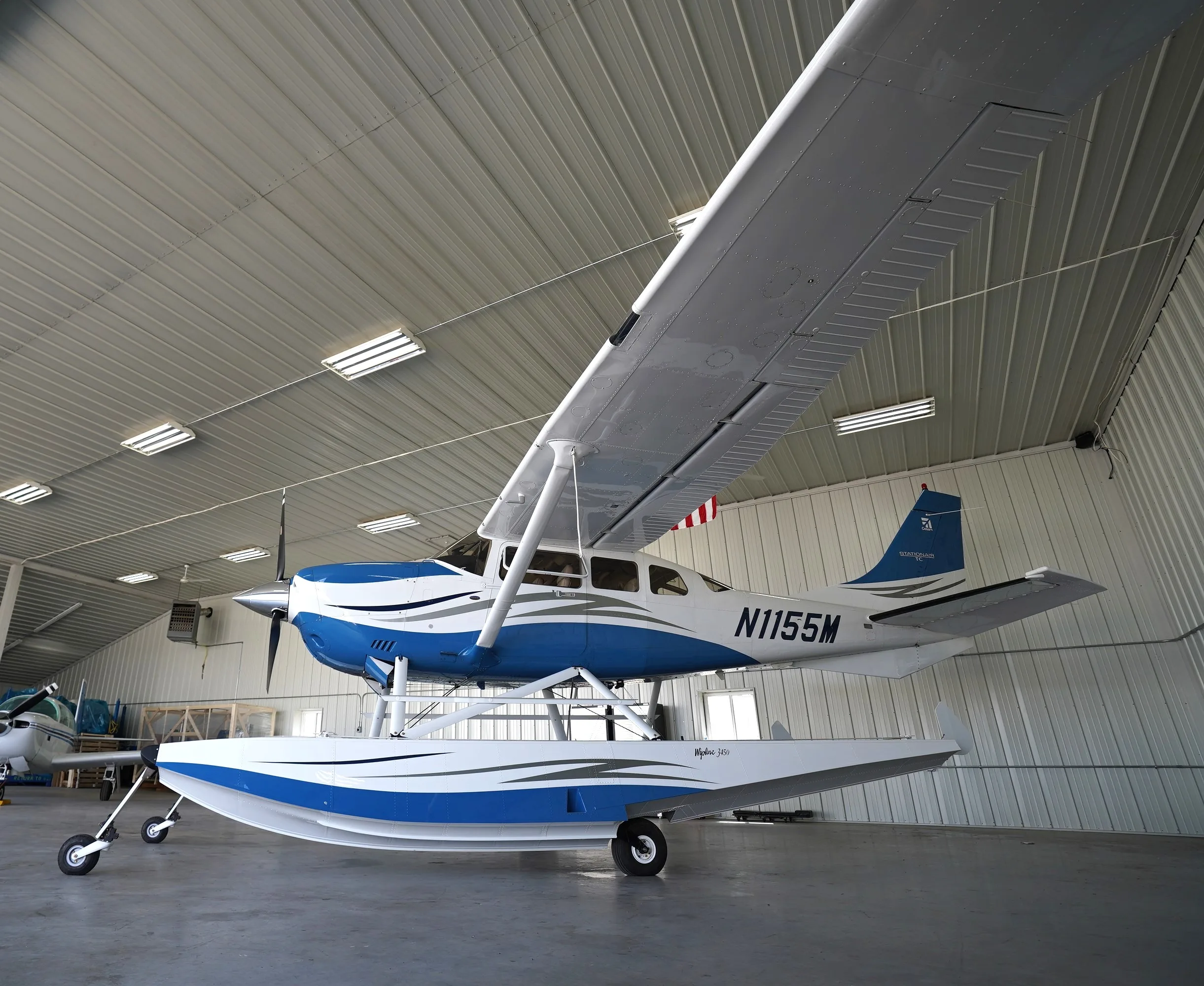
- Parts Manual For Wipline Model 3450 Floats On Cessna 206
This document is a parts manual specifically for the Wipline Model 3450 floats designed for the Cessna 206 aircraft. It provides detailed information on the various components and assemblies that make up the float system, including hull bulkhead assemblies, wheel well assemblies, skins, stiffeners, and the hydraulic and electrical systems. The manual is intended for maintenance personnel and aircraft owners who require precise part numbers and descriptions for ordering and servicing the float system. It includes a comprehensive parts list, assembly instructions, and diagrams to assist in the installation and maintenance of the floats.
- Navigation - G1000 NXI With Esp Software Update To Version 2501.10 That Turns Off The Autopilot Engagement At Low Airspeed
This Service Bulletin (SEB-34-21) addresses a software update for the G1000 NXI navigation system in Cessna aircraft, specifically targeting the T206H and 182T models. The update modifies the Electronic Stability Protection (ESP) system to prevent autopilot engagement at low airspeeds, which can be critical during training maneuvers. The bulletin provides detailed instructions for mechanics on how to implement the software update, including compliance recommendations and necessary precautions to avoid system failures during the update process. It emphasizes the importance of following the outlined procedures to ensure the aircraft's avionics operate correctly and safely after the update.
Service Bulletins · 2021PDF · 16 pages · 270 KB of Navigation - G1000 NXI With Esp Software Update To Version 2501.10 That Turns Off The Autopilot Engagement At Low Airspeed, opens in a new tabRequest removal of Navigation - G1000 NXI With Esp Software Update To Version 2501.10 That Turns Off The Autopilot Engagement At Low Airspeed
Cessna 206 for sale now
View all 95 for sale →Aircraft that this airworthiness directives covers, listed on the sites Sprinkle reads. Asking prices, not sales. Cessna 206 asking prices by year built.

Also useful for the Cessna T206
From Sprinkle’s library of aircraft documents. PDFs open from Sprinkle’s own files. Read Mar 6, 2026.
Want this document taken down? Request removal