
Airworthiness Bulletin AWB 52-006 Issue 2 - 02 January 2025
Service Bulletins for the Cessna T206
PDF, 3 pages, 145 KB, from Sprinkle’s own files.
What it covers
This Airworthiness Bulletin (AWB) serves as an advisory document for operators and pilots of Cessna 206 series aircraft, including the T206H model. It addresses a potential issue regarding emergency egress from the rear cargo door, particularly when the flaps are extended. The bulletin highlights a specific incident where a U206G experienced difficulty in exiting through the rear cargo door due to flap obstruction. While the bulletin does not mandate compliance, it provides recommendations for interim actions to enhance safety during emergency situations. Operators are encouraged to review related Airworthiness Directives and implement suggested practices to mitigate risks associated with this issue.
Key points
- The bulletin applies to Cessna 206 series aircraft, including the T206H.
- Emergency egress from the rear cargo door may be obstructed by extended flaps.
- Pilots should demonstrate how to open the rear cargo door with flaps lowered to at least 20 degrees during pre-flight briefings.
- In emergencies, consider retracting flaps after landing to facilitate egress.
- Compliance with the recommendations is not mandatory, but operators are encouraged to review related ADs.
Main sections
Effectivity
This bulletin applies to various models of the Cessna 206 series, including the T206H, U206, and others, covering all serial numbers.
Purpose
The purpose of this bulletin is to inform operators and pilots about potential difficulties in emergency egress from the rear cargo door and to recommend interim actions.
Recommendations
The bulletin recommends that pilots be aware of the obstruction caused by extended flaps when using the rear cargo door as an emergency exit. It suggests including a practical demonstration in pre-flight briefings and considering flap retraction during emergency landings.
Background
The bulletin references an incident involving a U206G that highlighted the egress difficulty when the rear cargo door is obstructed by extended flaps. It also mentions related Airworthiness Directives from Transport Canada and other aviation authorities.
References
The bulletin cites several references including Transport Canada AD CF-2020-10 and EASA Safety Information Bulletin 2020-16, which provide additional context and guidance regarding the issue.
Safety notes
- Extended flaps may obstruct the rear cargo door, complicating emergency egress.
- Operators should consider the implications of flap extension during emergency situations.
The document’s text
Show the text read from the PDF
AWB 52-006 Issue 2 02 January 2025 Page 1 of 3 Airworthiness Bulletin AWB 52-006 Issue 2 - 02 January 2025 Textron/Cessna 206 Rear Cargo Door Exit An Airworthiness Bulletin is an advisory document that alerts, educates and makes recommendations about airworthiness matters. Recommendations in this bulletin are not mandatory. 1. Effectivity Textron Aviation Inc. (formerly Cessna Aircraft Company) model 206, U206, U206A, U206B, U206C, U206D, U206E, U206F, U206G, TU206A, TU206B, TU206C, TU206D, TU206E, TU206F, TU206G, 206H and T206H aircraft, all S/N. 2. Purpose The purpose of this Airworthiness Bulletin is to make registered operators, operators and pilots aware of a situation that may arise with emergency egress from the rear right hand exit of the aircraft and to recommend some interim actions. At this time, the airworthiness concern described in this Airworthiness Bulletin is not considered an unsafe condition that would warrant an Airworthiness Directive to be issued under Part 39 of the Civil Aviation Safety Regulations 1998. 3. Background In January 2020 a Cessna U206G made an emergency landing into shallow water and was partially submerged. During egress, one person attempted to exit the rear cargo door and found egress impeded by the position of the flaps, which when extended, stop the forward part of the cargo door from opening fully. There have been other similar reports of difficulty in exiting the aircraft from the rear door, which is a designated emergency exit. Transport Canada released an Airworthiness Directive AD CF-2020-10 which be obtained from the TC AD website at https://wwwapps.tc.gc.ca/Saf-Sec-Sur/2/cawis-swimn/AD_dl.a. The AD contains certain actions which are intended to mitigate the risk of operations with cargo doors when used as an emergency exit. -- 1 of 3 -- AWB 52-006 Issue 2 02 January 2025 Page 2 of 3 4. References Transport Canada (TCCA) Airworthiness Directive (AD) CF-2020-10. European Aviation Safety Authority (EASA) Safety Information Bulletin (SIB) 2020-16. New Zealand Civil Aviation Authority (NZ CAA) Continuing Airworthiness Notice (CAN) 25-003. Civil Aviation Safety Authority of Australia (CASA) AD/CESSNA 206/47 Amdt 3. 5. Recommendations This recent occurrence highlights the issue of the difficulty of emergency evacuation through the rear cargo door when the flaps are extended in the Cessna 206. In order to mitigate risk and as an interim action (pending any further state of design or OEM action on the issue): Pilots should be aware that lowering the flaps may obstruct this exit and significantly increase the difficulty of opening the forward door section of the rear cargo door. All passenger pre-flight briefings should include a practical demonstration of how to open and egress the aircraft through a flap obstructed cargo door. This will require a demonstration with flaps lowered to at least 20 degrees to demonstrate the condition. Care should be taken to not damage the flap or door during this demonstration. Additionally, in the event that an emergency landing or water ditching is required, pilots should consider retracting the flaps if possible after the emergency landing or if operationally feasible, limit the amount of flap extension to a maximum of 10 degrees. This would of course be a judgement made by the pilot in command based on operational factors, severity of the emergency/damage to aircraft and if there are occupants seated in the rear of the aircraft. It is strongly recommended that registered operators and operators of affected Cessna 206, T206, TU206 and U206 aircraft series, review TC AD CF-2020-10 and give due consideration to compliance with the intent of this document, however compliance is not mandatory under CASR Part 39, because the AD is not from the state of design. Note: CASA has an active AD “AD/CESSNA 206/47 Amdt 3 Rear Door Emergency Exit” for Australian registered aircraft, which depending on the applicability based on the aircraft model, mandates the requirement for installing either a placard or accomplishing the installation of Cessna Service Bulletin SEB 91-4 that modifies the aircraft with a “return spring” feature for the red emergency release handle. Accomplishment of this S/B removes one of the most significant known factors which made egress difficult in past accidents. 6. Reporting Not required. -- 2 of 3 -- AWB 52-006 Issue 2 02 January 2025 Page 3 of 3 7. Enquiries Enquiries with regard to the content of this Airworthiness Bulletin should be made via the direct link email address: AirworthinessBulletin@casa.gov.au or in writing, to: Airworthiness and Engineering Branch National Operations and Standards Civil Aviation Safety Authority GPO Box 2005, Canberra, ACT, 2601 -- 3 of 3 --
Read from the PDF by machine, so tables and diagrams come out rough. The PDF is the document.
More Cessna T206 documents
All 21 →- Navigation - G1000 NXI With Esp Software Update To Version 2501.10 That Turns Off The Autopilot Engagement At Low Airspeed
This Service Bulletin (SEB-34-21) addresses a software update for the G1000 NXI navigation system in Cessna aircraft, specifically targeting the T206H and 182T models. The update modifies the Electronic Stability Protection (ESP) system to prevent autopilot engagement at low airspeeds, which can be critical during training maneuvers. The bulletin provides detailed instructions for mechanics on how to implement the software update, including compliance recommendations and necessary precautions to avoid system failures during the update process. It emphasizes the importance of following the outlined procedures to ensure the aircraft's avionics operate correctly and safely after the update.
Service Bulletins · 2021PDF · 16 pages · 270 KB of Navigation - G1000 NXI With Esp Software Update To Version 2501.10 That Turns Off The Autopilot Engagement At Low Airspeed, opens in a new tabRequest removal of Navigation - G1000 NXI With Esp Software Update To Version 2501.10 That Turns Off The Autopilot Engagement At Low Airspeed - CESSNA T206 Model Guide
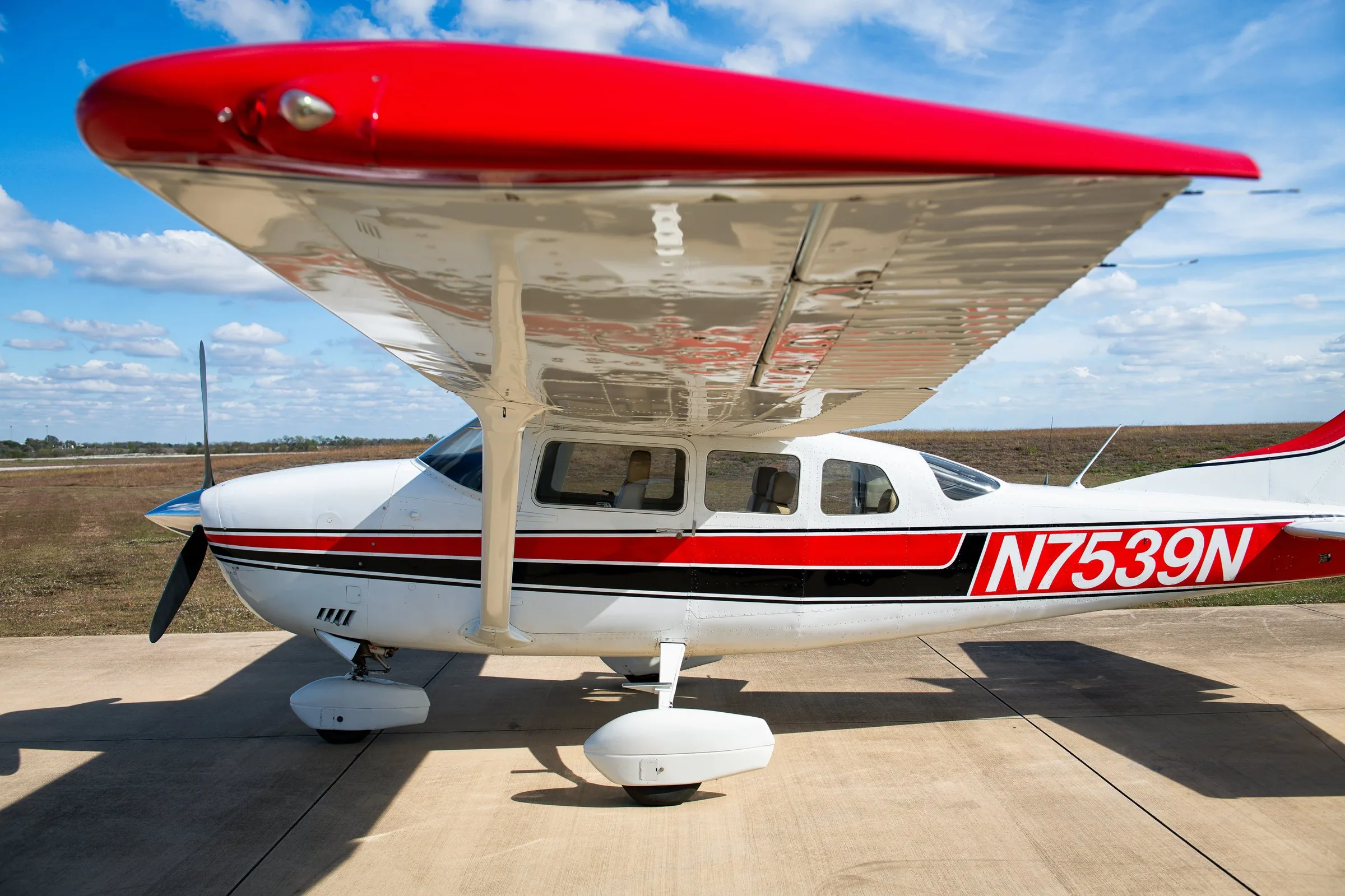
CESSNA T206 is a turbocharged single-engine piston airplane. The figures here come from the T206H handbook supplement. It has a 3789 lb max takeoff weight, 87 gal of usable fuel and 176 kt top speed at 17,000 ft. One state patrol unit lists a 310 hp Lycoming IO-540 and a rear cargo door. Buyers should check autopilot and door-egress service items.
- Placards And Markings - Emergency Exit Warning Placard Installation
This service bulletin, SEB-11-05, addresses the installation of an emergency exit warning placard for various Cessna 206 models. It is mandatory for compliance during the next 100-hour or annual inspection, or within 12 months of publication. The bulletin outlines the necessary parts and instructions for installation, emphasizing the importance of proper placement for visibility from the pilot's seat. It also includes compliance requirements and maintenance practices that must be followed. The document is intended for aircraft owners and mechanics involved in maintaining Cessna 206 series aircraft.
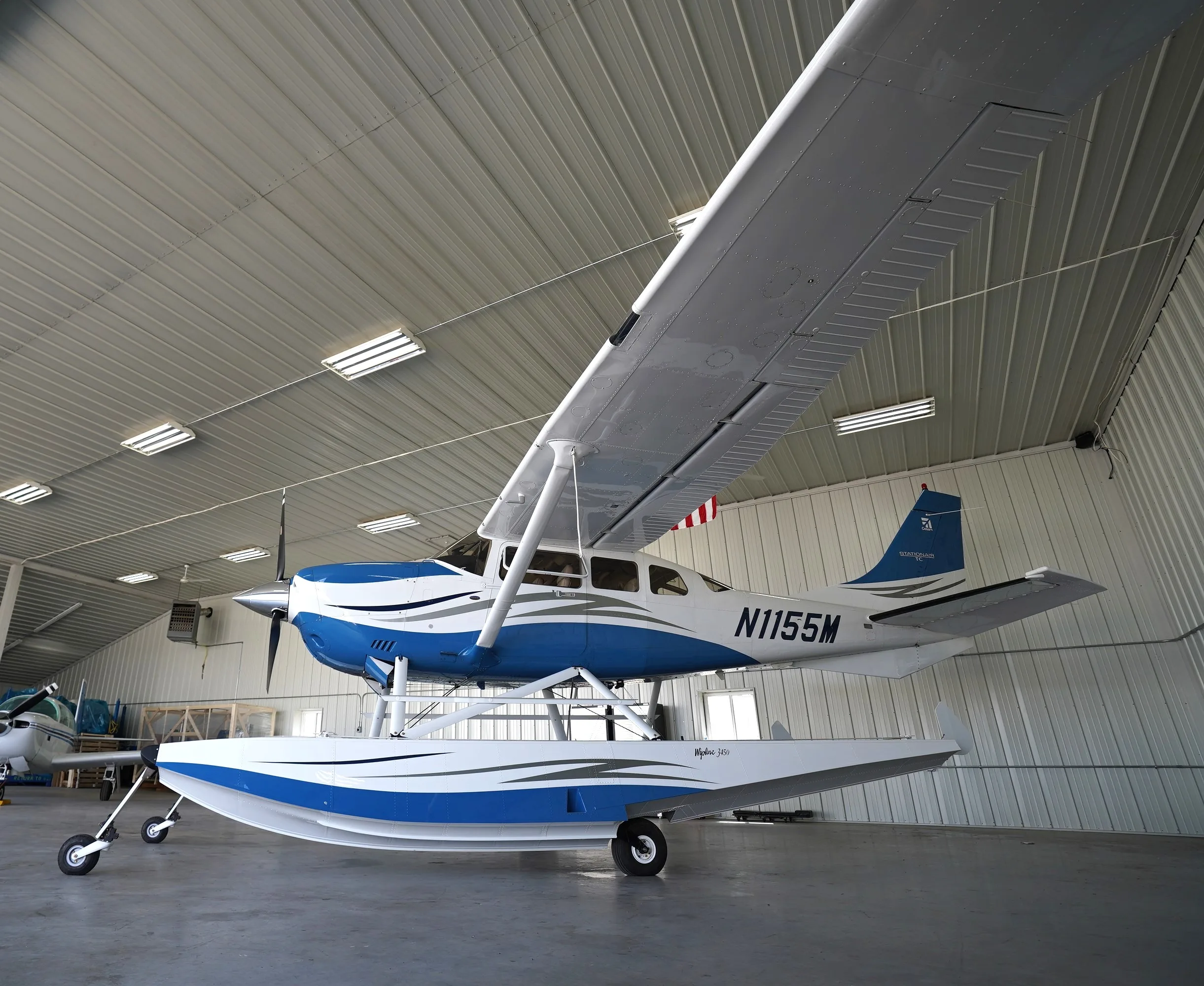
- Parts Manual For Wipline Model 3450 Floats On Cessna 206
This document is a parts manual specifically for the Wipline Model 3450 floats designed for the Cessna 206 aircraft. It provides detailed information on the various components and assemblies that make up the float system, including hull bulkhead assemblies, wheel well assemblies, skins, stiffeners, and the hydraulic and electrical systems. The manual is intended for maintenance personnel and aircraft owners who require precise part numbers and descriptions for ordering and servicing the float system. It includes a comprehensive parts list, assembly instructions, and diagrams to assist in the installation and maintenance of the floats.
- Service Letter 239
This document is a service letter specifically addressing the hydraulic pump replacement for Cessna 206 aircraft equipped with 4000A floats. It provides detailed instructions for compliance with the replacement procedure, which is optional. The letter includes information about the service kit, parts required, and compliance methods. It is intended for maintenance personnel and technicians working on Cessna 206 aircraft. The document outlines the necessary steps to ensure proper installation and functionality of the hydraulic pump, along with warranty information and technical data related to the service.
- Airworthiness Directive CF-2020-10
This document is an Airworthiness Directive (AD) issued by Transport Canada concerning the Cessna T206H and other related models. The AD addresses safety concerns regarding emergency egress through cargo doors located at the aft right-hand side of the cabin. It outlines compliance requirements for operators of affected aircraft to ensure that emergency exits are functional and accessible. The directive includes operating limitations, corrective actions, and modifications necessary to enhance safety and mitigate risks associated with emergency egress. The document is crucial for pilots and maintenance personnel to understand the implications of the AD on aircraft operation and configuration.
- Continuing Airworthiness Notice – 25-003
This Continuing Airworthiness Notice (CAN) issued by the Civil Aviation Authority of New Zealand addresses emergency egress difficulties in the Cessna 206, T206, TU206, and U206 aircraft series. It highlights the findings of Transport Canada regarding the cargo doors on these aircraft, which have been linked to fatalities during accidents due to difficulties in opening them in emergencies. The notice recommends that operators review the associated Transport Canada Airworthiness Directive (AD) CF-2020-10, which imposes new limitations on aircraft configuration and loading to enhance safety. The document serves as a safety alert to operators and maintainers, emphasizing the importance of compliance with the new guidelines and best practices for safe operation.
Supplemental Type Certificate · 2020PDF · 1 page · 21 KB of Continuing Airworthiness Notice – 25-003, opens in a new tabRequest removal of Continuing Airworthiness Notice – 25-003 - Aircraft Ops & Stan/Eval
This document serves as a checklist and operational guide for pilots flying within the Civil Air Patrol (CAP) using various aircraft models, including the Cessna T206H. It provides standardized procedures and safety guidelines to ensure effective and safe flight operations. The document outlines the responsibilities of pilots, aircraft specifications, and operational trends, and it emphasizes the importance of compliance with both CAP and FAA regulations. It is intended for CAP pilots and personnel involved in flight operations, offering insights into aircraft management, flight evaluations, and training requirements.
Cessna 206 for sale now
View all 95 for sale →Aircraft that this service bulletins covers, listed on the sites Sprinkle reads. Asking prices, not sales. Cessna 206 asking prices by year built.

Also useful for the Cessna T206
From Sprinkle’s library of aircraft documents. PDFs open from Sprinkle’s own files. Read Mar 6, 2026.
Want this document taken down? Request removal