
South Dakota Highway Patrol Aviation Unit
Other Documents for the Cessna T206
PDF, 54 pages, 10 MB, from Sprinkle’s own files.
What it covers
This document provides an overview of the South Dakota Highway Patrol Aviation Unit, focusing on their operations, aircraft, and missions. It highlights the capabilities of the Cessna T206, which was acquired in 2007 to replace an aging Cessna 182. The document outlines the aircraft's specifications, including its turbocharged engine, seating configurations, and extended-range fuel tanks. It also discusses the various missions the unit undertakes, such as traffic enforcement, search and rescue, and drug interdiction, emphasizing the importance of aviation in law enforcement operations across South Dakota.
Key points
- Cessna T206 features a turbocharged 310 horsepower Lycoming IO-540 engine.
- The aircraft can carry a pilot plus three passengers, with an option for five.
- Extended-range fuel tanks hold 117 gallons, allowing for 6.5 to 10 hours of flight time.
- The unit averages 353 flight hours annually, primarily for enforcement missions.
- The T206 is equipped with TKS ice protection for enhanced safety in adverse weather.
Main sections
Aircraft Overview
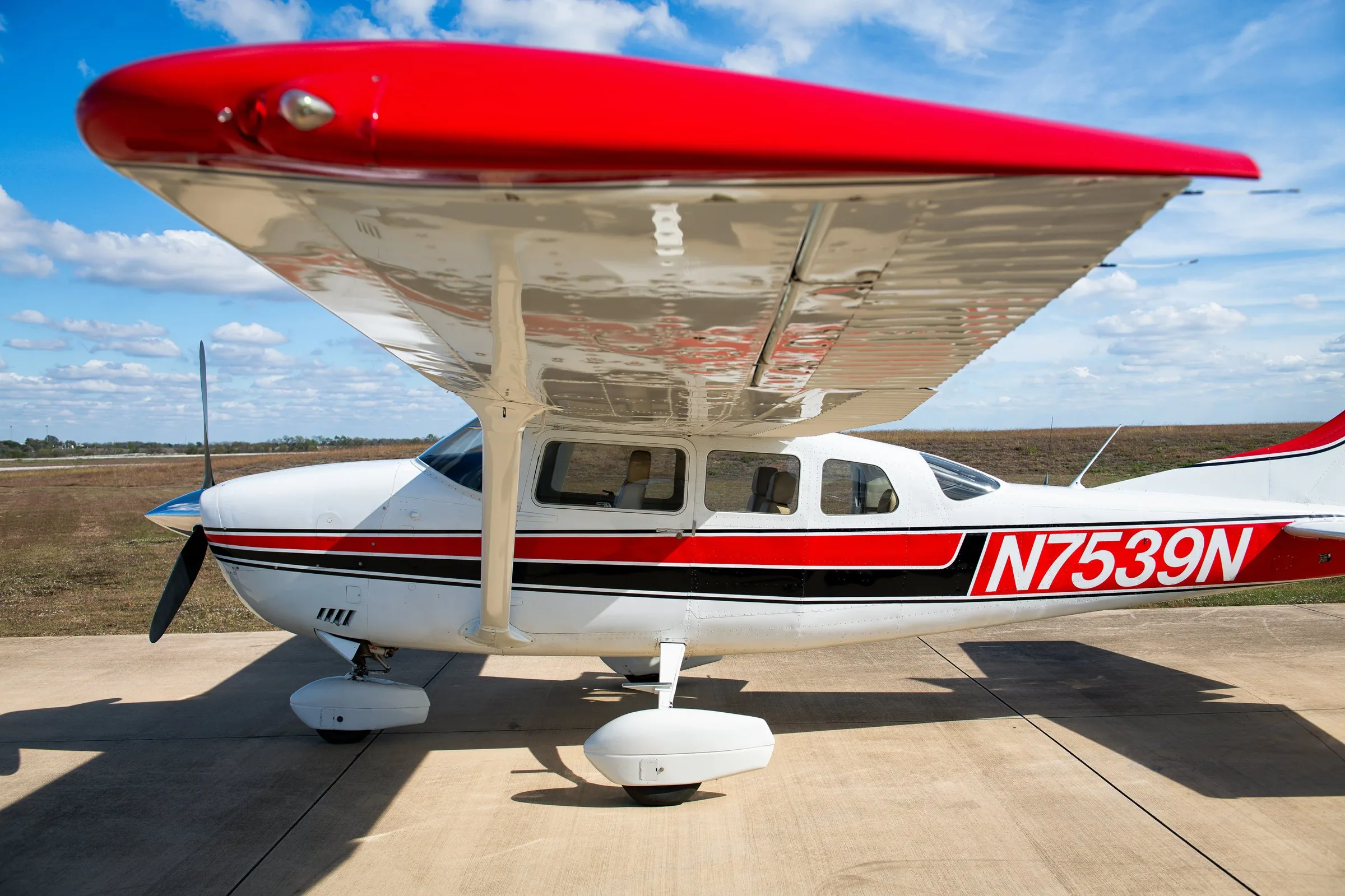
The South Dakota Highway Patrol operates a 2007 Cessna T206, which features a turbocharged 310 horsepower Lycoming IO-540 engine. The aircraft is configured to carry a pilot plus three passengers, with the option to add rear seating for a total of five. It is equipped with extended-range fuel tanks that hold 117 gallons, providing a flight duration of approximately 6.5 to 10 hours, depending on conditions.
Operational Use
The Cessna T206 is utilized for a variety of missions, including traffic enforcement, search and rescue, and drug interdiction. The aircraft is capable of operating year-round in all weather conditions and has access to 60 out of 75 public airports in South Dakota. The unit averages 353 flight hours annually, with 81% of operations related to enforcement missions.
Mission Capabilities
The aircraft supports multiple law enforcement functions such as traffic complaints, aggressive driving enforcement, and tactical overwatch. It plays a critical role in pursuit management, allowing law enforcement to track suspects from the air while minimizing risks associated with high-speed ground chases.
Aircraft Specifications
Key specifications of the Cessna T206 include a turbocharged engine with 310 horsepower, a maximum fuel capacity of 117 gallons, and a flight range of approximately 6.5 to 10 hours. The aircraft is also equipped with TKS ice protection, enhancing its operational capabilities in adverse weather conditions.
Historical Context
The document outlines the history of the South Dakota Highway Patrol's aviation operations, noting the transition from earlier aircraft models to the current Cessna T206, which was acquired in 2007 to improve operational efficiency and effectiveness in law enforcement.
The document’s text
Show the text read from the PDF
South Dakota Highway Patrol Aviation Unit Trooper Sarah Schumacher -- 1 of 54 -- Introduction • Pilot since 2005 • B.S. in Aviation from South Dakota State University • Airplane Single and Multi-Engine Land, Instrument airplane, CFI, CFII,MEI, Remote Pilot • FAA Safety Team Representative and FAAST “Drone Pro” • Law Enforcement: dispatcher from 2013- 2015, SDHP Academy Class 59 in 2016 • Grew up in Watertown, living in Pierre, SD since 2017 -- 2 of 54 -- -- 3 of 54 -- Sir I’m giving you a citation today. Best traffic stop ever!! -- 4 of 54 -- History of Aviation in South Dakota Highway Patrol • 1960’s – Speed enforcement began. SDHP leased a Super Cub. Pilots and spotters utilized stop watches to determine speed over distances. • 1970’s –Speed enforcement continued. In the late 1970’s, SDHP purchased a used Cessna 182 Skylane. -- 5 of 54 -- • 1981 – SDHP replaced the Skylane with a new Cessna 182 Skylane RG. • Late 1980s – “Drug War”, the SDHP started working counter-drug operations including marijuana identification and eradication. • 1995 – SDHP added OH-58C Bell Helicopter for marijuana eradication, emergency relays, natural disaster response, etc. • 2007 – SDHP purchases 2004 Cessna T206 to replace the aging 182 Skylane RG. • 2014 – SDHP purchases first FLIR system and fits to both helicopter and airplane. -- 6 of 54 -- SDHP Aviation Unit Today • Average of 353 hours flown a year over 81 different “unique” missions, increasing every year • 81% of use is directly related to missions/enforcement, rest is training and transportation and emergency relays. • Over the last 3 years, HP500 has utilized 60/75 (80%) of public airports in the state for enforcement or services -- 7 of 54 -- What we actually“do” • Traffic enforcement (speed, stop sign, passing zone, following too closely) • Traffic complaints • Aggressive/reckless driving/DUI • Search and rescue • Pursuit management • Drug interdiction • Emergency response/relay • Tactical overwatch • Traffic control, fire spotting, etc • High profile events -- 8 of 54 -- Why an airplane? • SD is a BIG state ~77,000 square miles • Helicopters are limited by weight, range, speed • Helicopters are very high liability • Helicopters require significantly more maintenance, which means more down time and more money • Cessna T206 is a good balance of speed, payload, range and simplicity -- 9 of 54 -- HP500 • 2007 Cessna T206 • Turbocharged 310 horsepower Lycoming IO-540 • Configured for pilot plus 3, can add rear seating for pilot plus 5 • Extended-range fuel tanks = 117 gallons of fuel (~6.5 hours-10 hours) • TKS ice protection -- 10 of 54 -- Airport Operation selection • Main considerations: • Runway surface • Weather reporting/winter maintenance • VFR only or IFR approaches available • Fuel, hangar, services available • Proximity to operations • Easy in and out -- 11 of 54 -- Easy Changes • Issue and update NOTAMs regularly, especially for runway conditions and closures. • Weather reporting and runway information is critical -- 12 of 54 -- South Dakota Highway Patrol Aviation Unit -- 13 of 54 -- What everyone thinks the Aviation Unit is like What the Aviation Unit is actually like -- 14 of 54 -- Tactical Flight Officer Program (TFO) • Specialized training in systems and techniques • Thermography training • Aerial Search and Rescue training -- 15 of 54 -- TFO Training Program • TFO’s must possess a variety of skills: • Ability to work in and around small aircraft • Good spatial orientation • Location, location, location! • Law enforcement tactics – MFF, SWAT, Use of Force -- 16 of 54 -- FLIR 230-HD • thermal imaging system, utilizes “day time”, “low light” and “Infra-red” camera sensors • Purchase and installation was approximately $500,000 in 2014 for “sensor pod”, aircraft mounting, monitors and controllers, radio upgrades, weight and balance changes for helicopter and airplane • This is where the SDHP began shifting from primarily speed enforcement towards “tactical” enforcement. -- 17 of 54 -- What is Forward Looking Infra- Red? (IR) • A thermal, or infrared camera, is a non-contact device that detects infrared energy (heat) and converts it into a visual image. • That image is interpreted by the operator. -- 18 of 54 -- Different functions We utilize different: • Color palettes • Settings • Sensors To achieve our goal. Tracking a vehicle on a drug interdiction operation is different from searching for a suspect after a pursuit, which is different from a high-risk fugitive warrant. -- 19 of 54 -- IR color palettes -- 20 of 54 -- Different color palettes allow different details to “pop” on an image. This is especially important in low-contrast situations -- 21 of 54 -- Histogram • Graphical depiction of amount of “light” in an image – can be over-exposed (washed out) or under-exposed (too dark) • Histogram increases contrast of an image – adjusts the intensity of the whites/blacks • Useful for IR images where there is both light and dark in the same image – shows different detail Auto Histogram -- 22 of 54 -- Histogram Examples • Washed out • Too much gray – not enough true black and white -- 23 of 54 -- Digital Detail Enhancement -- 24 of 54 -- Aircraft Missions • SDHP airplane flies year round, in all seasons and all weather conditions • Operates in and out of 60/75 public airports in SD • Examples of missions include: • Traffic enforcement • Motor carrier enforcement • Pursuit management • Drug Interdiction • Traffic control • Tactical overwatch -- 25 of 54 -- Traffic Enforcement “putting cars on the side of the road” • Stop sign violation, speeding, passing, reckless/aggressive driving, traffic complaints, following too closely, move over violations, DUI enforcement • SDHP Aircraft has made multiple DUI and drug arrests from the air by observing violations and getting a trooper in position to stop vehicle. -- 26 of 54 -- Pursuit Management -- 27 of 54 -- High Speed Pursuits • Vehicle pursuits are a very high liability law enforcement function. • Pursuits can last anywhere from a few seconds to 2+ hours in South Dakota. • Aircraft allows units in pursuit to slow down and fall back while aircraft follows the vehicle. This decreases dangerous driving behavior of driver and LEO • Low risk of aircraft being out-run by suspect • If aircraft is tracking and vehicle stops, crashes, or occupants run on foot, we are already in position to react. -- 28 of 54 -- Sport bike pursuit – Sioux Falls -- 29 of 54 -- Checkpoint Pursuit – Sioux Falls -- 30 of 54 -- GFP Search GFP search -- 31 of 54 -- GFP search -- 32 of 54 -- Pursuit search -- 33 of 54 -- Pursuit/Stolen Vehicle search -- 34 of 54 -- -- 35 of 54 -- Interdiction track and stop -- 36 of 54 -- -- 37 of 54 -- North Oahe – Stranded boater -- 38 of 54 -- -- 39 of 54 -- SDHP UAS Program History - 2016 – Started with 2 Sentera Omni Inspect drones with FLIR, 4 RPIC’s - 2020 – Added 2 Autel Evo II - 2021 – Added 8 more Autel Evo II Pro 6K/Dual 640 drones - 18 RPIC’s throughout the state -- 40 of 54 -- 2016 – Sentera Omni Inspect • 2 units, 4 operators (Sioux Falls and Rapid City) • Zenmuse XT FLIR system • Primary uses: tactical overwatch, searches, disaster assessment, crash and crime scene photos -- 41 of 54 -- -- 42 of 54 -- Autel Evo II • 2020-2021 • 10 units: 7 Pro 6K Rugged, 3 Dual 640 Thermal Rugged • 18 Remote Pilots • Primary use: crash and crime scene photography, mapping, reconstruction • Additional uses: Tactical overwatch, searches, firespotting, disaster assessment, etc -- 43 of 54 -- Autel Evo II Dual 640 (Thermal) -- 44 of 54 -- Autel Evo II Pro 6K • Assist South Dakota DCI with search for human remains • Altitude = 70 feet -- 45 of 54 -- Search Options • Very good for searching small areas • Program rectangular, polygon, and waypoint missions and fly autonomously • Can record continuous video or take photos with overlap • All photos are geo-referenced -- 46 of 54 -- -- 47 of 54 -- Crash Scene Reconstruction • SDHP reconstructs approximately 90% of serious injury and fatality crashes in South Dakota. • Prior to 2021, all reconstructions were done with a Leica Total Station or a 3D Scanner. • Drones can save a lot of time, money, and help prevent secondary crashes -- 48 of 54 -- Pix4D Introduction • https://youtu.be/U7DzH5fHVtY -- 49 of 54 -- Crash Reconstruction -- 50 of 54 -- -- 51 of 54 -- Why Part 107? • 2 paths – Part 107 or COA • Preferred Part 107 • Certification test • Insurance requirements/Risk Management • Waiver options/accessibility • LAANC -- 52 of 54 -- LAANC – Low Altitude Authorization and Notification Capability – allows access to controlled airspace at and below 400’ • Real-time approval for flights AIRMAP – Allows remote pilot to plan and autonomously file flight plans within controlled airspace -- 53 of 54 -- NOTAM example for UAS Operation within airport airspace /ABR -- 54 of 54 --
Read from the PDF by machine, so tables and diagrams come out rough. The PDF is the document.
More Cessna T206 documents
All 21 →- CESSNA T206 Model Guide
CESSNA T206 is a turbocharged single-engine piston airplane. The figures here come from the T206H handbook supplement. It has a 3789 lb max takeoff weight, 87 gal of usable fuel and 176 kt top speed at 17,000 ft. One state patrol unit lists a 310 hp Lycoming IO-540 and a rear cargo door. Buyers should check autopilot and door-egress service items.
- Airworthiness Bulletin AWB 52-006 Issue 2 - 02 January 2025
This Airworthiness Bulletin (AWB) serves as an advisory document for operators and pilots of Cessna 206 series aircraft, including the T206H model. It addresses a potential issue regarding emergency egress from the rear cargo door, particularly when the flaps are extended. The bulletin highlights a specific incident where a U206G experienced difficulty in exiting through the rear cargo door due to flap obstruction. While the bulletin does not mandate compliance, it provides recommendations for interim actions to enhance safety during emergency situations. Operators are encouraged to review related Airworthiness Directives and implement suggested practices to mitigate risks associated with this issue.
- Placards And Markings - Emergency Exit Warning Placard Installation
This service bulletin, SEB-11-05, addresses the installation of an emergency exit warning placard for various Cessna 206 models. It is mandatory for compliance during the next 100-hour or annual inspection, or within 12 months of publication. The bulletin outlines the necessary parts and instructions for installation, emphasizing the importance of proper placement for visibility from the pilot's seat. It also includes compliance requirements and maintenance practices that must be followed. The document is intended for aircraft owners and mechanics involved in maintaining Cessna 206 series aircraft.
- Parts Manual For Wipline Model 3450 Floats On Cessna 206
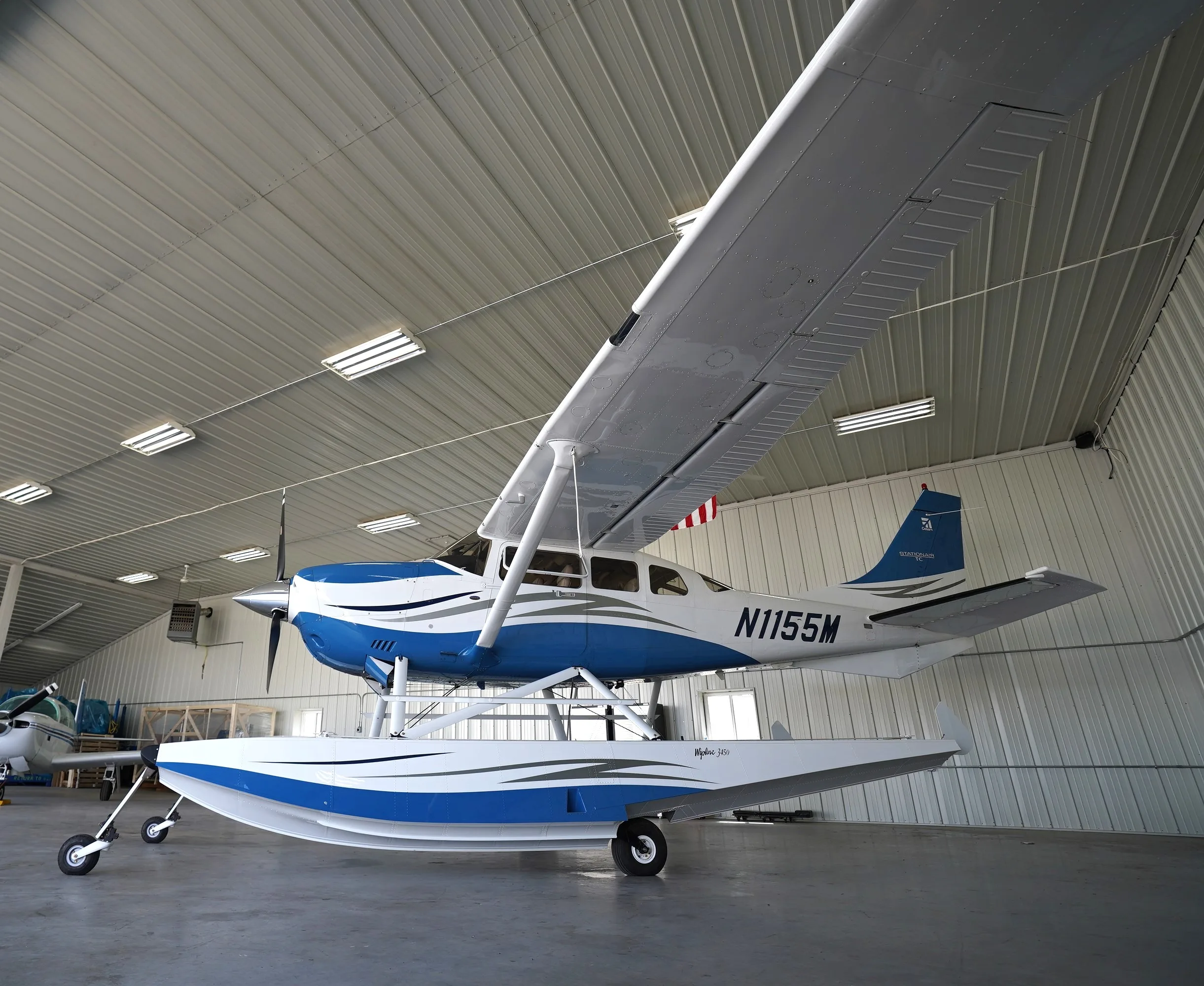
This document is a parts manual specifically for the Wipline Model 3450 floats designed for the Cessna 206 aircraft. It provides detailed information on the various components and assemblies that make up the float system, including hull bulkhead assemblies, wheel well assemblies, skins, stiffeners, and the hydraulic and electrical systems. The manual is intended for maintenance personnel and aircraft owners who require precise part numbers and descriptions for ordering and servicing the float system. It includes a comprehensive parts list, assembly instructions, and diagrams to assist in the installation and maintenance of the floats.
- Navigation - G1000 NXI With Esp Software Update To Version 2501.10 That Turns Off The Autopilot Engagement At Low Airspeed
This Service Bulletin (SEB-34-21) addresses a software update for the G1000 NXI navigation system in Cessna aircraft, specifically targeting the T206H and 182T models. The update modifies the Electronic Stability Protection (ESP) system to prevent autopilot engagement at low airspeeds, which can be critical during training maneuvers. The bulletin provides detailed instructions for mechanics on how to implement the software update, including compliance recommendations and necessary precautions to avoid system failures during the update process. It emphasizes the importance of following the outlined procedures to ensure the aircraft's avionics operate correctly and safely after the update.
Service Bulletins · 2021PDF · 16 pages · 270 KB of Navigation - G1000 NXI With Esp Software Update To Version 2501.10 That Turns Off The Autopilot Engagement At Low Airspeed, opens in a new tabRequest removal of Navigation - G1000 NXI With Esp Software Update To Version 2501.10 That Turns Off The Autopilot Engagement At Low Airspeed - Service Letter 239
This document is a service letter specifically addressing the hydraulic pump replacement for Cessna 206 aircraft equipped with 4000A floats. It provides detailed instructions for compliance with the replacement procedure, which is optional. The letter includes information about the service kit, parts required, and compliance methods. It is intended for maintenance personnel and technicians working on Cessna 206 aircraft. The document outlines the necessary steps to ensure proper installation and functionality of the hydraulic pump, along with warranty information and technical data related to the service.
- Airworthiness Directive CF-2020-10
This document is an Airworthiness Directive (AD) issued by Transport Canada concerning the Cessna T206H and other related models. The AD addresses safety concerns regarding emergency egress through cargo doors located at the aft right-hand side of the cabin. It outlines compliance requirements for operators of affected aircraft to ensure that emergency exits are functional and accessible. The directive includes operating limitations, corrective actions, and modifications necessary to enhance safety and mitigate risks associated with emergency egress. The document is crucial for pilots and maintenance personnel to understand the implications of the AD on aircraft operation and configuration.
- Continuing Airworthiness Notice – 25-003
This Continuing Airworthiness Notice (CAN) issued by the Civil Aviation Authority of New Zealand addresses emergency egress difficulties in the Cessna 206, T206, TU206, and U206 aircraft series. It highlights the findings of Transport Canada regarding the cargo doors on these aircraft, which have been linked to fatalities during accidents due to difficulties in opening them in emergencies. The notice recommends that operators review the associated Transport Canada Airworthiness Directive (AD) CF-2020-10, which imposes new limitations on aircraft configuration and loading to enhance safety. The document serves as a safety alert to operators and maintainers, emphasizing the importance of compliance with the new guidelines and best practices for safe operation.
Supplemental Type Certificate · 2020PDF · 1 page · 21 KB of Continuing Airworthiness Notice – 25-003, opens in a new tabRequest removal of Continuing Airworthiness Notice – 25-003
Cessna 206 for sale now
View all 95 for sale →Aircraft that this other documents covers, listed on the sites Sprinkle reads. Asking prices, not sales. Cessna 206 asking prices by year built.

Also useful for the Cessna T206
From Sprinkle’s library of aircraft documents. PDFs open from Sprinkle’s own files. Read Mar 6, 2026.
Want this document taken down? Request removal