
Aircraft Ops & Stan/Eval
Checklist for the Cessna T206
PDF, 25 pages, 1.8 MB, from Sprinkle’s own files.
What it covers
This document serves as a checklist and operational guide for pilots flying within the Civil Air Patrol (CAP) using various aircraft models, including the Cessna T206H. It provides standardized procedures and safety guidelines to ensure effective and safe flight operations. The document outlines the responsibilities of pilots, aircraft specifications, and operational trends, and it emphasizes the importance of compliance with both CAP and FAA regulations. It is intended for CAP pilots and personnel involved in flight operations, offering insights into aircraft management, flight evaluations, and training requirements.
Key points
- CAP operates a fleet of 551 powered aircraft, including the Cessna 206.
- Flight evaluations show a 3% failure rate, with common issues in checklist usage and instrument approaches.
- Pilots must comply with both CAP and FAA regulations during operations.
- Proper documentation is essential for reimbursement processes, requiring specific details on receipts.
- CAP is exploring new mission opportunities, including wildlife tracking and emergency transport.
Main sections
Aircraft Fleet Overview
The CAP operates a diverse fleet of powered aircraft, including 551 total aircraft with specific models like the Cessna 172, Cessna 182, and Cessna 206. The document highlights the number of active pilots and mission pilots, emphasizing the importance of maintaining a well-trained and equipped fleet.
Flight Evaluations and Trends
The document details the results of flight evaluations conducted within the CAP, noting a total of 1435 evaluations with a failure rate of 3%. It categorizes the types of maneuvers where failures occurred, such as instrument approaches and use of checklists, providing insights into areas needing improvement.
Operational Guidelines
CAP pilots are required to adhere to specific operational guidelines that align with FAA regulations. This includes understanding the responsibilities associated with flying CAP aircraft and the importance of compliance with safety protocols.
Documentation and Receipts
The document outlines the necessary documentation for CAP operations, including the proper handling of receipts for reimbursements. It specifies what information must be included on receipts to ensure smooth processing.
Future Missions and Opportunities
The document discusses potential new missions for CAP pilots, including wildlife tracking, traffic monitoring, and emergency transport missions. It encourages pilots to engage in diverse operational roles to enhance community service.
Safety notes
- Adherence to checklists is critical for safe flight operations.
- Pilots must remain vigilant and comply with all operational guidelines to ensure safety.
The document’s text
Show the text read from the PDF
Aircraft Ops & Stan/Eval 31 August 2017 Susan Parson National Stan/Eval Officer Civil Air Patrol CITIZENS SERVING COMMUNITIES -- 1 of 25 -- Goal: Provide safe, effective, and efficient, standardized guidance to those who fly in CAP. Civil Air Patrol Aircraft Operations 2 -- 2 of 25 -- CITIZENS SERVING COMMUNITIES • Who’s Who • Numbers – how many, how much? • Trends • Reminders • What’s Ahead • Resources Aircraft Operations Overview 3 -- 3 of 25 -- • Ron Olienyk, CAP/DO • Deputy Director, Operations • Vacant, CAP/DOV • Chief, Standardization and Evaluation • Capt Susan Parson, CAP/DOV • Standardization & Evaluation Officer • Col Carlton Sumner, CAP/DOT • Chief of Training / Balloon Prog. Mgr. • Col Jack Buschmann, CAP/DOG • Glider Program Manager Aircraft Operations Who’s Who 4 -- 4 of 25 -- CITIZENS SERVING COMMUNITIES Aircraft Operations Flight Academy Video 3 -- 5 of 25 -- CITIZENS SERVING COMMUNITIES Status, Aircraft Upgrades & MX • CAP Pilots • 9600+ Total • 2800+ Active Flyers • 1700+ Mission Pilots • Powered Aircraft Fleet - 551 • New planes purchased • 2016 - 19 (17 x 182T) & (2 x T206H) • 2017 - 15 (9 x 182T) & (6 x 172S) • Consolidated MX • 100% of wings enrolled! • 52 wings/550 aircraft Aircraft Operations How Many… 6 -- 6 of 25 -- Gippsland GA-8 (16) Cessna 172 (172) Cessna 206 (36) Cessna 182 (327) Primary Powered Aircraft Models of the CAP Fleet Cruise speed 110-135 kts Range 520-730 NM Aircraft Operations How Many… 7 -- 7 of 25 -- Gliders: • There are 46 Serviceable gliders in the fleet • 29 Blanik L-23s • 5 Schleicher ASK21s • 1 Schweizer 2-32 • 11 Schweizer 2-33s Aircraft Operations How Many… 8 -- 8 of 25 -- CITIZENS SERVING COMMUNITIES The flying hour comparison is directly affected by budget constraints. Aircraft Operations How Much… 1 Oct–11 Aug AF Mission Flying Hour Comparison 9 Liaison Flying 2,024.9 1,696.8 -16.2% Corporate Flying 19,515.0 20,730.0 6.2% Grand Total Flying 88,671.3 83,882.2 -5.4% Description Previous Year Current Year Difference % AFROTC 126.3 481.3 281.1% Range Support 288.1 796 176.3% DSCA/DR 1,010.3 1598.1 58.2% AFJROTC 443.0 677.3 52.9% Other/HLS 5,273.6 6,139.00 16.4% Air Defense 1,144.3 1,265.70 10.6% SAR 1,483.2 1,594.70 7.5% SUAS (Green Flag) 1,023.9 1,099.30 7.4% Maintenance 7,680.7 7,691.40 0.1% Cadet Orientation 9,141.7 9,142.80 0.0% Route Survey 605.2 526.4 -13.0% Training 31,931.0 25,809.10 -19.2% Drug Interdiction 6,980.1 4,634.30 -33.6% Total AFAM Flying 67,131.4 61,455.40 -8.5% -- 9 of 25 -- Glider Program • Status • Number of CAP Gliders: 46 flying & 10 (Requiring Repairs/In Storage) • Utilization: approx 200 launches/glider (annually) Aircraft Operations How Much… FY16 FY17 Glider Flights (Sorties)* 8,593 5,267 • CAP Glider Guidance • CAPM 60-1G (Glider Program Procedures) • Located “Aircraft Ops/CAP Pilots” webpage *1 October 2016– 11 August 2017 data 10 -- 10 of 25 -- Green Flag (Surrogate Predator Ops) • Locations • GF East: Barksdale AFB, LA • GF West: Nellis AFB, NV • Always looking for aircrew • Now directly under Wings (LA / NV) • Standardized structures and Ops • Enhanced interoperability between GF East & West • CAP Chief of Special Missions (Joe Piccotti) • Supports GF and other high interest programs Aircraft Operations How Much… 11 -- 11 of 25 -- Aircraft Operations Trends 12 Flight Evaluations: 1435 Failures: 39 Failure Rate: 3% https://missions.capnhq.gov/trend_analysis/index.cfm Category: Total Failures: Instrument Approach Procedures 7 Steep Turns 6 Normal Approaches and Landings 6 Use of Checklist 5 Power-On Stalls 5 Maneuvering During Slow Flight 5 Precision Approach 5 Non-Precision Approach 5 Aircraft Systems 4 Surface and Traffic Pattern Operations 4 Normal Takeoff & Climb 4 Power-Off Stalls 3 Category: Total Failures: Instrument Approach Procedures 7 Precision Approach 5 Non-Precision Approach 5 Normal Approaches and Landings 6 Normal Takeoff & Climb 4 Maneuvering During Slow Flight 5 Power-On Stalls 5 Power-On Stalls 5 Use of Checklist 5 Surface and Traffic Pattern Operations 4 -- 12 of 25 -- Aircraft Operations Trends 13 Flight Evaluations: 1435 Failures: 39 Failure Rate: 3% https://missions.capnhq.gov/trend_analysis/index.cfm Category: Total Failures: Recovery from Unusual Flight Attitudes 2 Engine Failure/Takeoff Below VMC 2 Go-around 2 Short-field Approach & Landing 2 Category: Total Failures: Annual Online Written Exam 1 Taxiing 1 Radio Comm & ATC Light Signals 1 Crosswind Takeoff & Climb 1 Short-field Takeoff & Climb 1 Soft-field Takeoff & Climb 1 Radio Navigation 1 Constant Airspeed Descents 1 Radio Nav & Radar Services 1 S - Turns 1 Turns Around A Point 1 System & Equipment Malfunction 1 POH Bold Face Knowledge 1 X-wind Approaches and Landings 1 Soft-field Approach & Landing 1 Clearing Turns and Collision Avoidance 1 Vigilance, Risk Management & Judgement 1 Intercept & Tracking of Courses 1 Circling & Missed Approach 1 Use of Crew Resource Management 1 Demonstrate teaching maneuvers in flight 1 Demonstrate evaluating maneuvers in flight 1 Demonstrate syllabus maneuvers/items 1 -- 13 of 25 -- CAPF 5 Pilot Flight Evaluations: • Measured using FAA & CAP standards • Enhance Safety through Compliance • Provides Trend Data • Purpose of Ground Eval Portion • Assess pilot’s knowledge of rules, documentation, local ops & emergency procedures. • Purpose of Flight Eval Portion • Assess pilot’s ability to perform specific flight maneuvers and fly the aircraft safely. Aircraft Operations Reminders 14 -- 14 of 25 -- • Wing Supplements to CAPR 60-1 on Web • All supps to previous CAPR 60-1 expire within 6 months • Must be revised & re-approved IAW CAPR 60-1 • Submit for approval as MS Word document via E-mail • Coordinate IAW CAPR 60-1: - CAP Region, CAP-USAF/LR, CAP-USAF/DO prior to NHQ • Supps must not conflict with HHQ directives • Supps must not be less restrictive than the parent reg. • Supps may provide additional requirements or clarification to the parent regulation Aircraft Operations Reminders 15 -- 15 of 25 -- CITIZENS SERVING COMMUNITIES Documentation: receipts & reimbursement CAP Form 108s: • Upload the actual receipt within one day of purchase. • Ensure all info is included on the receipt for processing. • Circling key Info helps!!! (Date, Tail #, Gallons, & Fuel $) Aircraft Operations Reminders Required on Receipt: • Vender • Tail # • Date • Gals Fuel • $ Fuel 16 -- 16 of 25 -- CITIZENS SERVING COMMUNITIES Correct CAPF 108 Receipt Aircraft Operations Reminders Required on Receipt: • Vender • Tail # • Date • Gals Fuel • $ Fuel 17 -- 17 of 25 -- Possible New Missions? • Sundown or boat patrols for lakes & ocean shorelines for cities & counties • Animal surveys & wildlife tracking for states & universities • More fire patrol missions for states or military • Traffic monitoring missions for states • Low level route surveys for military bases • Remotely Piloted Aircraft (RPA) Escort missions • GIIEP/DAART missions with the National Guard • Pilots N Paws (Transporting Pets in emergencies-gov’t req.) • Project Lifesaver (Locates lost or wondering persons with Alzheimer’s Disease, Autism, Downs Syndrome, etc.) Aircraft Operations What’s Ahead 18 -- 18 of 25 -- CAPR 70-1 CAP Flight Management Overview • Substantially revised from previous CAPR 60-1 • States the responsibilities of all CAP personnel with respect to the control and management of CAP aircrews, aircraft, and flying programs 19 -- 19 of 25 -- CAPR 70-1 CAP Flight Management Applicability • Applies to all CAP aircrews and all CAP aircraft as defined in CAPR 70-1 • All CAP personnel involved in CAP flight activities must comply fully with the requirements of 14 CFR, as well as with the additional CAP-specific standards • All CAP members must understand that flying CAP aircraft is a privilege, not a right of membership. 20 -- 20 of 25 -- CAPR 70-1: CAP Flight Management Table of Contents 1. Overview 2. Applicability 3. Operating Instructions (OI), Pamphlets, Supplements and Waivers to this Regulation 4. Qualification: CAP Pilots, Instructors, Check Pilots 5. Qualification: Aircraft Types 6. CAP Pilot Training, Proficiency, and Orientation Flights 7. CAP Pilot Flight Evaluation 8. Suspension of CAP Flying Privileges, Appeals, Reinstatement, and Damages 9. CAP General Operating and Flight Rules Attachment 1 COMPLIANCE ELEMENTS Attachment 2 GLOSSARY OF REFERENCES AND SUPPORTING INFORMATION Attachment 3 INSTRUCTIONS FOR CAP PILOT FLIGHT EVALUATIONS ‒ AIRPLANE/GLIDER 21 General Info: CAP’s version of 14 CFR part 1 Info specific to CAP operating environment CAP pilot certification requirements & procedures: CAP version of 14 CFR part 61 CAP operating rules: CAP version of 14 CFR part 91 -- 21 of 25 -- • Airman Testing Web Page • http://www.faa.gov/training_testing/testing/ • http://www.faa.gov/training_testing/testing/acs/ • FAASafety.gov – ALC-449* • www.faasafety.gov • ACS Focus Team • 9-AVS-ACS-Focus-Team@FAA.gov • Safety Alert for Operators – 17009 • https://www.faa.gov/other_visit/aviation_industry/airline_operators/airline_safety/safo/all_safos/ Aircraft Operations FAA Resources -- 22 of 25 -- CITIZENS SERVING COMMUNITIES • Website: “Aircraft Operations & Stan/Eval” Access at: www.capmembers.com Stan/Eval Information Pilot & Flight Training information FAA sites, AOPA courses, weather, & more! • WMIRS (Web Mission Information Reporting System) Standardized Sortie Generation & Flight Release • Ops Qual Real-time qualification data 23 Aircraft Operations CAP Resources -- 23 of 25 -- Aviators Model Code of Conduct (AMCC) • Developed by a team of aviation professionals and drawing upon decades of research and experience, the Code recommends operating practices to enhance the quality and safety of your flight operations. • Pilot conduct impacts the entire aviation community, including its safety culture. A code of conduct can help achieve new levels of proficiency. • Located on the CAP Pilots web page: • Aviators Model Code of Conduct (PDF) • Flight Instructors Code of Conduct (PDF) • Glider Aviators Code of Conduct (PDF) • Seaplane Pilots Code of Conduct (PDF) • Aviators Model Code of Conduct (website) • Passenger Briefing Materials (AMCC) Aircraft Operations Other Resources 24 -- 24 of 25 -- Questions? Feedback? 25 Aircraft Operations -- 25 of 25 --
Read from the PDF by machine, so tables and diagrams come out rough. The PDF is the document.
More Cessna T206 documents
All 21 →- Cessna 206 N168SA Checklist
This document is a checklist for the Cessna 206, specifically tailored for the aircraft with registration N168SA. It provides a comprehensive guide for pilots to follow before starting the engine, during taxi, takeoff, in-flight operations, and after landing. The checklist is designed to ensure safety and operational efficiency, covering critical pre-flight checks, engine start procedures, and post-landing protocols. It includes specific power settings and mixture adjustments for various altitudes, making it a valuable resource for pilots operating this aircraft model.
- CESSNA T206 Model Guide
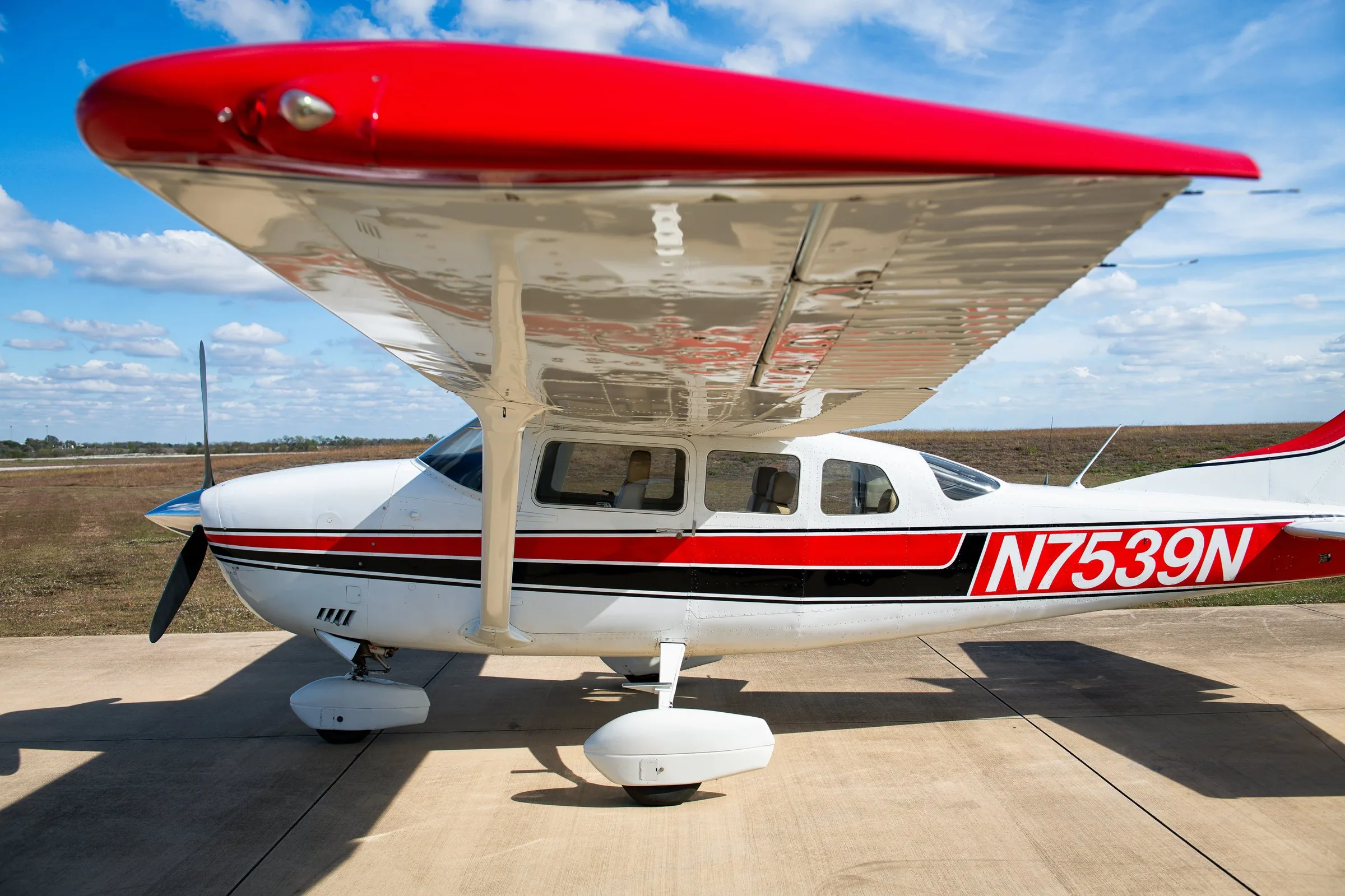
CESSNA T206 is a turbocharged single-engine piston airplane. The figures here come from the T206H handbook supplement. It has a 3789 lb max takeoff weight, 87 gal of usable fuel and 176 kt top speed at 17,000 ft. One state patrol unit lists a 310 hp Lycoming IO-540 and a rear cargo door. Buyers should check autopilot and door-egress service items.
- Airworthiness Bulletin AWB 52-006 Issue 2 - 02 January 2025
This Airworthiness Bulletin (AWB) serves as an advisory document for operators and pilots of Cessna 206 series aircraft, including the T206H model. It addresses a potential issue regarding emergency egress from the rear cargo door, particularly when the flaps are extended. The bulletin highlights a specific incident where a U206G experienced difficulty in exiting through the rear cargo door due to flap obstruction. While the bulletin does not mandate compliance, it provides recommendations for interim actions to enhance safety during emergency situations. Operators are encouraged to review related Airworthiness Directives and implement suggested practices to mitigate risks associated with this issue.
- Placards And Markings - Emergency Exit Warning Placard Installation
This service bulletin, SEB-11-05, addresses the installation of an emergency exit warning placard for various Cessna 206 models. It is mandatory for compliance during the next 100-hour or annual inspection, or within 12 months of publication. The bulletin outlines the necessary parts and instructions for installation, emphasizing the importance of proper placement for visibility from the pilot's seat. It also includes compliance requirements and maintenance practices that must be followed. The document is intended for aircraft owners and mechanics involved in maintaining Cessna 206 series aircraft.
- Parts Manual For Wipline Model 3450 Floats On Cessna 206
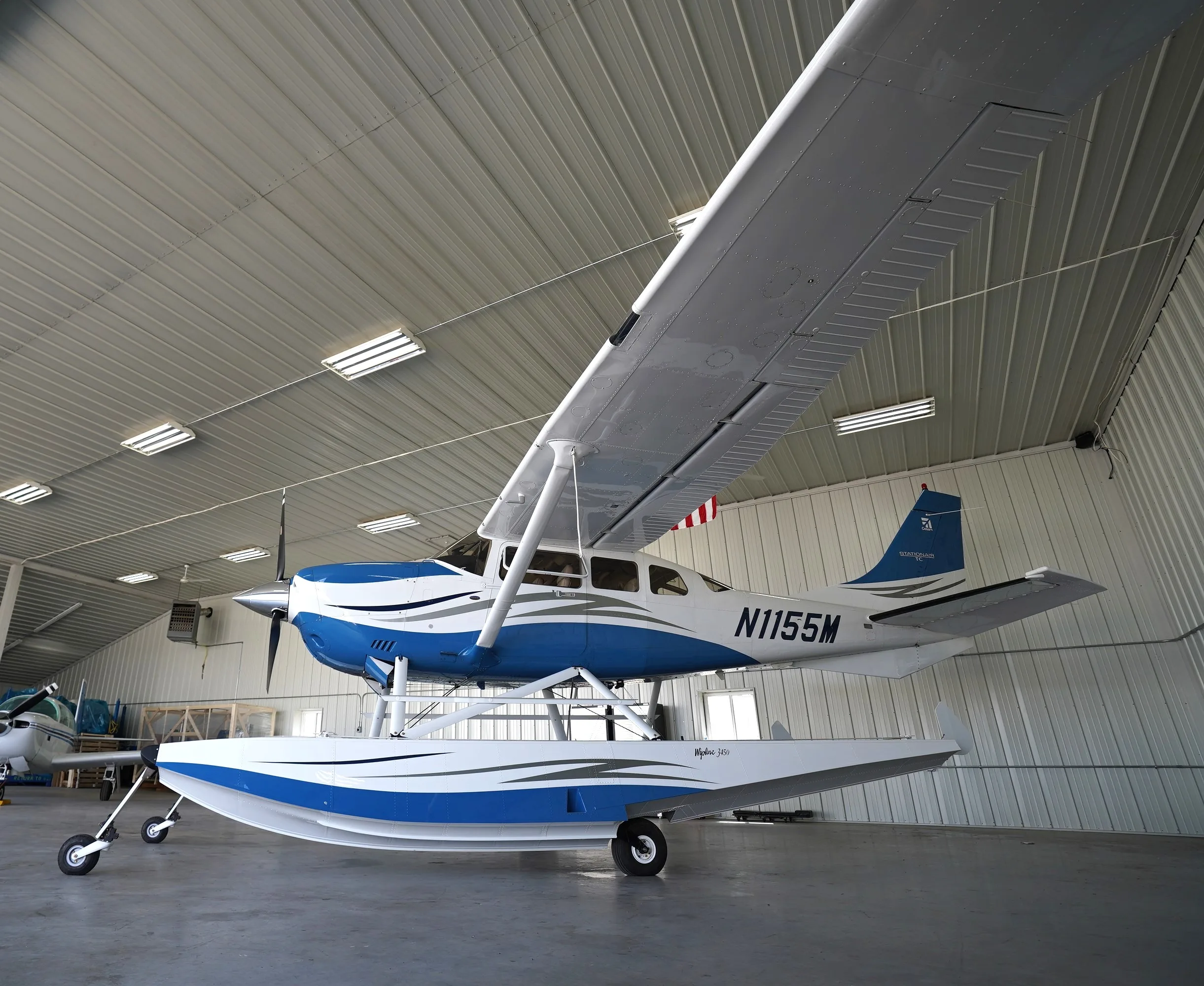
This document is a parts manual specifically for the Wipline Model 3450 floats designed for the Cessna 206 aircraft. It provides detailed information on the various components and assemblies that make up the float system, including hull bulkhead assemblies, wheel well assemblies, skins, stiffeners, and the hydraulic and electrical systems. The manual is intended for maintenance personnel and aircraft owners who require precise part numbers and descriptions for ordering and servicing the float system. It includes a comprehensive parts list, assembly instructions, and diagrams to assist in the installation and maintenance of the floats.
- Navigation - G1000 NXI With Esp Software Update To Version 2501.10 That Turns Off The Autopilot Engagement At Low Airspeed
This Service Bulletin (SEB-34-21) addresses a software update for the G1000 NXI navigation system in Cessna aircraft, specifically targeting the T206H and 182T models. The update modifies the Electronic Stability Protection (ESP) system to prevent autopilot engagement at low airspeeds, which can be critical during training maneuvers. The bulletin provides detailed instructions for mechanics on how to implement the software update, including compliance recommendations and necessary precautions to avoid system failures during the update process. It emphasizes the importance of following the outlined procedures to ensure the aircraft's avionics operate correctly and safely after the update.
Service Bulletins · 2021PDF · 16 pages · 270 KB of Navigation - G1000 NXI With Esp Software Update To Version 2501.10 That Turns Off The Autopilot Engagement At Low Airspeed, opens in a new tabRequest removal of Navigation - G1000 NXI With Esp Software Update To Version 2501.10 That Turns Off The Autopilot Engagement At Low Airspeed - Service Letter 239
This document is a service letter specifically addressing the hydraulic pump replacement for Cessna 206 aircraft equipped with 4000A floats. It provides detailed instructions for compliance with the replacement procedure, which is optional. The letter includes information about the service kit, parts required, and compliance methods. It is intended for maintenance personnel and technicians working on Cessna 206 aircraft. The document outlines the necessary steps to ensure proper installation and functionality of the hydraulic pump, along with warranty information and technical data related to the service.
- Airworthiness Directive CF-2020-10
This document is an Airworthiness Directive (AD) issued by Transport Canada concerning the Cessna T206H and other related models. The AD addresses safety concerns regarding emergency egress through cargo doors located at the aft right-hand side of the cabin. It outlines compliance requirements for operators of affected aircraft to ensure that emergency exits are functional and accessible. The directive includes operating limitations, corrective actions, and modifications necessary to enhance safety and mitigate risks associated with emergency egress. The document is crucial for pilots and maintenance personnel to understand the implications of the AD on aircraft operation and configuration.
Cessna 206 for sale now
View all 95 for sale →Aircraft that this checklist covers, listed on the sites Sprinkle reads. Asking prices, not sales. Cessna 206 asking prices by year built.

Also useful for the Cessna T206
From Sprinkle’s library of aircraft documents. PDFs open from Sprinkle’s own files. Read Mar 6, 2026.
Want this document taken down? Request removal