Advisory Circular: Part 141 Pilot Schools, Application, Certification, and Compliance
Cessna 152 Aerobat · Airworthiness Directives
Overview
This document is an Advisory Circular (AC) issued by the Federal Aviation Administration (FAA) concerning the certification and compliance of Part 141 pilot schools. It provides guidance for applicants seeking certification as a Part 141 pilot school, which is a structured training program regulated under Title 14 of the Code of Federal Regulations. The AC outlines the certification process, including the necessary documentation, training records, and compliance requirements. It also addresses the roles of FAA Flight Standards District Offices (FSDOs) in overseeing pilot schools. This document is essential for both new applicants and existing schools looking to renew their certification under Part 141.
- The document is an Advisory Circular (AC) from the FAA regarding Part 141 pilot schools.
- It outlines the certification process for pilot schools under 14 CFR Part 141.
- The certification process consists of five phases: preapplication, formal application, document compliance, demonstration and inspection, and certification.
- Aircraft used in Part 141 training must meet specific FAA standards.
- The Training Course Outline (TCO) is essential for defining the curriculum and training objectives.
Document
Source
Originally published by www.faa.gov. Sprinkle hosts a reference copy with an added summary, specifications and searchable full text.
Document details
- Type
- Airworthiness Directives
- Year
- 2017
- Pages
- 70
- File size
- 1.5 MB
- Publisher
- www.faa.gov
Common. Rarer than 4% of the aircraft models we track.
Most owners only have the POH. Here's the essential set for the Cessna 152 Aerobat.
- Pilot's Operating Handbook / AFM
- Checklist
- Maintenance Manual
- Parts Catalog (IPC)
- Systems & Wiring
- Service Bulletins
- Type Certificate (TCDS)
Free — save the A152 Aerobat to your watchlist and track it in one place.
More Cessna 152 Aerobatmanuals & documents
See all 24 →- The Student Pilot’s Flight Manual: From First Flight to Pilot CertificateFlight Manual
- CESSNA 152 NORMAL & EMERGENCY PROCEDURES CHECKLISTChecklist
- Cessna C-152 ChecklistChecklist
- CESSNA 152 PROCEDURES MANUALTraining Manual
- Type Acceptance Report TAR 98/08 – Cessna 150/152Maintenance Manual
- AAIB Bulletin 9/2017Service Bulletins
- The Basic Aerobatic Manual: With Spin and Upset Recovery TechniquesPilot's Operating Handbook
- AIRWORTHINESS BULLETIN Cessna 150/152 Series Aircraft Horizontal Stabiliser Spar CrackingService Bulletins
- AAIB Bulletin: 9/2010Service Bulletins
- Investigation of Factors Affecting Loss of Control of GA AircraftOther Documents
- AAIB Bulletin No: 12/2003Service Bulletins
- Aerobatic Training SyllabusAirworthiness Directives
If you fly the Cessna 152 Aerobat, you may also be researching these.

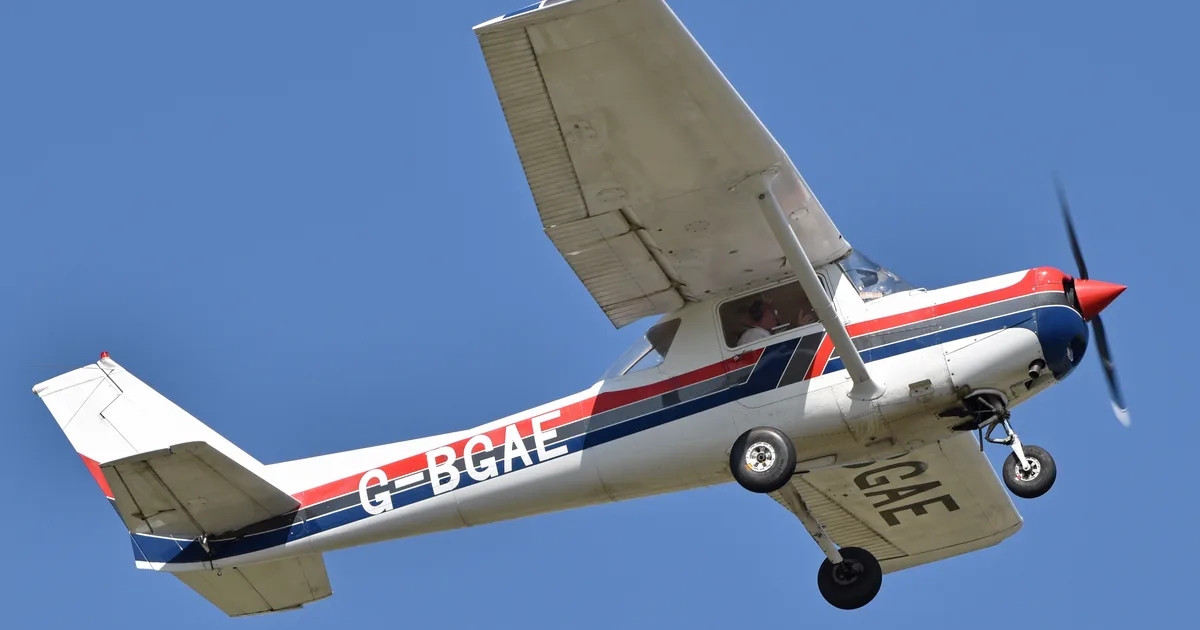

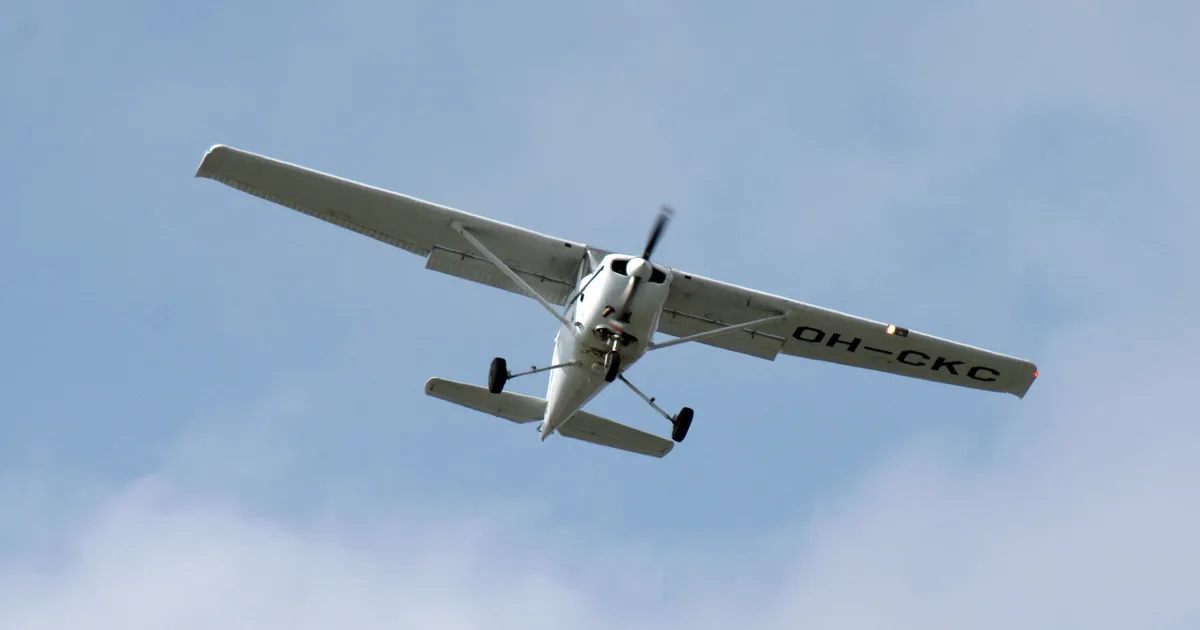


In this document
General
This section outlines the purpose of the Advisory Circular, which is to assist in the certification of Part 141 pilot schools. It highlights the differences between Part 141 and Part 61 pilot training, emphasizing the structured training programs required under Part 141. The section also discusses the importance of compliance with TSA requirements for training foreign nationals.
Preapplication Phase
This chapter discusses the steps an applicant must take before submitting a Letter of Intent (LOI) to the jurisdictional FSDO. It emphasizes the need for prospective applicants to evaluate their capabilities, including personnel, instructors, and aircraft, to meet the requirements of a Part 141 pilot school.
Certification Process
The certification process for a Part 141 pilot school is divided into five phases: preapplication, formal application, document compliance, demonstration and inspection, and certification. Each phase has specific requirements and actions that the applicant must complete to achieve certification.
Aircraft Requirements
This section details the requirements for aircraft used in Part 141 pilot schools. It specifies that the aircraft must meet certain standards and be suitable for the training courses offered by the school.
Training Course Outline (TCO)
The TCO is a critical document that outlines the curriculum for training courses offered by a Part 141 pilot school. It includes objectives, teaching aids, evaluative criteria, and desired outcomes for each course.
Full document text
U.S. Department of Transportation Federal Aviation Administration Advisory Circular Subject: Part 141 Pilot Schools, Application, Certification, and Compliance Date: 9/12/17 AC No: 141-1B Initiated by: AFS-800 Change: Federal Aviation Administration (FAA)-certificated pilot schools are regulated in accordance with Title 14 of the Code of Federal Regulations (14 CFR) part 141. Unlike pilot training conducted under 14 CFR part 61, part 141 pilot schools are required to use a structured training program and syllabus. Part 141 pilot schools may be able to provide a greater variety of training aids and require dedicated training facilities, flight instructor oversight, and FAA-approved course curricula. Colleges and universities, which may offer aviation degrees, often provide pilot training under part 141. This advisory circular (AC) provides guidance for part 141 pilot school applicants and others interested in the certification standards and requirements for certification under part 141. This revision updates information found in AC 141-1A, Pilot School Certification, dated February 18, 1993, including additional information on compliance with part 141, and includes a chapter on Transportation Security Administration (TSA) requirements for part 141 pilot schools. John S. Duncan Executive Director, Flight Standards Service 9/12/17 AC 141-1B ii CONTENTS Paragraph Page Chapter 1. General ...................................................................................................................... 1-1 1.1 Purpose of This Advisory Circular (AC) ................................................................... 1-1 1.2 Audience .................................................................................................................... 1-1 1.3 Cancellation ............................................................................................................... 1-1 1.4 References and Related Information .......................................................................... 1-1 1.5 Definitions.................................................................................................................. 1-1 1.6 Background ................................................................................................................ 1-3 1.7 Provisional Pilot School Versus Pilot School ............................................................ 1-3 1.8 Certification Process .................................................................................................. 1-3 1.9 Where You Can Find This AC................................................................................... 1-4 1.10 AC Feedback Form .................................................................................................... 1-4 Chapter 2. Preapplication Phase ................................................................................................. 2-1 2.1 General ....................................................................................................................... 2-1 2.2 Actions Prior to LOI .................................................................................................. 2-1 2.3 Pilot School Ratings ................................................................................................... 2-2 2.4 TCO and Syllabus ...................................................................................................... 2-3 2.5 Training Records ........................................................................................................ 2-3 2.6 Aircraft ....................................................................................................................... 2-3 2.7 Contact With the Jurisdictional FSDO ...................................................................... 2-4 2.8 LOI ............................................................................................................................. 2-4 2.9 FSDO Review of the LOI .......................................................................................... 2-5 2.10 The Applicant’s Responsibility.................................................................................. 2-5 2.11 The Jurisdictional FSDO’s Responsibility................................................................. 2-5 2.12 Joint Responsibility.................................................................................................... 2-5 Chapter 3. Formal Application Phase ......................................................................................... 3-1 3.1 General ....................................................................................................................... 3-1 3.2 FAA Form 8420-8...................................................................................................... 3-1 3.3 Requested Part 141 Pilot School Training Courses and Ratings ............................... 3-1 3.4 Signatures on FAA Form 8420-8 ............................................................................... 3-1 3.5 Training Course Outline (TCO) and Syllabus ........................................................... 3-1 9/12/17 AC 141-1B iii 3.6 TCO............................................................................................................................ 3-1 3.7 Syllabus Location....................................................................................................... 3-3 3.8 Formal Application Meeting ...................................................................................... 3-3 3.9 Electronic Recordkeeping/Manual/Signature Systems .............................................. 3-3 3.10 Signature Authenticity/Verification ........................................................................... 3-4 3.11 FAA Acceptance of Electronic Recordkeeping, Signature, and/or
Show full textShow less
Manual Systems ......................................................................................................... 3-5 3.12 Syllabus Content ........................................................................................................ 3-5 3.13 Syllabi With Reduced Time Requirements................................................................ 3-6 3.14 Syllabus Stage Checks and End-of-Course Tests ...................................................... 3-6 3.15 Commercially Developed Training Syllabi ............................................................... 3-6 3.16 Internet-Based Training ............................................................................................. 3-7 3.17 Training Agreements ................................................................................................. 3-7 3.18 Chief Instructor .......................................................................................................... 3-7 3.19 Assistant Chief Flight Instructor ................................................................................ 3-8 3.20 Chief Instructor and Assistant Chief Instructor Test ................................................. 3-8 3.21 Chief Instructor and/or Assistant Chief Instructor Who Also Provides Instruction ................................................................................................... 3-8 3.22 Chief and Assistant Chief Instructor Availability...................................................... 3-8 3.23 Flight Instructor Requirements .................................................................................. 3-8 3.24 Flight Instructor Responsibilities ............................................................................... 3-9 3.25 Other Part 141 Pilot School Personnel....................................................................... 3-9 3.26 TCO Approval ......................................................................................................... 3-10 3.27 Application Denial ................................................................................................... 3-10 Chapter 4. Document Compliance Phase.................................................................................... 4-1 4.1 General ....................................................................................................................... 4-1 4.2 Student Training Records .......................................................................................... 4-1 4.3 Credit for Previous Training ...................................................................................... 4-1 4.4 Student Enrollment Certificate .................................................................................. 4-2 4.5 Student Graduation Certificate .................................................................................. 4-2 4.6 Chief Instructor Qualifications/Training Record ....................................................... 4-3 4.7 Assistant Chief Instructor Qualifications/Training Record ....................................... 4-3 4.8 Check Instructor Qualifications/Training Record...................................................... 4-4 9/12/17 AC 141-1B iv 4.9 Flight Instructor Qualifications/Training Record ...................................................... 4-4 4.10 Student Safety Guide ................................................................................................. 4-4 4.11 Full Flight Simulators (FFS), Flight Training Devices (FTD), and Aviation Training Devices (ATD) ............................................................................. 4-5 4.12 Aircraft Requirements ................................................................................................ 4-6 4.13 Aircraft—Checklist and Manuals .............................................................................. 4-6 4.14 Aircraft—Instrument Training ................................................................................... 4-7 4.15 Aircraft—Commercial Training ................................................................................ 4-7 4.16 Document Deficiencies .............................................................................................. 4-7 Chapter 5. Demonstration And Inspection Phase ....................................................................... 5-1 5.1 General ....................................................................................................................... 5-1 5.2 Facilities Inspection ................................................................................................... 5-1 5.3 Principal Business Office........................................................................................... 5-1 5.4 Pilot Briefing Areas ................................................................................................... 5-1 5.5 Records ...................................................................................................................... 5-2 5.6 Training Aids ............................................................................................................. 5-3 5.7 Aircraft ....................................................................................................................... 5-3 5.8 Full Flight Simulators (FFS), Flight Training Devices (FTD), and Aviation Training Devices (ATD) ............................................................................. 5-4 5.9 Chief Instructor and Assistant Chief Instructor Tests ................................................ 5-4 5.10 Check Instructor Tests ............................................................................................... 5-4 5.11 Flight Instructor Tests ................................................................................................ 5-4 5.12 Airports ...................................................................................................................... 5-4 5.13 Airports—Satellite Bases ........................................................................................... 5-5 5.14 Terminating the Demonstration and Inspection Phase .............................................. 5-6 Chapter 6. Certification Phase .................................................................................................... 6-1 6.1 Completion of Reports ............................................................................................... 6-1 6.2 Air Agency Certificate Number ................................................................................. 6-1 6.3 Air Agency Certificate Information ........................................................................... 6-1 6.4 List of Approved Ratings and Courses ...................................................................... 6-1 6.5 Certification File for Applicant.................................................................................. 6-1 6.6 Display of Certificate ................................................................................................. 6-2 6.7 Certification Denial.................................................................................................... 6-2 9/12/17 AC 141-1B v Chapter 7. Other Certification Information, Post-Certification, and Acceptable Practices .................................................................................................................... 7-1 7.1 Advertising................................................................................................................. 7-1 7.2 Ongoing Documentation ............................................................................................ 7-1 7.3 Training Records ........................................................................................................ 7-1 7.4 Inspections ................................................................................................................. 7-1 7.5 Inspection of Aircraft Maintenance Records ............................................................. 7-1 7.6 Maintenance Facilities ............................................................................................... 7-2 7.7 Contract Maintenance ................................................................................................ 7-2 7.8 Examining Authority ................................................................................................. 7-2 7.9 Renewal of a Part 141 Pilot School’s Certificate....................................................... 7-3 7.10 Changing the Location of the Principal Business Office or Base of Operations ..................................................................................................... 7-3 7.11 Change in Chief and/or Assistant Chief Instructors .................................................. 7-3 7.12 Flight Instructor Refresher Courses (FIRC) (Part 141 Appendix K) ......................... 7-4 7.13 Institution of Higher Education With Letters of Authorization (LOA) to Certify Its Graduates for an Airline Transport Pilot (ATP) Certificate With Reduced Aeronautical Experience ............................................................................. 7-4 Chapter 8. Flight Training of U.S. Citizens and Foreign Nationals ........................................... 8-1 8.1 Background ................................................................................................................ 8-1 8.2 Title 49 CFR Part 1552 .............................................................................................. 8-1 8.3 Categories of Training Under TSA ............................................................................ 8-1 8.4 Flight Training for U.S. Citizens ............................................................................... 8-2 8.5 Recordkeeping Requirements .................................................................................... 8-2 8.6 The Student and Exchange Visitor Program (SEVP) ................................................ 8-2 8.7 Schools Certified by SEVP ........................................................................................ 8-3 Appendix A. Application Information ....................................................................................... A-1 Appendix B. Sample Training Course Outline and Syllabus .....................................................B-1 Appendix C. References and Additional Information (Current Editions) ..................................C-1 Appendix D. Frequently Asked Questions (FAQ)..................................................................... D-1 Appendix E. Part 141 Pilot School Simulation Training Credit Allowances ............................. E-1 9/12/17 AC 141-1B vi List of Figures Figure A-1. Sample Air Agency Certificate .............................................................................. A-1 Figure A-2. Sample Application for Pilot School Certification ................................................ A-2 Figure A-3. Sample Letter of Intent .......................................................................................... A-4 Figure A-4. Sample Letter of Intent—Electronic Recordkeeping and Electronic Signature ............................................................................................... A-5 Figure B-1. Sample Training Course Outline ........................................................................... B-1 Figure B-2. Sample Syllabus ..................................................................................................... B-4 Figure B-3. Training Course Outline Checklist ........................................................................ B-8 Figure B-4. Syllabus Checklist.................................................................................................. B-9 Figure E-1. Simulation Credit Table ..........................................................................................E-1 Figure E-2. Airline Transport Pilot (ATP) Simulation Credit Table .........................................E-1 9/12/17 AC 141-1B 1-1 CHAPTER 1. GENERAL 1.1 Purpose of This Advisory Circular (AC). AC 141-1, Pilot School Certification, was issued on August 29, 1974 and was revised on February 18, 1993. AC 141-1 was designed to assist in the certification of Title 14 of the Code of Federal Regulations (14 CFR) part 141 pilot schools. Since 1993, the Federal Aviation Administration (FAA) has made several amendments to part 141, which are reflected in this updated version. Additionally, after the events of September 11, 2001, the Transportation Security Administration (TSA) implemented requirements on the training of foreign nationals in the United States. This revision updates guidance on part 141; provides guidance on application, renewal, amendment, and compliance under part 141; and adds information on TSA requirements. FAA regulations can be found at: https://www.faa.gov/regulations_policies/faa_regulations/. 1.2 Audience. The primary audience for this AC includes persons seeking certification for a part 141 provisional pilot school or pilot school, certificated provisional pilot schools and pilot schools, and provisional pilot schools and pilot schools seeking to renew their certificates. The secondary audience includes FAA Flight Standards District Offices (FSDO) and principal inspectors (PI) assigned oversight of certificate holders conducting operations under part 141. 1.3 Cancellation. AC 141-1A, Pilot School Certification, dated February 18, 1993, is cancelled. 1.4 References and Related Information. Appendix C contains a list of references and related information. 1.5 Definitions. The following definitions apply to this AC and to the certification, renewal, and operation of a pilot school under part 141 (refer also to AC 120-78, Electronic Signatures, Electronic Recordkeeping, and Electronic Manuals): 1.5.1 Air Agency Certificate. An Air Agency Certificate is required for operation as a certificated pilot school under part 141, and is issued using FAA Form 8000-4, Air Agency Certificate. 1.5.2 Aviation Training Device (ATD). A training device, other than a full flight simulator (FFS) or flight training device (FTD), that has been evaluated, qualified, and approved by the Administrator. In general, an ATD includes a replica of aircraft instruments, equipment, panels, and controls in an open flight deck area or an enclosed aircraft cockpit. It includes the hardware necessary to represent a category and class of aircraft (or set of aircraft) operations in ground and flight conditions having the appropriate range of capabilities and systems installed in the device. 1.5.3 Certification Course. A certification course is a training course for a certificate or rating normally accomplished by a student from “zero time” to completion and prescribes the curriculum within a particular subject such as a recreational pilot course, private pilot course, or other listed approved training course. 9/12/17 AC 141-1B 1-2 1.5.4 Certification Job Aid. A checklist used by the jurisdictional FSDO to ensure the part 141 pilot school applicant has met all of the requirements for the issuance of an Air Agency Certificate. 1.5.5 Certificated Pilot School. A part 141 pilot school applicant meeting the pertinent requirements of part 141 that has been issued an Air Agency Certificate. This term, as well as part 141 pilot school, as used in this AC, refers to both provisional pilot schools and pilot schools. 1.5.6 Check Instructor. A check instructor is authorized to conduct student stage checks, end-of-course tests, and proficiency checks. 1.5.7 Curriculum. The courses offered by a part 141 pilot school. A set of courses depicting planned flight and/or ground instruction offered by a part 141 flight or ground school. Curricula are contained in a training course outline (TCO). 1.5.8 Examining Authority. The authority granting the holder of a pilot school certificate to conduct practical tests of its own graduates for the issuance of pilot certificates and ratings without further testing by the FAA. 1.5.9 Jurisdictional Flight Standards District Office (FSDO). The FAA FSDO assigned to a part 141 pilot school that provides certification and oversight to that school. 1.5.10 Lesson Plan. An organized outline for a single instructional period. It is a necessary guide for the instructor because it outlines what to do and in what order to do it, and what procedures to use in teaching the material of a lesson. Lesson plans should be prepared for each training period and be developed to show specific knowledge and/or skills to be taught. 1.5.11 Letter of Authorization (LOA). Issued to a part 141 pilot school by the jurisdictional FSDO as a standardized set of authorizations and approvals through the Web-based Operations Safety System (WebOPSS), in lieu of individual LOAs and approvals. 1.5.12 Letter of Intent (LOI). A letter sent to the jurisdictional FAA FSDO notifying the office of intent to submit an application for certification as a part 141 provisional pilot school. 1.5.13 Pilot School Rating. A part 141 pilot school is issued a rating for each of its approved courses. A part 141 pilot school rating is not to be confused with an airman certification rating, such as an instrument rating. 1.5.14 Provisional Pilot School. A part 141 pilot school that does not meet the requirements of § 141.5, but does meet the requirements of § 141.7 when its Air Agency Certificate is issued. 1.5.15 Satellite Base. A location other than the main operations base where approved ground or flight training courses are conducted. 9/12/17 AC 141-1B 1-3 1.5.16 Schedule of Events (SOE). A timetable provided by the applicant and accepted by the certification team, setting a reasonable expectation for the progression of the certification process. 1.5.17 Syllabus. An outline and summary of topics to be covered in a training course, textbooks, and other material used in the course. It is a step-by-step (building block) progression of learning with provision for regular review and evaluation at prescribed stages of learning. The syllabus defines the unit of training, states by objective what the student is expected to accomplish during the unit of training, shows an organized plan for instruction (building blocks, from the simple to the complex), and dictates an evaluation process for either the unit or stages of learning. A syllabus is contained within a training course outline (TCO). 1.5.18 Tablet. A wireless general purpose mobile computer with a touchscreen display. 1.5.19 Training Course Outline (TCO). A document describing the content of a particular course through a statement of objectives, description of teaching aids, definition of evaluative criteria, and indication of desired outcomes. 1.6 Background. Part 141 prescribes rules governing the operation of part 141 pilot schools and their use of course curricula for pilot training under this part. This ensures that training by a part 141 pilot school is adequate, appropriate, and administered by qualified persons. Compared to 14 CFR part 61, flight time requirements for completing a course under part 141 are often reduced, in large part because part 141 training is more controlled through the structured courses approved by the FAA. Training is overseen by experienced chief instructors, and all instructors must have familiarization training and proficiency checks in the types of aircraft in which they provide training. Additionally, certificated schools receive regular surveillance from the FAA. 1.7 Provisional Pilot School Versus Pilot School. An applicant for an Air Agency Certificate meeting the requirements of § 141.7 is issued a provisional pilot school certificate as initial certification under part 141, as the applicant will not have met the recent training activity requirements of § 141.5(d). It is a prerequisite for a part 141 pilot school to hold certification as a provisional pilot school before it may apply for a pilot school certificate. An applicant for a pilot school certificate must meet all of the requirements of § 141.5, including graduating at least 10 different people and establishing a pass rate of 80 percent or higher. Once a provisional pilot school has met all of the requirements of § 141.5, and all other pertinent sections within part 141, it may apply for a pilot school certificate. 1.8 Certification Process. The certification of a part 141 pilot school is accomplished through a five-phase certification process. This includes (1) preapplication, (2) formal application, (3) document compliance, (4) demonstration and inspection, and (5) certification. 1.8.1 Preapplication Phase. The applicant initiates the process leading to certification as a provisional pilot school. The applicant contacts the jurisdictional FSDO to obtain 9/12/17 AC 141-1B 1-4 pertinent information concerning a path to certification as a provisional pilot school. The applicant meets with one or more inspectors from the office (the certification team), who explain the certification process and can answer the applicant’s questions. 1.8.2 Formal Application Phase. The applicant submits the formal application, FAA Form 8420-8, Application for Pilot School Certification; an LOI; TCOs, including a syllabus that is contained in the TCO; a safety procedures guide; all other applicable documents required by part 141; and any other applicable FAA guidance and as outlined during the preapplication meeting. 1.8.3 Document Compliance Phase. The certification team reviews all relevant documents for completeness and compliance. Should there be items missing or not in compliance, the team may delay the review process until the required corrections are submitted. 1.8.4 Demonstration and Inspection Phase. Testing of the chief instructor and any assistant chief instructors, if applicable, by the FAA takes place, along with all required inspections. During this phase, the applicant will have to demonstrate it is capable of delivering training that is expected to meet the objectives of its TCO. 1.8.5 Certification Phase. When all requirements are satisfied, the FAA will issue the letters to the applicant, indicating approval of courses and pilot school ratings based on the TCOs submitted to the certification team. The applicant is then issued a Provisional Pilot School Air Agency Certificate. 1.9 Where You Can Find This AC. You can find this AC on the FAA’s website at http://www.faa.gov/regulations_policies/advisory_circulars. 1.10 AC Feedback Form. For your convenience, the AC Feedback Form is the last page of this AC. Note any deficiencies found, clarifications needed, or suggested improvements regarding the contents of this AC on the Feedback Form. 9/12/17 AC 141-1B 2-1 CHAPTER 2. PREAPPLICATION PHASE 2.1 General. This chapter will discuss the preapplication phase, in which the applicant generates and submits a Letter of Intent (LOI) to the jurisdictional Flight Standards District Office (FSDO). Contact information for FSDOs can be found at http://www.faa.gov/about/office_org/field_offices/fsdo/. 2.2 Actions Prior to LOI. Before contacting the jurisdictional FSDO, a prospective applicant is encouraged to evaluate its capability to meet the initial certification, as well as the ongoing requirements of a 14 CFR part 141 pilot school. Some considerations include: 1. Will the prospective applicant for a provisional pilot school certificate have adequate personnel, adequate certified flight and ground instructors, a chief instructor, and aircraft meeting the requirements of part 141? 2. Do the proposed chief instructor and any assistant chief instructors, if applicable, meet the requirements of part 141, §§ 141.35 and 141.36? 3. Will check instructors be utilized, and do they meet the requirements of § 141.37? 4. Does the applicant have continuous use of each airport at which training flights originate? 5. Does each airport used by the part 141 pilot school meet the requirements of § 141.38(b) through (f)? 6. Does the applicant intend to utilize satellite bases, and how will compliance with § 141.91 be achieved? 7. What aircraft will be utilized in the course(s) the applicant is seeking and who will maintain these aircraft? How will the applicant comply with § 141.39? 8. If the applicant proposes to utilize full flight simulators (FFS) or flight training devices (FTD), has the FFS or FTD received National Simulator Program (NSP) evaluation and an approval letter in the past 12 months? Has the applicant received training on the use of these devices? Does the FFS/FTD comply with § 141.41(a)? 9. If the applicant plans to use aviation training devices (ATD), have the ATDs received an FAA letter of authorization (LOA) from the General Aviation and Commercial Division (AFS-800) within the past 5 years? Has the applicant received training on the use of the trainer? Does the ATD comply with § 141.41(b)? 10. Will pilot briefing areas be in place as required under § 141.43? 11. Does the applicant intend to use electronic recordkeeping and/or signatures, in accordance with Advisory Circular (AC) 120-78, Electronic Signatures, Electronic Recordkeeping, and Electronic Manuals? 12. Does the applicant propose to submit electronic documents? 9/12/17 AC 141-1B 2-2 13. Will the Internet be utilized for the delivery of classroom instruction or other purposes, such as filing flight plans? If yes, how will the applicant comply with § 141.53(d)? 14. Does the applicant understand its responsibility to maintain ongoing compliance with the standards regarding its aircraft, facilities, and personnel as specified in an approved training course outline (TCO) in accordance with § 141.89? 15. Have the limitations in advertising under § 141.23 been considered? 16. What TCO and syllabus does the school plan to use for each course? Does the school plan to use a commercially developed syllabus, or will they develop their own? 2.3 Pilot School Ratings. An applicant should review § 141.11 and the appendices of part 141 and determine what course(s) will be part of the initial application package. The term “pilot school rating” as used in § 141.11 describes the certification and rating courses that are approved for part 141 pilot schools. Pilot school ratings are listed on a part 141 pilot school’s Air Agency Certificate. Examples of pilot school ratings include Recreational Pilot, Private Pilot, and Commercial Pilot. Courses are approved under § 141.55. There are more than 40 different courses, with each requiring a separate TCO and separate syllabus. The typical courses include: 1. Recreational pilot certification courses: Airplane Single-Engine Land (ASEL), rotorcraft helicopter, and rotorcraft gyroplane. 2. Private pilot certification courses: ASEL, Airplane Multiengine Land (AMEL), Airplane Single-Engine Sea (ASES), Airplane Multiengine Sea (AMES), rotorcraft helicopter, gyroplane, glider, lighter-than-air airship, lighter-than-air gas balloon, lighter-than-air balloon with an airborne heater, and powered-lift. 3. Commercial pilot certification courses: ASEL, AMEL, ASES, AMES, rotorcraft helicopter, rotorcraft gyroplane, glider, lighter-than-air airship, lighter-than-air gas balloon, lighter-than-air balloon with an airborne heater, and powered-lift. 4. Instrument rating courses: airplane, helicopter, and powered-lift. 5. Airline transport pilot (ATP) certification courses: ASEL, AMEL, ASES, AMES, rotorcraft helicopter, and powered-lift. 6. Flight instructor certification courses: airplane single-engine, airplane multiengine, rotorcraft helicopter, rotorcraft gyroplane, glider, and powered-lift. 7. Special preparation courses: pilot refresher courses, flight instructor refresher course, ground instructor refresher course, agriculture aircraft operations course, rotorcraft external load-operations course, special operations course, test pilot course, and Airline Transport Pilot Certification Training Program (ATP CTP). 9/12/17 AC 141-1B 2-3 8. Under § 141.57, a part 141 pilot school may combine courses, but it would have to meet the requirements of each course, which also includes completion of the entire course before issuing a graduation certificate. A special curriculum course must contain features that can be expected to achieve a level of pilot competency equivalent in scope and depth to that achieved by the curriculum prescribed in the appendixes of part 141. 9. Under part 141 appendix L, the applicant would propose an approved course of training that includes the aeronautical knowledge areas that are needed to safely exercise the privileges of the certificate, rating, or authority for which the course is established. Refer to part 141 appendix L for the requirements for each approved course under this appendix. 10. Part 141 appendix M provides for the minimum curriculum for a combined private pilot certification and instrument rating course for airplane, airplane single-engine, airplane multiengine, rotorcraft helicopter, and powered-lift. Refer to part 141 appendix M for the requirement for this combined course. 11. Under part 141 appendix I, the approval of one or more courses of training that results in the issuance of an additional aircraft category or class rating to an existing pilot certificate entitles the school to have “Additional Aircraft Category or Class Rating” placed on its school certificate. 12. Aircraft type rating courses for other than ATP Certificate (part 141 appendix J): A type rating in an airplane category, single-engine class; a type rating in an airplane category, multiengine class; a type rating in a rotorcraft category, helicopter class; and/or type rating in a powered-lift category. 2.4 TCO and Syllabus. Although not needed at the time the LOI is submitted, the applicant is encouraged to consider the TCO and syllabus required at the time the applicant makes a formal application for a course. By that point, the applicant must decide whether to develop and submit its own syllabus, or utilize the current version of a commercially produced and FAA-approved syllabus, and consider what actions will be needed in order to comply with the requirements of §§ 141.53 and 141.55. Chapter 3, Formal Application Phase, explains the requirements for the TCO and syllabus. Appendix B, Sample Training Course Outline and Syllabus, provides a sample TCO and syllabus submittal. 2.5 Training Records. Certificate holders must maintain current and accurate records on each student and instructor, and must understand what actions will be needed in order to comply with § 141.101. A description of the proposed recordkeeping system must be included in the LOI. Chapter 4, Document Compliance Phase, provides more detail regarding the requirements for the TCO, syllabus, and required student recordkeeping. 2.6 Aircraft. Each aircraft used for flight training must conform to § 141.39, and the makes and models (M/M) to be used in training must be included in the LOI. See Chapter 4 for more information on aircraft requirements. 9/12/17 AC 141-1B 2-4 2.7 Contact With the Jurisdictional FSDO. After an applicant decides which ratings and associated courses it will seek, reviews part 141, and reviews all requirements for certification, it is highly recommended the applicant contact its jurisdictional FSDO and make an appointment to meet with a manager. The jurisdictional FSDO manager and assigned inspector will outline the part 141 certification requirements, aircraft requirements, and FAA policy and procedures. This is a time for the prospective applicant to ask questions, learn what is required to be certificated as a provisional pilot school, and learn what will be needed to maintain the part 141 pilot school’s certificate. This is also a time for the jurisdictional FSDO to learn about the applicant and what resources will be needed in order to support the prospective applicant during the certification process. 2.8 LOI. To be eligible for a pilot school certificate, the school must meet the pertinent requirements of part 141, and apply in a form and in a manner prescribed by the Administrator (under § 141.13(a)). This includes submitting an LOI to the jurisdictional FSDO. Appendix A, Figure A-3, Sample Letter of Intent, shows a sample LOI. The LOI must include the following: 1. Statement of intent to become a certificated pilot school under part 141. 2. The company’s legal name and any doing business as (DBA) names, the principal operation’s base address, the primary airport address, the mailing address, telephone numbers, and email addresses. 3. M/M of aircraft, number of aircraft, numbers of each type of aircraft, and if available, aircraft registration numbers of the proposed part 141 pilot school’s aircraft. 4. Estimated date when operations are planned to begin. 5. Training courses to be offered and ratings requested with any training course(s). 6. Name and qualifications of a proposed chief instructor for each course, and name and qualifications of any assistant chief instructor(s), if applicable, for each course who will be employed by the proposed part 141 pilot school. 7. Training aids to be used, including computer programs, FFSs, FTDs, and/or ATDs. 8. Intent to use computers, tablets, or other electronic devices for course delivery or portions of course delivery, including the use of electronic recordkeeping and the use of tablets during the operation of an aircraft. 9. Recordkeeping methods, including electronic logbooks and other electronic data storage, and the proposed method of security with these devices. 10. Any intended use of tablets in order to provide students with copies of syllabi, to be used by students in flight courses or for student recordkeeping. 11. Three separate, three-letter designators (in order of preference) for use in LOAs and certificate management. 9/12/17 AC 141-1B 2-5 2.9 FSDO Review of the LOI. Typically, the jurisdictional FSDO will review all submissions and provide feedback to the applicant within 30 business-days of receiving an LOI. The FSDO will determine if the LOI provides sufficient information for the certification process to continue. The preapplication phase ends and the formal application phase begins with receipt of the completed application. Chapter 3 discusses the formal application phase. 2.10 The Applicant’s Responsibility. It is the applicant’s responsibility to know, understand, and be prepared to comply with relevant parts of 14 CFR parts 61, 91, and 141. It is also the applicant’s responsibility to contact the jurisdictional FSDO for guidance, ask questions if something is not understood, and devote the necessary time, financial, and human resources during the certification process. Ultimately, the applicant is responsible to its prospective students to deliver quality instruction based on a well-thought-out course of instruction. 2.11 The Jurisdictional FSDO’s Responsibility. It is the jurisdictional FSDO’s responsibility to devote the time and resources to new and existing part 141 pilot schools and explain and answer questions the applicant may have. The FSDO will keep the applicant apprised on the status of their application. 2.12 Joint Responsibility. Together, the applicant and the jurisdictional FSDO, through the assigned personnel on the certification team, must work together in order for the application to result in the initial certification of a provisional pilot school. This joint responsibility does not end with the certification of a part 141 pilot school; rather, this joint responsibility is an ongoing process. 9/12/17 AC 141-1B 3-1 CHAPTER 3. FORMAL APPLICATION PHASE 3.1 General. The next step in the 14 CFR part 141 pilot school certification process is the formal application phase. This chapter will discuss what documentation must be submitted for consideration, and the appropriate format. For the formal application phase to begin, the applicant must submit all required documentation. 3.2 FAA Form 8420-8. The formal application phase begins when FAA Form 8420-8, Application for Pilot School Certificate, is submitted to the jurisdictional Flight Standards District Office (FSDO). This form may be obtained from https://www.faa.gov/forms/index.cfm/go/document.information/documentID/186278. Preferably, the form is completed electronically in accordance with the instructions on page 2 of the form. Alternatively, the form may be completed in duplicate by paper (see Appendix A, Figure A-2, Sample Application for Pilot School Certification). 3.3 Requested Part 141 Pilot School Training Courses and Ratings. Each part 141 pilot school training course must be listed on FAA Form 8420-8. Because the process to certificate a provisional pilot school is complex, it is recommended that the applicant begin the certification process by requesting certification for one or two training courses only. After initial certification, part 141 pilot schools are encouraged to add more courses to its certificate as needed. 3.4 Signatures on FAA Form 8420-8. All applications must be signed, either in ink on paper or electronically. FAA Form 8420-8 contains information on who is authorized to sign the form. This depends on whether the applicant is an individual, partnership, corporation, company, club, or association. 3.5 Training Course Outline (TCO) and Syllabus. A TCO and syllabus is required for each course under a rating when the formal application is submitted. When the jurisdictional FSDO has approved the TCO(s), a letter of approved courses will be issued and the appropriate pilot or provisional school rating(s) will be placed on the Air Agency Certificate. The TCO describes the content of a particular course by statement of objectives, description of teaching aids, definition of evaluative criteria, indication of desired outcomes, and duties and responsibilities of chief instructor and other personnel. The syllabus is an outline and summary of the topics to be covered in a training course. Appendix B, Sample Training Course Outline and Syllabus, has a sample of a TCO and syllabus. 3.6 TCO. The TCO must include, at a minimum, the items listed in part 141, § 141.55. These items may be listed in the sequence from the regulation or in any sequence the applicant wishes. The syllabus may be a separate document or in the same book, as appropriate. At a minimum, the TCO includes: 1. A description of each room used for ground training, including the room’s size and the maximum number of students that may be trained in the room at one time, unless the course is provided via an Internet-based training medium. This can be a textural description or a “to-scale” drawing of the 9/12/17 AC 141-1B 3-2 building or specific rooms. If future growth is expected and a larger hangar or more rooms are planned, this could be put in an appendix. 2. A description of each type of audiovisual aid, projector, tape recorder, mockup, chart, aircraft component, or other special training aids used for ground training, other than full flight simulators (FFS) or flight training devices (FTD). 3. A description of each FFS, FTD, or aviation training device (ATD) to be used for training. 4. The name and identifier of the airport at which training flights originate and a description of the facilities, including pilot briefing areas, that are available for use by the part 141 pilot school’s students and personnel. This is normally the home airport. It would be rare to originate training flights from a different airport, as this could involve a need for authorization of a satellite base. 5. A description of the type of aircraft, make and model (M/M), including any special equipment used for each phase of training. The aircraft list should indicate which are instrument flight rules (IFR) equipped and which aircraft are complex or high-performance for commercial pilot training. This would be a good list to place in an appendix of the TCO. 6. The name of the chief instructor, assistant chief instructor, and check instructor for each approved course. 7. The minimum qualifications and ratings for each instructor assigned to ground or flight training. See paragraph 3.23 for flight instructor requirements. 8. A training syllabus that includes the following information: • The prerequisites for enrolling in the ground and flight portion of the course, including the pilot certificate and rating (if required by this part), training, pilot experience, and pilot knowledge. • A detailed description of each lesson, including the lesson’s objectives, standards, and planned time for completion. • A description of what the course is expected to accomplish with regard to student learning. • The expected accomplishments and the standards for each stage of training. • A description of the checks, stage exams, and end-of-course exams to be used to measure a student’s accomplishments for each stage of training. 9. When a part 141 pilot school or new applicant applies for ratings, the syllabus included in each of the TCOs will be reviewed carefully against the appropriate appendix in part 141. The content must support the objectives, be arranged in a logical sequence, and be attainable within the estimated stage and course times. To accommodate for individual learning differences and other situations, reasonable variances in the timeframe should be considered when determining the estimated timeframes of lessons, stages, or courses. 9/12/17 AC 141-1B 3-3 3.7 Syllabus Location. The regulations require a TCO to contain a syllabus, but it does not state that the syllabus must be physically included in the TCO. The syllabus may be included as a chapter or an appendix. Part 141 pilot schools using a commercially produced syllabus may provide a copy in the TCO itself or refer to the syllabus by name and current version identification number. If the TCO is submitted electronically, the commercially produced syllabus may be submitted separately, reflecting what will be given to the students. Schools must update their syllabus each time a commercially available syllabus is revised by way of the new version identification number. 3.8 Formal Application Meeting. The FAA may decide to have a formal application meeting with the applicant. If the FAA meets with the applicant, the meeting may include, but is not limited to, the following: • The application. • The Schedule of Events (SOE), if applicable. • Each TCO, syllabus, and curriculum. • Personnel, including chief and any assistant chief instructors, aircraft, airports, and facility requirements. • Electronic recordkeeping, signature, and/or manual systems. • How approvals and authorization will be issued; this may include letters to the applicant or letters of authorization (LOA). 3.9 Electronic Recordkeeping/Manual/Signature Systems. Handwritten signatures, paper records, and paper manuals continue to be acceptable. However, an applicant may use electronic submissions, including submitting an electronic application (FAA Form 8420-8), electronic TCOs, and electronic syllabi, and may maintain a system of electronic recordkeeping. During the preapplication phase, the prospective applicant must inform the FAA of its intent to utilize electronic submissions for all TCOs, syllabi, records, and applications. One electronic TCO submission is equal to two paper copy submissions. As outlined in Advisory Circular (AC) 120-78, Electronic Signatures, Electronic Recordkeeping, and Electronic Manuals, applicants and certificate holders intending to use electronic recordkeeping, TCOs, syllabi, applications, training records, or other documents, must inform their jurisdictional FSDO prior to implementing an electronic system. To obtain authorization, the applicant or certificate holder must submit a letter to the appropriate jurisdictional FSDO describing the proposed computer and electronic system, including the proposed sections or revision to the part 141 pilot school’s electronic recordkeeping, TCOs, syllabi, applications, and other documents. See Appendix A, Figure A-4, Sample Letter of Intent—Electronic Recordkeeping and Electronic Signature, for a sample Letter of Intent (LOI) to use electronic recordkeeping and electronic signatures. 9/12/17 AC 141-1B 3-4 3.9.1 Remote Access. The FAA must be able to review the records, TCOs, syllabi, applications, and any other information stored electronically at the part 141 pilot school’s offices. The part 141 pilot school must make this information available to both FAA and National Transportation Safety Board (NTSB) personnel when requested. 3.9.2 Requests. Certificate holders must provide any requested information to the NTSB in the event of an accident or incident. When a certificate holder is required to provide manuals or manual information to the FAA or NTSB, it should be provided in the desired format of the requesting agency whenever possible. 3.9.3 FAA Review of the Electronic Recordkeeping Proposal. If the proposed electronic hardware and computer software meet the guidelines of AC 120-78, the jurisdictional FSDO will note this acceptance. 3.9.4 Electronic Student Training Records. Electronic training records must meet the requirements of part 141, § 141.101. Pilot schools may provide electronic copies of training records, TCOs and syllabi, and course content to any student enrolled in an approved course of training. Upon request by the student, the school must provide a paper copy of the requesting student’s training record. Note: This is as per § 141.101(e). 3.9.5 Technological Advances. Part 141 pilot schools should ensure all electronic system components are maintained to enable the retrieval of archived manuals. Future changes in data storage media may result in a need to replace current computer hardware or use another storage medium. Future systems must be able to retrieve archived technical data. Otherwise, the certificate holder or operator will have to maintain the old system to ensure data availability. 3.10 Signature Authenticity/Verification. Electronic signatures are acceptable, provided the electronic signature has a method of security by ensuring it is difficult for another individual to duplicate or alter the electronic signature. An electronic system producing signatures must restrict individuals from affixing another individual’s signature to a record, record entry, document, or application. Through control and archives, the computer software must determine if the signature is genuine and if the individual is authorized to sign the document. For example, a proper signature affixed to an improperly created document, application, or record still results in a document, application, or record that may not meet regulatory requirements. A signature that is improperly applied to an otherwise legitimate document, application, or record still results in a document, application, or record that may not meet regulatory requirements. 3.10.1 Archiving Electronically Signed Documents. Since no paper document with an ink signature exists, a means of safely archiving electronically signed documents must be a part of any electronic signature computer software. 3.10.2 Procedures to be Established. The applicant must establish restrictions and procedures to prohibit the use of an individual’s electronic signature when the individual leaves or terminates employment. This should be done immediately upon notification of the 9/12/17 AC 141-1B 3-5 individual’s change in employment status. Procedures must also be established allowing a part 141 pilot school to correct documents signed electronically in error. The signature must be invalidated anytime a superseding entry is made on the same document. The entry must be voided but remain in place. Reference to a new entry must be made and electronically dated and signed. 3.10.3 Nonrepudiation. An electronic signature must prevent a signatory from denying he or she affixed a signature to a record, record entry, application, or document. The more difficult it is to duplicate a signature, the likelier the signature was created by the signatory. 3.10.4 Traceability. The electronic signature must provide traceability to the individual who signed the record, record entry, application, or any other document. 3.11 FAA Acceptance of Electronic Recordkeeping, Signature, and/or Manual Systems. The appropriate FAA inspector will review the electronic signature proposal, the proposed computer hardware and software system, and proposed procedures to check compliance with the guidelines of AC 120-78. If acceptable, the FSDO will provide the part 141 pilot school with an LOA. 3.12 Syllabus Content. Each syllabus should use a “building block” progression of learning, with provisions for regular review and evaluation at prescribed stages. Each applicant should develop training syllabi in a format similar to the Aviation Instructor’s Handbook (FAA-H-8083-9). Section 141.55 provides information on the requirements of each syllabus, including any prerequisites necessary for enrollment in the course, such as minimum pilot certificates and ratings. The required class of medical certificate or statement of no medical deficiency (required for glider or balloon courses only) should be included in the syllabus. Other information that should be included in the syllabus is as follows: 1. Any training, pilot experience, or special knowledge required for enrollment in the course. 2. A description of objectives and standards, and the measurable unit of student accomplishment or learning to be derived from the course. 3. Stages of training and the completion standards for each stage. The standards and objectives must be stated in relation to the performance expected of the student. 4. Lessons of training and the completion standards for each lesson. The standards and objectives must be stated in relation to the performance expected of the student. 5. Objectives and completion standards must be included for the following: • Course objectives that state in broad terms the knowledge and skill goals to be reached by the student at the end of the course. • Stage objectives that state desired student goals in specific areas of knowledge and skill. 9/12/17 AC 141-1B 3-6 • Lesson objectives that clearly specify the desired student outcomes for each lesson must be consistent with the objective of the stage and the course. 6. The scope of knowledge, procedures, and maneuvers each lesson includes are left to the discretion of the part 141 pilot school. In no case, however, may the completion standards be less than those outlined in the appropriate section of 14 CFR part 61, the appropriate Airman Certification Standards (ACS), or practical test standards (PTS). 3.13 Syllabi With Reduced Time Requirements. Only pilot schools, not provisional pilot schools, may submit a TCO with reduced time. A provisional pilot school that subsequently receives certification as a pilot school and has held that pilot school certificate for 24 months may request and receive initial approval for 24 months for a course with reduced time requirements, provided it does not hold examining authority in accordance with § 141.55(d) or (e), as appropriate. If a pilot school applies for a special course of airman training under § 141.57 with reduced training times, then that pilot school must comply with the provisions set forth in § 141.55(d) and (e). In accordance with § 141.55(d)(3) and (e)(4), a pilot school may not be approved for examining authority for a special course of airman training that has been approved for reduced training times. A provisional pilot school may not apply for a special course of airman training with reduced training times under § 141.55(d) and (e). 3.14 Syllabus Stage Checks and End-of-Course Tests. The training syllabus must contain a description of the stage checks and end-of course tests used to measure a student’s proficiency at each stage of training. The applicant must submit copies of each stage check and the end-of-course test as part of the syllabus for each course. Part 141 appendices allow a certain amount of the time acquired during stage and end-of-course tests to be credited toward the aeronautical knowledge and training required by the particular rating being taught and can be included in the overall total training times. 3.15 Commercially Developed Training Syllabi. Commercial companies have developed training programs, including TCOs and syllabi, which have been reviewed by the General Aviation and Commercial Division (AFS-800) and appear to meet all of the requirements for specific training courses. Part 141 pilot school applicants are encouraged to use commercially developed courses, as many of these programs are well established. However, applicants are cautioned that the jurisdictional FSDO has final approval authority for any TCO or syllabus submitted. Additionally, part 141 pilot schools must ensure their commercially produced syllabi are current, as they do change. For any change to a syllabus from the vendor, the part 141 pilot school must submit a revised syllabus to its jurisdictional FSDO for approval and an amended LOA. 1. Applicants must show that they understand and can apply the commercially developed training syllabus in the manner described in the syllabus, and the syllabus completely supports the rating being taught. 2. When a commercial syllabus is used, the part 141 pilot school must ensure the syllabus remains up to date. Only the FAA-approved version can be used. In the event of a commercial syllabus revision, the part 141 pilot school must 9/12/17 AC 141-1B 3-7 receive approval for that revision. Any subsequent modifications to the commercially developed syllabus must be approved by the FSDO before the part 141 pilot school may use the modified syllabus. Note: The applicant should be alert to changes in the course content by producers of commercially developed syllabi. 3. Commercially produced syllabi should be submitted to the FAA for approval a minimum of 30 days before the expected training begins. Refer to §§ 141.53 and 141.55. 3.16 Internet-Based Training. An applicant for a part 141 pilot school certificate seeking to utilize Internet-based training must comply with § 141.53(d), ensuring security, integrity, confidentiality, availability, access control, and identification/authentication of its Internet-based training course. 1. A part 141 pilot school may use a commercially produced Internet course if it meets all of the requirements of § 141.53. 2. The Internet training provider (ITP) will receive a letter from AFS-800 stating that its syllabus and content appear to meet the requirements of part 141. 3. The applicant for a part 141 pilot school may receive a letter from the ITP stating that its course appears to meet the FAA’s Internet-based requirements and meets the syllabus requirements of part 141. 4. The jurisdictional FSDO approving the TCO, which includes the syllabus, may use this letter in verifying that the Internet-based training meets the requirements of part 141. However, the jurisdictional FSDO retains the final authority for the approval of this ITP for use in the school’s TCO. 3.17 Training Agreements. A part 141 pilot school may elect to provide flight training to an institution of higher education. The training agreement could make the institution of higher education eligible under part 61, § 61.169 to receive an LOA for certifying its graduates for an ATP certificate under the academic and aeronautical experience requirements in § 61.160. 3.18 Chief Instructor. A part 141 pilot school is required to designate a chief instructor for each training course. The chief instructor is required to meet the appropriate requirements prescribed under § 141.35. The chief instructor may also serve as an assistant chief instructor. With the jurisdictional FSDO’s authorization, a chief instructor is allowed to serve in that capacity for more than one part 141 school. 1. The chief instructor, under § 141.85, bears the responsibility to certify each student’s training record, graduation certificate, stage checks, end-of-course test reports, and recommendation for course completion. 2. The chief instructor is responsible to ensure each certificated flight instructor (CFI), certificated ground instructor, or commercial pilot with a lighter-than-air rating passes an initial proficiency check in each M/M 9/12/17 AC 141-1B 3-8 of aircraft prior to that instructor being assigned instructing duties in the school’s approved training course. Additionally, the chief instructor is responsible to ensure each instructor passes a recurrent proficiency check every 12 calendar-months after the month in which the initial test was accomplished. 3. Section 141.85 states that the chief instructor is the responsible party to ensure “each student accomplishes the required stage checks and end-of-course tests in accordance with the school’s approved training course.” The chief instructor is also responsible to ensure the training techniques and standards for the school are acceptable to the Administrator. The authority for these tasks may be delegated, but the responsibility is always maintained by the chief instructor. 3.19 Assistant Chief Flight Instructor. Each part 141 pilot school must designate an assistant chief instructor for each of its satellite bases. In addition, one or more assistant chief instructors for a course or courses of training may be designated at any base if justified by the number of students involved, the complexity of the course, or the number of hours a day during which training is conducted. The assistant chief instructor must meet the requirements of § 141.36. With the jurisdictional FSDO’s authorization, an assistant chief instructor is allowed to serve in that capacity for more than one certificated school. 3.20 Chief Instructor and Assistant Chief Instructor Test. Prior to serving as a chief instructor or assistant chief instructor in a course, the jurisdictional FSDO will administer a knowledge test and a proficiency test in accordance with §§ 141.35 (chief instructor) and 141.36 (assistant chief instructor). This is a one-time event for a course and school for both the chief instructor and assistant chief instructor. 3.21 Chief Instructor and/or Assistant Chief Instructor Who Also Provides Instruction. A chief instructor or assistant chief instructor who provides flight instruction in an aircraft must accomplish a proficiency check in each M/M of aircraft used in that training course and thereafter for each course of training the chief and/or assistant chief instructor participates in; and must comply with paragraph 3.23. 3.22 Chief and Assistant Chief Instructor Availability. The chief instructor or an assistant chief instructor must be available at the part 141 pilot school, or if away from the pilot school, be available by telephone, radio, or other electronic means during the time that training is given for an approved training course. 3.23 Flight Instructor Requirements. Part 141 requires all flight instructors to be qualified to teach each course of training to which they are assigned, and prescribes certain knowledge and proficiency tests to be accomplished prior to being assigned to an approved training course. If the chief instructor or an assistant chief instructor also provides flight instruction in the course they are assigned to, they must also comply with this section: 9/12/17 AC 141-1B 3-9 1. The instructor must satisfactorily accomplish a proficiency check for each course of training taught. 2. This proficiency check is given to the instructor by the designated chief instructor, assistant chief instructor, or check instructor. 3. The instructor must accomplish a proficiency check every 12 months thereafter for each course of training in which the instructor instructs. 4. The certificate holder must maintain a record of these proficiency checks to show compliance with § 141.79(d). 5. The instructor must satisfactorily accomplish a one-time proficiency test in each M/M of aircraft (e.g., Cessna 150 or Cessna 172) before giving any flight instruction in the particular aircraft. 6. The chief instructor, assistant chief instructor, or check instructor must brief all instructors teaching that course on the objectives and standards of the course. 7. The certificate holder must maintain a record verifying this briefing to show compliance with §§ 141.79(d) and 141.81(c). The instructor must maintain records of instructor briefings and instructor proficiency tests required by §§ 141.79(d) and 141.81(c) in either a logbook or in the permanent school records at the home base of operations. 3.24 Flight Instructor Responsibilities. Student pilots cannot depart on a solo training flight unless an authorized flight instructor, who is present at the airport, has approved and released that solo flight. This should include a review of the weather conditions/forecasts and the student’s logbook, verifying that he or she is qualified to solo. Cross-country flights should be made to specific airports that the part 141 pilot school determines to be suitable. The part 141 pilot school may wish to provide students with a list of these suitable airports in its safety procedures guide. Solo cross-country flights, when properly dispatched from the originating airport, are considered to have approval for the entire flight (§ 141.79(b)). If unexpected weather or mechanical problems delay a student en route or a student intends to remain overnight, the part 141 pilot school should either: • Arrange for another instructor based at the point of delay to dispatch the flight, or • Have a part 141 pilot school instructor dispatch the flight electronically (via telephone, text, email, or fax). 3.25 Other Part 141 Pilot School Personnel. Section 141.33(a)(2) states that an applicant for a pilot school or provisional pilot school certificate may choose to use dispatchers, aircraft handlers, line crewmen, and servicemen, and a school may wish to use a flight instructor as a dispatcher or a ground instructor. These personnel must receive instruction in the procedures and responsibilities of employment. It is recommended that the school keep a record of this instruction in the employee’s personnel file. A school may elect to use verbal instructions, manuals, or any other means to ensure that dispatchers, aircraft handlers, line crewmen, and servicemen are knowledgeable and capable of performing their assigned duties. 9/12/17 AC 141-1B 3-10 3.26 TCO Approval. When the jurisdictional FSDO has approved the TCO(s), a letter of approved courses and ratings will be issued and the appropriate course(s) placed on the Air Agency Certificate. A school with a private pilot rating on its Air Agency Certificate may conduct one or several private pilot certification courses, provided a TCO is submitted and approved under part 141 subpart C for each course of private pilot training given. Note: Each requested pilot school rating must be listed on the application. 3.27 Application Denial. Denial of an application will be substantiated by the jurisdictional FSDO with a letter to the applicant documenting the reasons for denial and what actions are needed in order to obtain a part 141 pilot or provisional pilot school authorization. An applicant may reapply at any time for a rating(s) in the same manner as prescribed for initial application. At the jurisdictional FSDO’s discretion, reinspection of previously approved areas may not be necessary. 9/12/17 AC 141-1B 4-1 CHAPTER 4. DOCUMENT COMPLIANCE PHASE 4.1 General. This chapter will focus on the document compliance phase, the documents necessary for certification as a 14 CFR part 141 pilot school or provisional pilot school, and the review of these documents by the jurisdictional Flight Standards District Office (FSDO). The applicant’s proposed training course outline (TCO) and syllabus for each course, system for student record documentation, personnel records documentation, student safety guide, and training records of the chief instructor, assistant chief instructor, assigned instructors to a course, and check instructors, as well as other documents, are reviewed in depth to ensure compliance with part 141. At the conclusion of the document compliance phase, the proposed documents and proposed systems for record documentation reviewed will be evaluated during the next phase, the demonstration and inspection phase. 4.2 Student Training Records. A certificate holder must maintain enough information for the FAA to determine the quality of training given. The record system used must include more than a simple description of a training flight. It will include a very accurate detailed chronological record of all training, both ground and flight. Part 141, § 141.101 requires each school to establish and maintain a current and accurate record of the participation of each student enrolled in an approved course. These requirements are not separate from the logging of training time required in 14 CFR part 61 (typically recorded in the student’s logbook). Rather, the training records described here are an additional requirement to track part 141-specific activity. Aeronautical experience and flight training used to meet the requirements for a certificate or rating must be recorded in accordance with part 61, § 61.51(a) through (k), as appropriate. This includes both aeronautical knowledge training and flight training. The records maintained in a student’s logbook will not suffice for the recordkeeping requirements. This must be an independent training and recordkeeping system, not just a list of flights. It should be a detailed account of all of the student’s activity while enrolled in an approved course. 4.3 Credit for Previous Training. A student who transfers from one part 141 pilot school and enrolls in another part 141 pilot school may receive credit obtained in the previous course of training in accordance with §§ 141.67(b)(1) through (5) and 141.77. The transferring student must present certified training records to the receiving school from the previous school, documenting topics and times of training completed and the result of each stage check. The receiving school must test a transferring student, document the results of that testing, and document any credit given. A student may not be credited with more training by the receiving school than was credited at the school from which the student transferred. 1. A student who enrolls in a course of training may receive credit for not more than 25 percent of the curriculum requirement for knowledge and experience received from other than a part 141 pilot school or 14 CFR part 142 approved aeronautical or flight training course. 2. A student who enrolls in a course of training may receive credit for not more than 50 percent of the curriculum requirement for knowledge and experience received from a part 141 pilot school or part 142 training center. 9/12/17 AC 141-1B 4-2 3. The amount of credit for previous training allowed, whether received from a part 141 pilot school or other source, must be placed in the student’s enrollment record at the time of enrollment. 4. When a student transfers from a part 141 pilot school or terminates training for any reason, the student must be given, upon request, a transcript of the results of the student’s participation in that course of training. This transcript should be signed by the chief instructor of the course and should consist of at least the name of the school that gave the training, including the school’s certificate number, if applicable; kind of training given; course or courses taken; a statement the student was enrolled in the school’s course of training; and the results of each stage check and final check. 5. If the student is transferring into a part 141 pilot school that holds examining authority, the credit that may be granted is limited to a transferring student who received his or her training from another part 141 approved pilot school and training course. 6. Students seeking certifying statements for a restricted privileges Airline Transport Pilot (ATP) Certificate in accordance with § 61.160 may transfer credit for aeronautical knowledge and flight training gained at an institution of higher education which holds an Institutional Authority Letter of Authorization (IALOA) to another institution holding an IALOA, in accordance with § 141.77. This would apply to previous training for the instrument rating and commercial certificate, taken under a part 141 pilot school at an institution of higher education that holds an IALOA. 4.4 Student Enrollment Certificate. When a student enrolls, a part 141 pilot school must furnish the student with a copy of a certificate of enrollment, containing: • The student’s name; • The name of the course in which the student is enrolled; • The date of enrollment; and • A copy of the safety procedures and practices, per § 141.93(a)(3). 4.5 Student Graduation Certificate. A certificate holder must issue a graduation certificate to each student who completes its approved course of training. The certificate holder may not issue a graduation certificate to a student, or recommend a student for a pilot certificate or rating, unless the student has completed all of the training requirements of that course. Section 61.71 states that a person who graduates from an approved training program under part 141 is considered to have met the applicable aeronautical experience, aeronautical knowledge, and areas of operation requirements of part 61, if that person presents the graduation certificate and passes the required practical test as appropriate within the 60-day period after the date of graduation. Should an applicant not accomplish pilot certification within 60 days of the date of graduation certificate, additional training and an additional final progress check may be accomplished, 9/12/17 AC 141-1B 4-3 facilitating the issuance of a new graduation certificate, unless expressly prohibited by the TCO. Note: Some TCOs may encompass “combined courses” such as a combined Private Certificate and Instrument Rating under part 141 appendix M, or a combined Instrument Rating and Commercial Certificate Special Curriculum course under § 141.57. In these cases, a single graduation certificate will be issued at the completion of the entire course. However, as with conventional single-course TCOs, should an applicant not accomplish pilot certification within 60 days of the date of graduation certificate, additional training and an additional final progress check may be accomplished, facilitating the issuance of an updated graduation certificate, unless expressly prohibited by the TCO. 4.6 Chief Instructor Qualifications/Training Record. The certificate holder should keep a current and accurate record of the chief instructor’s qualifications and currencies. This record should include: • The name and pilot certificate number of the designated chief instructor, including qualifications; • A list of courses approved as chief instructor by the FAA; • The date of approval from the FAA for the initial knowledge test and proficiency test for each course; and • The date of all recurrent training or flight instructor refresher courses (FIRC), as applicable. 4.7 Assistant Chief Instructor Qualifications/Training Record. The certificate holder should keep a current and accurate record of the assistant chief instructor qualifications and currencies. This record should include: 1. The name and pilot certificate number of the designated assistant chief instructor, including qualifications. 2. A list of courses approved as assistant chief instructor by the FAA. 3. The date of approval from the FAA for initial knowledge test and proficiency test for each course. 4. The date of all recurrent training or FIRCs, as applicable. 5. The specific authorities designated by the chief instructor: • Name of course authorized to conduct stage checks; • Name of course authorized to conduct end-of-course checks; and • Authorization to conduct annual instructor proficiency checks. 9/12/17 AC 141-1B 4-4 4.8 Check Instructor Qualifications/Training Record. The certificate holder should keep a current and accurate record of any check instructor’s qualifications and currencies. This record should include: 1. The name and pilot certificate number of the designated check instructor, including qualifications. 2. A list of courses approved as a check instructor by the FAA. 3. The date of approval from the FAA for each course as a check instructor. 4. The date of the proficiency test given by the chief instructor or assistant chief instructor on the flight procedures and maneuvers for each course designated as check instructor. 5. A listing of the specific authorities designated by the chief instructor, including: • Name of course authorized to conduct stage checks; • Name of course authorized to conduct end-of-course checks; and • The authorization to conduct annual instructor proficiency checks. 4.9 Flight Instructor Qualifications/Training Record. The certificate holder should keep a current and accurate record of all flight instructors assigned to a course and keep a record of their qualifications and currencies. This record should include: • The name and pilot certificate number of the flight instructor; • The date of initial proficiency check given by the chief/assistant chief instructor or check instructor in each make and model (M/M) of aircraft used in the training course the instructor is authorized to instruct; • The date of all recurrent proficiency checks given by the chief/assistant instructor or check instructor; • A list of courses the instructor is approved to teach; and • The part 141 pilot school must maintain a record verifying a review and briefing on the objectives and standards of any training course the instructor is assigned to in accordance with §§ 141.79(d) and 141.81(c). 4.10 Student Safety Guide. The certificate holder must provide the student with a copy of the safety procedures and practices during the enrollment process, describing the use of the school’s facilities and the operation of its aircraft. The procedures and practices must include at least the following information (§ 141.93): • The weather minimums required by the school for dual and solo flights; • The procedures for starting and taxiing aircraft on the ramp; • Fire precautions and procedures; 9/12/17 AC 141-1B 4-5 • Redispatch procedures after unprogrammed landings, on and off airports; • Aircraft discrepancies and approval for return-to-service determinations; • Securing of aircraft when not in use; • Fuel reserves necessary for local and cross-country flights; • Avoidance of other aircraft in flight and on the ground; • Minimum altitude limitations and simulated emergency landing instructions; and • A description of and instructions regarding the use of assigned practice areas. 4.11 Full Flight Simulators (FFS), Flight Training Devices (FTD), and Aviation Training Devices (ATD). If an FFS, FTD, or ATD is used in an approved training course, the specific lessons for its use must be clearly identified in the training syllabus. The objectives and completion standards should be well defined. Part 141 specifies the maximum credit (see Appendix E for the maximum credit allowed) for the experience or training requirements for a certificate or rating. ATD allowances are also provided on the letter of authorization (LOA) provided to the manufacturer or operator of the training device. The training course syllabus must clearly identify the specific lessons that will be accomplished in a FFS, FTD, and/or ATD and fully described in the FAA-approved TCO. The objectives and completion standards when using these ground trainers must be well defined, just as they are in an aircraft. This will facilitate training to proficiency, as students transition to the aircraft to complete their flight training. 1. Section 141.41(a) prescribes the requirements for an FFS or FTD when using these devices for training credits in an approved pilot training course. FFSs or FTDs are evaluated and qualified under 14 CFR part 60 and require annual renewal. 2. Section 141.41(b) provides the requirements when using an ATD for training credits. Their approval and use is prescribed in Advisory Circular (AC) 61-136, FAA Approval of Aviation Training Devices and Their Use for Training and Experience. This includes allowances for both basic and advanced ATDs that are approved by the General Aviation and Commercial Division (AFS-800). ATDs must be accompanied by the FAA LOA and are valid for 60 calendar-months. 3. The FAA will use discretion when approving a training syllabus that substitutes instruction in an FTD or FFS for the flight time required in a complex airplane. Any use of an FFS or FTD in lieu of flight time in a complex airplane must be justified with clearly stated objectives in the training syllabus that are applicable to the skills expected to be learned in a complex airplane. Approval of the TCO will be based on the ability of the FFS or FTD to provide effective training for a complex airplane. ATDs cannot be used to substitute for time in a complex airplane. 9/12/17 AC 141-1B 4-6 4. The National Simulator Program (AFS-205) qualifies a school’s FFS or FTD and provides a letter of qualification. The General Aviation and Commercial Division (AFS-800) provides an LOA for all ATD approvals. 5. The permitted use of FFSs, FTDs, and ATDs are covered in the appropriate appendices of part 141 and §§ 61.4 and 141.41. 6. There are no restrictions on the amount of training time accomplished and logged in training devices. The logging of additional training time is always acceptable. However, the regulatory limitations on the maximum credit allowed in an FFS, FTD, or ATD for the “minimum” pilot experience requirements remain, and are specified in parts 61 and 141 and in the device LOA. No approvals or authorizations are provided for aircraft type ratings or practical tests using ATDs. 4.12 Aircraft Requirements. Each aircraft used by a part 141 pilot school for flight training and solo flights must comply with § 141.39 and must be inspected and maintained in accordance with the requirements for aircraft operated for hire under 14 CFR part 91 subpart E. This requires aircraft used in an approved course of training to have 100-hour inspections and annual inspection, or to be maintained following a procedure prescribed under § 91.409(c). The aircraft, which the FAA inspects, must meet the requirements of the training aircraft described in the appropriate TCO. Aircraft used by part 141 pilot schools may be listed in an LOA, if LOAs are issued. 1. All aircraft used in a part 141 flight school must have a standard airworthiness certificate, a primary airworthiness certificate, or a special airworthiness certificate in the light-sport category. Restricted category aircraft may also be used; however, the use of these aircraft are limited to the special purpose in which the aircraft was certificated. 2. Applicants are requested to submit to the jurisdictional FSDO the aircraft types and N-numbers designated for use in part 141 pilot schools. 3. An aircraft not completely equipped for IFR operations may be used for instruction in the control and maneuvering of an aircraft by reference to instruments if it is approved in the TCO. For example, an airplane need only be equipped with appropriate flight instruments needed for the basic instrument portion of a course. 4. All aircraft used by a part 141 pilot school for flight training must have two pilot stations with engine power controls that can be easily reached and operated in a normal manner from both pilot stations. 4.13 Aircraft—Checklist and Manuals. A variety of airplanes are used in pilot training. Some aircraft are less complicated while others are more complicated, and their checklists vary accordingly. The requirements for a checklist defined in the terms of “pretakeoff” and “prelanding” in § 141.75(a) are broad and allow less complicated aircraft to be equipped with relatively simple checklists. Schools may consider expanding checklists for aircraft that are more complicated. Both the checklist and pilot’s operating 9/12/17 AC 141-1B 4-7 handbook (POH) for the aircraft, and copies of the handbook if furnished to each student, must be carried on each aircraft used for flight training. 4.14 Aircraft—Instrument Training. Aircraft used for instrument training must be equipped to meet the requirements of § 141.39. For training in the control and precision maneuvering of an aircraft by reference to instruments, the aircraft may be equipped as provided in the approved course of training, if the approved training syllabus requires flights under IFR. 4.15 Aircraft—Commercial Training. The commercial pilot certification course (airplane) is set forth in part 141 appendix D, and requires flight instruction in an airplane with retractable gear, flaps, and controllable pitch propeller or turbine powered. 1. Single-engine or multiengine airplanes may be used to fulfill this requirement. Use of an appropriately equipped multiengine airplane to meet the complex airplane requirements for a Commercial Single-Engine Airplane Certificate does not result in the issuance of a multiengine rating. 2. Utilizing an appropriately equipped multiengine airplane to meet the complex airplane requirements for a Commercial Single-Engine Airplane Certificate presents several issues. The instructors utilized must meet § 61.195(b)(1) and (f). At the completion of the training, the student must provide an airplane adequate to complete all tasks for the practical test. The requirements of the current edition of Commercial Pilot Practical Test Standards for Airplane (FAA-S-8081-12) or the Airman Certification Standards (ACS) for the commercial pilot, as appropriate, must be met. 3. If a school applies for a commercial pilot certification course (airplanes) with a seaplane class rating (using seaplanes for the entire course), a special curriculum should be submitted under § 141.57, which includes the general requirements of part 141 appendix D. The complex airplane used in such a course must have flaps, a controllable pitch propeller, and floats. The use of an amphibious airplane in a commercial pilot certification course could qualify a student for both a land and sea class rating, provided the TCO was so approved. 4.16 Document Deficiencies. If the jurisdictional FSDO’s review of the submitted documents reveals deficiencies in the applicant’s submissions, the jurisdictional FSDO will notify the applicant of the deficiencies in writing. In the letter to the applicant, the jurisdictional FSDO will advise the applicant what deficiencies must be corrected before certification can continue. The jurisdictional FSDO will place a reasonable time limit on when the corrections must be completed. If the applicant does not respond to the jurisdictional FSDO within 90 days of the time limit, the entire application package will be returned to the applicant with a cover letter stating that the certification process has been terminated. 9/12/17 AC 141-1B 5-1 CHAPTER 5. DEMONSTRATION AND INSPECTION PHASE 5.1 General. The demonstration and inspection phase is where the jurisdictional Flight Standards District Office (FSDO) inspects the applicant’s facilities and equipment and observes personnel in the performance of their duties. Emphasis in this phase is on compliance with the regulations and safe operating practices for a 14 CFR part 141 provisional pilot school. 5.2 Facilities Inspection. The applicant must demonstrate that it has adequate facilities to conduct its intended course(s) of training. These facilities include the business office, main base of operations, pilot briefing areas, aeronautical knowledge training facilities, airports, and any proposed satellite bases. A certificate holder is required to have the continuous use of an airport and a pilot briefing area. The school must, under part 141, § 141.31, have a written agreement indicating it has the continuous use of those facilities for 6 months at the time of certification or renewal of its certificate. 5.3 Principal Business Office. The jurisdictional FSDO will inspect the business office. Each certificate holder must maintain a principal business office with a mailing address and name that matches its certificate. The purpose of a principal business office is to provide a specific location for the required part 141 pilot school files and records, and a location where the operation of school business may be conducted. This requirement should not be construed to mean that all school functions, such as scheduling flights and training functions, must be conducted at the principal business office. After certification, the FAA will continue periodic and routine inspections of the business office and facilities. 1. While part 141 does not require a business office to be a room with four walls and a door, the regulation does prohibit the sharing of a single business office by more than one part 141 pilot school. In that case, the business office must be conspicuously isolated by walls or partitions to ensure separation from another pilot school’s activity. 2. The business office should be situated so the required school files and student training records are kept up to date and available to students and instructors alike. This serves the purpose of providing on-the-spot information regarding training progress and other business interests. 5.4 Pilot Briefing Areas. A certificate holder is required to have continuous use of a pilot briefing area at each airport where training flights originate. This does not include airports used as destinations for cross-country flight training. The briefing area must meet the requirements of § 141.43. Pilots not participating in the school’s training programs can use the briefing facilities, providing orderly school functions are maintained. However, no other pilot school may use the area during the period it is to be used by the certificate holder. Briefing areas are subject to the jurisdictional FSDO’s approval under the provisions of § 141.55(c)(4). 9/12/17 AC 141-1B 5-2 1. To meet the requirements of § 141.43, the pilot briefing areas must be adequate to shelter students waiting to engage in flights and arranged and equipped for the conduct of pilot briefings. 2. If a school offers instrument or commercial pilot courses, it is required to have access to a Flight Service Station (FSS). A telephone, either by landline or other telephone communications such as the use of cell phones, is required in the briefing room. 3. To preclude a disruption of schedules due to excessive travel time between the business office and briefing area, the area should be located near enough to the airport where training flights originate. 4. The FAA recognizes that pilot training methods differ from other kinds of training methods. A part 141 pilot school enrolls students with widely varying backgrounds, goals, and degrees of motivation and aviation experience. For this reason, it is understandable it is not always possible to schedule large classes for aeronautical knowledge training at one time. Individual instruction is often necessary for maximum benefit to a particular student. Therefore, it is anticipated that part 141 pilot schools will use classrooms, small isolated rooms, training booths, or other areas with an instructor or a training aid. Each aeronautical knowledge training area is required to be heated, lighted, and ventilated to meet the applicable building code requirements for the area concerned. All ground instructional facilities are subject to approval by the jurisdictional FSDO under § 141.45. 5. If a training course is conducted through an Internet-based medium, the holder of a part 141 pilot school certificate that provides such training need not comply with § 141.45(a) and (b), but must maintain in current status a permanent business location and business telephone number. 5.5 Records. Certificate holders are required to maintain records to provide proof of their enrolled students’ progress. A school is free to devise its own means of meeting the requirements of § 141.101. However, the school must demonstrate to the FAA that its recordkeeping method meets the regulatory requirements. 1. The school will be required to explain how its recordkeeping process works, as well as demonstrate that it is a permanent record. If the process uses paper, then permanent ink is necessary. The explanation and demonstration must also include a means of correcting errors. On subsequent inspections, the school must show it is continuing to maintain records in an acceptable fashion. 2. If a school chooses to maintain these records electronically, it must also show the records are as permanent and secure as paper records. 3. The jurisdictional FSDO must be provided access to examine part 141 pilot schools’ records during normal business hours. 9/12/17 AC 141-1B 5-3 5.6 Training Aids. A certificate holder may use training aids to improve communication between instructors and students. Training aids are instructional aids defined by the National Education Association (NEA) as “devices that assist an instructor in the teaching and learning processes by presenting, supporting, or supplementing material, usually intermittently. They are not self-supporting.” The key factor is that such aids support, supplement, or reinforce the lesson being taught. 1. Training aids should be identified in each training course outline (TCO), and should be easily understood, readily visible, and compatible with the learning outcomes expected in the completion standards for the lesson. They must be accurate and appropriate to the course. The effectiveness of aids is judged by their organization, sequencing, pattern of logic, and overall effectiveness when used in support of obtaining the objectives and standards prescribed by the training syllabus. 2. Recent years have seen an abundance of excellent new material and techniques in training aids. The aids present many advantages for the school. Each school must keep in mind the teaching goals to be achieved, including the continuous monitoring of student progress necessary to develop effectively the knowledge of each student according to the training syllabus. Aids do not replace the instructor. 3. Notwithstanding the complexity or design of a training aid, the chief instructor or an authorized and qualified representative must determine through personal review or testing that the standards for each lesson have been attained when training aids are being used. The purpose of this personal review or testing is to ensure students meet the completion standards and understand missed questions, if a knowledge test is given. Only through such evaluation can the instructor make a sound determination the student should progress to the next lesson or the student requires review of subjects or procedures previously covered. 5.7 Aircraft. An Airworthiness inspector will inspect aircraft to be used by part 141 pilot schools. During the inspection, the school will demonstrate it has available aircraft appropriate for flight instruction in that course. Aircraft must meet the aircraft requirements listed in the Document Compliance Phase (see paragraph 4.12). 1. Each aircraft used by a part 141 pilot school for flight training and solo flights must comply with § 141.39 and must be inspected and maintained in with the requirements for aircraft operated for hire under part 91 subpart E. This requires aircraft used in an approved course of training to have 100-hour inspections and annual inspection, or to be maintained following a procedure prescribed under part 91, § 91.409(c). 2. Aircraft must meet the requirements of the training aircraft described in the appropriate TCO. 9/12/17 AC 141-1B 5-4 5.8 Full Flight Simulators (FFS), Flight Training Devices (FTD), and Aviation Training Devices (ATD). During this phase the applicant should be prepared to demonstrate the operation of the FFS, FTD, or ATD as applied to its use in the pilot certification course and as described in the TCO. This would include presentation of the appropriate documentation required to verify current FAA qualification or approval as appropriate. The operator is expected to ensure the ground trainer’s functionality and operation and facilitate any maintenance requirements. 5.9 Chief Instructor and Assistant Chief Instructor Tests. For designation as chief instructor or an assistant chief instructor, a person must hold the appropriate certificates and ratings, including medical certification, and must meet the pilot-in-command (PIC) requirements of 14 CFR part 61, § 61.57. During the demo