EMERGENCY AIRWORTHINESS DIRECTIVE - AOPA
CESSNA 414 · Airworthiness Directives
Overview
This Emergency Airworthiness Directive (AD) issued by the FAA on February 20, 2005, addresses safety concerns regarding the Cessna Models 402C and 414A airplanes. It specifically targets those aircraft that lack a spar strap modification on each wing spar as outlined in Cessna Service Bulletin MEB02-5 and Service Kit SK402-47. The directive was prompted by reports of severe cracking in the wings of Model 402C airplanes, which could potentially lead to catastrophic wing failure. The AD requires visual inspections of the wing spars for cracks at specified intervals, emphasizing the importance of early detection to prevent loss of control during flight. The document outlines the necessary inspection procedures and reporting requirements for operators of the affected aircraft.
- This AD applies to Cessna Models 402C and 414A without the required spar strap modification.
- Initial inspections for Model 414A must occur at 8,500 hours TIS or before further flight after receipt of the AD.
- Subsequent inspections for Model 414A must be conducted at intervals not exceeding 15 hours TIS.
- Specific areas of the wing spars must be inspected, including WS 114 and WS 112.5.
- Any cracks found must be reported to the FAA within 24 hours.
Document
Source
Originally published by www.aopa.org. Sprinkle hosts a reference copy with an added summary, specifications and searchable full text.
Document details
- Type
- Airworthiness Directives
- Year
- 2005
- Pages
- 5
- File size
- 39 KB
- Publisher
- www.aopa.org
Common. One of the most common aircraft types we track.
Full essential library on file for the CESSNA 414.
CESSNA 414 for sale now
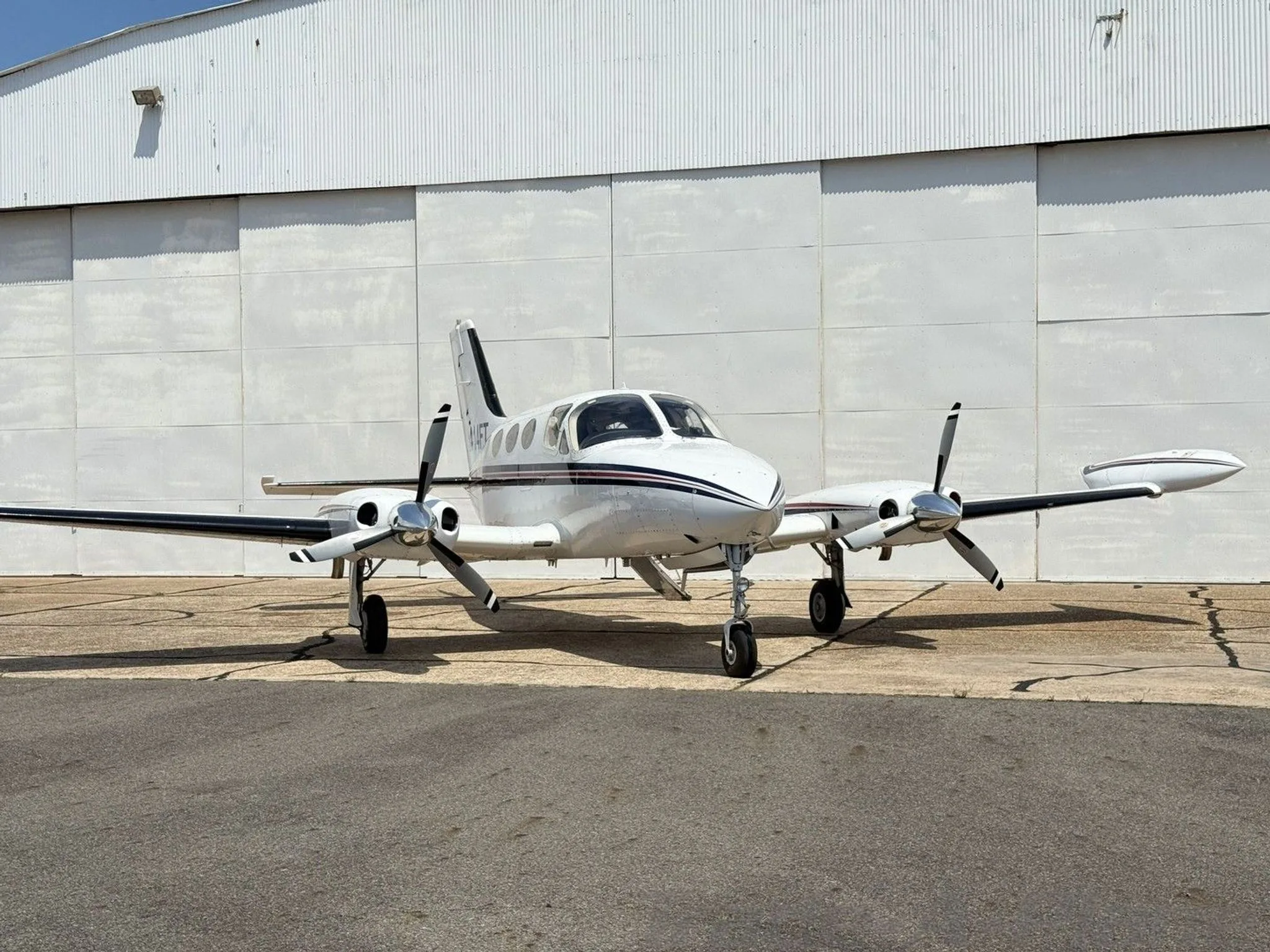
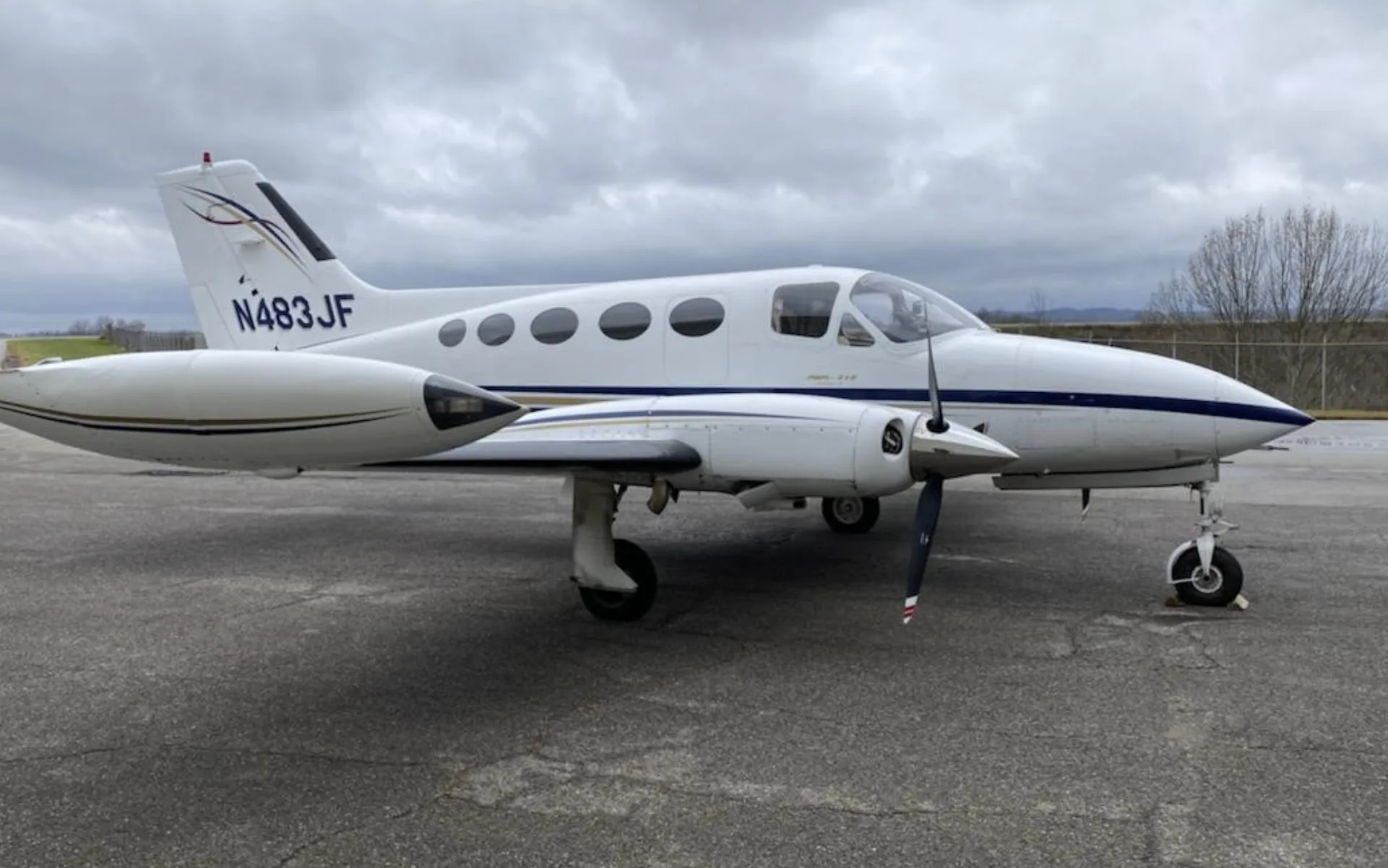

Free — save the 414 to your watchlist and track it in one place.
More CESSNA 414manuals & documents
See all 33 →- C-414 Initial/Transition Ground Training Student Guide - Tom GorskiSystems Description
- C-414A Transition Flight Training Student GuideV Speeds Reference
- C-414 Initial/Transition Flight Training Student Guide - Tom GorskiNormal Procedures
- NAVIGATION - STALL WARNING HORN REPLACEMENTService Bulletins
- AC 150/5220-10F, Guide Specification for Aircraft Rescue and Fire ...Specifications
- SERVICE BULLETIN No. 058 Rev. A Turbocharger - Back Plate Assembly Replacement at OverhaulMaintenance Manual
- Aviation Accident Factual ReportOther Documents
- RAM Performance - Cessna 414 Series VIIPilot's Operating Handbook
- AAIB Bulletin: 4/2019 N414FZ EW/G2018/06/33Other Documents
- Type Acceptance Report TAR 6/21B/14 – Cessna 400 SeriesOther Documents
- Aviation Accident Final ReportOther Documents
- C-414 NORMAL CHECKLISTPilot's Operating Handbook
If you fly the CESSNA 414, you may also be researching these.



In this document
Background
The FAA issued this AD due to reports of cracks found in the wings of two Cessna Model 402C airplanes, which had significant total hours in service. The inspections mandated by previous ADs were deemed insufficient, prompting the need for more frequent checks on the affected models.
Inspection Requirements
Operators of Model 414A airplanes must perform both external and internal inspections of the wing spars for cracks. Initial inspections are required upon reaching 8,500 hours total time-in-service (TIS) or prior to further flight after receipt of this AD. Subsequent inspections must occur at intervals not exceeding 15 hours TIS.
Specific Areas of Inspection
Particular attention must be paid to the lower spar cap at Wing Station (WS) 114, the rivets on either side of WS 114, and the spar web at WS 112.5. Additional areas include the lower spar cap between WS 80 and WS 89 and the attach bolts near WS 89.18.
Reporting Requirements
Any cracks found during inspections must be reported to the FAA within 24 hours. The report should include details such as the airplane serial number, total hours TIS, and findings from the inspection.
Compliance and Alternatives
Operators may request alternative methods of compliance with this AD by following the procedures outlined in 14 CFR 39.19. All requests must be submitted to the principal inspector for consideration.
Safety notes
- Failure to comply with inspection requirements may lead to catastrophic wing failure and loss of control of the aircraft.
Full document text
1 EMERGENCY AIRWORTHINESS DIRECTIVE Aircraft Certification Service Washington, DC U.S. Department of Transportation Federal Aviation Administration We post Emergency ADs on the internet at "www.faa.gov" DATE: February 20, 2005 AD #: AD 2005-05-51 Send to all owners and operators of The Cessna Aircraft Company (Cessna) Models 402C and 414A airplanes. This AD applies to all Models 402C and 414A airplanes that do not have a spar strap modification incorporated on each wing spar following Cessna Service Bulletin MEB02-5, dated June 24, 2002, and Cessna Service Kit SK402-47, dated June 24, 2002. Discussion What events have caused this AD? The FAA has received reports of and is analyzing data from cracks found in the wings of two Cessna Model 402C airplanes. On the first airplane, early information indicates the airplane had severe cracking on its left wing in the vicinity of the front spar and outboard engine beam. The lower spar cap had completely failed at about Wing Station (WS) 114. The airplane also had cracks in the lower wing skin and the web splice doubler. Also found were two popped rivets: one between the heat shield and the wing skin and another between the factory installed web splice doublers and web. The airplane had 20,355 total hours time-in-service (TIS). During the airplane’s most recent flights before the cracking was found, the pilot noticed progressive deterioration in roll trim. The flights required the pilot to use aileron trim for level flight to keep the wings level. The airplane landed safely and inspection revealed the cracks. On the second airplane, fatigue cracks were found at about WS 114 in the lower spar cap of another Model 402C airplane that had over 20,000 total hours TIS. Fatigue analysis shows that similar fatigue cracks could also develop in the wings of the Model 414A airplanes. Is there any current regulatory action to address this area of the Cessna 402C airplanes? Airworthiness Directive (AD) 2000-23-01, Amendment 39-11971 (65 FR 70645), currently requires repetitive visual inspections of the forward, aft, and auxiliary wing spars for cracks on Cessna Model 402C airplanes. These inspections are at intervals not to exceed 110 hours TIS. Logbook records indicate that both airplanes with cracked spars were in compliance with AD 2000- 23-01. What is FAA’s determination? The FAA’s analysis so far shows the inspections of AD 2000-23-01 should be done more frequently and particular attention paid to the following areas: 2 Just Outboard of the Engine Beam • The lower spar cap at WS 114. • The three rivets on both the inboard and outboard sides of WS 114 (total of six rivets) in the lower spar cap as viewed from the access hole. • The spar web at WS 112.5. Just Inboard of the Inboard Engine Beam • The lower spar cap between WS 80 and WS 89. • The two attach bolts just inboard of the WS 89.18 rib. Therefore, FAA has decided to issue an AD to detect and correct cracking in the wing spars of the affected airplanes before the cracks grow to failure. Such a wing failure could result in the wing separating from the airplane with consequent loss of control of the airplane. In addition, we are working with Cessna to develop more extensive solutions to this cracking problem. The FAA anticipates issuing future airworthiness directives (ADs) to address this issue. These ADS may include, but are not necessarily limited to, more intensive inspection procedures and already developed FAA-approved spar strap modifications. What does this AD require? This AD supersedes AD 2000-23-01 to require the visual inspections of the forward, aft, and auxiliary wings spars for cracks more frequently on type design Model 402C airplanes. It adds inspection requirements for the Model 414A airplanes. The AD does not affect those airplanes that incorporate a spar strap modification on each wing following Cessna Service Bulletin MEB02-5, dated June 24, 2002, and Cessna Service Kit SK402- 47, dated June 24, 2002. Provisions are included in this emergency AD to position the airplane to a home base, hangar, maintenance facility, etc. Presentation of the Actual AD This rule is issued under 49 U.S.C. Section 44701 (formerly section 601 of the Federal Aviation Act of 1958), pursuant to the authority delegated to me by the Administrator, and is effective immediately upon receipt of this action. 2005-05-51 THE CESSNA AIRCRAFT COMPANY: Directorate Identifier 2005-CE-06-AD. When Does This AD Become Effective? (a) This emergency AD becomes effective upon receipt. Are Any Other ADs Affected By This Action? (b) This AD supersedes AD 2000-23-01, Amendment 39-11971 (65 FR 70645). 3 What Airplanes Are Affected by This AD? (c) This AD affects Model 402C and 414A airplanes, all serial numbers, that: (1) are certificated in any category; and (2) do not incorporate a spar strap modification on each wing spar following Cessna Service Bulletin MEB02-5, dated June 24, 2002, and Cessna Service Kit SK402-47, dated June 24, 2002. What is the Unsafe Condition Presented in This AD? (d) This AD is the result of extensive cracks found in the wing spars of two of the affected airplanes. We are issuing this AD to detect and correct cracking in the wing spars before the cracks grow to failure. Such wing failure could result in the wing separating from the airplane with consequent loss of control of the airplane What Must I do to Address This Problem? (e) Inspections: Perform both an external and internal inspection of the forward, aft, and auxiliary wing spars for cracks at the times below that are applicable (pay particular attention to the areas specified in paragraph (f) of this AD). Do these inspections following the ACCOMPLISHMENT INSTRUCTIONS section of Cessna Service Bulletin MEB99-3, dated May 6, 1999 (Model 402C); or Cessna Service Bulletin MEB00-7, dated June 24, 2002 (Model 414A): Affected Airplanes Initial Inspection Repetitive Interval (1) For all Model 402C airplanes with fewer than 15,000
Show full textShow less
hours total time-in- service (TIS). Upon accumulating 10,000 hours TIS on the airplane or at the next inspection that would have been required by AD 2000- 23-01, whichever occurs later. Thereafter at intervals not to exceed 110 hours until accumulating 15,000 hours TIS. (2) For all Model 414A airplanes, serial numbers 414A0001 through 414A0047 and 414A0049 through 414A0200. Upon accumulating 8,500 hours TIS on the airplane or prior to further flight after receipt of this AD, whichever occurs later. To return/position the airplane to a home base, hangar, maintenance facility, etc., you may operate the airplane up to 3 hours TIS provided the flight(s) occur(s) no later than 30 days after receipt of this emergency AD. Only the PILOT AND ANY ADDITIONAL FLIGHT CREW MEMBER REQUIRED FOR SAFE OPERATION is allowed for this flight; and FLIGHT INTO KNOWN OR FORECAST MODERATE OR SEVERE TURBULENCE IS PROHIBITED. Thereafter at intervals not to exceed 15 hours TIS. 4 (3) For the following airplanes that have 15,000 hours or more TIS or upon accumulating 15,000 hours TIS: (i) All Model 402C airplanes. (ii) Model 414A airplanes, serial numbers 414A0201 through 414A1212. Prior to further flight after receipt of this AD. To return/position the airplane to a home base, hangar, maintenance facility, etc., you may operate the airplane up to 3 hours TIS provided the flight(s) occur(s) no later than 30 days after receipt of this emergency AD. Only the PILOT AND ANY ADDITIONAL FLIGHT CREW MEMBER REQUIRED FOR SAFE OPERATION is allowed for this flight; and FLIGHT INTO KNOWN OR FORECAST MODERATE OR SEVERE TURBULENCE IS PROHIBITED. Thereafter at intervals not to exceed 15 hours TIS. (f) Specific Inspection Areas of Emphasis: When doing the inspections, pay particular attention to the following areas: (1) Just Outboard of the Engine Beam (i) The lower spar cap at Wing Station (WS) 114. (ii) The three rivets on both the inboard and outboard sides of WS 114 (total of six rivets) in the lower spar cap as viewed from the access hole. (iii) The spar web at WS 112.5. (2) Just Inboard of the Inboard Engine Beam (i) The lower spar cap between WS 80 and WS 89. (ii) The two attach bolts just inboard of the WS 89.18 rib. (g) Cracks found: If you find any crack on any forward, aft, or auxiliary wing spar; or in surrounding structure such as spar webs or skins during any inspection required by this AD, prior to further flight do the following: (1) Obtain an FAA-approved repair scheme from the Cessna Aircraft Company, P.O. Box 7706, Wichita, Kansas 67277; telephone: (316) 941-7550, facsimile: (316) 942-9008; and (2) Incorporate this repair scheme. (h) Reporting Requirement: As soon as possible, but no later than 24 hours after any inspection required by this AD: (1) Submit a report of inspection findings to the Manager, Wichita Aircraft Certification Office (ACO), by fax: (316) 946-4107. (i) Include a report for “cracks found” or “no cracks found” on the initial inspection; and (ii) Include a report only for “cracks found” on the repetitive inspections. 5 (2) The report must include your name and a contact phone number, the results of the findings, a description of any cracking found, the airplane serial number, and the total number of hours TIS on the airplane. The “Lower Wing Spars and Skin Inspection Report” included as page 6 of Cessna Service Bulletin MEB99-3, dated May 6, 1999, may be utilized for this reporting requirement. May I Request an Alternative Method of Compliance? (i) You may request a different method of compliance or a different compliance time for this AD by following the procedures in 14 CFR 39.19. Unless FAA authorizes otherwise, send your request to your principal inspector. The principal inspector may add comments and will send your request to the Manager, Wichita Aircraft Certification Office, FAA. For information on any already approved alternative methods of compliance or for further information about this AD, contact Paul Nguyen, Aerospace Engineer, FAA, Wichita Aircraft Certification Office, 1801 Airport Road, Mid- Continent Airport, Wichita, Kansas 67209; telephone: (316) 946-4125; facsimile: (316) 946-4107; e- mail: paul.nguyen@faa.gov. May I Get Copies of the Documents Referenced in this AD? (j)You may get copies of the documents referenced in this AD Cessna Aircraft Company, Product Support P.O. Box 7706, Wichita, Kansas 67277; telephone: (316) 517-5800; facsimile: (316) 942-9006. Issued in Kansas City, Missouri, on February 20, 2005. David R. Showers, Acting Manager, Small Airplane Directorate, Aircraft Certification Service.
What's in the CESSNA 414 TCDS
A Type Certificate Data Sheet (TCDS) is the FAA's record of what an aircraft type was approved as. It is the source of truth for weights, seating, fuel and the rules the design was certified against. Expand any line to see what it means.
1,386 CESSNA 414 parts for sale
See all →
Parts listed for sale by vetted eBay sellers — confirmed on eBay at checkout.