Aviation Accident Final Report
CESSNA 414 · Other Documents
Overview
This document is an Aviation Accident Final Report issued by the National Transportation Safety Board (NTSB) regarding an accident involving a Cessna 414 aircraft, registration N888AA. The report details the circumstances surrounding the accident, which occurred on May 28, 1998, during the initial climb phase of flight. The right engine experienced a catastrophic failure, leading to a loss of power and subsequent impact with trees. The report includes findings from the investigation, pilot information, and meteorological conditions at the time of the accident. It serves as a critical resource for understanding the factors that contributed to the accident and highlights the importance of engine maintenance and operational procedures for multi-engine aircraft.
- Aircraft Model: Cessna 414
- Max Gross Weight: 6,500 lbs
- Best Climb Speed: 115 knots
- Rate of Climb: 308 feet per minute
- Pilot's Total Flight Time: 2,353 hours
Document
Source
Originally published by www.baaa-acro.com. Sprinkle hosts a reference copy with an added summary, specifications and searchable full text.
Document details
- Type
- Other Documents
- Year
- 1998
- Pages
- 6
- File size
- 93 KB
- Publisher
- www.baaa-acro.com
Common. One of the most common aircraft types we track.
Full essential library on file for the CESSNA 414.
CESSNA 414 for sale now



Free — save the 414 to your watchlist and track it in one place.
More CESSNA 414manuals & documents
See all 33 →- C-414 Initial/Transition Ground Training Student Guide - Tom GorskiSystems Description
- C-414A Transition Flight Training Student GuideV Speeds Reference
- C-414 Initial/Transition Flight Training Student Guide - Tom GorskiNormal Procedures
- NAVIGATION - STALL WARNING HORN REPLACEMENTService Bulletins
- AC 150/5220-10F, Guide Specification for Aircraft Rescue and Fire ...Specifications
- SERVICE BULLETIN No. 058 Rev. A Turbocharger - Back Plate Assembly Replacement at OverhaulMaintenance Manual
- Aviation Accident Factual ReportOther Documents
- RAM Performance - Cessna 414 Series VIIPilot's Operating Handbook
- AAIB Bulletin: 4/2019 N414FZ EW/G2018/06/33Other Documents
- Type Acceptance Report TAR 6/21B/14 – Cessna 400 SeriesOther Documents
- Aviation Accident Final ReportOther Documents
- C-414 NORMAL CHECKLISTPilot's Operating Handbook
If you fly the CESSNA 414, you may also be researching these.

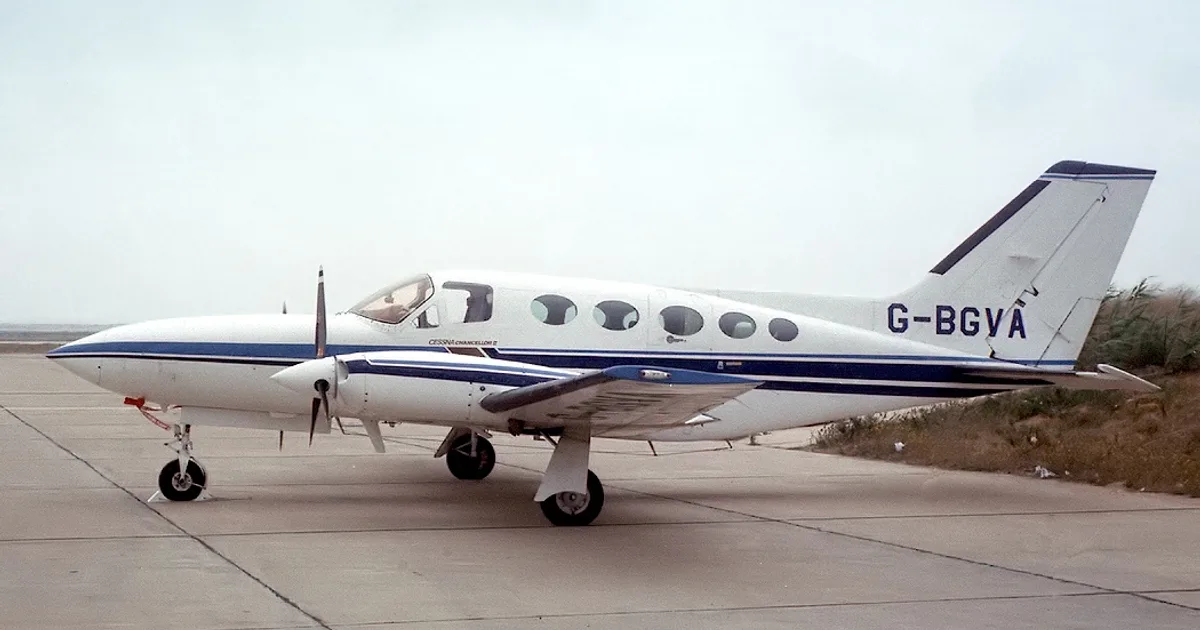


In this document
Accident Overview
On May 28, 1998, a Cessna 414, registration N888AA, was destroyed during takeoff when the right engine failed. The aircraft was at approximately 300 feet above ground level when the pilot reported a sudden engine failure. The pilot attempted to return to the airport but could not maintain altitude, resulting in a collision with trees.
Engine Failure Analysis
The investigation revealed that the right engine's crankshaft was broken, and the number two crankshaft bearing was melted and blocked the oil feed line. This mechanical failure led to the engine's loss of power during the critical phase of flight.
Pilot and Aircraft Information
The pilot, an airline transport pilot with 2,353 total flight hours, was operating the Cessna 414 under Part 135 regulations. The aircraft had a maximum gross weight of 6,500 lbs and was equipped with two Continental TSIO-520-J engines, each rated at 300 hp.
Climb Performance Data
According to the Cessna 414 Pilot's Operating Handbook, at a weight of 5,680 lbs, with gear and flaps retracted and the inoperative propeller feathered, the aircraft's best climb indicated airspeed is 115 knots, with a rate of climb of 308 feet per minute.
Accident Findings
The NTSB determined that the probable cause of the accident was the slipped number two bearing in the right engine, which caused the crankshaft to fracture. Contributing factors included the trees that the aircraft collided with during the descent.
Safety notes
- Engine failures can occur suddenly and without warning, particularly during critical phases of flight such as takeoff and initial climb.
- Proper engine maintenance is crucial to prevent mechanical failures that can lead to accidents.
Full document text
Page 1 of 6 National Transportation Safety Board Aviation Accident Final Report Location: NORTH PLATTE, NE Accident Number: CHI98LA178 Date & Time: 05/28/1998, 1300 CDT Registration: N888AA Aircraft: Cessna 414 Aircraft Damage: Destroyed Defining Event: Injuries: 3 Minor Flight Conducted Under: Part 135: Air Taxi & Commuter - Non-scheduled Analysis The airplane had just taken off and was at approximately 300 agl when the right engine 'had a sudden and catastrophic failure.' The right propeller stopped spinning with the blades in the low-pitch position. The pilot initiated a right turn back toward the airport, but the airplane would not maintain altitude. The pilot rolled out of the turn, but the descent continued until the airplane struck the trees. Examination of the airplane's right engine revealed that the crankshaft was broken at the number 3 short cheek, just forward of the number two cylinder piston rod. The number two crankshaft bearing was broken and melted. The oil feed line to the number two bearing was blocked by a piece of the broken bearing. The Single Engine Climb Data table in the Cessna 414 Pilot's Operating Handbook indicates that an airplane weighing 5,680 pounds, with gear and flaps retracted and the inoperative propeller in feather, operating at a density altitude of 5,055 feet, will have a best climb indicated airspeed of 115 knots. The rate of climb will be 308 feet per minute. Probable Cause and Findings The National Transportation Safety Board determines the probable cause(s) of this accident to be: the slipped number two bearing in the airplane's right engine, which blocked the bearing's oil feed line, causing the bearing and the crankshaft to overheat and fracture. A factor contributing to this accident was the trees. Page 2 of 6 CHI98LA178 Findings Occurrence #1: LOSS OF ENGINE POWER(TOTAL) - MECH FAILURE/MALF Phase of Operation: TAKEOFF - INITIAL CLIMB Findings 1. (C) ENGINE ASSEMBLY,BEARING - SLIPPED 2. (C) FLUID,OIL - STARVATION 3. (C) ENGINE ASSEMBLY,BEARING - FRACTURED 4. (C) ENGINE ASSEMBLY,CRANKSHAFT - FRACTURED 5. ENGINE ASSEMBLY,CRANKCASE - FRACTURED ---------- Occurrence #2: IN FLIGHT COLLISION WITH OBJECT Phase of Operation: EMERGENCY DESCENT/LANDING Findings 6. (F) OBJECT - TREE(S) ---------- Occurrence #3: IN FLIGHT COLLISION WITH TERRAIN/WATER Phase of Operation: DESCENT - UNCONTROLLED Page 3 of 6 CHI98LA178 Factual Information On May 28, 1998, at 1300 central daylight time (cdt), a Cessna 414, N888AA, operated by an airline transport pilot, was destroyed when on initial climb, the airplane's right engine lost power. The airplane subsequently struck some trees and impacted the terrain in an inverted attitude. Visual meteorological conditions prevailed at the time of the accident. The flight was being conducted under 14 CFR Part 135. An IFR flight plan was on file. The pilot and two passengers on board the airplane sustained minor injuries. The cross-country flight originated at North Platte, Nebraska. In his written statement, the pilot said that he had just taken off and was at approximately 300 feet above ground level (agl) when the right engine "had a sudden and catastrophic failure." Before he could complete his emergency checklist, the right propeller stopped spinning with the blades in the low-pitch position. The pilot said that he initiated a right turn back toward the airport, but noted that the airplane would not maintain altitude. The pilot rolled out of the turn, but the descent continued. The airplane struck the trees. The pilot said that on impact he was knocked unconscious and could not remember anything after realizing that the airplane was going to hit the trees. A Federal Aviation Administration (FAA) inspector examined the wreckage at the accident site. The accident site was located in a wooded area on the north bank of the North Platte River, approximately 3/4 of a mile south of the North Platte Regional Airport, North Platte, Nebraska. The airplane rested inverted on the ground and was oriented on a 200-degree heading. Several nearby trees, aft of the wreckage, were broken and damaged. The nose of the airplane was crushed inward and aft to the forward pressure bulkhead. The airplane's cabin and aft fuselage remained intact. The left wing was broken aft beginning outboard of the engine nacelle. The outboard portion of the left wing was located just right of the fuselage. It showed numerous areas of aft crushing and denting along the entire length of the leading edge. Both wing sections remained attached by the engine and aileron flight control cables. The left engine had separated from the nacelle and was located 33 feet south of the fuselage. The airplane's left propeller was broken off at the flange and rested just 48 feet forward of the fuselage. It showed torsional bending and chordwise scratches. The airplane's right wing was broken off at the wing root. It was found resting 58 feet aft of the fuselage. The right engine was broken out of the nacelle, but remained attached by the engine control cables. The right propeller was broken at the flange. One of the three blades was broken out of the hub. All three blades showed little damage. The airplane's empennage was bent downward. The vertical stabilizer and rudder were bent aft and broken. Flight control continuity was confirmed. Examination of the airplane's left engine revealed no anomalies. Examination of the airplane's right engine revealed that the crankshaft was broken at the number 3 short cheek, just forward of the number two cylinder piston rod. The number two crankshaft bearing was broken and melted. The oil feed line to the number two bearing was blocked by a piece of the broken bearing. The Single Engine Climb Data table in the Cessna 414 Pilot's Operating Handbook indicates that an airplane weighing 5,680 pounds, with gear and flaps retracted and the inoperative propeller in feather, operating at a density altitude of 5,055 feet, will have a best climb
Show full textShow less
indicated airspeed of 115 knots. The rate of climb will be 308 feet per minute. Page 4 of 6 CHI98LA178 Pilot Information Certificate: Airline Transport; Flight Instructor Age: 33, Male Airplane Rating(s): Multi-engine Land; Single-engine Land Seat Occupied: Left Other Aircraft Rating(s): None Restraint Used: Seatbelt, Shoulder harness Instrument Rating(s): Airplane Second Pilot Present: No Instructor Rating(s): Airplane Multi-engine; Airplane Single-engine; Instrument Airplane Toxicology Performed: No Medical Certification: Class 2 Valid Medical--no waivers/lim. Last FAA Medical Exam: 01/23/1998 Occupational Pilot: Last Flight Review or Equivalent: Flight Time: 2353 hours (Total, all aircraft), 312 hours (Total, this make and model), 2298 hours (Pilot In Command, all aircraft), 103 hours (Last 90 days, all aircraft), 40 hours (Last 30 days, all aircraft), 2 hours (Last 24 hours, all aircraft) Aircraft and Owner/Operator Information Aircraft Make: Cessna Registration: N888AA Model/Series: 414 414 Aircraft Category: Airplane Year of Manufacture: Amateur Built: No Airworthiness Certificate: Normal Serial Number: 414-0468 Landing Gear Type: Retractable - Tricycle Seats: 8 Date/Type of Last Inspection: 03/24/1998, Continuous Airworthiness Certified Max Gross Wt.: 6500 lbs Time Since Last Inspection: 84 Hours Engines: 2 Reciprocating Airframe Total Time: 6159 Hours Engine Manufacturer: Continental ELT: Installed, not activated Engine Model/Series: TSIO-520-J Registered Owner: SILVERHAWK SECURITY SPEC. INC. Rated Power: 300 hp Operator: SILVERHAWK SECURITY SPEC. INC. Operating Certificate(s) Held: None Page 5 of 6 CHI98LA178 Meteorological Information and Flight Plan Conditions at Accident Site: Visual Conditions Condition of Light: Day Observation Facility, Elevation: LBF, 2778 ft msl Distance from Accident Site: 1 Nautical Miles Observation Time: 1256 CDT Direction from Accident Site: 360° Lowest Cloud Condition: Clear / 0 ft agl Visibility 10 Miles Lowest Ceiling: None / 0 ft agl Visibility (RVR): 0 ft Wind Speed/Gusts: 12 knots / Turbulence Type Forecast/Actual: / Wind Direction: 70° Turbulence Severity Forecast/Actual: / Altimeter Setting: 29 inches Hg Temperature/Dew Point: 28°C / 13°C Precipitation and Obscuration: Departure Point: (LBF) Type of Flight Plan Filed: IFR Destination: KEARNEY, NE (EAR) Type of Clearance: IFR Departure Time: 1300 CDT Type of Airspace: Class E Airport Information Airport: NORTH PLATTE MUNICIPAL (LBF) Runway Surface Type: Airport Elevation: Runway Surface Condition: Runway Used: 0 IFR Approach: None Runway Length/Width: VFR Approach/Landing: None Wreckage and Impact Information Crew Injuries: 1 Minor Aircraft Damage: Destroyed Passenger Injuries: 2 Minor Aircraft Fire: None Ground Injuries: N/A Aircraft Explosion: None Total Injuries: 3 Minor Latitude, Longitude: Administrative Information Investigator In Charge (IIC): DAVID C BOWLING Report Date: 02/15/2001 Additional Participating Persons: ROBERT V BOTTOM; LINCOLN, NE FRED LEEPER; WICHITA, KS FRED FIHE; MOBILE, AL Publish Date: Investigation Docket: NTSB accident and incident dockets serve as permanent archival information for the NTSB’s investigations. Dockets released prior to June 1, 2009 are publicly available from the NTSB’s Record Management Division at pubinq@ntsb.gov, or at 800-877-6799. Dockets released after this date are available at http://dms.ntsb.gov/pubdms/. Page 6 of 6 CHI98LA178 The National Transportation Safety Board (NTSB), established in 1967, is an independent federal agency mandated by Congress through the Independent Safety Board Act of 1974 to investigate transportation accidents, determine the probable causes of the accidents, issue safety recommendations, study transportation safety issues, and evaluate the safety effectiveness of government agencies involved in transportation. The NTSB makes public its actions and decisions through accident reports, safety studies, special investigation reports, safety recommendations, and statistical reviews. The Independent Safety Board Act, as codified at 49 U.S.C. Section 1154(b), precludes the admission into evidence or use of any part of an NTSB report related to an incident or accident in a civil action for damages resulting from a matter mentioned in the report. A factual report that may be admissible under 49 U.S.C. § 1154(b) is available here.
What's in the CESSNA 414 TCDS
A Type Certificate Data Sheet (TCDS) is the FAA's record of what an aircraft type was approved as. It is the source of truth for weights, seating, fuel and the rules the design was certified against. Expand any line to see what it means.
1,386 CESSNA 414 parts for sale
See all →
Parts listed for sale by vetted eBay sellers — confirmed on eBay at checkout.