AIRPLANE FLIGHT MANUAL for the CIRRUS SR22 with Cirrus Perspective Touch+ Avionics System
Cirrus SR22T G7 · Flight Manual
Overview
This Airplane Flight Manual (AFM) is specifically designed for the Cirrus SR22 equipped with the Cirrus Perspective Touch+ avionics system. Approved by the FAA for use in the Normal Category under 14 CFR 23, this manual must be carried in the aircraft at all times and kept accessible to the pilot during flight operations. The AFM provides essential operational procedures, performance data, and maintenance information necessary for the safe and efficient operation of the SR22. It is structured to facilitate easy reference, with sections covering general information, limitations, emergency procedures, performance data, weight and balance, systems descriptions, and handling and servicing. The manual is updated regularly to incorporate new procedures and performance data as they become available, ensuring that operators have the most current information at their disposal.
- Maximum Takeoff Gross Weight: 3600 lb (1633 kg)
- Total Fuel Capacity: 94.5 U.S. gallons (358.0 L)
- Horsepower Rating: 310 hp @ 2700 RPM
- Maximum Baggage Compartment Loading: 130 lb (59 kg)
- Oil Capacity: 8 U.S. quarts (7.6 L)
- Wing Loading: 24.8 lb per square foot
- Power Loading: 11.61 lb per hp
Document
Source
Originally published by mikegoulianaviation.com. Sprinkle hosts a reference copy with an added summary, specifications and searchable full text.
Document details
- Type
- Flight Manual
- Year
- 2023
- Pages
- 304
- File size
- 2.1 MB
- Publisher
- mikegoulianaviation.com
Common. One of the most common aircraft types we track.
Most owners only have the POH. Here's the essential set for the Cirrus SR22T G7.
- Pilot's Operating Handbook / AFM
- Checklist
- Maintenance Manual
- Parts Catalog (IPC)
- Systems & Wiring
- Service Bulletins
- Type Certificate (TCDS)
Cirrus SR22T G7 for sale now
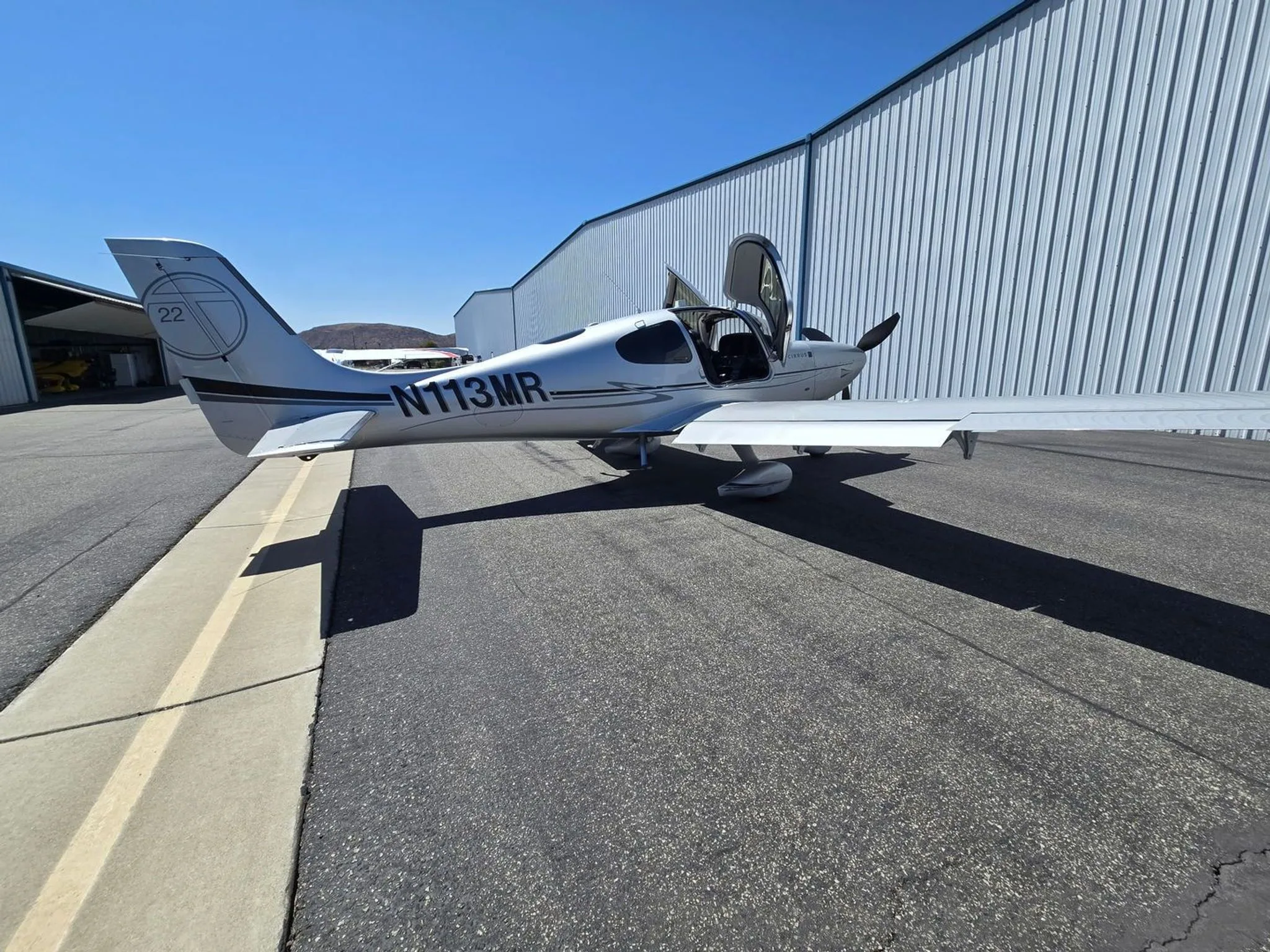


Free — save the SR22T to your watchlist and track it in one place.
More Cirrus SR22T G7manuals & documents
See all 21 →- AIRPLANE FLIGHT MANUAL for the CIRRUS SR22TPilot's Operating Handbook
- AAIB Bulletin: G-RGSK AAIB-29925Other Documents
- 2025 SR22T GTS G7Pilot's Operating Handbook
- Specifications for the Cirrus SR22T G7Specifications
- 2024 SR SERIES G7 / SR22Weight And Balance
- 2024 SR SERIES G7 / SR22TChecklist
- 2024 Cirrus SR22T G7 GTS (N229AT)Checklist
- Cirrus SR22T G7 ChecklistChecklist
- COPA Pilot - September 2024Parts Catalog
- 2024 SR SERIES G7 / SR22TWeight And Balance
- PILOT’S INFORMATION MANUAL for the CIRRUS SR22T with Cirrus Perspective Touch+ Avionics SystemPilot's Operating Handbook
- Pilot’s Guide for the Cirrus SR2x with Cirrus Perspective Touch+ by GarminFlight Manual
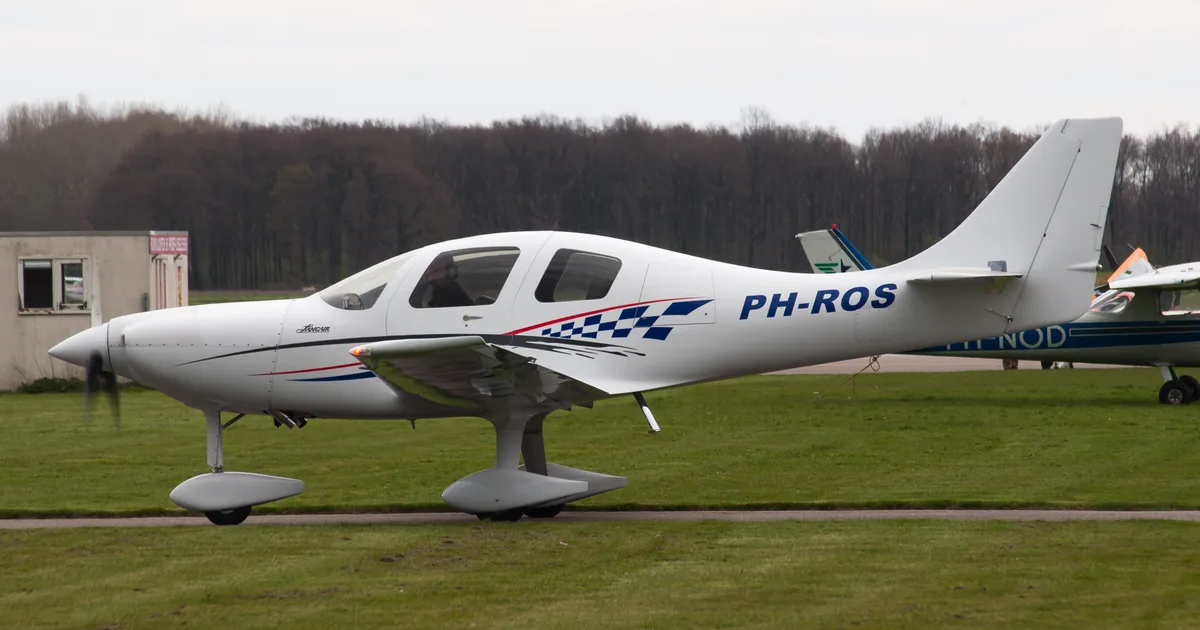
If you fly the Cirrus SR22T G7, you may also be researching these.



In this document
General Information
This section provides an overview of the Cirrus SR22, including its specifications, engine details, and propeller information. The SR22 is powered by a Continental IO-550-N engine, producing 310 horsepower at 2700 RPM. It features a constant speed, three-blade propeller, with a diameter of 78 inches. The aircraft has a total fuel capacity of 94.5 U.S. gallons, with 92.0 gallons usable.
Limitations
This section outlines the operational limitations of the SR22, including maximum takeoff gross weight of 3600 lb (1633 kg) and maximum zero fuel weight of 3400 lb (1542 kg). It also specifies the maximum baggage compartment loading at 130 lb (59 kg) and provides critical performance limitations.
Emergency Procedures
Emergency procedures are detailed in this section, providing pilots with necessary actions to take in various emergency scenarios. This includes engine failure procedures, electrical failure protocols, and other critical emergency responses.
Performance Data
The performance data section includes essential information such as takeoff and landing distances, climb rates, and fuel consumption rates. This data is vital for flight planning and operational efficiency.
Weight and Balance
This section provides guidelines for calculating weight and balance, ensuring that the aircraft is loaded within safe limits for flight operations. It includes tables and examples for accurate calculations.
Systems Description
A detailed description of the aircraft systems, including avionics, electrical, and fuel systems, is provided in this section. Understanding these systems is crucial for safe operation and troubleshooting.
Handling and Servicing
This section outlines the procedures for handling and servicing the SR22, including preflight checks, fueling procedures, and maintenance requirements.
Safety Information
Safety information is emphasized throughout the manual, including warnings, cautions, and notes that highlight critical operational procedures and maintenance practices.
Safety notes
- All limitations, procedures, maintenance & servicing requirements, and performance data contained in this AFM are mandatory for compliance with FAA operating rules and for continued airworthiness of the airplane.
- Warnings are used to call attention to operating procedures which, if not strictly observed, may result in personal injury or loss of life.
- Cautions are used to call attention to operating procedures which, if not strictly observed, may result in damage to equipment.
Full document text
P/N 44765-001 FAA APPROVED Cover Page-i FAA APPROVED AIRPLANE FLIGHT MANUAL for the CIRRUS SR22 with Cirrus Perspective Touch+ Avionics System FAA Approved in Normal Category based on 14 CFR 23. This document must be carried in the airplane at all times and be kept within the reach of the pilot during all flight operations. THIS MANUAL INCLUDES THE MATERIAL REQUIRED TO BE FURNISHED TO THE PILOT BY 14 CFR 23 AND ADDITIONAL INFORMATION PROVIDED BY CIRRUS AIRCRAFT AND CONSTITUTES THE FAA APPROVED AIRPLANE FLIGHT MANUAL. Model - Serial #: Registration #: Original Issue 01 Aug 2023 Cover Page-ii FAA APPROVED P/N 44765-001 Copyright © 2023 - All Rights Reserved Cirrus Aircraft 4515 Taylor Circle Duluth, MN 55811 01 Aug 2023 Original Issue CIRRUS A IRPLANE FLIGHT M ANUAL SR22 L IST O F E FFECTIVE PAGES List of Effective Pages Use this page to determine the current effective date for each page in the AFM. Supplements are issued individually and are controlled by the Log of Supplements Page in Section 9. Log of Revisions REV NO FAA APPROVAL DATE SUMMARY DESCRIPTION Original Issue Monica Merritt Mgr., AIR-712 25 Aug 2023 01 Aug 2023 Original Issue Page Status Page Status Page Status P/N 44765-001 FAA APPROVED LOEP-1 CoverPage-i Original Issue CoverPage-ii Original Issue LOEP-1 Original Issue LOEP-2 Original Issue LOEP-3 Original Issue LOEP-4 Original Issue Frontmatter-1 Original Issue Frontmatter-2 Original Issue Frontmatter-3 Original Issue Frontmatter-4 Original Issue 1-1 Original Issue 1-2 Original Issue 1-3 Original Issue 1-4 Original Issue 1-5 Original Issue 1-6 Original Issue 1-7 Original Issue 1-8 Original Issue 1-9 Original Issue 1-10 Original Issue 1-11 Original Issue 1-12 Original Issue 1-13 Original Issue 1-14 Original Issue 2-1 Original Issue 2-2 Original Issue 2-3 Original Issue 2-4 Original Issue 2-5 Original Issue 2-6 Original Issue 2-7 Original Issue 2-8 Original Issue 2-9 Original Issue 2-10 Original Issue 2-11 Original Issue 2-12 Original Issue 2-13 Original Issue 2-14 Original Issue 2-15 Original Issue 2-16 Original Issue 2-17 Original Issue 2-18 Original Issue 2-19 Original Issue 2-20 Original Issue 2-21 Original Issue 2-22 Original Issue 2-23 Original Issue 2-24 Original Issue 2-25 Original Issue 2-26 Original Issue 2-27 Original Issue 2-28 Original Issue 2-29 Original Issue 2-30 Original Issue 2-31 Original Issue 2-32 Original Issue 2-33 Original Issue 2-34 Original Issue 2-35 Original Issue 2-36 Original Issue 2-37 Original Issue 2-38 Original Issue 3-1 Original Issue 3-2 Original Issue 3-3 Original Issue 3-4 Original Issue 3-5 Original Issue 3-6 Original Issue 3-7 Original Issue 3-8 Original Issue 3-9 Original Issue 3-10 Original Issue 3-11 Original Issue 3-12 Original Issue 3-13 Original Issue 3-14 Original Issue 3-15 Original Issue 3-16 Original Issue 3-17 Original Issue 3-18 Original Issue 3-19 Original Issue 3-20 Original Issue 3-21 Original Issue 3-22 Original Issue 3-23 Original Issue 3-24 Original Issue 3-25 Original Issue 3-26 Original Issue 3-27 Original Issue 3-28 Original Issue 3-29 Original Issue 3-30 Original Issue 3-31 Original Issue 3-32 Original Issue 3-33 Original Issue 3-34 Original Issue 3-35 Original Issue 3-36 Original Issue 3-37 Original Issue 3-38 Original Issue 3-39 Original Issue 3-40 Original Issue Original Issue 01 Aug 2023 LOEP-2 FAA APPROVED P/N 44765-001 CIRRUS A IRPLANE F LIGHT M ANUAL SR22 L IST O F E FFECTIVE PAGES List of Effective Pages (Cont.) Page Status Page Status Page Status 3-41 Original Issue 3-42 Original Issue 3-43 Original Issue 3-44 Original Issue 3-45 Original Issue 3-46 Original Issue 3A-1 Original Issue 3A-2 Original Issue 3A-3 Original Issue 3A-4 Original Issue 3A-5 Original Issue 3A-6 Original Issue 3A-7 Original Issue 3A-8 Original Issue 3A-9 Original Issue 3A-10 Original Issue 3A-11 Original Issue 3A-12 Original Issue 3A-13 Original Issue 3A-14 Original Issue 3A-15 Original Issue 3A-16 Original Issue 3A-17 Original Issue 3A-18 Original Issue 3A-19 Original Issue 3A-20 Original Issue 3A-21 Original Issue 3A-22 Original Issue 3A-23 Original Issue 3A-24 Original Issue 3A-25 Original Issue 3A-26 Original Issue 3A-27 Original Issue 3A-28 Original Issue 3A-29 Original Issue 3A-30 Original Issue 3A-31 Original Issue 3A-32 Original Issue 3A-33 Original Issue 3A-34 Original Issue 3A-35 Original Issue 3A-36 Original Issue 3A-37 Original Issue 3A-38 Original Issue 3A-39 Original Issue 3A-40 Original Issue 3A-41 Original Issue 3A-42 Original Issue 4-1 Original Issue 4-2 Original Issue 4-3 Original Issue 4-4 Original Issue 4-5 Original Issue 4-6 Original Issue 4-7 Original Issue 4-8 Original Issue 4-9 Original Issue 4-10 Original Issue 4-11 Original Issue 4-12 Original Issue 4-13 Original Issue 4-14 Original Issue 4-15 Original Issue 4-16 Original Issue 4-17 Original Issue 4-18 Original Issue 4-19 Original Issue 4-20 Original Issue 4-21 Original Issue 4-22 Original Issue 4-23 Original Issue 4-24 Original Issue 4-25 Original Issue 4-26 Original Issue 4-27 Original Issue 4-28 Original Issue 4-29 Original Issue 4-30 Original Issue 4-31 Original Issue 4-32 Original Issue 4-33 Original Issue 4-34 Original Issue 4-35 Original Issue 4-36 Original Issue 4-37 Original Issue 4-38 Original Issue 5-1 Original Issue 5-2 Original Issue 5-3 Original Issue 5-4 Original Issue 5-5 Original Issue 5-6 Original Issue 5-7 Original Issue 5-8 Original Issue 5-9 Original Issue 5-10 Original Issue 5-11 Original Issue 5-12 Original Issue 5-13 Original Issue 5-14 Original Issue 5-15 Original Issue 5-16 Original Issue 5-17 Original Issue 5-18 Original Issue 5-19 Original Issue 5-20 Original Issue 5-21 Original Issue 5-22 Original Issue 5-23 Original Issue 5-24 Original Issue 5-25 Original Issue 5-26 Original Issue
Show full textShow less
5-27 Original Issue 5-28 Original Issue 5-29 Original Issue 5-30 Original Issue 5-31 Original Issue 5-32 Original Issue 5-33 Original Issue 5-34 Original Issue 5-35 Original Issue 5-36 Original Issue 5-37 Original Issue 5-38 Original Issue 5-39 Original Issue 5-40 Original Issue 5-41 Original Issue 5-42 Original Issue 5-43 Original Issue 5-44 Original Issue 5-45 Original Issue 5-46 Original Issue 5-47 Original Issue 5-48 Original Issue 5-49 Original Issue 5-50 Original Issue 5-51 Original Issue 5-52 Original Issue 5-53 Original Issue 5-54 Original Issue 5-55 Original Issue 5-56 Original Issue 5-57 Original Issue 5-58 Original Issue 6-1 Original Issue 6-2 Original Issue 6-3 Original Issue 6-4 Original Issue 6-5 Original Issue 6-6 Original Issue 6-7 Original Issue 6-8 Original Issue 6-9 Original Issue 6-10 Original Issue 6-11 Original Issue 6-12 Original Issue 7-1 Original Issue 7-2 Original Issue 8-1 Original Issue 8-2 Original Issue 8-3 Original Issue 8-4 Original Issue 8-5 Original Issue 8-6 Original Issue 8-7 Original Issue 01 Aug 2023 Original Issue P/N 44765-001 FAA APPROVED LOEP-3 CIRRUS A IRPLANE F LIGHT M ANUAL SR22 L IST O F E FFECTIVE PAGES List of Effective Pages (Cont.) Page Status Page Status Page Status 8-8 Original Issue 8-9 Original Issue 8-10 Original Issue 8-11 Original Issue 8-12 Original Issue 8-13 Original Issue 8-14 Original Issue 8-15 Original Issue 8-16 Original Issue 8-17 Original Issue 8-18 Original Issue 8-19 Original Issue 8-20 Original Issue 8-21 Original Issue 8-22 Original Issue 8-23 Original Issue 8-24 Original Issue 8-25 Original Issue 8-26 Original Issue 8-27 Original Issue 8-28 Original Issue 8-29 Original Issue 8-30 Original Issue 8-31 Original Issue 8-32 Original Issue 8-33 Original Issue 8-34 Original Issue 9-1 Original Issue 9-2 Original Issue 10-1 Original Issue 10-2 Original Issue 10-3 Original Issue 10-4 Original Issue 10-5 Original Issue 10-6 Original Issue 10-7 Original Issue 10-8 Original Issue Original Issue 01 Aug 2023 LOEP-4 FAA APPROVED P/N 44765-001 CIRRUS A IRPLANE F LIGHT M ANUAL SR22 L IST O F E FFECTIVE PAGES List of Effective Pages (Cont.) Page Status Page Status Page Status Original Issue 01 Aug 2023 Intentionally Left Blank CIRRUS FRONTMATTER SR22 FOREWORD P/N 44765-001 NOT FAA APPROVED Frontmatter-1 Foreword This Airplane Flight Manual (AFM) has been prepared by Cirrus to famil- iarize operators with the aircraft. Read this AFM carefully. It provides oper- ational procedures that will ensure the operator obtains the performance published in the manual, data ed to allow the most efficient and safe use of the airplane, and basic information to assist in maintaining the airplane in airworthy condition. • N OTE • All limitations, procedures, maintenance & servicing require- ments, and performance data contained in this AFM are manda- tory for compliance with FAA operating rules and for continued airworthiness of the airplane. This AFM includes the material required to be furnished to the pilot by the Code of Federal Regulations (CFRs) and additional information provided by Cirrus and constitutes the FAA Approved Airplane Flight Manual for the aircraft. The Airplane Flight Manual This AFM has been prepared using GAMA Specification #1 for Airplane Flight Manual, Revision 2, dated 18 October 1996 as the content model and format guide. However, some deviations from this specification were made for clarity. The AFM is presented in loose-leaf form for ease in inserting revisions and is sized for convenient storage. Tabbed dividers throughout the AFM allow quick reference to each section. Logical and convenient Tables of Contents are located at the beginning of each section to aid in locating specific data within that section. The AFM is divided into ten sections as follows: Section 1 ........................................................................................ General Section 2 ..................................................................................Limitations Section 3 ..............................................................Emergency Procedures Section 3A ............................................................ Abnormal Procedures Section 4 ....................................................................Normal Procedures Section 5 ...................................................................... Performance Data Section 6 ...................................................................Weight and Balance Section 7 .................................................................. Systems Description Section 8 .............................................................Handling and Servicing Section 9 ................................................................... Log of Supplements Section 10 ................................................................... Safety Information Original Issue 01 Aug 2023 FRONTMATTER CIRRUS FOREWORD SR22 Frontmatter-2 NOT FAA APPROVED P/N 44765-001 The data presented in this AFM is the result of extensive flight tests and is approved by the Federal Aviation Administration. However, as new proce- dures or performance data are developed, the AFM will be revised. • N OTE • It is the responsibility of the owner to ensure that the Airplane Flight Manual is current at all times. Therefore, it is very important that all revisions be properly incorporated into this AFM as soon as they become available. Revising the Airplane Flight Manual Two types of revisions may be issued for this Handbook: Temporary and Numbered. Temporary revisions are printed on yellow paper, normally cover only one topic or procedure, and are issued to provide safety related information in a timely manner. All the information needed to properly file a temporary revision is included on the revision itself. Typically, a temporary revision is superseded and replaced by the next numbered revision. Numbered revisions are printed on white paper, normally cover several subjects, and are issued as general updates to the AFM. Each numbered revision includes an “Instruction Sheet”, a “List of Effective Pages”, and a “Revision Highlights” page. The “Instruction Sheet” is intended to assist the manual holder in removing superseded pages and inserting new or superseding pages. The “List of Effective Pages” shows the issue or revision status of all pages in the AFM. The “Revision Highlights” page gives a brief description of changes made to each page in the current revision. Identifying Revised Material Each page in the AFM has the issue date at the lower inside corner opposite the page number and the revision level under the part number. Issue dates will correspond to the issue dates of the Original Issue, any revisions, or reissues on the List of Effective Pages. The Original Issue and its issue date will be listed on the List of Effective Pages. In the event that the majority of pages in the AFM are revised, Cirrus may determine that it is more effective to reissue the AFM. Reissues will be identified by the word “Reissue” followed by a letter indicating the reissue level; for example, “Reissue A” on the List of Effective Pages along with its issue date. Revisions will be identi- fied by the word “Revision” followed by the revision number on the List of Effective Pages; for example, “Revision 2” (Original Issue, Revision 2) or “Revision B1” (Reissue B, Revision 1). Revised material on a page can be identified by a change bar located at the outside page margin. 01 Aug 2023 Original Issue CIRRUS FRONTMATTER SR22 SUPPLEMENTS P/N 44765-001 NOT FAA APPROVED Frontmatter-3 Revisions to the Airplane Flight Manual AFM revisions, temporary revisions, and supplements can be downloaded from Cirrus at www.cirrusaircraft.com, or from the Authorized Service Center website. Paper copies of AFM revisions and supplements can be purchased from Cirrus Connection at www.cirrusconnection.com. Supplements The Supplements section (Section 9) of this AFM contains FAA Approved Supplements necessary to safely and efficiently operate the airplane when equipped with optional equipment not provided with the standard airplane or not included in the AFM. Supplements are essentially “mini-hand- books” and may contain data corresponding to most sections of the AFM. Data in a supplement either adds to, supersedes, or replaces similar data in the basic AFM. Section 9 includes a “Log of Supplements” page preceding all Cirrus Supplements produced for this airplane. The “Log of Supplements” page can be utilized as a “Table of Contents” for Section 9. If the airplane is modified at a non-Cirrus facility through an STC or other approval method, it is the owner’s responsibility to ensure that the proper supple- ment, if applicable, is installed in the AFM and that the supplement is prop- erly recorded on the “Log of Supplements” page. FAA Approved AFM Supplements must be in the airplane for flight oper- ations when the subject optional equipment is installed or the special oper- ations are to be performed. Retention of Data In the event a new title page is issued, the weight and balance data changes, the equipment list changes, or the “Log of Supplements” is replaced, the owner must ensure that all information applicable to the airplane is trans- ferred to the new pages and the aircraft records are current. It is not a requirement that owners retain information, such as supplements, that is not applicable to their airplane. In the event a new AFM is purchased, the owner must ensure that all infor- mation applicable to the airplane is transferred to the new AFM and the aircraft records are current. Original Issue 01 Aug 2023 FRONTMATTER CIRRUS WARNINGS, C AUTIONS, AND NOTES SR22 Frontmatter-4 NOT FAA APPROVED P/N 44765-001 Warnings, Cautions, and Notes Warnings, Cautions, and Notes are used throughout this AFM to focus attention on special conditions or procedures as follows: • WARNING • Warnings are used to call attention to operating procedures which, if not strictly observed, may result in personal injury or loss of life. • CAUTION • Cautions are used to call attention to operating procedures which, if not strictly observed, may result in damage to equipment. • N OTE • Notes are used to highlight specific operating conditions or steps of a procedure. Airplane Serial Number Effectivity For aircraft serial numbers with an alphabetical suffix, the letter designa- tion should be ignored when reading effectivity notes in service and oper- ating documents. For example, "2491H" is the same as "2491" when referencing effectivity to determine applicable operation for this aircraft. 01 Aug 2023 Original Issue P/N 44765-001 NOT FAA APPROVED 1-1 CIRRUS S ECTION 1: G ENERAL SR22 Section 1: General Table of Contents Introduction.......................................................................................... 3 The Airplane ........................................................................................ 7 Engine ............................................................................................... 7 Propeller ............................................................................................ 7 Hartzell ............................................................................................ 7 McCauley ........................................................................................ 7 MT .................................................................................................. 7 Fuel ................................................................................................... 7 Approved Fuel Grades .................................................................... 7 Oil ...................................................................................................... 8 Maximum Certificated Weights.......................................................... 8 Specific Loadings .............................................................................. 8 Noise Characteristic .......................................................................... 8 Terminology....................................................................................... 9 Original Issue 01 Aug 2023 S ECTION 1: GENERAL CIRRUS SR22 1-2 NOT FAA APPROVED P/N 44765-001 01 Aug 2023 Original Issue Intentionally Left Blank CIRRUS S ECTION 1: G ENERAL SR22 I NTRODUCTION P/N 44765-001 NOT FAA APPROVED 1-3 Introduction This section contains information of general interest to pilots and owners. You will find the information useful in acquainting yourself with the airplane, as well as in loading, fueling, sheltering, and handling the airplane during ground operations. Additionally, this section contains definitions or explanations of symbols, abbreviations, and terminology used throughout this Handbook. • N OTE • For specific information regarding the organization of this Hand- book, revisions, supplements, and procedures to be used to obtain publications, see the “Foreword” section. All liquid volumes referenced in this publication are expressed in United States Customary Units, e.g., U.S. Gallons. Original Issue 01 Aug 2023 S ECTION 1: GENERAL CIRRUS I NTRODUCTION SR22 1-4 NOT FAA APPROVED P/N 44765-001 Figure 1-1: Airplane Three View 78 inches 3-BLADE 198 cm 38.3 ft 11.67 m 9.1 ft 2.8 m 26.0 ft 7.92 m 8.9 ft 2.71 m SR22_FM01_5663 01 Aug 2023 Original Issue CIRRUS S ECTION 1: G ENERAL SR22 I NTRODUCTION P/N 44765-001 NOT FAA APPROVED 1-5 Figure 1-2: Airplane Interior Dimensions Location Length Width Height Volume Cabin 122” 49.3” 49.7” 137 cu ft Baggage Compartment 36” 39.8” 38.5” 32 cu ft 20.5" 10.5" 20.0" 5.0" 39.8" 49.3" 240 220 200 180 160 140 120 16.0" 49.7" 27.0" 38.5" FS 33.4" 39.0" 20.0" 33.3" 32.0" SR22_FM01_5636 100 222 CABIN DOOR OPENING BAGGAGE DOOR OPENING Station Fuselage Original Issue 01 Aug 2023 S ECTION 1: GENERAL CIRRUS I NTRODUCTION SR22 1-6 NOT FAA APPROVED P/N 44765-001 Figure 1-3: Turning Radius 9.1 ft. (2.77 m) 0.5 ft. (0.15 m) 24.3 ft. (7.41 m) 7.0 ft. (2.16 m) RADIUS FOR NOSE GEAR RADIUS FOR OUTSIDE GEAR RADIUS FOR INSIDE GEAR RADIUS FOR WING TIP TURNING RADII ARE CALCULATED USING ONE BRAKE AND PARTIAL POWER. ACTUAL TURNING RADIUS MAY VARY AS MUCH AS THREE FEET. GROUND TURNING CLEARANCE SR22_FM01_5399 01 Aug 2023 Original Issue CIRRUS S ECTION 1: G ENERAL SR22 T HE A IRPLANE P/N 44765-001 NOT FAA APPROVED 1-7 The Airplane Engine Number of Engines ............................................................................................ 1 Number of Cylinders ......................................................................................... 6 Engine Manufacturer ...........................Continental Aerospace Technologies Engine Model ....................................................................................... IO-550-N Fuel Metering ..................................................................................Fuel Injected Engine Cooling .................................................................................. Air Cooled Engine Type........................................... .Horizontally Opposed, Direct Drive Horsepower Rating........................................................... 310 hp @ 2700 RPM Propeller Hartzell Propeller Type.....................................................Constant Speed, Three Blade Model Number........................................................ PHC-J3YF-1RF/F7694(B) Diameter ....................................................................... 78.0” (76.0” Minimum) Model Number.................................................. PHC-J3YF-1RF/F7693DF(B) Diameter ........................................................................78.0" (76.0" Minimum) or McCauley Propeller Type.....................................................Constant Speed, Three Blade Model Number.............................................................. D3A34C443/78CYA-0 Diameter ....................................................................... 78.0” (76.0” Minimum) or MT Propeller Type.....................................................Constant Speed, Three Blade Model Number...................................................................... MTV-9-D/198-52 Diameter ....................................................................... 78.0” (76.0” Minimum) Fuel Total Capacity .........................................................94.5 U.S. Gallons (358.0 L) Total Usable ............................................................92.0 U.S. Gallons (348.0 L) Approved Fuel Grades 100 LL Grade Aviation Fuel (Blue) 100 (Formerly 100/130) Grade Aviation Fuel (Green) Original Issue 01 Aug 2023 S ECTION 1: GENERAL CIRRUS THE A IRPLANE SR22 1-8 NOT FAA APPROVED P/N 44765-001 Oil Oil Capacity (Sump)......................................................... 8 U.S. Quarts (7.6 L) Refer to Section 2, Powerplant Limitations, for approved oil grades. Maximum Certificated Weights Maximum Takeoff Gross Weight........................................ 3600 lb (1633 Kg) Maximum Zero Fuel Weight................................................ 3400 lb (1542 Kg) Maximum Baggage Compartment Loading.............................. 130 lb (59 kg) Specific Loadings Wing Loading................................................................. 24.8 lb per square foot Power Loading............................................................................. 11.61 lb per hp Noise Characteristic The certificated noise levels for the aircraft established in accordance with CFR 36 Appendix G are: No determination has been made by the Federal Aviation Administration that the noise levels of this airplane are or should be acceptable or unaccept- able for operation at, into, or out of, any airport. The above noise levels were established at 3600 pounds takeoff weight and 2700 RPM. Configuration Actual Maximum Allowable Hartzell 3-blade Propeller, PHC-J3YF-1RF/F7693DF 84.7 dB(A) 88.0 dB(A) Hartzell 3-blade Propeller, PHC-J3YF-1RF/F7693DF(B) 84.7 dB(A) 88.0 dB(A) Hartzel 3-blade Propeller PHC-J3YF-1N/N7605(B) 84.7 dB(A) 88.0 dB(A) Hartzel 3-blade Propeller PHC-J3Y1F-1N/N7605(B) 84.7 dB(A) 88.0 dB(A) Hartzel 3-blade Propeller PHC-J3Y1F-1N/N7605C(B) 84.7 dB(A) 88.0 dB(A) 01 Aug 2023 Original Issue CIRRUS S ECTION 1: G ENERAL SR22 T HE A IRPLANE P/N 44765-001 NOT FAA APPROVED 1-9 Terminology Table 1: General Airspeed Terminology General Airspeed Terminology Terminology Definition KCAS Knots Calibrated Airspeed is the indicated airspeed corrected for position and instrument error. KIAS Knots Indicated Airspeed is the speed shown on the airspeed indicator. The IAS values published in this handbook assume no instrument error. KTAS Knots True Airspeed is the airspeed expressed in knots relative to undisturbed air which is KCAS corrected for altitude and temperature. VG Best Glide Speed is the speed at which the greatest flight distance is attained per unit of altitude lost with power off. VO Operating Maneuvering Speed is the maximum speed at which application of full control movement will not overstress the airplane. V FE_50% Maximum Flap Extended Speed (50%) is the highest speed permissible with wing flaps extended to the 50% position (typical of takeoff and approach) V FE_100% Maximum Flap Extended Speed (100%) is the highest speed permissible with wing flaps extended to the 100% position (typical of landing). V NO Maximum Structural Cruising Speed is the speed that should not be exceeded except in smooth air, and then only with caution. V NE Never Exceed Speed is the speed that may not be exceeded at any time. V PD Maximum Demonstrated Parachute Deployment Speed is the maximum speed at which parachute deployment has been demonstrated. Original Issue 01 Aug 2023 S ECTION 1: GENERAL CIRRUS THE A IRPLANE SR22 1-10 NOT FAA APPROVED P/N 44765-001 Table 2: Meteorological Terminology V REF Landing reference speed or threshold crossing speed. VS Stalling Speed is the minimum steady flight speed at which the aircraft is controllable. VSO Stalling Speed is the minimum steady flight speed at which the aircraft is controllable in the landing configuration (100% flaps) at the most unfavorable weight and balance. V X Best Angle of Climb Speed is the speed at which the airplane will obtain the highest altitude in a given horizontal distance. The best angle-of-climb speed normally increases slightly with altitude. V Y Best Rate of Climb Speed is the speed at which the airplane will obtain the maximum increase in altitude per unit of time. The best rate-of-climb speed decreases slightly with altitude. Meteorological Terminology Terminology Definition IMC Instrument Meteorological Conditions are meteorological conditions expressed in terms of visibility, distance from cloud, and ceiling less than the minima for visual flight defined in 14 CFR 91.155. ISA International Standard Atmosphere (standard day) is an atmosphere where (1) the air is a dry perfect gas, (2) the temperature at sea level is 15 °C, (3) the pressure at sea level is 29.92 in.Hg (1013.2 millibars). MSL Mean Sea Level is the average height of the surface of the sea for all stages of tide. In this Handbook, altitude given as MSL is the altitude above the mean sea level. It is the altitude read from the altimeter when the altimeter’s barometric adjustment has been set to the altimeter setting obtained from ground meteorological sources. General Airspeed Terminology (Continued) Terminology Definition 01 Aug 2023 Original Issue CIRRUS S ECTION 1: G ENERAL SR22 T HE A IRPLANE P/N 44765-001 NOT FAA APPROVED 1-11 Table 3: Engine Power Terminology OAT Outside Air Temperature is the free air static temperature obtained from in-flight temperature indications or from ground meteorological sources. It is expressed in either °C or °F. PA Pressure Altitude is the altitude read from the altimeter when the altimeter’s barometric adjustment has been set to 29.92 in.Hg (1013.21 mb) corrected for position and instrument error. In this Handbook, altimeter instrument errors are assumed to be zero. Standard Temperature Standard Temperature is the temperature that would be found at a given pressure altitude in the standard atmosphere. It is 59 °F (15 °C) at sea level pressure altitude and decreases approximately 4 °F (2 °C) for each 1000 feet of altitude increase. See ISA definition. Engine Power Terminology Terminology Definition HP Horsepower is the power developed by the engine. MCP Maximum Continuous Power is the maximum power that can be used continuously. MAP Manifold Pressure is the pressure measured in the engine’s induction system expressed as in.Hg. RPM Revolutions Per Minute is engine rotational speed. Static RPM Static RPM is RPM attained during a full-throttle engine runup when the airplane is on the ground and stationary. Meteorological Terminology (Continued) Terminology Definition Original Issue 01 Aug 2023 S ECTION 1: GENERAL CIRRUS THE A IRPLANE SR22 1-12 NOT FAA APPROVED P/N 44765-001 Table 4: Performance and Flight Planning Terminology Performance and Flight Planning Terminology Terminology Definition g One “g” is a quantity of acceleration equal to that of earth’s gravity. Demonstrated Crosswind Velocity Demonstrated Crosswind Velocity is the velocity of the crosswind component for which adequate control of the airplane during taxi, takeoff, and landing was demonstrated during certification testing. Demonstrated crosswind is not considered to be limiting. Service Ceiling Service Ceiling is the maximum altitude at which the aircraft at maximum weight has the capability of climbing at a rate of 100 feet per minute. GPH Gallons Per Hour is the amount of fuel (in gallons) consumed by the aircraft per hour. NMPG Nautical Miles Per Gallon is the distance (in nautical miles) which can be expected per gallon of fuel consumed at a specific engine power setting and/or flight configuration. Unusable Fuel Unusable Fuel is the quantity of fuel that cannot be safely used in flight. Usable Fuel Usable Fuel is the fuel available for flight planning. 01 Aug 2023 Original Issue CIRRUS S ECTION 1: G ENERAL SR22 T HE A IRPLANE P/N 44765-001 NOT FAA APPROVED 1-13 Table 5: Weight and Balance Terminology Weight and Balance Terminology Terminology Definition Reference Datum Reference Datum is an imaginary vertical plane from which all horizontal distances are measured for balance purposes. Fuselage Station Fuselage Station (FS) is a location along the airplane fuselage measured in inches from the reference datum and expressed as a number. For example: A point 123 inches aft of the reference datum is FS 123. CG Center of Gravity is the point at which an airplane would balance if suspended. Its distance from the reference datum is found by dividing the total moment by the total weight of the airplane. Arm Arm is the horizontal distance from the reference datum to the center of gravity (CG) of an item. The airplane’s arm is obtained by adding the airplane’s individual moments and dividing the sum by the total weight. Moment Moment is the product of the weight of an item multiplied by its arm. Basic Empty Weight Basic Empty Weight is the actual weight of the airplane including all operating equipment that has a fixed location in the airplane. The basic empty weight includes the weight of unusable fuel and full oil. MAC Mean Aerodynamic Chord is the chord drawn through the centroid of the wing plan area. LEMAC Leading Edge of Mean Aerodynamic Chord is the forward edge of MAC given in inches aft of the reference datum (fuselage station). Maximum Gross Weight Maximum Gross Weight is the maximum permissible weight of the airplane and its contents as listed in the aircraft specifications. Maximum Takeoff Weight Maximum Takeoff Weight is the maximum weight approved for the start of the takeoff run. Original Issue 01 Aug 2023 S ECTION 1: GENERAL CIRRUS THE A IRPLANE SR22 1-14 NOT FAA APPROVED P/N 44765-001 Maximum Zero Fuel Weight Maximum Zero Fuel Weight is the maximum permissible weight of the airplane and its contents minus the total weight of the fuel onboard. Useful Load Useful Load is the basic empty weight subtracted from the maximum takeoff weight. It is the maximum allowable combined weight of pilot, passengers, fuel, and baggage. Weight and Balance Terminology (Continued) Terminology Definition 01 Aug 2023 Original Issue P/N 44765-001 FAA APPROVED 2-1 CIRRUS S ECTION 2: L IMITATIONS SR22 Section 2: Limitations Table of Contents Introduction.......................................................................................... 3 Certification Status ............................................................................ 3 Taxiing, Takeoff, and Landing Limitations........................................... 4 Operational Limits ............................................................................. 4 Airspeed Limitations ............................................................................ 4 Operating Speeds ............................................................................. 4 Flap Speeds ...................................................................................... 4 Airspeed Indicator Markings................................................................ 5 Powerplant Limitations ........................................................................ 6 Engine ............................................................................................... 6 Fuel ................................................................................................... 6 Oil ...................................................................................................... 6 Propeller ............................................................................................ 8 Hartzell ............................................................................................ 8 McCauley ........................................................................................ 8 MT .................................................................................................. 8 Engine Instrument Markings & Annunciations................................... 9 Powerplant ...................................................................................... 9 Fuel ................................................................................................. 10 Electrical.......................................................................................... 11 Weight Limits..................................................................................... 12 Center of Gravity Limits..................................................................... 13 Maneuver Limits ................................................................................ 15 Flight Load Factor Limits ................................................................... 15 Minimum Crew Requirements ........................................................... 15 Kinds of Operation............................................................................. 15 Kinds of Operation Equipment List.................................................. 15 Altitude Limits .................................................................................... 19 Outside Air Temperature Limit .......................................................... 19 Takeoff Temperature....................................................................... 19 Maximum Occupancy........................................................................ 20 Child Restraint System Limits ......................................................... 20 Systems and Equipment Limits ......................................................... 21 Flap Limitations ............................................................................... 21 Icing Conditions............................................................................... 21 Kinds of Operation......................................................................... 21 Original Issue 01 Aug 2023 S ECTION 2: L IMITATIONS CIRRUS SR22 2-2 FAA APPROVED P/N 44765-001 Severe Icing................................................................................... 23 Operation......................................................................................... 24 Ice Protection System (IPS) Fluid..................................................24 Use of Autopilot in Icing Conditions ............................................... 24 Probe Heat ...................................................................................... 24 Autopilot........................................................................................... 25 Minimum Autopilot Speed.............................................................. 25 Maximum Autopilot Speed............................................................. 25 Minimum-Use-Height ..................................................................... 25 Engagement Limits ........................................................................ 25 Navigation and Communication Equipment .................................... 27 Attitude and Heading Reference System (AHRS) ......................... 27 Cirrus Perspective Touch+ Integrated Avionics System.................. 27 Traffic Avoidance System (TAS) ..................................................... 29 Navigation Map and Weather Map ..................................................29 Safe Taxi, Taxiway Routing and Chartview.....................................30 Terrain Proximity Map ..................................................................... 30 Synthetic Vision System (SVS) ....................................................... 30 Terrain Awareness Warning System (Optional) .............................. 30 Max Viz Enhanced Vision System (Optional) ..................................31 Stormscope Weather Information System (Optional) ...................... 31 Air Conditioning System ..................................................................31 Inflatable Restraint System.............................................................. 31 Cirrus Airframe Parachute System (CAPS).....................................31 Other Limitations ...............................................................................31 Smoking........................................................................................... 31 Crew Communication ...................................................................... 31 Placards............................................................................................. 32 Exterior Placards ............................................................................. 32 Interior Placards .............................................................................. 34 Electronic Placards.......................................................................... 37 01 Aug 2023 Original Issue CIRRUS S ECTION 2: L IMITATIONS SR22 I NTRODUCTION P/N 44765-001 FAA APPROVED 2-3 Introduction The limitations included in this Section of the AFM are approved by the Federal Aviation Administration. This section provides operating limitations, instrument markings, and basic placards required by regulation and necessary for the safe operation of the aircraft and its standard systems and equipment. • Note • Compliance with the operating limitations in this section and in Section 9 is required by the Code of Federal Regulations. For installed equipment described in an FAA Approved AFM Supplement, refer to Section 9: Log of Supplements of this AFM for amended operating limits. Certification Status The aircraft is certificated under the requirements of 14 CFR, Part 23 Airworthiness Standards: Normal Category, Part 36, Noise Standards, and Special Conditions prescribed by the Administrator. Original Issue 01 Aug 2023 S ECTION 2: L IMITATIONS CIRRUS TAXIING , TAKEOFF, AND L ANDING L IMITATIONS SR22 2-4 FAA APPROVED P/N 44765-001 Taxiing, Takeoff, and Landing Limitations Operational Limits This airplane may be operated on any smooth runway surface. Maximum Tailwind for Takeoff and Landing................................... 10 knots Airspeed Limitations Operating Speeds Operating Maneuvering Speed (V O ) 3600lbs .................................. 140 KIAS Never Exceed Speed (VNE ) ................................................................ 205 KIAS Max. Structural Cruising Speed (VNO )............................................. 176 KIAS Flap Speeds Maximum flap extended speed, 50% (V FE_50% ).............................. 150 KIAS Maximum flap extended speed, 100% (VFE_100% ).......................... 110 KIAS 01 Aug 2023 Original Issue CIRRUS S ECTION 2: L IMITATIONS SR22 A IRSPEED I NDICATOR M ARKINGS P/N 44765-001 FAA APPROVED 2-5 Airspeed Indicator Markings The airspeed indicator markings are based on Section 5, Airspeed Calibra- tion - Normal Static Source Table. When using the alternate static source, allow for the airspeed calibration variations between the normal and alter- nate static sources. Marking Value (KIAS) Remarks White Arc 64 to 110 Full Flap Operating Range. Lower limit is the most adverse stall speed in the landing configuration. Upper limit is the maximum speed permissible with flaps extended. Green Arc 74 to 176 Normal Operating Range. Lower limit is the maximum weight stall at most forward C.G. with flaps retracted. Upper limit is the maximum structural cruising speed (VNO ). Yellow Arc 176 to 205 Caution Range. Operations must be conducted with caution and only in smooth air. Red Arc 205 Never Exceed Speed (V NE ). Maximum speed for all operations. Original Issue 01 Aug 2023 S ECTION 2: L IMITATIONS CIRRUS POWERPLANT L IMITATIONS SR22 2-6 FAA APPROVED P/N 44765-001 Powerplant Limitations Engine Continental Aerospace Technologies ...............................................IO-550-N Power Rating .................................................................... 310 HP @ 2700 RPM Maximum RPM ..................................................................................2700 RPM Fuel Approved Fuel........................ Aviation Grade 100 LL (Blue) or 100 (Green) Total Fuel Capacity................................................. 94.5 U.S. gallons (358.0 L) Total Fuel Each Tank ........................................... 47.25 U.S. gallons (179.0 L) Total Usable Fuel (all flight conditions) .............. 92.0 U.S. gallons (348.0 L) Maximum Allowable Fuel Imbalance .................... 10.0 U.S. gallons (37.9 L) The fuel pump must be set to BOOST for takeoff, climb, and landing. Oil Maximum Oil Temperature ..................................................... 240 °F (116 °C) Minimum Oil Temperature for Takeoff................................ 100 °F (37.8 °C) Minimum Oil Pressure ..............................................................................10 psi Maximum Oil Pressure ............................................................................100 psi Approved Oils: Engine Break-In: For first 25 hours of operation or until oil consumption stabilizes, use straight mineral oil conforming to MIL-C-6529. If engine oil must be added to the factory installed oil, add only MIL-C-6529 straight mineral oil. • N OTE • Mineral oil conforming to MIL-C-6529 Type II contains a corro- sion preventive additive and must not be used for more than 25 hours or six months, whichever occurs first. If oil consumption has not stabilized in this time, drain the mineral oil, replace the oil filter and replace the discarded mineral oil with SAE J1966 avia- tion oil. After Engine Break-In: Use only oils conforming to SAE J 1899 (Ashless Dispersant Lubrication Oil). 01 Aug 2023 Original Issue CIRRUS S ECTION 2: L IMITATIONS SR22 POWERPLANT L IMITATIONS P/N 44765-001 FAA APPROVED 2-7 • N OTE • The correct grade of oil to be used is based on environmental conditions. If the aircraft is going to be flown into an area that is much warmer or colder than the aircraft is usually operated in, use a different viscosity of oil. During operation, if the oil inlet temperatures are near the maximum permitted temperatures, then a higher viscosity oil can help to decrease the temperatures. Recommended Oil Gradesa a. For additional qualified oil grades and viscosities, refer to the Continental Motors M-0 Maintenance Manual. Ambient Air Temperature (SL) Single Viscosity Multi-Viscosity All Temperatures - 15W-50 20W-50 20W-60 Above 40 °F (4 °C) SAE 50 20W-50 20W-60 Below 40 °F (4 °C) SAE 30 10W-30 15W-50 20W-50 Original Issue 01 Aug 2023 S ECTION 2: L IMITATIONS CIRRUS POWERPLANT L IMITATIONS SR22 2-8 FAA APPROVED P/N 44765-001 Propeller Hartzell Propeller Type .................................................... Constant Speed, Three Blade Model Number.........................................................PHC-J3YF-1RF/F7694(B) Diameter........................................................................78.0” (76.0” Minimum) Model Number................................................... PHC-J3YF-1RF/F7693DF(B) Diameter.........................................................................78.0" (76.0" Minimum) or McCauley Propeller Type .................................................... Constant Speed, Three Blade Model Number.............................................................. D3A34C443/78CYA-0 Diameter........................................................................78.0” (76.0” Minimum) or MT Propeller Type .................................................... Constant Speed, Three Blade Model Number...................................................................... MTV-9-D/198-52 Diameter........................................................................78.0” (76.0” Minimum) 01 Aug 2023 Original Issue CIRRUS S ECTION 2: L IMITATIONS SR22 POWERPLANT L IMITATIONS P/N 44765-001 FAA APPROVED 2-9 Engine Instrument Markings & Annunciations The following describes the engine instrument markings. Associated Warning and Caution Annunciations are shown in capitalized text. Powerplant Instrument (Range & Units) Red Arc/Bar Yellow Arc/Bar Green Arc/Bar Yellow Arc/Bar Red Arc/Bar Lower Warning Range Min. Caution Range Normal Range Max. Caution Range Upper Warning Range Cylinder Head Temperature (100 °F to 500 °F) –– –– 240 to 420 420 to 460 CHT > 460 CHT Engine Speed (0 to 3000 RPM) –– –– 500 to 2700 –– > 2700 a RPM Exhaust Gas Temperature (1000 °F to 1600 °F) –– –– 1000 to 1600 –– –– Manifold Pressure (10 to 35 Inch Hg) –– –– 15 to 29.5 –– –– Oil Pressure (0 to 100 PSI) 0 to 10 b OIL PRESS 10 to 30 b OIL PRESS 30 to 60 60 to 100 > 100 b OIL PRESS Oil Temperature (75 °F to 250 °F) –– –– 100 to 240 –– > 240 OIL TEMP Percent Power (0 to 100%) –– –– 0 to 100 –– –– a. Engine Speed Warning when RPM between 2710 and 2730 for more than 10 seconds OR when RPM greater than 2730 for more than 5 seconds. b. Oil Pressure Caution when oil pressure is between 10 and 29 psi and RPM is greater than 1000. Oil Pressure Warning when oil pressure is below 10 psi, OR oil pressure is above 100 psi. Original Issue 01 Aug 2023 S ECTION 2: L IMITATIONS CIRRUS POWERPLANT L IMITATIONS SR22 2-10 FAA APPROVED P/N 44765-001 Fuel Instrument (Range & Units) Red Arc/Bar Yellow Arc/Bar Green Arc/Bar Yellow Arc/Bar Red Arc/Bar Minimum Minimum Caution Range Normal Range Maximum Caution Range Maximum Fuel Flow (0 to 30 U.S. Gal/Hr) –– –– 0 to 25 a –– –– Fuel Quantity (0 to 46 U.S. Gallon) 0 0 to 14 14 to 46 –– –– a. Top of green arc dynamically changes based on altitude. A gap in the fuel flow band is displayed when power settings are less than or equal to 75% to aid in leaning operations. Refer to Section 4, Cruise Leaning for details. 01 Aug 2023 Original Issue CIRRUS S ECTION 2: L IMITATIONS SR22 POWERPLANT L IMITATIONS P/N 44765-001 FAA APPROVED 2-11 Electrical Instrument (Range & Units) Red Arc/Bar Yellow Arc/Bar Green Arc/Bar Yellow Arc/Bar Red Arc/Bar Minimum Minimum Caution Range Normal Range Maximum Caution Range Maximum Essential Bus Volts (0 to 36 Volts) 0 to 24.4 –– 24.5 to 32 –– > 32 Main Bus 1 Voltage (0 to 36 Volts) –– 0 to 24.4 24.5 to 32 –– > 32 Main Bus 2 Voltage (0 to 36 Volts) –– 0 to 24.4 24.5 to 32 –– > 32 Alternator 1 Current (0 to 100 Amps) –– 0 to 1 a 2 to 100 –– –– Alternator 2 Current (0 – 100 Amps) –– 0 – 1 a ALT 2 2 – 100 –– –– Battery 1 Current (-80 to 80 Amps) –– -80 to -5b -4 – 80 –– –– a. 20 second delay of Caution CAS message. b. 30 second delay of Caution CAS message. Original Issue 01 Aug 2023 S ECTION 2: L IMITATIONS CIRRUS WEIGHT L IMITS SR22 2-12 FAA APPROVED P/N 44765-001 Weight Limits Maximum Takeoff Weight ....................................................3600 lb (1633 kg) Maximum Zero Fuel Weight.................................................3400 lb (1542 kg) Maximum Weight in Baggage Compartment .......................... 130 lb (59 kg) 01 Aug 2023 Original Issue CIRRUS S ECTION 2: L IMITATIONS SR22 C ENTER OF G RAVITY L IMITS P/N 44765-001 FAA APPROVED 2-13 Center of Gravity Limits CG Envelope Weight (lb) FS (inches) Forward Light 2100 137.8 Forward Intermediate 2700 139.1 Forward Gross 3600 143.2 Aft Gross 3600 148.1 Aft Light 2100 148.1 Original Issue 01 Aug 2023 S ECTION 2: L IMITATIONS CIRRUS CENTER OF GRAVITY L IMITS SR22 2-14 FAA APPROVED P/N 44765-001 Figure 2-1: Center of Gravity Envelope FS 148.1 2100 lb FS 137.8 2100 lb FS 139.1 2700 lb FS 143.2 3600 lb FS 148.1 3600 lb 2000 2200 2400 2600 2800 3000 3200 3400 3600 Fuselage Station (FS) Weight - Pounds Max Zero Fuel Wt. 3400 lbs 138 136 140 142 144 146 148 150 SR22_FM02_5676 01 Aug 2023 Original Issue CIRRUS S ECTION 2: L IMITATIONS SR22 M ANEUVER L IMITS P/N 44765-001 FAA APPROVED 2-15 Maneuver Limits Acrobatic maneuvers are strictly prohibited. Spins are prohibited. This airplane is certified in the Normal category. • N OTE • Because the aircraft has not been certified for spin recovery, the Cirrus Airframe Parachute System (CAPS) must be deployed if the airplane departs controlled flight. Refer to Section 3, Inadver- tent Spin Entry. Flight Load Factor Limits Flaps UP (0%), any weight ..............................................................+3.8g, -1.9g Flaps 50%, any weight ...........................................................................+1.9g, 0g Flaps 100% (Down), any weight ..........................................................+1.9g, 0g Minimum Crew Requirements The minimum flight crew is one pilot. Kinds of Operation The aircraft is equipped and approved for the following type operations: • VFR day and night • IFR day and night • Serials w/ IPS: Flight into known icing. See in this section for more information Kinds of Operation Equipment List The following listing summarizes the equipment required under 14 Code of Federal Regulations (CFR) Part 23 for airworthiness under the “listed kind of operation”. Those minimum items of equipment necessary under the operating rules are defined in 14 CFR Part 91. • N OTE • All references to types of flight operations on the operating limita- tions placards are based upon equipment installed at the time of Airworthiness Certificate issuance. Original Issue 01 Aug 2023 S ECTION 2: L IMITATIONS CIRRUS K INDS OF OPERATION SR22 2-16 FAA APPROVED P/N 44765-001 System, Instrument and/or Equipment Kinds of Operation Remarks, Notes, and/or Exceptions VFR Day VFR Night IFR Day IFR Night PLACARDS AND MARKINGS Airplane Flight Manual 1 1 1 1 Garmin Cockpit Reference Guide 1 1 1 1 COMMUNICATIONS VHF COM A/R A/R 1 1 ELECTRICAL POWER Battery 1 1 1 1 1 Battery 2 - - 1 1 Alternator 1 1 1 1 1 Alternator 2 - - 1 1 Electrical Indications 1 1 1 1 ALT 1 Annunciator 1 1 1 1 ALT 2 Annunciator - - 1 1 Circuit Breakers A/R A/R A/R A/R As required. EQUIPMENT & FURNISHINGS Emergency Locator Transmitter 1 1 1 1 Egress Hammer 1 1 1 1 Restraint System A/R A/R A/R A/R One seat belt for each occupant. Inflatable Restraints FIRE PROTECTION Fire Extinguisher 1 1 1 1 01 Aug 2023 Original Issue CIRRUS S ECTION 2: L IMITATIONS SR22 K INDS OF OPERATION P/N 44765-001 FAA APPROVED 2-17 FLIGHT CONTROLS Flap Position Indicator 1 1 1 1 Flap System 1 1 1 1 Pitch Trim Indicator 1 1 1 1 Pitch Trim System 1 1 1 1 Roll Trim Indicator 1 1 1 1 Roll Trim System 1 1 1 1 Stall Warning System 1 1 1 1 Stick Shaker - - - - FUEL Auxiliary Fuel Pump 1 1 1 1 Fuel Quantity Indicators 2 2 2 2 Fuel Selector Valve 1 1 1 1 Automatic Fuel Selection - - - - ICE & RAIN PROTECTION Alternate Engine Air Induction System 1 1 1 1 Alternate Static Air Source 1 1 1 1 Pitot Heat - - 1 1 LANDING GEAR Wheel Pants - - - - May be removed. LIGHTS Anticollision Lights 2 2 2 2 System, Instrument and/or Equipment Kinds of Operation Remarks, Notes, and/or Exceptions VFR Day VFR Night IFR Day IFR Night Original Issue 01 Aug 2023 S ECTION 2: L IMITATIONS CIRRUS K INDS OF OPERATION SR22 2-18 FAA APPROVED P/N 44765-001 Instrument Lights - 1 - 1 Navigation Lights - 2 - 2 Landing Light - 1 - 1 For hire operations. Flash Light - 1 - 1 Ice Inspection Light - - - 1 NAVIGATION & PITOT STATIC Primary ADAHRS 1 1 2 2 Standby ADARS - - 1 1 Magnetic Compass A/R A/R A/R A/R Pitot System 1 1 1 1 Static System, Normal 1 1 1 1 VHF NAV - - A/R A/R GPS - - A/R A/R PFD/MFD 1 1 2 2 Touchscreen Controller 1 1 2 2 Marker Beacon Receiver - - A/R A/R Remote Audio Panel A/R A/R 1 1 Transponder 1 1 1 1 ENGINE INDICATING Cylinder Head Temperature - - - - Exhaust Gas Temperature - - - - Fuel Flow 1 1 1 1 System, Instrument and/or Equipment Kinds of Operation Remarks, Notes, and/or Exceptions VFR Day VFR Night IFR Day IFR Night 01 Aug 2023 Original Issue CIRRUS S ECTION 2: L IMITATIONS SR22 ALTITUDE L IMITS P/N 44765-001 FAA APPROVED 2-19 Altitude Limits Maximum Airport Elevation ...................................................... 10,000 ft MSL Maximum Operating Altitude.................................................... 17,500 ft MSL Outside Air Temperature Limit For operation of the airplane below an outside air temperature of -10°F (-23°C), use of cowl inlet covers approved by Cirrus and listed in the Winterization Kit AFM Supplement P/N 13772-118 is required. Manifold Pressure 1 1 1 1 Oil Pressure 1 1 1 1 Oil Quantity (Dipstick) 1 1 1 1 Oil Temperature 1 1 1 1 Engine Speed 1 1 1 1 SPECIAL EQUIPMENT Cirrus Airframe Parachute (CAPS) 1 1 1 1 System, Instrument and/or Equipment Kinds of Operation Remarks, Notes, and/or Exceptions VFR Day VFR Night IFR Day IFR Night Original Issue 01 Aug 2023 S ECTION 2: L IMITATIONS CIRRUS M AXIMUM O CCUPANCY SR22 2-20 FAA APPROVED P/N 44765-001 Maximum Occupancy Occupancy of this airplane is limited to “4+1” persons, the pilot and four passengers. If carrying three rear seat passengers, occupants must be wearing a seat belt and shoulder harness with their hips and back firmly against the seat back as shown in the following illustration. If three rear seat passengers cannot meet these requirements, occupancy is limited to four persons. Child Restraint System Limits 1. Rear seat configuration for LATCH / ISOFIX compliant child seats is limited to two seats in the outboard positions. 2. A single non-LATCH / ISOFIX compliant seat may be installed in the center seat position. 3. Installation of three child seats in the rear seat is prohibited. Figure 2-2: Rear Passenger Seat Arrangement SR22_FM02_3491 01 Aug 2023 Original Issue CIRRUS S ECTION 2: L IMITATIONS SR22 S YSTEMS AND E QUIPMENT L IMITS P/N 44765-001 FAA APPROVED 2-21 Systems and Equipment Limits The appropriate revision of the Cirrus Perspective Touch+ Cockpit Refer- ence Guide (P/N 190-02954-XX, where X can be any digit from 0 to 9) must be immediately available to the pilot during flight. The system software version stated in the reference guide must be appropriate for the system software version displayed on the equipment. Flap Limitations Approved Takeoff Settings........................................................................... 50% Approved Landing Settings..................................................UP, 50%, or 100% Icing Conditions Serials w/o IPS: Flight into known icing conditions is prohibited. Serials w/ IPS: In icing conditions the airplane must be operated as described in the oper- ating procedures section of this manual. Where specific operational speeds and performance information have been established for such conditions, this information must be used. • WARNING • At the first sign of IPS malfunction, the aircraft must immediately exit icing conditions. Kinds of Operation The IPS allows flight into known icing as defined by Title 14 of the Code of Federal Regulations (CFR) Part 25, Appendix C - Envelopes for Contin- uous Maximum and Intermittent Maximum Icing. This airplane is approved for flight into known icing conditions only if all the following conditions are met. • The airplane is equipped with all of the IFR Day/Night equipment in the previous Kinds of Operation Equipment List in this section • The airplane is equipped with all of the additional Cirrus and FAA approved equipment in the Kinds of Operation Equipment List within Icing Conditions Original Issue 01 Aug 2023 S ECTION 2: L IMITATIONS CIRRUS S YSTEMS AND E QUIPMENT L IMITS SR22 2-22 FAA APPROVED P/N 44765-001 System, Instrument and/or Equipment Kinds of Operation Remarks, Notes, and/or Exceptions FIKI IFR Day FIKI IFR Night FLIGHT CONTROLS AOA Vane Heat 1 1 ICE & RAIN PROTECTION Windshield Spray Nozzles 1 1 Wing LH and RH Inboard Panel 1 1 Wing LH and RH Outboard Panel 1 1 Horizontal Stabilizer LH and RH Panel 1 1 Elevator Tip LH and RH Panel 1 1 Vertical Stabilizer Panel 1 1 Propeller Slinger Ring 1 1 IPS Controller and Annunciation 1 1 LANDING GEAR Wheel Pants 1 1 01 Aug 2023 Original Issue CIRRUS S ECTION 2: L IMITATIONS SR22 S YSTEMS AND E QUIPMENT L IMITS P/N 44765-001 FAA APPROVED 2-23 Severe Icing The airplane is prohibited from operating in severe icing conditions. Severe icing conditions are defined as any freezing drizzle, any freezing rain, Supercooled Large Droplets (SLD), or any icing conditions that overwhelm the ice protection systems. If the airplane encounters such conditions, the pilot must (i) immediately exit icing conditions by changing altitude or course, and (ii) remain clear of icing conditions for the remainder of the flight. Severe icing conditions may be identified by the following: • Unusually extensive ice accumulation on the airframe or windshield in areas not normally observed to collect ice • Ice on or behind the wing or horizontal tail panels that cannot be removed with IPS HIGH flow • Unusually extensive ice accreted on the airframe in areas not normally observed to collect ice • Accumulation of ice on the upper or lower surface of the wing aft of the protected area • Accumulation of ice on the propeller farther back than normally observed • Inability of the airplane to maintain the published ice-contaminated performance specifications listed in Section 5: Performance Data The following weather conditions may be conducive to severe icing: • Visible rain at temperatures colder than 32 °F (0 °C) static air tempera- ture. • Droplets that splash or splatter at temperatures colder than 32 °F (0 °C) static air temperature. Original Issue 01 Aug 2023 S ECTION 2: L IMITATIONS CIRRUS S YSTEMS AND E QUIPMENT L IMITS SR22 2-24 FAA APPROVED P/N 44765-001 Operation Takeoff is prohibited with any frost (polished or not), ice, snow, or slush adhering to the wings, stabilizers, control surfaces, or engine inlet. Minimum Airspeed for Flight into Known Icing Conditions........95 KIAS* *Includes all phases of flight, including approach, except as required for takeoff and landing. Maximum Airspeed IPS operation.......................177 KIAS AND 204 KTAS Minimum Operating Temperature for IPS............................. -30 °F (-34 °C) Maximum Flap Deflection with Ice Accretions ........................................50% When holding in icing conditions the flaps must be UP (0%). Limit ground operations of Lift Transducer Heat (PROBE HEAT) to 45 seconds. Ice Protection System (IPS) Fluid Minimum Dispatch Fluid Quantity IPS Fluid Minimum Dispatch Quantity ............................. 5.0 U.S. gal (19 L) Deicing Fluid Limits Usable Tank Capacity............................................................... 8 Gallons (30 L) Tank Capacity..........................................................................8.5 gallons (32 L) Use of Autopilot in Icing Conditions In light-to-moderate icing conditions, autopilot use with periodic checks (disconnect and hand fly) is permitted. However, autopilot use is prohib- ited in the following conditions: • Severe Icing • Any unusually small or large control forces, or control deflections, to move flight controls when the autopilot is disconnected periodically for checking purposes Probe Heat Limit probe heat operation on ground to five minutes or less when OAT is above 41 °F (5 °C). Extended use in warmer temperatures may damage the composite structure adjacent to probe(s). Flap Setting in Flight into Known Icing Minimum Autopilot Speed 100% Prohibited 50% 85 KIAS UP 90 KIAS 01 Aug 2023 Original Issue CIRRUS S ECTION 2: L IMITATIONS SR22 S YSTEMS AND E QUIPMENT L IMITS P/N 44765-001 FAA APPROVED 2-25 Autopilot The Garmin GFC 700 Automatic Flight Control System (AFCS) has the following limitations: Minimum Autopilot Speed Serials w/ IPS during flight into known icing conditions see the pre- ceding Icing Conditions section for minimum autopilot speeds w/ IPS. Maximum Autopilot Speed Minimum-Use-Height Takeoff and Climb......................................................................... 400 feet AGL Enroute and Descent.................................................................. 1,000 feet AGL Approach (GP or GS Mode) ...Higher of 200 feet AGL or Approach MDA, DA, DH Approach (FLC, VS, PIT or ALT Mode .............. Higher of 400 feet AGL or Approach MDA) Engagement Limits The Autopilot may not be engaged beyond the Engagement Limits. If the Autopilot is engaged beyond the command limits (up to engagement limits), it will be rolled or pitched to within the command limits and an alti- tude loss of 1000 feet or more can be expected while attitude is established in the selected mode. Flap Configuration Minimum Autopilot Speed 100% 75 KIAS 50% 80 KIAS UP 85 KIAS Flap Configuration Maximum Autopilot Speed 100% 110 KIAS 50% 150 KIAS UP 185 KIAS Axis Autopilot Engagement Limit Pitch ±50° Roll ±75° Original Issue 01 Aug 2023 S ECTION 2: L IMITATIONS CIRRUS S YSTEMS AND E QUIPMENT L IMITS SR22 2-26 FAA APPROVED P/N 44765-001 The Autopilot and Flight Director will not command pitch or roll beyond the Command Limits. Use of VNAV is not supported during an approach with a teardrop course reversal. VNAV will be disabled at the beginning of the teardrop. Axis Autopilot Command Limit FD Pitch Command Limits +20°, -15° FD Roll Command Limits 30° 01 Aug 2023 Original Issue CIRRUS S ECTION 2: L IMITATIONS SR22 S YSTEMS AND E QUIPMENT L IMITS P/N 44765-001 FAA APPROVED 2-27 Navigation and Communication Equipment Attitude and Heading Reference System (AHRS) Navigation using the Cirrus Perspective Touch+ Integrated Avionics System is prohibited in the following geographic areas. Cirrus Perspective Touch+ Integrated Avionics System 1. IFR enroute and terminal navigation is prohibited unless the pilot veri- fies the currency of the database or verifies each selected waypoint for accuracy by reference to current approved data. 2. Instrument approach navigation predicated upon the GPS Receiver must be accomplished in accordance with approved instrument approach procedures that are retrieved from the GPS equipment data- base. The GPS equipment database must incorporate the current update cycle. a) Receiver Autonomous Integrity Monitoring (RAIM) must be avail- able at the Final Approach Fix for instrument approach procedures that do not use the integrity information from Satellite Based Augmentation Systems (SBAS). For flight planning purposes, in areas where SBAS coverage is not available, the pilot must check RAIM availability. b) Accomplishment of ILS, LOC, LOC-BC, LDA, SDF, MLS or any other type of approach not approved for GPS overlay with the GPS receiver is not authorized. Magnetic Cut-out Regions Latitude Longitude North North of 72° N All longitudes North of 65° N Between 75° W and 120° W. (Northern Canada) North of 70° N Between 70° W and 128° W. (Northern Canada) North of 70° N Between 85° E and 114° E. (Northern Russia) South South of 70° S All longitudes South of 55° S Between 120° E and 165° E. (Region south of Australia and New Zealand) Original Issue 01 Aug 2023 S ECTION 2: L IMITATIONS CIRRUS S YSTEMS AND E QUIPMENT L IMITS SR22 2-28 FAA APPROVED P/N 44765-001 c) Use of the VOR/ILS receiver to fly approaches not approved for GPS requires VOR/ILS navigation data to be present on the display. d) Vertical Navigation information for approach procedures that do not meet the ICAO Annex 10 requirements for precision approaches may be utilized for advisory information only. Use of Vertical Navi- gation information for Instrument Approach Procedures does not guarantee step-down fix altitude protection, or arrival at approach minimums in normal position to land. e) IFR non-precision approach approval is limited to published approaches within the U.S. National Airspace System. Approaches to airports in other airspace are not approved unless authorized by the appropriate governing authority. f) RNAV approaches must be conducted utilizing the GPS sensor. g) The Cirrus Perspective Touch+ Integrated Avionics System is compliant with AC 90-100A. As such, the Cirrus Perspective Touch+ system is eligible to fly RNAV 'Q' or 'T' routes, RNAV SID/STAR/ODPs and eligible to use RNAV substitution or RNAV alternate means of navigation (US Only). Refer to AC 90-100A for additional operator requirements and limitations. h) The Cirrus Perspective Touch+ Integrated Avionics System includes navigation sensors that meet the standards set forth in TSOC145a/ETSO-C145 (Sensors) for Class 3 systems. i) The Cirrus Perspective Touch+ Integrated Avionics System has been installed in accordance with AC 20-138A and is approved for navi- gation using GPS and SBAS (within the coverage of a Satellite Based Augmentation System complying with ICAO annex 10) for IFR enroute, terminal and approach operations. j) The Cirrus Perspective Touch+ Integrated Avionics System complies with the standards set forth in AC 90-96A and JAA TGL-10 (rev 1) for BRNAV and PRNAV operations. k) The navigation databases employed by the Cirrus Perspective Touch+ Integrated Avionics System meet the requirements set forth in AC 20-153 for database integrity, quality and database manage- ment practices. The data in the navigation databases are referenced to the WGS-84 reference system. l) The Cirrus Perspective Touch+ Integrated Avionics System complies with the standards set forth in AMC 20-27 and NPA 01 Aug 2023 Original Issue CIRRUS S ECTION 2: L IMITATIONS SR22 S YSTEMS AND E QUIPMENT L IMITS P/N 44765-001 FAA APPROVED 2-29 2009-04 (AMC 20-28) for RNAV operations including LNAV/VNAV and LPV approach operations. m) Barometric vertical navigation (Baro-VNAV) operations may be conducted if SBAS is unavailable or disabled. The Cirrus Perspective Touch+ Integrated Avionics System will provide automatic, temperature-compensated glidepath vertical guidance and has been shown to meet the accuracy requirements of VFR/IFR enroute, terminal, and approach Baro-VNAV operations within the conter- minous US and Alaska in accordance with the criteria in AC 20-138D. 3. The installed ADS-B OUT system, including GTX 335 Mode S Tran- sponder and GTX 345 Mode S UAT in Transponder (optional), has been shown to meet the equipment requirements of 14 CFR 91.227. 4. FIS-B Receiver Equipment, including GTX 345 Mode S UAT in Tran- sponder (optional): a) Flight Information Services - Broadcast (FIS-B) information is intended to enhance pilot awareness of weather and airspace condi- tions. It does not replace positive two way communication when making safety critical weather or routing decisions. Use FIS-B weather and National Airspace System (NAS) status information as follows: (1)To aid pilot awareness of hazardous meteorological conditions and awareness of the regulatory status of the airspace. (2)FIS-B information is meant to enhance flight planning only. It lacks sufficient resolution and updating necessary for tactical maneuvering. Traffic Advisory System (TAS) Use of the Traffic Advisory System (TAS) to maneuver the airplane to avoid traffic is prohibited. The TAS is intended for advisory use only. TAS is intended only to help the pilot to visually locate traffic. It is the responsi- bility of the pilot to see and maneuver to avoid traffic. Navigation Map and Weather Map The Navigation Map is intended only to enhance situational awareness. Use of the Navigation Map page for pilotage navigation is prohibited. LTNG information on the Navigation Map or Weather Map is approved only as an aid to hazardous weather avoidance. Use of the Weather Map for hazardous weather penetration is prohibited. Original Issue 01 Aug 2023 S ECTION 2: L IMITATIONS CIRRUS S YSTEMS AND E QUIPMENT L IMITS SR22 2-30 FAA APPROVED P/N 44765-001 Safe Taxi, Taxiway Routing and Chartview Do not use Safetaxi, Taxiway Routing, or Chartview functions as the basis for ground maneuvering. Safetaxi, Taxiway Routing, and Chartview func- tions have not been qualified to be used as an Airport Moving Map Display (AMMD). Safetaxi, Taxiway Routing, and Chartview are to be used by the flight crew to orient themselves on the airport surface to improve pilot situ- ational awareness during ground operations. Terrain Proximity Map The Terrain Proximity Map is intended only to enhance situational aware- ness. Use of the Terrain Proximity information for primary terrain avoid- ance is prohibited. Synthetic Vision System (SVS) Use of the Synthetic Vision System (SVS) for flight guidance, navigation, traffic avoidance, or terrain avoidance is prohibited. Maneuvering the airplane in any phase of flight such as taxi, takeoff, approach, landing, or roll out should not be predicated on SVS imagery. The synthetic vision system is not intended to be used independently of traditional attitude instrumentation. Consequently, SVS is disabled when traditional attitude instrumentation is not available. Otherwise, the traditional attitude instru- mentation will always be visible in the foreground with SVS features in the background. Terrain Awareness Warning System (Optional) Use of the Terrain Awareness and Warning System for navigation and terrain avoidance is prohibited. The TAWS is intended to serve as a situa- tional awareness tool only and may not provide the accuracy fidelity on which to solely base terrain or obstacle avoidance maneuvering decisions. To avoid getting unwanted alerts, TAWS must be inhibited when landing at an airport that is not included in the airport database. • N OTE • Only vertical maneuvers are recommended responses to warnings and cautions unless operating in VMC or the pilot determines, using all available information and instruments, that a turn, in addition to the vertical escape maneuver, is the safest course of action. During certain operations, warning thresholds may be exceeded due to specific terrain or operating procedures. During day VFR flight, these warnings may be considered as cautionary. 01 Aug 2023 Original Issue CIRRUS S ECTION 2: L IMITATIONS SR22 O THER L IMITATIONS P/N 44765-001 FAA APPROVED 2-31 Max Viz Enhanced Vision System (Optional) 1. Use of the Enhanced Vision System (EVS) for flight guidance, naviga- tion, traffic avoidance, or terrain avoidance is prohibited. Maneuvering the airplane in any phase of flight such as taxi, takeoff, approach, landing, or roll out must not be predicated on EVS imagery. 2. The appropriate revision of the Max Viz Enhanced Vision System Infor- mation Manual, (p/n 309100024) must be available to the pilot during flight. Stormscope Weather Information System (Optional) 1. Use of the Weather Information System for hazardous weather penetra- tion is prohibited. 2. When option installed, the appropriate revision of the L-3 Avionics Systems WX500 Stormscope Series II Weather Mapping Sensor User’s Guide, (p/n 009-11501-001) must be available to the pilot during flight. Air Conditioning System The use of Recirculation Mode during flight is prohibited. Inflatable Restraint System Use of a child safety seat with inflatable restraint system is prohibited. Cirrus Airframe Parachute System (CAPS) V PD Maximum Demonstrated Deployment Speed .........................140 KIAS • N OTE • Refer to Section 10, Cirrus Airframe Parachute System (CAPS) for additional CAPS guidance. Other Limitations Smoking Smoking is prohibited in this airplane. Crew Communication One headset which satisfies the requirements of TSO C139() or a micro- phone which satisfies the requirements of TSO C58 must be available for pilot use when operations require two-way communications. Original Issue 01 Aug 2023 S ECTION 2: L IMITATIONS CIRRUS P LACARDS SR22 2-32 FAA APPROVED P/N 44765-001 Placards Exterior Placards Figure 2-3: Placards (1 of 5) Upper fuselage, either side of CAPS rocket cover: WARNING! STAY CLEAR WHEN AIRPLANE IS OCCUPIED ROCKET FOR PARACHUTE DEPLOYMENT INSIDE Wing, adjacent to fuel filler caps: SR22_FM02_5321A Engine compartment, inside oil filler access: ENGINE OIL GRADE ABOVE 40°F (4°C) SAE 50, 20W50, OR 20W60 BELOW 40°F (4°C) SAE 30 OR 10W30, 15W50, OR 20W50 REFER TO AFM FOR APPROVED OILS 01 Aug 2023 Original Issue CIRRUS S ECTION 2: L IMITATIONS SR22 P LACARDS P/N 44765-001 FAA APPROVED 2-33 Figure 2-3: Placards (2 of 5) Wing, adjacent to fluid filler cap: OPEN EXTERNAL POWER 28 V DC USE ONLY AL-5 (DTD-406B) FLUID 4.0 US GALLONS (15.1 LITERS) TOTAL USABLE CAPACITY TKS ICE PROTECTION FLUID Left fuselage, on external power supply door: Serials w/ Ice Protection. SR22_FM02_5329A Doors, adjacent to latch: Original Issue 01 Aug 2023 S ECTION 2: L IMITATIONS CIRRUS P LACARDS SR22 2-34 FAA APPROVED P/N 44765-001 Interior Placards Figure 2-3: Placards (3 of 5) LIFT BUTTON FOR OFF POSITION Engine control panel: F R I C T I O N M I X T U R E P O W E R MAX IDLE RICH CUTOFF SR22_FM02_5677 01 Aug 2023 Original Issue CIRRUS S ECTION 2: L IMITATIONS SR22 P LACARDS P/N 44765-001 FAA APPROVED 2-35 Figure 2-4: Placards (4 of 5) USE FOR EMERGENCIES ONLY SEAT BELTS MUST BE WORN AT ALLTIMES MAXIMUM DEMONSTRATED DEPLOYMENT SPEED 140 KIAS TO ACTIVATE: PULL HANDLE DOWN STEADILY WITH BOTH HANDS CAPS Overhead Placard: C IRRUS A IRFRAME P ARACHUTE S YSTEM SI D E - A SI D E - B SR22_FM02_5703 Flag, CAPS Pin: Original Issue 01 Aug 2023 S ECTION 2: L IMITATIONS CIRRUS P LACARDS SR22 2-36 FAA APPROVED P/N 44765-001 Figure 2-4: Placards (5 of 5) DISTRIBUTED FLOOR LIMIT 130 LBS BAGGAGE STRAP CAPACITY IS 35 LBS EACH MAXIMUM SEE AIRPLANE FLIGHT MANUAL FOR BAGGAGE TIE-DOWN AND WEIGHT AND BALANCE INFORMATION Baggage Compartment Door, inside: EMERGENCY EXIT REMOVE EGRESS HAMMER FROM WITHIN CENTER ARMREST LID. STRIKE CORNER OF WINDOW. KICK OR PUSH OUT AFTER FRACTURING Cabin Window, above door latch: ELT LOCATED BEHIND BULKHEAD REMOVE CARPET AND ACCESS PANEL Baggage Compartment, aft edge: RESCUE: FRACTURE AND REMOVE WINDOW Cabin Door Window, lower edge, centered, applied upside down: SR22_FM02_5704 01 Aug 2023 Original Issue CIRRUS S ECTION 2: L IMITATIONS SR22 P LACARDS P/N 44765-001 FAA APPROVED 2-37 Electronic Placards This aircraft is certified for the following flight operations: DAY- NIGHT - VFR- IFR, Flight in known icing (with required equipment). Operate per Airplane Flight Manual Maximum flap position 50% if airframe is ice contaminated. Maneuvering Speed: Vo 140 KIAS Normal Category Airplane No Acrobatic Maneuvers including spins, approved. Crew seats must be locked in position and control handles fully down before flight. Aircraft is equipped with: Cirrus Airframe Parachute System (CAPS) and Garmin Electronic Stability and Protection (ESP) Original Issue 01 Aug 2023 S ECTION 2: L IMITATIONS CIRRUS P LACARDS SR22 2-38 FAA APPROVED P/N 44765-001 01 Aug 2023 Original Issue Intentionally Left Blank P/N 44765-001 FAA APPROVED 3-1 CIRRUS S ECTION 3: E MERGENCY P ROCEDURES SR22 Section 3: Emergency Procedures Table of Contents Introduction.......................................................................................... 3 Crew Alert System (CAS) Messaging ............................................... 3 Warnings ......................................................................................... 3 CAPS Guidance ................................................................................ 3 Preflight Planning .............................................................................. 4 Preflight Inspections/Maintenance .................................................... 4 Methodology...................................................................................... 4 Maintain Aircraft Control .................................................................. 4 Analyze the Situation....................................................................... 4 Take Appropriate Action .................................................................. 4 Land as Soon as Conditions Permit ................................................ 5 Circuit Breakers................................................................................. 5 Memory Items.................................................................................... 5 Procedure Division Symbols ............................................................. 6 Landing Guidance ............................................................................. 6 Land as Soon as Practicable .......................................................... 6 Land as Soon as Possible ............................................................... 6 Airspeeds for Emergency Operations ................................................. 7 Maneuvering Speed .......................................................................... 7 Best Glide (Flaps: UP)....................................................................... 7 Emergency Landing .......................................................................... 7 Glide .................................................................................................... 8 Best Glide Speed .............................................................................. 8 Serials w/ Hartzell Propeller w/ Composite Blades ........................... 9 Best Glide Speed .............................................................................. 9 Emergency Procedures..................................................................... 10 Automatic Flight Control Malfunction (Autopilot, ESP, Trim, Flaps) 10 Cabin Fire In Flight .......................................................................... 10 CAPS Deployment .......................................................................... 12 Ditching ........................................................................................... 14 Emergency Descent ........................................................................ 14 Emergency Engine Shutdown On Ground ...................................... 15 Emergency Ground Egress ............................................................. 15 Emergency Landing w/o Power....................................................... 16 Engine Failure In Flight ................................................................... 17 Engine Failure On Takeoff - Low Altitude........................................ 18 Original Issue 01 Aug 2023 S ECTION 3: E MERGENCY P ROCEDURES CIRRUS SR22 3-2 FAA APPROVED P/N 44765-001 Engine Fire During Start ..................................................................19 Engine Fire In Flight ........................................................................ 19 Engine Partial Power Loss .............................................................. 20 Ice Protection System Failure/ Excessive Ice Accumulation.................................................................................... 22 Inadvertent Spin Entry ..................................................................... 23 Landing Without Elevator Control.................................................... 24 Power Lever Linkage Failure........................................................... 25 Propeller Governor Failure .............................................................. 26 Rejected Takeoff ............................................................................. 26 Smoke and Fume Elimination.......................................................... 27 Wing Fire In Flight ........................................................................... 28 Emergency CAS Procedures............................................................. 29 AOA OVERHEAT Warning.............................................................. 29 APPROACH SPEED Warning......................................................... 29 AUTO DESCENT Warning .............................................................. 30 CHT Warning................................................................................... 31 CO LEVEL HIGH Warning...............................................................32 ESSENTIAL BUS VOLTS Warning ................................................. 33 FLAPS ICE Warning........................................................................ 34 FUEL FLOW Warning...................................................................... 35 FUEL IMBALANCE Warning ........................................................... 36 FUEL LOW LEFT Warning .............................................................. 36 FUEL LOW RIGHT Warning............................................................ 37 FUEL LOW TOTAL Warning ........................................................... 37 IPS CONTROL FAIL Warning ......................................................... 37 IPS FLUID LOW Warning................................................................ 38 IPS QUANTITY FAIL Warning......................................................... 38 MAIN BUS 1 VOLTS Warning ......................................................... 38 MAIN BUS 2 VOLTS Warning ......................................................... 39 OIL PRESSURE Warning................................................................ 40 OIL TEMP Warning ......................................................................... 40 OXYGEN FAULT Warning .............................................................. 41 OXYGEN QTY LOW Warning ......................................................... 42 OXYGEN REQUIRED Warning....................................................... 42 RPM Warning .................................................................................. 43 SPIN SPIN SPIN Warning ...............................................................44 STALL Warning ...............................................................................45 STALL WARNING FAIL Warning .................................................... 45 STARTER ENGAGED Warning ...................................................... 46 01 Aug 2023 Original Issue CIRRUS S ECTION 3: E MERGENCY P ROCEDURES SR22 I NTRODUCTION P/N 44765-001 FAA APPROVED 3-3 Introduction This section provides procedures for handling emergencies and critical flight situations that may occur while operating the aircraft. Although emergencies caused by airplane, systems, or engine malfunctions are rare, the guidelines described in this section should be considered and applied as necessary should an emergency arise. Emergency procedures associated with optional equipment are not described in this section. Although this section provides procedures for handling most emergencies and critical flight situations that could arise in the aircraft, it is not a substi- tute for proper flight training, thorough knowledge of the airplane, and recognized piloting techniques and standards. A thorough study of the information in this handbook while on the ground will help you prepare for time-critical situations in the air. • N OTE • Refer to Section 9: Log of Supplements for optional equipment Emergency Procedures. Crew Alert System (CAS) Messaging Warnings Displayed in red against a black background, Warning CAS messages arise during emergency situations that require immediate flight crew awareness and immediate flight crew response. • A flashing Warning CAS message with an accompanying aural alert requires immediate action. • A Warning CAS message with no accompanying aural alert requires attention, dependent on workload. It may also require performing maintenance or taking corrective action prior to next flight. Warnings with no aural alert typically occur while on ground. CAPS Guidance All Cirrus aircraft are equipped with a pilot or passenger activated ballistic airframe parachute system. The system is capable of lowering the aircraft and occupants safely to the ground for life threatening emergencies. CAPS provides pilots and passengers an alternative means of handling various life threatening emergency situations. In many cases CAPS may offer a safer option for occupants as compared to continued flight or traditional countermeasures. Pilots flying Cirrus aircraft must be properly trained and familiar with CAPS guidance, limitations, and operating procedures. Refer to Section 10, Cirrus Airframe Parachute System (CAPS), for CAPS deployment and guidance information. Original Issue 01 Aug 2023 S ECTION 3: E MERGENCY P ROCEDURES CIRRUS I NTRODUCTION SR22 3-4 FAA APPROVED P/N 44765-001 Preflight Planning Enroute emergencies caused by weather can be minimized or eliminated by careful flight planning and good judgment when unexpected weather is encountered. Preflight Inspections/Maintenance In-flight mechanical problems in the aircraft will be extremely rare if proper preflight inspections and maintenance are practiced. Always perform a thorough walk-around inspection before any flight to ensure that no damage occurred during the previous flight or while the airplane was on the ground. Pay special attention to any oil leaks or fuel stains that could indicate engine problems. • N OTE • Refer to Section 4: Normal Procedures, "Preflight Inspection" for more information. Methodology Aircraft emergencies are dynamic events. Because of this, it is impossible to enumerate every action a pilot should properly undertake in response to a particular situation. However, four basic actions can be applied to any emergency. They are: Maintain Aircraft Control Many minor aircraft emergencies turn into major ones when the pilot fails to maintain aircraft control. Do not panic and do not fixate on a particular problem. Over-attention to a warning light during an instrument approach can lead to a pilot-induced unusual attitude, and possibly worse. To avoid this, even in an emergency: always aviate, navigate, and communicate, in that order. Never let anything interfere with your control of the airplane. Never stop flying. Analyze the Situation Once you are able to maintain control of the aircraft, assess the situation. Read all warning and caution messages. Evaluate the engine parameters. Consider all aircraft operational information at your disposal. Take Appropriate Action In many situations, the procedures listed in this section will either correct or mitigate the aircraft problem or allow safe recovery of the aircraft. Follow them and use good pilot judgment. 01 Aug 2023 Original Issue CIRRUS S ECTION 3: E MERGENCY P ROCEDURES SR22 I NTRODUCTION P/N 44765-001 FAA APPROVED 3-5 The Cirrus Airframe Parachute System (CAPS) should be activated in the event of a life-threatening emergency where CAPS deployment is deter- mined to be safer than continued flight and landing. • N OTE • Refer to Section 10, Cirrus Airframe Parachute System (CAPS) for CAPS deployment information and landing considerations. Land as Soon as Conditions Permit Once you have evaluated and responded to the emergency, assess your next move. Perform any non-critical “clean-up” items in the checklist and land as soon as practicable. Even if the airplane appears to be in sound condi- tion, it may not be. • N OTE • Refer to Landing Guidance in this section for factors that deter- mine landing criticality. Circuit Breakers Some procedures involve manipulating circuit breakers (CBs). The following criteria should be followed during “Circuit Breaker” steps: • Intentional pulling of circuit breakers during flight, other than as required in specific procedures, may cause abnormal or unexpected system behavior and is not recommended. • When instructed to “SET”, the appropriate circuit breaker should be checked for normal condition. If the circuit breaker is not “SET”, it may be reset only once. If the circuit breaker opens again, do not reset. • When instructed to “PULL”, the appropriate circuit breaker should only be pulled and not reset. • When instructed to “CYCLE”, the appropriate circuit breaker should be pulled, delayed for several seconds, and reset only once. Allow suffi- cient cooling time for circuit breakers that are reset through a “CYCLE” procedure. Memory Items Checklist steps emphasized by a rectangular enclosure, such as the example below, should be memorized for accomplishment without reference to the procedure, due to the nature of their urgency. 1. Mixture .................................................................................CUTOFF Original Issue 01 Aug 2023 S ECTION 3: E MERGENCY P ROCEDURES CIRRUS I NTRODUCTION SR22 3-6 FAA APPROVED P/N 44765-001 Procedure Division Symbols For procedures requiring pilot decision, conditional steps are indented with a symbol to ate sub-sections within the procedure. On condition, the pilot makes a decision to identify the applicable sub-section. Following the initial decision, a further sub-division of the procedure may occur. In that event, one or more additional conditions guides the pilot through the remaining decisions. Once the applicable condition(s) are identified, the pilot follows the remaining steps until the indication "Proce- dure Complete" is reached. The procedure symbol levels are: ◆ First Level ❍ Second Level ❑ Third Level Landing Guidance Land as Soon as Practicable The pilot may consider the convenience of future maintenance when selecting an airport to land as soon as practicable. Pilots must not overfly a suitable and practicable airport for other ground conveniences. Land as Soon as Possible The pilot must identify and land at the first available airport that allows for a safe approach and landing considering the approach procedures avail- able, ceilings, visibility, winds and runway lengths 01 Aug 2023 Original Issue CIRRUS S ECTION 3: E MERGENCY P ROCEDURES SR22 AIRSPEEDS FOR E MERGENCY OPERATIONS P/N 44765-001 FAA APPROVED 3-7 Airspeeds for Emergency Operations Maneuvering Speed 3600 lb (1633 kg) ..................................................................................140 KIAS Best Glide (Flaps: UP) All Weights ..............................................................................................92 KIAS Emergency Landing Flaps UP...................................................................................................90 KIAS Flaps 50% .................................................................................................85 KIAS Flaps 100% ...............................................................................................80 KIAS Original Issue 01 Aug 2023 S ECTION 3: E MERGENCY P ROCEDURES CIRRUS G LIDE SR22 3-8 FAA APPROVED P/N 44765-001 Glide Best Glide Speed 3600 lb (1633 kg).................................................................................... 92 KIAS Figure 3-1: Maximum Glide Ratio Normal Conditions ~ 8.8 : 1 w/ Ice Accumulation ~ 6.4 : 1 Conditions Example Power OFF Altitude 10,000 ft. AGL Propeller Windmilling Airspeed Best Glide Flaps 0% (UP) Glide Distance Normal Conditions 14.2 NM Wind Zero Glide Distance w/ Ice Accumulation 10.5 NM 14000 12000 10000 8000 6000 2000 4000 0 6 8 10 12 14 16 18 4 2 20 0 GROUND DISTANCE - NAUTICAL MILES HEIGHT ABOVE GROUND - FEET SR22_FM03_5782 NORMAL CONDITIONS NORMAL CONDITIONS WITH ICE ACCUMULATION WITH ICE ACCUMULATION 01 Aug 2023 Original Issue CIRRUS S ECTION 3: E MERGENCY P ROCEDURES SR22 G LIDE P/N 44765-001 FAA APPROVED 3-9 Serials w/ Hartzell Propeller w/ Composite Blades Best Glide Speed 3600 lb (1633 kg) ....................................................................................92 KIAS Figure 3-2: Normal Conditions ~ 8.1 : 1 w/ Ice Accumulation ~ 6.4 : 1 Conditions Example Power OFF Altitude 10,000 ft. AGL Propeller Windmilling Airspeed Best Glide Flaps 0% (UP) Glide Distance 13.4 NM Wind Zero Glide Distance w/ Ice Accumulation 10.5 NM SR22_FM03_5783 GROUND DISTANCE - NAUTICAL MILES HEIGHT ABOVE GROUND - FEET 0 2 4 6 8 10 12 14 16 18 20 0 2000 4000 6000 8000 10000 12000 14000 NORMAL CONDITIONS WITH ICE ACCUMULATION Original Issue 01 Aug 2023 S ECTION 3: E MERGENCY P ROCEDURES CIRRUS E MERGENCY P ROCEDURES SR22 3-10 FAA APPROVED P/N 44765-001 Emergency Procedures Automatic Flight Control Malfunction (Autopilot, ESP, Trim, Flaps) Cabin Fire In Flight 1. AP DISC Button ........................................................... PRESS AND HOLD 2. AP SERVO (A1), PITCH TRIM (B1), ROLL TRIM (B2), FLAPS (D3) CBs............................................................................. PULL, AS REQUIRED 3. AP DISC Button .............................................................................RELEASE 4. Land as soon as practicable. Procedure Complete 1. BAT 1, ALT 1, and ALT 2 Switches.......................................................OFF 2. Fire Extinguisher ........................................... ACTIVATE AS REQUIRED 3. All other switches .....................................................................................OFF 4. Land as soon as possible. ◆ If setting BAT/ALT off eliminated source of fire or fumes and airplane is in night or IFR conditions: a. Airflow Selector..................................................................................OFF b. BAT 1, ALT 1, and ALT 2 Switches.................................................. ON c. Required Systems .................................ACTIVATE ONE AT A TIME d. Temperature Selector ....................................................................COLD e. Vent Selector............................ FEET/PANEL/DEFROST POSITION f. Airflow Selector............................... SET AIRFLOW TO MAXIMUM g. Panel Vents ..................................................................................... OPEN h. Land as soon as possible. Procedure Complete • N OTE • With both BAT and both ALT switches OFF, engine will continue to run. However, no electrical power will be available. (Continued on next page) 01 Aug 2023 Original Issue CIRRUS S ECTION 3: E MERGENCY P ROCEDURES SR22 E MERGENCY P ROCEDURES P/N 44765-001 FAA APPROVED 3-11 • N OTE • If the airplane is in IMC conditions, turn ALT 1, ALT 2, and BAT 1 switches OFF. Power from battery 2 will keep the PFD and GTC’s operational for approximately 30 minutes. If airplane is in day VFR conditions and turning off the BAT/ALT switches elim- inated the fire situation, leave the BAT/ALT switches OFF. Do not attempt to isolate the source of the fire by checking each individual electrical component. If the cause of the fire is readily apparent and accessible, use the fire extinguisher to extinguish flames and land as soon as possible. Opening the vents or doors may feed the fire, but to avoid incapac- itating the crew from smoke inhalation, it may be necessary to rid cabin of smoke or fire extinguishant. If required to re-activate systems, pause several seconds between activating each system to isolate malfunctioning system. Continue flight to earliest possible landing with malfunctioning system off. Activate only the minimum amount of equipment necessary to complete a safe landing. (Continued) Original Issue 01 Aug 2023 S ECTION 3: E MERGENCY P ROCEDURES CIRRUS E MERGENCY P ROCEDURES SR22 3-12 FAA APPROVED P/N 44765-001 CAPS Deployment • WARNING • The maximum demonstrated deployment speed is 140 KIAS. Jerking or rapidly pulling the activation handle will greatly increase the pull forces required to activate the rocket. Use a firm and steady pulling motion – a “chin-up” type pull ensures successful activation. 1. Activation Handle ....PULL DOWN STEADILY WITH BOTH HANDS • N OTE • Wait for aircraft to stabilize beneath canopy before proceeding. 2. Mixture .............................................................................................CUTOFF 3. Fuel Selector ..............................................................................................OFF 4. Fuel Pump .................................................................................................OFF 5. BAT /ALT Switches .................................................................................OFF Turn the BAT/ALT switches off after completing any necessary radio communications. 6. Engine Knob .............................................................................................OFF 7. ELT .............................................................................................. VERIFY ON 8. Loose Items .......................................................................................SECURE 9. Seat Belts
What's in the Cirrus SR22T G7 TCDS
A Type Certificate Data Sheet (TCDS) is the FAA's record of what an aircraft type was approved as. It is the source of truth for weights, seating, fuel and the rules the design was certified against. Expand any line to see what it means.
1,001 Cirrus SR22T G7 parts for sale
See all →

Parts listed for sale by vetted eBay sellers — confirmed on eBay at checkout.