COPA Pilot - September 2024
Cirrus SR22T G7 · Parts Catalog
Overview
This document is the September 2024 issue of COPA Pilot, a magazine published for members of the Cirrus Owners and Pilots Association (COPA). It serves as a resource for Cirrus aircraft owners, providing insights into safety, maintenance, and community events. The magazine includes articles on various topics relevant to Cirrus pilots, including technical advice, member experiences, and updates on Cirrus aircraft models, specifically focusing on the SR22T G7. It aims to enhance the knowledge and skills of its readers while fostering a sense of community among Cirrus aircraft owners.
- The COPA Pilot magazine is published monthly for Cirrus aircraft owners.
- Members have access to exclusive training programs and safety events.
- The Member Advantage Program offers discounts on various aviation products and services.
- Technical Liaison activities help address member concerns with Cirrus Aircraft.
- Community forums provide a platform for sharing flying experiences and advice.
Document
Source
Originally published by www.cirruspilots.org. Sprinkle hosts a reference copy with an added summary, specifications and searchable full text.
Document details
- Type
- Parts Catalog
- Year
- 2024
- Pages
- 35
- File size
- 5.3 MB
- Publisher
- www.cirruspilots.org
Common. One of the most common aircraft types we track.
Most owners only have the POH. Here's the essential set for the Cirrus SR22T G7.
- Pilot's Operating Handbook / AFM
- Checklist
- Maintenance Manual
- Parts Catalog (IPC)
- Systems & Wiring
- Service Bulletins
- Type Certificate (TCDS)
Cirrus SR22T G7 for sale now
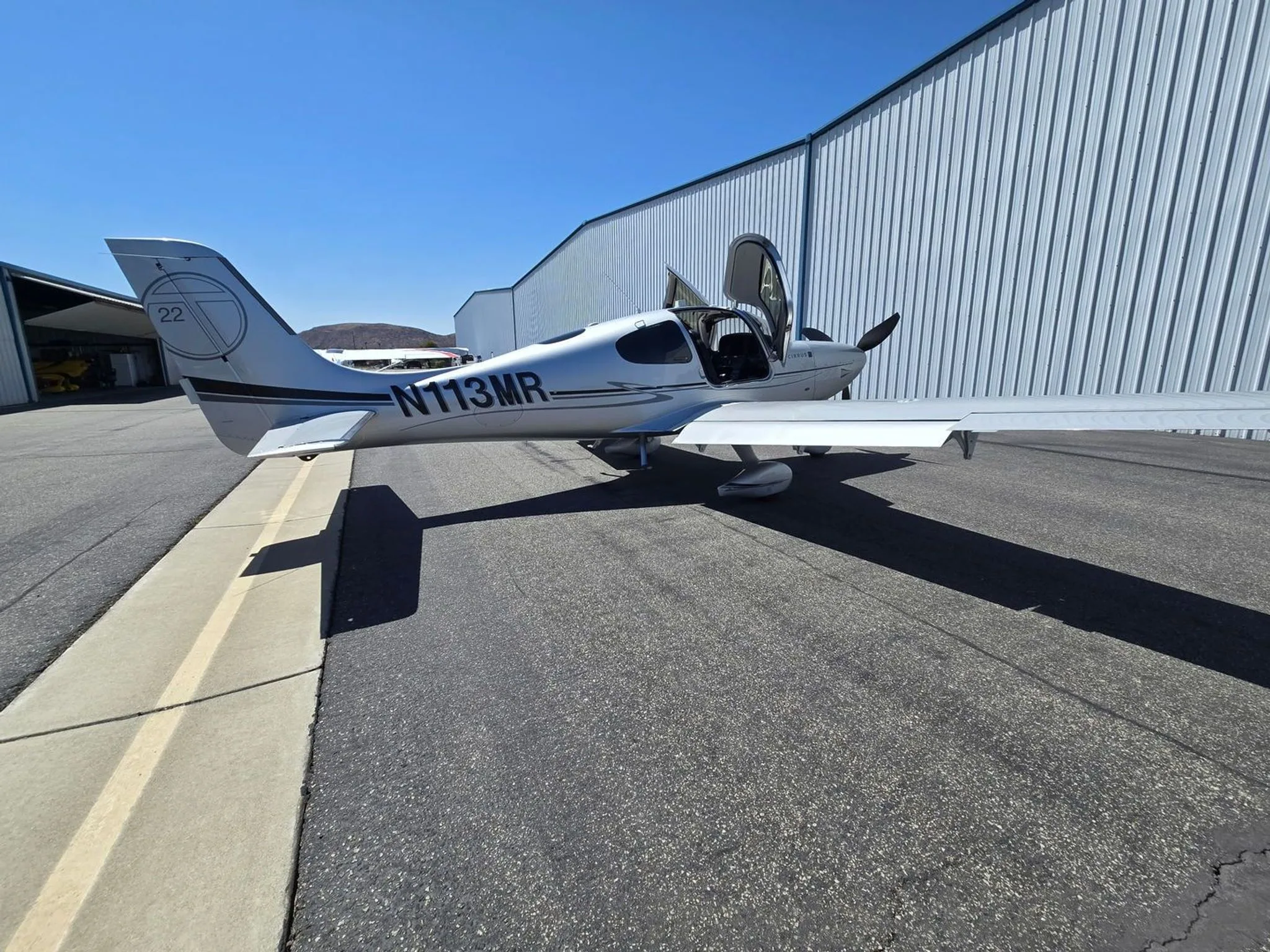


Free — save the SR22T to your watchlist and track it in one place.
More Cirrus SR22T G7manuals & documents
See all 21 →- AIRPLANE FLIGHT MANUAL for the CIRRUS SR22TPilot's Operating Handbook
- AAIB Bulletin: G-RGSK AAIB-29925Other Documents
- 2025 SR22T GTS G7Pilot's Operating Handbook
- Specifications for the Cirrus SR22T G7Specifications
- 2024 SR SERIES G7 / SR22Weight And Balance
- 2024 SR SERIES G7 / SR22TChecklist
- 2024 Cirrus SR22T G7 GTS (N229AT)Checklist
- Cirrus SR22T G7 ChecklistChecklist
- 2024 SR SERIES G7 / SR22TWeight And Balance
- AIRPLANE FLIGHT MANUAL for the CIRRUS SR22 with Cirrus Perspective Touch+ Avionics SystemFlight Manual
- PILOT’S INFORMATION MANUAL for the CIRRUS SR22T with Cirrus Perspective Touch+ Avionics SystemPilot's Operating Handbook
- Pilot’s Guide for the Cirrus SR2x with Cirrus Perspective Touch+ by GarminFlight Manual
If you fly the Cirrus SR22T G7, you may also be researching these.



In this document
Member Guide
The Member Guide section outlines the various benefits available to COPA members, including access to exclusive events, training programs, and discounts on services and products related to Cirrus aircraft ownership.
Safety Events Calendar
This section provides a calendar of upcoming safety events and training programs, including the 3-day and 1-day Cirrus Pilot Proficiency Programs (CPPP) scheduled throughout the year in various locations.
Technical Liaison Activities
Details about COPA's Technical Liaison activities, which involve addressing member concerns with Cirrus Aircraft and providing feedback on critical issues affecting Cirrus aircraft.
Member Advantage Program
An overview of the Member Advantage Program, which offers COPA members discounts and special offers from various aviation vendors, enhancing the value of membership.
From the Forums
A section dedicated to sharing experiences and discussions among COPA members, focusing on real-life flying scenarios, challenges faced, and lessons learned.
Safety notes
- Always ensure proper communication with ATC, especially during busy times.
- Be prepared for changing weather conditions and have a plan for emergencies.
Full document text
SEPTEMBER 2024 VOLUME 19 | NUMBER 9 CIRRUSPILOTS.ORG COPA Pilot MEDICAL The Dreaded Diagnosis MIGRATION Time’s Up! PILOT POINTERS Int’l Weather Services COPA U What’s Up or What’s Down with VNAV? BRIAN TURRISI » PG 28 COPA ® ONLINE FORUMS: One of the most active online forums in general aviation, the COPA® forums have hundreds of messages posted each day. It is the ideal place to absorb information or get any question answered. MAGAZINE ARCHIVES: Past issues of COPA’s exclusive magazine can be downloaded from our website – a treasure- trove of information. TECHNICAL LIAISON ACTIVITIES: COPA’s Technical Liaisons regularly forward member issues to vendors and provide members with feedback on critical issues affecting Cirrus aircraft. MEMBER ADVANTAGE PROGRAM: Provides benefits for COPA® Members through special access and relationships with companies that provide parts and services for Cirrus aircraft. Many providing special pricing and packages. REGIONAL FLY-INS: Volunteer regional coordinators regularly announce one-day and weekend events where COPA ® members will gather to socialize and meet face-to-face. Often held at attractive locations with special talks, tours, and activities. ANNUAL MIGRATIONS: Each year in the U.S., hundreds of Cirrus aircraft gather to celebrate their heritage during a long weekend of excellent seminars, a vendor trade show and socializing. A European Migration is also held annually and attracts members from many countries. Attendees visit local landmarks at each specially chosen destination and attend educational seminars. COPA® PILOT PROFICIENCY PROGRAM (CPPP): The most in-depth, two-day weekend training program available for Cirrus pilots. Scheduled throughout the year in both the United States, Europe and Australia. CPPP offers both ground-only or ground and flight sessions with seasoned certified Cirrus Standardized Instructor Pilots. Many members attend annually as part of their recurrent training. Now offering one-day classroom sessions. MEMBER GUIDE FOLLOW COPA ON SOCIAL MEDIA We are the Cirrus Owners and Pilots Association (COPA® ) – a not-for-profit membership organization established to educate, promote the safety of and support the owners and pilots of certified aircraft manufactured by Cirrus Aircraft Company. We encourage ownership of these aircraft and provide online interaction, training programs and social activities for our members. Additionally, COPA® will promote goodwill towards the general aviation community. Founded in 2001, with over 6,000 members worldwide, COPA® is a volunteer-run organization completely independent of Cirrus Aircraft Company. Open to all interested individuals. Dues are $95 per year, which includes a subscription to COPA® Pilot magazine as well as the benefits listed below. Join now by registering at cirruspilots.org or membership@cirruspilots.org. « « « « « « « WHO IS COPA? BECOME A MEMBER COPA® CALENDAR SAFETY EVENTS 3-DAY U.S. CPPPs OCT 11-13, 2024 » Wichita, KS (KICT) 1-DAY U.S. CPPPs SEPT 14, 2024 » Louisville, KY (KLOU) OCT 26, 2024 » Plymouth, MA (KPYM) (+ Flight Training) INTERNATIONAL CPPPs SEPT 13-15, 2024 » Baden Baden, Germany (EDSB) (English) OCT 19-20, 2024 » Salzburg, Austria (LOWS) (Avionics) (German/English) NOV 8-10, 2024 » Port Macquarie, Australia (YPMQ) (English) To register for these events, go to: cpppevents.com SOCIAL EVENTS MIGRATION 2024 » SEPT 26-29, 2024 Scottsdale, AZ Please refer to the COPA website for the most up-to-date information. T he Cir r us O w ne r s a nd Pilots Association (aka, “COPA”) is a 501(c)7 non-profit corporation dedicated to serving its members. COPA is not in any way affiliated with Cirrus Aircraft, the manufacturer. Cirrus is a registered trademark of Cirrus Aircraft. Copyright© 2024, COPA ® Pilot. All rights reserved. The act of making a submission for publication is an express warranty that such contribution does not infringe on the rights or copyright of others. Nothing appearing in COPA ® Pilot shall be reproduced or distributed without the express permission of the publisher. Printed in the United States of America. Articles submitted for publication by members may contain opinions or specific recommendations. Such opinions and recommendations are solely those of the author, and do not necessarily reflect the official viewpoint of COPA® . COPA® does not endorse any practice in violation of published FAA regulations or the aircraft POH/FOM. Advertising in COPA ® Pilot does not necessarily imply endorsement. Questions and requests for media kits should be directed to the Advertising Manager. SEPTEMBER 2024 CONTENTS Volume 19 | Number 9 Published exclusively for Cirrus Owners and Pilots Association members worldwide MEMBER GUIDE Safety and social event calendar. CIRRUS AUTHORIZED SERVICE CENTERS A directory broken down by state in the U.S. and country internationally. ADVERTISING INDEX A list of businesses that are advertised in this issue, referenced by page. 01 62 64 AT A GLANCE 22 cirruspilots.org 500 Westover Dr #13209 Sanford, NC 27330 50 MEMBER ADVANTAGE PROGRAM A list of businesses providing special offers for members. 07 ® PRESIDENT’S COLUMN An Oshkosh to Remember TJ SHEMBEK AR 04 28 COPA U CORNER What’s Up or What’s Down with VNAV? BRIAN TURRISI MEMBER SPOTLIGHT Karen Seaton Rises to the Challenge L AURIE EINSTEIN KOSZUTA 22 MIGRATION Time’s Up! YOUR MIGR ATION PL ANNING COMMIT TEE 18 FROM THE FORUMS Embarrassing Departure from KHPN 10 PILOT POINTERS International Weather Services K ARSTEN SHEIN 36 TRAVELOGUE Flyaway to the Boulia Camel Races ERIC KE YS 50 FEATURE What’s Your Cirrus Taxi Style? LE X CROSET T 44 FEATURE The Dreaded Diagnosis JERROLD SECKLER 40 COPA PRESIDENT TJ SHEMBEKAR P 702-920-2108 Email: president@cirruspilots.org EDITOR KIM BLONIGEN Email: editor@cirruspilots.org ADVERTISING DIRECTOR JENNA REID P 816-699-8634 Email: jenna.reid@vpdcs.com ADVERTISING COORDINATOR BETSY BEAUDOIN P 800-773-7798
Show full textShow less
Email: betsy.beaudoin@vpdcs.com GRAPHIC DESIGNER BETHANY GULDE PUBLISHER COPA® Pilot ISSN #2578-6938 (print) ISSN 2578-6946 (online) or USPS #024-643, Copyright © 2024 COPA® Pilot. It is published 12 times per year by Cirrus Owners and Pilots Association, 500 Westover Dr #13209 Sanford, NC 27330 Periodicals postage is paid at Sanford, NC and additional mailing offices. POSTMASTER: Send address changes to COPA® Pilot at 500 Westover Dr #13209 Sanford, NC 27330 MEMBERSHIP AND SUBSCRIPTIONS To join COPA® and get a subscription to this magazine go to cirruspilots.org ADDRESS CHANGES Please contact the Membership Coordinator at Membership@CirrusPilots.org for any address changes. Membership updates are handled at COPA® headquarters, call +1 (320) 999-COPA (2672) COVER PHOTO Photo credit: Megan Vande Voort CREDIT MATT WILLIAMS PHOTOGRAPHY 4 46786916032A2U3COPA Pilot An Oshkosh to Remember TJ SHEMBEKAR is a three-time Cirrus owner, currently flying an SR22T G6. Like many people, TJ dreamed of becom- ing a pilot since childhood, then on his birthday in 2006, he decided to take the plunge and obtained his private pilot certificate. He went on to acquire an instrument and commercial rating in his SR20 G2 before stepping up to an SR22TN G3, which he flew extensively. After taking a five-year break due to a work assignment in Singapore, he returned to flying in 2018. He has racked up 2,100 hours in Cirrus aircraft, flying in all 50 states and 11 countries. TJ is always in pursuit of the next fly- ing adventure. In fact, he chronicles his journeys on his YouTube channel “TJ Flying Adventures.” In 2023, TJ and his wife Lisa moved from Connecticut to the Spruce Creek fly-in community near Daytona Beach, Florida, and he recently retired as CIO from IBM spinoff company Merative, which allows him more time to fly. PRESIDENT’S COLUMN Every summer pilots from around the world swarm to Oshkosh, Wisconsin, for EAA’s AirVenture, the largest air show in the world. This year was no differ- ent, as it was estimated that there were approximately 686,000 visitors and over 10,000 airplanes that flew into OSH. While the numbers are impressive, it was particularly memorable for me person- ally. In years past, I usually stayed for two or three days. This year, I decided to stay the full week so I could see the Wednesday night air show and explore all of AirVenture. For the past three years, I have started each AirVenture experience with a C2A (COPA to AirVenture) arrival. A couple of days before this year’s show, 39 airplanes converged at the Southern Wisconsin Regional Airport (JVL) in Janesville for some practice sorties. This was the largest C2A mass arrival to date and required some serious preparation. The C2A leadership did an outstand- ing job coordinating all of the logistics for 80-plus people and ensured that everyone was ready. Aside from numerous practice sorties to fine-tune our stick and rudder skills, we did an intense walkthrough on the ramp. We spent 10 minutes practicing the arrival. Then we spent over an hour walking through contingencies, such as mechanical issues, ATC glitches, weather matters, etc. Fortunately, none of the contingencies we planned for materialized and we had a very smooth arrival Sunday. In fact, we landed all of the aircraft in five minutes! Aside from the thrill of the actual mass arrival flight, the comradery and teamwork of the C2A crew is something I am honored to be a part of and continue to be impressed by. I am thoroughly convinced that an organized C2A mass arrival is much safer than the frenzy of the Fisk arrival that OSH has for AirVenture. After arrival, the marathon began. Every night seemed to be a memorable event and gave me a chance to meet with dozens of COPA members from around the world. The first night, Cirrus Aircraft hosted a massive welcome party, where they announced the 10,000th SR delivery with the clever tail number of N10000. Monday night, the traditional COPA dinner was another sold out event. We had over 300 people attend this year. Our keynote speaker, Will Garber, gave an intense presentation followed by a lighthearted C2A video. We finished the night with an after-party on the rooftop overlooking the airplanes parked on the North 40. Tuesday night, the C2A crew hosted their signature barbecue dinner plane- side at their campsite. This event has become another COPA tradition with the campsite getting bigger and more elaborate each year. Bill Hershman, who is also known as “BBQ Bill” lived up to his reputation preparing a wonderful meal for everyone. Wednesday night was completely new territory for me, having never stayed that long before; this was my first year seeing the night air show. While the air shows during the day are certainly fun, the night air show was incredible. Between the pyrotechnics, the aerobat- ics and hundreds of drones, it was unlike anything I have ever seen before. The rest of the week, I continued to explore every corner of the show, includ- ing the seaplane base, the ultralight area and I even learned a few things about building airplanes. If you have never been to AirVenture, I encourage you to join the hundreds of COPA members who go every year and if you really want to do it right, plan to arrive with the C2A group! TJ Shembekar COPA President 6 7 467891032A0U89G1S02 T1 519G1S0VOVL00COPA Pilot 6 WRITER'S GUIDELINES We welcome your story and photography submissions to COPA Pilot, but we’d like to share a bit of guidance that might make the process easier for you and hence easier for our editorial staff. COPA Pilot is the monthly magazine of the 6,000-plus members of Cirrus Owners and Pilots Association (COPA) who either own or support the ownership of Cirrus aircraft. COPA is a 501(c)7 non-profit corporation. In each issue, COPA Pilot focuses on a variety of topics, support- ing our members in the use of their aircraft through articles that include piloting skills and techniques, safety topics, maintenance issues, destination stories, product reviews and spot- lights on individual members. Our readers crave stories with fresh perspectives on these topic lines or prose that can highlight a new area that will benefit our members. We’re interested in stories from authors who write precisely and know how to make every word count. Too much detail can be as prob- lematic to a story as too little. Most stories will be written in the third-person, although we occasionally will assign very specific first-person accounts of destination or safety related articles. Our typical stories run about 1,500 words in length. We prefer that you query our editor first before you begin writing any story rather than sim- ply sending in a completed manuscript unan- nounced. If you are unsure about an idea for an article, you may propose the article in a writ- ten query via email to the COPA Pilot editor at editor@cirruspilots.org which will then be reviewed by the editorial board. We prefer any final manuscripts to be saved in MS Word. Be sure to include your name, address, tele- phone number and email. We do not accept manuscripts that are also being considered by another publication. We may consider stories that have already run in another publication, depending upon their relevance to the COPA Pilot readership. If you’d like to include a sample of something you’ve written with your query, that can always be helpful. Photography – Every great manuscript deserves quality photography to help illustrate your tale. We prefer original high-resolution color photos with a resolution of at least 300 dpi at an 8 x 10-inch size. If you’re shooting from an iPhone or something similar, please choose the high definition setting to ensure the best quality. Also, it’s best not to use the zoom function. The photos can be cropped by the designer if needed. If you choose to send photos not taken by you, we must have verification that you are authorized to share them in order not to violate any copyright laws. Please check with the person who shot the original photos to obtain that permission. Photos taken off the internet must also have permission to use unless they are royalty free or can be used without fee for photo credit. We also welcome photography submissions of your Cirrus either in flight or an outside ground shot with no background clutter – buildings, other airplanes, etc. If you have additional questions about writing for COPA Pilot, please email the editor at editor@cirruspilots.org. MEMBER ADVANTAGE PROGRAM Go to the COPA website for more information on offers and watch for added vendors. AIRMART » COPA Members receive a $500 rebate on the sale or purchase of an aircraft with AirMart AIRTUG » COPA Members receive $350 off any Airtug Aircraft Tug. AXIS » Get 10% off your Axis headset purchases BEST TUGS » Receive 10% of the base tug price toward accessories with any new tug purchase BOLDMETHOD » Get 20% off online course purchases ELIVATE AIRCRAFT » COPA Members receive a 10% discount on all Elivate Aircraft Services. FIREFROST » COPA Members receive $500 off a FireFrost system. GALLAGHER » COPA Members receive a 5% discount on Whelen AVIATION Aerospace Technologies HID BoomBeam landing light upgrade kits, Orion 600 LED Wingtip Lights, and BatteryMinder battery tenders. GOT PLUGZ » Receive 20% off sitewide at www.gotplugz.com JEPPESEN » Accept 20% off all annual aircraft subscriptions and more LIGHTSPEED » COPA Members who are customers of Lightspeed Headsets will become members of the Lightspeed COPA VIP Program. MYGOFLIGHT » COPA Members will receive 20% off all MyGoFlight products. NASSAU FLYERS » COPA Members receive great exclusive discounts on Hudson Corridor flights and Sim Training sessions. PF FLYERS » COPA Members can obtain a 5% discount on labor through PF Flyers. PROPELLING » Get 10% off eligible items at AVIATION www.propellingaviation.com REALSIM GEAR » Offers COPA members a 5% discount of a full range of products. SPARROWHAWK » COPA Members can enjoy a 15% discount on MOBILE DETAILING all aircraft detailing, paint restorations, and paint sealant applications to their aircraft. STEEL AVIATION » Receive 0.5% discount off of commission fees COPA IS PROUD TO PARTNER WITH THE FOLLOWING LEADING AVIATION VENDORS: When you join COPA, you’re automatically enrolled in its Member Advantage Program, giving you unique access to some of the best deals in the industry. From substantial savings on training and safety seminars, to exclusive discounts on essential products and equipment, you’ll save time and money with a membership that practically pays for itself. 8 9 467891032A0U89G1S02 T1 519G1S0VOVL00COPA Pilot TRAVELOGUE 10 11 467891032A0U89G1S02 T1 519G1S0VOVL0 COPA Pilot FROM THE FORUMS Embarrassing Departure from KHPN cirruspilots.org cirruspilots.org « Information sharing among COPA members FROM THE FORUMS Mukul Dixit – COPA Member I had an embarrassing series of errors while departing from Westchester County Airport (KHPN) and I figured I would share. My wife, sister and I planned a fun day trip to New York City (NYC), including a Broadway show at 7:30 p.m., and got ready to start our flight home around 11:15 p.m. I had studied KHPN to death and was very aware that the tower closed at 11 p.m. and airspace turned into Class E afterward. But here is where the comedy of errors started. I was flying out IFR (more on weather in a second) and went to get my clearance. When I went on frequency to get my clearance, the controller was working hard with inbounds and outbounds to the NYC area. Even though the AF/D clearly states to call a secondary New York Center for clearance in off-hours (it makes sense that there is a clearance frequency even when the tower is closed since the field is Echo), I wondered if I should call the listed TRACON phone number for clearance. So I went ahead and called them. After it rang three times unanswered, a guy picks up. I asked for clearance, and after putting me on hold for five minutes, he asked, “Can you please call back in five minutes? We are very busy right now.” Of course, I can! I wait for five minutes while prepping for departure and then give him a call back. While calling him on the phone through Bluetooth, my COM1 started blaring with an arrival at KHPN. Unfortunately that prevented me from hearing TRACON on the phone, and they hung up on me when I didn’t respond. I reduced the volume of COM1 and called back for a third time. At this point, I have annoyed the crap out of the controllers (and rightfully so). When I called back again, a controller picks up and immediately says, “NO CLEARANCES ON THE PHONE, PLEASE CALL 126.4.” So I went back to the frequency to get my clearance. I recently started a new cockpit flow where I am now put- ting all my “air frequencies” in COM1 and all my “ground frequencies” in COM2 (I used to just put weather and 121.5 in COM2 but a CSIP recently taught me this flow which makes quick switching of radios during departure and arrival so much better). 13 467891032A0U89G1S02 12 AUGUST 2024 COPA Pilot FROM THE FORUMS So I wait on COM2 to get my clearance for 10 minutes (no window to call them because the controllers are working hard). When I finally got a window and called them, about 20 more minutes had passed (since I needed to wait quite a while for readback). The weather for the NYC coastal area was changing from IFR to LIFR, with a small marine layer coming in. At this point, the field is 7 sm and 300 broken, slowly worsening. But I was ready for this. I knew that the weather was going to deteriorate. Having recently been beat up with a CSIP in an extensive IPC, I was mentally prepared to depart from conditions like this, especially since the visibility on ground roll was still going to be good. Additionally, the marine layer was pretty “shallow” and just on the coastal line (i.e., there was better weather once going inland, not too far). I started my taxi to depart and am making calls on CTAF (COM1). It is pretty quiet on CTAF. While waiting at the ILS hold short line, performing my engine run up, I see a Jet Blue pop out of the clouds at 400 feet and land. “Weird … the guy didn’t make any calls on CTAF and just landed here.” Two minutes later, I heard the Jet Blue guy on COM2 announcing that he had landed and wanted to cancel IFR. “OK, well maybe he just didn’t make any calls on CTAF and stayed with Center the whole time. That doesn’t feel safe, but oh well.” I called Center on COM2 and announced that I was #1 ready to depart. I was cleared to take off on a SID. I was also prepared to hand-fly the departure out (this is my first time departing from such LIFR conditions). I put the Center frequency in COM1 (air = COM1, so I’m trying to follow my procedures) and turn COM2 off. I then departed and hit the clouds immediately. Hand flying and things were going fine. I called Center on COM1 to announce my departure. There was no response, even though I could see the “Rx” and “Tx” pop up on the Perspective. So, I was in the clouds at 800 MSL, and I started the departure and turn toward the right. I climbed up to 1,600 MSL. Called again – same problem. “Oh great, my COM1 just broke.” Thankfully, I had loaded the center frequency on COM2 since I used it to get clearance. I switched COM2 back on and heard the controller saying, “Jet Blue XXXX can you please try to contact Cirrus N411TH on KHPN CTAF? He is just departing KHPN and I am unable to make contact with him.” At that point, I responded and said that I could hear him now, and he had a sigh of relief. “There you are!” then assigns me updated altitudes, headings, etc. Right around that time, I also broke out of the clouds and put the autopilot on. The flight proceeded normally from there. While debugging “what happened with COM1,” I realized that I had turned the volume down to hear my cellphone and never turned the volume back up. This was a good learning experience and probably the highest workload departure I have had in 400 hours of flying. It was embarrassing, but I learned a lot in retrospect. And the icing on the cake – some degenerate was lasing planes around Ithaca (at 12:45 a.m.) and I got lased (no injuries from it). Anyway, thanks for listening! Mike Miller – COPA Member Thanks for sharing your experience! I’m curious if you would attempt a late-night departure like this again. I know by midnight, I’m usually pretty fatigued and I’ve read more than a few accident reports that begin with a late-night IMC departure. (I’m not criticizing; I’m just asking for the benefit of newer pilots on COPA who might want to learn from your experience.) Mukul Dixit – COPA Member I booked a hotel just in case I was not up for the flight at night. I have thought about whether I would do this again, and I think I still would. I was feeling great and alert. My wife and sister passed out in the plane immediately. I have always operated well late at night (for work and school). (This is probably not the answer the majority would want to hear). Mark Woglom – COPA Member I’m glad you posted. Your post has made me think harder about what I might do in a similar situation. Here are some of my thoughts, starting with what I would have done before your post: 1. Almost all airports the size of KHPN will have a direct radio link for receiving a clearance on the ground. As you’ve figured out, 126.4 was the correct frequency to call for a clearance when the tower is closed. 2. I also use COM2 radio for ground usage, and I would have had 126.4 as my active frequency in COM2. At my home field in New Hampshire, I also monitor the CTAF on COM1 while awaiting an IFR release. If by chance I am getting my release while traffic is talking on COM1, I might toggle it off for a second to assure I got my release time correct. (I only do this while awaiting a release, not while getting my clearance). 3. Before takeoff, I switch to COM1 CTAF and put 121.5 as the primary monitoring frequency in COM2. I have the departure control frequency in COM1 standby. I like having 121.5 ready to go because I can always use it if something isn’t going well. But I hadn’t really thought about my procedure if I needed to use the telephone, so I’ll throw out some ideas: 4. If I can’t reach clearance delivery on the radio (or there is no ground frequency for clearance), I would call, just as you did. However, I think I would be inclined to keep the clearance frequency active, given that nobody is talking on it. 5. If there were radio interference or no radio frequency, I’d probably stay on a ground frequency on COM2 or put 121.5 in there while I made the phone call. After all, I’m still on the ground, so I’m not yet ready to go to a COM1 air frequency. Presumably, those frequencies would be quiet. If not, something else is going on. cirruspilots.org cirruspilots.org “This was a good learning experience and probably the highest workload departure I have had in 400 hours of flying.” FROM THE FORUMS WHAT STORY IS YOUR ENGINE DATA TELLING? Accurate interpretation of your engine data is crucial to achieving optimum performance and safety. Common indications identified by periodic engine data analysis: ◆ Imminent component failure ◆ Ignition system performance ◆ Fuel system maladjustment ◆ Turbo system health ◆ Pilot operational influences Beneficial for early detection as well as troubleshooting specific problems. Call or email to have your engine data professionally analyzed. AVIATION RESOURCES 101 Airport Avenue Cumberland, WI 54829 715/822-5787 hangar 715/491-1303 cell Jim Barker, Owner, A&P/IA www.aviationvibes.com jim@aviationvibes.com “Confidence at Any Altitude” Wisconsin Aviation 14 15 467891032A0U89G1S02 T1 519G1S0VOVL00COPA Pilot cirruspilots.org cirruspilots.org FROM THE FORUMS 6. Once I had my IFR clearance and release, I’d go back to the COM1 CTAF and get 121.5 in there for monitoring or as an emergency backup. This would be in keeping with my standard procedures, so I’d be less likely to botch the frequency changeover. Oh, and I guess if the weather was already low and getting worse, I’d personally leave in the morning, minimizing the complexities. That’s a personal decision, but for me, age and experience have enhanced my conservative approach to flying. Thanks for posting. You made me think through a potential gotcha I hadn’t considered. I probably could have made the same mistake. Mukul Dixit – COPA Member I fully expected this post to also diverge into an ADM discussion (and I honestly posted my experience for that reason so that I could also do a post-mortem on my ADM). Below is my thought process leading up to the flight. Please don’t take the comments as me being dismissive. I just wanted to explain the decision-making process that went through my head as I concluded that I was going to depart, especially so that I could learn from you all. I had a hotel reservation because I knew flying in the New York area would be a s@%# show with thunderstorms all over the state (and parked specifically over the NYC area). When I took off, KHPN was 300/7, not 300/1 (it would have been a lot different for me if the visibility was really low as well). The tops of that marine layer were 2,000 feet. Additionally, here was the weather for nearby airports that I had studied for emergency planning: TEB (21 nm away): sct 800, broken 1200 / 10 sm CDW (28 nm away): clear / 10 sm POU (34 nm away): 2000 / 10 sm MMU (36 nm away): 700 / 10 sm MGJ (37 nm away): clear / 10 sm FWN (42 nm away): clear / 10 sm So I felt like I had options en route if there was an emer- gency that “gave me some time to debug” … I just had to go west or northwest. If I had an immediate emergency over 500 AGL, I would have pulled CAPS regardless of whether it was clear and blue skies or night and IMC. If I had an engine failure or an immediate emergency right after takeoff below 500 AGL, I would have been very exposed, unable to land visually. However, the metro NYC area (especially taking off RWY 16 at KHPN) does not offer many good options. I also extensively studied the ILS 16 procedure at KHPN and was mentally ready to execute. In my recent IPC (a week ago), I had the opportunity to shoot three approaches down to minimums (200 AGL) with an instructor, so I felt good about my proficiency. I didn’t have get-there-itis, had a hotel booked, called off work Tuesday, and was ready to enjoy NYC today if needed. I guess with all of the above, I concluded that I would be comfortable with departing. I also made this post here on purpose. It has been invaluable for me to share my experiences here and learn from others. Bryan Ross – COPA Member Again, I admire your planning and thought process, but I think you may be missing out on some things. You wisely had a plan to use CAPS if there was an emergency. But a mechanical type emergency wasn’t your biggest risk. You were. One of your highest risks was spacial disorientation due to the combination of the aforementioned circumstances (environmental, physiological, psychological, etc.). While CAPS can save the day in that case as well, at low alti- tudes, recognition would almost certainly come too late for it to be viable. Again, I’m glad it worked out, and I understand that I’m an outlier with my cowardly risk tolerance, but with 25+ years of flying for a living and 10,000+ flight hours, I’m not taking that flight. Just a reference point to consider. Fly safe. Mukul Dixit – COPA Member I have never thought about it that way. Thanks sincerely. A lesson learned for me on what not to do. Ed Watters – Platinum CSIP | CPPP Instructor OK, I have to do some of these departures too. Dark, low IFR, but it’s usually before sunrise, and I am fairly well rested. To Bryan’s point, the greatest risk in an event like this is spatial disorientation after takeoff. I was most concerned about your hand-flying the departure while trying to figure out your comm issue. Use your automation, program your flight director, arm NAV for the SID and engage the AP at 400AGL. Don’t think any less of yourself for doing that; I don’t. Kurt von Emster – COPA Member I really appreciate the post. I find it hard to post my own errors on COPA to avoid going down the rabbit hole of ADM. What is great about the forum is the ability to learn from others’ mistakes. No judgment, just good intel. ADM is somewhat pilot specific and it’s not my place to judge. But a screw-up is a great learning experience for all. “Thanks for posting. You made me think through a potential gotcha I hadn’t considered. I probably would have made the same mistake.” “I also made this post here on purpose. It has been invaluable for me to share my experiences here and learn from others.” FROM THE FORUMS 16 17 467891032A0U89G1S02 T1 519G1S0VOVL00COPA Pilot cirruspilots.org FROM THE FORUMS I learn a lot from these posts and wish we had more “I just screwed up because ...” But admitting to screwing up something also opens one up to judgment. I’d rather learn from what others are doing and say, “Hum, would I have done that?” Or “Why did they do that?” Or “Oh crap, I did not even think about that.” I think many of us “lurkers” gain a lot from just the secondhand experience. For what it’s worth, I scalloped through an approach into KMYF a few weeks ago because ATC sent me through the approach, turned me around to vectors to 2 miles from the FAF, and I failed to activate the leg to the FAF. I was barely a quarter mile off the approach in VMC when tower canceled my clearance and sent me back to ATC as I figured out my mistake (ATC saw me back on course and sent me back to tower, no issue). Instead of posting on COPA, I called my CSIP and booked a ground session and three-hour flight redoing my mistake. We both figured it out and I flew the “mistake” for hours a week later. Coms issues are a problem. I am the king of anticipation bias when expecting routings. I have spent hours work- ing with my CSIP on this, but I never even thought about my Bluetooth and volume being an issue. I had to turn down the volume on my flight today, but fortunately, I remembered to turn it back up on Com 1 before depart- ing. This post is another learning experience, and it is much appreciated. Thanks for the new “checklist” item. Noted and appreci- ated. Keep ‘em coming. “What is great about the forums is the ability to learn from others’ mistakes. No judgment, just good intel.” ©Copyright 2024 Cirrus Design Corporation. All Rights Reserved. YOUR TRUSTED PARTNER IN CIRRUS AIRCRAFT FINANCING Renowned in the industry for competitive rates and seamless service, Cirrus Finance provides a turnkey lending solution from application to closing. Customers benefit from low, fixed rates and full-term fixed rates up to 20 years with no balloon payments and no pre-payment penalties. Financing is available for new and used aircraft and for both private and commercial or leaseback utilization. For a free consultation, visit us at cirrus.link/finance or at 855.453.8189 18 19 467891032A0U89G1S02 T1 519G1S0VOVL0 COPA Pilot MIGRATION MIGRATION COPA's Largest Event « Time’s Up! U.S. Migration 2024 Scottsdale, Arizona Sept. 26-29 by Your COPA Migration Committee Attention all Cirrus enthusiasts! If you’ve been on the fence about registering and attending COPA Migration, now’s the time to act as COPA’s largest annual fly-in event is almost here! This is your chance to dive into a world of aviation excellence with educational seminars, a vendor trade show showcasing the latest and greatest in aviation products and services and vibrant social events where you can connect with fel- low Cirrus pilots. This year, Migration lands at the stunning Westin Kierland Resort & Spa, nestled in the tranquil beauty of the Sonoran Desert. This premier destination promises a luxuri- ous escape with top-notch amenities that will leave you refreshed and rejuvenated. Indulge in the culinary delights of seven exquisite restaurants and bars, offering both indoor and outdoor dining expe- riences, or enjoy the convenience of 24-hour room service. For golf enthusiasts, the resort boasts three nine-hole courses designed by the acclaimed Scottsdale golf architect Scott Miller. Picture yourself playing amid serene lakes, dry desert washes and vibrant flora and fauna. Pamper yourself at the spa with a range of rejuvenating treatments, including massages, facials and more for your body, hair, nails and skin. The 24-hour fitness studio is equipped with state- of-the-art cardio and strength training equipment, free weights and compli- mentary fitness classes. After a work- out, unwind in the hot tub, steam room or sauna. The on-site water park is a haven of fun and relaxation, featuring a lazy river, the thrilling FlowRider surfing simulator and a 110-foot waterslide. For those seeking a more laid-back experience, there’s a serene pool area perfect for lounging. 20 467891032A0U89G1S02 T1 519G1S0VOVL00COPA Pilot MIGRATION 20 If shopping is your therapy, you’re in luck! Kierland Commons, an upscale outdoor shopping mall, is just steps away from the resort, offering over 70 retailers for a delightful shopping and dining experience. Don’t miss out on this incredible opportunity to be part of COPA Migration at the Westin Kierland Resort & Spa. Register now by scanning the QR code below and prepare for an unforgettable experience! Please note, COPA’s Westin Kierland Resort & Spa special guestroom rate of $249 per night expires on September 4. To make a room reservation at Westin Kierland Resort & Spa (or AC Hotel by Marriott located across the street), please do so online or contact Marriott Reservations at (800) 354-5892. 22 23 TRAVELOGUE VOLUME 19, NUMBER 9 SEPTEMBER 2024 COPA Pilot 22 MEMBER SPOTLIGHT MEMBER SPOTLIGHT Getting to Know COPA Pilots « Karen Seaton Rises to the Challenge by Laurie Einstein Koszuta Years ago, Karen Seaton read an article about an aircraft manufacturing company with an innovative idea that she found intriguing. According to the piece, the company installed a whole-airframe parachute system in all its aircraft as an enhanced safety feature. With a father who had been a Navy aviator and later a 747 Northwest Airlines captain, Karen immediately wanted to share the story with him. “When I told him about it,” Karen recalled with amusement, “My father just shook his head and said ‘that will never last.’ Of course, as we all know, it has lasted and Cirrus is that company.” At the time, Karen, a pilot with multiple ratings, didn’t anticipate she would eventually own and pilot the very plane that had been the subject of that article. “When I was in high school,” Karen said, “I decided to become a pilot. I didn’t know if I wanted to become an airline pilot or follow a corporate path, so I majored in Aviation Management at the University of North Dakota (UND) in Grand Forks.” As part of the program’s curriculum, students were required to take flight lessons, and as a result, Karen earned her private certificate as an 18-year-old freshman. From September to May of her junior year, Karen interned as a flight coordinator LAURIE EINSTEIN KOSZUTA has been a freelance writer for many years and along with her husband, John, now owns a Cirrus SR22. With John as the pilot-in- command and Laurie as the partner, they regularly travel to see family, visit friends and enjoy our beautiful country. You can read more of Laurie’s work on her web- site: www.laurieeinsteinkoszuta.com. Karen Seaton read about the Cirrus years before she actually sat in one. When she finally had the chance, it was enough to convince her to return to flying and now she owns her own Arrivée Special Edition SR22T. CREDIT: MATT SHAW CREATIVE 24 25 467891032A0U89G1S02 T1 519G1S0VOVL00COPA Pilot MEMBER SPOTLIGHT MEMBER SPOTLIGHT 24 at FedEx in Memphis through the uni- versity’s co-op program. Her role was to support the operations of outbound flights. After her internship ended, Karen returned to UND for a summer semes- ter before transferring to the aviation program at St. Cloud State University (SCSU) in Minnesota, where she com- pleted her major. With an aviation management degree, a private certificate and instrument, com- mercial and CFI ratings, Karen began working as a ground and flight instruc- tor at Aero Services, Inc., at the Flying Cloud Airport (KFCM) in Eden Prairie, Minnesota. She was 24 years old. “People would come into the flight school,” she chuckled, “and want to take a demo flight or sign up for lessons and then be surprised to see a young female instructor. I would see the look on their face, smile and tell them that I had been flying for six years. Sometimes, I felt like I had to work harder to gain their trust and acceptance.” Karen earned her CFII rating in between instructing others at the school. She worked in Eden Prairie for a year before moving to Lincoln, Nebraska. While there, she signed up to take a weekend course offered by a flight school out of the Lincoln Airport (KLNK) where she added a multiengine rating to her already expanding number of certifications. “The Sand Hills Golf Club in Mullen, Nebraska, was under construction at the time,” Karen remembered. “I was flying a Baron 58P and became the primary pilot for that organization. I flew the manager from Lincoln, where he lived, to North Platte Airport (KLBF) on Monday mornings and then flew back on Fridays to pick him up. I also had the chance to fly Ben Crenshaw, the course designer, whenever he needed to be on-site.” While living in Lincoln, Karen was asked to serve on the Athletic Development Board at the University of Nebraska. “I knew that the most valuable thing I could offer that organization was my skills as a pilot. I volunteered my plane and time to fly Tom Osborne, the head Cornhuskers football coach, on his recruiting trips.” “It was a major boon to help that way,” said Karen. “I even flew him down to the Orange Bowl several times. I had wondered if others wanted to get involved, so I asked aircraft owners and pilots if they would donate their aircraft and time. Many people stepped forward. The program is still ongoing, and I am proud to have started it.” In 2000, Karen moved to Boulder, Colorado, known for its healthy environment. It was what she needed after years of battling health problems that had unexplainable symptoms. For over 30 years, she had sought answers from doctor after doctor to learn the root cause. Among the many symptoms were perpetual tiredness, lack of energy and difficulty walking. At that point, it became painfully evident that her corporate flying career might be over, and she would face a life without aviation. However, in 2013, Karen found herself in a Denver doc- tor’s office with a definitive diagnosis – chronic and acute Lyme disease. “I felt like I was going off the rails,” she explained. “All I knew about Lyme disease was from a docu- mentary I had seen, and it terrified me. The people I saw were chronic sufferers. I didn’t want that to be me, so I begged the doctor for a different diagnosis. The doctor told me that he believed I had had Lyme disease for 35 years and that I would be OK.” Shocked and angry by the diagnosis, Karen finally realized that she had answers to the questions she had been pursuing for years. The realiza- tion motivated her to shift her mindset and dedicate time to learning about the disease and its treatment. She went through months of antibiotic infusions, used an infrared sauna, incorporated daily juicing into her routine and made significant changes to her diet, cutting out caffeine, alcohol, sugar, dairy and processed foods. Her health gradually improved, and she felt better than she had in years. Karen used her knowledge about good nutrition and began volunteering with organizations to teach others. She also focused on raising her two daughters – Abby, born in 1999, and a second daughter, Grace, born in 2003. However, she deeply missed flying, and after being away from it for about 13 years, she began contemplating a return in 2015. “I joined the Ninety-Nines,” said Karen of the international organization for female pilots, “to keep myself in the aviation world.” At one of the meet- ings, she learned about the National Intercollegiate Flying Association (NIFA), an organization dedicated to precision flying competitions for university avia- tion students. “I wasn’t looking for a job,” Karen said when she discovered that nearby Metro State University (MSU) had a team. “I just wanted to volunteer to score land- ings at the airport and help with other needs. Within three months, two other coaches left for other jobs, and I became a part-time affiliate instructor. It was a lot of work, but I did enjoy it.” At one of NIFA’s national competi- tions in Columbus, Ohio, Karen saw a Cirrus, parked by the local training center, on static display on the ramp. “Unfortunately, the line was too long to go see it, but it reminded me of that article I read long ago about the Cirrus, and I wanted to learn more.” The next day, after returning home to Denver from the competition, Karen called Independence Aviation (IA) at Centennial Airport (KAPA) and asked to take a closer look. When she arrived, the chief pilot took her to the hangar, and she climbed aboard a brand-new Cirrus SR22T. When the avionics lit up, she was sold and wanted to train immediately. She knew there would be a learning curve with the avionics because she had only flown corporate aircraft with Since earning her pilot certificate at the age of 18 and adding many ratings, Karen has shared aviation though volunteering in a variety of ways, from flying University of Nebraska’s football coach on recruiting trips to being part of granting Make-A-Wish Foundation’s wish. CREDIT: MATT SHAW CREATIVE 26 27 467891032A0U89G1S02 T1 519G1S0VOVL00COPA Pilot MEMBER SPOTLIGHT gauges. It didn’t deter her. She started her transitional training in the SR20 and eventually moved to the SR22T. While training, she completed her flight review, instrument proficiency check (IPC) and a mountain course. “My instructor thought that it might be good for me to get back into instructing,” Karen said, “so I spent a lot of time in IA’s simulator and just practiced and prac- ticed. I ended up buying my own simu- lator (Flight1 Tech Advanced Aviation Training Device (AATD) equipped with the Cirrus Perspective+ G6 avionics). Since it is approved for flight training and currency, I created a business around it because so many people don’t have access to a simulator.” After renting for about three years, Karen decided to purchase her own new SR22T. “I remember asking my sales rep how long the wait would be, and he said about six months to a year. However, I was able to buy an Arrivée Special Edition SR22T that was available in just six months.” When Karen was ready to take deliv- ery in December 2021, she asked Ed Watters, a Platinum Cirrus Standardized Instructor Pilot (CSIP) whom she had met at a COPA Pilot Proficiency Program (CPPP) event, if he would be her instruc- tor. He agreed and they met in Knoxville, Tennessee, for the delivery. Since Karen’s airplane was not quite ready, Cirrus offered the use of another aircraft for four days. With Ed at her side, Karen flew left seat along the eastern corridor for the first three days. On the final day, Ed suggested that Karen ‘teach him to fly’ from the right seat. “I told him I wasn’t going to do that,” Karen said with a laugh. “I finally asked if that meant I could tell him what to do, and he said ‘you sure do.’ He knew that it would be a terrific opportunity for me to learn … and he was right.” Throughout her flying career, Karen felt a strong pull to give back and has flown many flights for the Make-A-Wish Foundation. She also established self- named scholarships at SCSU and MSU so students could continue training for advanced ratings. Unfortunately, SCSU no longer has an aviation program, and while the MSU flight team is still in operation, she no longer has a scholar- ship there. “The thing I like about owning a Cirrus is the ability to network with other pilots in COPA,” Karen emphasized. “I get on the forums to learn about maintenance and solutions to different issues, and I like attending CPPP events because the CSIPs are mentors and have so much knowledge and experience.” In the end, the Cirrus has stolen Karen’s heart in aviation. “My girls enjoy flying with me and bringing friends. One of my favorite times to fly is Saturday morn- ings. We often fly short hops, arrange a crew car, grab breakfast and fly home. That beautiful plane is just so magi- cal.” For more information about Karen’s flight simula- tor business, SimClub by Kilo Sierra, visit https:// www.simclubbykilosierra.com or email Karen at Simclub365@gmail.com. Karen’s two daughters enjoy flying with her and bringing along friends. Shown left, Karen’s daughter Abby with her friend Dylan. 28 29 VOLUME 19, NUMBER 9 SEPTEMBER 2024 COPA Pilot COPA U CORNER COPA U CORNER Instruction Insights « What’s Up or What’s Down with VNAV? by Brian Turrisi BRIAN TURRISI, M.D. is a CFII Platinum CSIP based at Hilton Head, South Carolina (KHXD), with over 5,000 hours teaching in Cirrus aircraft of all vintages. He has owned four Cirrus aircraft of his own over the last 20 years accumulat- ing about 10,000 total hours. He also serves as COPA University’s Dean of College of Flight Operations. Feel free to contact Brian about this article or any questions concerning Cirrus flying at bturrisi@gmail.com, TurrisiFlightTraining. com or (301) 461-0589. The modern navigators in our air- planes continue to present us with newer and sometimes more com- plicated features with each new rendition of software or hardware upgrades. Starting with Perspective, then Avidyne R9 and the IFDs, a new feature called VNV, or vertical naviga- tion, became available. With the later GTN software upgrades, this is now a feature as well. Unfortunately, the older navigators including the Garmin 430/530 units do not have the ability to exhibit VNV. They only have an alternate feature called VSR (vertical speed required), which should not be confused with true VNV. So, what is VNV and how does it differ from simple vertical speed (VS) which has been around for decades? The use of VNV allows a pilot to com- mand a descent from a known altitude to a point further ahead along a flight plan course at a precisely set lower altitude. As opposed to using VS, which simply commands a vertical speed (in feet per minute), VNV will vary the rate of descent to get to the target waypoint at the selected target altitude precisely at that point. It takes wind and ground speed into account during the descent resulting in a more precise abil- ity to decide where to start your descent. Before the age of precise SBAS-based GPS navigation, this type of vertical precision was not possible. For those learning to fly more than 20 years ago, this is a new navigation feature requiring a bit of a learning curve, which I will discuss now. Let us start where the most practical place to use this feature in everyday flying exists. On a VFR flight, the most common use is in deciding when to start a descent from cruise altitude down to traffic pattern altitude in preparation to land. No longer is any mental math needed. Simply tell the navigator how far from the airport (typically 3-5 miles) you want to be at traffic pattern altitude. Then, the navigator calculates the rest of the math and will depict a TOD (top of descent) point on your moving map. Since we do not want to be at that altitude right over the airport but rather some distance before getting there, we use the ATK OFST (along track offset) feature to set that point (refer to Figure 1, below). Figure 1 COURTESY: RON BACKNICK 31 467891032A0U89G1S02 30 COPA U CORNER SEPTEMBER 2024 COPA Pilot On Perspective avionics aircraft, there is an ATK OFST soft key on the MFD. On other navigators you set the offset in the flight plan by selecting the waypoint of interest (airport in this case) and insert the offset mileage (see Figure 2, at right). The TOD point is then calculated based on the current altitude of the aircraft and the desired altitude selected to descend to. The default angle to reach this target is 1.7° in a Cirrus; other air- planes using this same software will have a different default descent angle. The maximum angle allowable is 6°. The pilot can change the descent angle within allowable parameters, but it is usually simpler to leave the default set- ting and let the computer do the math. See Figure 3 (right) to illustrate various scenarios. As you can see, the aircraft’s ground speed and the descent angle determine when, where and how the actual descent occurs. In the ATK OFST example, the only thing different from the FPA (flight path angle) 1.7° scenario in Figure 3 is that the BOD (bottom of descent) is a point before the depicted waypoint but still along that descending track. In IFR flying, descents are not allowed without ATC permission. Beginning a descent at TOD to reach a target altitude at a distant waypoint is not usually what ATC will issue. But does that defeat the whole idea of using VNV? Absolutely not. If a controller waits to have you start a descent past TOD and the needed new descent angle does not exceed 6°, it still works simply by pushing the “VNV Direct” softkey. That action re- computes a new descent angle resulting in a steeper course and rate of descent to get you to the same altitude at the same point. Using VNV Direct also works if the controller wants you to descend earlier than TOD, resulting in a shallower FPA to reach the target altitude. This makes using the VNV scenarios much more versatile in the IFR world than at first glance given that ATC decides when descents should begin. To make this work using the autopilot, the following things must be set up: • The desired BOD altitude must be selected, or often already populated (on an instrument approach procedure), at the BOD waypoint. All navigators capable of VNV include the ability to select those altitudes. On published procedures like IAPs and STARS, the altitudes will already be preselected. • The altitude preselect on the PFD (ALTS) must be set to a lower altitude than the current altitude. Often, it should be set to the same altitude as the target one in the flight plan. The VNV profile will default to stopping the descent at the higher of the two altitudes set on either ALTS or the waypoint altitude. • On the autopilot, VNV must be selected. It will stay armed until TOD is reached, and the descent will commence. When hand flying, start the descent at TOD on your own. Figure 2 Figure 3 (continued on page 34) 34 35 467891032A0U89G1S02 T1 519G1S0VOVL00COPA Pilot COPA U CORNER CPPP Calendar 3-Day U.S. CPPPs OCT 11-13, 2024 Wichita, KS (KICT) 1-Day U.S. CPPPs SEPT 14, 2024 Louisville, KY (KLOU) OCT 26, 2024 Plymouth, MA (KPYM) (+ Flight Training) International CPPPs SEPT 13-15, 2024 Baden Baden, Germany (EDSB)(English) OCT 19-20, 2024 Salzburg, Austria (LOWS) (Avionics) (German/English) NOV 8-10, 2024 Port Macquarie, Australia (YPMQ)(English) Where might one want to select an altitude differently from the published one at a waypoint? The most common scenario is when flying a procedure with multiple step-down altitudes (refer to Figure 4, above). In this example, all the waypoints out- side the FAF (CUVSA) have defined minimal altitudes depicted and listed on the flight plan. Since active functioning VNV will always default to the higher of the altitudes either in the flight plan or in altitude preselect, this complicated stepdown will be flown on AP simply by setting ALTS at 1,500 feet. Starting at 4,200 feet at NAGVY, VNV will not go below any intermediate altitudes before CUVSA. But each time it passes one waypoint, it will continue to descend to the lower altitude of the next waypoint until reaching CUVSA. Even though we set our “final” altitude on ALTS at 1,500 feet, it will only go there after honoring the constraint of 2,100 feet at NIXDE. And since none of the FPA’s exceed 6° on any of the intermediate level-offs, it works automatically from 4,200 feet down to 1,500 feet. VNV is not allowed and will not be use- able inside any FAF. At that point, if there is a GP or GS, that vertical path will take over for the final descent. If there is no GP or GS, only VS will be available to provide a descent pathway. The lat- est Garmin software in Perspective+ assumes an instrument approach will always be flown using VNV all the way to the FAF. The problem is that capturing the GP/GS on many approaches outside the FAF is often more desirable. Given that altitude constraints are defined based on barometric altitude, various temperature differences will result in actual altitude being higher or lower than published. A functioning GP/GS is set at a fixed angle guaranteeing obstacle clearance and pressure or temperature changes do not matter. Therefore, it is often better and safer to fly the actual GP/GS instead of the VNV path. In these cases, it is easy to override the VNV function simply by selecting the “CNCL VNV” softkey or simply fly the GP/GS capturing it at a higher altitude outside the FAF. The options are there for the pilot to select the best choice in each case. This is an overview of what the VNV capabilities in our navigators can now do. The only missing link in earlier Cirrus models is that the DFC 90 AP does not have a VNAV function. That could change in an Avidyne update that we hope we will see in the future. For now, go out and practice flying vertical navi- gation scenarios with or without your CFI/CSIP. Let me know if you have any questions or run into any issues. Figure 4 (continued from page 30) Enstrom Helicopter Corporation 36 37 467891032A0U89G1S02 T1 519G1S0VOVL0 COPA Pilot PILOT POINTERS PILOT POINTERS Tips for Cirrus Pilots « International Weather Services by Karsten Shein KARSTEN SHEIN is a former NASA and NOAA climatologist and director of the Midwestern Regional Climate Center at the University of Illinois. He holds a commercial instrument license and Ph.D. and has been writing about aviation weather for the past 28 years. Karsten can be reached at kshein@clim8solutions. com. Pilots have always been at the mercy of the weather, but early pilots fre- quently had only their eyes and an airport windsock to gauge the elements. As civil aviation developed, so did weather observing and forecasting capabilities. Unfortunately, even though aviation has connected distant places, the availability and quality of weather information is highly variable across the globe. International bodies like the World Meteorological Organization (WMO) and the International Civil Aviation Organization (ICAO) have created standards for routine weather observations and information products. While these organizations have ensured a minimum of essential, routine and sustained airport observing capacity and many aviation weather products are available everywhere, not all airports have the same capabilities. Many supplemental weather products, such as weather radar or forecast model output are not available from smaller or less wealthy countries, however some do provide these products for a fee. Another limitation pilots have historically encountered with international weather information has been the ability to obtain it without being in the country itself. This was once due to communications limitations and is why commercial airlines would rely on local offices to relay weather information for flight planning to their operations centers. Although we now live in an age of instant global data transfer, many of those dissemination issues remain for other reasons, such as a lack of modernization or national policies regarding data. Fortunately for pilots, current aviation infrastructure ensures that pilots operating within the airspace of most countries have access to essential weather information such as METARS, TAFs and SIGMETS via radio or telephone communications, and many of these products are also freely accessible via the internet if one knows where to look. These weather sources are well-known for pilots operating within a given country. Still, they can be challenging to locate and navigate for those planning a flight that crosses into those countries, particularly when those resources are in another language. Pilots from places like the United States, where weather information is freely and readily available, may also be surprised by how many of the products they are used to at home are simply not produced in other parts of the world. For pilots operating across borders, and even those just sticking to their home country, several good options exist for compre- hensive aviation weather information. Pilots operating in the United States (and those in Canada and Mexico) are likely familiar with aviationweather.gov, the U.S. National Weather Service’s comprehensive weather resource for pilots. While most of the products on this site are limited to either the United States or North America, the site also includes two features that can help pilots with flight planning and routing across much of Earth. The first resource is the “Advanced Map” found under the Tools tab in the site header. The Advanced Map is an interac- tive weather display for the full globe. By default it displays current available infrared satellite imagery and composite radar information, METARs and TAFs from select airports and graphical SIGMETs. Pilots can toggle additional layers on/off, however, several options are limited to the U.S. and its surrounding airspace. A slider bar lets pilots move +/- 8 hours from present and zooming in on a location will increase the information the map displays for that area. Pilots can also use a route tool to overlay their proposed routing on the displayed weather information. The second global product from aviationweather.gov is the World Area Forecast System (WAFS), available from the “Products” tab menu. As the name implies, this map displays Advanced Map tool at aviationweather.gov. The dynamic interface helps pilots to visualize weather at most locations around the world. SOURCE: NWS 38 39 467891032A0U89G1S02 T1 519G1S0VOVL00COPA Pilot PILOT POINTERS weather forecast data across much of Earth. Like the Advanced Map tool, the WAFS map is interactive, and pilots can zoom in on areas of interest. Initially WAFS displays turbulence and wind speed at FL300 and icing at 10,000 feet, but like the Advanced Map, these layers can be adjusted via a layers icon in the upper right. Up to three layers are visible and include turbulence from 14,000 feet to FL450, windspeed from 10,000 feet to FL450, icing from 6,000 feet to FL300, and the tops and horizontal extent of cumulonimbus coverage. The time slider bar at the bottom lets users examine forecasts up to 30 hours lead time. While this product is not as useful for low-level flight planning, it can provide pilots with guidance on the larger weather patterns that will affect a flight. Other websites and free mobile apps can display current radar, satellite, observational and forecast data for any available location. Still others, like the Volcanic Ash Advisory Centers (volcanic ash) or blitzortung.org (lightning), deliver global information on specific hazards. Many pilots would rather not scour the internet or switch between multiple apps to get their weather information, and much of this data would not be acces- sible in the cockpit anyway. Fortunately, pilots have options from comprehensive flight management tools. These tools have assembled access to, and display weather information from around the world and deliver the information via satellite, radio or cellular links to the cockpit. Those who fly almost exclusively in the U.S. and southern Canada often sub- scribe to XM weather or receive weather information from an ADS-B receiver, but these services don’t cover much beyond that geography. For those who need weather in other places, subscrip- tions to Jeppesen FliteStar, Garmin Pilot, ForeFlight or other weather information services may be suitable. The full functionality of these inter- national weather services is normally available via app or webpage when- ever a pilot has access to the internet, which means that they can be useful for international flight planning. As with any weather source, the information available to a pilot will vary by coun- try or region. For example, METARs, TAFs, winds aloft, SIGMETs and satellite imagery are normally available for most countries, but other information, like PIREPS or radar imagery, may not be available outside of a few. In the cockpit, the availability of weather information outside of the United States or Canada can be more challenging. If a pilot has installed a satellite receiver, it is possible to obtain near-global weather coverage. However, unless onboard receivers can connect to the internet, are connected to compatible avionics displays or a pilot is flying within cellular coverage, these weather subscription services will not normally be able to deliver weather information. While an overwhelming amount of weather information is available to pilots anywhere in the world, getting useful weather information FROM or FOR anywhere in the world remains inconsistent and challenging. Within a country, local pilots, FBOs and aviation authorities should be able to help you find the weather information you need and may even help you navigate any language barrier. If you are flying to or from the U.S. to a neighboring country or within Europe, you can expect good weather availability, but elsewhere, it would be a good idea to turn to a sub- scription international weather service for the most comprehensive access to the weather information that is avail- able. Copyright 2024, Karsten A. Shein First publication rights granted Cirrus Owners and Pilots Association All other rights reserved by copyright holder. Typical automated surface observing system (ASOS) found at most midsize to larger airports worldwide. Thanks to weather observing standards, pilots in most countries can expect similar quality of weather informa- tion, although the quantity and availability of information will vary greatly from country to country. SOURCE: NOAA Steel Aviation 40 41 VOLUME 19, NUMBER 9 SEPTEMBER 2024 COPA Pilot FEATURE The Dreaded Diagnosis by Dr. Jerrold Seckler As the pilot population ages, more and more pilots are developing conditions that are more commonly seen in older adults. One such condition is malignancy, commonly referred to as “cancer.” Cancer is not really a single disease but rather a generic term to describe a large group of diseases in which there is uncontrolled and disorganized multiplication of specific cells which lead to a large number of abnormal cells that eventually spread from the organ of origin to other parts of the body. These abnormal malignant cells then interfere with the functions of the body’s normal cells leading to significant symptoms and, if left untreated, death. All cancers are named after the organ in which it originates, e.g., colon cancer, kidney cancer, pancreatic cancer, lung cancer, etc. If the cancer spreads to another organ it is properly referred to as a specific cancer that has metastasized. For example, if a cancer originally arises in the lung and spreads to the bone, the bone lesion would be described as lung cancer metastatic to the bone. If a cancer originates in the bone and spreads to the lungs, it would be a bone cancer metastatic to the lung. This distinction is important because most people with “bone cancer,” for example, really have a cancer that arose elsewhere and has metastasized to the bone. The behavior and treatment of cancer is related to the cancer’s organ of origin. Some cancers, like prostate cancer, can be DR. JERROLD SECKLER is retired after practicing medicine (urology) for over 40 years and was an active AME for 25 years. Since buying a 2001 Cirrus SR22 and joining COPA, he has been involved in many facets of the organization including serving on the COPA board and as president of the COPA Safety and Education Foundation (SEF) board of trustees. Seckler is also a ground instructor at Cirrus Pilot Proficiency Programs. FEATURE very slow growing and often carry a good long-term prog- nosis while others, like pancreatic cancer, grow rapidly, metastasize early in the course of the disease and have an extremely poor prognosis. In addition to cancers that arise in specific organs (solid tumors), there are other tumors that arise in the lymphatics or bone marrow, specifically lymphomas and leukemias. Since all types of cancer are different, the appropriate treatment and prognosis depends on the specific type of cancer present, as well as the presence or absence of metastatic disease. What About the Medical Certificate? In terms of aviation, the effect a cancer has on one’s ability to fly is dependent on 1) the extent of the cancer, 2) any symptoms the cancer might be causing, 3) any treatments that are being received and 4) any side effects from current and prior treatments. Because “cancer” really refers to a large collection of separate and distinct conditions, there is no single standard that the Federal Aviation Administration (FAA) requires for certification of airmen with a cancer diagnosis. What is required by the FAA will vary with the specific type of cancer involved. Once a cancer is diagnosed numerous tests will be per- formed to determine whether the tumor has spread (metas- tasized) or is still localized to the organ of origin. Then decisions regarding treatment must be made and they must be individualized. Most cancer treatments involve either removing the tumor (surgery), treating the tumor with radiation (and there are multiple ways to deliver radiation to any given tumor) or chemotherapy in which drugs are admin- istered orally or by intravenous infusion in an attempt to kill the tumor cells wherever they might be in the body. In some cancers, other therapies like immunotherapy (modification of the immune system) may be utilized. Often, combinations of these modalities are employed. Under some circumstances the recommended treatment, especially for slow growing 42 467891032A0U89G1S02 T1 519G1S0VOVL00COPA Pilot FEATURE tumors, may be simply to wait and see if the tumor grows, but in this country, treatment is usually aggressive. Generally speaking, if you are diagnosed with a malignancy you will need to have your next medical issued by the FAA under the Special Issuance Program. Because the treatments for most cancers are associated with significant side effects, you should ground yourself until the treatments are finished and you have completely recovered from their effects. At the time of your next medical examination, the Aviation Medical Examiner (AME) will request a tumor pathology report along with any reports of treatment, surgery, radiation or che- motherapy. Additionally, the AME will confirm with a report from your oncologist that there is no evidence of a residual or recurrent tumor and that you are not suffering from any side effects resulting from the treatments that might impair your ability to serve as pilot in command. Once the AME gathers the information, he/she will forward it to the FAA and they will make a decision regarding the medical certificate. Almost always, if there is no evidence of a residual tumor and there are no significant side effects related to the treatment the FAA will issue the medical certificate along with a letter that details how often and which follow-up reports will be required for further issuances. If these subsequent reports are satisfactory, the AME will usually be able to issue subsequent medicals without further FAA involvement. This holds true for all classes of certificate. After a Special Issuance, the AME can often issue subsequent medical certificates without needing to go through the FAA by using the CACI (Conditions the AME Can Issue) program. The AME will not be able to issue subsequent medicals if there is any recurrence of the tumor, or if any new treatments are initiated. Should the tumor recur, or if additional treatment is required, the application for a medical certificate will again be referred to the FAA for a decision. Of all the diagnoses one can get, patients fear a diagnosis of cancer the most. While cancer is clearly a serious problem, early detection and modern treatment modalities have resulted in significantly improved prognoses for many malignancies. As a pilot, rest assured that as long as there is no evidence of metastatic disease or significant side effects from treat- ment, you should be able to continue to qualify for a medical certificate with minimal difficulty. Give your plane a higher purpose by donating it to Wings of Hope. Your plane, even if it is no longer airworthy, can play an essential role in our mission of changing and saving lives through the power of aviation. Our donation process is easy and the tax benefits are significant. Give your plane a new life, helping to change lives. Questions? Contact Mike Piccirilli at 314-705-9250 or mike.piccirilli@wingsofhope.ngo. wingsofhope.ngo Wings of Hope’s Airplane Donation Program 44 45 TRAVELOGUE VOLUME 19, NUMBER 9 SEPTEMBER 2024 COPA Pilot FEATURE 44 VOLUME 19, NUMBER 8 FEATURE What’s Your Cirrus Taxi Style? by Lex Crosett Are your brakes being replaced every 100 hours? Do your passengers hurry to put on their neck pillows to avoid whiplash while you taxi the airplane? Many pilots transitioning to a Cirrus after being trained on a legacy training air- craft (e.g., Piper Warrior, Cessna 172) have some difficulty with the free castering nosewheel. Some folks take to it like a fish to water, but some struggle. To twist an idiom, you might say that sometimes we try to lead that horse to water, but it just won’t fish. When that pilot (horse) becomes a Cirrus owner, they wonder why their brake pads are being replaced at every inspection and what that “thunk thunk” noise is when they taxi. Taxiing well and safely is a valuable skill in a Cirrus. Every pilot has their Cirrus taxiing style. Let’s see if you, dear reader, can identify yours. LEX CROSETT is a Cirrus Stand- ardized Instructor Pilot (CSIP) at Mike Goulian Aviation, a Platinum Cirrus Training Center in the Boston, Massachusetts, area. Lex is also an FAA Gold Seal Flight Instructor and NAFI Master Flight Instructor. He holds Airline Transport Pilot and Flight Instructor certificates in both airplanes and helicopters. He owns a Cirrus SR22 and is an active Angel Flight and Patient Airlift services command pilot. Thomas the Tank Driver You pull your seat far forward and rest the middle of your feet on the tops of the pedals, and stab right or left as needed – make the “durn” thing turn. Leave the power up at 1,500 RPM all the time. It works great! This is where passengers hurry to install their neck pillows until you get them in the air. Your mechanic sends you the bill and you think Cirrus should install more powerful brakes. This isn’t the right technique, Thomas and you are risking a brake overheat among other expensive, bad outcomes. The line crew shouldn’t be able to toast marshmallows on your melted wheel fairings. Doris the Dizzy Dumpster Driver Doris taxis carefully and at an appropriate speed but only moves the rudder a small amount, stabbing away at the brakes when it’s time to turn. Works fine, but not a comfortable ride for the passengers and still hard on the brakes. Also hard on the large leg muscles when moving her feet up and down and pounding those brakes. After the flight, Doris has sore quadriceps and thinks she needs to spend more time at the gym. Doris should deflect the rudder fully before using the brakes and think brake pressures, not pedal movement. If it looks like you are doing leg lifts over there in the left seat, you are working way too hard. Your passengers will still need their neck pillows early in the flight and your brake pads will not last long. CREDIT: MEGAN VANDE VOORT 46 47 467891032A0U89G1S02 T1 519G1S0VOVL00COPA Pilot TRAVELOGUE FEATURE FEATURE Mike the Zero Turn Mower Mike likes to taxi briskly and is a specialist at spinning the airplane on one wheel when it’s time to run-up. Flat spot city! Mike also likes to turn off on 90-degree taxiway turnoffs like they are a high-speed taxiway at JFK Airport. The landing gear groans and the wheels slide as the airplane tries not to lift a wing while skidding off the runway. As the popular song says, Mike – “YouGottaNot.” Slow down the airplane before turning; think Minnesota in the wintertime. Keep those main wheels rolling when you turn into the wind. You will not lose control on a contaminated surface and your tires will last much longer. Sam the Speedster Sam is all about balancing speed and intense task focus. A Type A pilot, Sam taxis at 20 knots-plus while running the Before Takeoff checklist and copying an IFR clearance. It all works well until Sam drops his Apple pencil and wraps the airplane around a taxi light. Lawn job! Sam, multitasking in the airplane while taxiing is just plane (sic) dumb. Wait until you are stopped to run checklists and keep your ground speed below 15 knots, preferably closer to 10 knots until you arrive at the run-up pad. The faster you taxi, the more the airplane will want to weathervane when that unexpected gust of wind hits the tail. “YouGottaNot” be a speedster! Recommendations • Try placing the balls of your feet in the middle of the rud- der pedal and using full rudder deflection first, then use your only your ankle (not your leg muscles) to apply brake pressure, not movement, when the brakes are needed. • Don’t run checklists or copy clearances while moving on the taxiway. • Keep your ground speed between 10 and 16 knots, lower speed is better in strong winds. • Taxi on the centerline, not 1 foot to the left. Lean your head over the aircraft centerline to observe dead center. • Use 1,000 RPM as a target for your taxi power setting. • Position your controls to compensate for the wind. • When the wind is blowing, roll the airplane nose into the wind for run-up without stopping the inside wheel in the turn and straighten the nose wheel before stopping. • Slow to a fast-walking speed before turning off the runway. • Cross the hold short line before running your after-landing flow/checklist. Looks like a flap, feels like a gear handle. Oops! You may find that more than half of your taxi to the runway can be accomplished with rudder alone at 1,000 RPM. Think about balancing a glass of water on the bolster panel while taxiing. Are you going to get wet? Try these ideas next time you fly; and remember “YouGottaNot” revert to the habits you should avoid. Perhaps you found an element or two of your own taxi tech- nique above and chuckled a little. These examples will help you remember that handling an airplane well and safely on the ground is an important part of airmanship. Here is what Cirrus says about taxiing in the Pilot’s Operating Handbook (POH). I would suggest substituting “toe pressure” for “toe taps.” “When taxiing, directional control is accomplished with rudder deflection and intermittent braking (toe taps) as necessary. Use only as much power as is necessary to achieve forward movement. Deceleration or taxi speed control using brakes but without a reduction in power will result in increased brake temperature. Taxi over loose gravel at low engine speed to avoid damage to the propeller tips. • WARNING • Maximum continuous engine speed for taxiing is 1,000 RPM on flat, smooth, hard surfaces. Power settings slightly above 1,000 RPM are permissible to start motion, for turf, soft surfaces and on inclines. Use minimum power to maintain taxi speed. If the 1,000 RPM taxi power limit and proper braking procedures are not observed, the brake system may overheat and result in brake damage or brake fire.” “These examples will help you remember that handling an airplane well and safely on the ground is an important part of airmanship.” Aircraft Spruce & Specialty Co. 48 46786916032A2U33COPA Pilot 50 51 LEGAL ZONE VOLUME 19, NUMBER 9 SEPTEMBER 2024 COPA Pilot TRAVELOGUE TRAVELOGUE TRAVELOGUE Places to Fly and Explore « ERIC KEYS holds a CPL and an IRF rat- ing. He started flying late in life and has accumulated over 1,100 hours. VH-IXB is a Cirrus G5 with the Australis package (NA, AC and tinted windows) for Australian conditions. After reading the headline, you might be wondering, where is Boulia and why camel races? It’s not the destination per se, but the flying journey and the opportunity to share the experience with my wife and our friends. Like most pilots, you don’t need to ask me twice to tell you about my adventures. Here is the tale of our most recent trip. Boulia is in far western Queensland, Australia. Traditionally, it is the land of the Pitta Pitta people, who have lived in the region for thousands of years before Europeans arrived. Today, it is cattle farming country, where 100,000 acres would be classed as a small farm. The daytime temperature dur- ing the summer averages more than 100ºF and the annual rainfall is just 10 inches. It’s remote, hot and dry, so unsurprisingly, only 458 people live there. During race time, the population swells to more than 3,000 people as grey nomads from around the country arrive to join in the fun. CREDIT MATT WILLIAMS PHOTOGRAPHY Flyaway to the Boulia Camel Races by Eric Keys The flight route covering 3,000 nm and 20.9 flight hours in the Keys’ SR22 G5. 52 SEPTEMBER 2024 COPA Pilot TRAVELOUGUE Settlers imported camels to Australia in the late 19th and early 20th centu- ries to haul goods and people across the Australian interior. Motor vehicles eventually replaced transportation by camel. With no work for their beasts, many cameleers let their camels go free to wander the outback. Australia now has the largest population of wild camels in the world. The late 20th century saw an emerging interest in camel racing, both endur- ance events and short-course races. The Boulia Camel Races began in 1997 and the event has grown to become Australia’s premier camel race. As men- tioned, the event now attracts over 3,000 people each year. The organisers call it the Melbourne Cup (think Kentucky Derby) of camel racing. The cup is held each year during the second weekend of July. This is the middle of Australia’s winter season when the weather is mild (70 to 75˚ F) and skies are mostly clear, which make for ideal flying conditions. Flying the outback during the summer is challenging both on the ground and in the convective turbulence, which can be encountered up to flight levels. Planning for this trip began nine months ahead of the race. Accommodations in outback towns are always limited. One coach bus load of tourists can fill all the available beds. Boulia has one hotel, one motel and a caravan park. The race organisers book most of these accommodations for officials and oth- ers associated with the event. Luckily, I found two cabins in the caravan park, which were basic, but met our needs. Most racegoers come with their own caravan, RV or tent. We only pack camp- ing gear into the Cirrus when there is no other alternative. Once the Boulia accommodation was secured, I could plan the rest of the trip. We decided to plan a 12-day trip exploring the Australian outback — seven days exploring communities along our route from Essendon to Boulia, two at the races and three days to get home to Essendon. Accommodation and ground transport were booked for all our intended stops. Taxis and hired cars are usually only found in the larger cities, and finding a crew car at an Australian airport is a rare exception. Most of the accommodations in these smaller towns are happy to pick you up from the airport. A total of 25 camels participated in the 2024 Boulia Camel Races and with atten- dance at its largest to date of 3,100 people. CREDIT MATT WILLIAMS PHOTOGRAPHY AssuredPartners Aerospace Insurance 54 55 467891032A0U89G1S02 T1 519G1S0VOVL00COPA Pilot TRAVELOGUE TRAVELOGUE The week before departing, the focus shifted to flight planning. Four passengers and 55 kilo- grams (about 120 pounds) of luggage, including emergency supplies, tie-downs and spare oil, limit our fuel to tabs plus 35 litres (about 9 gallons) per side or 296 litres (approximately 78 gallons) FOB – enough fuel for about five hours of flying, allowing for reserves. The weather forecast was checked daily to understand the current weather patterns and trends. On the day of departure, a high- pressure system dominated our weather, bring - ing settled weather but with a southerly wind that filled the Melbourne basin with clouds. North of the dividing range were clear skies. This is a common pattern for Melbourne and a key reason for holding an instrument rating for those based here. The freezing level was 5,000, as was the LSALT (lowest safe altitude). Luckily, the cloud tops were forecast at 3,500. We departed Essendon (YMEN) Friday for Louth (YLOH), stopping at Hillston (YHLS) for lunch and Cobar (YCBA) for fuel. On our approach into Hillston, we noticed “Will you marry me?” ploughed into a field, prompting us to specu- late on whether all that trouble was suitably rewarded. Louth is a tiny community on the Darling River. In the 1800s, it was a river port, but now it is almost a ghost town that serves as a watering hole for the local farmers and the occasional tourist willing to venture off the main road. On the Friday night of our visit, a “crowd” of about 12 gathered outside the local inn for drinks, and we enjoyed an evening of classic Australian banter. Our next stop was Thargomindah (YTGM) for no reason other than we had never been, and it is featured in the Australian Pilots Touring Guide. It is a small place with one hotel and one motel. Its biggest claim is that it is the third town, after London and Paris, to have installed a hydropower station fuelling the town from 1898 through 1951. The power station continues to operate for tourists. From Thargomindah, it was on to Longreach (YLRE) for two nights. The Qantas Museum is a must for any visiting pilot, and Stockman’s Hall of Fame provides an entertaining look at Australian bush culture. From there, it was a short flight to Winton (YWTN). Qantas was founded in Winton in 1920 but moved its headquarters and built its first hangar An overhead view of the Boulia Camel racecourse and campers at the 2024 races. (credit Matt Williams Photography) The crew (from left) Regine Keys, Eric Keys, Debra Burlington and Branton Procter in front of the iconic Birdsville Hotel in Queensland. (continued on page 58) 56 57 467891032A0U89G1S02 T1 519G1S0VOVL00COPA Pilot TRAVELOGUE Pilots N Paws® is an online meeting place for pilots and other volunteers who help to transport rescue animals by air. The mission of the site is to provide a user- friendly communication venue between those that rescue, shelter, and foster animals; and pilots and plane owners willing to assist with the transportation of these animals. Joining is easy and takes just a minute of your time. www. pilotsnpaws .org ® 58 59 467891032A0U89G1S02 T1 519G1S0VOVL00COPA Pilot TRAVELOGUE TRAVELOGUE at Longreach the following year. The two towns now compete over which has the strongest claim as Qantas’ birth- place. Our interest in Winton wasn’t aviation-related – we were there to visit the world’s only dinosaur stampede. It’s a stampede that occurred about 95 million years ago. Paleontologists estimate 150 small two-legged dino- saurs were drinking at the edge of a lake when a large theropod spooked them, leaving a trail of hundreds of small footprints and a few large ones in the mud. These footprints, through some freak act of nature, became fossils. These are now on display for tourists and paleontologists alike. Luckily, a local tour operator provided us ground transport and a very informative guide. After Winton, we continued north to Mount Isa (YBMA), a mining town and the largest city in western Queensland (YBMA), with a population of 18,000. Mount Isa sits close to the northern edge of the Kati Thunda-Lake Eyre basin, the most extensive river system in Australia by area. The Diamantina River is one of the largest rivers in the system but rarely flows. When the monsoon rains come, the river floods spilling into the flood plain up to 30 km wide, giving rise to its name as “Channel Country.” Our route from Winton took us over the channel country and the headwaters of the Diamantina River. Recent rains filled the river, and over the next few days, we followed the water to its end at Kati Thunda. We arrived in Boulia (YBOU) just before lunch, and the proprietor of the caravan park picked us up for the short ride into town. We learned that our host with her husband also owns a helicopter mustering business. Once settled in, we went to the pub for lunch, where I enjoyed a camel burger. Afterward, we headed out to the racecourse to watch the riding lawn mower races – the warmup event before the serious racing the following day. Camel racing involves leading the ani- mals from their pens (and food) down the racetrack to the start line, lining them up and then letting them race back to their pens. The jockeys hang on behind the camel’s hump the best they can, shouting and whipping to encourage their beasts forward. There is a basic harness that the jockeys cling to, but there are no reins to control the animals once they are released. The camels, however, have a mind of their own. Many refused to walk to the starting line, fighting their handlers the whole way. Others sat down and refused to move. We saw several camels break away from their handlers, returning to their pens and scratched from the race. Camel racing is far more chaotic than you find with thoroughbreds – all working, of course, in the bookmakers’ favour. After two days of 25 camels rac- ing, Gunna from Gympie won the cov- eted Boulia Cup. The camel we chose, Barry, came in third. Race officials say this year’s event was the largest to date with over 3,100 attendees. After the races, it was time to head home. From Boulia, we flew to Birdsville for the night. We departed Birdsville (YBDV) at first light to watch the sun rise over the Simpson Desert – the low sun casting long shadows on the sand dunes is a sight to behold. We contin- ued to follow the Diamantina River from Birdsville through Goyder Lagoon and on to Kati Thanda-Lake Eyre. Kati Thanda-Lake Eyre is a large endorheic lake system that drains much of central Australia. Despite being the largest lake in Australia, it is not acces- sible on the ground – the only way to see it is from the air. Tourist flights over the lake operate from two bases: William Creek and Maree. Pilots unfa- miliar with the local procedures should contact these operators beforehand for a briefing. Our last night was spent in Maree before our longest and most challenging leg back home to Essendon Airport. Layers of cloud from 2,000 to flight levels, low freezing levels and showers posed vari- ous challenges. I wasn’t confident we could make it home that day, but with some luck, we found a viable path. Flying through the Australian outback takes you through some of the most remote and inhospitable places you will likely find – it’s an adventure. In the event of engine failure or some other incident, I can rely on CAPS to get me onto the ground, but then what? Submitting and following flight plans with the all- important Search and Rescue Time (SARTIME) is essential on these trips. If I fail to cancel my SARTIME, Airservices will pass my details to the Australian Maritime Safety Authority’s Joint Rescue Coordination Centre. The details of my flight plan and the signal from my emergency locator transmitter should be sufficient to find me, but it is a question of time. As a precaution, I carry enough water and food for two days with first aid and other emergency equipment. Fuel planning for outback flying also has its challenges. Not all airports have fuel, and even those that do can run out. On this trip, recent rain had closed many outback roads for over a week. This can impact the delivery of many items, including avgas. Checking NOTAMs and calling ahead to confirm fuel availability is a simple precaution. Over 12 days covering 3,000nm in 20.9 hours, IXB, our Cirrus SR22 G5, didn’t miss a beat. Now we are home planning for our next adventure! The sun rising over the Simpson Desert captured on the flight back home. (continued from page 55) 60 61 467891032A0U89G1S02 T1 519G1S0VOVL0 COPA Pilot 60 Factory Direct Models Corporate Angel Network VOLUME 19, NUMBER 9 SEPTEMBER 2024 COPA Pilot 63 62 CIRRUS AUTHORIZED SERVICE CENTERS A directory broken down by state in the U.S. and country internationally. « FAR WESTERN STATES CALIFORNIA Aero Works (PAO) / 650-565-0063 / Palo Alto Channel Islands Aviation (CMA) / 805-419-2295 / Camarillo Coast Air Center LLC (MYF) / 858-279-4359 / San Diego Coastal Valley Aviation (SMX) / 805-928-7701 / Santa Maria Foothill Aircraft Sales & Service (CCB) / 909-985-1977 / Upland Gryphon Aircraft Services (F70) / 951-698-4260 / Murrieta Kim Davidson Aviation Inc. (SMO) / 310-391-6293 / Santa Monica Martin Aviation (SNA) / 714-210-2945 / Santa Ana Mather Aviation LLC (MOD) / 209-577-6831 / Modesto Mather Aviation LLC (MHR) / 916-364-4711 / Sacramento Scanlon Aviation (DVO) / 415-897-9787 /Novato (AD pg 48) Sierra Aero (TRK) / 530-359-8751 / Truckee Sierra Mountain Aviation, Inc. (GOO) / 530-273-5273 / Grass Valley TDL Aero Enterprises (MCE) / 209-722-7300 / Merced Woodland Aviation Inc. (DWA) / 530-759-6036 / Davis HAWAII Hawaii Aero Mx LLC (HNL) / 808-838-7788 / Honolulu NEVADA Lone Mountain Aviation (VGT) / 702-309-2200 / Las Vegas OREGON Hillsboro Aviation Inc. (HIO) / 503-648-2831 / Hillsboro Jet Center (MFR) / 541-770-5314 / Medford Leading Edge Aviation, Inc. (BDN) / 541-241-5042 / Bend WASHINGTON Ace Aviation Inc. (RNT) / 425-204-0845 / Renton Corporate Air Center (BVS) / 360-757-7757 / Burlington Northwest Flight Service (SFF) / 509-458-2359 / Spokane MIDDLE WESTERN STATES ARIZONA Glendale Aero Services (GEU) / 623-414-4935 / Glendale Heliponents, Inc. (FFZ) / 480-981-8300 / Mesa COLORADO Arapahoe Aero (APA) / 303-799-8386 / Englewood Legacy Air, Inc. (BJC) / 303-404-0277 / Broomfield Vector Air (EIK) / 303-664-0633 / Erie IDAHO Jackson Jet Center (BOI) / 208-383-3300 / Boise KANSAS Wells Aircraft Inc. (HUT) / 620-663-1546 / Hutchinson MONTANA Edwards Jet Center (BIL) / 406-252-0508 / Billings Rocky Mountain Aircraft Services (GPI) / 406-752-5810 / Kalispell (AD pg 60) NEBRASKA Ross Aviation Flight Maintenance (LNK) / 402-475-8600 / Lincoln NEW MEXICO Santa Fe Aero Services, LLC (SAF) / 505-795-7900 / Santa Fe NORTH DAKOTA Bismarck Aero Center (BIS) / 701-223-4754 / Bismarck Executive Air Taxi Corp. (BIS) / 701-258-5024 / Bismarck Fargo Jet Center Inc. (FAR) / 701-373-8840 / Fargo OKLAHOMA Autopilots Central/Sparks Aviation (TUL) / 918-836-6418 / Tulsa SOUTH DAKOTA Elite Aircraft (FSD) / 605-271-3389 / Sioux Falls Quest Aviation (ABR) / 605-225-8008 / Aberdeen TEXAS Abilene Aero Incorporated (ABI) / 325-677-2601 / Abilene Aerosmith Aviation Inc. (GGG) / 903-643-0898 / Longview Chuck’s Aircraft LLC (EDC) / 512-610-3111 / Pflugerville Cirrus Factory Service Center (TKI) / 214-856-4074 / McKinney Deer Horn Aviation (MAF) / 432-560-2470 / Midland El Paso Aero Inc. (ELP) / 915-779-3481 / El Paso Houston Aviation (SGR) / 281-494-5800 / Sugar Land Lubbock Aero (LBB) / 806-747-5101 / Lubbock McCreery Aviation Co. Inc. (MFE) / 956-686-1774 / McAllen Salty Pelican Aviation, LLC (BAZ) / 830-837-0823 / New Braunfels Tidal Aviation Service Center (CXO) / 713-589-4510 / Conroe UTAH Above View Jet Center (SGU) / 435-688-8009 / St. George Advantage Aviation, LLC (U42) / 801-755-5398 / West Jordan Leading Edge Aviation (LGU) / 435-752-5955 / Logan WYOMING Atlas Aero Service (CPR) / 307-243-2500 / Casper Choice Aviation (COD) / 307-587-9262 / Cody NORTH CENTRAL / GREAT LAKES STATES ILLINOIS Byerly Aviation (PIA) / 309-697-6300 / Peoria Chicago Aviation Services, LLC (DPA) / 630-338-3833 / West Chicago Emery Air MRO (RFD) / 815-395-4784 / Rockford Parks Aviation Holdings, LLC (CPS) / 618-337-5845 / Sauget Synergy Flight Center, LLC (BMI) / 309-828-4448 / Bloomington INDIANA Aircraft Specialists Inc. (JVY) / 812-246-4696 / Sellersburg Jet Access Maintenance, LLC (TYQ) / 317-768-2939 / Zionsville Gary Jet Center, Inc. (GYY) / 219-944-1210 / Gary Sweet Aviation LLC (SMD) / 260-267-5505 / Fort Wayne Tri State Aero Incorporated (EVV) / 812-426-1221 / Evansville IOWA Classic Aviation, Inc. (PEA) / 641-628-9393 / Pella Jet Air Incorporated (IOW) / 319-248-1200 / Iowa City Sponder Aviation Maintenance (SUX) / 712-574-8727 / Sioux City MICHIGAN ACE Aviation Center, Inc. (ARB) / 734-662-6806 / Ann Arbor Kalamazoo Aircraft (AZO) / 269-381-0790 / Kalamazoo Waterford Aviation (PTK) / 248-724-2400 / Waterford MINNESOTA Cirrus Factory Service Center (DLH) / 218-788-3438 / Duluth Great Planes Aviation, LLC (RST) / 507-218-4700 / Rochester Midwest Aircraft Refinishing, Inc. (HIB) / 218-404-0314 / Hibbing Monaco Air Duluth (DLH) / 218-727-2911 / Duluth NorthPoint Aviation (BRD) / 218-829-3398 / Brainerd (AD pg 8) Premier Jet Center (FCM) / 952-697-3170 / Eden Prairie Quality Aviation Incorporated (FBL) / 507-332-0140 / Fairbault Twin Cities Aviation (ANE) / 763-784-9165 / Blaine MISSOURI Mistwood Aviation Services, LLC (SUS) / 314-200-2650 / Chesterfield WISCONSIN Capital Flight, LLC (C29) / 608-291-3360 / Middleton Jet Air Group (GRB) / 920-497-4900 / Green Bay Wisconsin Aviation Inc. (MSN) / 608-268-5000 / Madison (AD pg 13) Wisconsin Aviation Inc. (RYV) / 920-261-4567 / Watertown (AD pg 13) NORTHEAST STATES CONNECTICUT US Flight Aircraft Maintenance (DXR) / 914-288-8088 / Danbury KENTUCKY MidAmerica Aircraft Services, LLC (OWB) / 270-903-8870 / Owensboro Thoroughbred Aviation Maintenance Inc. (LEX) / 859-255- 1902 / Lexington MAINE Maine Aviation Aircraft Maintenance LLC (PWM) / 207-780- 1811 / Portland MARYLAND AvDyne AeroServices LLC (BWI) / 410-859-3917 / Glen Burnie MASSACHUSETTS FlightLevel Aviation (OWD) / 781-769-8686 / Norwood Mike Goulian Aviation (PYM) / 774-343-1688 / Plymouth Twin City Airmotive (FIT) / 978-342-8700 / Fitchburg NEW HAMPSHIRE Infinity Aviation Services (ASH) / 603-598-4526 / Nashua NEW JERSEY Elite Flight Experience (TTN) / 609-582-1438 / Ewing Paragon Aircraft Service, Inc. (CDW) / 973-575-0364 / Fairfield NEW YORK Boshart Enterprises & Aircraft Services (GVQ) / 585-344- 1749 / Batavia Nassau Flyers (FRG) / 631-454-0626 / Farmingdale Performance Flight (HPN) / 914-397-1444 / West Harrison OHIO First Flight Aviation (MGY) / 937-885-5580 / Miamisburg FlightLogix LLC (LUK) / 513-321-1200 / Cincinnati G Force Aviation Incorporated (CAK) / 330-499-9790 / North Canton Lone Mountain Aircraft Maint. (SGH) / 888-566-3686 / Springfield MRK Aviation (LPR) / 440-323-7000 / Elyria PENNSYLVANIA Advanced Lancaster LP (LNS) / 717-735-5179 / Lititz AirQuest Aviation (BTP) / 724-586-6023 / Butler flyADVANCED (LOM) / 215-646-0400/ Blue Bell Lancaster Avionics Inc. (LNS) / 717-569-1953 / Lititz VERMONT Heritage Aviation (BTV) / 802-863-3626 / South Burlington VIRGINIA Advanced Leesburg, LLC (JYO) / 703-443-4739 / Leesburg Delta Fox Aviation (HEF) / 703-438-8450 / Manassas Dominion Aviation Services, Inc. (FCI) / 804-271-7793 / North Chesterfield Freedom Aviation (LYH) / 434-582-3059 / Lynchburg Horizon Aviation Services Inc. (CPK) / 757-421-9000 / Chesapeake Million Air – Richmond (RIC) / 804-222-3700 / Richmond SOUTH EASTERN STATES ALABAMA Continental Services (CQF) / 251-930-4400 / Fairhope Southern Sky Aviation (BHM) / 205-703-9737 / Birmingham FLORIDA Advanced Aircraft Center (TMB) / 305-259-8291 / Miami APG Aviation (PGD) / 941-575-8605 / Punta Gorda Boca Aircraft Maintenance, LLC (BCT) / 561-347-3333 / Opa-Locka CE Avionics, Inc. (SFB) / 407-323-0200 / Sanford Cirrus Factory Service Center (ISM) / 689-244-5221 / Kissimmee East Coast Aviation Service, Inc. (SUA) / 772-781-0610 / Stuart Flightline Group Incorporated (TLH) / 850-574-4444 / Tallahassee Millennial Technologies, LLC (FXE) / 954-489-9091 / Ft. Lauderdale Sarasota Avionics & Maintenance (TPF) / 866-539-4078 / Tampa (AD pg 57) Southeast Aero Services Inc. (SGJ) / 904-824-1899 / St. Augustine University Air Center (GNV) / 352-416-0795 / Gainesville GEORGIA Augusta Aviation, Inc. (DNL) / 706-733-8970 / Augusta DLK Aviation Incorporated (RYY) / 770-427-4954 / Kennesaw Phoenix Air Group, Inc. (VPC) / 770-387-2000 / Cartersville Romanair WDR, Inc. (WDR) / 770-867-4001 / Winder LOUISIANA Glencoe Aviation (REG) / 225-460-3636/ Gonzales Tubreaux Aviation (DTN) / 318-510-4330 / Shreveport MISSISSIPPI Madison Air, LLC (MBO) / 601-853-1960 / Madison NORTH CAROLINA Aerowood Aviation (EQY) / 704 -289-7727 / Monroe Aircare Aviation Inc. (RWI) / 252-977-1717 / Elm City Elite Aircraft Maintenance, LLC (TTA) / 919-665-1233 / Sanford SOUTH CAROLINA Eagle Aviation (CAE) / 803-822-5555/ West Columbia Interstate Turbine (CHS) / 843-554-9191 / North Charleston PF Flyers Inc. (GMU) / 864-252-4289/ Greenville (AD pg 42) Preci
What's in the Cirrus SR22T G7 TCDS
A Type Certificate Data Sheet (TCDS) is the FAA's record of what an aircraft type was approved as. It is the source of truth for weights, seating, fuel and the rules the design was certified against. Expand any line to see what it means.
1,001 Cirrus SR22T G7 parts for sale
See all →
Parts listed for sale by vetted eBay sellers — confirmed on eBay at checkout.