KITFOX SUPER SPORT Model Guide
KITFOX SUPER SPORT · Model Guide
Overview
KITFOX SUPER SPORT is a piston single-engine aircraft from Kitfox. The documents supplied for this guide are builder and maintenance manuals on fabric covering and horizontal tail assembly. They give no performance, weight or V-speed figures, so none are listed. Use the guide to judge build and covering quality.
- Covering follows the Poly-Fiber system. Kitfox recommends covering the wings first, since the trimmed wing fabric can cover the tail surfaces.
- Do not final heat-tighten wing fabric above 325°. More heat can deform the aluminum wing trailing edge.
- The tail has shaped wooden ribs bonded into a welded tube structure. Pitch trim pivots the horizontal stabilizer about its trailing edge.
- Rib stitching on the wings is recommended by Poly-Fiber and Kitfox, though earlier Kitfoxes did not require it.
Summary written by AI from the source document. Check the original before relying on it. See which parts of Sprinkle are written by AI.
Reference only, not for flight. Use the current approved manual for your aircraft. See terms, section 5.
Document
Source
Copy found at sprinkle.com. Sprinkle hosts a reference copy with an added summary, specifications and searchable full text.
Document details
- Type ·
- Model Guide
- Year ·
- 2026
- File size ·
- 46 KB
- Copy found at ·
- sprinkle.com
Does this guide give performance or weight figures for the KITFOX SUPER SPORT?
No. The inputs for the KITFOX SUPER SPORT are fabric covering and horizontal tail assembly manuals. They contain no speeds, range, weights or V-speeds. Get those figures from the operating handbook for the specific aircraft.
How is the KITFOX SUPER SPORT covered?
The KITFOX SUPER SPORT uses the Poly-Fiber covering system. The steps are to bond the edges, iron them, heat shrink, brush on Poly-Brush and rib stitch the wings. Then add finishing tapes. Finish with a Poly-Brush spray coat, Poly-Spray UV protection and paint.
How is pitch trim done on the KITFOX SUPER SPORT?
On the KITFOX SUPER SPORT, pitch trim pivots the horizontal stabilizer about its trailing edge using a pilot-controlled trim system. The manual says this allows trim throughout the entire operating envelope.
What is the KITFOX SUPER SPORT Model Guide?
The KITFOX SUPER SPORT Model Guide is a model guide for the KITFOX SUPER SPORT, dated 2026.
What year was the KITFOX SUPER SPORT Model Guide published?
The KITFOX SUPER SPORT Model Guide — the KITFOX SUPER SPORT model guide on file — is dated 2026.
Common. More common than 70% of the aircraft models we track.
Most owners only have the POH. Here's the essential set for the KITFOX SUPER SPORT.
- Pilot's Operating Handbook / AFM
- Checklist
- Maintenance Manual
- Parts Catalog (IPC)
- Systems & Wiring
- Service Bulletins on file
- Type Certificate (TCDS)
KITFOX SUPER SPORT for sale now
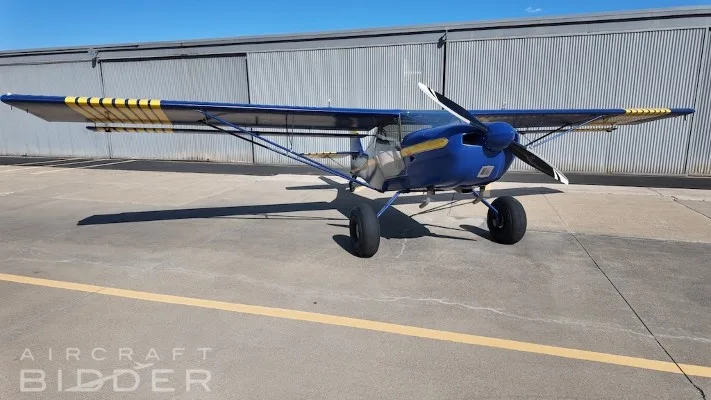
Free — save the SUPER SPORT to your watchlist and track it in one place.
More KITFOX SUPER SPORTmanuals & documents
Related documents
- KITFOX SERIES 7 Model GuideKITFOX SERIES 7 · Model Guide
- PIPER PIPERSPORT Model GuidePIPER PIPERSPORT · Model Guide
- DynAero MCR-01 Sportster Model GuideDynAero MCR-01 Sportster · Model Guide
- Piper PA-18 Super Cub Model GuidePiper PA-18 Super Cub · Model Guide
- AEROPILOT LTD LEGEND 600 Model GuideAEROPILOT LTD LEGEND 600 · Model Guide
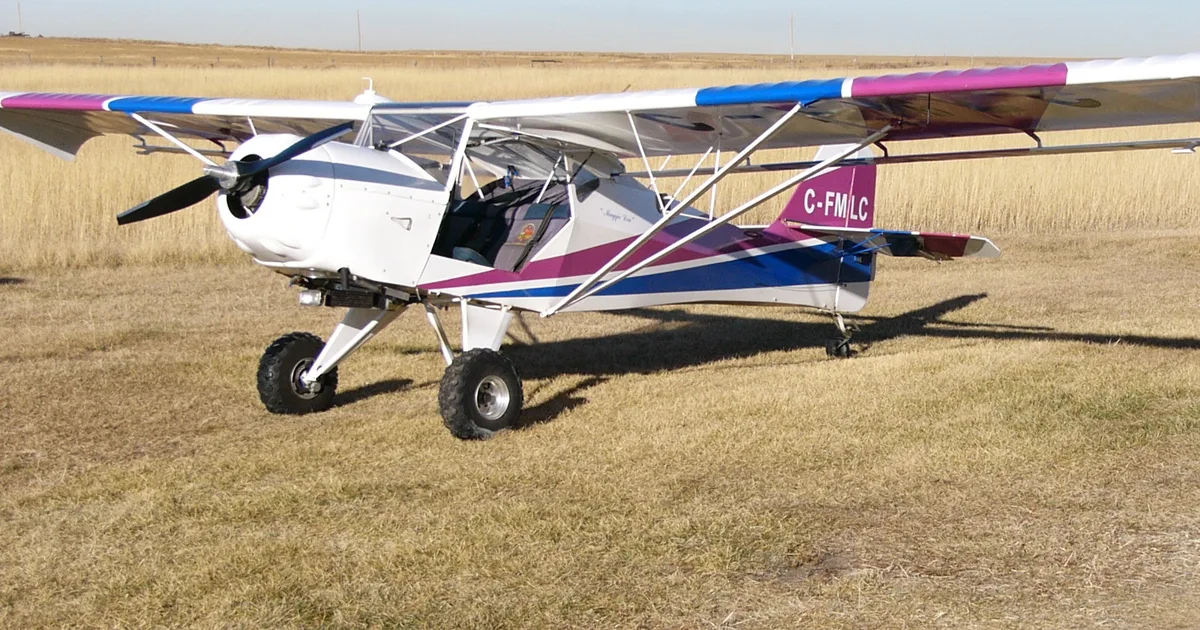
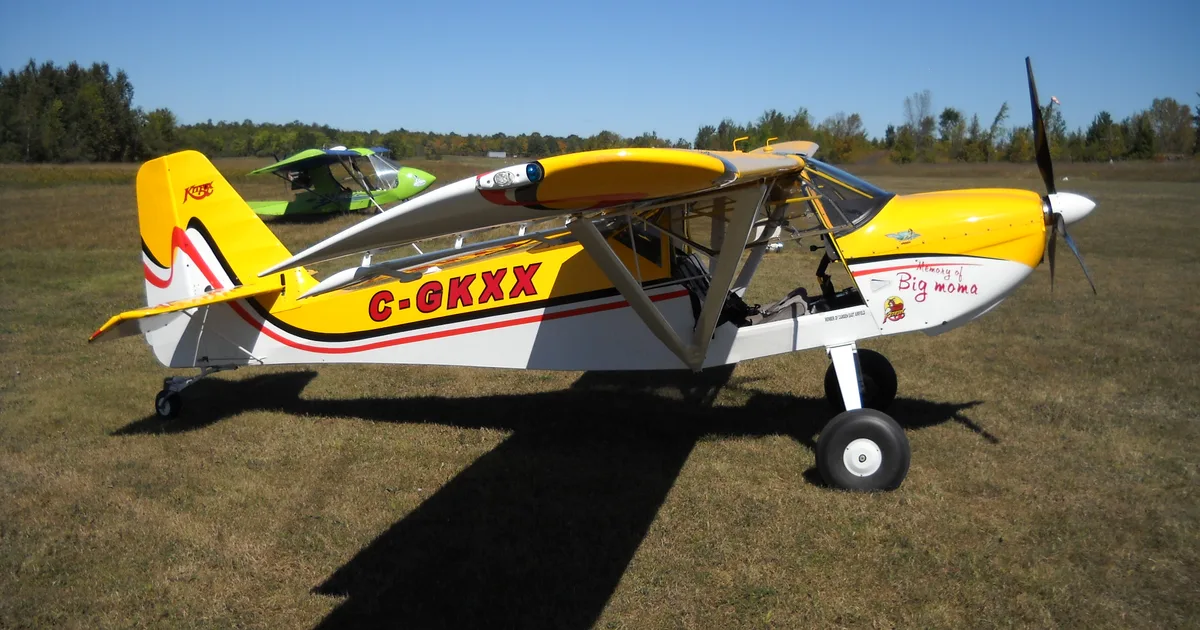
If you fly the KITFOX SUPER SPORT, you may also be researching these.
In this document
Wing fabric and finishing
Check that the fabric is bonded to the rib capstrips and rib stitched. Look for reinforcing doilies at the fuel tank fill neck, lift strut brackets, jury strut brackets, pitot tube and tank drain. Look for inspection rings and drain holes in the lower fabric. Finishing tapes should be 2" over ribs and 4" on the trailing edge.
Fuselage covering and access
The fuselage is covered by the blanket technique, belly first, then the sides, then the top. Fabric wraps 3/4 of the way around the tubes and is heat tightened up to 350°. Inspection rings are suggested for the rear idler bellcrank, the trim actuator and the empennage. Check that they are present.
Horizontal tail and trim
The stabilizer attaches to the fuselage at a rear pivot mount, with a left and a right brace. It must sit perpendicular to the vertical tail. The distances from each stabilizer tip to the top of the vertical tail must be equal. Check the hinge bushings and bearings, and the stabilizer pivot bearing.
Summary written by AI from the source document. Check the original before relying on it. See which parts of Sprinkle are written by AI.
Safety notes
- The manual warns that if the fabric is not applied properly, the aircraft may be unsafe in flight.
- Check the horizontal tail rigging. Both stabilizer tips should be equidistant from the vertical tail tip, and the brace check nuts should be tight.
- Wood parts should be varnished with an epoxy varnish. Look for unprotected wood when inspecting.
Summary written by AI from the source document. Check the original before relying on it. See which parts of Sprinkle are written by AI.
Full document text
KITFOX SUPER SPORT Model Guide KITFOX SUPER SPORT is a piston single-engine aircraft from Kitfox. The documents supplied for this guide are builder and maintenance manuals on fabric covering and horizontal tail assembly. They give no performance, weight or V-speed figures, so none are listed. Use the guide to judge build and covering quality. • Covering follows the Poly-Fiber system. Kitfox recommends covering the wings first, since the trimmed wing fabric can cover the tail surfaces. • Do not final heat-tighten wing fabric above 325°. More heat can deform the aluminum wing trailing edge. • The tail has shaped wooden ribs bonded into a welded tube structure. Pitch trim pivots the horizontal stabilizer about its trailing edge. • Rib stitching on the wings is recommended by Poly-Fiber and Kitfox, though earlier Kitfoxes did not require it. Wing fabric and finishing Check that the fabric is bonded to the rib capstrips and rib stitched. Look for reinforcing doilies at the fuel tank fill neck, lift strut brackets, jury strut brackets, pitot tube and tank drain. Look for inspection rings and drain holes in the lower fabric. Finishing tapes should be 2" over ribs and 4" on the trailing edge. Fuselage covering and access The fuselage is covered by the blanket technique, belly first, then the sides, then the top. Fabric wraps 3/4 of the way around the tubes and is heat tightened up to 350°. Inspection rings are suggested for the rear idler bellcrank, the trim actuator and the empennage. Check that they are present. Horizontal tail and trim The stabilizer attaches to the fuselage at a rear pivot mount, with a left and a right brace. It must sit perpendicular to the vertical tail. The distances from each stabilizer tip to the top of the vertical tail must be equal. Check the hinge bushings and bearings, and the stabilizer pivot bearing. Safety notes: • The manual warns that if the fabric is not applied properly, the aircraft may be unsafe in flight. • Check the horizontal tail rigging. Both stabilizer tips should be equidistant from the vertical tail tip, and the brace check nuts should be tight. • Wood parts should be varnished with an epoxy varnish. Look for unprotected wood when inspecting.