
SOCATA Tobago TB-10 Model Guide
Model Guide for the Socata Tobago TB-10
PDF, 47 KB, from Sprinkle’s own files.
What it covers
The SOCATA Tobago TB-10 is a fixed-gear, single-engine piston aircraft. Registry data for the TB 10 family shows up to 5 passengers, up to 1100 kg MTOW, up to 116 kt cruise, up to 680 nm range and a 15000 ft service ceiling. These are family-level maxima, not confirmed for every aircraft. The only document here is a French pilot checklist, so weights, limits and handbook data are not covered.
Key points
- Fixed landing gear. Two fuel tanks of 105 litres each, 6 litres unusable. Fuel burn is about 40 litres per hour at 23/2400.
- Key speeds: rotate at 65 kt, best rate of climb 78 kt, best glide 86 kt, stall 60 kt clean and 53 kt in landing flaps.
- Demonstrated crosswind is 25 kt. Final approach is 75 kt with flaps 10° and 73 kt with full flaps.
- The checklist gives no weight and balance, useful load or price data. Get the flight manual and logbooks before buying.
Figures in this document
As the document states them. Check them against the PDF before you rely on one.
Performance
- Approach speed flaps 0 (kt)
- 80
- Demonstrated crosswind (kt)
- 25
- Approach speed flaps 10 (kt)
- 75
- Approach speed full flaps (kt)
- 73
- Precautionary landing speed (kt)
- 70
V-speeds
- BEST_GLIDE_KTS
- 86
- STALL_FLAPS_0_KTS
- 60
- ROTATION_SPEED_KTS
- 65
- STALL_FLAPS_10_KTS
- 57
- BEST_RATE_CLIMB_KTS
- 78
- BEST_ANGLE_CLIMB_KTS
- 70
- MANEUVERING_SPEED_KTS
- 86
- STALL_LANDING_FLAPS_KTS
- 53
Main sections
Engine start and run-up checks
Cold start uses 4 primer injections; a warm engine takes none. Starter runs 10 seconds maximum. Confirm oil pressure within 30 seconds. Run-up at 1800 then 2000 rpm: magneto drop under 175 rpm, difference between magnetos under 50 rpm, carb heat drop under 100 rpm, idle 600 to 700 rpm. Oil level should sit between 4 and 8 quarts.
Takeoff, climb and approach speeds
Takeoff uses flaps 8° and at least 2600 rpm. Rotate at 65 kt, initial climb 65 to 73 kt, then 90 kt after flaps and pump are retracted and off. Best angle climb is 70 kt with flaps 10°. Approach with no wind and flaps 0° is 80 kt. Precautionary landing speed is 70 kt. Stalls are 60 kt flaps 0°, 57 kt flaps 10°.
Safety notes
- Engine failure in flight: glide at 86 kt. Check tank, pump, mixture, carb heat and magnetos, then make a forced landing.
- Failure just after takeoff: pitch down to 70 kt and land straight ahead. Fuel off, mixture to idle cut-off, battery and alternator off.
- Alternator failure: the battery supplies the system, so shed loads. Try re-engaging the alternator only once.
Questions this document answers
How much fuel does the SOCATA Tobago TB-10 carry?
The SOCATA Tobago TB-10 checklist lists two tanks of 105 litres each, with 6 litres unusable. Burn is about 40 litres per hour at 23/2400.
What are the main speeds for the SOCATA Tobago TB-10?
For the SOCATA Tobago TB-10: rotate at 65 kt, best rate of climb 78 kt, best glide 86 kt. Stalls are 60 kt with flaps 0°, 57 kt with flaps 10° and 53 kt in landing flaps.
How many people can the SOCATA Tobago TB-10 family carry?
Registry data for the SOCATA Tobago TB-10 family shows up to 5 passengers. It also shows up to 1100 kg MTOW. These are family-level maxima. Check the aircraft's own manual.
The document’s text
Show the text read from the PDF
SOCATA Tobago TB-10 Model Guide The SOCATA Tobago TB-10 is a fixed-gear, single-engine piston aircraft. Registry data for the TB 10 family shows up to 5 passengers, up to 1100 kg MTOW, up to 116 kt cruise, up to 680 nm range and a 15000 ft service ceiling. These are family-level maxima, not confirmed for every aircraft. The only document here is a French pilot checklist, so weights, limits and handbook data are not covered. • Fixed landing gear. Two fuel tanks of 105 litres each, 6 litres unusable. Fuel burn is about 40 litres per hour at 23/2400. • Key speeds: rotate at 65 kt, best rate of climb 78 kt, best glide 86 kt, stall 60 kt clean and 53 kt in landing flaps. • Demonstrated crosswind is 25 kt. Final approach is 75 kt with flaps 10° and 73 kt with full flaps. • The checklist gives no weight and balance, useful load or price data. Get the flight manual and logbooks before buying. Engine start and run-up checks Cold start uses 4 primer injections; a warm engine takes none. Starter runs 10 seconds maximum. Confirm oil pressure within 30 seconds. Run-up at 1800 then 2000 rpm: magneto drop under 175 rpm, difference between magnetos under 50 rpm, carb heat drop under 100 rpm, idle 600 to 700 rpm. Oil level should sit between 4 and 8 quarts. Takeoff, climb and approach speeds Takeoff uses flaps 8° and at least 2600 rpm. Rotate at 65 kt, initial climb 65 to 73 kt, then 90 kt after flaps and pump are retracted and off. Best angle climb is 70 kt with flaps 10°. Approach with no wind and flaps 0° is 80 kt. Precautionary landing speed is 70 kt. Stalls are 60 kt flaps 0°, 57 kt flaps 10°. Safety notes: • Engine failure in flight: glide at 86 kt. Check tank, pump, mixture, carb heat and magnetos, then make a forced landing. • Failure just after takeoff: pitch down to 70 kt and land straight ahead. Fuel off, mixture to idle cut-off, battery and alternator off. • Alternator failure: the battery supplies the system, so shed loads. Try re-engaging the alternator only once.
Read from the PDF by machine, so tables and diagrams come out rough. The PDF is the document.
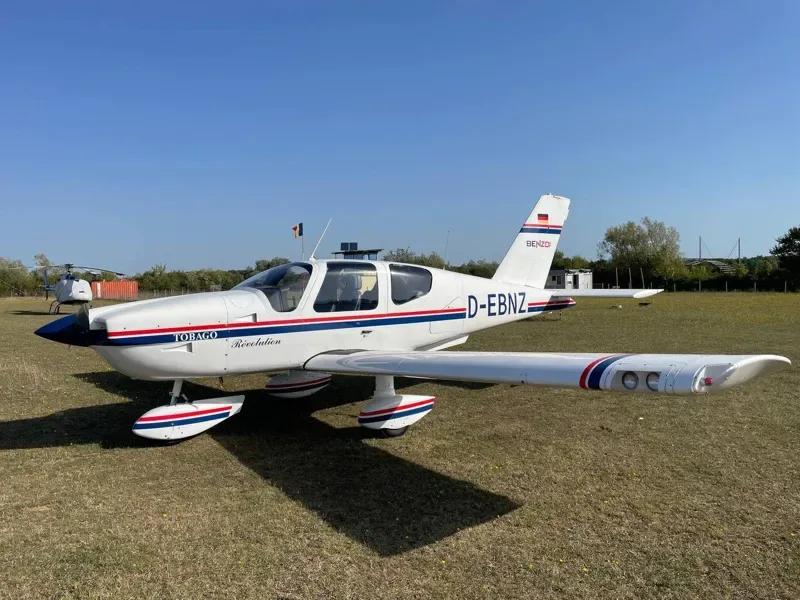
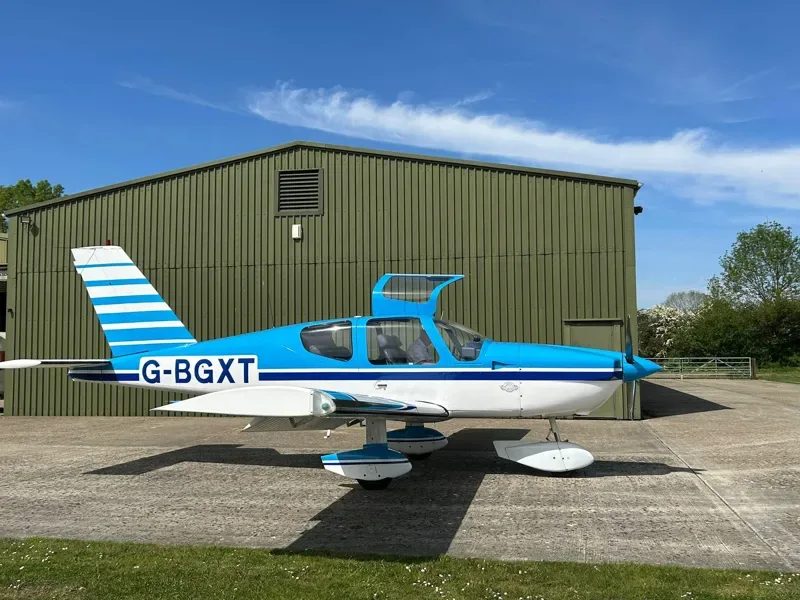
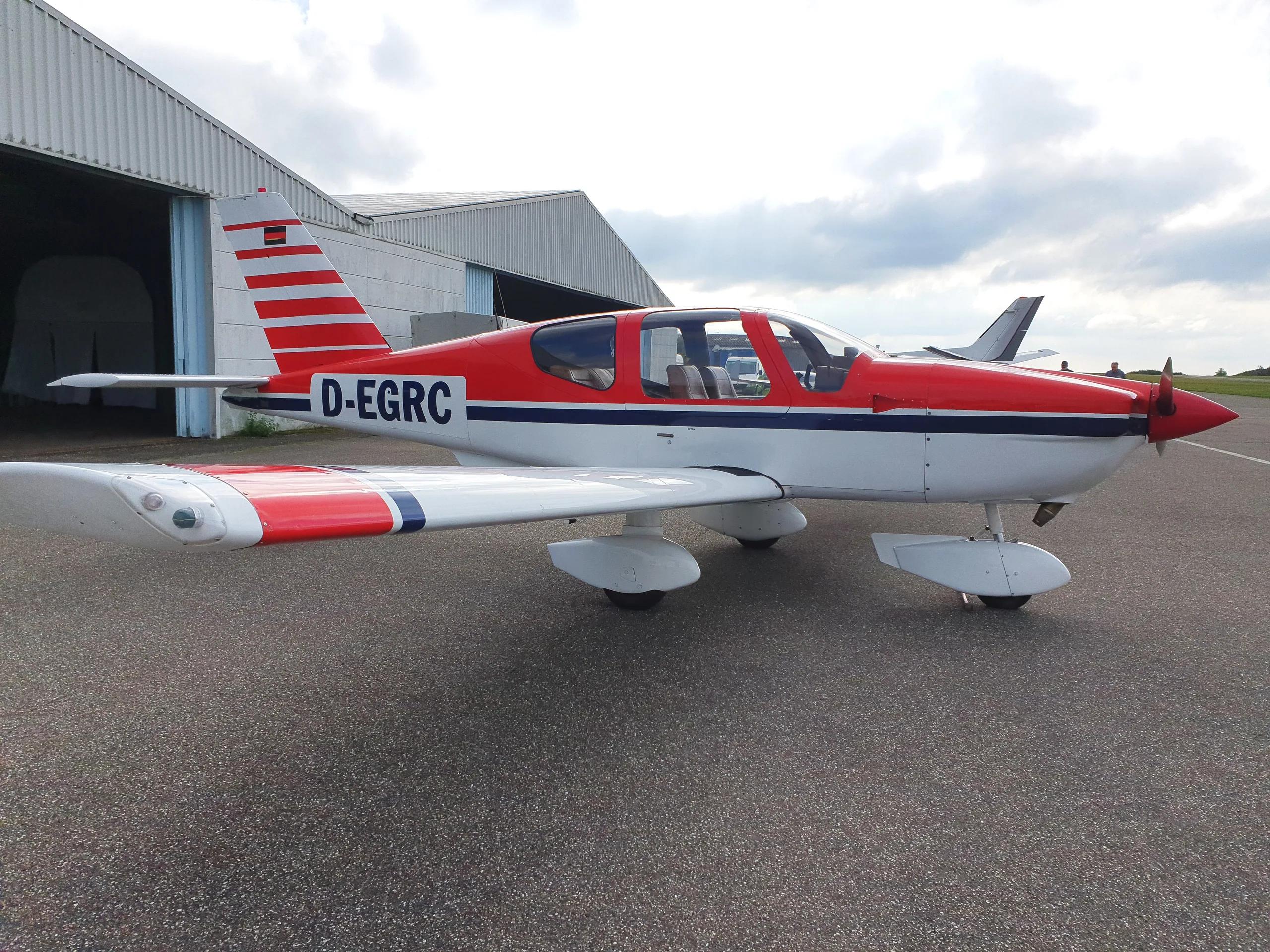
SOCATA TB 10 for sale now
View all 7 for sale →Aircraft that this model guide covers, listed on the sites Sprinkle reads. Asking prices, not sales. SOCATA TB 10 asking prices by year built.
Also useful for the Socata Tobago TB-10
From Sprinkle’s library of aircraft documents. PDFs open from Sprinkle’s own files. Read Nov 26, 2026.
Want this document taken down? Request removal