Alpi Pioneer 200 Model Guide
Alpi Pioneer 200 · Model Guide
Overview
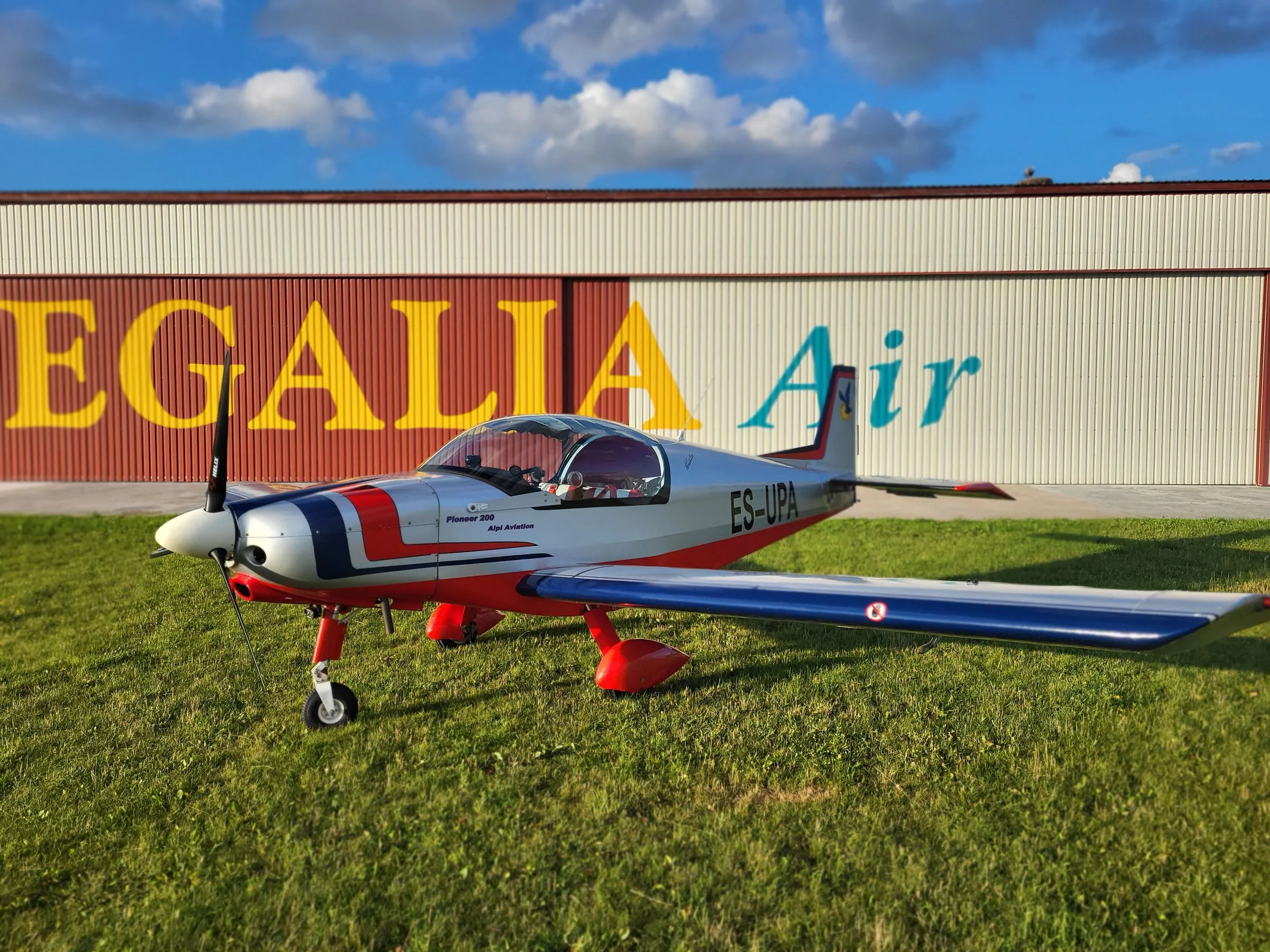
Alpi Pioneer 200 is a two-seat, side-by-side ultralight (ULM) built from an Alpi Aviation S.r.l. kit in San Quirino, Italy. It has a wooden airframe with fabric-covered control surfaces, tricycle gear and a 79 hp Rotax 912 UL. Its manuals limit it to day VFR with no aerobatics or spins. Maximum takeoff weight is 450 kg.
- Two seats. Maximum takeoff weight is 450 kg and base empty weight is 280 kg. Baggage is limited to 10 kg.
- Rotax 912 UL, 79 hp. The manual quotes a 130 m takeoff ground roll and a 100 m landing roll at max weight, sea level, ISA.
- The manuals disagree on some limits (Va 162 vs 180 km/h, crosswind 28 vs 25 km/h). Check the manual for the specific aircraft.
- Day VFR only. Aerobatics, including spins, are prohibited.
Summary written by AI from the source document. Check the original before relying on it. See which parts of Sprinkle are written by AI.
Reference only, not for flight. Use the current approved manual for your aircraft. See terms, section 5.
Document
Source
Copy found at sprinkle.com. Sprinkle hosts a reference copy with an added summary, specifications and searchable full text.
Document details
- Type ·
- Model Guide
- Year ·
- 2026
- File size ·
- 48 KB
- Copy found at ·
- sprinkle.com
Specifications & performance
Extracted from this document.
Specifications
- Seats ·
- 2
- Height m ·
- 2.07
- Length m ·
- 6.15
- Wingspan m ·
- 7.55
- Wing area m2 ·
- 10.5
- Engine power (hp) ·
- 79
- Fuel capacity l ·
- 54
- Propeller diameter cm ·
- 166
Performance
- Max level speed kmh ·
- 200
- Rate of descent (fpm) ·
- 550
- Landing ground roll m ·
- 100
- Takeoff ground roll m ·
- 130
- Max rate of climb m min ·
- 220
- Normal cruise speed kmh ·
- 180
- Fuel burn 75 percent lph ·
- 16.2
- Max operating altitude m ·
- 5,000
V-speeds
- VFE_KMH ·
- 100
- VNE_KMH ·
- 240
- VNO_KMH ·
- 215
- STALL_CLEAN_KMH ·
- 65
- STALL_FLAPS_KMH ·
- 62
- LIFT_OFF_SPEED_KMH ·
- 85
Weight & balance
- Empty weight kg ·
- 280
- Wing loading kg m2 ·
- 42.8
- Max baggage weight kg ·
- 10
- Max landing weight kg ·
- 450
- Max takeoff weight kg ·
- 450
- Cg aft limit percent mac ·
- 32
- Cg forward limit percent mac ·
- 16
How many people and how much baggage can the Alpi Pioneer 200 carry?
Alpi Pioneer 200 is limited to two occupants including the pilot. Maximum takeoff weight is 450 kg and baggage is limited to 10 kg. A solo pilot sits in the left seat and needs no ballast.
What engine and fuel does the Alpi Pioneer 200 use?
Alpi Pioneer 200 uses a Rotax 912 UL, rated 79 hp at 5500 RPM. The tank holds 54 L, of which 50 L is usable. The flight manual approves unleaded mogas, and 100LL only for short use with a carbon inspection.
How far can the Alpi Pioneer 200 fly?
The manual quotes 510 km at 75% power with a half-hour reserve, and 394 km at 90% power with the same reserve. Fuel burn at 75% power is 16.2 l/h. These figures are for max weight, sea level, ISA.
Are the Alpi Pioneer 200 documents consistent?
Not entirely. For the Alpi Pioneer 200, the Italian manual gives Va 162 km/h and crosswind 28 km/h, while the flight manual gives 180 km/h and 25 km/h. Use the manual issued for the specific aircraft.
What is the Alpi Pioneer 200 Model Guide?
The Alpi Pioneer 200 Model Guide is a model guide for the Alpi Pioneer 200, dated 2026.
What year was the Alpi Pioneer 200 Model Guide published?
The Alpi Pioneer 200 Model Guide — the Alpi Pioneer 200 model guide on file — is dated 2026.
Common. More common than 60% of the aircraft models we track.
Most owners only have the POH. Here's the essential set for the Alpi Pioneer 200.
- Pilot's Operating Handbook / AFM
- Checklist
- Maintenance Manual
- Parts Catalog (IPC)
- Systems & Wiring
- Service Bulletins on file
- Type Certificate (TCDS)
Alpi Pioneer 200 for sale now
Free — save the Pioneer 200 to your watchlist and track it in one place.
More Alpi Pioneer 200manuals & documents
Related documents
- Aeropilot Legend 600 Model GuideAeropilot Legend 600 · Model Guide
- AEROPILOT LTD LEGEND 600 Model GuideAEROPILOT LTD LEGEND 600 · Model Guide
- TECNAM P2008 Model GuideTECNAM P2008 · Model Guide
- TECNAM P2004 BRAVO Model GuideTECNAM P2004 BRAVO · Model Guide
- TECNAM P-2002 Sierra RG Model GuideTECNAM P-2002 Sierra RG · Model Guide
If you fly the Alpi Pioneer 200, you may also be researching these.
In this document
Airframe and engine
Wooden lattice fuselage with birch plywood, cantilever wooden wings with fabric-covered ailerons and electric slotted flaps. Wings and tailplane come off for transport. Tricycle gear with hydraulic wheel brakes. Fixed-pitch two-blade wooden propeller, 166 cm diameter. Tank holds 54 L (50 L usable). Flight manual fuel: unleaded mogas; 100LL only for short use with carbon inspection.
Performance and range
Max level speed 200 km/h, fast cruise 190 km/h, normal cruise 180 km/h. Stall is 65 km/h clean and 62 km/h with flaps. Best climb is 220 m/min. Fuel burn at 75% power is 16.2 l/h. Range with a half-hour reserve is 510 km at 75% power and 394 km at 90%. Figures are for max weight, sea level, ISA.
What to check when buying
The manual applies only to the aircraft named on its cover by registration and serial number, so confirm the match and revision status. It is a kit build, and the maker disclaims responsibility for unauthorised modifications. Inspect the wood and fabric structure. Check engine limits: oil pressure at least 2 bar in level flight, cylinder head temperature at most 150 °C, magneto drop at most 200 RPM at 4000 RPM.
Summary written by AI from the source document. Check the original before relying on it. See which parts of Sprinkle are written by AI.
Safety notes
- Aerobatics, including spins, are prohibited. Smoking is prohibited. Maximum air temperature for takeoff at gross weight is 40 °C.
- Never exceed 240 km/h. Above 215 km/h fly only in smooth air and with caution. With flaps down, stay below 100 km/h.
- The Italian manual says it gives advice only and that decisions rest with the pilot. A solo pilot must sit in the left seat.
Summary written by AI from the source document. Check the original before relying on it. See which parts of Sprinkle are written by AI.
Full document text
Alpi Pioneer 200 Model Guide Alpi Pioneer 200 is a two-seat, side-by-side ultralight (ULM) built from an Alpi Aviation S.r.l. kit in San Quirino, Italy. It has a wooden airframe with fabric-covered control surfaces, tricycle gear and a 79 hp Rotax 912 UL. Its manuals limit it to day VFR with no aerobatics or spins. Maximum takeoff weight is 450 kg. • Two seats. Maximum takeoff weight is 450 kg and base empty weight is 280 kg. Baggage is limited to 10 kg. • Rotax 912 UL, 79 hp. The manual quotes a 130 m takeoff ground roll and a 100 m landing roll at max weight, sea level, ISA. • The manuals disagree on some limits (Va 162 vs 180 km/h, crosswind 28 vs 25 km/h). Check the manual for the specific aircraft. • Day VFR only. Aerobatics, including spins, are prohibited. Airframe and engine Wooden lattice fuselage with birch plywood, cantilever wooden wings with fabric-covered ailerons and electric slotted flaps. Wings and tailplane come off for transport. Tricycle gear with hydraulic wheel brakes. Fixed-pitch two-blade wooden propeller, 166 cm diameter. Tank holds 54 L (50 L usable). Flight manual fuel: unleaded mogas; 100LL only for short use with carbon inspection. Performance and range Max level speed 200 km/h, fast cruise 190 km/h, normal cruise 180 km/h. Stall is 65 km/h clean and 62 km/h with flaps. Best climb is 220 m/min. Fuel burn at 75% power is 16.2 l/h. Range with a half-hour reserve is 510 km at 75% power and 394 km at 90%. Figures are for max weight, sea level, ISA. What to check when buying The manual applies only to the aircraft named on its cover by registration and serial number, so confirm the match and revision status. It is a kit build, and the maker disclaims responsibility for unauthorised modifications. Inspect the wood and fabric structure. Check engine limits: oil pressure at least 2 bar in level flight, cylinder head temperature at most 150 °C, magneto drop at most 200 RPM at 4000 RPM. Safety notes: • Aerobatics, including spins, are prohibited. Smoking is prohibited. Maximum air temperature for takeoff at gross weight is 40 °C. • Never exceed 240 km/h. Above 215 km/h fly only in smooth air and with caution. With flaps down, stay below 100 km/h. • The Italian manual says it gives advice only and that decisions rest with the pilot. A solo pilot must sit in the left seat.