
Checklist for CESSNA 150 G5
Checklist for the Cessna 150 G5
PDF, 14 pages, 3.0 MB, from Sprinkle’s own files.
What it covers
This document serves as a checklist for the Cessna 150 G5, providing pilots with a structured guide to ensure all necessary pre-flight, in-flight, and post-flight procedures are followed. The checklist is designed to enhance safety and efficiency during flight operations. It includes critical steps that pilots must complete before and after flying, ensuring that the aircraft is in optimal condition for flight. The document is intended for use by pilots operating the Cessna 150 G5, whether for training or personal use, and emphasizes the importance of thorough preparation and adherence to safety protocols.
Key points
- Ensure fuel and oil levels are adequate before flight.
- Follow proper engine start procedures to avoid damage.
- Check flight controls and flaps before takeoff.
- Monitor engine performance and fuel consumption during flight.
- Complete a post-flight inspection and secure the aircraft.
Main sections
Preflight Inspection
The preflight inspection checklist outlines the necessary steps to ensure the aircraft is ready for flight. This includes checking fuel levels, oil levels, and the condition of the aircraft's exterior. Pilots should verify that all control surfaces are free and clear of obstructions and that the tires are properly inflated.
Engine Start Procedures
This section details the steps for safely starting the engine, including checking the fuel selector, ensuring the mixture is rich, and verifying that the throttle is set correctly. It emphasizes the importance of monitoring engine instruments during startup.
Before Takeoff
The before takeoff checklist includes verifying that all flight controls are functioning correctly, setting the flaps to the appropriate position, and ensuring that the transponder is set to the correct code. Pilots must also confirm that the runway is clear and that they are ready for departure.
In-Flight Checks
In-flight checks focus on monitoring engine performance, fuel consumption, and navigation instruments. Pilots are reminded to maintain situational awareness and to be prepared for any changes in weather conditions.
Post-Flight Procedures
The post-flight checklist includes steps for securing the aircraft, conducting a post-flight inspection, and properly logging flight time and any maintenance issues.
Safety notes
- Always perform a thorough preflight inspection to ensure safety.
- Monitor engine instruments closely during startup and flight.
- Be aware of weather changes that may affect flight operations.
The document’s text
Show the text read from the PDF
Cessna 150G Checklist N3495J Cessna 150G Preflight Inspection N3495J 1. Remove Control/Gust Locks 2. Remove pitot tube cover 3. AROW Documents - Must be in Aircraft 4. Check Emergency Equip (Fire Extinguisher, ELT) 5. Check ignition switch OFF 6. Master Switch ON a. Pitot heat ON b. Check Fuel Quantity c. Flaps to 20 degrees d. All Lights On (Nav, Strobe, Landing) 7. Walk around and check: a. Landing/Taxi Lights b. Nav Lights c. Strobes d. Pitot Heat 8. Lights OFF 9. Pitot heat OFF 10. Master Switch OFF 11. Set trim for takeoff 12. Left main gear a. Check tire wear/tread, pressure b. Check for leaking brakes 13. Left Wing a. Pitot tube - check clear b. Disconnect Tie Down c. Check Strut d. Fuel tank vent tube - clear e. Leading Edge - Stall Horn, Vent f. Wing Tip secure - no major cracks g. Aileron connecting rods, hinges, counterweights secure h. Flap connections secure 14. Empenage a. Check for wrinkles in skin b. Antennas secure c. Horizontal and Vertical stabilizers - secure d. Elevator - free movement, connections secure e. Trim Tab - secure f. Rudder - Free movement, secure g. Disconnect tie down 15. Right Wing a. Flap - connections secure b. Aileron connecting rods, hinges, counterweights secure c. Wing Tip d. Leading Edge e. Disconnect Tie Down f. Check Strut 16. Right Main Gear a. Check tire wear/tread, pressure b. Check for leaking brakes (red hydraulic fluid on brake lines or on ground) 17. Nose 18. Fuel a. Oil - 4-6 quarts b. Fuel sump - drain c. Check cowl - secure d. Engine compartment - free of debris e. Spinner - all screws present and secure f. Prop - check for cracks g. Nose wheel and strut h. Air Filter/Intake Static Port a. Left Tank check quantity b. Left Sump - check for debris/water c. Right Tank - check quantity d. Right Sump - check for debris/water e. Belly Drain - check for debris/water Before Engine Start 1. Preflight Inspection Complete 2. Passenger Briefing Complete 3. Seats and Seat Belts Set 4. Brakes Test 5. Fuel Valve ON 6. Mixture Rich 7. Carb Heat - OFF 8. Propeller Area Clear Visually 9. Prime (as required) 10. Beacon ON 11. Master Switch ON 12. MAKE SURE ALL RADIOS, GPS, are OFF 14. Ignition-turn key to BOTH position Starting Engine 1. Throttle Open 1/4 inch - 2. Announce "CLEAR PROP" 3. PULL to start 4. Throttle to 1000 RPM 5. Oil Pressure CHECK If no oil pressure within 30 sec, shutdown immediately. 6. Ammeter CHECK 7. Vacuum CHECK 8. Mixture LEAN a few turns After Start 1. Start Flight Timer 2. Flaps UP 3. Avionics ON 4. Radios Check 5. ATIS/AWOS record 6. Set Altimeter 7. Brakes Check Before Take Off 1. Cabin Doors and windows LATCHED 2. Flight Controls Free and Correct 3. Fuel Quantity Check 4. Fuel Valve ON 5. Elevator Trim to "Take Off" 6. RUN-UP a. Throttle to 1700 RPM b. Mags CHECK c. Engine Instruments CHECK d. Vacuum CHECK e. Ammeter CHECK f. Carb Heat CHECK g. Idle CHECK h. Throttle to 1000 RPM 7. Flaps SET as required. 8. Emergency Briefing COMPLETE 9. Departure Briefing COMPLETE Runway Items 1. Heading Indicator - SET to compass 2. Transponder - SET to ALT 3. Lights As Required 4. Mixture - RICH 5. Carb Heat - OFF 6. Check windows are latched 7. Record Time - Start GoPro if equiped. Normal Takeoff 1. Flaps UP 2. Carb Heat - OFF 3. Throttle FULL OPEN 4. Rotate 50 MPH 5. Pitch for Climb attitude @ Vy - 72 MPH until obstacles cleared Maximum Performance Take-off 1. Flaps 10 degrees 2. Carb Heat COLD 3. Brakes HOLD 4. Throttle FULL OPEN 5. Engine Instruments GREEN ARC 6. Brakes RELEASE 7. Elevator Control NEUTRAL 8. Climb Speed Vx- 52 MPH Climb 1. Airspeed 75-80 MPH (for best engine cooling) 2. Throttle FULL OPEN 3. Mixture RICH 4. Retract Flaps as necessary Cruise 1. Power 2000 to 2750 MPH (<75%) 2. Trim as necessary 3. Mixture LEAN to max RPM (above 3000 feet) 4. Engine Instruments - Check 5. Heading Set to Compass Approach Descent 1. ATIS/ASOS 2. Throttle SET as required 3. Carb Heat ON below 2000 RPM 4. Mixture SET 5. Altimeter SET 6. Approach Briefing COMPLETE Before Landing 1. Lights SET 2. Mixture RICH 3. Carb Heat ON (set before reducing throttle) 4. Fuel valve CHECK ON After Landing 1. Lights SET 2. Flaps UP 3. Carb heat COLD 4. Transponder STANDBY 5. Radios SET Shutdown 1. Avionics OFF (Radio, transponder, Comm, GPS) (Make sure all avionics are turned off individually before shut- down) 2. Lights OFF 3. Mixture CUTOFF 4. Ignition OFF 5. Master Switch OFF 6. Stop flight timer or record time 7. Stop GoPro camera Securing 1. DO NOT engage parking brake. It is INOP. 2. Control Lock INSTALL 3. Pitot Cover Install 4. Chocks 5. Tie-downs SET 6. Gust Locks Install V Speeds Vr 50 Rotation Speed Vx 52 Vy 72 66 Va 109 Vs1 55 Vso 48 Vfe 100 Best angle of climb Best Rate of climb (at Sea Level) Best Rate of Climb (at 10,000) Max maneuvering speed Stall Speed Stall Speed in landing config Max Flaps Extended Vno 120 Max Cruise Speed Vne 162 Vbg 65 Never Exceed Speed Best Glide Nut Tree Frequencies CTAF 123.05 ° ASOS 134.75 ° Emergency 121.5 Passenger Brief Doors, seats & seatbelts (positive latch), emergency exits, fire extinguisher, no smoking, PIC authority Instrument Check ° Airspeed indicator should be zero Attitude indicator should be blue over black/brown & within five degrees ° Altimeter should be within 75 feet of field elevation ° ° Vertical speed indicator should read zero Heading indicator should match magnetic compass - which should have no crack, leaks, or bubbles Turn coordinator should be level (if airplane is) with the ball in the cage - no cracks, leaks, or bubbles PRE-TAKEOFF BRIEF Engine failure or abnormality during takeoff roll: IMMEDIATELY CLOSE THROTTLE, STOP STRAIGHT AHEAD, & AVOID OBSTACLES If not enough runway remains to stop: Mixture Fuel shutoff valve Battery master Ignition switch Cutoff Pull out/off Off Off Avoid obstacles Engine failure immediately after takeoff: Land on remaining runway/within 30° of centerline. Avoid obstacles. Do not attempt 180° turn. Airspeed Flaps. Power Time permitting Fuel shutoff valve Best glide As necessary As available Declare an emergency Pull out/off Mixture ..... Idle cutoff Ignition Off Battery master Off Configurations Clean configuration: Fuel ON Mixture rich Flaps zero Landing configuration: Carb heat on Fuel ON Mixture rich Flaps as necessary Cruise configuration: Fuel ON Mixture leaned above 3000 ft Flaps zero New Carburettor icing-probability chart To work out dew point depression: Temp Minus Dew Pt. = Dew Pt. Depression To use this chart: - obtain the temperature and dew point calculate the difference between the two. This is the 'dew point depression' for example, if the temperature is 12° C and the dew point is 2° the dew point depression will be 10° for icing probability, refer to the shading legend appropriate to the intersection of the lines 3 - for relative humidity, refer to the right hand scale 4 10% Serious icing- any power Moderate icing - cruise power; Serious icing - descent power Serious icing - descent power Light icing- cruise or descent power DEW POINT DEPRESSION + 30 25 20 15 14 13 12 11 10° 9 8 7 tin 20% 30%- 40% 50% 60% 70%- 80% 90% 100% 10 1 15 20 25 30 35 40 45 TEMPERATURE C RELATIVE HUMIDITY EMERGENCY PROCEDURES Engine Failures During Takeoff Run 1. Throttle Idle - 2. Brakes Apply - 3. Wing Flaps - Retract 4. Mixture - Cut-off 5. Ignition Switch - Off 6. Master Switch - Off Immediately After Takeoff 1. Airspeed -- 65 MPH 2. Mixture - Cut-off 3. Fuel Shutoff Valve - Off 4. Ignition Switch - Off 5. Wing Flaps - As Required 6. Land Straight ahead - Avoid Obstacles During Flight 1. Airspeed 65 MPH 2. Carb Heat - On 3. Primer-In and Locked 4. Fuel Valve - On 5. Mixture - Rich 6. Ignition Switch - BOTH 7. Starter Pull (if propeller is stopped) EMERGENCY PROCEDURES Forced Landing -- Without Power 1. Airspeed trim for 65 MPH - 2. Identify and maneuver for off-site landing area 3. Radio Call - give emergency info and location (if time permits) 4. Squawk-7700 (if time permits) 5. Mixture - Cut-off 6. Fuel Valve - Off 7. Ignition Switch - Off 1 8. Flaps As Required 9. Master Switch - Off 10. Doors Unlatch prior to touchdown - 11. Touchdown -- tail low Engine Fire -- In Flight 1. Mixture Cut-off - 2. Fuel Valve - Off 3. Ignition Switch - Off 4. Master Switch - Off 5. Cabin Heat and Air off (except wing root vents) - 6. Airspeed 90-100 MPH to extinguish flames higher if necessary (not to exceed Vne or 162 MPH) 7. Execute Forced Landing Without Engine Power EMERGENCY PROCEDURES Engine Fire -- During Start on the Ground 1. Continue Cranking to suck flames into engine 2. If Engine Starts: a. Power to 1700 RPM for a few minutes b. Shutdown and inspect for damage 3. If Engine Fails to Start: a. Mixture Cut-off - b. Fuel Valve - Off C. Switch - Off d. Master Switch - Off 4. Use Fire Extinguisher to extinguish flames 5. Inspect for Damage
Read from the PDF by machine, so tables and diagrams come out rough. The PDF is the document.
More Cessna 150 G5 documents
All 11 →- Cessna 150 Checklist
This document is a checklist specifically for the Cessna 150 aircraft. It provides a comprehensive guide for pilots to perform pre-flight inspections, engine starting procedures, takeoff, landing, and emergency procedures. The checklist is structured to ensure that all critical systems and components are checked and verified before and during flight operations. It is designed for use by pilots to enhance safety and operational efficiency during flight preparation and execution.
- Checklist for Cessna 150 G5
This document serves as a checklist for the Cessna 150 G5, providing pilots with a structured approach to preflight, flight, and post-flight procedures. It is designed to ensure that all critical steps are followed to maintain safety and compliance with operational standards. The checklist includes various sections that cover essential tasks and checks that pilots must perform before and during flight, as well as after landing. This document is intended for use by pilots operating the Cessna 150 G5, offering a clear and concise reference to enhance flight safety and efficiency.
- Data Sheet AD5940/AD5941
The document is a data sheet for the AD5940 and AD5941, which are high precision, low power analog front ends designed for portable applications requiring electrochemical-based measurement techniques. It provides detailed specifications, features, and applications for these devices, which are suitable for various measurement techniques including amperometric, voltammetric, and impedance measurements. The document includes information on the devices' performance characteristics, power requirements, and operational capabilities, making it a valuable resource for engineers and developers working with these components.
- CESSNA 150 G5 Model Guide
CESSNA 150 G5 is a single-engine piston aircraft in the Cessna 150 family. The library entry has no year, seat or spec data, so the figures here come from two pilot checklists plus family-level registry maximums. Use them as a starting point and verify against the aircraft's POH and logbooks before buying.
- Product Data Sheet
This document is a Product Data Sheet for the Rosemount 8700M Magnetic Flow Meter, detailing its specifications, features, and configurations. It is intended for engineers and technicians involved in the selection and installation of magnetic flow meters in various industrial applications. The document outlines the performance characteristics, available models, and options for the Rosemount 8700M series, including transmitters and sensors. Key information includes accuracy ratings, diagnostic capabilities, and installation requirements, making it a comprehensive resource for users looking to optimize flow measurement solutions.
- A Comparison of the V2X Communication Systems: ITS-G5 and C-V2X
This document presents a comparison of two vehicle-to-everything (V2X) communication systems: ITS-G5 and C-V2X. It evaluates the performance of both systems in terms of their physical and MAC layers, focusing on their capabilities in optimizing road traffic and improving safety. The paper discusses the technical specifications, performance evaluations, and the impact of network congestion on both systems. The findings are based on simulations and field tests, providing insights into the advantages and limitations of each communication standard under various conditions.
- Product Information Sheet
This document serves as a product information sheet for DeoxIT® products, specifically detailing the D-Series, Gold G-Series, and Shield S-Series. It provides comprehensive information on the applications, formulations, and usage instructions for these cleaning and lubricating products. While it does not directly pertain to aircraft specifications, it is relevant for aviation enthusiasts and technicians who may use these products for maintenance on aircraft components. The document outlines the cleaning actions, compatibility, and application methods of various DeoxIT® products, emphasizing their importance in maintaining electrical connections and preventing corrosion.
- Airworthiness Directives for CESSNA 150 G5
This document is an Airworthiness Directive (AD) specifically for the Cessna 150 G5. It outlines mandatory actions that must be taken to ensure the continued airworthiness of the aircraft. The directive is issued by the Federal Aviation Administration (FAA) and is intended for aircraft owners, operators, and maintenance personnel. The document provides detailed instructions on compliance requirements, including timelines and specific procedures that must be followed to mitigate safety risks associated with the aircraft. The AD is crucial for maintaining operational safety and compliance with federal regulations.
Cessna 150 for sale now
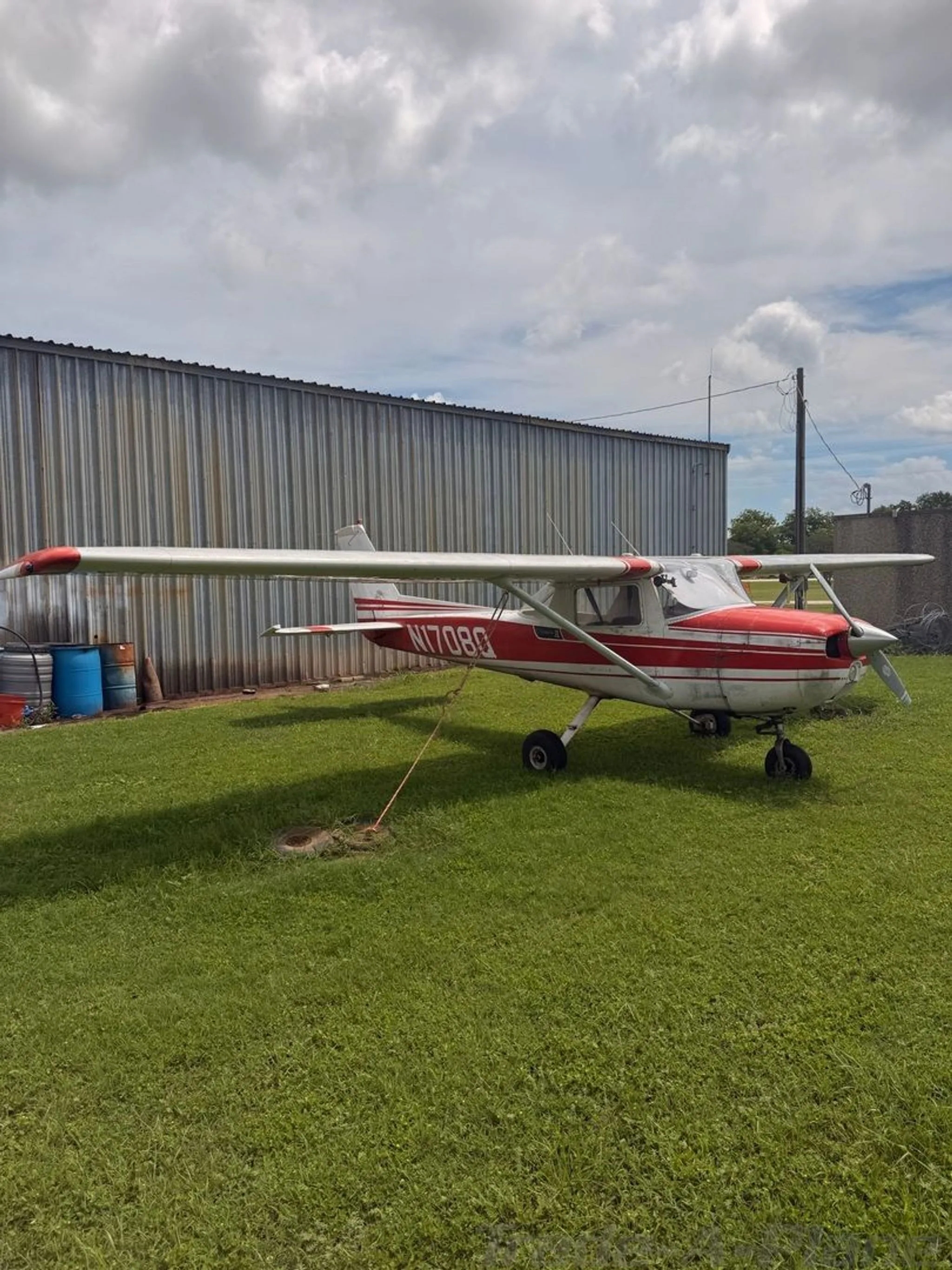
View all 36 for sale →Aircraft that this checklist covers, listed on the sites Sprinkle reads. Asking prices, not sales. Cessna 150 asking prices by year built.

Also useful for the Cessna 150 G5
From Sprinkle’s library of aircraft documents. PDFs open from Sprinkle’s own files. Read Mar 6, 2026.
Want this document taken down? Request removal