
Type Acceptance Report TAR 8/21B/24 – Cessna 170 Series
Maintenance Manual for the Cessna 170B
PDF, 11 pages, 79 KB, from Sprinkle’s own files.
What it covers
This Type Acceptance Report provides an overview of the Cessna 170 Series, specifically focusing on the Type Acceptance Certificate granted for the Cessna Model 170, 170A, and 170B in New Zealand. It details the certification basis, compliance with operational requirements, and the necessary documentation for airworthiness certification. The report confirms that all models under FAA Type Certificate A-799 are accepted in New Zealand without special import requirements. It serves as a reference for aircraft owners and operators regarding compliance and operational standards for the Cessna 170 Series.
Key points
- MCTOW for Cessna 170B is 2200 lb (998 kg).
- The Cessna 170 Series includes models 170, 170A, and 170B.
- Type Certificate A-799 covers all models of the Cessna 170 Series.
- No special import requirements for the Cessna 170 Series in New Zealand.
- The Cessna 170 is a four-seat, single-engine, high-wing aircraft.
Main sections
Executive Summary
The report confirms that New Zealand Type Acceptance has been granted to the Cessna Model 170 Series based on FAA Type Certificate A-799. All models under this certificate are eligible for an Airworthiness Certificate in the Standard Category, provided they meet New Zealand operational requirements.
Aircraft Certification Details
The Cessna 170 Series includes models 170, 170A, and 170B, with a maximum certified takeoff weight (MCTOW) of 2200 lb (998 kg) and a maximum seating capacity of 4. The aircraft is powered by either a Continental C-145-2 or O-300-A engine.
Application Details and Background Information
The report outlines the application for type acceptance, which was submitted in 2008. It describes the Cessna 170 as a four-seat, single-engine, high-wing aircraft with a tailwheel configuration, detailing its historical development and introduction in New Zealand.
NZCAR §21.43 Data Requirements
This section lists the data requirements satisfied for type acceptance, including the FAA Type Certificate A-799 and various maintenance manuals and parts catalogs relevant to the Cessna 170 Series.
New Zealand Operational Rule Compliance
The report reviews compliance with New Zealand operational rules, confirming that the Cessna 170 Series meets the necessary requirements for airworthiness certification.
The document’s text
Show the text read from the PDF
Aircraft Certification Unit Type Acceptance Report TAR 8/21B/24 – Revision 1 CESSNA 170 Series -- 1 of 11 -- -- 2 of 11 -- Type Acceptance Report Rev.1 : 7 September 2018 TAR 8/21B/24 – Cessna 170 Series i TABLE OF CONTENTS EXECUTIVE SUMMARY 1 1. INTRODUCTION 1 2. AIRCRAFT CERTIFICATION DETAILS 2 3. APPLICATION DETAILS AND BACKGROUND INFORMATION 3 4. NZCAR §21.43 DATA REQUIREMENTS 4 5. NEW ZEALAND OPERATIONAL RULE REQUIREMENTS 5 ATTACHMENTS 7 APPENDIX 1 7 -- 3 of 11 -- -- 4 of 11 -- Type Acceptance Report Rev.1 : 7 September 2018 TAR 8/21B/24 – Cessna 170 Series 1 Executive Summary New Zealand Type Acceptance has been granted to the Cessna Model 170 Series based on validation of FAA Type Certificate number A-799. There are no special requirements for import. All models listed under the FAA type certificate have been type accepted in New Zealand. These are now eligible for the issue of an Airworthiness Certificate in the Standard Category in accordance with NZCAR §21.177, subject to any outstanding New Zealand operational requirements being met. (See Section 5 of this report for a review of compliance of the basic type design with the operating Rules.) NOTE: The information in this report was correct as at the date of issue. The report is generally only updated when an application is received to revise the Type Acceptance Certificate. For details on the current type certificate holder and any specific technical data, refer to the latest revision of the State-of-Design Type Certificate Data Sheet referenced herein. 1. Introduction This report details the basis on which Type Acceptance Certificate No. 8/21B/24 was granted in the Standard Category in accordance with NZCAR Part 21 Subpart B. Specifically, the report aims to: (a) Specify the foreign type certificate and associated airworthiness design standard used for type acceptance of the model(s) in New Zealand; and (b) Identify any special conditions for import applicable to any model(s) covered by the Type Acceptance Certificate; and (c) Identify any additional requirements which must be complied with prior to the issue of a NZ Airworthiness Certificate or for any subsequent operations. The report covers all models included on the State-of-Design type certificate which have been granted type acceptance in New Zealand. Appendix 1 details which models have been type accepted in accordance with the provisions of CAR Part 21B and which were certificated prior to that under NZCAR Section B.9 and are now type accepted under the transitional arrangements of Part 21 Appendix A(c). -- 5 of 11 -- Type Acceptance Report TAR 8/21B/24 – Cessna 170 Series Rev.1 : 7 September 2018 2 2. Aircraft Certification Details (a) State-of-Design Type and Production Certificates: Manufacturer: Cessna Aircraft Company Type Certificate Holder: Textron Aviation Inc. (since July 29, 2015) Type Certificate: A-799 Issued by: Federal Aviation Administration Production Approval: Delegation Option Manufacturer No. CE-1 FAA PC No.4 (b) Models Covered by the Part 21B Type Acceptance Certificate: (i) Model: 170, 170A, 170B MCTOW: 2200 lb. [998 kg] Max. No. of Seats: 4 Noise Standard: Not Applicable Engine: Continental C-145-2 or -2H, or O-300-A Type Certificate: E-253 Issued by: Federal Aviation Administration Propeller(s): McCauley 1A170 Type Certificate: P-857 Issued by: Federal Aviation Administration Sensenich 73BR-50 (or any other fixed-pitch wooden) Type Certificate: P-170 Issued by: Federal Aviation Administration McCauley 2B36C7/78K-2 Type Certificate: P-889 Issued by: Federal Aviation Administration Sensenich M74DR Type Certificate: P-886 Issued by: Federal Aviation Administration McCauley 1C172/MDM Type Certificate: P-910 Issued by: Federal Aviation Administration -- 6 of 11 -- Type Acceptance Report Rev.1 : 7 September 2018 TAR 8/21B/24 – Cessna 170 Series 3 3. Application Details and Background Information The application for New Zealand type acceptance was from Mr P C Waterhouse, dated 14 January 2008. The first-of-type example was a 1950 Model 170A serial number 19878, registered ZK-OCC. The Cessna 170 is a four-seat single-engine high-wing all-metal light aeroplane with a tailwheel undercarriage configuration. Type Acceptance Certificate No. 8/21B/24 was granted on 12 March 2008 to the Cessna Models 170 and 170A based on validation of FAA Type Certificate A-799. There are no special requirements for import into New Zealand. Revision 1 to this report was issued to update the format. This was at the request of the type certificate holder, who has provided access to all technical publications. The 1948 Cessna 170 was basically a four-seat development of the Model 140, using a new two-panel fabric-covered wing of extended span and an enlarged fuselage. The 1949-51 Model 170A introduced an all-metal wing of semi-tapered planform with single lift strut and a dorsal fin. The 1952-56 Model 170B (originally known as the Model 171) was very similar to the 170A, with some refinement of the wing and tail and new slotted flaps. (The first example of the Cessna 170 Series in New Zealand was a Model 170B serial number 25372 registered ZK-AZC in March 1953.) -- 7 of 11 -- Type Acceptance Report TAR 8/21B/24 – Cessna 170 Series Rev.1 : 7 September 2018 4 4. NZCAR §21.43 Data Requirements The type data requirements of NZCAR Part 21B Para §21.43 have been satisfied by supply of the following documents, or were already held by the CAA: (1) State-of-Design Type certificate: FAA Type Certificate Number A-799 FAA Type Certificate Data Sheet no. A-799 at Revision 55 dated July 29, 2015 – Model 170 approved July 12, 1948 – Model 170A approved December 15, 1948 – Model 170B approved September 28, 1950 (2) Airworthiness design requirements: (i) Airworthiness Design Standards: The certification basis of the Cessna 170 Series is Civil Air Regulations Part 03; at issue dated December 15, 1946 with Amendments 03-1 through 03-3 for the Model 170, and Amendments 03-1 through 03-4 for the Model 170A; and at issue dated November 1, 1949 with Amendments 3-1 and 3-2 for the Model 170B. This is an acceptable certification basis in accordance with NZCAR Part 21B Para §21.41 and Advisory Circular 21-1A, as CAR 3 is the predecessor of FAR 23, which is the basic standard for Normal Category Airplanes called up under Part 21 Appendix C. There are no non-compliances and no additional special conditions have been prescribed by the Director under §21.23. (ii) Special Conditions: Nil (iii) Equivalent Level of Safety Findings: Nil (iv) Airworthiness Limitations: See Maintenance Manual (3) Environmental Certification: Not applicable. (4) Certification Compliance Listing: Cessna Report No.802 – Model 170 – Fuselage Analysis Cessna Report No.804 – Model 170 – Vertical Tail Analyses Cessna Report No.807 – Model 170 – Landing Gear Analyses Cessna Report No.880 – Model 171 (170A/B) – Basic Data Cessna Report No.881 – Model 171 – Wing Analysis Cessna Report No.882 – Model 171 – Horizontal Tail Load Analysis Model 170B – Excerpts from Performance Reports -- 8 of 11 -- Type Acceptance Report Rev.1 : 7 September 2018 TAR 8/21B/24 – Cessna 170 Series 5 (5) Flight Manual: Owners Manual for Cessna 170 Publication No. D376-13 CAA Accepted as AIR 3028 Owners Manual for Cessna 170A Publication No. P125-13 CAA Accepted as AIR 3029 Owners Manual for Cessna 170B Publication No. P213-13 CAA Accepted as AIR 2874 (1952-55) [s/n 20267 thru 26995] Owners Manual for Cessna 170B Publication No. P130-13 CAA Accepted as AIR 3030 (1956) [s/n 26996 thru 27169] (6) Operating Data for Aircraft: (i) Maintenance Manual: Publication D138-1-13 Maintenance Manual Cessna 100 Series 1953-1962 (ii) Current service Information: Service Bulletins (iii) Illustrated Parts Catalogue: Publication P106-12 IPC Cessna 1948 Model 170 Publication P107-12 IPC Cessna 1949-51 Model 170A Publication P108-12 IPC Cessna 1952-56 Model 170B (7) Agreement from manufacturer to supply updates of data in (5), and (6): Textron Aviation Publications are now available through the Textron Aviation Technical Publications website at https://ww2.txtav.com (8) Other information: Cessna Models 170-170A-170B Drawing List -- 9 of 11 -- Type Acceptance Report TAR 8/21B/24 – Cessna 170 Series Rev.1 : 7 September 2018 6 5. New Zealand Operational Rule Compliance Compliance with the retrospective airworthiness requirements of NZCAR Part 26 has been assessed as they are a prerequisite for the grant of an airworthiness certificate. CAR Part 26 – Subpart B – Additional Airworthiness Requirements Appendix B – All Aircraft PARA: REQUIREMENT: MEANS OF COMPLIANCE: B.1 Marking of Doors and Emergency Exits To be determined on an individual aircraft basis B.2 Crew Protection Requirements – CAM 8 Appdx. B # .35 Not Applicable – Agricultural Aircraft only Compliance with the following additional NZ operating requirements has been reviewed and were found to be covered by either the original certification requirements or the basic build standard of the aircraft, except as noted: CAR Part 91 – Subpart F – Instrument and Equipment Requirements PARA: REQUIREMENT: MEANS OF COMPLIANCE: 91.505 Seating and Restraints – Safety belt/Shoulder Harness CAR §3.715 91.507 Pax Information Signs – Smoking, safety belts fastened Not Applicable – Less than 10 passenger seats 91.509 Min. VFR (1) ASI (2) Machmeter (3) Altimeter (4) Magnetic Compass (5) Fuel Contents (6) Engine RPM (7) Oil Pressure CAR §3.655(a)(1) Not Applicable CAR §3.655(a)(2) CAR §3.655(a)(3) CAR §3.672 CAR §3.655(b)(1)(iv) CAR §3.655(b)(1)(ii) (8) Coolant Temp (9) Oil Temperature (10) Manifold Pressure (11) Cylinder Head Temp. (12) Flap Position (13) U/c Position (14) Ammeter/Voltmeter N/A – Air cooled CAR §3.655(b)(1)(iii) N/A – Fixed-Pitch N/A – less than 250 hp CAR §3.338 N/A – Fixed undercarriage CAR §3.681 91.511 Night VFR Instruments and Equipment Operational requirement – Compliance as applicable 91.513 VFR Communication Equipment Operational requirement – Compliance as applicable 91.517 IFR Instruments and Equipment Operational requirement – Compliance as applicable 91.519 IFR Communication and Navigation Equipment Operational requirement – Compliance as applicable 91.523 Emergency Equipment: (a) More Than 9 pax – First Aid Kits per Table 7 – Fire Extinguishers per Table 8 (b) More than 20 pax – Axe readily accessible to crew (c) More than 61 pax – Portable Megaphones per Table 9 Operational Requirement – Compliance as applicable Operational Requirement – Compliance as applicable Not Applicable – Less than 20 passenger seats Not Applicable – Less than 61 passenger seats 91.529 ELT – TSO C126 406 MHz after 22/11/2007 Operational requirement – Compliance as applicable 91.531 Oxygen Indicators – Volume/Pressure/Delivery Operational requirement – Compliance as applicable 91.533 Oxygen for non-Pressurised Aircraft Operational requirement – Compliance as applicable 91.541 SSR Transponder and Altitude Reporting Equipment Operational requirement – Compliance as applicable 91.543 Altitude Alerting Device – Turbojet or Turbofan Not Applicable – Not turbo jet or turbofan powered 91.545 Assigned Altitude Indicator Operational requirement – Compliance as applicable A.15 ELT Installation Requirements To be determined on an individual aircraft basis CAR 135 – Subpart F – Instrument and Equipment Requirements PARA: REQUIREMENT: MEANS OF COMPLIANCE: 135.355 Seating / restraints – Shoulder harness flight-crew seats Operational requirement – Compliance as applicable 135.357 Additional Instruments (Powerplant and Propeller) Has all instruments required under FAR §23.1305 135.359 Night Flight Landing light, Pax compartment Operational requirement – Compliance as applicable 135.361 IFR Operations Speed, Alt, spare bulbs/fuses Operational requirement – Compliance as applicable 135.363 Emergency Equipment (Part 91.523 (a) and (b)) Operational requirement – Compliance as applicable 135.367 Cockpit Voice Recorder N/A – Only for 2-crew helicopters with more than 10 pax 135.369 Flight Data Recorder Not Applicable – Less than 10 passenger seats 135.371 Additional Attitude Indicator Not Applicable – Not turbo jet or turbofan powered NOTES: 1. A Design Rule reference in the Means of Compliance column indicates the Design Rule was directly equivalent to the CAR requirement, and compliance is achieved for the basic aircraft type design by certification against the original Design Rule. 2. The CAR Compliance Tables above were correct at the time of issue of the Type Acceptance Report. The Rules may have changed since then and compliance should be checked individually. -- 10 of 11 -- Type Acceptance Report Rev.1 : 7 September 2018 TAR 8/21B/24 – Cessna 170 Series 7 Attachments The following documents form attachments to this report: Photographs first-of-type example Cessna 170A s/n 19878 ZK-OCC Three-view drawing Cessna Model 170 Copy of FAA Type Certificate Data Sheet Number A-799 Sign off …………………………………….. ……………………………............... David Gill Checked – Kavita Vanmari Team Leader Airworthiness Airworthiness Engineer Appendix 1 List of Type Accepted Variants: Model: Applicant: CAA Work Request: Date Granted: 170B AC 21-1.2/NZCAR Part 21 Appendix A(c) 170, 170A P C Waterhouse 8/21B/24 12 March 2008 -- 11 of 11 --
Read from the PDF by machine, so tables and diagrams come out rough. The PDF is the document.
More Cessna 170B documents
All 28 →- Instructions for Continued Airworthiness No. ICA17025
This document serves as Instructions for Continued Airworthiness for Cessna 170, 172, and 175 models that have been modified with WingExtensions under Transport Canada STC Approval Number SA01-35. It provides essential information regarding the installation, removal, and maintenance of the WingExtensions, as well as periodic inspection guidelines. The document emphasizes the importance of using actual measured weights for weight and balance calculations and includes specific weight data for the WingExtensions. It is intended for aircraft operators and maintenance personnel to ensure compliance with airworthiness standards and to maintain the safety and performance of the modified aircraft.
- Instructions for Continued Airworthiness
This document serves as an Instructions for Continued Airworthiness (ICA) for the portable stretcher assembly installed in various Cessna aircraft models, including the Cessna 170B. It provides essential maintenance information to ensure the airworthiness of the stretcher installation, which is governed by FAA regulations. The document outlines inspection requirements, maintenance schedules, and operational procedures necessary for the safe use of the stretcher assembly. It is intended for maintenance technicians and operators who must integrate this information into their aircraft maintenance programs. The ICA supplements existing maintenance manuals and provides specific guidelines for the portable stretcher installation, ensuring compliance with FAA standards.
- Cessna Flap Gap Seals 100/200 Series STC#SA2382NM
This manual provides detailed instructions for the installation of flap gap seals on Cessna 100 and 200 series aircraft, specifically including the Cessna 170B. It outlines the necessary parts, tools, and procedures to ensure proper installation and maintenance of the flap gap seals. The manual emphasizes the importance of checking flap rigging prior to installation for optimal performance. It includes sections on installation for various models, parts lists, and instructions for continued airworthiness, ensuring that users can maintain compliance with FAA regulations.
- CESSNA 170B Model Guide
The CESSNA 170B is a single-engine piston, tailwheel, high-wing airplane. The New Zealand type acceptance report describes it as a four-seat, all-metal light aeroplane built from 1952 to 1956, originally known as the Model 171. The library data gives a Continental O-300 of 145 hp, a 100 kt cruise, 500 nm of range and 40 gal of fuel. Because it is a tailwheel airplane from the 1950s, a buyer should focus on the age-related airworthiness directives, the tailwheel bracket and the fuel system.
- Cessna 170 & C305A (USAF O‐1A) T3 Tailwheel Suspension System Installation Instructions
This document provides installation instructions for the T3 Tailwheel Suspension System (P/N ABI-51525) specifically designed for the Cessna 170 series and Cessna 305A (USAF O-1A). It is intended for qualified maintenance personnel responsible for the installation and airworthiness of the tailwheel suspension system. The manual outlines the necessary procedures for replacing the existing tail spring with the new suspension system, including detailed steps for installation and weight and balance considerations. It also includes information on the components of the kit and the importance of maintaining the system for optimal performance.
- Instructions for Continued Airworthiness
This document provides instructions for the continued airworthiness of McFarlane Aviation's PMA Fuel Selector Valve assemblies, specifically designed for various Cessna aircraft including the Cessna 170B. It outlines the installation, maintenance, and inspection procedures necessary to ensure the proper functioning of the fuel selector valve. The document is intended for aircraft maintenance personnel and provides detailed steps for disassembly, inspection, assembly, and testing of the fuel selector valve. It emphasizes the importance of adhering to specified torque values and inspection criteria to maintain safety and compliance with FAA regulations.
- Service Bulletin: SB-001 Rev C
This Service Bulletin (SB-001 Rev C) issued by Stratus Tool Technologies addresses mandatory inspections and maintenance procedures for oil filter adapters used in various Continental aircraft engines, including the Cessna 170. The bulletin emphasizes the importance of proper installation and maintenance to prevent oil leaks that could lead to engine power loss. It outlines specific compliance instructions that must be completed within a defined timeframe, ensuring that aircraft owners and operators maintain their aircraft in accordance with the latest safety standards. The document serves as a critical reference for mechanics and pilots to ensure the integrity of the oil filter adapter system.
- Airworthiness Directive Schedule Aeroplanes Cessna 170 Series
This document is an Airworthiness Directive (AD) schedule for the Cessna 170 series aircraft, specifically applicable to the Cessna 170A and 170B models. Issued on June 30, 2011, it outlines mandatory inspections, modifications, and compliance requirements to ensure the safety and airworthiness of these aircraft. The document includes specific directives related to various components and systems, such as the windshield, mainplane rear spar, fuel system, and shoulder harnesses. Each directive specifies the applicability, requirements, compliance timelines, and effective dates, ensuring that operators maintain their aircraft in accordance with regulatory standards.
Cessna 170 for sale now
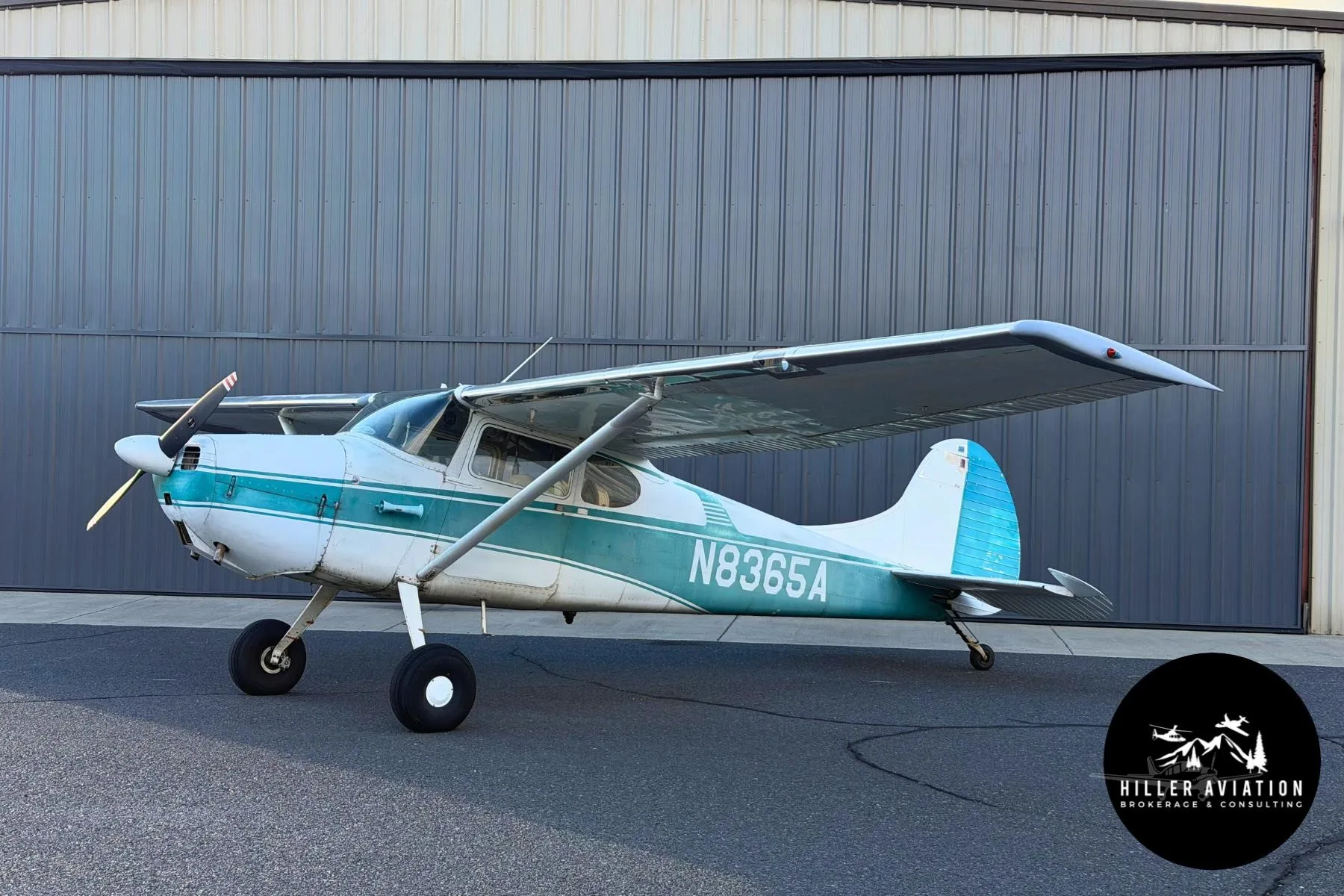
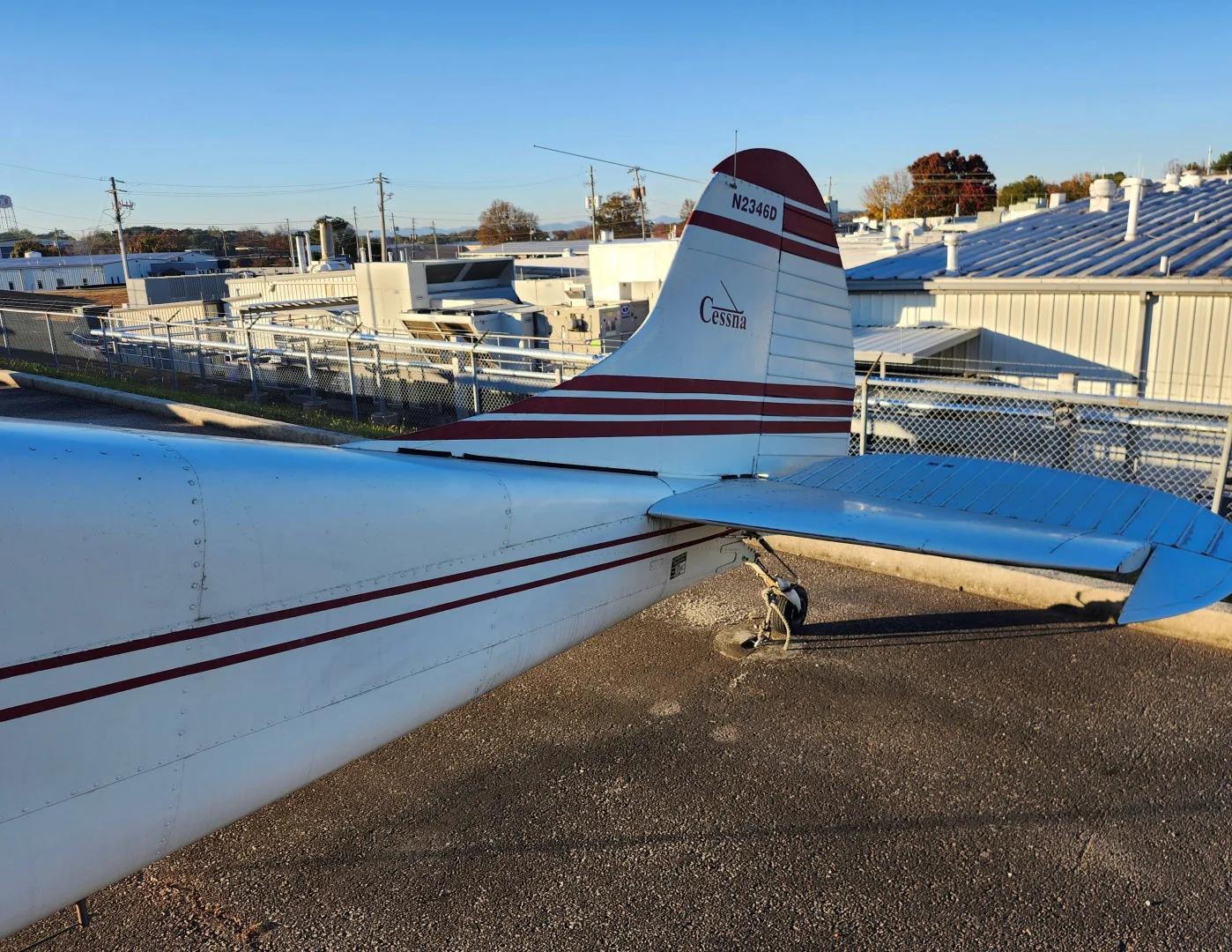
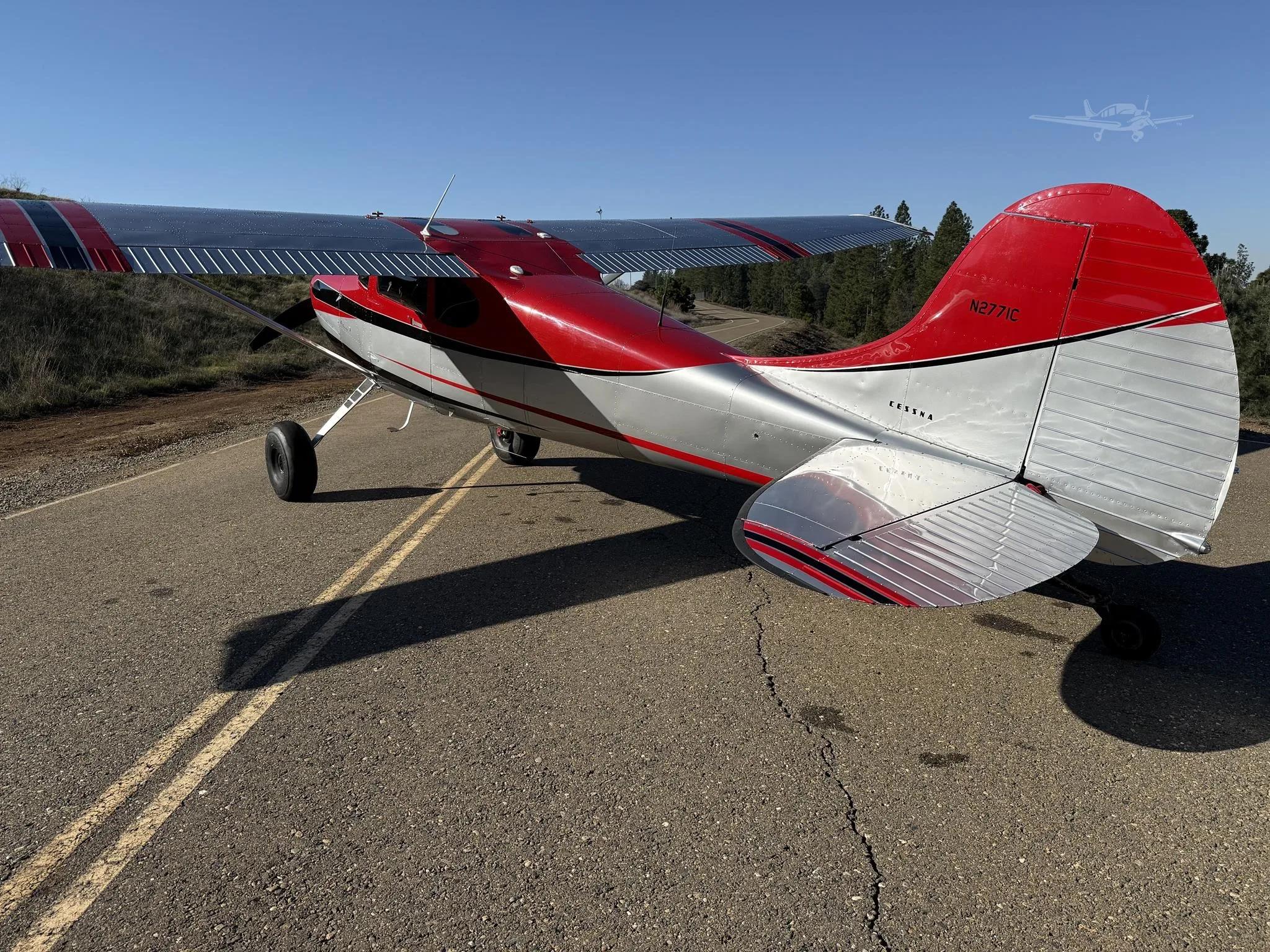
View all 4 for sale →Aircraft that this maintenance manual covers, listed on the sites Sprinkle reads. Asking prices, not sales. Cessna 170 asking prices by year built.
Also useful for the Cessna 170B
From Sprinkle’s library of aircraft documents. PDFs open from Sprinkle’s own files. Read Apr 15, 2026.
Want this document taken down? Request removal