
Airworthiness Directive Schedule Aeroplanes Cessna 170 Series
Service Bulletins for the Cessna 170B
PDF, 5 pages, 154 KB, from Sprinkle’s own files.
What it covers
This document is an Airworthiness Directive (AD) schedule for the Cessna 170 series aircraft, specifically applicable to the Cessna 170A and 170B models. Issued on June 30, 2011, it outlines mandatory inspections, modifications, and compliance requirements to ensure the safety and airworthiness of these aircraft. The document includes specific directives related to various components and systems, such as the windshield, mainplane rear spar, fuel system, and shoulder harnesses. Each directive specifies the applicability, requirements, compliance timelines, and effective dates, ensuring that operators maintain their aircraft in accordance with regulatory standards.
Key points
- DCA/CESS170/101 requires modification of the Narco Model 300 Position Light Flasher by September 1, 1959.
- DCA/CESS170/104 mandates windshield inspections every 100 hours TIS to prevent failure.
- DCA/CESS170/105 requires inspection of the mainplane rear spar for cracks every 100 hours TIS.
- DCA/CESS170/110 necessitates replacement of specific fuel selector valve components by March 24, 2000.
- DCA/CESS170/111 requires shoulder harness inspections within the next 100 hours TIS.
- DCA/CESS170/112 mandates seat adjustment mechanism inspections within the next 100 hours TIS.
Main sections
DCA/CESS170/101 Narco Model 300 Position Light Flasher - Modification
This directive applies to Model 170 Series aircraft with serial numbers 25373 through 27169 that incorporate a Narco flasher model 300 in the lighting system. Compliance is required by September 1, 1959.
DCA/CESS170/104 Windshield Cracking - Inspection
All model 170 Series aircraft not fitted with Rural Aviation mod. RA 63 must undergo inspections to minimize windshield failure. Inspections include examining rivets, edges for cracks, and floating edge supports. Compliance is required every 100 hours TIS.
DCA/CESS170/105 Mainplane Rear Spar - Inspection
This directive requires all model 170 Series aircraft to inspect the mainplane rear spar for cracks, particularly around the root attachment fitting. Inspections should occur every 100 hours TIS and after any mainplane damage.
DCA/CESS170/110 Fuel Selector Valve Cam - Replacement
Applicable to model 170 series equipped with specific fuel selector valve cams or valves shipped between December 6, 1998, and May 10, 1999. Compliance is required by March 24, 2000.
DCA/CESS170/111 Shoulder Harness – Inspection & Modification
This directive applies to specific serial numbers of the Cessna 170 and mandates inspections of the shoulder harness adjuster for safety. Compliance is required within the next 100 hours TIS.
DCA/CESS170/112 Seat Adjustment Mechanism – Inspection and Replacement
Applicable to all model 170, 170A, and 170B aircraft, this directive addresses seat slippage and requires inspections and corrective actions to prevent loss of control. Compliance is required within the next 100 hours TIS after the last inspection.
Safety notes
- Failure to comply with these directives may result in serious safety risks, including loss of control of the aircraft.
The document’s text
Show the text read from the PDF
Issued 30 June 2011 Page 1 of 5 CAA of NZ Airworthiness Directive Schedule Aeroplanes Cessna 170 Series 30 June 2011 Notes 1. This AD schedule is applicable to Cessna 170A and 170B series aircraft manufactured under FAA Type Certificate No. A-799. 2. The Federal Aviation Administration (FAA) is the National Airworthiness Authority (NAA) responsible for the issue of State of Design Airworthiness Directives (ADs) for these aircraft. State of Design ADs can be obtained directly from the FAA website at: Dynamic Regulatory System (faa.gov) 3. The date above indicates the amendment date of this schedule. 4. New or amended ADs are shown with an asterisk * Contents DCA/CESS170/101 Narco Model 300 Position Light Flasher - Modification ..................................................... 2 DCA/CESS170/102 Cancelled .......................................................................................................................... 2 DCA/CESS170/103 Cancelled .......................................................................................................................... 2 DCA/CESS170/104 Windshield Cracking - Inspection ...................................................................................... 2 DCA/CESS170/105 Mainplane Rear Spar - Inspection ..................................................................................... 2 DCA/CESS170/106 Javelin Auxiliary Fuel System - Modification ..................................................................... 3 DCA/CESS170/107 Fuel Cap - Modification ..................................................................................................... 3 DCA/CESS170/108 Electrical System - Modification ........................................................................................ 3 * DCA/CESS170/109 Cancelled – DCA/CESS170/112 refers ............................................................................. 3 DCA/CESS170/110 Fuel Selector Valve Cam - Replacement .......................................................................... 4 DCA/CESS170/111 Shoulder Harness – Inspection & Modification.................................................................. 4 * DCA/CESS170/112 Seat Adjustment Mechanism – Inspection and Replacement ........................................... 5 -- 1 of 5 -- Aeroplanes Cessna 170 Series Issued 30 June 2011 Page 2 of 5 CAA of NZ DCA/CESS170/101 Narco Model 300 Position Light Flasher - Modification Applicability: Model 170 Series S/N 25373 through 27169 that incorporate a Narco flasher model 300 in the lighting system Requirement: Comply with Cessna SL 180/182-41-1 (FAA AD 59-10-03 refers) Compliance: By 1 September 1959 DCA/CESS170/102 Cancelled DCA/CESS170/103 Cancelled DCA/CESS170/104 Windshield Cracking - Inspection Applicability: All model 170 Series not fitted with Rural Aviation mod. RA 63 or approved equivalent Requirement: To minimise the possibility of windshield failure the following inspections are required: 1. Examine the rivets attaching the ends of the windshield outer centre strip to the fuselage and cabin top. Ensure there is adequate landing between the rivet holes and the edge of the strip. Defective rivets must be replaced and strips with inadequate landing or cracks must be repaired or replaced. 2. Examine the edges of the windshield for cracks and signs of chafing. Ensure that all felt rubbing strips are fitted correctly and have not deteriorated, particularly where the windshield is in contact with the wing root fairings. 3. The windshield is designed with floating edge supports. Inspect these supports for the presence of sealing compounds or deteriorated or badly fitted rubbing strips which may prevent free floating of the windshield. Any such defect must be rectified. Compliance: Every 100 hours TIS Effective Date: 31 August 1958 DCA/CESS170/105 Mainplane Rear Spar - Inspection Applicability: All model 170 Series Requirement: 1. Examine each mainplane rear spar for cracks in the area of the root attachment fitting. Cracking originates around the spar web radius below the root end fitting, and may extend to the spar upper flange at the outboard end of the root fitting where the reinforcing angle is joggled. 2. The rear spar web may be examined after the wing root lower fairings are removed. If a crack is present it may be obscured by the root ribs and the spar root end fittings. Careful inspection should be made of the inboard edge and radius of the spar web visible below the root fittings and inboard of the root ribs. The edge of the rear spar upper flange should be inspected through the inboard inspection hole behind the rear spar. Where doubt exists, the trailing edge root end rib shall be removed to permit a more detailed inspection. Compliance: Every 100 hours TIS and immediately following any case of mainplane damage or groundlooping Effective Date: 31 May 1960 -- 2 of 5 -- Aeroplanes Cessna 170 Series Issued 30 June 2011 Page 3 of 5 CAA of NZ DCA/CESS170/106 Javelin Auxiliary Fuel System - Modification Applicability: All model 170 Series equipped with Javelin auxiliary fuel system Requirement: Comply with Cessna SESL SE 69-24 (FAA AD 73-17-01 refers) Compliance: Within the next 100 hours TIS Effective Date: 30 September 1973 DCA/CESS170/107 Fuel Cap - Modification Applicability: Model 170 Series S/N 18729 through 27169 Requirement: Fit vented fuel cap per Cessna SEB 92-27 (FAA AD 79-10-14R1 refers) Compliance: Within next 100 hours TIS unless already accomplished Effective Date: 20 April 1979 DCA/CESS170/108 Electrical System - Modification Applicability: Model 170 Series S/N 18000 through 20099 and 25000 through 27169 Requirement: To prevent inflight electrical system failure, smoke in cockpit and/or fire in wire bundle behind instrument panel, accomplish the following: Disconnect at ammeter or electrical system bus, as applicable, wire which connects bus to cigar lighter receptacle (wire is connected to either the bus side, or equipment side of a circuit breaker, or to the ammeter) then either: 1. Reconnect wire to bus using an existing or newly installed circuit protection device properly rated for wire gauge used, or 2. disconnect wire from lighter receptacle and remove it from aircraft, or 3. insulate disconnected end of wire and secure it to bundle in which it is routed (FAA AD 79-08-03 refers) Note: FAA AC 43.13-1A contains guidance information on wire gauge/circuit protection device ratings Compliance: Within next 100 hours TIS Effective Date: 29 June 1979 * DCA/CESS170/109 Cancelled – DCA/CESS170/112 refers Effective Date: 30 June 2011 -- 3 of 5 -- Aeroplanes Cessna 170 Series Issued 30 June 2011 Page 4 of 5 CAA of NZ DCA/CESS170/110 Fuel Selector Valve Cam - Replacement Applicability: Model 170 series equipped with Fuel Selector Valve Cam P/N 0513123, or Fuel Selector Valve P/N 0513120-5, 0513120-6, 0513120-8, 0513120-9, or 0513120-200; that Cessna shipped from December 6, 1998, through May 10, 1999. Requirement: To prevent partial or complete loss of engine power replace any of the affected fuel selector valve cams or fuel selector valves per Cessna Service Bulletin SEB99-7. Any of the affected fuel selector valve cams or fuel selector valves held as spares must not be fitted to any aircraft. (FAA AD99-27-02 refers) Compliance: By 24 March 2000 Effective Date: 24 February 2000 DCA/CESS170/111 Shoulder Harness – Inspection & Modification Applicability: All Model 170 S/N 18000 through 18729 and 170A S/N 18730 through 19400 and 19402 through 20266 and 170B S/N 20267 through 20999 and 25000 through 27169, which have incorporated Cessna Mod Kit AK170-10. Requirement: To prevent slippage of the pilot and copilot shoulder harness, which could result in serious injury to the pilot and copilot, accomplish the following: 1. Inspect the upper shoulder harness adjuster P/N 443030-401 for the presence of a retainer spring, in accordance with Cessna Single Engine Service Bulletin SEB86-8, Revision 1. 2. If a retainer spring is found during the inspection of the upper shoulder harness adjuster, prior to further flight remove the spring by cutting each side; and stamp out the -401 identification number in accordance with Cessna Single Engine Service Bulletin SEB86-8, Revision 1 3. If a retainer spring is not found during the inspection of the upper shoulder harness adjuster, make an entry in the airplane log book showing compliance with this AD. 4. Only incorporate Cessna Accessory Kits that have been inspected and modified in accordance with this AD. (FAA AD 2004-19-01 refers) Compliance: Within the next 100 hours TIS Effective Date: 25 November 2004 -- 4 of 5 -- Aeroplanes Cessna 170 Series Issued 30 June 2011 Page 5 of 5 CAA of NZ * DCA/CESS170/112 Seat Adjustment Mechanism – Inspection and Replacement Applicability: Model 170, 170A and 170B aircraft, all S/N. Note: This AD supersedes DCA/CESS170/109 to introduce additional inspection requirements, to improve the clarity of the required inspections, and provide improved figures/graphics. The FAA continue to receive reports of inadvertent seat movement. These reports included an incident of a seat separating from the seat track due to wear of the seat roller housing tangs. Requirement: To prevent seat slippage or disengagement of the seat roller housing from the seat rail which could result in the pilot/copilot being unable to reach all the controls and loss of aircraft control, accomplish the following: Accomplish the inspections and corrective actions in FAA AD 2011-10-09 on the seat rails; seat rollers, washers, and axle bolts or bushings; seat roller housings and the tangs; and the lock pin springs. (FAA AD 2011-10-09 refers) Compliance: Within the next 100 hours TIS after the last inspection accomplished per DCA/CESS170/109 (FAA AD 87-20-03 R2 refers) or by 30 June 2012 whichever occurs sooner, and thereafter at intervals not to exceed 100 hours TIS or every 12 months whichever occurs sooner. Effective Date: 30 June 2011 -- 5 of 5 --
Read from the PDF by machine, so tables and diagrams come out rough. The PDF is the document.
More Cessna 170B documents
All 28 →- Service Bulletin: SB-001 Rev C
This Service Bulletin (SB-001 Rev C) issued by Stratus Tool Technologies addresses mandatory inspections and maintenance procedures for oil filter adapters used in various Continental aircraft engines, including the Cessna 170. The bulletin emphasizes the importance of proper installation and maintenance to prevent oil leaks that could lead to engine power loss. It outlines specific compliance instructions that must be completed within a defined timeframe, ensuring that aircraft owners and operators maintain their aircraft in accordance with the latest safety standards. The document serves as a critical reference for mechanics and pilots to ensure the integrity of the oil filter adapter system.
- AIRWORTHINESS DIRECTIVE AD/CESSNA 170/79 Crew Seat Back Cylinder Lock Modification
This document is an Airworthiness Directive (AD) issued by the Civil Aviation Safety Authority (CASA) of Australia, specifically addressing safety modifications required for the Cessna 170 and related models. The directive outlines necessary actions to be taken regarding the crew seat back cylinder lock assembly to prevent potential failures that could lead to unsafe conditions during flight. The AD applies to specific serial numbers of the Cessna 172R and 172S models, detailing compliance timelines based on the aircraft's time-in-service. The document is crucial for maintaining airworthiness and ensuring pilot and passenger safety.
- AIRWORTHINESS DIRECTIVE AD/CESSNA 170/78 Amdt 1
This document is an Airworthiness Directive (AD) issued by the Civil Aviation Safety Authority (CASA) of Australia, specifically addressing safety concerns related to the Cessna 170 and 172 series aircraft. The directive outlines mandatory inspections and corrective actions required to ensure the airworthiness of these aircraft, particularly focusing on the flexible fuel hose end fittings. The AD is applicable to specific serial numbers of the Cessna 172R and 172S models, detailing the necessary inspection procedures and compliance timelines. The intent is to prevent potential in-flight engine failures due to loose fuel lines, which could lead to loss of engine power or fire hazards. Pilots and maintenance personnel are advised to adhere strictly to the outlined requirements to maintain safety standards.
- Airworthiness Directives; Cessna Models 170A, 170B, 172, 172A through 172P, 175, 175A, 175B, 175C, P172D and R172E (USAF T-41B) Airplanes
This document outlines an Airworthiness Directive (AD) issued by the FAA, applicable to various Cessna aircraft models, including the Cessna 170B. The directive mandates a one-time inspection and potential modification of the engine crankcase breather tube to prevent blockage due to ice. The AD is crucial for ensuring the safety and airworthiness of the affected aircraft, as ice blockage could lead to increased crankcase pressure, resulting in oil loss and engine failure. Compliance is required within specified timeframes to mitigate risks associated with this condition.
Service Bulletins · 1982PDF · 5 pages · 1.5 MB of Airworthiness Directives; Cessna Models 170A, 170B, 172, 172A through 172P, 175, 175A, 175B, 175C, P172D and R172E (USAF T-41B) Airplanes, opens in a new tabRequest removal of Airworthiness Directives; Cessna Models 170A, 170B, 172, 172A through 172P, 175, 175A, 175B, 175C, P172D and R172E (USAF T-41B) Airplanes - Weight & Balance for CESSNA 170B
This Service Newsletter provides critical information regarding the balancing of flight control surfaces for various Cessna models, including the 170B. It supersedes previous newsletters and offers updated instructions for using the flight control surface balancing fixture. The newsletter emphasizes the importance of adhering to established procedures and government regulations to ensure safety and effectiveness in balancing control surfaces. It includes specific instructions for balancing ailerons with piano-type hinges and provides a table of limits and specifications for control surface balancing on models including the 170B. The balancing process is essential for maintaining aircraft control and performance, and this document serves as a valuable resource for technicians and maintenance personnel.
- CESSNA 170B Model Guide
The CESSNA 170B is a single-engine piston, tailwheel, high-wing airplane. The New Zealand type acceptance report describes it as a four-seat, all-metal light aeroplane built from 1952 to 1956, originally known as the Model 171. The library data gives a Continental O-300 of 145 hp, a 100 kt cruise, 500 nm of range and 40 gal of fuel. Because it is a tailwheel airplane from the 1950s, a buyer should focus on the age-related airworthiness directives, the tailwheel bracket and the fuel system.
- Cessna 170 & C305A (USAF O‐1A) T3 Tailwheel Suspension System Installation Instructions
This document provides installation instructions for the T3 Tailwheel Suspension System (P/N ABI-51525) specifically designed for the Cessna 170 series and Cessna 305A (USAF O-1A). It is intended for qualified maintenance personnel responsible for the installation and airworthiness of the tailwheel suspension system. The manual outlines the necessary procedures for replacing the existing tail spring with the new suspension system, including detailed steps for installation and weight and balance considerations. It also includes information on the components of the kit and the importance of maintaining the system for optimal performance.
- Instructions for Continued Airworthiness
This document provides instructions for the continued airworthiness of McFarlane Aviation's PMA Fuel Selector Valve assemblies, specifically designed for various Cessna aircraft including the Cessna 170B. It outlines the installation, maintenance, and inspection procedures necessary to ensure the proper functioning of the fuel selector valve. The document is intended for aircraft maintenance personnel and provides detailed steps for disassembly, inspection, assembly, and testing of the fuel selector valve. It emphasizes the importance of adhering to specified torque values and inspection criteria to maintain safety and compliance with FAA regulations.
Cessna 170 for sale now
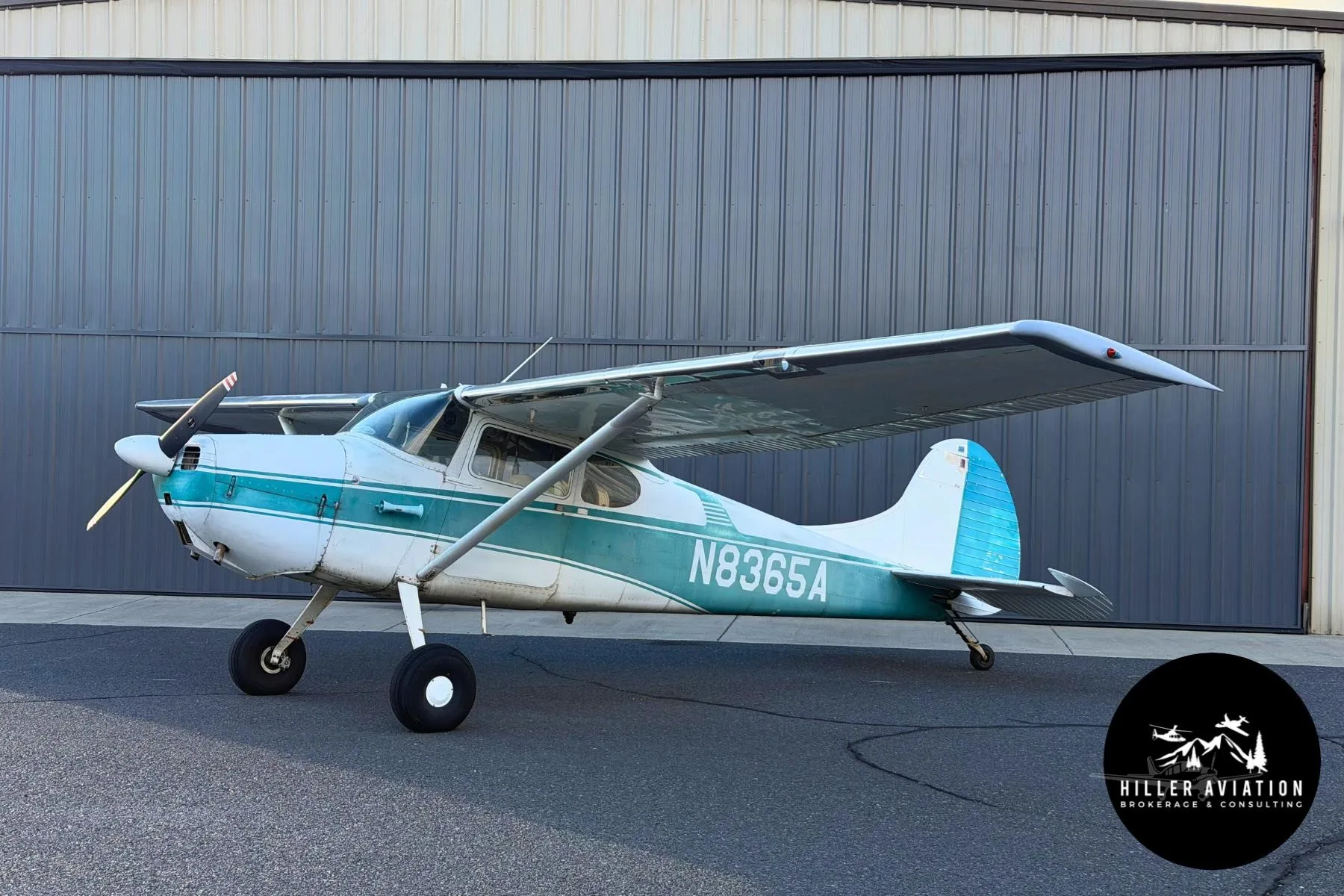
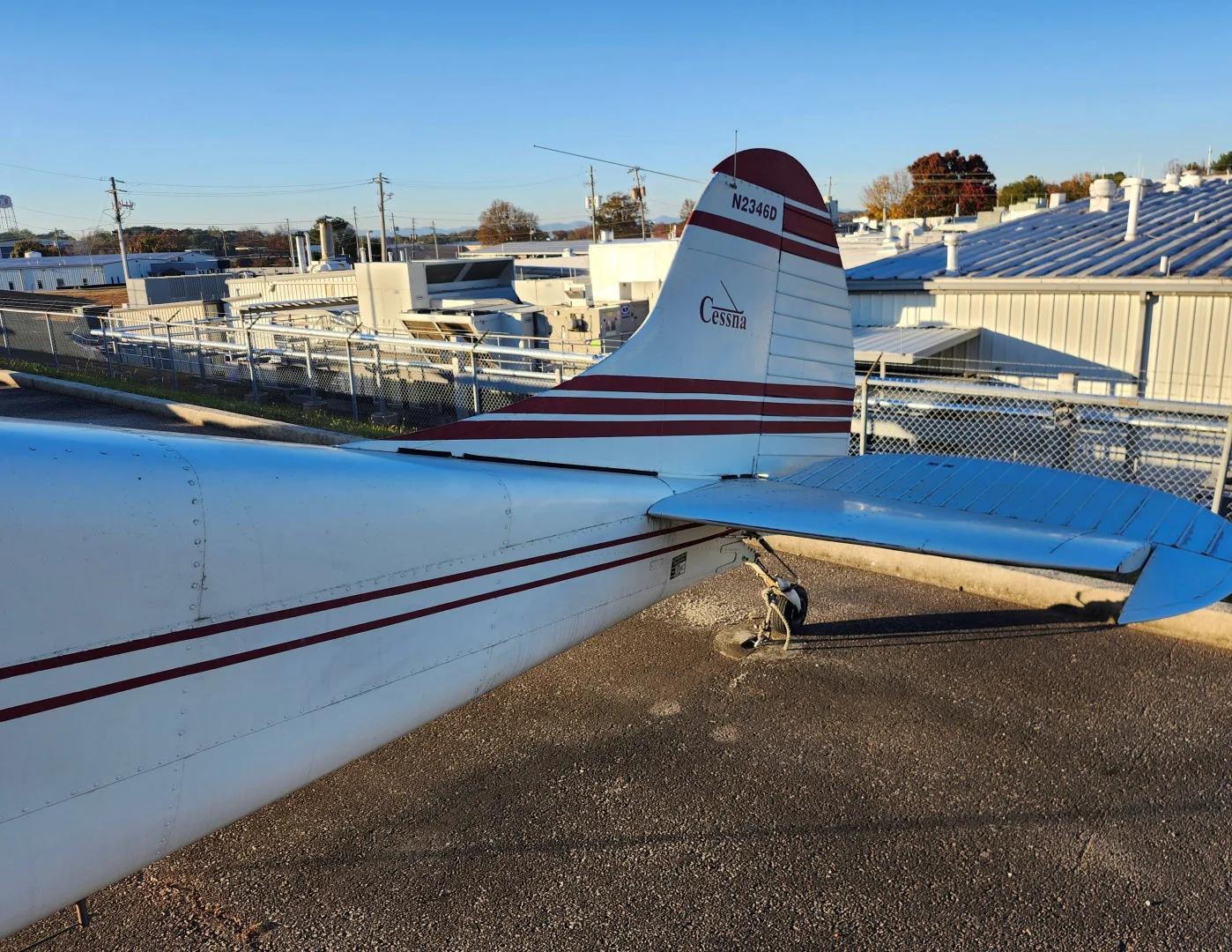
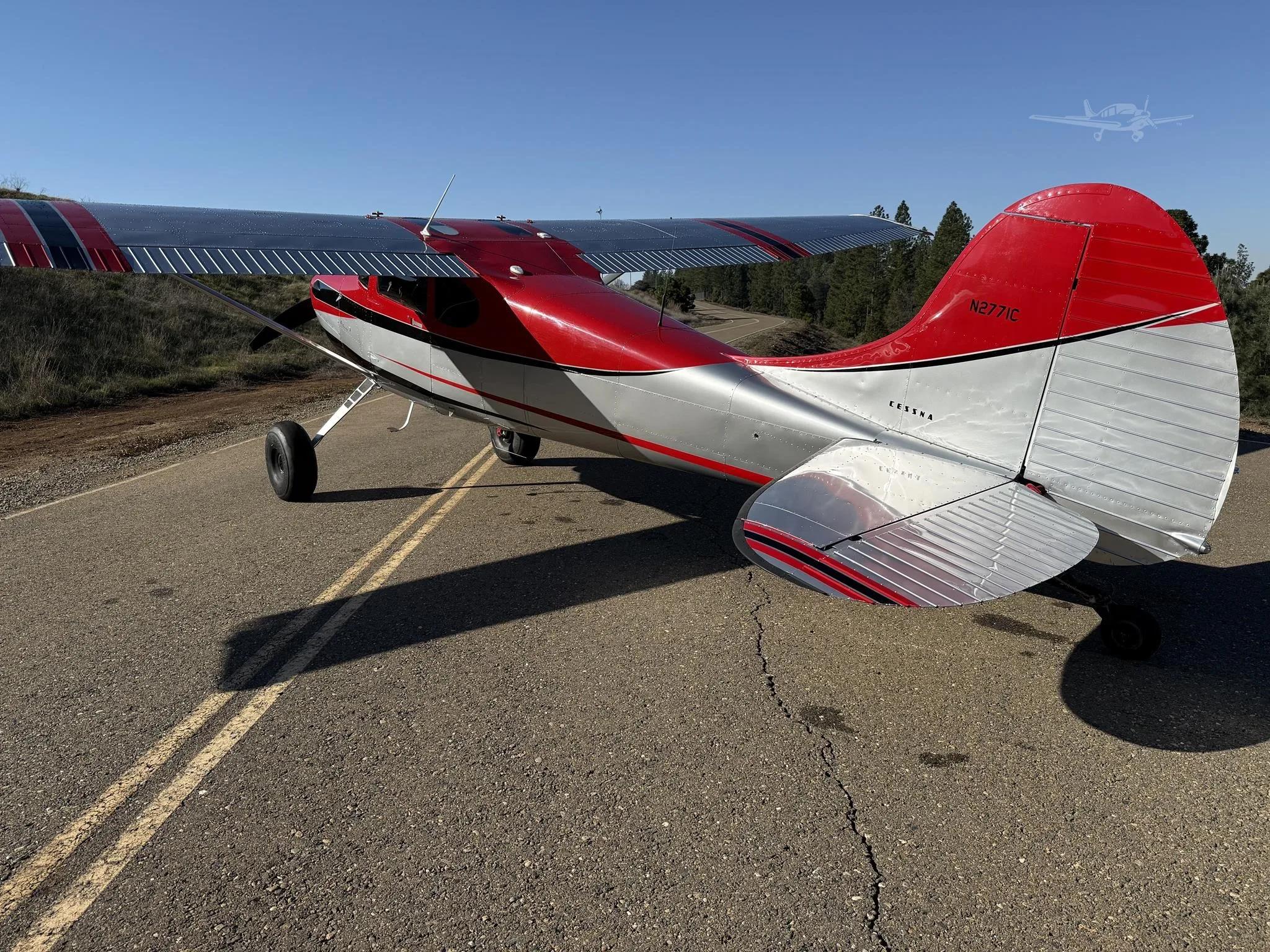
View all 4 for sale →Aircraft that this service bulletins covers, listed on the sites Sprinkle reads. Asking prices, not sales. Cessna 170 asking prices by year built.
Also useful for the Cessna 170B
From Sprinkle’s library of aircraft documents. PDFs open from Sprinkle’s own files. Read Apr 15, 2026.
Want this document taken down? Request removal